In a statement delivered before the United Nations Human Rights Council on 2 October 2025 , Euro-Med Human Rights Monitor called to protect human rights defenders in Gaza and to grant international investigators unrestricted access to examine violations committed amid Israel’s ongoing war on the Gaza Strip.
The statement was delivered remotely from Gaza by Maha Hussaini, Head of Media at Euro-Med Monitor, during the Council’s 60th session under Item 8. Hussaini stressed that the continued silence of states and civil society representatives severely undermines international law and enables further violations.
Addressing the Council, Hussaini said: “I speak to you from my last refuge after I was forcibly expelled from my home in Gaza City under relentless Israeli bombardment, though I do not know if by the time you hear these words I will still be alive or buried beneath the rubble.”
She continued: “Gaza is under unprecedented Israeli attacks, and I have been forcibly displaced along with my colleagues at Euro-Med Human Rights Monitor several times now. I’m meant to present this statement as a human rights defender, to document and to advocate. But today I can no longer count the Israeli crimes I witness, because they surround me in every breath and every hour.”
Hussaini further noted: “It is a shame that I had to tear up my business card identifying me as a human rights worker at some point during this genocide to avoid being killed or detained by the Israeli military.”
She concluded: “We demand, not plead, we demand protection for those documenting genocide in Gaza, we demand unhindered access for international investigators, and we demand that perpetrators face justice. Every silence from you, representatives of states and civil society, is another strike of the hammer driving the coffin of international law.”
On 4 October 2025, in its response to a call for input by UN Special Rapporteur on human rights defenders, Mary Lawlor, Al-Haq drew urgent attention to the escalating and systematic efforts to silence Palestinian voices and dismantle the infrastructure of Palestinian civil society. The submission highlights how Israel’s settler-colonial apartheid regime has intensified its campaign to suppress resistance, criminalise advocacy and quash any pursuit of accountability as it pursues Palestinian erasure.
Each year the European Parliament awards the Sakharov Prize to honour exceptional individuals and organisations defending human rights and fundamental freedoms, safeguarding the rights of minorities, and fighting for respect of international law, democracy and rule of law. Nominations are made by political groups or by at least 40 MEPs. This year’s nominations were presented during a joint meeting of the foreign affairs and development committees, and the human rights subcommittee on 23 September 2025:
Andrzej Poczobut
Andrzej Poczobut is nominated by the groups of theEuropean People’s Party and the European Conservatives and Reformists. He is a journalist, essayist and blogger from the Polish minority in Belarus, known for his criticism of Alexander Lukashenko’s regime and has become a symbolic figure in the struggle for freedom and democracy in the country.
Poczobut has been repeatedly arrested by the authorities. Detained in 2021, he was sentenced to eight years in a penal colony. He has at times been held in solitary confinement without adequate medical treatment. His current condition is unknown and his family is denied any visits. Parliament has called for his immediate and unconditional release.
The Socialists and Democratsgroup has nominated journalists and humanitarian aid workers in conflict zones represented by the Palestinian Press Association, the Palestine Red Crescent Society (PRCS), and the United Nations Relief and Works Agency (UNRWA). Gaza is identified as the world’s deadliest region for journalism, with a high number of Palestinian journalists killed. Humanitarian workers have also endured significant losses during the conflict, with deadly attacks affecting organisations such as World Central Kitchen, the PRCS and UNRWA. These individuals, through their work and sacrifices, ensure international awareness of the critical human rights situation in Gaza.
The Left group has also nominated journalists in Palestine, with a specific mention of Hamza and Wael Al-Dahdouh, Plestia Alaqad, Shireen Abu Akleh, Ain Media (in honour of Yasser Murtaja & Roshdi Sarraj), representing all the journalists active in Palestine.
Franco-Algerian writer Boualem Sansal is nominated by the Patriots for Europe group. A former senior official in Algeria’s Ministry of Industry, he began writing novels after retiring. He has received several literary awards and is known for his criticism of Islamism and the Algerian government.
In November 2024, Sansal was arrested in Algeria for “undermining national unity” following an interview with French media. In March 2025, he was sentenced to five years in prison, despite health concerns and without his French lawyer present. The sentence was later upheld on appeal. The European Parliament and French National Assembly have both called for his immediate release.
The Renew Europe group has nominated the Serbian students who initiated nationwide protests after the collapse of a railway station canopy in Novi Sad, Serbia, on 1 November 2024. This tragedy, which killed 16 people, was linked to alleged systemic corruption and infrastructural neglect. It triggered silent nationwide protests demanding accountability. The movement has transcended ideological and political divisions and now includes academic staff and students, farmers, artists, journalists, taxi drivers, engineers, and others. It culminated on 15 March 2025, when over 350,000 people gathered in Belgrade for the largest demonstration in Serbia’s post-Yugoslav history.
Budapest Pride
Budapest Pride has been nominated by the Greens/European Free Alliance group as well as by Marc Angel (S&D, Luxembourg), Kim van Sparrentak (Greens/EFA, Netherlands) and 43 other MEPs. Taking place despite a government-announced ban, 2025 Budapest Pride drew the largest attendance in the event’s history and became the seventh-largest Pride march in Europe. Despite the risks of potential police intervention, fines, and imprisonment, the march emphasised freedom of assembly and expression. By combining grassroots LGBTQ activism with support from established NGOs amid increasing government restrictions, the event has played a role in advocating for democratic values and civil liberties in Hungary.
Charlie Kirk, nominated by the Europe of Sovereign Nations group, was an American civic activist and public speaker, co-founder and CEO of Turning Point USA (TPUSA), founded in 2012 to engage students and young voters. Under his leadership, TPUSA played a significant role in youth political participation and debates on free speech on university campuses. On 10 September 2025, Charlie Kirk was shot dead during an outdoor event at Utah Valley University. The assassination has been widely condemned and highlights concerns over threats to freedom of expression.
Mzia Amaglobeli and Georgia’s pro-democracy protest movement have been nominated by Rasa Juknevičienė (EPP, Lithuania) and 60 other MEPs. Mzia Amaglobeli, a Georgian journalist and director of online media outlets, was detained in 2025 for participating in an anti-government protest and imprisoned for two years on politically motivated charges. The first female political prisoner in Georgia since its independence and a fighter for freedom of expression, she has become the symbol of Georgia’s pro-democracy protest movement that opposes the Georgian Dream regime after the October 2024 elections.
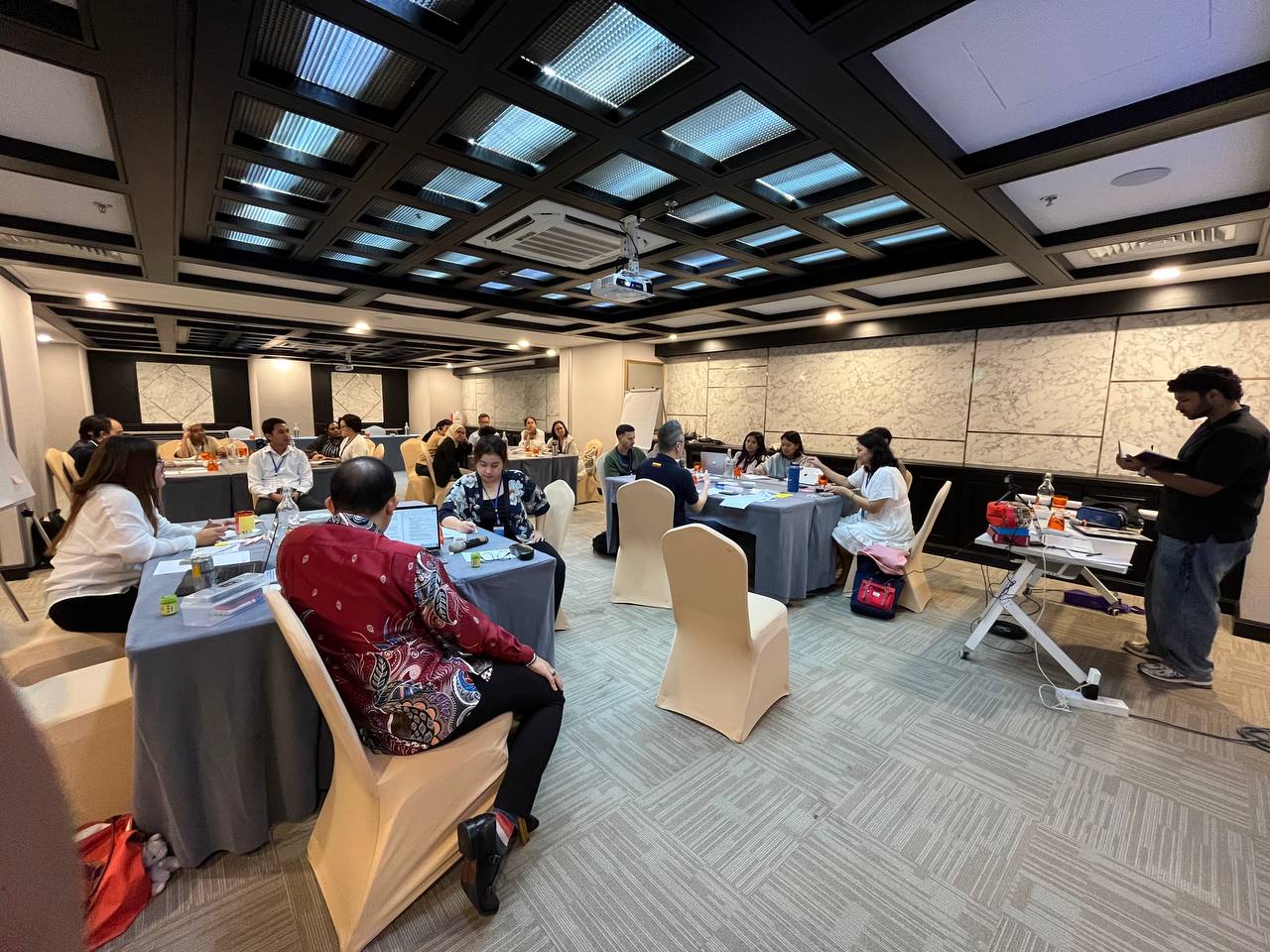
On 24–26 August 2025, the International Commission of Jurists (ICJ), together with the Centre for Independent Journalism, Malaysia (CIJ), and the Numun Fund, gathered human rights defenders and experts to discuss the need for Southeast Asian States to adopt and implement a human rights-based approach in efforts to tackle the growing spread of harmful content in digital spaces.
The workshop in Kuala Lumpur, Malaysia, focusing on leveraging ASEAN platforms, brought together 24 representatives from organizations across the ASEAN region, including Cambodia, Indonesia, Lao PDR, Malaysia, Myanmar, the Philippines, Thailand, and Viet Nam, all States that are members of the Association of Southeast Asian Nations (ASEAN).
Participants underlined that the surge in hate speech, disinformation, and other harmful online content had elicited responses from ASEAN States which often relied on heavy-handed and repressive measures. These include application of criminal laws that are vague and prone to abuse, restrictive content takedown and licensing regimes; and even State-sponsored disinformation campaigns.
Participants heard that ASEAN regional mechanisms currently lack robust mandates and coordination capable of effectively addressing disinformation, harmful content, and other digital challenges. Participants considered means of ensuring platform accountability, in the context of advertisement-driven business models of technology companies with ineffective content moderation practices. The online platforms typically employ algorithms that amplify sensationalist or extreme content, fueling the viral spread of disinformation and other human rights abuses.
Workshop participants worked to develop joint next steps and produced a set of recommendations for ASEAN Member States, technology companies, and ASEAN human rights bodies, particularly the ASEAN Intergovernmental Commission on Human Rights (AICHR). The recommendations included strengthening ASEAN human rights institutions and mechanisms in responding to and addressing human rights complaints submitted to them, enhancing their independence, and embedding human rights–centered advocacy into ASEAN work plans and instruments….
On 25 August, additional discussions were held with a representative from the Big Tech company Meta, focusing on the need to improve accountability and remedies through effective, accessible, and confidential grievance mechanisms. Participants also proposed multi-stakeholder co-regulation frameworks to ensure CSO participation through ongoing dialogue and collaboration on digital platform services, human oversight—not AI alone—in guiding content moderation standards, and the strengthening of independent third-party fact-checking across the region.
The series concluded with a panel discussion on 26 August 2025, co-hosted by the ICJ during the Digital Rights Asia-Pacific Assembly 2025. The panel, titled “The Role of ASEAN Human Rights Mechanisms in Institutionalizing Human Rights in the Digital Space: Towards Accountability and Collective Advocacy,” was also attended by AICHR representatives from Indonesia, Malaysia, and Thailand. It focused on how AICHR can better safeguard human rights online and identified concrete pathways for institutionalizing monitoring and accountability mechanisms related to human rights in the digital space.
Egyptian media reported on 22 September, 2025, that President Abdel Fattah al-Sisi had issued a presidential pardon for the imprisoned Egyptian-British activist Alaa Abdel Fattah. On 23 September the Guardian, HRW and others reported that the British-Egyptian human rights activist Alaa Abd el-Fattah has indeed been released from jail after serving six years for sharing a Facebook post.
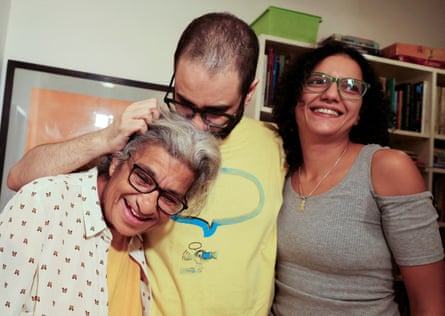
Early on Tuesday morning his campaign said in a statement that Abd el-Fattah was released from Wadi Natron prison and was now in his home in Cairo. “I can’t even describe what I feel,” his mother, Laila Soueif, said from her house in Giza as she stood next to her son surrounded by family and friends. “We’re happy, of course. But our greatest joy will come when there are no [political] prisoners in Egypt,” she added.
Alaa Abd el-Fattah stands next to his mother, Laila Soueif, and sister, Sanaa, at their home in Giza. Photograph: Mohamed Abd El Ghany/Reuters
Amnesty International’s Erika Guevara Rosas said the release was welcome but long overdue. “His pardon ends a grave injustice and is a testament to the tireless efforts of his family and lawyers, including his courageous mother Laila Soueif and activists all over the world who have been relentlessly demanding his release,” she said. The following quote can be attributed to Amr Magdi, senior Middle East and North Africa researcher at Human Rights Watch: “President Sisi’s pardon of the imprisoned Egyptian activist Alaa Abdel Fattah is long overdue good news. Though we celebrate his pardon.
The campaign for Abd el-Fattah’s release was led by his family, including his mother, who was admitted to hospital in London twice after going on hunger strikes trying to secure his release. The UK prime minister, Keir Starmer, is also known to have telephoned Sisi three times to lobby for Abd el-Fattah’s release. see: https://humanrightsdefenders.blog/2022/07/07/mona-seifs-letter-a-cry-for-help-for-alaa/
On 18 September 2025, ISHR said that analysis of revised 2026 budget proposal for UN80 reform points to disproportionate cuts to the chronically-underfunded human rights pillar. Together with peace and development, human rights constitutes one of the three key areas of action for the UN and thus should be adequately funded.
On 16 September 2025, the UN Secretary-General published its report revising its earlier proposal for the UN’s 2026 budget (known as ‘Revised estimates’ report). The International Service for Human Rights (ISHR) has analysed the revised budget and is deeply concerned about proposed cuts to an already chronically under-resourced human rights pillar. While demands on the human rights system do not cease to grow to address mounting global conflicts and crises, further cuts will significantly reduce effectiveness and efficiency, and its capacity to deliver on human rights protection to individuals and populations on the ground.
‘The UN’s human rights pillar has historically received significantly less funds than development and peace and security, accounting for just 7% of the UN regular budget and less than 1% of UN’s total expenditure. Any cuts to it would result in minimal savings but have significant and disproportionate adverse consequences for the rights of people around the world – Phil Lynch, ISHR Executive Director
In recent years, a liquidity crisis fuelled by the late or non-payments of dues by the US and China had already prompted High Commissioner for Human Rights Volker Türk to suspend the delivery of reports, workshops and other activities mandated by the Human Rights Council (HRC). The HRC has also reduced the length of its sessions, limiting space for States, experts and civil society to address some of the world’s most pressing rights issues and crises.
Additional cuts to the human rights pillar would further undermine the ability of the UN’s human rights bodies to continue to investigate atrocity crimes such as in Gaza, Myanmar and the Democratic Republic of Congo, to support victims and human rights defenders, to assist States in improving their human rights policies, and to develop global human rights standards that protect us all.
UN Secretary-General Antonio Guterres stressed the cuts are ‘carefully calibrated’ and ensure balance between the UN’s three pillars (peace and security, development, and human rights). Yet, the proposed cuts to the budget of the Office of the High Commissioner for Human Rights (OHCHR) of around 15% run much deeper than the 2026 proposed budget on development (targeted for around 12% cut) and peace and security (targeted for a 13% cut, excluding peacekeeping operations).
Like a three-legged stool, if the human rights pillar is cut to the extent proposed then not only will it collapse, but the whole system will topple.
ISHR is campaigning for the UN80 Initiative to be more than a simple accounting overhaul for the UN, centred only on cost-cutting. On July 21, ISHR and 16 civil society organisations signed an open letter to the Secretary-General and High Commissioner Türk with concrete recommendations and proposals to ensure that the UN human rights system is streamlined, strengthened and sustainable, guided by the aim of support human rights defenders, providing justice to victims and ensuring accountability for rights abuses.
The cuts will next be reviewed by a UN budgetary committee traditionally hostile to human rights funding, whose conclusions will serve as a basis for States to negotiate.
For more information, please contact: Raphael Viana David, ISHR, Programme Manager r.vianadavid@ishr.ch
On 12 September, 2025 the seven rights groups described Khalid’s prolonged imprisonment as a “violation of his rights” and an instance of “selective persecution”, asserting that he was arrested on “politically motivated and spurious charges” on 13 September 2020.
Alongside Amnesty International, the signatories include: CIVICUS, FORUM-ASIA, Front Line Defenders. International Commission of Jurists, International Federation for Human Rights (FIDH) and World Organisation Against Torture (OMCT).
The statement expressed deep concern over the invocation of the anti-terror law UAPA (Unlawful Activities Prevention Act) and the repeated denial of bail to Khalid.
“These repeated bail denials combined with persistent delays, and the continued absence of trial proceedings, amount to a violation of his right to a fair trial, including speedy trial, guaranteed under the International Covenant on Civil and Political Rights (ICCPR), to which India is a state party, as well as under the Constitution of India,” the statement read.
The groups further highlighted the unequal application of bail standards, particularly in cases related to the 2020 Delhi riots and anti-CAA protests, saying:
“We are further concerned about the discriminatory application of bail standards in cases arising from the violence surrounding the CAA protests and more broadly in cases involving the UAPA. While similarly situated accused have been granted bail, Khalid continues to be denied relief. Such unequal treatment violates the principle of equality before the law and sets a deeply troubling precedent.”
The rights organizations also drew attention to the role of the Delhi Police and political leaders during the 2020 Delhi riots, where Khalid and other Muslim activists were implicated.
“Independent investigations, including by Amnesty International India, Human Rights Watch and Delhi Minorities Commission, have documented the role of the Delhi Police in human rights violations during the CAA protests and the ensuing violence,” the statement said. “Police officers were recorded engaging in beatings, torture and other ill-treatment, and arbitrary arrests, and in some cases standing by as mobs attacked protesters.”
The statement noted that Indian courts have repeatedly criticized the police investigations, describing them as: “Very poor,” “callous,” and “fraught with multiple flaws,” with documented instances of fabricated cases and manipulated records.
It further condemned the role of senior political leaders, who were seen delivering inflammatory hate speeches, branding protesters as “traitors” or “anti-nationals”, and openly inciting violence.
“Despite the existence of video and documentary evidence, no meaningful accountability measures have been taken against implicated political figures or police officials,” the statement added.
The rights groups emphasized that Khalid’s prolonged detention is not an isolated incident, but part of a larger pattern of repression against those exercising their constitutional rights to freedom of expression and association.
“Other students and human rights activists, including Gulfisha Fatima, Sharjeel Imam, Khalid Saifi, Shifa-ur-Rehman and Meeran Haider, also remain in detention for their peaceful opposition to the CAA, while police officials and political leaders responsible for incitement or complicity in violence continue to enjoy impunity,” the groups noted. “This selective prosecution erodes public trust in the justice system, entrenches impunity for state actors, and criminalises free expression.”
The seven international organizations demand:
The immediate and unconditional release of Umar Khalid
The equal application of bail standards
An end to the discriminatory treatment of human rights defenders
Accountability for police officers and political leaders implicated in incitement and violence
Brian J. Dooley is an Irish human rights activist and author. He is Senior Advisor at Washington DC–based NGO Human Rights First. In October 2023 he was made an Honorary Professor of Practice at the Mitchell Institute, Queen’s University Belfast. He is a visiting scholar at University College, London (UCL). He is a prominent human rights voice on Twitter (@dooley_dooley).
From April 2020 to March 2023 he was Senior Advisor to Mary Lawlor, the United Nations Special Rapporteur on the situation of human rights defenders. He is as an advisory board member of the Gulf Centre for Human Rights, and was a visiting scholar at John Jay College, City University of New York from 2022 to 2023, and at Fordham University Law School in New York from 2019 to 2020.
He receives the award for having dedicated his career to advocating human rights and bringing greater global attention to less visible issues. Congratulations with a big DISCLAIMER : I am a good friend and admirer of Brian [see posts: https://humanrightsdefenders.blog/tag/brian-dooley/] and he has represented Human Rights First on the MEA Jury for years.
Dooley has written numerous reports on human rights defenders and human rights issues based on research in countries including Bahrain, Egypt, China (Hong Kong), Hungary, Kenya, Lebanon, Northern Ireland, Palestine, Ukraine, the USA (Guantanamo), and the United Arab Emirates. His efforts have played a crucial role in exposing human rights violations, and he has actively supported justice in conflict areas, including Ukraine and Northern Ireland.
Commenting on the Award, Brian Dooley said: “This is such a great honour for me, and I’m very grateful to the University of Oslo for recognising my work. I’ve been very lucky over decades that my work with Amnesty International, with The Gulf Centre for Human Rights, with Mary Lawlor – the Special Rapporteur on Human Rights Defenders – and with Human Rights First has enabled me to meet and work with Human Rights Defenders working in some of the most difficult places in the world. Too often great work by local activists in wars or revolutions, or those living under oppression, goes unseen and unreported. This award helps bring attention to this work, and to those who do it.”
Brian will receive his Award during the Oslo Peace Days this coming December.
The Trump administration’s omission of key sections and manipulation of certain countries’ rights abuses degrade and politicize the 2025 US State Department human rights report, Human Rights Watch, Amnesty International, Human Rights First and many other NGOs concluded .
On August 12, 2025, the State Department released its “Country Reports on Human Rights Practices” covering the year 2024. The report omits several categories of rights violations that were standard in past editions, including women, LGBT people, persons with disabilities, corruption in government, and freedom of peaceful assembly. The administration has also grossly mischaracterized the human rights records of abusive governments with which it has or is currently seeking friendly relations.
By undermining the credibility of the report, the administration puts human rights defenders at risk, weakens protections for asylum seekers, and undercuts the global fight against authoritarianism.
This year’s human rights report may strictly keep with the minimum statutory requirements but does not acknowledge the reality of widespread human rights violations against whole groups of people in many locations. As a result, Congress now lacks a widely trusted, comprehensive tool from its own government to appropriately oversee US foreign policy and commit resources. Many of the sections and rights abuses that the report omits are extremely important to understanding the trends and developments of human rights globally, Human Rights Watch said.
On Israel, the State Department disregards the Israeli authorities’ mass forced displacement of Palestinians in Gaza, their use of starvation as a weapon of war, and their deliberate deprivation of water, electricity, medical aid, and other goods necessary for civilians’ survival, actions that amount to war crimes, crimes against humanity, and acts of genocide. The State Department also fails to mention vast damage and destruction to Gaza’s essential infrastructure and the majority of homes, schools, universities, and hospitals.
The report is dishonest about abuses in some third countries to which the US is deporting people, stating that the US found “no credible reports of significant human rights abuses” in El Salvador, although they cite “reports” of extrajudicial executions, enforced disappearance, and mistreatment by police. The administration has transferred to El Salvador’s prisons, despite evidence of torture and other abuses.
The State Department glosses over the Hungarian government’s escalating efforts to undermine democratic institutions and the rule of law, including severe curbs on civil society and independent media, and abuses against LGBT people and migrants. It also fails to acknowledge that Russian authorities have widely used politically motivated imprisonment as a tool in their crackdown on dissent, and its prosecutions of individuals for “extremism” for their alleged affiliation with the LGBT movement.
Judi Aldalati is a Syrian journalist, a researcher and human rights defender. She told ISHR how seeing the early days of the Arab Spring led her to pursue the defence of human rights and shared her aspirations for the future of Syria amidst the uncertainty that has followed the collapse of the Assad regime.
On 5 August 2025, human rights defender Enes Hocaoğulları was detained at the Ankara Esenboğa Airport, on his return to Türkiye due to an arrest warrant issued by an Istanbul court, in connection with ongoing investigations into a speech he made at the 48th session of the Congress of Local and Regional Authorities of the Council of Europe on 27 March 2025.
Enes Hocaoğulları is a youth and LGBTI+ rights defender based in Ankara, Türkiye. Since 2022, he works as the International Advocacy and Fundraising Coordinator at ÜniKuir Association, an LGBTI+ rights organisation in Türkiye. His focus is on diplomatic engagement, monitoring youth rights, reporting and advocacy. His climate activism during his high school years eventually evolved into a fight for human rights and democracy. In February 2025, he was selected as the youth delegate from Türkiye for the Congress of Local and Regional Authorities of the Council of Europe.
On 5 August 2025, human rights defender Enes Hocaoğulları was detained at the Ankara Esenboğa Airport, on his return to Türkiye due to an arrest warrant issued by an Istanbul court, in connection with ongoing investigations into a speech he made at the 48th session of the Congress of Local and Regional Authorities of the Council of Europe on 27 March 2025.
The judgeship ruled for the pre-trial detention of Enes Hocaoğulları, justifying the decision by stating that there is strong suspicion that the human rights defender might flee. This is despite the fact that he returned to Türkiye aware of the risk of arrest upon arrival. Following the pre-trial arrest decision, he was transferred to Sincan Prison in Ankara.
In February 2025, Enes Hocaoğulları was selected as the youth delegate of Türkiye for the Congress of Local and Regional Authorities of the Council of Europe. On 24-27 March 2025, the human rights defender attended the 48th session of the Congress, where he delivered several speeches, including on 27 March 2025, when he gave a speech detailing police violence imposed on protesters in Türkiye, including attacks with tear gas, rubber bullets and water cannons, and the strip search of detained students. He called on the international community to act against the human rights violations in Türkiye.
The speech, which was recorded and posted online, went viral on social media. This led to a smear and hate campaign against the youth and LGBTI+ rights defender, accusing him of being a traitor, foreign agent and a queer who wants to “spread LGBTI+ ideology”. Additionally, investigations were initiated by Ankara and Istanbul Chief Public Prosecutors’ Office under articles 216 (inciting public to hatred and hostility) and 217/A (defamation law) of the Turkish Penal Code respectively, which were later consolidated under Ankara prosecutor’s office. An additional investigation was initiated by the Kırşehir Prosecutor’s Office under article 301 of the Turkish Penal Code (insulting the Turkish nation, the Republic of Turkey, or the institutions and organs of the state).
Front Line Defenders believes that the human rights defender was solely arrested for his peaceful human rights work and for exercising his right to free expression to explain the human rights violations that he has personally witnessed. It is particularly worrying that he was targeted for a speech that he made at the Council of Europe, which Türkiye is a member of.