On 24 January 2017, thelocal.se published the English version of an opinion piece originally written in Swedish by Civil Rights Defenders executive director Robert Hårdh for newspaper Dagens Nyheter. Like my post published yesterday about the call for Canada to ‘compensate’ for Trumps election [https://humanrightsdefenders.blog/2017/01/23/2017-4-canadas-year-of-real-human-rights-action/], this piece argues that Sweden, also as a member of the EU and with its current place on the UN Security council, must step forward and take a greater responsibility to protect human rights on a global level: Read the rest of this entry »
Archive for the 'organisations' Category
2017 (4): Canada’s year of real human rights action?
January 23, 2017Alex Neve and Beatrice Vaugrante (Amnesty International Canada) wrote in the Ottawa Citizen (23 January 2017) a piece entitled: “Why 2017 must be Canada’s year of human rights action”.
Referring to Trump’s election and a number of human rights ‘anniversaries’ they say that there “is no better way to mark 2017’s many anniversaries, and keep a clear Canadian identity, than to make it a year devoted to advancing a strong human rights agenda, at home and abroad. That is the theme of Amnesty International’s most recent Human Rights Agenda for Canada, released today: A Year to Get It Right.”
The need is certainly great….a deeply troubling current of populism, racism, xenophobia and misogyny that has dominated election and referendum campaigns in numerous countries, most notoriously in the United States. The world collectively holds its breath in worried apprehension about the human rights implications of Trump’s presidency. And what of Canada?
Important Canadian government policy changes last year point to a renewed commitment to human rights; not consistently, but certainly sorely needed after years of diminished world standing. That is particularly so when it comes to gender equality, refugee protection and diversity. We have significantly re-engaged with the UN human rights system, including support for institutions that we once helped established, such as the International Criminal Court.
On the home front, the government’s talk of a new relationship with Indigenous peoples is welcome. It has laid the ground for the long-overdue National Inquiry into Missing and Murdered Indigenous Women and Girls, which faces challenges and misgivings but is nonetheless underway. However, it is disappointingly evident that inspirational words and gestures are not translating into the concrete measures needed to truly address the decades of human rights abuse at the heart of Canada’s legacy of colonialism. Nowhere is that more obvious than when major resource development projects – be it pipelines, mines or hydroelectricity – are at stake. This is well-evidenced in the continued federal support for British Columbia’s Site C Dam despite a scathing environmental impact assessment, vocal opposition from First Nations, and the government’s own acknowledgement that its Treaty obligations have been sidelined. …..
It adds up to a year of considerable human rights responsibility and expectation for Canada. Responsibility: to make sure that 2017 is a turning point for Indigenous rights in Canada. No more excuses. Governments, institutions and Canadian society more broadly must sincerely commit to profound action to ensure that violations against Indigenous peoples will at long last be brought to an end and justice done for those who have borne the burden of this terrible history.
Expectation: to stand up for human rights around the world. There will be much pressure on Prime Minister Justin Trudeau to appease new counterparts, south of the border and elsewhere, who have come to power having fuelled discrimination and division. But there can be no room to waiver. Respect for human rights must be at the heart of what Canada seeks to advance around the world, as never before. 2017 must be a year for human rights.
Alex Neve is Secretary General of Amnesty International Canada’s English Branch. Béatrice Vaugrante is Director General of Amnesty International Canada’s Francophone Branch.
Source: Why 2017 must be Canada’s year of real human rights action | Ottawa Citizen
2017 (3): HRW reminds world of continuing repression of minorities and their defenders
January 20, 2017On 12 January 2017, Human Rights Watch (HRW) released its World Report on global human rights violations in 2016 and on the dangers the world will be facing in 2017. HRW shines its spotlight on the global rise of authoritarian populism and the concomitant toughening and broadening of anti-terrorism legislation around the world, which endangered throughout 2016 – and must be expected to keep challenging in 2017 – the very foundations of human rights law and the personal dignity inherent in every human being just as much as the despicable extremist attacks, to which they are a direct reaction.
Below the UNPO‘s (stand for the UNREPRESENTED NATIONS AND PEOPLES ORGANIZATION) reading of the report which notes with satisfaction that HRW does not neglect to emphasize in its country reports the persisting human rights abuses directed against indigenous peoples and ethnic and religious minorities around the world, but also sees some shortcomings (from its own perspective): Read the rest of this entry »
Greece: MPs of Golden Dawn far-right party attack minority rights defenders – no police action
January 10, 2017On 6 January 2017 the International Secretariat of the World Organisation Against Torture (OMCT) requested urgent intervention in the following situation in Greece.


International Commission of Jurists appoints five personalities as new Commissioners
January 10, 2017After giving itself a new Secretary General [https://humanrightsdefenders.blog/2016/11/04/sam-zarifi-new-sg-of-the-international-commission-of-jurists/] the International Commission of Jurists (ICJ) in Geneva has now announced new additions to its main body: the Commission:
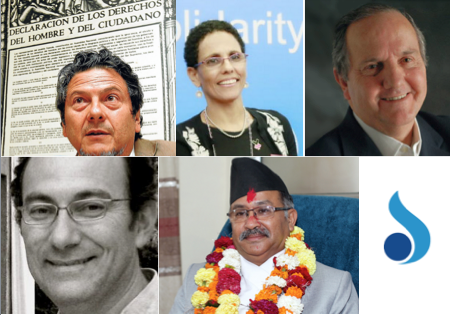
The following five new Commissioners have recently been elected: Mr Reed Brody (United States), Ms Roberta Clarke (Barbados/Canada), Professor Juan Mendez (Argentina), Mr Alejandro Salinas Rivera (Chile) and Justice Kalyan Shrestha (Nepal). It is an impressive list: Read the rest of this entry »
Front Line launches its 2016 Report on Human Rights Defenders at Risk
January 9, 2017
After a short break, this blog resumes its job of selecting and summarizing events related to Human Rights Defenders. 2016 was a horrible year for HRDs and the launch of the annual report of Front Line Defenders confirms this by reporting that “more than 1000 human rights defenders were killed, harassed, detained, or subjected to smear campaigns and other violations in 2016″.
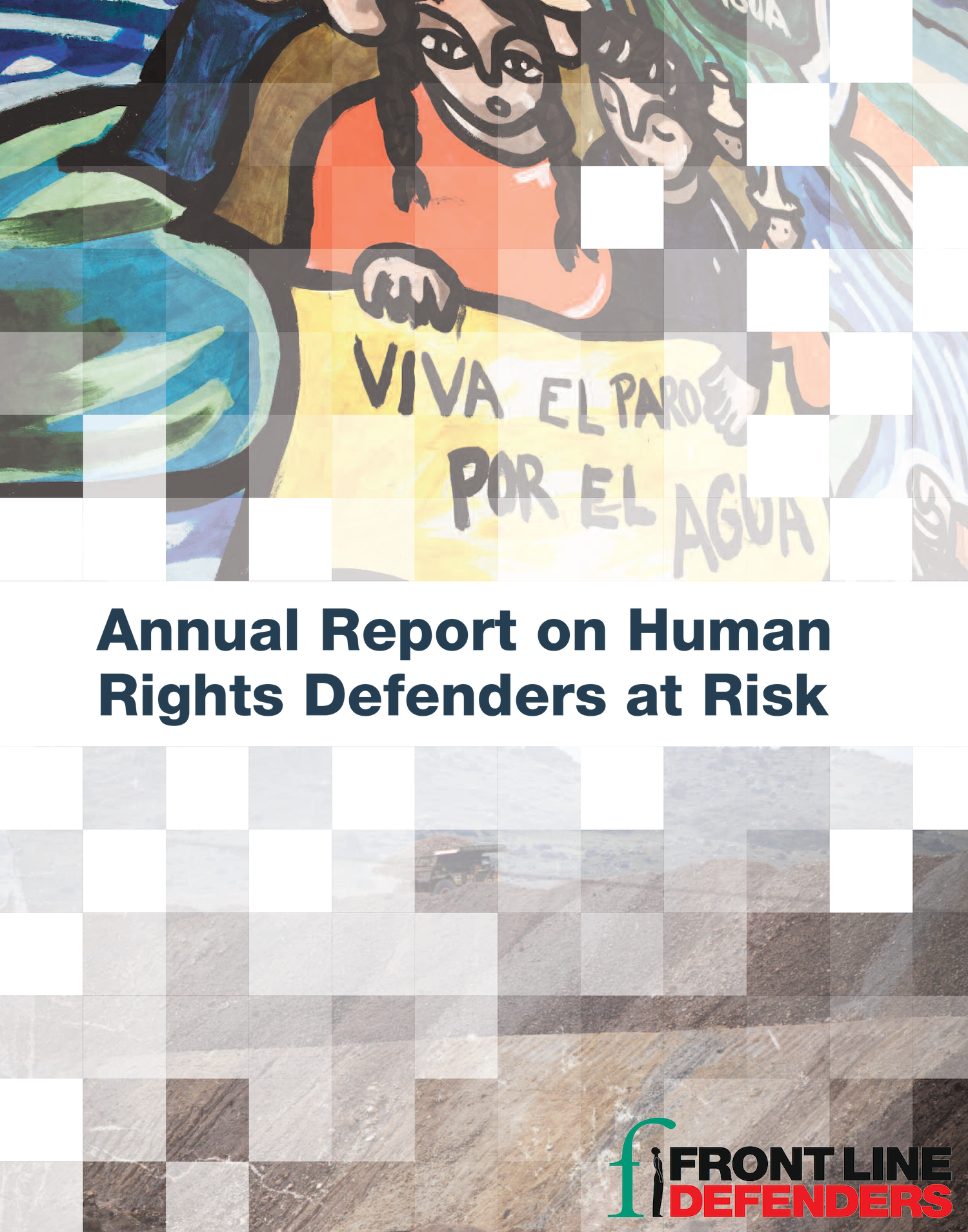
According to the report, 281 human rights defenders were murdered in 25 countries, 49 percent of whom were defending land, indigenous and environmental rights. Front Line Defenders found that in the vast majority of cases, killings were preceded by warnings, death threats and intimidation which, when reported to police, were routinely ignored. In addition to killings, over half of the cases reported by Front Line Defenders in 2016 concerned criminalisation, a tactic which the organisation calls “the first choice of governments to silence defenders and to dissuade others”.
For other post on Front Line last year, see: https://humanrightsdefenders.blog/category/front-line/page/4/
12 January: Community Discussion by HURIDOCS on Managing human rights contacts
January 9, 2017
 From mobilizing supporters, to organizing interviews, to fundraising, to persuading decision-makers, relationships are at the heart of human rights work. This is why it’s so important to have a system to document and manage these relationships. There are many Constituent Relationship Management (CRM) systems out there to help manage this information, but human rights groups often require additional attention to security, sustainability, and other custom features. So what CRM systems are human rights groups using today? What’s working well, and what are the challenges?
This HURIDOCS community discussion is an opportunity for CRM users, developers and advocates to share their experiences, knowledge and advice on contact management. A summary of the discussion will be written and shared on the HURIDOCS website.
When: 12 January 2017 at 4pm GMT
Where: Watch the webinar below from the embedded Hangout On Air, and participate via Twitter.
Who: open to anyone who wants to learn more about managing human rights contacts
So far, HURIDOCS has recruited human rights practitioners to present on their experiences using:
CiviCRM
Civi (a CiviCRM distribution)
Salesforce
ActionKit
If you have CRM experience you want to share, please contact: kristin@huridocs.org! To ask questions or make comments, use the #HURIDOCS hashtag on Twitter:
Source: Community Discussion: Managing human rights contacts | HURIDOCS
Palestinian human rights defenders continue to be persecuted
December 21, 2016Meanwhile, Israeli authorities handed Amro 18 charges, ranging from “insulting a soldier” to “assault,” and “participation in a rally without a permit,” with some of the charges dating back to 2010. … “This relatively unusual practice of bringing up stale charges, which were not pursued many years ago, strongly suggests that Mr. Amro is being unfairly targeted due to his legitimate and peaceful human rights work,” the UN experts noted in Saturday’s statement. The UN experts said Amro’s current trial was part of a “concerted pattern of harassment and intimidation by the Israeli authorities aimed at inhibiting his work as a human rights defender.” Amro faces up to three years in prison. His attorney, Gabby Lasky, has submitted a motion to have 14 of the 18 charged dismissed on the grounds that those charges are several years old and in some cases the charges were already investigated and closed without indictment. Issa Amro’s arrest has garnered international attention—many see it as one of the most serious examples of Israel’s intent to clamp down on all forms of resistance—violent or non-violent. The hearings promise to be a landmark legal battle over what Israel will permit in terms of peaceful protest and the consequences that face those who engage in it. In 2010 he was named Human Rights Defender of the Year for Palestine by the Office of the United Nations High Commissioner for Human Rights (OHCHR), in 2011 he was a guest of the US State Department as part of their International Visitor Leadership Program. In a 2015 op-ed he wrote for The Guardian, Amro explained how he became involved in activism:“I read books by Martin Luther King, Mahatma Gandhi and Nelson Mandela. I became convinced that their non-violent method was the best strategy for community resistance.” Magdalena Mugrabi, Amnesty International’s Deputy Regional Director for the Middle East and North Africa says “Issa Amro has faced a sustained campaign of harassment and assault at the hands of the Israeli military and settlers because of his activism. His case is emblematic of the climate of increasing hostility towards activists who protest the settlements, which are illegal under international law.” She added, “The deluge of charges against Issa Amro does not stand up to any scrutiny. In their determination to silence him and stifle his human rights work, the Israeli authorities have apparently even reopened a closed case file. If he is convicted we will consider Issa Amro a prisoner of conscience.”

The Special Rapporteurs also recalled the case of Hasan Safadi, media coordinator for Addameer human rights organization, whose three-month administrative detention order was renewed for an additional six months on 8 December. On 13 December Front Line issues an update on the extension of his administrative detention with an additional six months [Hasan Safadi was due to be released on 10 December 2016 from the Negev Desert (Ktziot) prison – where he is currently being held. Hasan Safadi has been in detention since 1 May 2016. – https://www.frontlinedefenders.org/en/profile/hasan-safadi]. On 27 October 2016 Hasan Safadi was sentenced to three months and one day imprisonment for visiting Lebanon, a country that is considered an enemy State under Israeli law. He had been placed in administrative detention on 1 May 2016 upon returning from an Arab youth conference in Tunisia.
The UN statement 0f 16 December went on to mention the case of Salah Khawaja, a member of the Stop the Wall Campaign, who was arrested in October and remains in detention without charges.
Sources:
Amnesty slams Israel’s detention of Palestinian human rights defender – Middle East Monitor
http://www.huffingtonpost.com/david-palumboliu/israel-puts-celebrated-_b_13590812.html
http://ohchr.org/EN/NewsEvents/Pages/DisplayNews.aspx?NewsID=21041&LangID=E
http://www.ohchr.org/EN/NewsEvents/Pages/DisplayNews.aspx?NewsID=16906&LangID=E
Fake news also in the human rights arena: who would give a Human Rights award to Duterte?
December 21, 2016Republished as some readers could not properly see the post: This blog has a special interest in human rights awards, so I noted with dismay that according to some obscure sources President Duterte of the Philippines had been given an international human rights award. The announcement looked like this:
“International Human Rights Committee to Award President Duterte = AUGUST 18, 2016

Philippine President Rodrigo Duterte has been named as one of the honorees in the annual Human Rights Award by the International Human Rights Committee.”
Unable to find any confirmation elsewhere I wrote to the American Bar Association which has an award and an ‘International Human Rights Committee’. No reply received yet but in the meantime I saw yesterday the “Fake news alert!” published on December 14, 2016 in Busted. And indeed it seems that fake news has also entered the human rights awards arena:
Various Facebook Duterte supporter groups such as “Duterte Warriors”, “Duterte News Global”, and “Duterte Media” have been sharing news of President Duterte being awarded by the International Human Rights Committee. According to the news article sourced from Trending News PH, President Rodrigo Duterte was named as one of the honorees in the annual Human Rights Award held by the International Human Rights Committee. This “committee” was said to have bestowed this award to Duterte for his “exemplary service in the promotion of human rights.” However, the said article is not linked to any other source and no major news outlets have reported on the headline. Furthermore, upon closer inspection, there are numerous inconsistencies on the dates the groups posted the article. The article itself was posted 4 months ago while the groups posted on September and October, with the “Duterte Warriors” group sharing the post twice, once in August and another in September. What was the point of posting the same news article more than once and on different months?
Moreover, the photo used in the article was originally a photo taken during LPU’s Quality Awards Convocation wherein Duterte, still a mayor that time, was awarded as the Most Outstanding Alumnus of Lyceum of the Philippines University in 2015. [http://newsinfo.inquirer.net/677750/duterte-is-lpus-outstanding-alumnus]
Even if it would turn out that some biased or incompetent committee did bestow a minor award, it does not change the fact that Duterte has issues with human rights defenders for the way he is conducting his war on drugs. In fact, recently, Human Rights Watch and other NGOs demanded that Duterte should renounce his earlier statement that seemed to threaten the lawyers of alleged drug dealers. “Duterte’s threats against lawyers and human rights defenders constitute a dangerous extension of his abusive ‘war on drugs’ that has already resulted in more than 5,000 killings,” HRW deputy Asia director Phelim Kine said. See also: https://humanrightsdefenders.blog/2016/11/02/duterte-is-wrong-human-rights-defenders-are-beautiful/
See also Front Line Defenders on 1 December: “On 28 November 2016, President Rodrigo Duterte threatened (<http://newsinfo.inquirer.net/848933/duterte-threatens-to-kill-human-rights-activists-if-drug-problem-worsens)> to kill human rights defenders in the Philippines in his speech in Malacañang. “The human rights (defenders) said I ordered the killings. I told them, ‘OK Let’s stop. We’ll let them (drug users) multiply so that when it’s harvest time, more people will die, I will include you because you are the reason why their numbers swell,” referring to human rights defenders.`
Sources:
Busted: International Human Rights award given to Duterte? Fake news alert!
EU adopts Urgent Resolution on Ilham Tohti and the Tibetan Buddhist Academy
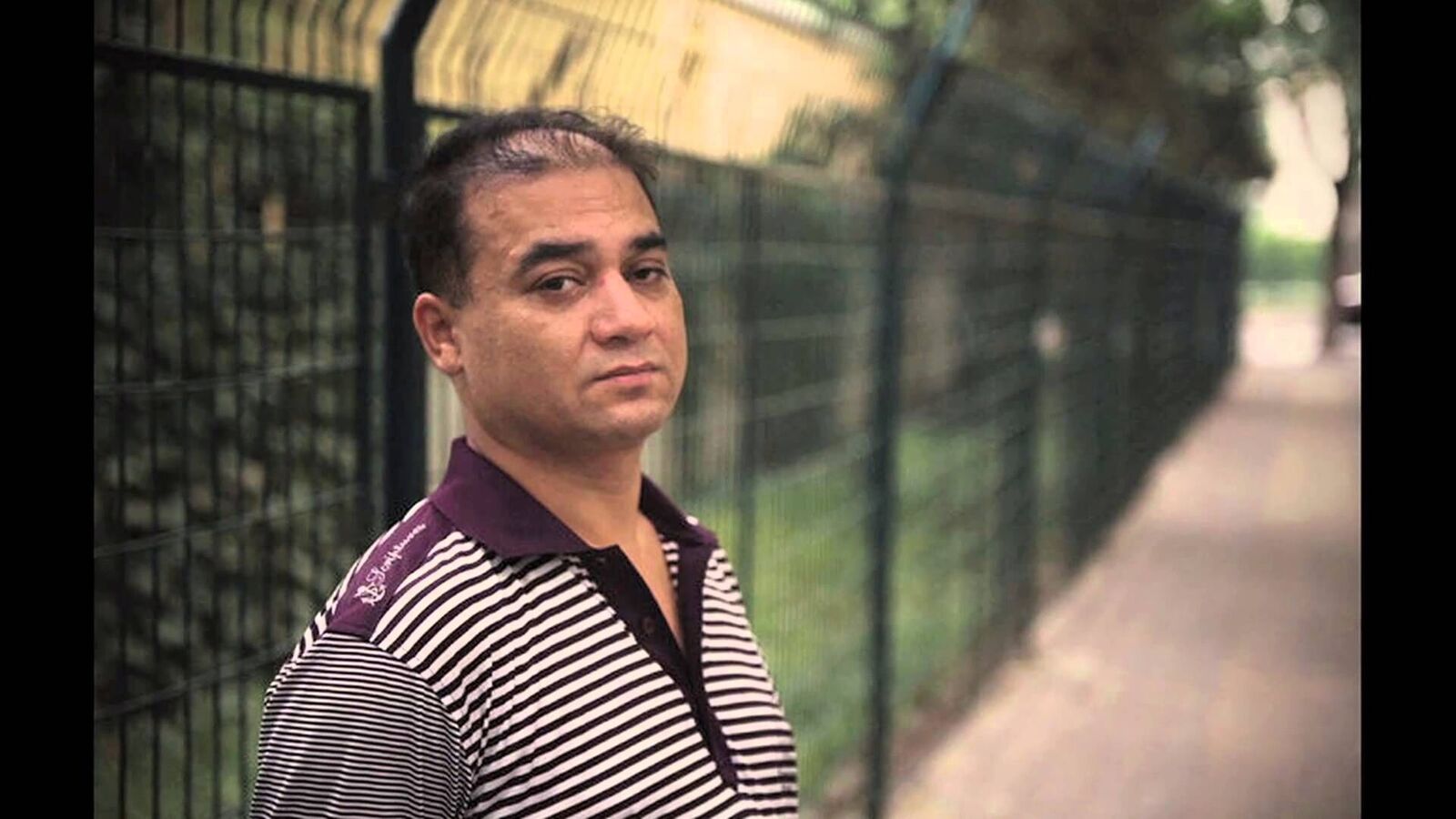
December 15, 2016Just now, on 15 December 2016, the European Parliament adopted an urgent and substantive resolution on breaches of human rights, democracy, and rule of law in China. The resolution condemns in particular exactions committed in East Turkestan and Tibet against the Uyghur and Tibetan populations respectively and addresses the cases of the imprisonment of economics professor Ilham Tohti (MEA Laureate 2016) and the dismantling of Larung Gar, the largest Buddhist institute in the world. The EU demands Tohti’s immediate and unconditional release, recalling his scholarly work on Uyghur-Han relations. [https://humanrightsdefenders.blog/2016/10/11/hot-news-ilham-tohti-chinas-mandela-wins-2016-martin-ennals-awad/]
The resolution below (in full) was published by the European Parliament: Read the rest of this entry »

