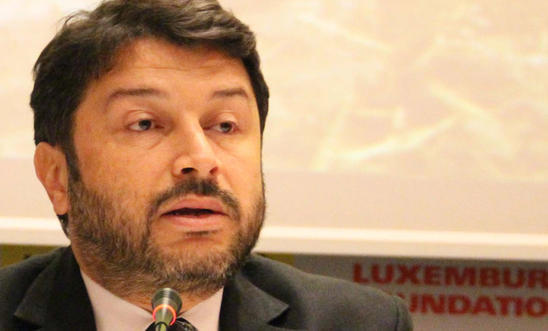
This side event will take place during the UN Forum on Business and Human Rights. The event will bring together multiple stakeholders to discuss how to remedy, redress and prevent attacks against human rights defenders working on business and human rights.
With Mugabe’s departure there is light at the end of the tunnel but there is a lot of cleaning up to do. Two recent opinion pieces make the point:
‘Mugabe’s departure offers Zimbabwe an opportunity to make a break from its past,’ (Zinyange Auntony, AFP)
Deprose Muchena, Amnesty International’s regional director for Southern Africa, wrote a piece in the Mail & Guardian of 23 November 2017 under title “From reconciliation to repression: Mugabe’s painful legacy“.
Mandipa Ndlovu, researcher and academic, wrote on the same day in the Huffington Post: “Is There A Future Of Sustainable Peace And Human Rights For Zimbabwe?”
Excerpts of the two articles below:
Muchena traces first Robert Mugabe’s political career that saw early successes ultimately wiped out by a litany of human rights abuses.
Mugabe started well in his early years as leader of Zimbabwe following the transition from British colonial rule. He oversaw heavy investment in Zimbabwe’s social services. Areas including health and education saw dramatic improvements, with the country still enjoying one of the highest literacy rates in Africa. The results of this significant investment in education are there for everyone to see. But Mugabe later undermined his own legacy. During his 37 years in power, he presided over the brutal repression of political opponents, established a culture of impunity for himself and his cronies, and his government implemented a series of policies that have had disastrous consequences for Zimbabweans…Mugabe began his political life fighting against injustice. Imprisoned, and later exiled for his political activities, he was one of more than 900 prisoners of conscience in Zimbabwe adopted by Amnesty International between 1965 and 1979.
After independence political opponents, (repression of Joshua Nkomo’s Zimbabwe Africa People’s Union, military crackdown across Matabeleland and Midlands provinces) ……With nobody held accountable for the killings, a dangerous precedent of impunity was set early on in Mugabe’s reign. It was one he went on to exploit time and again.
Throughout his presidency, general elections were characterised by spikes of serious human rights violations and abuses by state security agents and Zanu-PF activists. Opposition supporters suffered torture, harassment, intimidation and death…A wave of violence unleashed by the army against those suspected of voting for the MDC ensured that Mugabe won by a comfortable margin after the second round of votes was counted.
An increasing reliance on security services to suppress dissenting voices in and outside his party became a hallmark of Mugabe’s rule. Human rights defenders, journalists, those with dissenting views and opposition party activists were locked up on politically motivated charges or under draconian laws. Some were tortured or “disappeared”. Much early progress made on economic, social and cultural rights was wiped out by a series of disastrous government policy decisions. Carried out in 2005, Operation Murambatsvina — a Shona word for “drive out trash” — was one of the most devastating forced evictions in Zimbabwean history…
Although land reform was clearly needed and resulted in some legitimate large-scale redistribution, it was also used as a system of patronage. It rewarded Mugabe’s supporters with land but denied it to those considered supporters of opposition parties. Escaping repression and a shrinking economy, three million Zimbabweans have left the country since 2000…
Mugabe’s departure offers Zimbabwe an opportunity to make a break from its past. Zimbabwe’s future lies in renouncing impunity, addressing the human rights violations of the past, ensuring reparations for the victims and respecting the rule of law. The next generation of leaders must commit to upholding the Constitution and live up to Zimbabwe’s international and regional human rights obligations.
———————–
Supporters of Zimbabwe’s former vice president Emmerson Mnangagwa await his arrival in Harare, Zimbabwe, November 22, 2017. PHILIMON BULAWAYO/ REUTERS
Mandipa Ndlovusays that “during Mugabe’s reign, over one-third of the population (4-million people) was forced to relocate to abroad to seek better opportunities for them and their families, as well as escape the iron-fisted rule of the former president. The end of an era marked the beginning of a newfound hope that released dormant life in the Zimbabwean community both in the country and around the world.”
That long-time Mugabe ally, Emmerson Mnangagwa, will become the new president.. has been welcomed in regards to change for the southern African country, but must be engaged with from a nuanced position regarding the sustainability of human rights and good governance in the country…Zimbabweans are past bitterness and anger, we just want recognition and acknowledgement of past wrongs. This is the only way the country can move forward.
The fact is that Britain’s and the West’s policy was that of turning a blind eye to the black Zimbabwean persecutions of 1980 to 1987 and only reacted with economic sanctions when white-occupied farms were invaded in 2000. Moreover, the legacy of colonialism up until this point had remained one which the Zimbabwean people now realise was exploitative. This, for many Zimbabweans, highlights the interests of which demographic of the Zimbabwean population they seek to strengthen. This lack of historical recognition remains a sticking point to the black population of Zimbabwe, who have both lived through and experienced the effect of economic sanctions placed on the country as a result of Mugabe’s rule. One which needs to be rectified…
It would therefore be a disservice to the future of human rights to disregard the need to address this. Zimbabweans need to have these fears allayed through the initiation of both restorative and distributive justice in order to legitimise real change. In this, however, it is imperative to note that Zimbabweans are past bitterness and anger, we just want recognition and acknowledgement of past wrongs. This is the only way the country can move forward.
.. We have not forgotten people such as Itai Dzamara, whose whereabouts still need to be accounted for. It is not enough to remove the face of fear and violence when the potential for the re-engagement with the system still exists under untainted structures of governance. It is imperative that the narrative of ‘Operation Restore Legacy’ under the new regime does not gloss over the grief of loss (material, physical and in time) as linked to trauma and its subsequent memory..
In the new Zimbabwe, there should not be room to romanticise about the past and its legacies. The culture that tip-toes around the acceptability of violence within the public sphere for the perpetuation of political gain must be thwarted. This can be particularly translated to the politics of grief in reconciling the “violence” narrative…Regardless of what reforms are dormant in Mnangagwa’s hat as he ascends to the presidency, the sentiments of cooperation and the respect of human rights expressed in his press statement on November 21 will go a long way in legitimising bodies. These are the ideals to which the Zimbabwean people must continue to hold him and his administration to account.
Taner Kılıç, Amnesty Turkey’s Chair, has been behind bars for nearly six months
As the trial of ‘Istanbul 10’ and the Chair of Amnesty Turkey resumes today 22 November 2017, more than 70 persons signed an open letter calling for the case against the 11 human rights activists to be dropped. As quite a few celebrities make missteps in the human rights area [see recently: https://humanrightsdefenders.blog/2017/11/10/helen-hunt-joins-list-of-celebrities-that-show-insensitivity-on-human-rights/ ], it is heartening to see names such as Ai Weiwei, Edward Snowden, Anish Kapoor, Catherine Deneuve, Angélique Kidjo, Indira Varma, Tim Farron, Bianca Jagger, Canon Mark Oakley, Hilary Benn, Juliet Stevenson, and Sting among the signatories.In the AI UK letter (see full text and list of signatories below), the group say they’re “proud” to add their voices to “the global demand to end this gross injustice”.
[Amnesty’s Turkey Chair, Taner Kılıç, was arrested on 6 June, jail three days later and remains in detention. Meanwhile, ten other activists, including İdil Eser, the Director of Amnesty Turkey, were detained a month later. Seven of them were remanded in Turkey’s high-security Silivri Prison for almost four months, with one remanded in Ankara’s Sincan Prison. The eight were held for almost four months and released last month at their first hearing. They are all accused of “membership of a terrorist organisation”.] See also: https://humanrightsdefenders.blog/2017/10/12/many-birthday-parties-for-jailed-human-rights-defender-in-turkey/
OPEN LETTER AHEAD OF TRIAL OF TANER KILIC AND ISTANBUL 10
On Wednesday the trial of 11 human rights defenders including including Taner Kılıç, and İdil Eser the chair and director of Amnesty International Turkey, will resume in Istanbul.
The 11 face outlandish “terrorism” charges in what can only be described as a politically-motivated prosecution aimed at silencing critical voices within the country. If convicted they could face jail terms of up to 15 years. This sends a chilling message not just to people in Turkey but around the world.
With many people unfairly imprisoned as part of the crackdown following the bloody coup attempt in Turkey – including journalists, lawyers and civil society leaders – some may ask: why focus on these 11 people? The answer is simple: when human rights defenders are silenced, all our rights are put at risk. They are the ones that stand up for us. Now we must stand up for them.
We are proud to add our voices to the global demand to end this gross injustice and to immediately and unconditionally release Taner Kılıç from jail.
The Turkish authorities must know that the eyes of the world will be on Istanbul’s central court for this trial. We will not stay silent. Defending human rights is not a crime.
Signed:
Edward Snowden, human rights activist Catherine Deneuve, actor Ai Weiwei, artist Angélique Kidjo, musician Anish Kapoor, artist Peter Gabriel, musician Francois Morel, actor Elif Shafak, author Bianca Jagger, human rights activist Juliet Stevenson, actor Indira Varma, actor Mogens Lykketoft MP, ex-President of the UN General Assembly Nacho Sanchez Amor, OSCE Human Rights Committee Chair Mirosław Wyrzykowski, Constitutional judge, Poland Dr. Shashi Tharoor MP (former UN Under-Secretary General) Ryan Gage, actor Pasha Bocarie, actor Nazanin Boniadi, actor HK, musician Sting, musician Anti-Flag, musicians C 215, artist Lucas Belvaux, film maker Laurent Gaudé, writer El Moustach/Hicham Gaoua, artist Said Salhi, Vice president of LADDH (Algeria) Salil Shetty, Amnesty International Secretary General Ken Roth, Executive Director, Human Rights Watch Claude Rolin MP (Belgium) Tanita Tikaram, musician Mohamed Fahmy, journalist Peter Greste, journalist Mark Oakley, Canon Chancellor of St Paul’s Cathedral Peter Tatchell, human rights defender Natacha Régnier, actor Franck Pavloff, writer Emily Loizeau, musician Romain Goupil, film director Nicolas Lambert, comedian Clotilde Courau, comedian David Lammy MP Caroline Lucas MP Stephen McCabe MP Tom Brake MP Catherine West MP Carol Monaghan MP Joan Ryan MP Christopher Stephens MP Clive Lewis MP Jo Stevens MP Kerry McCarthy MP Richard Burden MP Kevin Brennan MP Jim Cunningham MP Rosie Cooper MP Eleanor Smith MP Wes Streeting MP Stephen Doughty MP Daniel Zeichner MP Stephen Kinnock MP Geraint Davies MP Marie Rimmer MP Grahame Morris MP Antoinette Sandbach MP Madeleine Moon MP Tonia Antoniazzi MP Preet Gill MP Phillipa Whitford MP Sarah Wollaston MP Gareth Thomas MP Emma Dent Coad MP Hilary Benn MP Tommy Sheppard MP Olivier Py, France Paul Rondin, France Monika Płatek, President of the Polish Association for Legal Education Adam Bodnar, former board of United Nations Fund for Victims of Torture Mikołaj Pietrzak, former Chair of the Human Rights Council of the Polish Bar Council Krzysztof Śmiszek, co-founder of Polish Society of Anti-Discrimination Law
Jiang Tianyong, 46, who had taken on many high-profile cases including those of Falun Gong practitioners, Tibetan protesters and victims of the 2008 contaminated milk powder scandal, before being disbarred in 2009, received a two year jail sentence. He was convicted on the spurious grounds of “inciting subversion” on Tuesday. Jiang’s sentence is the most high-profile jailing since Xi confirmed his status as China’s most powerful leader in a generation at a Communist Party congress last month. Jiang’s family has been unable to contact him since his sudden disappearance last November en route from Beijing to Changsha, where he had gone to inquire about detained human rights lawyer Xie Yang.
“Jiang Tianyong has long been infiltrated and influenced by anti-China forces and gradually formed the idea of overthrowing the existing political system of the country,” the judge said. The court said he had gone abroad for training on how to accomplish the goal and “applied for financial support from foreign anti-China forces”.
German Ambassador to China Michael Clauss expressed “serious concerns about the lawfulness of the legal proceedings”, saying in a statement the trial’s circumstances “certainly called into question the fairness of the verdict”. Germany will “continue to take an active interest in his fate,” he added.
The United Nations special rapporteur on human rights, Michel Forst, has said he feared Jiang’s previous disappearance was in part retaliation for the lawyer’s assistance to UN experts.
Jiang’s sentence was “a textbook example of the Chinese authorities’ systematic persecution of those who are brave enough to defend human rights in China today,” said Amnesty International China researcher William Nee. It was likely to have a “chilling effect” on other activists, since the evidence used against him was so minimal: critical social media comments, attendance of overseas trainings, and showing moral support to other human rights defenders facing trials.
Jiang’s wife, Jin Bianling, said none of the lawyers she had hired were allowed to see him and she only learned in August that the court had appointed one. “I contacted him continuously, but as soon as he heard I was Jiang Tianyong’s wife, he would immediately hang up the phone,” Jin, who fled to the US in 2013, told AFP by telephone. Four wives of lawyers detained in the 709 crackdown who came to show support were harassed by plainclothes agents and also denied entry in Changsha. “When I heard all the charges they listed against him, I felt my husband was very righteous. They made me greatly admire him,” she said. “I think history will remember what my husband has done.”
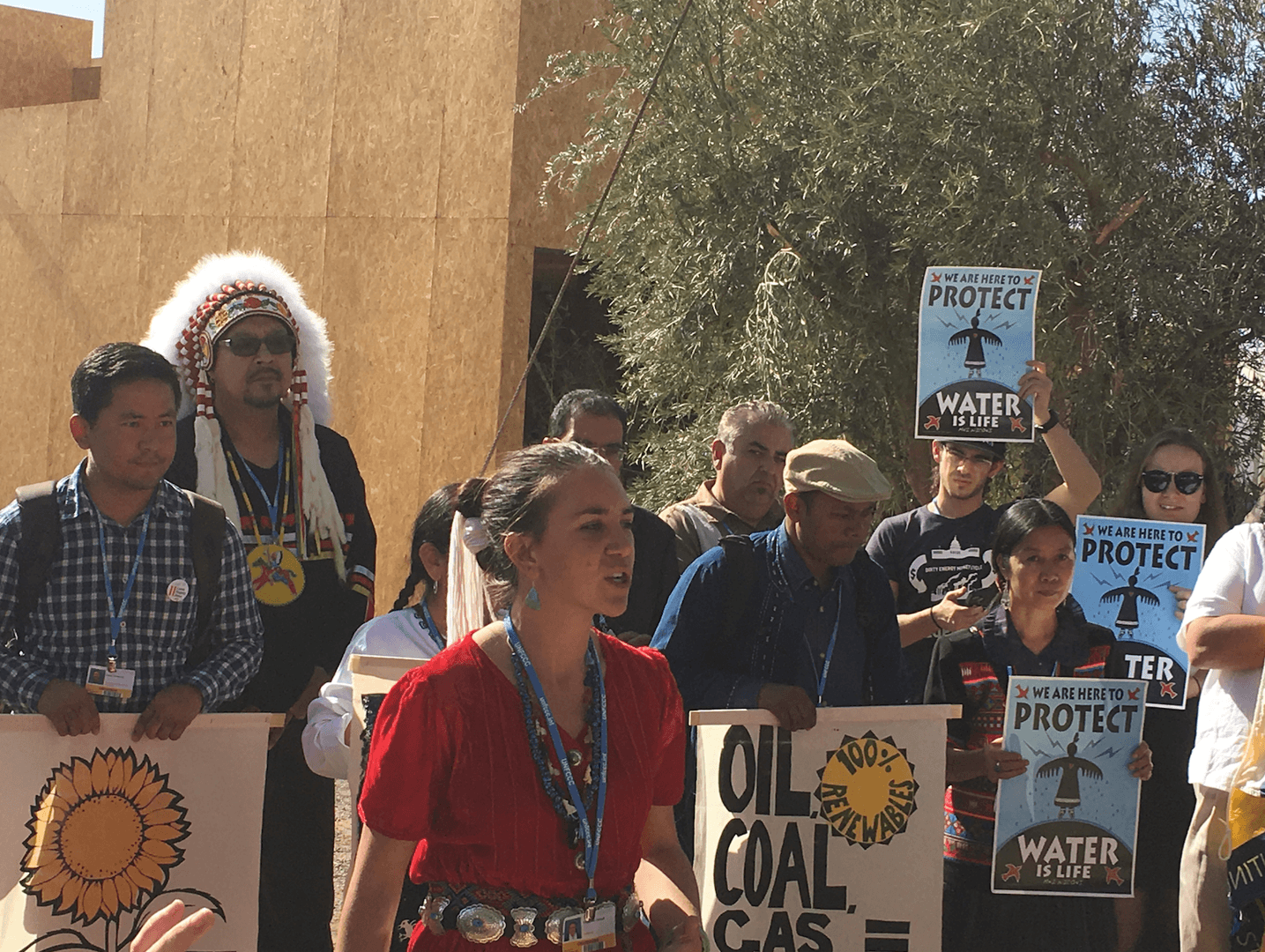
The talks wrapped up on Friday, and during the last two weeks, advocates for gender equality and indigenous peoples made their voices heard and won hard-fought battles to better respect their rights. Notably, governments agreed to create a platform to promote the participation of indigenous peoples in United Nations climate responses, and adopted a Gender Action Plan that aims to better integrate gender equality in climate change policies.
Just when the talks were nearing their end, human rights were pushed to the fore when Fijian prime minister and president of the climate talks, Frank Bainimarama, convened a high-level event about the importance of rights in climate negotiations. Why was this such a big deal? Because never before has any government presiding over the talks hosted an official event on human rights.
Bainimarama has also long been among those who have been silent on human rights issues. But on Thursday, he announced that integrating human rights in the implementation of the Paris Agreement was an important element of Fiji’s presidency, which will continue through the coming year. Costa Rica’s environment minister, Edgar Gutiérrez-Espelata, also proposed concrete ways to integrate rights into the current negotiations about the so-called Paris Rulebook. For example, governments could reference human rights obligations in climate change action plans and climate negotiators could agree to build capacity among states on promoting human rights in climate action.
The authors realize that of course, “such commitments are worth little unless governments are willing to turn rhetoric into reality. If they are serious about fighting climate change, governments should also do more to integrate the protection of human rights in climate policies, while defending the rights of people working to protect the environment.”
Similar ideas are to be found in the “Opening speech at seminar on human rights defenders” given the the Norwegian State Secretary Audun Halvorsen in Oslo, on 30 October for a seminar on “Environmental human rights defenders under threat from business operations“. The seminar was organised by Amnesty International Norway and Rainforest Foundation Norway.
The NOW! campaign, founded by 14 human rights organizations, calls for the immediate release of 165 prisoners of conscience in Vietnam. The campaign has established a comprehensive online database containing information about Vietnam’s prisoners of conscience. According to the database, Vietnam’s prisoners of conscience included bloggers, journalists, environmentalists, students, farmers, and workers who were arrested for their peaceful activism. Together, these men and women are serving 955 years and one month in prison, followed by 204 years under house arrest. Most of them were charged with violating article 79 of the criminal law, “plotting to overthrow the government”, and article 88, “conducting propaganda against the state”. But Civil Rights Defenders, one of the members of the NOW! campaign, said that the number of prisoners of conscience could be higher. [see also earlier post: https://humanrightsdefenders.blog/2016/01/14/assaults-on-human-rights-defenders-on-the-rise-in-vietnam/]
A lettersigned by 17 civil society organizations urged leaders who attended the 2017 summit of the Asia-Pacific Economic Cooperation (APEC) in Vietnam to raise the issue of human rights violations committed by state forces. The letter informed APEC leaders that Vietnam has detained at least 25 peaceful activists and bloggers since last year. “This crackdown is contrary to the goal of “Creating New Dynamism, Fostering a Shared Future” which is the stated theme of this year’s APEC gathering. Arbitrary detention, censorship, and state-sponsored violence against activists and human rights defenders are not only an affront to our common humanity but a grave violation of international human rights laws and standards. We believe it is in the strong interest of APEC and of the international community to speak out against the widespread and systematic violations of human rights violations in Vietnam.”
Nine human rights groups launched the #StopTheCrackdownVNcampaign decrying the crackdown of bloggers and activists in recent months and the harsh prison terms handed out to critics of the state. Don Le, a writer and member of Viet Tan political party, explained how the notorious articles 79 and 88 of the law are used by authorities to silence citizens: The law also allows authorities to filter, block or temporarily shutdown networks on the basis of any information that may be seen to “incite” mass gatherings that disturb national security and order. Given the Vietnamese government’s broad interpretation of national security, we might expect to see more attacks and shutdowns aimed at independent media and bloggers and arrests of peaceful community mobilisers.
But Vietnam is not easily impressed as the recent case of reprisals shows: Front Line Defenders reports that three human rights defenders were briefly arrested after meeting the EU Delegation in Hanoi. [On 16 November 2017, human rights defenders Pham Doan Trang, Bui Thi Minh Hang and Nguyen Quang were arrested by police after attending a meeting with the European Union Delegation in Hanoi to discuss human rights issues ahead of the EU – Vietnam Human Rights Dialogue, scheduled for 1 December 2017. After being kept incommunicado without access to legal representation, the human rights defenders were released. They remain under surveillance.] From Line adds that: Authorities in Vietnam have a habit of tightening the grip over human rights defenders and civil society ahead of international meetings. During the APEC Summit in Danang between 6 and 10 November 2017, and afterwards, during the state visits of U.S. President Donald Trump and Chinese President Xi Jinping, several human rights defenders and activists were kept under house arrest and heavy surveillance. Reports also state that human rights defenders were harassed by policemen in plainclothes to prevent them from meeting with international officials or organising demonstrations.
The Office of the UN High Commissioner for Human Rights issued a statement in July 2017 expressing concern about the detention and persecution of citizen journalists: We urge the Vietnamese authorities to immediately release all those detained in connection with their exercise of their rights to freedom of expression, and to amend the overly broad ill-defined laws that are used – under the pretext of national security – to crack down on dissent.
A former ISHR trainee, Karla Avelar defends the rights of LGBTI people. She is a finalist of this year’s Martin Ennals Award for Human Rights Defenders. In an exclusive interview with ISHR, on 6 November, she talked about her award nomination and what it means to be a trans woman and human rights defender in El Salvador. See also the THF film on her work:
Human rights defenders from across Africa were in The Gambia undergoing a three-day training to consolidate their knowledge and skills on relevant human rights instruments for effective monitoring at the continental and international levels. The training on international and regional human rights mechanisms, was held from 25 – 29 October 2017, was organised by the African Commission on Human and People’s Rights, CIVICUS, ISHR, ACHPR and the United Nations Human Rights Council. The training was held on the margins of the Forum on the Participation of NGOs in the 61st Ordinary Session of the African Commission on Human and Peoples’ Rights and 36th African Human Rights Book Fair.
The training was designed to sharpen the knowledge and skills on the procedures for the promotion and protection of human rights in Africa. It was divided into three main parts: the international and the regional systems and mechanisms for the two days, and freedom of association and assembly, the SDGs, and human rights monitoring. Hannah Forster of the African Centre for Democracy and Human Rights Studies (ACDHRS – http://www.acdhrs.org) said: “This, we believe, will enable us to better understand opportunities available as we engage governments in the fulfillment of their mandates to promote and protect human rights and it will equip us with the knowledge and skills to lobby our governments to domesticate and implement their commitments while assisting participants to frame a strategy as they seek redress for violations of human rights”.
In this short video, Basil Fernandoexplains the preparation for updating of the Asian Charter for Human Rights – A People’s Charter which was launched in Gwangju, South Korea in May 1998. The Asian region has never been able to agree on a regional system (such as in Europe, the Americas and Africa). This Video explains the purpose for which this People’s Charter was adopted, the process of consultations which led to the drafting of the Charter, the consultations held and the final adoption. The Asian Charter was launched as a joint effort of the Asian Human Rights Commission, a regional organisation based in Hong Kong, and the May 18 Memorial Foundation based in Gwangju, South Korea. The Video has been produced by Amila Sampath.
If you are – or know – a human rights defender keen to increase interaction with the UN system, apply now for the 2018 edition of ISHR’s Human Rights Defenders Advocacy Programme!
The training will take place in Geneva between 11 and 22 June 2018 and provides defenders with opportunities to put their advocacy skills directly into action at the 38th session of the UN Human Rights Council. Get a taste of the programme here.
ISHR’s Human Rights Defender Advocacy Programme (HRDAP) equips defenders with the knowledge and skills to make strategic use of the international human rights system. It also provides an opportunity for participants to directly engage in lobbying and advocacy activities at the UN level to effect change on the ground back home.
As well as receiving training modules on all the UN human rights mechanisms from a range of experts, participants will also have the opportunity to build networks in Geneva and around the world, carry out lobbying of UN member States and UN staff, and learn from peers from a range of regions working on a range of human rights issues.
At the end of last year’s training, 100% of participants were either “very satisfied” or “satisfied” with the overall programme, and they all also felt that they would be able to apply what they learnt to their own day-to-day work. ISHR will look to build upon this success in 2018.
Participants will take part in:
A short online learning component, prior to face-to-face training, to enable you to consolidate your existing knowledge and develop your advocacy objectives;
Intensive training in Geneva during June, to coincide with the 38th session of the Human Rights Council. The training will focus on ways to effectively use international human rights mechanisms and to influence outcomes;
Specific advocacy at Human Rights Council sessions and other relevant meetings, with regular feedback and peer education to learn from the experiences, including expert input from leading human rights advocates.
This programme is directed at experienced human rights defenders in non-governmental organisations, with existing advocacy experience at the national level and some prior knowledge of the international human rights system.
If you are interested in applying for ISHR’s training programme, please read the call for applications to check that you comply with the requirements, and apply before midnight Geneva time on 11 December 2018. The link to the online application form can be found in the call for applications. For more information, write to hrdap2018@ishr.ch.