Camara Salimata SY, is the vice-president of Association des Femmes Chefs de Famille (AFCF – Association of female family heads). She talked to ISHR about her work on women’s rights and political participation in Mauritania. She also highlights the risks and challenges facing her and calls for more respect from the African Commission and African States for their human rights obligations.
Victor Nanklan Touré is the president of NGO ‘Club Union Africaine Côte d’Ivoire’ which is mainly working on statelessness and land issues. A human rights advocate for over 15 years he participated in the civil society training organised in Banjul from 15 to 16 October 2016 by ISHR, the Office of the High Commissioner for Human Rights and the African Centre for Democracy and Human Rights Studies. On this occasion he presented his work to ISHR and shared a message towards African political leaders.
The interview mentioned above is unfortunately only available in French.
Andrea Ixchíu Hernandez is an indigenous rights defender working for several organisations in Guatemala. She talks – in English – to ISHR (International Service for Human Rights) about her work to build up community media so the voices of indigenous people are heard and the violations they face are publicly unveiled.
In 2012 – in the run up to the London Olympics – the Playfair 2012 Campaign (supported by War on Want and others) highlighted the appalling experiences of workers making Adidas official Olympic and Team GB goods in China, Sri Lanka and the Philippines. “Around the world 775,000 workers, mainly women, in 1,200 factories across 65 countries make Adidas products. Almost all of the jobs are outsourced to factories in poorer countries, yet through Adidas’ buying practices the company has enormous influence over their working conditions, and ultimately their lives. In the run up the London 2012 Olympics research has exposed the harsh reality of life for these workers.” The campaign demanded Adidas to end worker exploitation. playfair2012.org
In a report of 11 March 2015 on Labor Rights Abuses in Cambodia’s Garment Industry Human Rights Watch noted that brands can do more and said “For example, Adidas wrote to Human Rights Watch that it first started privately disclosing its supplier list to academics and nongovernmental organizations (NGOs) in 2001 and moved to a public disclosure system in 2007.”
In an article in Open Democracy of 17 June 2015 Mauricio Lazala and Joe Bardwell under the title: “What human rights?” Why some companies speak out while others don’t.” state that: “More recently, civil society has called on FIFA sponsors to respond to human rights concerns at construction sites for the Qatar 2022 World Cup. So far, Adidas, Coca-Cola and Visa have issued statements supporting workers’ rights in the country”
In an article published on 16 November 2015, ISHR Director Phil Lynch explored the role, responsibility and interest of business when it comes to supporting human rights defenders and protecting civil society space. He mentions Adidas in the following context: The fourth and final category of actions, perhaps the most important but also the least common, involves business actively advocating and seeking remedy for human rights defenders and against laws and policies which restrict them. Such action could be private, as I understand to be the predominant approach of Adidas. It could also be public, such as the open letters and press statements issued by Tiffany & Co and others for the release of Angolan defender and journalist Rafael Marques
On 31 December 2015, the Business and Human Rights Resource Centre listed in its “KnowTheChain” (a ranking of 20 apparel and footwear companies on efforts to address forced labour in the supply chain) Germany-based Adidas as number one out of 20.
On 21 June 2016 Adidas published its policy on HRDs: “The Adidas Group and Human Rights Defenders“. As there is such a dearth of corporate policies specifically on human rights defenders, here follows the key part in quote:
The threats faced by human rights defenders come in many forms – physical, psychological, economic, and social – and involve the interaction of many factors (poor governance, the absence of the rule of law, intolerance, tensions over development issues, etc.) and can be triggered by different actors, both private and State.
In his report to the General Assembly in 2015, the UN Special Rapporteur on the situation of human rights defenders recommended that both States and businesses should play an active role in supporting and promoting the role of HRDs working in their sectors. This should include, for example, speaking out when human right defenders are targeted for their corporate accountability work. Businesses must also cease and abstain from supporting any actions, directly or indirectly, which impinge upon defenders’ rights to freedom of expression, association and assembly.
The adidas Group has a longstanding policy of non-interference with the activities of human rights defenders, including those who actively campaign on issues that may be linked to our business operations. We expect our business partners to follow the same policy; they should not inhibit the lawful actions of a human rights defender or restrict their freedom of expression, freedom of association, or right to peaceful assembly.
We value the input and views of all stakeholders and we are willing, and open, to engage on any issue, be this related to our own operations or our supply chain. Often, our engagement with human rights defenders is constructive, especially where we identify areas of shared concern. For example, with respect to transparency and fair play in sports, or environmental sustainability, or the protection of worker rights in our global supply chain. In these instances, we may actively support the work of the HRD and derive shared value from our joint endeavours in, say, improving working conditions, safety, or the environment.
Surendra Pratap works for the Centre for Workers’ Education in India. He talked to ISHR about his activities promoting workers’ rights and trade unions. This video clip was published in the ISHR Monitor of December 2016.
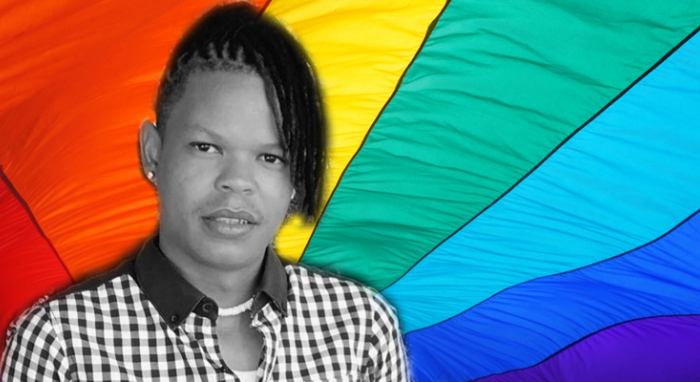
Jacobus was a human rights defender from Namibia who proudly defended and promoted the rights of of lesbian, gay, bisexual, trans and intersex people via Pan Africa ILGA. ISHR reported this in their ISHR Monitor of December 2016.
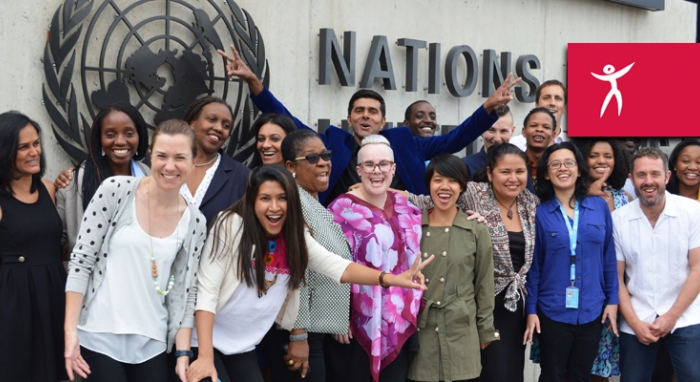
The International Service for Human Rights (ISHR) is calling for applications for its flagship Human Rights Defenders Advocacy Program in 2017 – the extensive training programme for human rights defenders. The training will take place in Geneva between 29 May and 9 June 2017 and provides defenders with opportunities to put their advocacy skills directly into action at the 35th session of the UN Human Rights Council.
ISHR’s Human Rights Defender Advocacy Programme (HRDAP) equips defenders with the knowledge and skills to make strategic use of the international human rights system. It also provides an opportunity for participants to directly engage in lobbying and advocacy activities at the UN level to effect change on the ground back home. As well as receiving training modules on all the UN human rights mechanisms from a range of experts, participants will also have the opportunity to build networks in Geneva and around the world, carry out lobbying of UN member States and UN staff, and learn from peers from a range of regions working on a range of human rights issues.
Participants will take part in:
A short online learning component, prior to face-to-face training, to enable you to consolidate your existing knowledge and develop your advocacy objectives;
Intensive training in Geneva during June, to coincide with the 35th session of the Human Rights Council. The training will focus on ways to effectively use international human rights mechanisms and to influence outcomes;
Specific advocacy at Human Rights Council sessions and other relevant meetings, with regular feedback and peer education to learn from the experiences, including expert input from leading human rights advocates.
This programme is directed at experienced human rights defenders in non governmental organisations and national human rights institutions, with existing advocacy experience at the national level and some prior knowledge of the international human rights system. If you are interested in applying for ISHR’s training programme, please read the call for applications to check that you comply with the requirements. The link to the online application form can be found under point 5 of the call for applications.
The call for applicants can be found here. For more information, write to hrdap2017@ishr.ch.
Travel bans on human rights defenders are popular with all kind of autocratic regimes but seem to enjoy special status in the Middle East. The video clip above (part of a joint campaign by AI and HRW) focuses on Egypt and so does the statement by 6 other NGOs issued on 9 November. They strongly condemn the travel ban against Malek Adly, prominent Egyptian human rights lawyer and director of the Lawyers Network of the Egyptian Center for Economic and Social Rights (ECESR). But there is more: Read the rest of this entry »
As the Geneva-based International Service for Human Rights (ISHR) is one of the most important sources of information on HRDs and the UN, I hope that many of you will be able to give them feedback on their various communications and digital publications by filling our the on-line survey in the link below. It indeed takes not more than 5 minutes to complete.
The Permanent Missions of Costa Rica, Finland, and Switzerland to the United Nations, together with Amnesty International and the International Service for Human Rights (ISHR), are organizing a side event in the margins of the General Assembly’s 71st session in New York on 24 October 2016 on the topic of: Implementation of United Nations human rights treaty body recommendations.
The event will take place at 3pm in Conference Room 6 of United Nations HQ in New York.
Some of the question to be discussed are: How can implementation of human rights treaty bodies’ recommendations be strengthened? What progress has there been in the area of follow-up and implementation since the High Commissioner’s 2012 report on strengthening the United Nations human rights treaty body system and Resolution 68/268? What are the national mechanisms for reporting and follow-up (NMRF) and which models have been the most effective in different States?
The discussion will focus on tools to encourage engagement and compliance with human rights treaty body recommendations in order to improve the promotion and protection human rights for all, including the treaty body follow-up procedures, national mechanisms for reporting and follow-up, and the role of civil society. Speakers will include representatives of treaty bodies, OHCHR, civil society, and government.


 Hans Thoolen on Human Rights Defenders and their awards