Archive for the 'HRW' Category

Azerbaijan: a Formula for combining sports and repression

April 21, 2015

Lewis Hamilton has just won the Bahrain Grand Prix [which was canceled in 2011 amid violent clashes after an uprising demanding political reforms]. It was the occasion for F1 chief Bernie Eccle­stone to says that the Azerbaijan “Baku European Grand Prix” will make its début in 2016, despite concerns over the country’s human rights record. Earlier this week, the sport’s official website carried a notice stating that “The Formula One Group is committed to respecting internationally recognized human rights in its operations globally.” Asked if the human rights situation in Azerbaijan had been checked out with a view to hosting next year’s race, Ecclestone said “We have” before adding “I think everybody seems to be happy. There doesn’t seem to be any big problem there.”

One wonders where he got this idea as the Human Rights Watch report (and that of other NGOs, such as FIDH/OMCT, see link below) on Azerbaijan for 2015 was damning:

Read the rest of this entry »

Events in memory of Alison Des Forges at Buffalo University

April 19, 2015

Alison Des Forges (1942-2009) was a well-known human rights defender and one of the world’s leading experts on the Rwandan genocide. She was senior adviser of Human Rights Watch at the time of her death in the crash of Continental flight 3407. HRW named its human rights award after her [see: http://www.brandsaviors.com/thedigest/award/alison-des-forges-award-extraordinary-activism]. Now the Alison L. Des Forges Memorial Committee in her native Buffalo (NY) is organizing three events in Buffalo on 23 and 24 April 2015 with as focus “Islam, Islamism, and Human Rights in Africa”:
  • An international symposium on April 23 featuring talks by university researchers and representatives of human rights organizations working in Africa. This event is free and open to the public.
  • A scholarship dinner and discussion on April 23. [reservation is required, and tickets are $100 per person. Proceeds go to the Alison Des Forges Memorial Scholarships]
  • A community roundtable on April 24, where university researchers will reflect on the previous day’s symposium topics: “The Interplay of Politics, Religion, Terrorism, Modernity and Human Rights”.

In an effort to address issues of intense public concern, these events will explore in depth the recent rise of violent extremist groups in Africa,” said Dussourd, co-chair of the Alison L. Des Forges Memorial Committee. “In so doing, we will go beyond sensational media headlines to the historical roots of this phenomenon as we examine groups such as Boko Haram, Seleka and Al-Shabaab.”

For information about the events contact Ellen Dussourd  dussourd@buffalo.edu)

Events in memory of Alison Des Forges will focus on Islam and human rights in Africa – University at Buffalo.

China’s new foreign NGO law bound to make things worse for ‘sensitive’ human rights defenders

April 8, 2015

Maya Wang (twitter @wang_maya), a China researcher at Human Rights Watch, published on 8 April 2105 an interesting post under the title “China’s new foreign NGO law will help silence critics“.

Photo courtesy of Flickr user Willem Velthoven.

Some years back I participated in an interesting meeting with Chinese academics in Beijing about exactly this issue of the status of NGOs in China. The meeting resulted in a book ‘NGOs in China and Europe’ (exceptionally also published in Chinese!) edited by Yuwen Li and published by Ashgate in 2011 (ISBN: 978-1-4094-1959-4). Although almost all participants agreed that the current regime for establishing associations is too cumbersome and too heavy-handed for Chinese civil society to flourish, the Government made clear that its main concern remained with what Maya calls ‘sensitive’ NGOs. Those working on issue that are even faintly related to human rights or smack of possible activism, especially when funded from abroad, are seen as a danger and should be subject tot maximum control. That seems to be born out by the draft of the long-awaited ‘Foreign NGOs Administration Law’, likely to be adopted this year and of which Human Rights Watch obtained a copy.

As Maya states, it has never been easy to run an independent organisation in China. The risks of being arbitrarily shut down or harassed are high, as shown by the arrest on 8 March of five women’s rights activists and a 24 March raid on an NGO that supports their work in Beijing. But the absence of a national law governing NGOs, coupled with differences in attitudes towards NGOs by regional leaders, have afforded some leeway for those with creative strategies. It has been common for ‘sensitive’ NGOs to register as a business to bypass the wary eyes of the state, or not register at all. And over the years, some international funding to these organisations in China has been tolerated.


Especially ‘sensitive’ NGOs have been unable to access domestic funding sources because they are not legally registered as a nonprofit and anyway those who did want to fund would receive official harassment. The new Foreign NGOs Administration Law is bound to end the funding lifeline that allowed more outspoken NGOs to operate.

The draft law is likely to significantly tighten the Government’s control over civil society says Maya: “If approved, the Ministry of Public Security (not the Ministry of Civil Affairs) will now have the power to supervise and approve registration of foreign NGOs. That ‘supervision’ can entail entering the premises of the foreign NGO at any point, questioning its staff, and copying or seizing any document, all tactics more commonly reserved for a criminal investigation. Foreign NGOs will have to submit for approval annual work plans and funding allocations, and will be prohibited from engaging in a range of peaceful activities, from raising funds or accepting donations in-country to recruiting volunteers or trying to recruit members ‘directly or indirectly.’” Violations of these prescriptions mean that an NGO’s representative in China would be liable to punishments, including a 15-day detention.

“The draft law is another step towards the Chinese Government’s ‘differentiated management’ model of NGOs, in which domestic groups working on issues approved by the state, such as charities for people with disabilities, can register easily and are considered for increased state funding and support.  But those engaged on rights or lobbying are stifled. The draft explicitly prohibits activities that ‘endanger…national security, unity and solidarity’ or that ‘go against China’s social morality’. These are vague terms, but ones frequently used to silence peaceful government critics and activists.”

China’s new foreign NGO law will help silence critics.

Joint Inspection Unit on human rights: not so innocent as it sounds

April 7, 2015

In a long but excellent post in Universal Rights of 23 March 2015, Subhas Gujadhur and Marc Limon dissect the issue of the Joint Inspection Unit‘s [JIU] report at the 28th session of the UN Human Rights Council (2 – 27 March) under the title: “The JIU report: what’s all the fuss about?”.

The background in short is that for years a number of countries – not by coincidence those that do not like the sometimes rather forthright pronouncements by the Office of the UN High Commissioner for Human Rights -have tried to get more ‘control’ over its management and resources. They are in fact using the ‘backdoor’ of the UN inspection unit to get there.

This is a very important issue but one that is too much cloaked in UN jargon to make it to mainstream media. In the words of the authors:  “Casual observers of the Human Rights Council may have been forgiven.. for a degree of bafflement at repeated and sometimes quite excitable references to a three letter acronym: JIU.

So let me quote liberally from the post in question:

The report on the ‘review of management and administration’ of the OHCHR [JIU/REP/2014/7] was produced by the JIU in response to a request by the Human Rights Council in March 2013 (resolution 22/2) and the report’s author, Mr. Gopinathan Achamkulangare, hoped to be able to present is to the Council at is 28th session.

This may all seem innocuous enough. However, resolution 22/2 and the JIU report touch upon fundamental and extremely sensitive questions about the role, prerogatives and independence of OHCHR, and its relationship with the member states of the Council; and are part of a long-running struggle between two groups of states with very different views on what OHCHR is, what it is there to do, and how it’s work should be overseen.

Council resolution 22/2 (adopted by a vote, with developed countries against and developing countries in favour) requested the JIU to ‘undertake a comprehensive follow up review of the management and administration of the Office of the High Commissioner for Human Rights (OHCHR), in particular with regard to its impact on the recruitment policies and composition of the staff.’ This resolution, like many previous ones with the same title, was pushed by Cuba and others in the belief that the staffing policies of the OHCHR favoured individuals from some regions (notably the West) over others.

In Cuba’s view, OHCHR had continuously failed to improve regional balance among its staff and thus, in order to strengthen accountability; it was asked to report and explain itself to the Council.

However, to others – especially Western states – asking the OHCHR to report to the Council on an administrative issue represented a worrying step towards making this supposedly independent entity answerable – and thus under the political oversight of – states sitting in the UN’s apex human rights intergovernmental body.

Similar differences of opinion have arisen, since the Council’s establishment in 2006, with regard to the financial resources of the OHCHR. Cuba and other developing countries have regularly expressed concern about where the Office’s money comes from (the UN’s regular budget or voluntary contributions from certain states), and how it is used and allocated (e.g. to certain field operations, to certain Special Procedures mandates). These concerns led Cuba and others to circulate a resolution in 2011, calling for greater financial transparency – though this was subsequently replaced by a Presidential Statement merely inviting the High Commissioner to provide more information on funding.

Central to the concerns of Cuba and others on both issues is a suspicion that the high proportion of individuals from Western states working at the Office (including at senior levels) together with Western financial support (especially where that support is ‘earmarked’ for certain purposes), gives the West undue influence over the OHCHR.

For its part, Western states, together with a number of states from other regions, suspect that Cuba and other leading countries of the Like Minded Group are intent on undermining the independence of the Office and bringing it under the political control of the Council (and thereby seeking to stop OHCHR criticism of states’ human rights records).

It should also be noted that the main author of the report is Mr. Gopinathan Achamkulangare, a former Ambassador of India to the Human Rights Council, who took position in the debates favoring the prerogatives of the Council over the OHCHR.

The report (more detail in the post itself) makes six recommendations:

  1. The GA should initiate an action-oriented review of the governance arrangements of the OHCHR through an open-ended working group/ad hoc committee […] so as to strengthen the capacity of member states to provide strategic guidance and to direct and monitor the work of OHCHR.
  2. The High Commissioner should update the existing action plan with specific measures, targets and timetables to broaden the geographical diversity of the professional workforce.
  3. The High Commissioner should develop a comprehensive strategy and related action plan to adapt specific circumstances and requirements of OHCHR’s human resource management strategy and policies.
  4. The Secretary General should, in the context of the Human Rights Up Front initiative, review the mandates of the different UN entities with human rights functions with a view of streamlining their work and mainstreaming human rights across the UN system.

The controversy even led to uncertainty that Mr. Gopinathan Achamkulangare would be allowed to present the report with some states (correctly, based on a legal analysis of relevant UN documents) arguing that discussing the management and administration of OHCHR is not part of the Council’s mandate as per GA resolution 60/251. In the end, the President of the Council and the Bureau announced that, as a courtesy, the JIU inspector would be allowed to present his report, but there would be no interactive debate with states.

By the time of the report’s presentation on 13th March, the Secretary-General had provided his comments on its findings and recommendations.[Note by the Secretary-General, A/70/68/Add.1] as follows:

  • The Secretary-General in effect rejected recommendation 1, arguing that ‘existing governance arrangements strike an appropriate balance between independence and accountability.’ The Secretary-General noted GA resolution 48/141 (1993) creating the post of High Commissioner, which decided that the High Commissioner would be appointed by the Secretary-General (i.e. is part of the secretariat). He also rejected the notion (used to support the view that while the High Commissioner is independent, the OHCHR is not and should operate under the political oversight of the Council) that the High Commissioner and OHCHR ‘have separate mandates and perform separate functions.’
  • Regarding recommendation 4, the Secretary-General noted that geographical diversity is a priority for the entire secretariat.
  • The Secretary-General also rejected recommendation 5 which called for the UN secretariat’s human resource management strategy to be ‘adapted to the specific circumstances and requirements of OHCHR’, on the grounds that ‘OHCHR is part of the Secretariat…and its staff members are subject to the same regulations, rules and policies as other departments.’
  • Finally, the Secretary-General welcomed recommendation 6 as a useful opportunity to strengthen the mainstreaming of human rights across the UN system.

There was some debate in which Western states, in line with the analysis of the Secretary-General, rejected key findings and recommendations in the report. For example, Norway noted that ‘existing governance arrangements strike an appropriate balance between independence and accountability,’ and underscored the importance of safeguarding the independence of the High Commissioner.

Countering this view, Pakistan on behalf of Like-Minded Group (LMG) states, expressed support for the JIU conclusions and recommendations, noting that oversight by a relevant intergovernmental body would contribute to ‘enhanced efficiency and effectiveness of the Office activities.’ LMG states therefore called for a clarification ‘of the respective roles of the different intergovernmental bodies with a view to streamlining the governance dynamics of OHCHR’ (i.e. in line with the JIU’s recommendations).

The post by Subhas Gujadhur and Marc Limon provides detailed and interesting background to the issue of imbalance in staffing and funding and rightly states that it “doesn’t take an international lawyer to understand that all these utterances are packed with possible political meanings, some subtle some less so, and have enormous potential implications for the functioning of the UN human rights system”.

——–

In this context, on 23 March a group of leading human rights NGOs (delivered by HRW, and supported by ISHRCivicusFIDHFORUM ASIAOMCT and EIPR), called in a statement to the Human Rights Council to resist Cuban-led attempts to micromanage and fetter the independence of the UN’s top human rights official.

The statement said that among its contradictory recommendations, the report proposes a mechanism to enable States to ‘direct and monitor’ the work of the High Commissioner and highlighted that creation of High Commissioner for Human Rights was one of the landmark achievements of the Vienna Declaration adopted by all States in 1994. For more than 20 years, successive High Commissioners have provided a strong and independent voice, committed to promoting and protecting human rights around the world, the statement said.

Today, that independence is under threat. The draft resolution, inaccurately titled “Composition of staff of the Office of the UN High Commissioner for Human Rights” seeks to affirm and encourage follow-up to the report of the Joint Inspection Unit (JIU), which reviews the “Management and Administration” said John Fisher of HRW delivering the statement.

The independence of the High Commissioner for Human Rights and his office is axiomatic to his effectiveness. The High Commissioner must be free to speak without fear and without favour, unconstrained by the political agenda of any State or group of States,’ said ISHR’s Michael Ineichen. ‘This report must not be permitted to be used as a subterfuge to constrain the High Commissioner and his office at a time when both their monitoring and reporting, and their advice and technical assistance, are needed perhaps more than ever before.’

See the full statement here.

 http://www.universal-rights.org/blogs/128-the-jiu-report-what-s-all-the-fuss-about

Human Rights Council: Reject attempts to limit Office of the High Commissioner | ISHR.

Two Giorgis speak about Azerbaijan’s continued refusal to play fair

April 3, 2015

From many sources including this blog [https://thoolen.wordpress.com/tag/azerbaijan/], we know that Azerbaijan is a leader in the category ‘crime does pay’. For a more general article on this topic see: https://www.linkedin.com/pulse/20140603192912-22083774–crime-should-not-pay-in-the-area-of-international-human-rights.

During the last 2 days of March 2015 it decided to detain a Georgian trial observer in the airport. As ‘non co-operation’ (to use a euphemism) tends to get underreported – which is exactly why it is so attractive –  here in full the interview which Giorgi Lomsadze of EurasiaNet.org had with the Giorgi Godia, the Human Rights Watch’s South-Caucasus representative who is the one who came to observe the trials of imprisoned human-rights lawyer Intigam Aliyev and rights-activist Rasul Jafarov. [The Azerbaijani government, as yet, has not provided a reason for Gogia’s detention and subsequent deportation back home.] Azerbaijan may be willing to host sports events, but fair play is not part of it.

China OR the UN must ensure independent investigation into death of Cao Shunli !

March 27, 2015

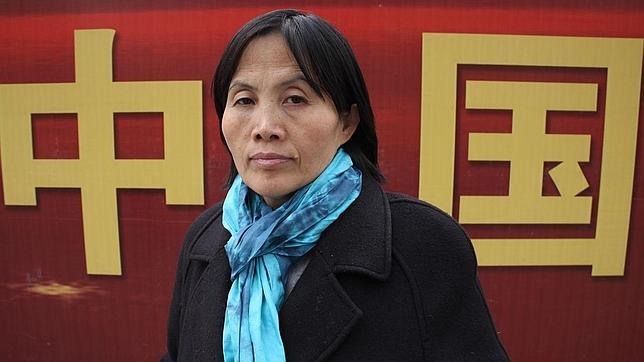
When late Chinese human rights defender Cao Shunli – as Final Nominee of he Martin Ennals Award 2014 – got a standing ovation during the ceremony in October last year, we all said, with the 10 NGOs on the Jury, that we should not forget her. On 19 March 2015 in a statement to the UN Human Rights Council that is exactly what a group of NGOs [International Service for Human Rights and supported by Human Rights WatchCIHRSCIVICUSConectasEHARDPArticle 19HRHF and ALRC] asked for: Ensure independent investigation into death of Cao Shunli.CAO_SHUNLI_PORTRAIT

China must ensure a full, independent and impartial investigation into the death of Chinese human rights defender Cao Shunli, ..If Chinese authorities are unable or unwilling to conduct such an investigation in accordance with international standards, the Human Rights Council as the world’s top human rights body must take appropriate action, the statement said.

One year after her tragic death, there has been no adequate investigation or accountability in relation to the death of Chinese defender Cao Shunli,’ said Michael Ineichen, Head of Human Rights Council Advocacy at ISHR. ‘If China is let of the hook for such a blatant case of reprisals against someone wanting to cooperate with UN human rights mechanisms, the Council sends a message to rights abusers that activists can be attacked with impunity.’

The statement highlighted the negative effect of impunity for cases of intimidation and reprisals, as shown by the numerous reported cases of intimidation and reprisals occurring during the 28th session of the Human Rights Council, including against South Sudanese and Bahraini defenders.

The legal and moral obligations of States to protect those who cooperate with the UN are clear, and if a State fails to conduct stop reprisals or to properly investigate allegations, the UN has a responsibility to act, the statement said.

We welcome recent advances on the institutional level, such as the treaty body policies that recognise States’ primary duty to ensure accountability in the case of reprisals, and the UN’s own duty of care,’ said Eleanor Openshaw, Head of Reprisals Advocacy at ISHR. ‘However, in the absence of a more systematic approach, such as through a dedicated focal point on reprisals which could coordinate investigation of and follow-up to individual cases, these steps will remain the proverbial drop in the ocean’   The statement is available as a PDF and video.

for more on reprisals in this blog see: https://thoolen.wordpress.com/tag/reprisals/

Broad coalition of NGOs at UN condemns Egypt’s treatment of women human rights defenders

March 23, 2015

During the adoption of the Universal Periodic Review (UPR) report on Egypt in the UN Human Rights Council on 20 March 2015 the Women Human Rights Defenders International Coalition (for the composition see below), made a forceful statement about the terrible situation of women human rights defenders in that country.

“The systematic judicial harassment faced by many women human rights defenders is highlighted through the emblematic case of the seven women defenders2 arrested on 21 June 2014 for protesting peacefully against the Protest and Public Assembly Law (No. 107), who faced arduous hassles including prolonged pre-trial detention. Their sentence was finally reduced to two years of imprisonment and two years of surveillance by the appeals court in December 2014. [The seven are: Ms. Sanaa Seif, Ms. Yara Sallam, Ms. Hanan Mustafa Mohamed, Ms. Salwa Mihriz, Ms. Samar Ibrahim, Ms. Nahid Bebo and Rania El-Sheikh]

Furthermore, we strongly condemn the killing of Shaimaa ElSabbagh during a peaceful protest on 24 January 2015. She was taking part in a gathering to commemorate the fourth anniversary of the 25 January revolution. We call on the Egyptian government to ensure a prompt, independent and effective investigation to identify the perpetrator and hold them to account. In this connection, we are deeply concerned that Azza Soliman from the Centre for Egyptian Women’s Legal Assistance (CEWLA), who was witness to the incident and testified before the Prosecutor’s Office, is now targeted as a suspect and charges have been brought against her under the public assembly law.

Finally, we express our continued dismay over sexual violence against women in online and offline public spaces. Though a national strategy to combat violence against women has been announced, we emphasise the need for it to be comprehensive and holistic with involvement of all relevant ministries and stakeholders, as well as adequate budget allocation. During the UPR, the government highlighted a new amendment to the Penal Code article 306, which addresses sexual harassment. This amendment is far insufficient in its scope as it only considers sexual harassment a crime if the intent of the perpetrator is proven to be related to obtaining sexual benefits…”

The Coalition members:  Amnesty International, Asia Pacific Forum on Women, Law and Development (APWLD), Asian Forum for Human Rights and Development (FORUM-ASIA), Association for Progressive Communications (APC), Association for Women’s Rights in Development (AWID), BAOBAB for Women’s Human Rights, Centre for Reproductive Rights, Centre for Women’s Global Leadership, Coalition of African Lesbians, Front Line Defenders, Human Rights First, Information Monitor (INFORM), International Federation for Human Rights, International Service for Human Rights (ISHR), International Women’s Rights Action Watch Asia-Pacific (IWRAW-AP), Isis International, ISIS Women’s International Cross- Cultural Exchange, Just Associates (JASS), The Latin American and Caribbean Committee for the Defense of Women’s Rights (CLADEM), MADRE, Nazra for Feminist Studies, Peace Brigades International, Rainbow Rights Project Inc, Urgent Action Fund for Women’s Human Rights, Women Living Under Muslim Laws (WLUML), Women’s Global Network for Reproductive Rights, WOmen’s Initiatives for Gender Justice, Women’s Rehabilitation Centre (WOREC), World Organisation against Torture (OMCT).

Coalition of human rights defenders and others call on Olympic Committee to change its ways

February 26, 2015

The IOC Executive Committee is meeting in Rio de Janeiro these days (26-28 February) to discuss implementation of Agenda 2020, its “strategic roadmap for the future of the Olympic Movement”. The IOC’s adopted agenda requires Olympic host countries to respect anti-discrimination measures and labor standards, improve transparency, and promote good governance.

The new Sport and Rights Alliance (SRA see below for membership) addressed a letter to the IOC saying that too often major sports events have seen people forcibly evicted from their homes to make way for infrastructure, workers exploited, campaigners locked up, the environment damaged beyond repair and notoriously opaque bidding processes,” … “The recommendations in the IOC’s Agenda 2020 are a chance to change that and ensure human rights, the environment and anti-corruption measures are central to all stages of the Olympic Games, from bidding, through to the development and delivery phase to final reporting.Read the rest of this entry »

Photographer Platon speaks about human rights in Indiana Wells on February 27

February 25, 2015

Award-winning photographer Platon will speak at Renaissance Esmeralda Resort in Indians Wells, USA, at 6 p.m., sharing human rights experiences behind his acclaimed photography.

[He worked for Rolling Stone, New York Times Magazine, Vanity Fair, Esquire, GQ and The Sunday Times Magazine, TIME, The New Yorker. Platon’s New Yorker portfolios have focused on many themes, including the U.S Military, portraits of world leaders and the Civil Rights Movement.]

Platon has teamed up with the Human Rights Watch to help them celebrate human rights defenders from Burma as well as the leaders of the Egyptian revolution. In 2011, Platon was honored with a “Peabody Award” for collaboration on the topic of Russia’s Civil Society with The New Yorker magazine and Human Rights Watch.

The event is sponsored by the H.N. & Frances C. Berger Foundation


H.N. & Frances C. Berger Foundation Presents Desert Town Hall.

Suffocating Dissent in Ethiopia: CounterPunch Tells the Facts and Names the Names

February 14, 2015
The long-read for the weekend comes from Counterpunch, 13/15 February 2015 where Graham Peebles treats the horrible media situation in Ethiopia. Basing himself on a variety of UN and NGO sources – including the recent report by Human Rights Watch – he describes in detail and by name what happens to journalists and human rights defenders who try to cover reality.

Read the rest of this entry »