FIFA president Gianni Infantino presents President Donald Trump with the FIFA Peace Prize during the FIFA World Cup 2026 Final Draw at John F. Kennedy IMAGES via Reuters Connect…Show more
This blog has a special interest in human rights awards, so it should not fail to mention the big surprise which occurred when FIFA (Fédération Internationale de Football Association), the worldwide governing body of soccer, gave President Donald Trump its first-ever prize for global peace. An investigation by the Times of London has revealed that the White House not only knew well in advance the honor was coming but also made demands about its size and style of presentation.
“FIFA’s so-called peace prize is being awarded against a backdrop of violent detentions of immigrants, national guard deployments in US cities, and the obsequious cancellation of FIFA’s own anti-racism and anti-discrimination campaigns,” said Minky Worden, who oversees sport for Human Rights Watch. “There is still time to honor FIFA’s promises for a World Cup not tainted by human rights abuses, but the clock is ticking.”
Trump’s message to Jonas Gahr Støre appears to ratchet up a standoff between Washington and its closest allies over his threats to take over Greenland, a self-governing territory of NATO member Denmark. On Saturday, Trump announced a 10% import tax starting in February on goods from eight nations that have rallied around Denmark and Greenland, including Norway.
At the end of 2025 the International Federation for Human Rights (FIDH), one of the world’s oldest human rights movements and Human Rights Watch were declared “undesirable” by the Russian Federation. For FIDH the designation was made by the Prosecutor General of Russia on 13 November, and on 1 December, Russia’s Ministry of Justice included FIDH in its register of “undesirable organizations“, which currently contains 281 entities, including several FIDH members, such as the Center for Civil Liberties (CCL), the Norwegian Helsinki Committee (NHC), the Helsinki Foundation for Human Rights (HFHR), and Truth Hounds.
“This ignoble move not only further threatens and endangers our Russian members, partners, their staff, and ordinary Russian citizens supporting our human rights work. It also sends a clear message that Russia is no friend of the global human rights movement“, said Alexis Deswaef, FIDH President. “This designation of FIDH as an ‘undesirable organisation’ demonstrates the importance of our commitment to supporting those who defend human rights, whether in Russia or in exile. FIDH will continue to pursue this commitment more than ever.”
Under the “undesirable organisations” law, adopted in 2015 and further tightened in 2021 and 2024, the Prosecutor General’s Office has the power to declare as “undesirable” any foreign or international organisation that is deemed “a threat to the foundations of the constitutional order of the Russian Federation, the defense capability of the country or the security of the state“.
Concretely, “undesirable organisations” are banned from engaging in any activities inside Russia, including the publication or dissemination of any information, carrying out financial transactions, and providing financial or other assistance to local organisations and individuals. The “participation in the activities” of an “undesirable organisation” is subject to administrative and criminal liability, including up to four years of imprisonment. Any Russian citizen or organisation cooperating with an “undesirable organisation“, even if residing outside Russia, faces administrative penalties and, in the case of individuals, criminal liability. In practice, the vague wording of the law has led to the punishment of individuals simply for reposting information disseminated by an “undesirable organisation” on social media platforms, even if the original posts predated the organisation’s designation as “undesirable“.
“For over three decades, Human Rights Watch’s work on post-Soviet Russia has pressed the government to uphold human rights and freedoms,” said Philippe Bolopion, executive director at Human Rights Watch. “Our work hasn’t changed, but what’s changed, dramatically, is the government’s full-throttled embrace of dictatorial policies, its staggering rise in repression, and the scope of the war crimes its forces are committing in Ukraine.”
The Prosecutor General’s Office made the decision to ban Human Rights Watch on November 10, as follows from the Ministry of Justice’s register of “undesirable” organizations updated today. The official reasons for the designation are not known.
This is a reminder that nominations for the 2026 Right Livelihood Award are open, and the deadline is January 16, 2026 . They are seeking new nominees for the Award who are leading change-makers in their field. Nominations are fully open to the public; therefore, anyone can nominate an individual or organisation creating change through their innovative and life-changing work. To nominate a candidate (preferably in English, but French and Spanish are also accepted), please submit nominations through our online nominations form. Read more about the Award https://www.trueheroesfilms.org/thedigest/awards/97238E26-A05A-4A7C-8A98-0D267FDDAD59.
The Right Livelihood Award recognizes and supports outstanding individuals and organizations driving social, environmental, and human rights change. Winners receive financial or honorary awards, lifelong access to a global network, and international recognition to amplify their impact and protect their work.
Transnational repression (TNR), the cross-border targeting, intimidation, and harassment of journalists and human rights defenders, is increasingly undermining press freedom and human rights in Europe and beyond. Journalists in exile often remain subjects of sustained threats, surveillance, cyber-attacks, psychological pressure, and harassment long after reaching presumed safety. These tactics are used by authoritarian states to silence dissent, extend their reach beyond borders, and weaken the role of independent media globally. This is demonstrrated in the 18 December 2025 Position Paper written by Katrin Schatz, Journalists-in-Exile Programme Manager,
The European Centre for Press and Media Freedom (ECPMF) stands firmly against any form of repression that endangers journalists in exile and undermines fundamental freedoms. As a Europe-focused organisation, our mandate centres on strengthening press freedom across the continent. Much of our documented experience with transnational repression comes from our support work in Germany, particularly through the Journalists in Exile (JiE) programme, which gives us direct insight into how these threats continue even after relocation. Our analysis, monitoring and advocacy consistently show that current policy frameworks are insufficiently equipped to address the reality of transnational repression.
Transnational Repression targets journalists in exile
Many Journalists in exile remain at risk. ECPMF’s research on transnational repression in Germany from 2025 finds that journalists who fled authoritarian contexts continue to experience threats, intimidation, surveillance and psychological pressure in their host countries. These tactics are part of a broader strategy by autocratising states to control dissent.
ECPMF’s Mapping Media Freedom (MapMF) platform shows exactly this – through the recently initiated category documenting threats against journalists in exile, ongoing surveillance, digital harassment and family members being targeted are reported. However, cases of transnational repression are rarely documented, not because they don’t exist, but because of the extreme sensitivity of the issue: publicity can endanger journalists’ families at home, expose those in exile to additional targeting, and many affected journalists choose or are advised to remain discreet for safety reasons.
Transnational repression threatens press freedom and democratic space
Transnational repression is not only an attack on individual journalists, it is a direct assault on press freedom and democratic spaces globally. However, acknowledging the personal strains of those affected is essential: many journalists in exile face isolation, trauma, financial precarity, and the constant fear that reprisals could reach them or their families, friends, and colleagues.
TNR tactics take place across multiple contexts: through digital harassment, spyware, coordinated smear campaigns, threats to family members, diplomatic pressure, misuse of international legal instruments, or using diaspora networks to intimidate critics abroad. Together, they form a pattern: a systematic effort by authoritarian and autocratising states to suppress independent journalism far beyond their borders. Coupled with the EU’s lack of reaction, this perpetuates cycles of violence and silencing.
By creating a climate of fear among critical voices and disrupting professional and personal safety TNR systematically undermines freedom of expression, independent journalism and the safety of journalists. Journalists in exile play an indispensable role in informing the public through international reporting, providing independent coverage from authoritarian contexts where local journalism is heavily restricted or impossible.
Gaps in policy and protection in the EU
Increasingly restrictive migration and return policies
The EU’s use of “safe country of origin/ third country” frameworks and streamlined return mechanisms risk exposing journalists to environments where they continue facing repression. Recent decisions by the European Council, endorsed by 39 MEPs , including the designation of countries with documented human rights violations, including press freedom violations as “safe” contradicts the very essence of protection that asylum and refugee policies are meant to provide.
The EU-wide list of safe countries will include: Bangladesh, Colombia, Egypt, Kosovo, India, Morocco and Tunisia. ECPMF is highly concerned about the dangerous implications of this policy for journalists and human rights defenders.
Lack of comprehensive frameworks
Current EU instruments still do not provide a systemic approach to TNR. There is no binding definition, no integrated action plan, and no framework that aligns migration policies, human rights obligations, digital safety, and cross-border policing responses to transnational repression. Existing mechanisms remain fragmented, leaving journalists without coherent pathways to protection.
Fragmented national responses
At the EU member state level, responses to TNR are inconsistent. Few governments started to formally acknowledge the threat and explore legal or policy measures, while others lack official recognition and structured responses. Even when awareness exists, protection mechanisms remain fragmented, under-resourced, or inaccessible. Journalists, just as any other person seeking refuge, also face racial discrimination within domestic systems, which can influence how their cases are treated.
Civil society has often stepped in where states have not taken responsibility. In Germany, the Coalition Against Transnational Repression has emerged as a key actor, bringing together human rights and diaspora organisations to push for stronger national policies. At the same time, many institutions and law enforcement bodies lack sufficient knowledge or training to identify transnational repression patterns, assess cross-border threats, or understand the jurisdictional complexities involved. Limited cooperation between migration authorities, police, prosecutors, and security services further weakens effective responses. As a result, national responses remain predominantly reactive rather than preventive, leaving journalists in exile exposed to ongoing risks.
ECPMF’s position and demands
Transnational repression is pervasive and increasingly dangerous. Journalists who have fled oppression continue to face coordinated pressure, digital harassment, legal threats, and physical intimidation across borders. As seen through the experiences of fellows in ECPMF’s Journalists-in-Exile programme, exile does not guarantee safety. Threats often follow them into Europe, leaving them vulnerable even in countries that are supposed to offer protection.
Current human rights and migration policies fall short of addressing the lived realities of journalists in exile and, in some cases, may even increase the risks they face. EU migration policies could force journalists back into the very environments from which they fled, thereby further jeopardizing their safety. This reflects the wider gap in the protection of journalists, where national and EU responses to transnational repression remain inconsistent, under-resourced, and fragmented.
ECPMF calls on the European Union, its member states and international bodies to take the following actions to better protect journalists in exile and combat transnational repression:
Develop and implement comprehensive legal frameworks that recognise the specific cross-border threats faced by journalists in exile, including digital harassment, surveillance, physical attacks, and threats to family members.
Ensure the protection of journalists within migration systems, with clear safeguards against forced returns to countries where they face repression, in line with the international principles of non-refoulement.
Develop and support national and EU-level mechanisms to monitor and respond to transnational repression, including dedicated hotlines, coordinated support services, and legal aid for affected journalists.
Include transnational repression in the EU’s strategic documents and policies for safeguarding democracies and combating disinformation and malicious interference, including the European Democracy Shield and similar documents, to ensure that the protection of those fighting repression is part of a comprehensive approach to preserving our democracies.
Incorporate transnational repression explicitly into EU foreign policy, ensuring that the EU’s human rights policies hold countries accountable for using repressive tactics against journalists in exile, as well as creating a system of sanctions and diplomatic pressure to address perpetrators.
Strengthen cooperation between member states, creating a coherent and coordinated EU response to transnational repression, with particular attention to the intersectional risks faced by journalists, including race, gender, and migration status.
Engage civil society and human rights organisations in the design and implementation of policies related to journalists in exile, ensuring that those who are most affected have a direct role in shaping the response.
This position paper was written by Katrin Schatz, Journalists-in-Exile Programme Manager, with contributions by Basma Mostafa, Journalists-in-Exile Fellow, Edith Bohl, Journalists-in-Exile Programme Officer, and Ena Bavčić, Senior Advocacy and Policy Advisor.
“Art was my existence, my life. Without it, maybe I wouldn’t have survived,” said Kheder Abdulkarim, a Kurdish-Syrian artist based in Germany and former political prisoner, whose work is inspired by his experience of persecution and erasure. He received an honourable mention at the 4th edition of the International Contest for Minority Artists.
The Contest is an initiative organized jointly by UN Human Rights, Freemuse, Minority Rights Group and the City of Geneva. Since 2024, the contest is also supported by the Centre des Arts of the International School of Geneva, the Loterie Romande, as well as by other donors who prefer to remain anonymous.
Each year, the Contest celebrates minority artists whose work bears witness to struggles for dignity, justice and visibility, forming a cornerstone of UN Human Rights’ efforts to uplift artists as human rights defenders.
The 2025 theme — Belonging, Place and Loss — resonated profoundly with artists around the world whose identities have been shaped by displacement, environmental devastation, structural racism, and generational trauma, generating more than 240 submissions this year.
At the award ceremony, UN Deputy High Commissioner for Human Rights, Nada Al-Nashif, reminded the audience of what minority artists reveal to societies.
“Tonight, we celebrate eight minority artists honoured in this edition, the power of art and the vital contribution that minority artists make as they shine a light on human rights struggles across the globe, stories and images that unite and anchor us in a shared humanity,” she said.
Art can be a human rights language, and a catalyst for positive change in societies which may seek to silence minority voices. Claude Cahn, human rights officer at UN Human Rights’ Indigenous Peoples and Minorities Section
For many laureates, art is the only archive that survives war, the only place where memory can remain intact.
Alia Al-Saadi is a Palestinian Syrian dancer and choreographer born a third-generation refugee in Yarmouk Camp, and one of the laureates of the contest’s 4th edition.
Her performances turn the body into an “archive of destruction,” she said, and “a state of psychological numbness, where prolonged exposure to violence renders shock ineffective.”
Abubakar Moaz, a Sudanese visual artist based in Kenya, won honourable mention and said his visual language emerged from conflict in the Blue Nile and exile in Nairobi.
Abdulkarim, imprisoned for nearly six years in the infamous Saydnaya Prison in Damascus, began sculpting there with scraps of vegetable crates. “I lost seven years of my life,” he said. “But I try to produce something from those years, to rebuild them and more.”
Emanoel Saravá, an Afro-Indigenous Brazilian visual and photo-performance artist, winner of an honourable mention, treats water as an archive of Black and peripheral suffering through their project Águas Marginais.
“The waters carry the memory of Black and peripheral communities, but they also bear the scars of environmental racism, climate change and neglect,” Saravá said.
Sead Kazanxhiu, a Roma political artist from Albania and laureate of the 4th edition, rejects narratives that reduce Roma communities to victimhood.
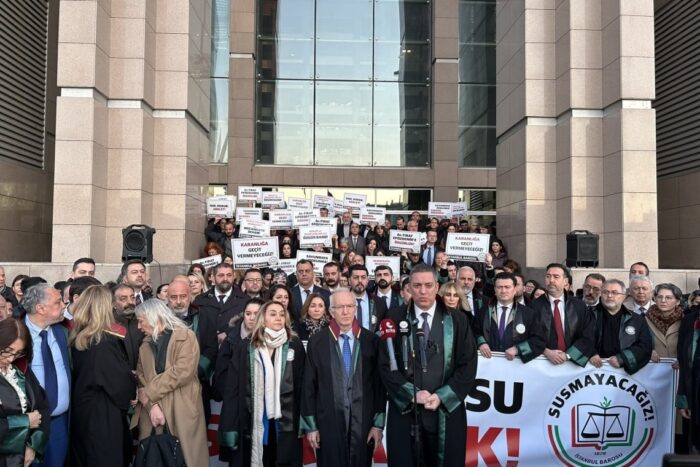
On 5 January 2026 the International Commission of Jurists and many other NGOs issued a joint statement calling on the authorities to immediately terminate the abusive criminal proceedings and drop charges ahead of the 26 Istanbul Heavy Penal Court’s expected final hearing scheduled for 5 to 9 January 2026.
The continued prosecution of the president and 10 executive board members of the Istanbul Bar Association, and the prosecutor’s request for their conviction on terrorism charges are a damning reflection of the troubled state of the rule of law and democratic norms in Turkey.
The prosecutor seeks the criminal conviction of all eleven members of the Bar’s elected leadership – President Prof. İbrahim Özden Kaboğlu, Ahmet Ergin, Bengisu Kadı Çavdar, Ekim Bilen Selimoğlu, Ezgi Şahin Yalvarici, Fırat Epözdemir, Hürrem Sönmez, Mehmedali Barış Beşli, Metin İriz, Rukiye Leyla Süren, and Yelde Koçak Urfa – on the charge of “spreading terrorist propaganda” under Article 7/2 of the Anti-Terrorism Law, solely for issuing a public statement on 21 December 2024 concerning the killing of two journalists in northern Syria and the arrest of journalists and lawyers at a related peaceful protest in Istanbul the day before.
The trial prosecutor’s final opinion confirms and deepens the concerns raised by 56 international organisations in the joint statement of January 2025, condemning the initiation of criminal and civil proceedings against the Bar’s leadership, and in the April 2025 joint statement, which deplored the removal of the elected board and the escalating attacks on lawyers across Turkey. A group of the organisations also submitted a joint amicus curiae brief in which they concluded that the proceedings violate Turkey’s obligations under international human rights law and constitute an unjustified interference with the independence of the legal profession.
A clear misuse of criminal law
In his final opinion, the prosecutor alleges that by referring to the two individuals killed in Syria as journalists and by citing international humanitarian law applicable to the protection of civilians and media workers in conflict zones, the Bar leadership “treated as a war crime” an operation carried out by security forces, thereby intentionally legitimising and disseminating the ultimate separatist aims of the Kurdistan Workers’ Party (PKK). The prosecutor further asserts that describing those killed as journalists “encouraged” membership of the PKK and “made its methods appear legitimate”, amounting to “press and media–based terrorist propaganda” under Article 7/2 of the Anti-Terrorism Law. These allegations, which claim that a lawful, rights-based statement consciously advanced the objectives of an armed organisation, are wholly unfounded and legally unsustainable.
As emphasised in both joint statements in January and April 2025 and the amicus curiae brief in September 2025, the Istanbul Bar Association has a statutory and ethical duty to speak out on violations of human rights and the rule of law. The prosecutor’s position effectively criminalises the Bar Association’s discharge of this duty protected under both domestic law and international human rights law and standards. The prosecutor’s construal of a legitimate exercise of the right to freedom of expression as a terrorism offence amounts to a misuse of criminal law and judicial harassment.
Violations of international standards and the Bar’s statutory mandate
International and regional human rights standards, including the UN Basic Principles on the Role of Lawyers, the Council of Europe Convention for the Protection of the Profession of Lawyer, and consistent jurisprudence of the European Court of Human Rights, affirm that lawyers and their associations must be able to engage in public debate on matters of justice and human rights without fear of reprisals.
Criminalising their exercise of the rights to freedom of expression and association contravenes the provisions of these instruments safeguarding the rights and role of lawyers and their professional organisations, as well as Articles 10 and 11 of the European Convention on Human Rights, Articles 19 and 22 of the International Covenant on Civil and Political Rights, and Articles 26, 27 and 33 of the Constitution of Türkiye.
The criminal proceedings strike at the heart of the independence of the legal profession and amount to a misuse of counter-terrorism laws to silence criticism, suppress human rights monitoring, and undermine self-governance of bar associations.
Signatories (in alphabetical order):
Amnesty International
Center of Elaboration and Research on Democracy (CRED)
Council of Bars and Law Societies of Europe (Le Conseil des barreaux européens, CCBE)
Defense Commission of the Barcelona Bar Association (Spain)
Deutscher Anwaltverein (German Bar Association, Germany)
Eşit Haklar İçin İzleme Derneği (Association for Monitoring Equal Rights, Türkiye)
European Association of Lawyers for Democracy and World Human Rights (ELDH)
The European Criminal Bar Association (ECBA)
Fédération des Barreaux d’Europe (European Bars Federation, FBE)
Foundation Day of the Endangered Lawyer
Hak İnsiyatifi Derneği (Rights Initiative Association, Türkiye)
Hakikat Adalet Hafıza Merkezi (Truth Justice Memory Center, Türkiye)
Haldane Society of Socialist Lawyers (UK)
Human Rights Institute of the Brussels Bar (Belgium)
Human Rights Watch
İnsan Hakları Derneği (Human Rights Association, Türkiye)
The International Association of Democratic Lawyers (IADL)
International Bar Association’s Human Rights Institute (IBAHRI)
The International Commission of Jurists (ICJ)
International Federation for Human Rights (FIDH), within the framework of the Observatory for the Protection of Human Rights Defenders
Kaos GL Derneği (Kaos GL Association, Türkiye)
The Law Society of England and Wales (LSEW, UK)
Lawyers for Lawyers (Netherlands)
Lawyers’ Rights Watch Canada (LRWC, Canada)
Lyon Bar Association (France)
National Union of Peoples Lawyers (NUPL, Philippines)
PEN Norway (Norway)
Turkey Litigation Support Project (TLSP, UK)
Türkiye İnsan Hakları Vakfı (Human Rights Foundation of Turkey, Türkiye)
Vereinigung Demokratischer Jurist:innen VDJ (Association of Democratic Jurists, Germany)
World Organisation Against Torture (OMCT), within the framework of the Observatory for the Protection of Human Rights Defenders
then on 9 January 2026 Amnesty stated “The decision to acquit the Istanbul Bar Association leadership of these unfounded charges is welcome news. This case was a clear misuse of criminal law and should never have been brought in the first place.” https://www.amnesty.org/en/latest/news/
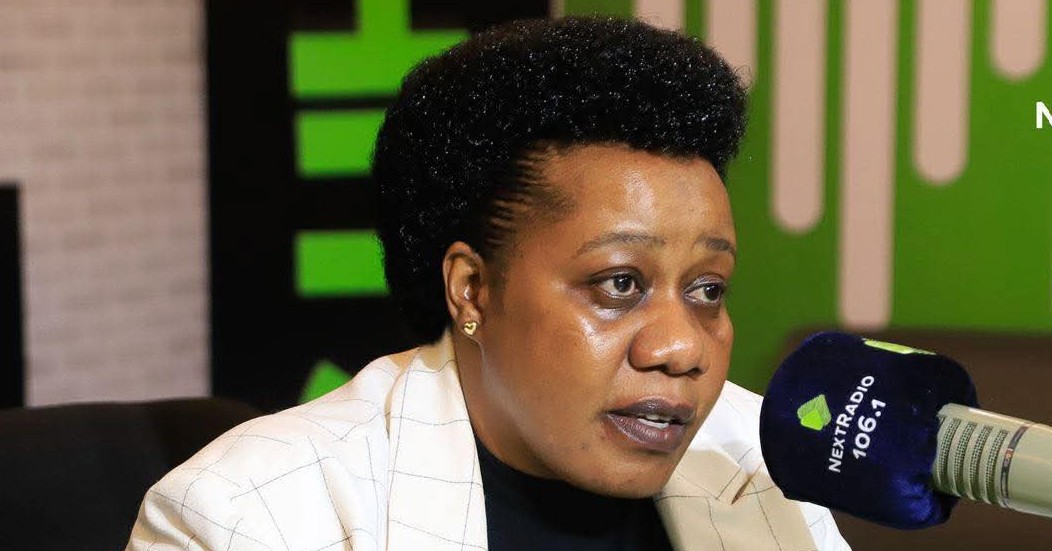
Sarah Bireete was arrested on December 30, 2025, after police and military personnel surrounded her home in Kampala. Shortly before her arrest, she posted on X, “My house is under siege by police and army”. As reported by East and Horn of Africa Election Observation Network (E-HORN) on 2 January 2026
The Police Reforms Working Group (PRWG) Kenya has called for the immediate release of Uganda’s human rights lawyer and civil society leader, Dr Sarah Bireete, warning that her detention ahead of the January elections threatens civic space and undermines democratic processes.
The Uganda Police confirmed her arrest in a brief social media post, stating she would be produced in court “in due course”. Police spokesperson Rachel Kawaala described the detention as part of “ongoing operations” but offered no further details.
“Dr Bireete is widely recognised for her unwavering passion for the protection of civil liberties, her lifelong quest for justice, and her steadfast commitment to democracy, a clarion call that has consistently advanced accountable governance across the region,” the Group said.
Bireete currently serves as Executive Director of the Centre for Constitutional Governance (CCG), Chairperson of the East Africa Civil Society Forum (EACSOF), and Chairperson of the Horn of Africa Election Observers Network (E-HORN).
PRWG Kenya described these roles as reflective of her integrity, credibility and long-standing contributions to human rights, electoral integrity and democratic governance.
The group urged Ugandan authorities to respect civil liberties, the rule of law and democratic processes.
“Respect for civil liberties, rule of law and democratic processes is fundamental to ensuring free, fair, and transparent elections,” PRWG Kenya said.
The statement also highlighted that Uganda’s constitution, under Article 23, guarantees that anyone arrested must be promptly informed of the reasons for their detention, a step that has not been followed in Dr Bireete’s case.
Bireete’s arrest follows her recent advocacy for Starlink, a satellite internet service operated by SpaceX, as a safeguard against potential internet shutdowns during the elections.
In a post dated December 23, 2025, she wrote, “Dear Ugandans, are you thinking of ways to navigate internet shutdown during elections? Starlink got you covered.”
As the country approaches general elections on 15 January 2026, UN experts* today warned that the pervasive climate of fear in Uganda, marked by allegations of enforced disappearance, the use of disproportionate force against political opposition supporters, and the intensified suppression of civil society and independent media, is not conducive to peaceful elections.
Are you a human rights defender working on democratic backsliding and/or racial justice, keen to use the UN to push for change at home? If so, apply for the 2026 edition of ISHR’s flagship training, the Human Rights Defender Advocacy Programme (HRDAP)!
After a successful edition in 2025, ISHR is pleased to launch the new call for applications for the 2026 Human Rights Defender Advocacy Programme (HRDAP26), which will take place both remotely and in Geneva and will be focused on thematic and context area! Below are some important dates to consider before applying:
Mandatory distance learning course: 13 April – 8 June 2026 (part time)
In-person course in Geneva: 10- 20 June 2026 (full time)
Deadline to apply: 15 January 2026, midnight CET (Geneva Time)
Programme description with all related information can be downloaded here.
For the last 10 years, this flagship training has equipped human rights defenders with the knowledge and skills to integrate the UN human rights system into their existing work at the national level in a strategic manner.
Following an external review of the programme in 2024, as well as to maximise impact and enhance follow-up, for 2026 the HRDAP selection criteria are evolving: they are based on 2 themes focused on context area and thematic advocacy, according to ISHR’ strategic priorities and opportunities at the UN: democratic backsliding and racial justice. The HRDAP themes will change annually (see the criteria below and the programme description for more details).[see: https://humanrightsdefenders.blog/2024/11/27/ishrs-training-for-human-rights-defenders-2025/]
12 participants will be selected for the 2026 edition of HRDAP.
What are HRDAP objectives?
By participating in the programme, defenders will:
gain knowledge and tools, which they can use to ensure their voice is central in international human rights decision-making
explore and compare the benefits of engagement with the Human Rights Council, the Special Procedures, the OHCHR, the Universal Periodic Review and the Treaty Bodies, and examine how they can use them to bolster their work at the national level
develop networks, strategies and advocacy techniques to increase the potential of their national and regional advocacy work.
How is HRDAP organised?
HRDAP topics
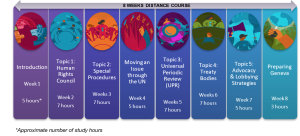
Defenders will complete a 10-week hybrid learning programme through a participatory approach, which will include:
accessing the HRDAP Platform, where they can complete e-learning courses on each key UN human rights mechanism and on advocacy strategies, and access interactive learning materials and case studies on the ISHR Academy
taking part in live Q&A sessions with human rights experts
receiving continuous advocacy support and personalised coaching in order to develop concrete advocacy objectives to make strategic use of the international human rights system
building networks around the world, and learning from peers from a range of regions working on a range of human rights issues
applying their knowledge to case-studies scenarios and enhancing their advocacy toolbox according to their specific needs
receiving support and advocacy accompaniment to conduct activities during the 62nd and 63rd Human Rights Council sessions and other relevant opportunities.
Participants will have the unique opportunity to apply their knowledge and skills while being in Geneva as well as to meet and share with their peers and experts. The blended format of the course allows defenders to continue their vital work on the ground, while diving into the inner workings of each key UN human rights mechanism and gaining first-hand experience from advocates and UN staff on how civil society can strategically engage in the international human rights space.
What are the criteria and themes for selection?
This programme is directed at experienced human rights defenders working in non-governmental organisations, with existing advocacy experience at the national level and some prior knowledge of the international human rights system. In 2026, we will select human rights defenders working on democratic backsliding and racial justice.
Defenders working in contexts of democratic backsliding
This theme is for human rights defenders working in democratic countries where authoritarian practices are gaining ground.
We particularly welcome applications from defenders who are:
pushing back against repressive laws, attacks on free expression, or restrictions on the freedom of peaceful assembly and association
documenting abuses linked to police and military violence, arbitrary arrests, surveillance, or harassment
fighting for justice, transparency, and the rule of law, and refusing to let democratic institutions be dismantled without accountability.
Defenders working on racial justice
This thematic is for defenders working to dismantle systemic racism and build societies rooted in equality and dignity. We will select applications from defenders focusing on anti-racism, exclusion and police violence, including anti-Black racism as experienced through legacies of colonialism and the Transatlantic Trade in Enslaved Africans, Indigenous (including Afro-Indigenous) communities working on historical injustice and reparations, as well as defenders of migrants and asylum seekers. We also welcome applications from mothers working for accountability for their children, victims of police violence.
In 2025 the International Federation for Human Rights (FIDH) welcomed 14 new organisations, on the occasion of its 42nd Congress, which took place in Bogotá at the end of October. The federation now has 194 members in 120 countries. Of varied origins, cultures, organisations, issues and sizes, yet united by a common struggle: the universal defence of human rights. These 14 memberships demonstrate the vitality of the human rights movement across the world, the relevance of the growth of an international federation dedicated to this universalist cause, and the need to bring together the strengths of civil society worldwide in the face of the challenges it is faced with. Local struggles, global problems, the organisations of FIDH find within the federation a space of solidarity where they can exchange ideas and collectively develop solutions to the shrinking civic space observed throughout the world.
“With these new arrivals, our federation is growing and becoming stronger, particularly on the Asian continent“, says Alexis Deswaef, President of FIDH, elected at the same congress in Bogotá.
On 4 December 2025, 24 human rights defenders, including Seán Binder and Athanasios (Nassos) Karakitsos, will appear before the Mytilene Court of Appeals, on the island of Lesvos. This comes seven years (!!) after their initial arrests. The human rights defenders are facing felony charges of ‘membership of a criminal organisation’, ‘facilitation of the entry of third country nationals into the country’, and ‘money laundering’. The charges stem from work carried out by the defenders in Greece between 2016 and 2018, where they assisted people on the move whose lives were at risk while trying to reach safety to the island of Lesvos. If convicted, they face up to 20 years of imprisonment.
Seán Binder and Athanasios (Nassos) Karakitsos are migrant rights defenders who worked with Emergency Response Center International (ERCI) between 2016 and 2018. The humanitarian work carried out by ERCI was extensive, and included helping more than 1000 people reach safety, organising workshops and swimming classes for migrant children in the Kara Tepe camp, and providing residents in the Moria camp with medical assistance. ERCI was registered as a non-governmental organisation and regularly cooperated with Greek authorities, including with the Greek Coast Guard on rescue operations. The organisation was dissolved after the criminalisation of its members and volunteers.
In September 2023, the Supreme Court upheld the Court of Appeals’ decision, delivered on 13 January 2023, to dismiss four misdemeanour charges of ‘forgery’, ‘espionage’, ‘possession of unlicensed radio’ and ‘infringement of state secrets’ faced by Seán Binder and seven other non-Greek speaking defenders. This was due to procedural flaws, including key documents, such as the indictments, having not been translated for the accused. In January 2024, the remaining sixteen human rights defenders, including Athanasios (Nassos) Karakitsos, were acquitted of the same charges. [https://humanrightsdefenders.blog/2021/11/17/greeces-mistaken-deterrence-migrants-and-aid-workers-facing-heavy-prison-sentences/]
On 21 August 2018, Lesvos Police arrested Seán Binder after he attended the police station voluntarily, having learned that another human rights defender had been arrested earlier that day. In the following days, they also arrested Athanasios (Nassos) Karakitsos, the field director of ERCI at the time. The human rights defenders were kept in pre-trial detention for more than one hundred days, accused of ‘people smuggling’, ‘money laundering’, ‘espionage’, and ‘membership of a criminal organisation.’ In December 2018, the human rights defenders were conditionally released on bail.
The upcoming trial is the second court case since 2018 initiated against the 24 human rights defenders based on their work, aiding, assisting and saving the lives of migrants and refugees, who were trapped in the Aegean Sea between Türkiye and Greece.
Front Line Defenders calls on the authorities in Greece to:
Immediately and unconditionally drop all charges against Seán Binder and Athanasios (Nassos) Karakitsos, and the other 22 human rights defenders who are also on trial;
Cease the criminalisation of human rights defenders who peacefully defend the rights of the migrants and refugees, including the humanitarian assistance to save the lives of people stranded at the marine and land borders;
Guarantee in all circumstances that all human rights defenders in Greece are able to carry
out their legitimate human rights activities without fear of reprisals and free of all restrictions, including judicial harassment.





 Hans Thoolen on Human Rights Defenders and their awards