Archive for the 'human rights' Category

Write for Rights again in December 2017

December 4, 2017

Every December, Amnesty International supporters across the globe write millions of letters and take actions for people whose human rights are under attack, in what has become the world’s biggest human rights campaign. Last year at least 4.6 million actions were taken. “For 15 years Write for Rights has given people hope in their darkest moments. Imagine being ill in jail and receiving thousands of letters of support and solidarity; or finding out that people all over the world are behind you in your quest for justice for a murdered relative. Writing letters really can change lives,” said Salil Shetty, Amnesty International’s Secretary General. For last year’s see: https://humanrightsdefenders.blog/2016/11/04/time-for-the-annual-write-for-rights-campaign/

This year Amnesty International is writing to, among others:

  • The Bangladeshi Home Minister, calling on him to bring the killers of Xulhaz Mannan to justice, without recourse to the death penalty. Xulhaz, a founder of Bangladesh’s only LGBTI magazine, was in his apartment with a colleague when men wielding machetes burst in and hacked them to death in April 2016. Despite ample evidence, the killers have yet to be charged.
  • The Prime Minister of Jamaica, telling him to protect Shackelia Jackson, who has been fighting for justice for her brother Nakiea since he was killed by police in 2014, and has refused to be silenced by police intimidation.  In the past decade around 2,000 men, usually young and poor, have been killed by police in Jamaica.
  • The Prime Minister of Israel, telling him to drop all charges against Farid al Atrash and Issa Amro, Palestinian human rights defenders, who want an end to illegal Israeli settlements on Palestinian land. They brave constant attacks by soldiers and settlers, and are facing ludicrous charges after they joined a peaceful protest march.


This year, these 10 people and groups urgently need your support:

Xulhaz Mannan

Xulhaz was a founder of Bangladesh’s only LGBTI magazine, a daring venture in a country where same-sex relations are illegal. He was in his apartment with a colleague when men wielding machetes burst in and hacked them to death. Despite ample evidence, including CCTV footage and eyewitness testimony, one year on the killers have yet to be charged for this brutal murder.

Mahadine

Tadjadine Mahamat Babouri, commonly known as Mahadine, is an online activist from Chad. In September 2016 he posted videos on Facebook criticizing the Chadian government. Within days, he was snatched off the streets, and beaten and chained up for several weeks. He faces a life sentence and is also gravely ill, having caught tuberculosis in prison.

Ni Yulan

A former lawyer, Ni Yulan has supported scores of people forced from their homes by lucrative construction projects. She has braved almost 20 years of violent harassment for defending housing rights, and has been monitored, arrested and repeatedly evicted by the authorities. She was once beaten so badly in detention that she now uses a wheelchair. Ni Yulan continues to help people stand up for their rights

Hanan Badr el-Din

Hanan Badr el Din’s life changed forever when her husband disappeared in July 2013. She last saw him on television, wounded and at a hospital after attending a protest. Hanan’s relentless search for him led her to others whose loved ones were taken by the Egyptian security forces. Now a leading voice exposing Egypt’s hundreds of disappeared, her latest search for information about her husband has seen her arrested on false charges which could result in five years in prison.

Sakris Kupila

Sakris Kupila, a 21-year-old medical student from Finland, has never identified as a woman. Yet he has to endure daily discrimination because his identity documents say he is female – the gender he was assigned at birth. To legally reassign your gender in Finland, you must be diagnosed with a “mental disorder” and sterilised. Sakris opposes this humiliating treatment. And despite threats and open hostility, he continues to demand a change to the law.

MILPAH Indigenous Movement

For the Indigenous Lenca people in Honduras, the land is their life. But huge hydroelectric, mining and other interests are out to exploit that land. MILPAH, the Independent Lenca Indigenous Movement of La Paz, is at the forefront of the struggle against them. They brave smear campaigns, death threats and physical assault to protect their environment, yet their attackers are rarely brought to justice.

Farid and Issa

Farid al-Atrash and Issa Amro are two Palestinian activists who demand an end to Israeli settlements – a war crime stemming from Israel’s 50-year occupation of Palestinian land. Dedicated to non-violence, the two activists brave constant threats and attacks by soldiers and settlers. In February 2016, Issa and Farid marched peacefully against settlements and the Israeli occupation. As a result, they face ludicrous charges apparently designed to obstruct their human rights work.

Shackelia Jackson

Shackelia Jackson will not give up. When her brother, Nakiea, was gunned down by police, she took on Jamaica’s sluggish court system to lead a bold fight for justice for his murder. In doing so, she rallied dozens of families whose loved ones were similarly killed. In response, the police have repeatedly raided and harassed her community. But Shackelia will not be silenced.

Clovis Razafimalala

Clovis is doing everything he can to protect Madagascar’s vanishing rainforest. Its rosewood trees are a precious resource under threat from a network of smugglers, bent on selling them off in what has become a billion dollar illegal trade. Clovis’ efforts to save this rare ruby-coloured tree have brought him unwanted attention. He has been convicted on false charges and could be jailed at any moment

Turkey

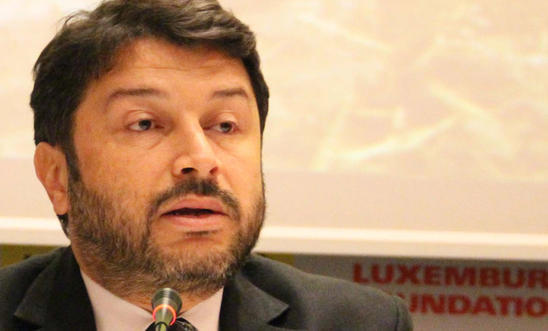
Right now, 11 people who have dedicated their lives to defending the human rights of journalists, activists and other dissenting voices in Turkey are themselves in danger. Among them are Amnesty International’s Director, İdil Eser, and its chair, Taner Kılıç, who remains in prison after five months. All are on trial for ‘terrorism’-related crimes, an absurd charge and face a jail sentence of up to 15 years.

Amnesty International’s Brave campaign calls on governments around the world to protect human rights defenders.

https://www.amnesty.org/en/latest/news/2017/11/amnesty-launches-worlds-biggest-human-rights-campaign/

In memoriam: Corinne Dufka remembers Peter Takirambudde

December 1, 2017

On 1 December 2017 Corinne Dufka of Human Rights Watch wrote a column aboutPeter Takirambudde who passed away on 16 November in his native Uganda. He was head of HRW’s Africa division from 1996 to 2008 during multiple crises, including in Sudan, Sierra Leone, Nigeria, Rwanda, and the Democratic Republic of Congo. After leaving Human Rights Watch, Peter founded and directed the Botswana-based African Human Rights Consortium, which helped train members of civil society from across the continent in human rights investigation and advocacy. Peter was also a lawyer and a well-respected law professor, including at the University of Botswana-Gaborone, where he served as head of social sciences, and at the University of Lund in Sweden. He received a bachelor’s degree from Makerere University in Uganda and a doctoral degree from Yale University.

As noted by Kenneth Roth, Human Rights Watch’s executive director, “We remember him fondly for his deep intellectual engagement with African human rights issues, his always-incisive analysis, and his principled and passionate defense of the rights of people throughout the continent. He made a very important mark establishing Human Rights Watch in Africa, and we remain deeply indebted to him.

The full text below:

Read the rest of this entry »

Side event on human rights defenders working on Business and Human Rights issues

November 23, 2017

This side event will take place during the UN Forum on Business and Human Rights. The event will bring together multiple stakeholders to discuss how to remedy, redress and prevent attacks against human rights defenders working on business and human rights.

Human rights defenders in Zimbabwe rejoice but realize still long away to go

November 23, 2017

With Mugabe’s departure there is light at the end of the tunnel but there is a lot of cleaning up to do. Two recent opinion pieces make the point:

'Mugabe’s departure offers Zimbabwe an opportunity to make a break from its past,' writes Deprose Muchena (Zinyange Auntony, AFP)
‘Mugabe’s departure offers Zimbabwe an opportunity to make a break from its past,’ (Zinyange Auntony, AFP)

Deprose Muchena, Amnesty International’s regional director for Southern Africa, wrote a piece in the Mail & Guardian of 23 November 2017 under title From reconciliation to repression: Mugabe’s painful legacy“.

Muchena traces first Robert Mugabe’s political career that saw early successes ultimately wiped out by a litany of human rights abuses.

Mugabe started well in his early years as leader of Zimbabwe following the transition from British colonial rule. He oversaw heavy investment in Zimbabwe’s social services. Areas including health and education saw dramatic improvements, with the country still enjoying one of the highest literacy rates in Africa. The results of this significant investment in education are there for everyone to see. But Mugabe later undermined his own legacy. During his 37 years in power, he presided over the brutal repression of political opponents, established a culture of impunity for himself and his cronies, and his government implemented a series of policies that have had disastrous consequences for Zimbabweans…Mugabe began his political life fighting against injustice. Imprisoned, and later exiled for his political activities, he was one of more than 900 prisoners of conscience in Zimbabwe adopted by Amnesty International between 1965 and 1979.

After independence political opponents, (repression of Joshua Nkomo’s Zimbabwe Africa People’s Union, military crackdown across Matabeleland and Midlands provinces) ……With nobody held accountable for the killings, a dangerous precedent of impunity was set early on in Mugabe’s reign. It was one he went on to exploit time and again.

Throughout his presidency, general elections were characterised by spikes of serious human rights violations and abuses by state security agents and Zanu-PF activists. Opposition supporters suffered torture, harassment, intimidation and death…A wave of violence unleashed by the army against those suspected of voting for the MDC ensured that Mugabe won by a comfortable margin after the second round of votes was counted.

An increasing reliance on security services to suppress dissenting voices in and outside his party became a hallmark of Mugabe’s rule. Human rights defenders, journalists, those with dissenting views and opposition party activists were locked up on politically motivated charges or under draconian laws. Some were tortured or “disappeared”. Much early progress made on economic, social and cultural rights was wiped out by a series of disastrous government policy decisions. Carried out in 2005, Operation Murambatsvina — a Shona word for “drive out trash” — was one of the most devastating forced evictions in Zimbabwean history…

Although land reform was clearly needed and resulted in some legitimate large-scale redistribution, it was also used as a system of patronage. It rewarded Mugabe’s supporters with land but denied it to those considered supporters of opposition parties. Escaping repression and a shrinking economy, three million Zimbabweans have left the country since 2000…


Mugabe’s departure offers Zimbabwe an opportunity to make a break from its past. Zimbabwe’s future lies in renouncing impunity, addressing the human rights violations of the past, ensuring reparations for the victims and respecting the rule of law. The next generation of leaders must commit to upholding the Constitution and live up to Zimbabwe’s international and regional human rights obligations.

———————–

Supporters of Zimbabwe’s former vice president Emmerson Mnangagwa await his arrival in Harare, Zimbabwe, November 22, 2017. PHILIMON BULAWAYO/ REUTERS

Mandipa Ndlovu says that “during Mugabe’s reign, over one-third of the population (4-million people) was forced to relocate to abroad to seek better opportunities for them and their families, as well as escape the iron-fisted rule of the former president. The end of an era marked the beginning of a newfound hope that released dormant life in the Zimbabwean community both in the country and around the world.

That long-time Mugabe ally, Emmerson Mnangagwa, will become the new president.. has been welcomed in regards to change for the southern African country, but must be engaged with from a nuanced position regarding the sustainability of human rights and good governance in the country…Zimbabweans are past bitterness and anger, we just want recognition and acknowledgement of past wrongs. This is the only way the country can move forward.

The fact is that Britain’s and the West’s policy was that of turning a blind eye to the black Zimbabwean persecutions of 1980 to 1987 and only reacted with economic sanctions when white-occupied farms were invaded in 2000. Moreover, the legacy of colonialism up until this point had remained one which the Zimbabwean people now realise was exploitative. This, for many Zimbabweans, highlights the interests of which demographic of the Zimbabwean population they seek to strengthen. This lack of historical recognition remains a sticking point to the black population of Zimbabwe, who have both lived through and experienced the effect of economic sanctions placed on the country as a result of Mugabe’s rule. One which needs to be rectified…

It would therefore be a disservice to the future of human rights to disregard the need to address this. Zimbabweans need to have these fears allayed through the initiation of both restorative and distributive justice in order to legitimise real change. In this, however, it is imperative to note that Zimbabweans are past bitterness and anger, we just want recognition and acknowledgement of past wrongs. This is the only way the country can move forward.

.. We have not forgotten people such as Itai Dzamara, whose whereabouts still need to be accounted for. It is not enough to remove the face of fear and violence when the potential for the re-engagement with the system still exists under untainted structures of governance. It is imperative that the narrative of ‘Operation Restore Legacy’ under the new regime does not gloss over the grief of loss (material, physical and in time) as linked to trauma and its subsequent memory..

In the new Zimbabwe, there should not be room to romanticise about the past and its legacies. The culture that tip-toes around the acceptability of violence within the public sphere for the perpetuation of political gain must be thwarted. This can be particularly translated to the politics of grief in reconciling the “violence” narrative…Regardless of what reforms are dormant in Mnangagwa’s hat as he ascends to the presidency, the sentiments of cooperation and the respect of human rights expressed in his press statement on November 21 will go a long way in legitimising bodies. These are the ideals to which the Zimbabwean people must continue to hold him and his administration to account.

For some of my earlier posts on Zimbabwe: https://humanrightsdefenders.blog/tag/zimbabwe/

Sources:

https://mg.co.za/article/2017-11-23-from-reconciliation-to-repression-mugabes-painful-legacy

http://www.huffingtonpost.co.za/mandipha-ndlovu/is-there-a-future-of-sustainable-peace-and-human-rights-for-zimbabwe_a_23286098/

Celebrities come out to support Taner Kılıç, Amnesty Turkey’s chair, on trial today

November 22, 2017
Taner Kılıç, Amnesty Turkey’s Chair, has been behind bars for nearly six months
As the trial of ‘Istanbul 10’ and the Chair of Amnesty Turkey resumes today 22 November 2017, more than 70 persons signed an open letter calling for the case against the 11 human rights activists to be dropped. As quite a few celebrities make missteps in the human rights area [see recently: https://humanrightsdefenders.blog/2017/11/10/helen-hunt-joins-list-of-celebrities-that-show-insensitivity-on-human-rights/ ], it is heartening to see names such as Ai Weiwei, Edward Snowden, Anish Kapoor, Catherine Deneuve, Angélique Kidjo, Indira Varma, Tim Farron, Bianca Jagger, Canon Mark Oakley, Hilary Benn, Juliet Stevenson, and Sting among the signatories.In the AI UK letter (see full text and list of signatories below), the group say they’re “proud” to add their voices to “the global demand to end this gross injustice”.

[Amnesty’s Turkey Chair, Taner Kılıç, was arrested on 6 June, jail three days later and remains in detention. Meanwhile, ten other activists, including İdil Eser, the Director of Amnesty Turkey, were detained a month later. Seven of them were remanded in Turkey’s high-security Silivri Prison for almost four months, with one remanded in Ankara’s Sincan Prison. The eight were held for almost four months and released last month at their first hearing. They are all accused of “membership of a terrorist organisation”.] See also: https://humanrightsdefenders.blog/2017/10/12/many-birthday-parties-for-jailed-human-rights-defender-in-turkey/ 

OPEN LETTER AHEAD OF TRIAL OF TANER KILIC AND ISTANBUL 10

On Wednesday the trial of 11 human rights defenders including including Taner Kılıç, and İdil Eser the chair and director of Amnesty International Turkey, will resume in Istanbul. 

The 11 face outlandish “terrorism” charges in what can only be described as a politically-motivated prosecution aimed at silencing critical voices within the country. If convicted they could face jail terms of up to 15 years. This sends a chilling message not just to people in Turkey but around the world. 

With many people unfairly imprisoned as part of the crackdown following the bloody coup attempt in Turkey – including journalists, lawyers and civil society leaders – some may ask: why focus on these 11 people? The answer is simple: when human rights defenders are silenced, all our rights are put at risk. They are the ones that stand up for us. Now we must stand up for them.

We are proud to add our voices to the global demand to end this gross injustice and to immediately and unconditionally release Taner Kılıç from jail.

The Turkish authorities must know that the eyes of the world will be on Istanbul’s central court for this trial. We will not stay silent. Defending human rights is not a crime. 

Signed:

Edward Snowden, human rights activist
Catherine Deneuve, actor 
Ai Weiwei, artist
Angélique Kidjo, musician
Anish Kapoor, artist
Peter Gabriel, musician
Francois Morel, actor 
Elif Shafak, author
Bianca Jagger, human rights activist
Juliet Stevenson, actor
Indira Varma, actor 
Mogens Lykketoft MP, ex-President of the UN General Assembly
Nacho Sanchez Amor, OSCE Human Rights Committee Chair
Mirosław Wyrzykowski, Constitutional judge, Poland
Dr. Shashi Tharoor MP (former UN Under-Secretary General)
Ryan Gage, actor
Pasha Bocarie, actor 
Nazanin Boniadi, actor 
HK, musician
Sting, musician
Anti-Flag, musicians
C 215, artist 
Lucas Belvaux, film maker 
Laurent Gaudé, writer 
El Moustach/Hicham Gaoua, artist  
Said Salhi, Vice president of LADDH (Algeria)
Salil Shetty, Amnesty International Secretary General
Ken Roth, Executive Director, Human Rights Watch
Claude Rolin MP (Belgium)
Tanita Tikaram, musician
Mohamed Fahmy, journalist
Peter Greste, journalist
Mark Oakley, Canon Chancellor of St Paul’s Cathedral
Peter Tatchell, human rights defender
Natacha Régnier, actor  
Franck Pavloff, writer 
Emily Loizeau, musician 
Romain Goupil, film director 
Nicolas Lambert, comedian 
Clotilde Courau, comedian 
David Lammy MP
Caroline Lucas MP
Stephen McCabe MP
Tom Brake MP
Catherine West MP
Carol Monaghan MP
Joan Ryan MP
Christopher Stephens MP
Clive Lewis MP
Jo Stevens MP
Kerry McCarthy MP
Richard Burden MP
Kevin Brennan MP
Jim Cunningham MP
Rosie Cooper MP
Eleanor Smith MP
Wes Streeting MP
Stephen Doughty MP
Daniel Zeichner MP
Stephen Kinnock MP
Geraint Davies MP
Marie Rimmer MP
Grahame Morris MP
Antoinette Sandbach MP
Madeleine Moon MP
Tonia Antoniazzi MP
Preet Gill MP
Phillipa Whitford MP
Sarah Wollaston MP
Gareth Thomas MP
Emma Dent Coad MP
Hilary Benn MP
Tommy Sheppard MP
Olivier Py, France 
Paul Rondin, France
Monika Płatek, President of the Polish Association for Legal Education
Adam Bodnar, former board of United Nations Fund for Victims of Torture
Mikołaj Pietrzak, former Chair of the Human Rights Council of the Polish Bar Council
Krzysztof Śmiszek, co-founder of Polish Society of Anti-Discrimination Law

https://www.amnesty.org.uk/press-releases/ai-weiwei-catherine-deneuve-bianca-jagger-and-peter-greste-among-those-calling-end

Piripkura, doc on Brazilian indigenous peoples, wins Amsterdam Human Rights Award at IDFA

November 22, 2017
Brazil’s “Piripkura” has won the Amsterdam Human Rights Award at this year’s International Documentary Film Festival Amsterdam (IDFA). Recognition for a devastating chronicle, the award comes with a cash prize of €25,000. The jury said of the film: “With this poignant, exceptional story, the filmmakers tackle a broad series of issues that should be high up on the international human rights agenda. The filmic quality of this documentary left us no choice but to award the Amsterdam Human Rights Award to ‘Piripkura.’”The film was produced by Brazil’s Zeza Filmes with Maria Farinha Filmes and Grifa Filmes as associate producers.


“Piripkura,” is a a modern-day ethnographic documentary with distinct differences from its scholarly predecessors. Ethnographic filmmaking started with voyeuristic or educational intentions, as an attempt to show the world something it had never seen. Perhaps it says something about the modern world that these films are now made in the spirit of conservation.

[The film follows Jair Candor, an official with Brazil’s indigenous affairs agency FUNAI, as he ventures into one of the Amazon’s protected indigenous lands, Piripkura. Only three Piripkura tribe-members are still alive today, and only two in their native land. The third, Rita, was forced to flee the lands when logging companies sent in mercenaries to kill the tribespeople, and thus lift government protections of the area. Rita accompanies Candor on his initial visits to confirm the continued existence of Pakyî and Tamandua, the last remaining Piripkura, an undertaking which must be done to sustain the areas protected status. Beyond the inherent dangers of living in the Amazon; corporate farms, fires, logging companies and massive budget cuts to aid agencies are constant threats to the two men.]

More information, and ways to help, can be found at: https://www.survivalinternational.org/about/funai

http://variety.com/2017/film/festivals/idfa-brazilian-doc-piripkura-amsterdam-human-rights-award-1202619003/

Supporting film festivals on human rights in 2018

November 19, 2017

Movies that Matter presented the ten festivals that it recently decided to support. This month, it offered grants to a new round of projects. Among others, two debuting festivals that will receive the start-up grant: for the first time a human rights film festival will take place in Timor-Leste in 2018. To bring the cinema to the people, the Timor-Leste Human Rights Film Festival will use a portable set-up to screen their selection of films at multiple sites. A new film festival will also arrive in South Africa: Shining Lights onto Langa. The festival introduces people to the Sunshine Cinema, a solar powered mobile cinema that converts solar energy into social impact. It brings people together with the intent to uplift grassroots movements and create networks of social change.

Additionally, the support goes to  three film festivals that pay direct attention to LGTBQI+ rights in Turkey, Pakistan and Myanmar. Other supported cinema projects include those in Kyrgyzstan, Moldova, Palestine, Turkey and Peru.

See also: https://humanrightsdefenders.blog/2017/03/01/small-grant-programme-for-human-rights-film-festivals-deadline-17-april/

Read more about all projects that were supported this year

https://www.moviesthatmatter.nl/nieuwsbrief_internationaal/18/international-support-november-2017

Overview of recent campaigning for human rights defenders in Vietnam

November 18, 2017

The NOW! campaign, founded by 14 human rights organizations, calls for the immediate release of 165 prisoners of conscience in Vietnam. The campaign has established a comprehensive online database containing information about Vietnam’s prisoners of conscience. According to the database, Vietnam’s prisoners of conscience included bloggers, journalists, environmentalists, students, farmers, and workers who were arrested for their peaceful activism. Together, these men and women are serving 955 years and one month in prison, followed by 204 years under house arrest. Most of them were charged with violating article 79 of the criminal law, “plotting to overthrow the government”, and article 88, “conducting propaganda against the state”. But Civil Rights Defenders, one of the members of the NOW! campaign, said that the number of prisoners of conscience could be higher. [see also earlier post: https://humanrightsdefenders.blog/2016/01/14/assaults-on-human-rights-defenders-on-the-rise-in-vietnam/]

A letter signed by 17 civil society organizations urged leaders who attended the 2017 summit of the Asia-Pacific Economic Cooperation (APEC) in Vietnam to raise the issue of human rights violations committed by state forces. The letter informed APEC leaders that Vietnam has detained at least 25 peaceful activists and bloggers since last year. “This crackdown is contrary to the goal of “Creating New Dynamism, Fostering a Shared Future” which is the stated theme of this year’s APEC gathering. Arbitrary detention, censorship, and state-sponsored violence against activists and human rights defenders are not only an affront to our common humanity but a grave violation of international human rights laws and standards. We believe it is in the strong interest of APEC and of the international community to speak out against the widespread and systematic violations of human rights violations in Vietnam.”

Nine human rights groups launched the #StopTheCrackdownVN campaign decrying the crackdown of bloggers and activists in recent months and the harsh prison terms handed out to critics of the state. Don Le, a writer and member of Viet Tan political party, explained how the notorious articles 79 and 88 of the law are used by authorities to silence citizens: The law also allows authorities to filter, block or temporarily shutdown networks on the basis of any information that may be seen to “incite” mass gatherings that disturb national security and order. Given the Vietnamese government’s broad interpretation of national security, we might expect to see more attacks and shutdowns aimed at independent media and bloggers and arrests of peaceful community mobilisers.

But Vietnam is not easily impressed as the recent case of reprisals shows: Front Line Defenders reports that three human rights defenders were briefly arrested after meeting the EU Delegation in Hanoi. [On 16 November 2017, human rights defenders Pham Doan Trang, Bui Thi Minh Hang and Nguyen Quang were arrested by police after attending a meeting with the European Union Delegation in Hanoi to discuss human rights issues ahead of the EU – Vietnam Human Rights Dialogue, scheduled for 1 December 2017. After being kept incommunicado without access to legal representation, the human rights defenders were released. They remain under surveillance.] From Line adds that: Authorities in Vietnam have a habit of tightening the grip over human rights defenders and civil society ahead of international meetings. During the APEC Summit in Danang between 6 and 10 November 2017, and afterwards, during the state visits of U.S. President Donald Trump and Chinese President Xi Jinping, several human rights defenders and activists were kept under house arrest and heavy surveillance. Reports also state that human rights defenders were harassed by policemen in plainclothes to prevent them from meeting with international officials or organising demonstrations.

The Office of the UN High Commissioner for Human Rights issued a statement in July 2017 expressing concern about the detention and persecution of citizen journalists: We urge the Vietnamese authorities to immediately release all those detained in connection with their exercise of their rights to freedom of expression, and to amend the overly broad ill-defined laws that are used – under the pretext of national security – to crack down on dissent.

Antoine Bernard, former head of FIDH, joins Reporters Without Borders (RSF)

November 18, 2017
I was slow in announcing the departure of Antoine Bernard as head of the FIDH [https://humanrightsdefenders.blog/2017/10/12/antoine-bernard-has-left-fidh-after-26-years/] but am glad to be more on the ball for his next position: On 14 November 2017 Reporters Without Borders (RSF) announced that Antoine Bernard has been appointed RSF’s deputy director-general in charge of programmes. He will start in January 2018.

Bernard, 51, will help RSF secretary-general and director-general Christophe Deloire to consolidate and develop RSF’s work of defending journalistic freedom and independence at a time of great dangers for journalists.

Bernard said: “In a world dominated by opaqueness, propaganda and impunity for the powerful, journalism is in danger and, with it, human rights and democracy. RSF is waging a fight that is absolutely essential and Christophe Deloire has managed to put RSF at the international forefront of the defence of the freedom to inform and the protection of journalists. I am honoured to join Christophe and his team.

[The past five years have seen very rapid growth in RSF’s activities and influence and enhancement of its image. It has launched major campaigns at the UN and in the field, reinforced and professionalized its headquarters in Paris, doubled its personnel worldwide, developed its bureaux in Washington and Tunis, and created new bureaux in Rio de Janeiro, London and Taiwan. It plans to open two new bureaux in 2018, one in San Francisco and one in Africa.]

https://rsf.org/en/news/former-head-fidh-appointed-rsf-deputy-director-general

Patrick Desbois, French priest who uncovered Nazi killings, awarded Lantos prize

November 10, 2017

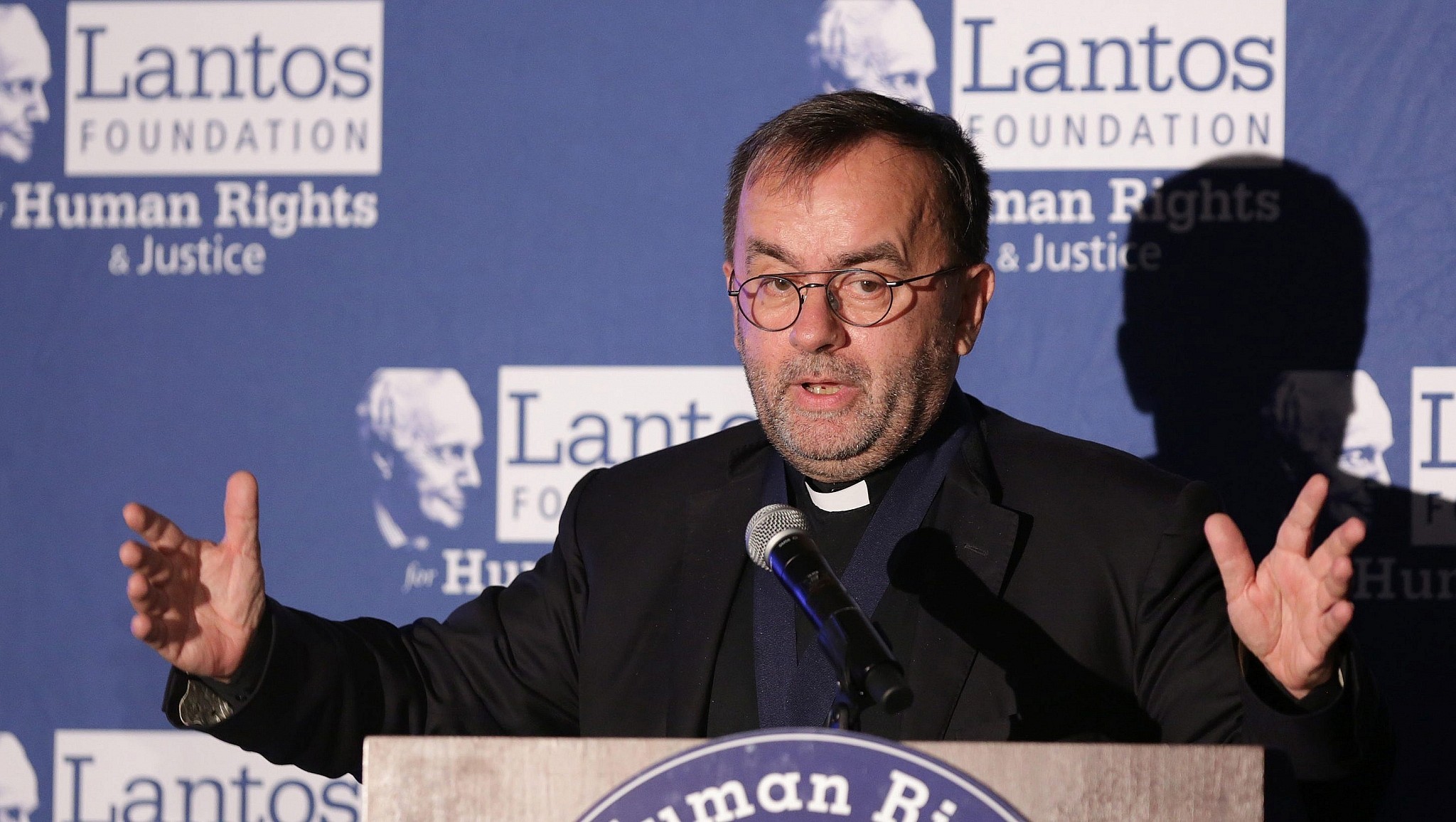
Father Patrick Desbois speaks after being awarded the Lantos Human Rights Prize on Capitol Hill in Washington, DC, on October 26, 2017. (Chris Kleponis)

Father Patrick Desbois speaks after being awarded the Lantos Human Rights Prize on Capitol Hill in Washington, DC, on October 26, 2017. (Chris Kleponis)

Father Patrick Desbois, a Roman Catholic clergyman, whose work has uncovered millions of previously unknown victims of the Nazi genocide was awarded the Lantos Foundation’s Human Rights Prize. The Lantos Human Rights Prize is an annual award given by the Lantos Foundation for Human Rights and Justice, an organization founded by Tom and Annette Lantos, who were both Holocaust survivors. For more on the award see: http://trueheroesfilms.org/thedigest/awards/lantos-human-rights-prize.

Father Patrick Desbois, who teaches at Georgetown University’s Program for Jewish Civilization, was recognized during a reception on Capitol Hill as a “vital voice standing up for the values of decency, dignity, freedom, and justice.” His scholarly reportage on the Holocaust has focused on the Jews who were killed by mass shootings by Nazi units in Russia, Ukraine, Belarus, Poland, Moldova and Romania between 1941 and 1944. In 2004, Desbois founded Yahad-In Unum, a French organization whose sole mission was to locate the mass graves of Jewish victims from Nazi paramilitary death squads. These regiments were responsible for the mass killings of Jews, often by shooting and primarily in the former Soviet Union.

His first book, “Holocaust by Bullets: A Priest’s Journey to Uncover the Truth behind the Murder of 1.5 Million Jews,” was based on that work and the culmination of its discoveries. Desbois has another book — a memoir on his life as an anti-genocide activist and Holocaust scholar — due for publication in 2018.

Other than uncovering unknown truths about the Nazi’s killing operation, Desbois has also been working on collecting evidence of the Islamic State’s massacre of the Yazidi people in parts of Iraq and Syria. [see also: https://humanrightsdefenders.blog/2017/02/09/collecting-human-rights-prize-yazidi-lawmaker-calls-trumps-travel-ban-unfair/]

Source: French priest who uncovered Nazi killing sites awarded Lantos rights prize | The Times of Israel