Archive for the 'Human Rights Defenders' Category

Turkey’s unsuitable candidate for the UN Human Rights Committee

May 18, 2022

Abdullah Bozkurt in the Nordic Monitor of 18 May 2022 points out that Turkey is nominating an unsuitable candidate for membership on the UN Human Rights Committee.

Turkey nominates human rights abuser to UN Human Rights Committee

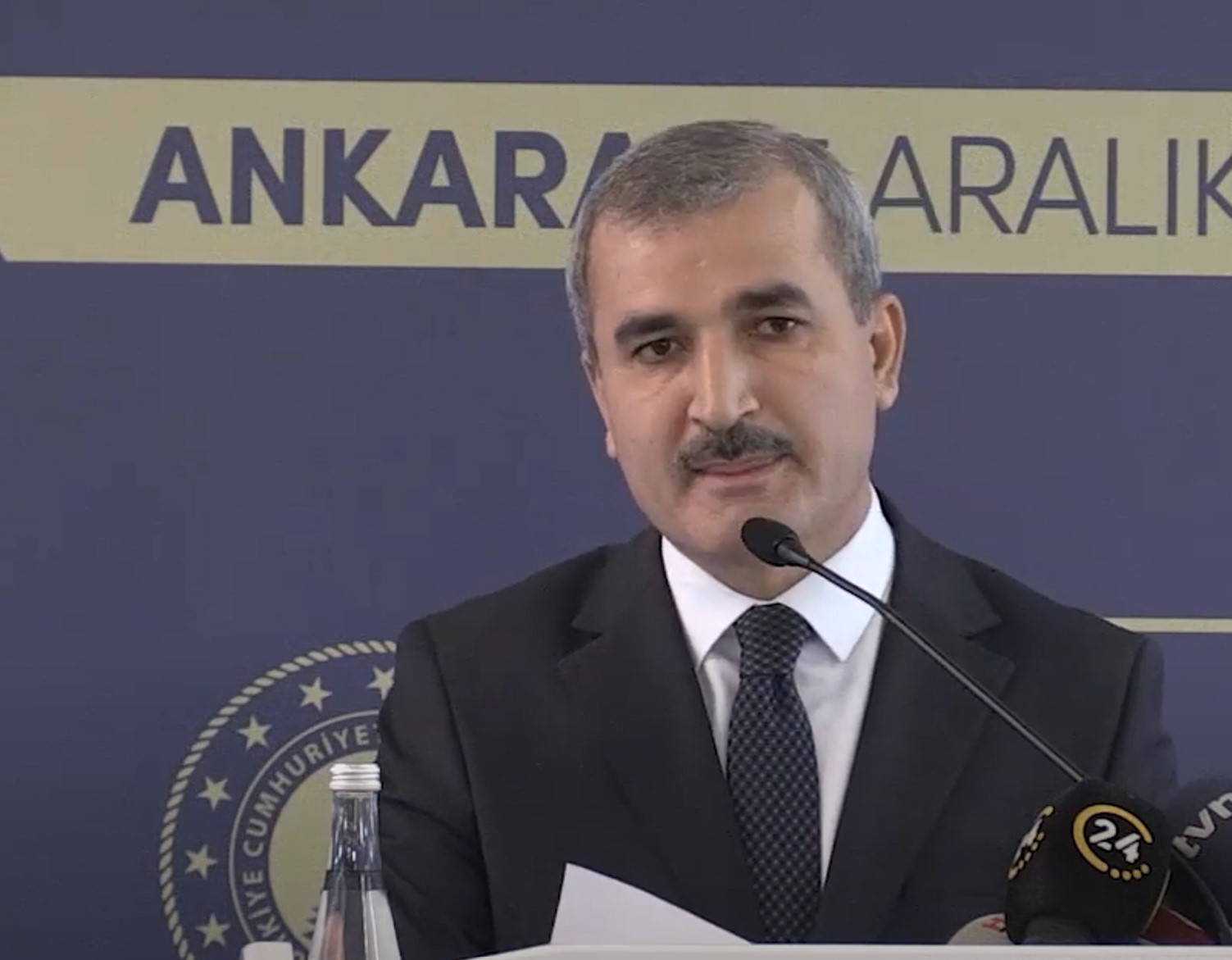
Turkish President Recep Tayyip Erdoğan has nominated a person with a poor human rights record for membership on the UN Human Rights Committee. According to UN documents Hacı Ali Açıkgül, head of the human rights department at Turkey’s Justice Ministry since 2015, was officially nominated to become one of nine new members of the Human Rights Committee.

Açıkgül, a loyalist and partisan official in the Erdoğan regime, hushed up cases of torture and abuse in Turkey’s detention and prison facilities where many people, including journalists, human rights defenders and activists, were subjected to harsh treatment.

The widespread and systematic practice of torture and abuse is approved by the Erdoğan government as part of an intimidation campaign to silence critical and independent voices in Turkey. Complaints of rights abuse fell on deaf ears, while officials who were involved in ill-treatment and torture were granted impunity.

He issued opinions to challenge complaints filed by victims with the Constitutional Court on violation of fundamental human rights and secretly and illegally coordinated with judges and prosecutors to ensure the continuous imprisonment of government critics. He defended the Erdoğan government in cases brought to the European Court of Human Rights.

Açıkgül used his position in the department not only to bury torture and abuse allegations and complaints, but also helped whitewash them when queried by organizations such as the Council of Europe.

International NGO opens office in Taiwan

May 17, 2022

On 16 May 2022 Safeguard Defenders announced the opening of its first Asian office in Taiwan’s capital, Taipei.

With our focus on the decline in human rights in China and other authoritarian states in the region, Taiwan was an obvious choice because of its open society and geographic proximity. Only recently emerging from its own authoritarian past, this progressive democracy has now become a popular base for civil society and media, particularly as Hong Kong’s human rights situation rapidly deteriorates under Beijing’s control.”

The story behind Safeguard Defenders goes back to 2009, the year when a small NGO called China Action was founded in Beijing by human rights activists Peter Dahlin from Sweden and Michael Caster from the U.S. and a small group of Chinese rights lawyers and other human rights defenders (HRD). ,,China Action was shuttered in 2016 after Chinese authorities targeted it in a major crackdown and when many of its staff and partners were detained, disappeared or imprisoned, including Peter. The foundation for Safeguard Defenders was laid in 2016, and was publicly launched in 2017. The organisation has inherited the mission of China Action, but with an expanded scope to support the survival and effectiveness of civil society and HRDs in some of Asia’s most hostile environments, including China.

Safeguard Defenders has been researching developing rule of law issues including arbitrary detention, the black jail systems of RSDL and Liuzhi, forced confessions, transnational repression including global harassment and kidnappings, and the CCP’s secret police institution, the National Supervisory Commission. See e,g, : https://humanrightsdefenders.blog/2022/01/18/china-goes-after-dissidents-abroad/

Coming in the next few months, Safeguard Defenders will have several key and ground-breaking reports on China on issues including the practice of sending political prisoners to psychiatric hospitals, the latest violations of human rights in the name of Covid, and how Beijing has weaponized exit bans. It will also be launching a brand new website. Follow on Twitter. 

China’s reaction will not be nice…

https://safeguarddefenders.com/en/blog/safeguard-defenders-opens-taiwan-office

https://focustaiwan.tw/politics/202205170025

Better “business and human rights” starts with better understanding

May 17, 2022

Andrés Zaragoza in Open Global Rights of 16 May 2022 hits the nail by arguing that “If we want to constructively engage companies, business associations or investors on human rights issues, we must recognize who our interlocutor is.

..Building trust and a common narrative to engage in a constructive conversation is extremely difficult. Some would argue that a trusting relationship between civil society and private companies is not only impossible but also not desirable; that good faith is nowhere to be found in business sectors where human rights abuses can and do take place.

It has already been 10 years since the adoption of the UN Guiding Principles on Business and Human Rights…..The enactment of legislation at the regional and national levels requiring companies to carry out human rights due diligence, such as the newly proposed EU Directive on Corporate Sustainability Due Diligence, as well as negotiations on a binding international treaty on business and human rights, creates a window of opportunity for NGOs to be creative, ambitious, and innovative in testing new advocacy strategies to change corporate conduct and advance human rights.

Despite an understandably dogged legacy of mistrust between civil society and corporations, there is a momentum for human rights organizations to engage productively with businesses, responsible investors, and other private actors that hold increasing market power, leverage, and are subject to new human rights legislation. As we write, global corporations are becoming increasingly relevant actors in international conflicts. In other words, businesses could become powerful allies in advancing human rights’ agendas with governments or in regards to public opinion.  

It’s no mystery that businesses and civil society speak different languages and engage from radically distinct perspectives when referring to human rights issues.

It is true that corporate activism is on the rise, with some companies supporting important causes and campaigns such as LGBTQ+ rights, anti-racism, equality, and non-discrimination. However, companies are not founded for promoting and protecting human rights, even if we may wish it otherwise. Instead, corporations see human rights issues through the lens of their productive and business models. This does not mean that workers or companies do not care about human rights. They do care, especially in certain sectors and business cultures. 

As civil society, we need to identify and understand how to best engage our strategic targets and audiences. If we want to constructively engage companies, business associations or investors on human rights issues, we must recognize who our interlocutor is. Businesses’ core activity is the starting point to analyse any human rights issue: their business, people, customers, and supply chain

Businesses tend to focus on risk identification and mitigation. There is growing recognition that human rights defenders can play a vital role in sounding the alarm on problems within an organization’s operations or supply chain. Generally, ‘UN speak’ does not work with businesses. Civil society should avoid jargon when engaging with business circles. Business representatives seek examples and clarity on which human rights issues are of concern and how they are relevant to their operations. See also: https://humanrightsdefenders.blog/2019/01/21/davos-businesses-need-strong-human-rights-defenders/

Civil society should not automatically feel good about the fact that a company has a person with “human rights” written in their title. Unfortunately, this often means that a position was created for compliance or reputational management purposes, to deal discreetly with human rights issues, or engage (read: manage) civil society relations. By contrast, companies that take human rights seriously embed the topic across functions and departments, working towards including human rights within the company’s ethos. 

To achieve change, civil society should make every effort to better understand the complexity of a particular company, its economic sector, activity, internal governance, corporate values, and culture. Each company has its own systems and structure, progressing through their human rights journey differently. 

On a micro level, the individual background, connections, and motivations of the human rights personnel within the company have great bearing on how issues are pushed through a company. At the systemic level, NGOs must understand the functioning of international business, economics, investment and trade.  

Lessons learnt and scars taken 

..Civil society should understand and use the market. As companies need to comply with human rights and sustainability regulations, NGOs and defenders can become key in risk assessment or due diligence processes, influencing directly the behavior of companies. We need to know the “enemy” and know ourselves. As civil society, we should build our technical capacity to understand and leverage international business, economics, investment and trade. We will not change business dynamics if we do not understand them.

See also: https://humanrightsdefenders.blog/2022/02/18/business-network-on-civic-freedoms-and-human-rights-defenders-launches-new-website/

https://www.openglobalrights.org/what-it-takes-to-bridge-the-divide-between-the-business-sector-and-human-rights/
NGOs condemn arbitrary arrest of pro-democracy activists in Hong Kong

May 15, 2022

NOGs (such as Human Rights Watch and the Human Rights Foundation) have condemned the arrest of Cardinal Joseph Zen, as well as the lawyer Joseph Zen, the singer Denise Ho and the scholar Hui Po-Keung, for having maintained contacts with foreign forces in Hong Kong.

HRW Senior China researcher Maya Wang, said that “the arrest of a 90-year-old cardinal is the latest example of the city’s human rights freefall in recent years.

The four, along with former lawmaker Cyd Ho, who is already in jail, were part of the 612 Humanitarian Aid Fund, which provided medical, legal and psychological help to protesters arrested during the 2019 pro-democracy protests in Hong Kong. Kong.

Denise Ho, Margaret Ng, and others affiliated with Stand News, an independent pro-democracy online publication, were previously arrested by national security police in December 2021 under allegations of publishing “seditious” and “inflammatory” materials. Denise Ho formerly served on the board of Stand News, but stepped down in November 2021. Meanwhile, the 612 Humanitarian Support Fund ceased operations in October 2021 after national security police and Chinese state-backed media requested information on its beneficiaries and donors.

Maya Wang has specified that Hong Kong has “long been a regional leader in openness and respect for the rule of law, but now competes for the first places in Asia for repression and political prisoners.”

The people of Hong Kong have been unequivocal in their demand for human rights, and governments around the world should be unequivocal in their response to that call,” concluded the HRW researcher.

https://mailchi.mp/hrf.org/hong-kong-hrf-condemns-arbitrary-arrest-of-denise-ho-and-colleagues?e=f80cec329e

Norwegian Human Rights Fund: annual report 2021

May 13, 2022

The NHRF stated that 2021 has been another challenging year with numerous obstacles for human rights defenders, such as restrictive legislations, harassment, threats and attacks…
Many of our grantee partners risk their wellbeing, their security and their lives for the important work they do. They are on the front line for all of us. We particularly remember those who lost their lives this
year in the struggle for human rights. We promise to continue to work in their spirit.
For more annual reports 2021, see: https://humanrightsdefenders.blog/tag/annual-report-2021/

In 2021, the NHRF has supported 106 organisations in 11 countries. We hope that this annual report will give you an inspiring insight into their work in 2021. In our new 2021-25 strategy, the three strategic areas are:

1) Fight against impunity and for access to justice,

2) Dismantling discrimination, inequality and marginalization and

3) Protecting human rights defenders and the right to defend rights.

To reach our goals we work through direct financial support to human rights work, networking and capacity building and through communications, advocacy and strategic alliance building.

Voices from the ground must be heard where decisions are made. People sometimes say that they want to be ‘the voice of the voiceless’. We do not see our job as being someone’s voice. We see our task as creating and facilitating the spaces for human rights defenders to use their own voices.
Another world is not only possible, she is on her way. On a quiet day, I can hear her breathing.

We want to thank our donors, cooperation partners, the UN special rapporteurs we
work with, our board, our advisory board and all our followers and supporters, for the solidarity and encouragement you have provided in 2021!..Together we will prove that another
world is indeed possible.

Historic vote: Russia also out of ECOSOC NGO Committee

May 13, 2022

On Wednesday, 13 April, members of the United Nations Economic and Social Council (ECOSOC) elected 19 members to the UN Committee on NGOs, a body frequently criticised for restricting civil society participation at the UN. See my earlier posts on this topic: https://humanrightsdefenders.blog/tag/ngo-committee/

Members of the United Nations Economic and Social Council (ECOSOC) voted to elect 19 members for the next 4 year term (2022-2025) of the ECOSOC Committee on NGOs. The 19 members of the Committee, elected from five regional groups, are the gatekeepers for civil society at the UN as they decide which NGOs receive UN accreditation participation rights.

In the election, the Eastern European States was the only regional group which presented a competitive slate, as three candidates, Armenia, Georgia and Russia, contested for the two available seats. Armenia, Georgia and Russia received 47, 44 and 15 votes respectively. As a result, Russia,  a member of the Committee since its establishment in 1947, has been voted out. This result comes one week after a historic resolution of the UN General Assembly to suspend Russia’s Human Rights Council membership. https://humanrightsdefenders.blog/2022/04/08/suspension-of-membership-un-human-rights-council-finally-operationalised/

Despite Russia’s departure, the incoming NGO Committee still includes members with deeply problematic records on safeguarding human rights and civil society participation. According to the CIVICUS Monitor, 60% of the incoming members are currently characterised as being ‘closed’ or ‘repressed’ civic spaces. This includes all members for the Asia-Pacific region. Civic space is ‘obstructed’ or ‘narrowed’ within the remaining 40%.

Members of the NGO Committee are the primary decision makers on which NGOs can access UN bodies and processes,” said Maithili Pai, Programme Officer and ISHR focal point for civil society access and participation. “States must fulfil their fundamental mandate under ECOSOC Resolution 1996/31 by acknowledging the breadth of NGO expertise and their capacity to support the work of the UN, and ensuring just, balanced, effective and genuine involvement of NGOs around the world.” she added.

ISHR is aware of 352 currently deferred organisations seeking UN accreditation, at least 40 which have faced over four years of deferrals, and one that has been deferred for 14 years. In response, ISHR sought to campaign for states to engage in competitive and meaningful elections that could produce positive outcomes for civil society. We urge incoming members of the Committee to open the doors of the UN to civil society groups from around the world.

https://ishr.ch/latest-updates/ecosoc-committee-on-ngos-elections-russia-voted-out-for-first-time-in-75-years/

Floribert Chebeya: DR Congo policeman sentenced to death for murder

May 13, 2022
Floribet Chebeya
Floribert Chebeya, murdered in 2010, received regular threats in his 20-year career

On 12 May 2022 – via the BBC – came the welcome news that finally a Congolese military court has sentenced a high-ranking policeman to death for his role in the 2010 murder of human rights activist Floribert Chebeya, which caused national outrage. See: https://humanrightsdefenders.blog/2021/02/12/dr-congo-should-reopen-inquiry-into-murder-of-floribert-chebeya/

Commissioner of police Christian Ngoy Kenga Kenga was found guilty of murder, desertion and misappropriation of weapons and ammunition. Mr Chebeya’s body was found bound and gagged in his car in Kinshasa.

There is a moratorium on capital punishments in DR Congo. However, the death penalty has not been abolished and military courts continue to hand down such sentences.

Another policeman, Jacques Migabo, was also sentenced to 12 years during the trial. He admitted to having strangled Mr Chebeya and his driver, Fidèle Bazana.

Police commissioner Paul Mwilambwe, who had been a key witness in the trial, was acquitted, UN-sponsored Radio Okapi says.

Mr Mwilambwe, who had been a fugitive since the murder and was only repatriated last year, named ex-President Joseph Kabila and the former head of police General John Numbi, as having ordered the killing. Neither Mr Kabila nor Gen Numbi have commented publicly, but a military court has charged the general with the murder of Mr Chebeya and his driver. He has fled the country and his current whereabouts are not known.

Kenga, Migabo and Mr Mwilambwe were initially sentenced to death in 2011, with Kenga arrested in 2020 in the southern city of Lubumbashi before the case was re-opened last September. Floribert Chebeya led the Congolese charity Voice of the Voiceless, and as a prominent critic of the government received regular death threats during his career of more than 20 years. See also: https://www.trueheroesfilms.org/thedigest/laureates/BA601D45-292F-61CB-530A-17FE52D5F974

He went to the police headquarters to meet the then head of the national police force, Gen Numbi, on the day he was killed. His driver Mr Bazana also went missing that day with authorities later pronouncing him dead.

See also: https://www.news24.com/news24/africa/news/widow-of-slain-drc-human-rights-defender-urges-drc-to-try-alleged-mastermind-who-fled-20220516

https://au.news.yahoo.com/floribet-chebeya-dr-congo-policeman-112444817.html

Sedition law suspended by India’s Supreme Court

May 12, 2022

Having posted before about this nefarious law [see also: https://humanrightsdefenders.blog/2021/06/16/delhi-high-court-re-establishes-that-criticism-is-not-sedition/], it is good news that on 11 May 2022 India’s Supreme Court suspended this law which activists say is often used by Prime Minister Narendra Modi’s government to target free speech and dissent.

Mr Modi’s critics say that the law, which was once used by Britain to target independence hero Mahatma Gandhi, has been abused by his government against many journalists, activists, and students. Section 124A of the Indian penal code gives wide-ranging powers to the police to arrest people, who can even face life imprisonment, for an act or speech that “brings or attempts to bring into hatred or contempt, or excites or attempts to excite disaffection towards the government”.

India’s official crime data says 236 people faced sedition charges between 2018 and 2020. India sparked global outrage last year after 22-year-old climate change activist Disha Ravi was arrested for sedition for allegedly creating a “toolkit” to aid anti-government farmer protests.

See also:

The rigours of Section 124A (are) not in tune with the current social milieu, and was intended for a time when this country was under the colonial regime,” India’s chief justice N V Ramana, part of a three-judge bench hearing a petition against the law, said. Mr Ramana asked the government not to file any new sedition cases and pause ongoing sedition investigations.

All pending trials, appeals and proceedings” under sedition, the court said, “be kept in abeyance” until the “re-examination of the provision is complete“.

The government had said Monday that it had decided to “re-examine and reconsider” the law but it remained in force. The top court also urged people jailed for sedition to approach local courts for bail.

Amnesty International welcomed the Supreme Court’s order “For far too long, authorities have misused the sedition law to harass, intimidate, and persecute human rights defenders, activists, journalists, students, filmmakers, singers, actors, and writers for peacefully exercising their right to freedom of expression,” Aakar Patel, Chair of Amnesty International India’s Board, said. “Sedition has been used as a tool of political repression by successive governmens”i

Nagpur-based lawyer Nihalsingh Rathod, who represents many accused in the Elgar Parishad case said the legislature should have re-examined the relevance of sedition a long time ago. The Supreme Court’s interim order was an important step in rights jurisprudence, he said.

“It won’t bring complete respite as no state invokes an isolated provision. In present cases too they invoke many provisions, including UAPA. But still, it brings hope that the process of looking at sedition and jurisprudence around it is being re-examined. It offers some hope that sedition law will undergo some churn that has never happened,” he said…

https://www.sbs.com.au/news/article/indias-top-court-suspends-use-of-controversial-sedition-law/wy0racqs4
https://economictimes.indiatimes.com/news/india/sedition-law-lawyers-and-free-speech-activists-welcome-sc-order/articleshow/91500777.cms?utm_source=contentofinterest&utm_medium=text&utm_campaign=cppst

Profile of Soun Yuthyia from Cambodia

May 11, 2022

I chose to be a human rights defender by, hopefully, protecting those who don’t know where to find a solution when there are human rights abuses happening to them.”

Soun Yuthyia is the advocacy director for The Cambodian Centre for Human Rights, an organisation that seeks to protect and promote respect for human rights throughout Cambodia. He shares his vision for the future of Cambodia and how his work has positively impacted the people of Cambodia.

Yuthyia also shares his experience with HRDAP and the ISHR Academy in the below video:

https://www.youtube-nocookie.com/embed/vAfHKFScArU

https://ishr.ch/defender-stories/human-rights-defenders-story-soun-yuthyia-from-cambodia/

Deutsche Welle Freedom of Speech Award 2022 to two Ukrainian journalists

May 10, 2022

DW Freedom of Speech Award 2022

Ukrainian visual journalist and novelist Mstyslav Chernov and photojournalist Evgeniy Maloletka are this year’s DW Freedom of Speech Award laureates. For more on this and other awards for press freedom, see: https://www.trueheroesfilms.org/thedigest/awards/b9e2c660-8e41-11ea-b31d-31ce896d8282

Mstyslav Chernov and Evgeniy Maloletka have a way of reporting that is painful to read and watch, but what really hurts is the truth that their reporting conveys: Russia brutally attacking Ukraine, and thereby Ukrainian civilians, under a fabricated pretense. While there are nuances to every story, there is no way facts can be negotiated. This is exactly what the Kremlin is doing: Distorting facts, spreading misinformation,” said DW Director General Peter Limbourg. “

The journalists, who both remain in Ukraine to continue their coverage of the war, welcomed the news about receiving the DW Freedom of Speech Award as an acknowledgment of their work. The award ceremony will be held on June 20 as part of the DW Global Media Forum.

AP journalist and novelist Mstyslav Chernov and freelance photojournalist Evgeniy Maloletka are both from eastern Ukraine. Previously, their reports and footage from the conflicts in Crimea and eastern Ukraine have been published in various international media, including BBC, Deutsche Welle, The New York Times, Washington Post, Der Spiegel and others. As a war reporter in several conflict zones such as Iraq or Syria, Chernov has been wounded multiple times. Before the war, Maloletka had also been working on a project about the Hutsul community in western Ukraine, their traditions and daily life, and on the impact of the conflict in the Donbas. Evgeniy Maloletka is a freelance photojournalist based in Kyiv.

The report “20 days in Mariupol: The team that documented city’s agony” offers a unique account of Mariupol under Russian siege, with Chernov and Maloletka being the last journalists in the city before their evacuation. They documented the city’s first deaths at the city hospital of Mariupol and the attack on the maternity ward with pregnant women and children in it, as well as numerous bombings. During this work, the journalists themselves were under constant attack and took great risks only to find a steady connection to upload their footage of the siege, bringing it to the attention of the international community. They were evacuated by Ukrainian soldiers to avoid them falling into the hands of Russians, who had been hunting them down.

AP Senior Vice President and Executive Editor Julie Pace: “Mstyslav and Evgeniy were the world’s eyes and ears in Mariupol, producing courageous and compelling reporting as the only international journalists inside the besieged city. The harrowing realities of Russia’s war would have remained unseen without their bravery. We are extremely proud of their work.

See also: https://www.aljazeera.com/news/2022/5/9/pulitzer-prize-board-honours-courage-of-ukrainian-journalists

https://www.dw.com/en/dw-freedom-of-speech-award-2022-goes-to-ukrainian-journalists-mstyslav-chernov-and-evgeniy-maloletka/a-61638608