Archive for the 'Human Rights Defenders' Category

Prime Minister should refrain from filing criminal lawsuit against human rights defender Yingcheep Atchanont

August 12, 2026

© iLaw

On 22 July 2026, Prime Minister Anutin Charnvirakul announced that he would file a criminal defamation complaint against Yingcheep Atchanont, the director of the Thai non-governmental organisation Internet Law Reform Dialogue (iLaw), an FIDH member organisation, over allegations linking the Prime Minister to irregularities in the election of the 200-member Senate, which was held between 9 and 26 June 2024. On 4 August 2026the International Federation for Human Rights (FIDH) and the World Organisation Against Torture (OMCT), within the framework of the Observatory for the Protection of Human Rights Defenders, urge Thailand’s Prime Minister Anutin Charnvirakul to refrain from filing a criminal defamation complaint against Thai human rights defender Yingcheep Atchanont, in connection with his legitimate work of monitoring public affairs and promoting democratic accountability.

The legal action stemmed from Yingcheep Atchanont’s submission of a petition to the opposition coalition in the House of Representatives on 21 July 2026, seeking a parliamentary examination of allegations that nine politicians from the Bhumjaithai Party, including Prime Minister Anutin, five cabinet ministers, and three senior figures, were involved in vote manipulation during the June 2024 Senate election.

According to iLaw’s investigation, evidence and witness statements suggested irregularities including candidate arrangements, the distribution of voting instructions, and the provision of financial incentives to candidates by networks linked to the Bhumjaithai Party, across different stages of the election process, which raised serious concerns over the integrity and transparency of the polls.

The Observatory recalls that since its founding in 2009, iLaw has played a prominent role in advancing democratic participation, freedom of expression, and a fair justice system in Thailand. The organisation has documented the impact of repressive laws and decrees adopted following the 2006 and 2014 military coups d’état and campaigned for their reform through public engagement and online advocacy. It has also worked to support citizen participation in legislative and constitutional reform processes, particularly through campaigns to collect signatures for proposed legislation and initiatives to amend Thailand’s military-backed 2017 Constitution. In addition, iLaw has contributed to strengthening electoral transparency by systematically documenting voting irregularities and mobilising citizens to participate in election observation.

The June 2024 Senate election gave rise to allegations of systemic fraud and vote-buying. Under the new selection system, more than 40,000 candidates voted among themselves through multiple rounds of selection at the district, provincial, and national levels to determine the 200-member Senate. The results led to public scrutiny particularly due to the disproportionately high number of successful candidates from provinces where the Bhumjaithai Party enjoyed strong electoral support.

A separate investigation conducted jointly by the Election Commission (EC) and the Department of Special Investigation (DSI) was concluded in July 2025. The investigation found sufficient evidence to prosecute 229 individuals, including 138 senators and 91 political figures associated with the Bhumjaithai Party, in connection with fraudulent practices during the June 2024 Senate election, in violation of the 2018 Organic Act on the Acquisition of Senators. However, in March 2026, an EC subcommittee voted to overturn the earlier finding. The conflicting recommendations were subsequently submitted to the EC for a final decision, which is expected in late August 2026.

The Observatory denounces the criminal lawsuits against Yingcheep, which appear to be in retaliation against the peaceful exercise of his right to freedom of expression, as enshrined in international human rights law, in particular in Article 19 of the International Covenant on Civil and Political Rights (ICCPR), to which Thailand is a state party.

The Observatory calls upon the Thai authorities to ensure that all complaints are dropped and urges them to take concrete steps towards the decriminalisation of defamation under Articles 326 and 328 of the Criminal Code, which are used to intimidate, silence, and harass human rights defenders in Thailand.

https://www.fidh.org/en/region/asia/thailand/thailand-prime-minister-should-refrain-from-filing-criminal-lawsuit

Algeria: UN experts demand release of arbitrarily detained journalist Hassan Bouras

August 11, 2026

On 10 July 2026, UN experts expressed deep concern over the detention of Algerian journalist and human rights defender Hassan Bouras, who faces serious risks after several weeks on hunger strike in detention.

“We are deeply concerned by the ongoing arbitrary detention of Mr. Bouras, as well as the serious risks to his life, health and physical integrity,” the experts said.

On 12 April 2026, plainclothes security agents apprehended Bouras outside his home in El Bayadh, reportedly without a warrant or explanation. The following day, the El Bayadh court ordered his pre-trial detention on several charges, including membership of a terrorist organisation and disseminating publications deemed harmful to the national interest.

“We are troubled that his arrest and detention appear to be linked to the peaceful exercise of his rights to freedom of expression, to promote, protect and defend human rights as well as to participation in public affairs through his work as a journalist and human rights defender,” the experts said.

The arrest follows a pattern of judicial harassment linked to Bouras’ journalistic and human rights activities.

On 2 May, Bouras was placed in solitary confinement for beginning a hunger strike to protest his detention and the violation of his human rights. During the hunger strike, which lasted 26 days, he collapsed twice and developed serious health complications without receiving adequate medical care – a matter of acute concern given his pre-existing cardiac and respiratory conditions. His deteriorating condition raised acute concerns for his health and well-being.

On 22 June, his case was referred to the local criminal court and is now pending trial. This comes amidst increasing concerns regarding restrictions on civil and political rights and freedom of the press in the country, as well as the ability of journalists and human rights defenders to carry out their work free from intimidation.

The experts stressed that deprivation of liberty for the legitimate exercise of freedom of expression is incompatible with international human rights law. They recalled that all persons deprived of liberty must be treated with humanity and respect for their inherent dignity and body integrity.

“We urge Algerian authorities to act without delay to protect Mr. Bouras’ life, health and freedom of expression. He must be granted immediate access to legal counsel and adequate medical care,” the experts said.

“We call for Mr. Bouras’ immediate release and for an end to the broader pattern of harassment and prosecution of journalists and human rights defenders in Algeria.”

https://www.ohchr.org/en/press-releases/2026/07/algeria-un-experts-demand-release-arbitrarily-detained-journalist-hassan

https://www.frontlinedefenders.org/en/case/case-history-hassan-bouras

UN experts urge Thailand not to extradite Chinese journalist Bai Zhaodong

August 11, 2026

UN human rights experts have urged Thailand to halt the possible extradition of Chinese journalist Bai Zhaodong, warning he could face persecution, torture and other serious rights violations if returned.

United Nations human rights experts have called on Thailand to prevent the possible extradition of Chinese journalist and human rights defender Bai Zhaodong to China, warning that his return could expose him to persecution, torture and other serious human rights abuses.

In a press release, the experts urged Thai authorities to uphold the principle of non-refoulement, which bars countries from transferring individuals to places where they face a genuine risk of persecution or other serious harm.

Bai left China in 2023 after allegedly facing persecution over his human rights activities and was subsequently recognised as an asylum seeker. The UN experts said he has been held in Thai immigration detention since January 21, 2026, despite having completed a two-month prison sentence imposed in March for immigration-related offences.

The experts noted that Bai’s planned resettlement to a safe third country was reportedly blocked on two separate occasions. They also expressed concern that Chinese authorities have formally requested his extradition.

”Immigration status alone cannot justify prolonged deprivation of liberty. Human rights defenders seeking international protection must not be returned to countries where they are at risk of facing persecution, torture or other irreparable harm,” the experts said.

The statement also highlighted concerns over Thailand’s recently approved draft regulations introducing a unified and expedited deportation process for foreign nationals. The Thai Cabinet approved the framework on July 14, 2026.

https://www.firstpost.com/world/un-experts-urge-thailand-not-to-extradite-chinese-journalist-bai-zhaodong-warn-of-persecution-and-torture-14036781.html/amp

https://www.ohchr.org/en/press-releases/2026/08/un-experts-urge-thailand-not-return-human-rights-defender-bai-zhaodong-china

What if AI could be a tool for freedom? HRF’s Alex Gladstein thinks so.

August 7, 2026

Chief Strategy Officer, Alex Gladstein, of the Human Rights Foundation featured on BBC World Service

HRF’s Chief Strategy Officer, Alex Gladstein, featured on BBC World Service

HRF Profile

Human Rights Foundation

What if AI could be a tool for freedom? In conversation with Owen Clegg from BBC World Service, Alex Gladstein, Chief Strategy Officer at the Human Rights Foundation, explores how artificial intelligence can empower human rights activists, expand access to information, and help counter authoritarian uses of technology.

While AI is often framed through the lens of risk, Alex explores how the technology can also empower activists, journalists, and opposition movements around the world by supercharging their work through personal and organizational agents. He points to Venezuela, where opposition groups responding to a humanitarian crisis have used AI to quickly build crowdfunding infrastructure that would otherwise have required significant time, technical expertise, and resources helping deliver aid. Listen to the full conversation below.

To learn more about the AI for Individual Rights program, join HRF’s AI newsletter. Subscribe here

HURIDOCS 2025 Annual Report: A year of holding ground

August 5, 2026

In 2025, the human rights sector faced extraordinary pressure. Across the world, civic space continued to shrink, funding landscapes shifted, and the communities that defenders serve faced mounting threats. Yet people, organisations, and movements chose to stay together, reinforce what matters, and keep the threads of accountability intact.

This year’s annual report is built around that idea. Civil society is a fabric, held together not by any single institution but by the many hands that choose to show up, stitch by stitch, in pursuit of justice. HURIDOCS’ role is to strengthen that fabric, through three interconnected areas of work:

Partnerships: Patchwork of purpose
Working alongside human rights defenders and civil society organisations worldwide to co-build the tools and systems they need.

Technology: Loom of innovation
Building open, accessible tools designed to outlast the moment, helping changemakers collect, protect, and make sense of information.

Research: Threads of learning
Shaping wider conversations on documentation, technology, and justice through thought leadership and active engagement with academic and practitioner communities.

HURIDOCS remained committed to strengthening that fabric in 2025, supporting 47 projects across 38 countries to ensure that documentation work could continue, evidence could be preserved, and the pursuit of justice would not be interrupted.

“Civil society is a quilt. Organisations are not isolated pieces. People move between them, ideas travel, partnerships form, and when one part of the fabric wears thin, others help mend it. The strength of civil society has never come from any one institution. It comes from the fabric we create together.”
— Danna Ingleton, HURIDOCS Executive Director

Partnerships: Patchwork of purpose

HURIDOCS supported 47 projects across 38 countries, from transitional justice in the Somali Region of Ethiopia to civil liberties monitoring in Indonesia, from death penalty defence across Asia to economic, social and cultural rights advocacy in Türkiye. Each partnership was shaped by the needs, expertise, and context of the communities our partners serve, ranging from long-term collaborations to rapid responses to crisis documentation needs.

The HURIDOCS Documentation Fund

Now in its third year, the Documentation Fund provided pro bono or subsidised support to 18 projects across a wide range of human rights, environmental, and humanitarian contexts, ensuring that under-resourced defenders could access the tools and expertise they need to document safely and effectively.

Technology: Loom of innovation 

In 2025, Uwazi became faster, smarter, and more resilient. When a series of sophisticated distributed denial-of-service attacks disrupted traffic to a number of public instances early in the year, the team responded swiftly and emerged stronger. Five new machine learning capabilities were developed, reducing the manual burden of documentation work and enabling partners to process complex information with greater speed and accuracy. A comprehensive redesign of the user interface and a foundational data layer upgrade are well underway, making Uwazi more powerful and more intuitive than ever.

Research: Threads of learning

For over four decades, HURIDOCS has shaped wider conversations on documentation, technology, and justice. We hosted Dr Tomiwa Ilori as part of the OTF Information Controls Fellowship Program, culminating in a joint research report on digital security tools for human rights defenders in Sub-Saharan Africa. We also contributed to academic initiatives, delivered guest lectures, and participated in international forums, reinforcing our role as a thought leader and field shaper in global discussions on human rights documentation.

Finances: Weave of support

HURIDOCS continued to navigate a complex funding landscape in 2025, strengthening existing partnerships and exploring new avenues for collaboration. We remain deeply grateful to our donors and supporters whose commitment made this work possible.

Download the 2025 Annual Report

Call for inputs to the report of the Special Rapporteur on the mental health of human rights defenders

August 4, 2026

The Special Rapporteur on the situation of human rights defenders invites States, national human rights institutions, civil society organizations, human rights defenders, medical and mental health professionals, academics, United Nations entities, regional organizations, donors, and other relevant stakeholders to provide inputs for an upcoming thematic report to the 64th session of the Human Rights Council on the mental health and psychosocial well-being of human rights defenders. [https://humanrightsdefenders.blog/2026/03/10/andrea-bolanos-vargas-next-special-rapporteur-on-human-rights-defenders/]

Human rights defenders play a vital role in promoting and protecting human rights, fundamental freedoms, democratic values, environmental protection, and social justice. In carrying out their work, defenders are frequently exposed to a range of pressures and risks, including threats, harassment, intimidation, surveillance, criminalization, arbitrary detention, reprisals, online abuse, displacement, and violence. These experiences may have significant consequences for their mental health and psychosocial well-being.

The report aims to examine the challenges faced by human rights defenders in maintaining their mental health and well-being, identify barriers to accessing adequate support, and highlight promising practices and measures that can help create enabling environments in which defenders can safely and sustainably carry out their work.

The Special Rapporteur welcomes contributions from all regions and encourages submissions reflecting the experiences of defenders working in diverse contexts, including women human rights defenders, Indigenous defenders, environmental and land rights defenders, LGBTIQ+ defenders, journalists, lawyers, trade unionists, youth defenders, defenders with disabilities, and defenders operating in situations of conflict, occupation, humanitarian crises, or authoritarian settings.

A detailed outline is to be found in the document.

FIDH publishes its somber 2025 annual report

August 3, 2026

Paris, 24 July 2026. “Never in recent years have human rights been attacked with such brutality.” These are the words with which FIDH President Alexis Deswaef opens the editorial that sets the tone for the 2025 activity report.

FIDH brings together nearly 200 human rights organisations from around the world. Despite a global context increasingly hostile to human rights and in the face of rising authoritarianism on every continent, FIDH is stepping up its proactive work through the documentation of violations, advocacy initiatives and strategic litigation, as well as by mobilising its network to support the work of human rights defenders.

Among the notable achievements of 2025, mention may be made of the contribution to:
 the release of 99 human rights defenders, thanks to the joint action of FIDH and its member organisations;
 the recognition by the Inter-American Court of Human Rights of the severity of the crisis in Nicaragua;
 the conviction by French courts, under universal jurisdiction, of a leader of a Syrian armed group;
 the inclusion, for the first time, of human rights in the final texts of COP 30 in Belem.

By filing a complaint against Franco-Israeli soldiers and raising the alarm over the crackdown on the Palestine solidarity movement in France, Germany, the United Kingdom and the United States, FIDH also remained engaged on the situation in Gaza and is committed to a long fight for justice.

In the face of multiple attacks, refusing to give up is what drives the Federation forward. Guided by the same vision for over a century — the absolute universality of human rights — and the conviction that to act is the best way to hope, FIDH will continue to turn warnings into action wherever it can.

Read the full report here.

https://www.fidh.org/en/about-us/What-is-FIDH/

UN High Commissioner for Human Rights Volker Türk deplores crackdown on fundamental freedoms in Uganda

August 1, 2026

On 30 July 2026 UN High Commissioner for Human Rights Volker Türk denounced the crackdown on dissent in Uganda, alongside a gradual erosion of the rule of law, increased military involvement in civilian institutions, and shrinking civic space – all of which are creating a climate of fear throughout the country.

“I am appalled that the authorities are increasingly targeting any form of dissent, and deepening restrictions on the fundamental freedoms of all those living in Uganda,” said Türk. “Those who dare to speak out are silenced.”

Since the general elections on 15 January 2026, repression has increased against all those perceived to oppose the Government. According to information received by the UN Human Rights Office, since the elections, at least 50 opposition leaders and supporters, five human rights defenders and five journalists have been subjected to human rights violations. These include instances of enforced disappearance, torture and ill-treatment, and arbitrary arrest or detention based on legal provisions which do not comply with international human rights law.

In addition, 10 leading civil society organisations have been suspended since January 2026, while others have been closely scrutinised and, at times, subjected to harassment.

The Office has also received information about increased military involvement in functions ordinarily carried out by civilian institutions. Some media outlets have been forced to close temporarily.

In May 2026, the Protection of Sovereignty Act was enacted, imposing extensive restrictions on international funding and foreign engagement with civil society organisations. The legislation includes severe penalties, including prison sentences of up to 10 years for violations.

“The actions of the authorities are creating a climate of fear that is increasing self-censorship, further stifling public debate and deepening polarisation,” said Türk.

“I call on the Government to abide by its obligations under international human rights law, the African Charter and the Ugandan Constitution to ensure a vibrant civil society where everyone can freely express their views and participate in public affairs,” he added.

The UN Human Rights Chief urged the Government to uphold the separation of powers and the rule of law, including by preventing military interference in civil institutions..

see also: https://humanrightsdefenders.blog/tag/uganda/

https://www.ohchr.org/en/press-releases/2026/07/uganda-crackdown-fundamental-freedoms

https://news.un.org/en/story/2026/07/1168057

Governments weaponising travel bans to silence dissent

August 1, 2026

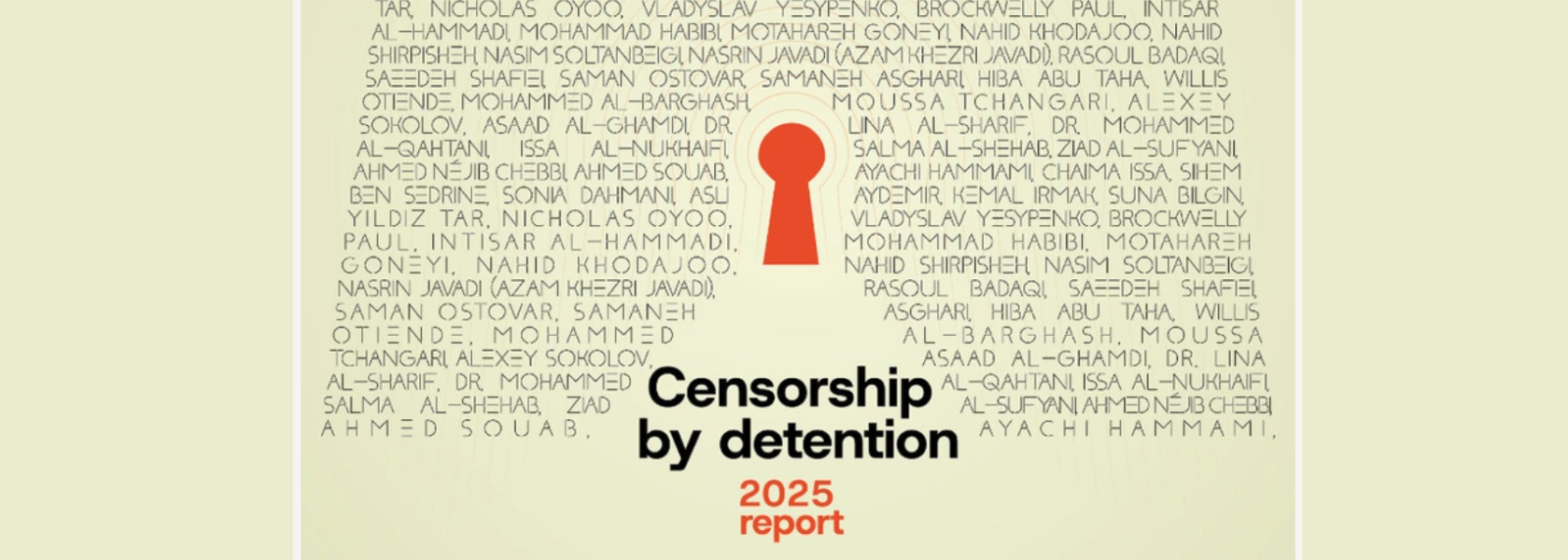
On 31 July 2026, Adil Zawahir, Alexandra C Panait and Kulsoom Rizvi published a blog post on their study of how dissidents are stopped from entering or leaving their countries

When we think of state censorship, we often picture prison cells, violent police crackdowns or control of newsrooms. However, our report titled The weaponisation of travel bans to silence speech and dissent published today by Index on Censorship reveals a quieter, less visible tool of state repression that is devastating civil society across the world.

We found that rather than protecting public safety, governments are increasingly manipulating “national security” or “public order” exemptions to trap journalists, fracture families and exile critics. Our research shows that these bans are highly adaptable tools that occur around politically sensitive events such as protests, elections and crackdowns on democratic activity. Their shared, devastating objective is to control narratives, block external scrutiny and create a chilling effect on free expression.

As we researched this topic, we strongly felt that to understand the severity of this crisis, the spotlight must remain entirely on the impacted individuals. The victims of this widespread authoritarian trend pay with their lives and livelihoods being upended by arbitrary and undemocratic measures.

Our analysis highlights that in authoritarian contexts, travel bans act as overt tools of absolute repression. In Saudi Arabia, they function as a form of “quasi-detention”, ensuring that prisoners of conscience remain silenced long after they are physically released from their cells. Take the example of Salma Al-Shehab, a doctoral student at Leeds University, who was imprisoned simply for tweeting in support of women’s rights. Upon her release, she was handed an eight-year travel ban, effectively destroying her academic career by barring her return to the United Kingdom.

Similarly, in Algeria, our research shows how journalists like Mustapha Bendjama find themselves trapped in a bureaucratic nightmare. Extrajudicial travel bans, known as ISTNs, are routinely issued by security agencies without formal judicial oversight, leaving targets in a legal vacuum with no clear avenues for appeal. Bendjama shared with us that this forced isolation acts as a “mental imprisonment” that has dried up his sources and severely compromised his ability to conduct rigorous journalism.

One of our most troubled findings was that the chilling effect of these restrictions extends well beyond authoritarian states, creeping into hybrid democracies. In India, administrative tools like “Look Out Circulars” are deployed to trap critical voices within the country’s borders. Sanna Irshad Mattoo, a Pulitzer Prize-winning photojournalist, was prevented from travelling to New York to accept her award, sending a clear message that international recognition offers no immunity from state retaliation.

In Georgia, foreign journalists who report critically on the country’s democratic backsliding have been arbitrarily denied re-entry at the border using generic legislative clauses. French journalist Clément Giradot was refused entry after reporting on political demonstrations, a decision that suddenly separated him from his home, his Georgian wife and his young child without any concrete legal justification.

It became clear to us that these are not isolated administrative errors. We believe they are part of a coordinated assault on international human rights. Whether it is Nicaragua arbitrarily revoking citizenship to render critics stateless, Belarus forcing exiled dissidents into jeopardy by refusing to renew passports abroad or the United States deploying visa revocations and social media screenings against lawfully present critics, the goal appears to be one: to enforce widespread self-censorship and fear.

The international community can no longer treat these administrative traps as routine border control measures. We urgently recommend taking action. States must do away with these opaque directives, end the use of secondary travel bans as a form of collective punishment against families and align their domestic laws with international human rights standards. Furthermore, democratic host nations must step in to provide secure legal status and alternative travel documents for exiled dissidents while applying sustained diplomatic pressure to demand the lifting of these arbitrary restrictions globally.

Respecting and protecting freedom of speech should not know any ideological boundaries or state borders. With this report, we express our solidarity with the brave ones who raised their voices and with many more who were silenced and never known. While researching and interviewing participants at the front lines of this injustice, we were reminded of the importance of academia’s role as both a sanctuary for freedom of expression and a service to society at large.

Human rights defenders Khurram Parvez and Irfan Mehraj finally released on bail in India

July 24, 2026

Khurram Parvez, coordinator of the Jammu Kashmir Coalition of Civil Society (JKCCS) and Chair of the Asian Federation Against Involuntary Disappearances (AFAD), has spent decades documenting human rights violations in Indian-administered Kashmir, including enforced disappearances, torture and extrajudicial killings. Irfan Mehraj, a journalist and human rights defender associated with JKCCS, has similarly contributed to documenting and reporting on human rights concerns in the region.

Both human rights defenders have faced prosecution under spurious allegations related to terrorism and secessionism that human rights organisations have consistently characterised as politically motivated and unsupported by credible evidence. The charges against both defenders remain in place, and the conditions attached to Khurram Parvez’s release continue to impose severe restrictions on his rights and freedoms. The international community, including the UN human rights system, must remain closely engaged until all charges are dropped and any restrictions on their work and freedom come to an end.

22 July 2022: The case in which Khurram Parvez, a prominent Kashmiri human rights defender, and Irfan Mehraj, a Kashmiri journalist and human rights defender – both associated with the Jammu Kashmir Coalition of Civil Society (JKCCS) – have been granted bail involves trumped-up charges of “funding terror activities” and “propagation of secessionist agenda” in retaliation for their widely respected and recognised human rights documentation and accountability work through JKCCS. On 18 July 2026, a New Delhi District Court held the bail hearing in this case.

In June 2023, the UN Working Group on Arbitrary Detention (UNWGAD), in its Opinion No. 8/2023, determined that Khurram Parvez’s detention was arbitrary and called on the Indian authorities to immediately and unconditionally release him.

Although the conditional release of the two defenders comes as a relief, after a prolonged period of arbitrary pre-trial detention, the harassment through legal means against them continues, in a context of longstanding and ongoing grave violations of human rights and fundamental freedoms in Jammu and Kashmir.

The Observatory calls on the Indian authorities to drop all charges against Khurram and Irfan, as they are part of politically motivated proceedings aimed at discrediting their legitimate work and the JKCCS.

https://www.fidh.org/en/region/asia/india/india-khurram-parvez-and-irfan-mehraj-released-on-bail

https://kmsnews.org/kms/2026/07/23/kashmiri-rights-defender-khurram-parvez-journalist-irfan-mehraj-released-on-bail.html

https://ishr.ch/latest-updates/india-bail-for-kashmiri-human-rights-defenders-must-be-followed-by-justice

https://kashmirtimes.com/opinion/comment-articles/does-bail-mean-freedom-unfinished-liberty-of-khurram-and-irfan