“Right Here, Right Now” a global dialogue on climate change and human rights are held at Oxford University and universities around the world 4-7 June 2025
The 2025 Summit aims to advance human rights-based solutions to the climate crisis, amplify environmental human rights defenders’ voices, reinforce the global climate justice movement, and inspire people, particularly students, as advocates and leaders for human rights-based climate action.
Other university partners include the University of the South Pacific, the University of Colorado Boulder, the University of Cape Town, UNSW Sydney, Monash University, the University of Nairobi, the African Climate and Development Initiative, and the University of São Paulo.
The cornerstone of the summit is a hybrid global event on World Environment Day, 5 June 2005. The Summit will bring together leading thinkers and practitioners at the intersection of climate change and human rights for a 24-hour global plenary, which will be broadcast live across time zones. Co-created and co-delivered by universities across the world, the plenary will follow the sun as we pass the baton between different regions.
The High Commissioner will open the Summit at the University of Oxford on 4 June 2025. Meanwhile, partner universities worldwide will host local activities on climate justice.
The U.S. government announced on 27 March the nomination of the Cuban human rights defender Rosa María Payá Acevedo as a candidate to join the Inter-American Commission on Human Rights (IACHR), an autonomous body of the Organization of American States (OAS).
The nomination underscores Washington’s support for the work that the Cuban activist has done in promoting human rights, freedom, and democratic governance in the Western Hemisphere.
Daughter of the deceased opposition leader Oswaldo Payá Sardiñas, who was awarded the Sakharov Prize and died under circumstances that have never been officially clarified, Rosa María has continued his legacy with “unmatched determination,” the State Department highlighted. [see: https://www.trueheroesfilms.org/thedigest/laureates/2522D108-8BCB-46A7-BEBD-144BC99B5926]
Payá is the founder of the Cuba Decide movement, which promotes a binding plebiscite for Cubans to freely and democratically choose their political future. She also leads the Pan-American Democracy Foundation, through which she collaborates with legislators from various countries to support regional stability and security. Among the recognitions he has received are the Morris Abram Award for Human Rights (2019) and the Valor Award from the Society of Common Sense (2022).
“I am deeply honored by the United States nomination to serve on the Inter-American Commission on Human Rights, a vital and independent institution dedicated to protecting the rights and dignity of all people across the Americas,” she wrote.
The elections to renew the members of the CIDH will be held on June 27, during the General Assembly of the OAS taking place in Antigua and Barbuda.
Dr. Sabiha Baloch is a woman human rights defender and member of the Baloch Yakjehti Committee (BYC), a network focused on advocating for the human rights and interests of the Baloch people in Pakistan. Dr. Sabiha Baloch has faced reprisals due to her work, including attacks against her family. Notably, her work as a woman human rights defender has led to the abduction of her brother and relative, who were subsequently released after several months in detention. Dr. Sabiha Baloch has been an integral part of peaceful campaigns against extra judicial killings, enforced disappearances and arbitrary arrests in Balochistan. She was part of the Baloch Long March and the Baloch National Gathering in 2024, which faced severe State reprisals, including violence and arrests. Since March 2025, following the arrest of several leading human rights defenders and members of the BYC, Dr. Sabiha Baloch has continued to document and highlight violations, and demand the release of detained colleagues and protesters.
On 5 April 2025, Pakistani authorities arrested the father of Baloch woman human rights defender Beebow Baloch. He is currently detained at the Hudda District Prison in Balochistan under Section 3 of the Maintenance of Public Order Act (MPO). The woman human rights defender Beebow Baloch has also been held at the same prison under the MPO since her arrest on 22 March 2025.
On 7 April 2025, Pakistani authorities arrested woman human rights defender Gulzadi Baloch in Quetta, Balochistan, with disturbing reports of excessive violence being used during the arrest. For several hours following her arrest, there was no information about her fate or whereabouts, causing serious concerns for her physical and mental safety. She is presently held at the Hudda district prison under the regressive Maintenance of Public Order (MPO) Act, which severely restricts access to bail.
The NGO Frontline demands that Baloch human rights defenders in Pakistan are protected from reprisals, and end their ongoing persecution and punishment in the State, including for exercising their right to free expression and peaceful dissent, under the guise of national security.
On 4 April 2025 a joint statement by 13 international, regional and national civil society organisations, strongly condemned violations of the right to protest in Turkey, including police brutality, ill-treatment that may amount to torture, mass arbitrary detentions, and the systematic persecution of human rights defenders.
Mass protests erupted across Turkey on 19 March 2025, following the detention of more than 100 individuals —including the Mayor of Istanbul, Ekrem İmamoğlu. These arrests, made as part of investigations into allegations of “corruption” and “terrorism”, and their timing have raised widespread concerns that the charges are politically motivated – just days before İmamoğlu’s expected presidential candidacy.
In the immediate aftermath of the arrests, authorities imposed sweeping restrictions, including days-long blanket bans on gatherings across multiple cities, restricted access to several social media platforms curbing access and preventing the dissemination of information, and shut down major public transportation routes in İstanbul, all in a systematic effort to suppress dissent and mobilisations.
Despite these measures, thousands have continued to gather in protest across the country since 19 March. While protests have been overwhelmingly peaceful, journalists and civil society organisations have documented grave human rights violations in several locations, and particularly in Saraçhane, Istanbul, including an indiscriminate and disproportionate display of police violence and brutality that may amount to torture and other ill-treatment, including beatings with batons, demonstrators being kicked while subdued on the ground, close-range targeting with Kinetic Impact Projectiles (KIPs), as well as the indiscriminate use of chemical irritants and water cannons. Based on widely circulated footage and public testimonies, and in line with the UN Committee Against Torture’s recommendations to Turkey following its periodic review in 2024, the Human Rights Foundation of Turkey (TİHV) has also denounced the use of restraint methods that inflict unnecessary pain, such as prolonged handcuffing behind the back and stress positions. These practices, known to cause serious health consequences, have at times been publicised by police officers themselves via personal accounts, seemingly as a tactic of intimidation.
Reports have stated that protesters who have been met with excessive police force have suffered grave and long-lasting injuries such as head trauma and eye damage due to tear gas cartridges and KIPs, burns and respiratory issues due to the indiscriminate and widespread use of tear gas and water cannons, which in some cases resulted in their hospitalisation. The full extent of the injuries, as well as the physical and psychological toll on protesters’ health, will only become clear in the following months.
According to the report of Human Rights Association (İHD), as of 27 March 2025, a total of 1,879 people—including children, lawyers, journalists, students, union leaders and human rights defenders—have been taken into custody during protests and house raids on the grounds of inciting protests, engaging in violence, concealing their faces with masks, and using bats or other objects. Over 260 of them have been placed in pre-trial detention, while judicial control measures have been imposed on 468 individuals simply for exercising their right to peaceful protest. Istanbul Bar Association Child Rights Committee reported that among the arrested in İstanbul, 20 were under the age of 18.
Progressive Lawyers Association (ÇHD) also highlights incidents of torture, ill-treatment and sexual violence in detention facilities. Lawyers have denounced the treatment of seven female detainees who were subjected to beatings as well as unjustified strip searches while in custody. According to a released testimony, another female victim reported being groped by a police officer while handcuffed behind the back and forcefully pinned to the ground and that she soiled herself out of fear during the ordeal. She was reportedly placed under house arrest after her testimony. The Turkish Medical Association has recalled the importance of medical examinations upon entry in custody and detention to prevent and document torture and other ill-treatment.
Human rights defenders, including those monitoring the protests, have also become targets of State repression during the protests. Journalists and media organisations covering protests have also been persecuted, infringing on the right to freedom of expression and the right to information. As of 28 March, at least 14 journalists were detained after covering the protest.
Lawyers representing those who were arbitrarily detained in the context of protests, were also targeted. At least 14 lawyers were detained, including the lawyer of İmamoğlu, demonstrating the State authorities’ disregard for the rule of law and the right to defence, due process and justice. In the midst of the protests as part of the general intimidation strategy against lawyers, on 21 March the Istanbul Bar Association’s executive board was dismissed by the decision of İstanbul 2nd Civil Court of First Instance- a move that raises serious concerns of further attacks on the independence of the legal profession and the detainees’ right to legal representation. Following the decision, police interfered as lawyers attempted to march from the courthouse in Çağlayan to the Istanbul Bar Association building in Taksim to protest the decision.
Signatories:
ARTICLE 19
Asociación Unidad de Defensa Jurídica, Registro y Memoria para Nicaragua (AUDJUDRNIC)
CIVICUS: World Alliance for Citizen Participation
EuroMed Rights
Front Line Defenders
Gulf Centre for Human Rights (GCHR)
ILGA-Europe
United Against Torture Consortium (UATC), through its following members:
The International Rehabilitation Council for Torture Victims (IRCT)
Omega Research Foundation
Redress
And the World Organisation Against Torture (OMCT)
Unidad de Protección a Defensoras y Defensores de Derechos Humanos – Guatemala (UDEFEGUA)
Within the framework of the Observatory for the Protection of Human Rights Defenders:
Led by Norway, the resolution crucially covers new grounds and further develops States’ obligations to protect human rights defenders in the digital age. It also considers the needs expressed by human rights defenders during the consultative process leading to its negotiation and approval.
For the first time and in a major win for the human rights defenders movement, the resolution includesa reference to the Declaration +25 and is very much in line with its content.
‘The Declaration +25 is a ground-breaking initiative,’ said Phil Lynch, Executive Director at ISHR. ‘Civil society organisations worldwide have united to produce this authoritative articulation of the international legal framework for the protection of human rights defenders. We are very pleased that the Human Rights Council recognised it,’ Lynch added.
For example, the resolution calls on States to forgo the use of biometric mass surveillance and to refrain from or cease the use or transfer of new and emerging technologies, including artificial intelligence applications and spyware to actors that are not liable to operating these in full compliance with international human rights law.
Initially, the resolution included a reference to transnational repression but this was removed in the final version.
‘While we welcome the reference to types of transnational repression referred to in the resolution, we stress that transnational repression is not only about actions taken by a State, but also its proxies, to deter, silence or punish people and groups who engage in dissent, critique or human rights advocacy from abroad, in relation to that State,’ said ISHR’s Lynch and civil society partners in their end of session statement.
Indeed, transnational repression includes acts targeted directly against human rights defenders, journalists or activists, as well as acts targeting them indirectly by threatening their families, representatives or associates. Particularly vulnerable are nationals or former nationals, members of diaspora communities and those living in exile. ISHR will continue to push for States to publicly recognise and acknowledge this form of harassment.
Another lost opportunity is the lack of explicit recognition of the positive role of child human rights defenders in promoting human rights and fostering change in societies, including their active role in the digital space. The resolution also doesn’t tackle the specific challenges and risks they face because of their age and their civic engagement, as highlighted by the Special Rapporteur on human rights defenders in her 2024 report.
The resolution fell short of reaffirming States commitments from UNGA A/RES/78/216, to enhance protection measures for child defenders and to provide a safe, enabling and empowering environment for children and young people online and offline.
The negotiation of the resolution was a hard and long process: 12 informal sessions were needed to agree on a text. In a regrettable move, some States presented amendments to the tabled text trying to undermine and weaken it. The text was finally adopted without a vote.
OHCHR is now mandated to convene three regional workshops and a report to assess risks created by digital technologies to human rights defenders and best practices to respond to these concerns.
On 4 April 2025 Scoop news informed that human rights defender and author Benedict Rogers is now a Senior Director at Fortify Rights. Rogers brings more than three decades of experience advancing human rights throughout Asia, with a particular focus on China, Hong Kong, Myanmar, and North Korea.
“We’re so honored to welcome Benedict to our team of human rights defenders,” said Matthew Smith, Chief Executive Officer at Fortify Rights. “Benedict’s principled leadership, deep expertise, and unwavering commitment to human rights are invaluable assets to our work. He will significantly help our ability to strengthen community-based responses to human rights violations and to combat rising authoritarianism.”
Benedict Rogers co-founded and served as Chief Executive of Hong Kong Watch from 2020 to 2024 and remains a trustee of the organization. He is a member of the advisory group of the Inter-Parliamentary Alliance on China, an advisor to the Stop Uyghur Genocide Campaign, and a co-founder of the International Coalition to Stop Crimes Against Humanity in North Korea. Rogers previously worked for nearly 30 years with Christian Solidarity Worldwide, including as East Asia Team Leader and Senior Analyst for East Asia.
He is the author of seven books, including The China Nexus: Thirty Years In and Around the Chinese Communist Party’s Tyranny (2022) and Burma: A Nation at the Crossroads (2012), and he has written numerous articles, editorials, and reports on human rights conditions in Myanmar, China, North Korea, and elsewhere.
In line with Fortify Rights’s mandate to strengthen community-based responses to human rights violations, Rogers will work directly with frontline human rights defenders, civil society organizations, and affected communities, sharing his expertise and supporting their efforts to document abuses, advocate for justice, and build resilient movements for change. His decades of experience conducting trainings, mentoring activists, and leading international advocacy initiatives will help amplify the voices of those most affected by rights violations.
It is a great privilege to join Fortify Rights, which is an organization whose frontline investigations, in-depth research, and brave and reliable advocacy have long inspired me,” said Benedict Rogers. “Fortify Rights has built a remarkable reputation for its courage, integrity, and impact. Joining Fortify Rights feels like a natural next chapter in my journey and an important opportunity to contribute—supporting its work in Myanmar, across Asia, and in Ukraine; providing an advocacy voice in London, Europe, and beyond; expanding efforts into China and North Korea; and strengthening the capacity of brave human rights defenders throughout the region. I look forward to contributing to its mission and expanding its important work across Asia and beyond.”
On 4 April, 2025 the Miami Herald reported that Haiti-based human rights lawyer Mario Josep died in a car accident.
In a country where justice is often elusive, Mario Joseph was a fearless crusader who didn’t care whether his opponent was the Haitian government or the international community as he defended political prisoners and poor victims of human rights abuses in his Caribbean homeland. Joseph died Monday night from injuries sustained in a car accident last week as he pulled into his house. His death was confirmed by his longtime friend Brian Concannon and the Boston-based nonprofit Institute for Justice & Democracy in Haiti. He was 62. Concannon said in a statement. “The global human rights movement has lost an inspirational leader when the notion of human rights itself is under broad attack.”
Since 1996 Joseph had served as the attorney for the Bureau des Avocats Internationaux, or Bureau of International Lawyers, in Port-au-Prince. The organization represented victims of human rights violations, trained Haitian law students and worked with U.S. law schools clinics, while also closely collaborating with the Institute for Justice & Democracy in Haiti. His high-profile cases included championing the rights of 5,000 victims of waterborne-cholera who blamed the United Nations for its introduction into Haiti after the 2010 earthquake.
Among Jospeh’s many accolades over the years was the Judith Lee Stronach Human Rights Award from the Center for Justice & Accountability in San Francisco, the Alexander Human Rights Award from Santa Clara University, and honorary doctorates from the University of San Francisco and Indiana University School of Law. He was also a finalist for the 2013 Martin Ennals Human Rights Defenders Award.
On 2 April 2025 AFP reported that language used by President Donald Trump and his government to slash US-funded foreign aid is being adopted by other governments to attack NGOs and independent media.
Civil society groups in parts of Eastern Europe and beyond — long targeted by discredit-and-defund campaigns because of the light they shone on corruption and lack of transparency — are now also dealing with Trumpian rhetoric, human rights groups said.
Trump administration statements “are being weaponised in real-time by autocrats and dictators across Eastern and Southeastern Europe to justify and deepen their crackdown on independent media, NGOs, and human rights defenders,” Dave Elseroad, of the Human Rights House Foundation, told AFP.
From Hungary to Serbia, to Georgia and Bosnia, non-governmental organisations and independent media outlets working to bolster democratic norms are hearing officials borrow White House phrases to justify officials’ stances against them.
It includes Trump’s claim that the US Agency for International Development (USAID) was “run by radical lunatics”, and his billionaire advisor Elon Musk’s calling the agency a “criminal organisation” that needed to be put “through the woodchipper”.
Such terms are “seriously encouraging language used in Budapest or in Belgrade or in Bratislava or Banja Luka,” said Miklos Ligeti, head of legal affairs at Transparency International’s Hungary chapter.
In some countries, the verbal ammunition comes on top of a sudden funding gap wrought by the dismantling of USAID, which is hitting the NGO sector hard. USAID had been providing funding to a vast array of independent organisations in countries like Hungary where such groups have been “financially suffocated domestically,” Ligeti told AFP.
Hungarian Prime Minister Viktor Orban has hailed the crackdown on USAID by his ally Trump as a “cleansing wind”. Orban has vowed to “eliminate the entire shadow army” he says is made up of his political enemies, judges, the media and NGOs.
The UN rights office in Geneva slammed “escalating attempts worldwide to weaken and harm domestic and international human rights systems, including defunding and delegitimising civil society”. It said that “it is all the more worrying to see these trends also emerging in established democracies”.
In some countries there is a direct line between utterances in Washington and action to undermine civil society. In Georgia, for example, the ruling Georgian Dream party last month called for the country to adopt its own version of the US Foreign Agents Registration Act (FARA) — which observers warn could be turned against NGOs receiving foreign funding.
And in Serbia, which has been rocked by months of protests over government corruption, authorities referred to statements made by Trump and other top US officials to justify raiding a number of NGOs. The Serbian government saw the Trump administration’s labelling of USAID as a “criminal organisation” as “a fantastic opportunity to basically punish civil society”, said Rasa Nedeljkov, programme director at the Center for Research, Transparency and Accountability (CRTA).
CRTA’s offices were raided in February by heavily armed police. The operation took 28 hours because prosecutors had CRTA staff manually copy documents related to USAID-funded projects to hand to them, rather than accepting digital versions.
Serbian authorities have explicitly referred to statements by Trump and other US officials to justify raids on a number of NGOs.
Pavol Szalai, head of the EU-Balkans desk at Reporters Without Borders (RSF), said leaders in a string of countries were using “the suspension of USAID by Trump to attack media which had received USAID funds”. He said such groups were being doubly punished: they “lost their funding from one day to the next” while also increasingly being “targeted by intimidation”…
He warned that, “as these media retreat.. they will be replaced by propaganda”.
Watan News on 30 March 2025 came with a rather remarkable story about the UAE’s covert efforts to damage Qatar and Saudi Arabia’s reputations through paid campaigns using African NGOs Human rights sources in Geneva. Whether this is all true or not I cannot say, but it is worth reporting on.
Watan writes that “human rights circles in Geneva’ have revealed the United Arab Emirates’ involvement in leading coordinated incitement campaigns against its adversaries, using African organizations in exchange for financial bribes to attack Abu Dhabi’s opponents and whitewash its own dire human rights record. According to the source, Abu Dhabi’s campaign aims to bring in so-called “victims,” such as migrant workers, to testify before the UN Human Rights Council in an effort to damage Qatar’s international reputation.
Reliable reports indicate that the UAE has continuously funded this campaign over the past three years. Several human rights organizations and active institutions in Geneva have reportedly received large sums of money to support anti-Qatar activities. The funds are reportedly channeled through the UAE Embassy in Geneva and a key intermediary, Issa Al-Arabi, a Bahraini national who acts as a liaison for the UAE in supporting various rights groups at the UN.
According to the source, the campaign is being executed by the Rencontre Africaine pour la Défense des Droits de l’Homme (African Meeting for the Defense of Human Rights) under the leadership of Nishkarsh Singh, along with the Tomoko Development and Cultural Union (TACUDU) led by Fazal-ur-Rehman, and the International Network for Human Rights (INHR).
Another UN source said that the UAE’s campaign is coordinated by key figures within the diplomatic and human rights community in Geneva and Washington, primarily operating within the INHR network.
This organization plays a major role in organizing human rights events at the UN, with a team of participating legal and diplomatic experts.
Notable individuals involved include:
Biro Diawara – A veteran human rights activist in Geneva for over 20 years, representing African civil society including journalists, parliamentarians, religious leaders, and human rights defenders. He has strong ties to African delegations in New York, Geneva, and the continent, with a focus on Sudan, West Africa, and his native Guinea.
Clément N. Voule – Former UN Special Rapporteur on the Rights to Freedom of Peaceful Assembly and of Association. After completing his term in the summer of 2024, he joined the Geneva Human Rights Institute in September. A Togolese international lawyer, he specializes in human rights and security sector reform and holds multiple roles within Geneva’s human rights community.
Jane Galvão – Director of Resource Mobilization at INHR and Global Health Advisor. With over 20 years of experience managing health programs, she has worked on infectious diseases and women’s and children’s health, managing over $750 million in funding for organizations like UNITAID and WHO.
Eric N. Richardson – Founding President of INHR. A former U.S. diplomat and attorney, he led the U.S. team at the UN Human Rights Council in Geneva from 2013 to 2016. With experience in countries like China, North Korea, Libya, Tunisia, New Zealand, and Israel, he now focuses on mediation efforts with Amnesty International and teaches law at the University of Michigan and UC Berkeley.
John Shyamana – Expert in Social and Economic Rights, New York. With over 30 years of experience, he specializes in child policy, labor rights, and social welfare, having worked with the U.S. Congress and state legislatures on legislative and advocacy efforts.
Kumar – Senior Human Rights Advisor, Washington D.C. Former Advocacy Director for Amnesty International USA. With more than two decades of experience, he has championed human rights and humanitarian causes worldwide, particularly in Asia, Afghanistan, and Myanmar.
Jeff Landsman – Managing Director and Treasurer at INHR. A certified financial planner and seasoned international buyer, he oversees the institute’s financial operations and strategic planning.
Asel Alimbayeva – Program Officer and Director, INHR Geneva. Fluent in English, French, Russian, and Kazakh. She has worked at the UN Office in Geneva and Kazakhstan’s Permanent Mission, leading social media and HR operations at the institute.
Pedro Cherinos Terrones – Legal Advisor, Lima. A Peruvian lawyer specializing in international trade, business law, human rights, and compliance with international law.
Sean Wessing – AI and Innovation Specialist, Bologna. Holds dual Master’s degrees from SAIS–Johns Hopkins and Bologna Business School. Leads fundraising and AI governance projects at INHR.
Zaf Haseem – Videographer and Reconciliation Specialist, Asia. A conflict mediator who has worked in Sri Lanka, Burma, Indonesia, and the Central African Republic, using film as a training tool for peacebuilding.
UAE’s Smear Campaign Targeting Qatar and Saudi Arabia
Diplomatic sources indicate that the UAE is recruiting African civil society organizations to conduct media and human rights attacks against Qatar. These efforts are expected to intensify during the UN Human Rights Council sessions in June and September 2025, with a major campaign planned for the September session. Additionally, the UAE is reportedly preparing similar activities within the African Union Commission, targeting both Qatar and Saudi Arabia as part of its escalating geopolitical rivalry in Africa.
These developments underscore rising regional tensions in Africa, where the UAE is leveraging human rights tools and diplomatic influence to advance its political agenda.
They also raise serious concerns about the independence of some Geneva-based human rights organizations, which are increasingly being used as instruments of political influence rather than neutral advocacy.
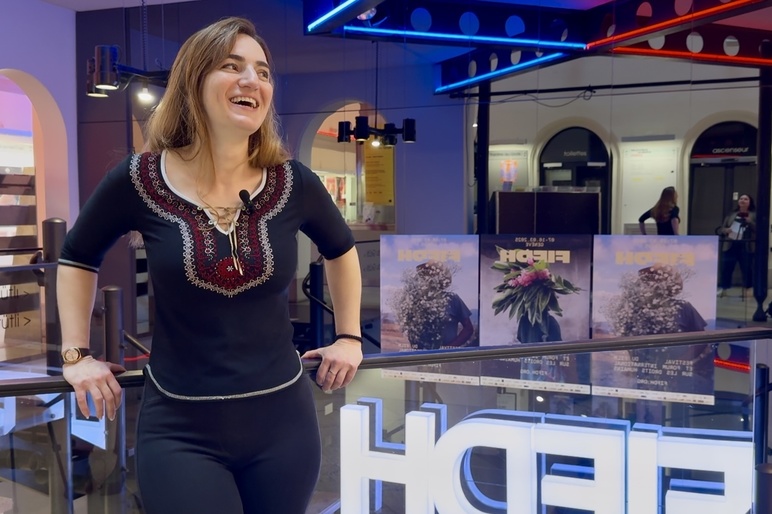
Born in Damascus, Syria, Lina is a filmmaker, journalist, and human rights defender, who in 2011 decided to pick up her camera and start filming, without a plan, but with the knowledge that she has a story to tell. What ensued are five years of conflict, arbitrary arrests, as well as torture and ill-treatment in detention, but also of hope that things would get better, despite a veto. Five Seasons of Revolution was recently screened at the International Film Festival and Forum on Human Rights in Geneva, in an event co-hosted by OMCT, partner of the festival. In this interview, Lina tells us more about her process and the challenges she encountered in the making of the film, as well as her hopes for the future of Syria.
What made you decide to start filming?
We started shooting in the summer of 2011, and a lot was already happening in Syria, but it was not clear how things were going to go. I was optimistic, thinking it would be over in six months, maybe a year, with a release within two years. It took 12 years.
It took more than five years of filming, and then many more to edit, because the country hadn’t stabilised, and the characters’ decision to participate in the film shifted with every new development, for their own safety. We had to go back, take characters out, then put them back in, and make amendments to the storyline. But it wasn’t all negative. During this time, deepfake technology improved and gave us a solution for the anonymity issue of some of the characters who chose to stay in Syria in a way that is safe and does not interfere with the visual narrative.
What was the most challenging part about the filming process?
Not knowing where it’s heading. As a filmmaker, you have, even in documentaries, a rough script, or an idea of where you are heading, but we couldn’t. It was like surfing, we just had to keep up with weird twists and turns. At some point, there were so many arrests in the group that I was filming, the characters just kept going in and out of jail, and at any given moment, we would lose one of them. I was arrested several times and the rest of the film crew had to come up with plan Bs for ‘what if we lose the director, who also happens to be the camera person and the sole contact to all the other characters, how do we finish the film?’ There was even one editing session that was held in my absence because I was detained, and they didn’t know when I would be released. It was really challenging.
What was the most challenging part about having to change your identity several times throughout filming?
It was very confusing, but it was also very necessary. In order to make it work, you have to internalise it to a certain extent, which was challenging. This confuses your relationships with the people you’re working with, with the people you’re socialising with, with the people that trust you, despite only knowing your fake name. Very strong bonds are formed under extremely difficult conditions and something always felt wrong about not being able to be fully honest with people. it also created these compartments of who I am because different parts of me had different names in different places… and they didn’t always get along. Walking out of it was also a challenge. Normalising being one person and only using one name, only answering to one name. It was quite a journey.
Towards the end of the documentary, you talk about your experience with your arrest. Did what you experienced in custody change your approach to the film, or your activism?
I did not encounter anything during my arrest that I did not previously know exists and happens. What was detrimental was the repetition of detentions because you know you might get away with it once, maybe twice, if you’re lucky three times. But when I was released for the third time, I realised I did not know anybody that survived a fourth arrest. I felt like a cat with seven lives and I was really running out of them. I think this affected not only my decision-making in the film, but decision-making in my life in general, which obviously had consequences.
What are three things you hope people remember after watching your film?
Number one is that simplistic reductionist scenarios of war into black and white, good and bad are never true. Number two is that nobody has a blueprint for what to do in these cases. People improvise, people try to find solutions on the spot under pressure, and these are not always ideal. But also, people can be much braver than they think, because at the end of the day we are survivors, all of us, and there is a lot more to us than we sometimes give ourselves credit for. And number three, friendship is really important.
You are a filmmaker, but also a human rights defender. What are your hopes now for Syria and its people?
I hope people will be able to recover. I hope people will be given a break, given a chance to process everything they went through, given a bit of time to find a way out of this gigantic mess. It will take generations to rebuild the country. I understand that people have endured so much for so long that they cannot take one more day of it, so there is understandably also a lot of emotions. I just hope that we have the ability to open our hearts a bit more, understand each other a bit more and that people will in return give us the chance to process everything….