Archive for the 'Human Rights Defenders' Category

Türk in Wilton Park: Human rights defenders are key to conflict resolution

January 15, 2025
Volker Türk, UN High Commissioner for Human Rights, addressing a General Assembly meeting. (file)

UN Photo/Eskinder Debebe

The UN High Commissioner for Human Rights Volker Türk highlighted the critical role of human rights defenders in today’s tumultuous global landscape in a speech on 13 January 2025 to Wilton Park, the executive agency of the United Kingdom’s Foreign office.  

For many workers, defending human rights is not just a job, but a calling. As he noted, many “work out of a deep sense of service to others, and a desire to make a meaningful impact.”

From conflict zones to post-war societies, they provide crucial support to detainees and victims of torture, deliver emergency relief, document violations and expose the root causes of conflict. 

Human rights defenders are key to conflict resolution. They are the messengers of dignity, justice and peace,” said Mr. Türk.

However, despite their invaluable work, human rights defenders face “unacceptably high” threats, with some attacks amounting to war crimes.

For journalists and humanitarian workers, being killed, kidnapped, harassed or detained has become an increasingly likely reality.

Women are particularly vulnerable, often targeted by sexual violence, online threats and risks to their family.

Mr. Türk cited the criminalisation of dissent, the forceful suppression of peaceful protests and restrictions on non-governmental organisations as alarming developments. 

These events often force human rights defenders to operate in exile, exposing them to new forms of persecution and repression, including online surveillance.

“The full impact of digital technologies on the work and safety of human rights defenders is not yet known,” he warned, underlining the urgency of addressing these modern threats.

Mr. Türk urged governments to take decisive action, including establishing well-resourced national protection systems and supporting civil society networks that provide cross-border protection. He also noted the importance of reacting swiftly to emerging threats.

“The risks of this work must not be shouldered by the defenders alone,” he said, emphasising the need to support NGOs at risk and to push back against the labelling of defenders as terrorists, foreign agents or traitors.

“We must do everything we can to make sure [defenders] can operate safely wherever they are,” he concluded.  

For other of Turk’s statements see: https://humanrightsdefenders.blog/tag/volker-turk/
https://news.un.org/en/story/2025/01/1158961

Yu Wensheng’s appeal rejected by Chinese court

January 8, 2025

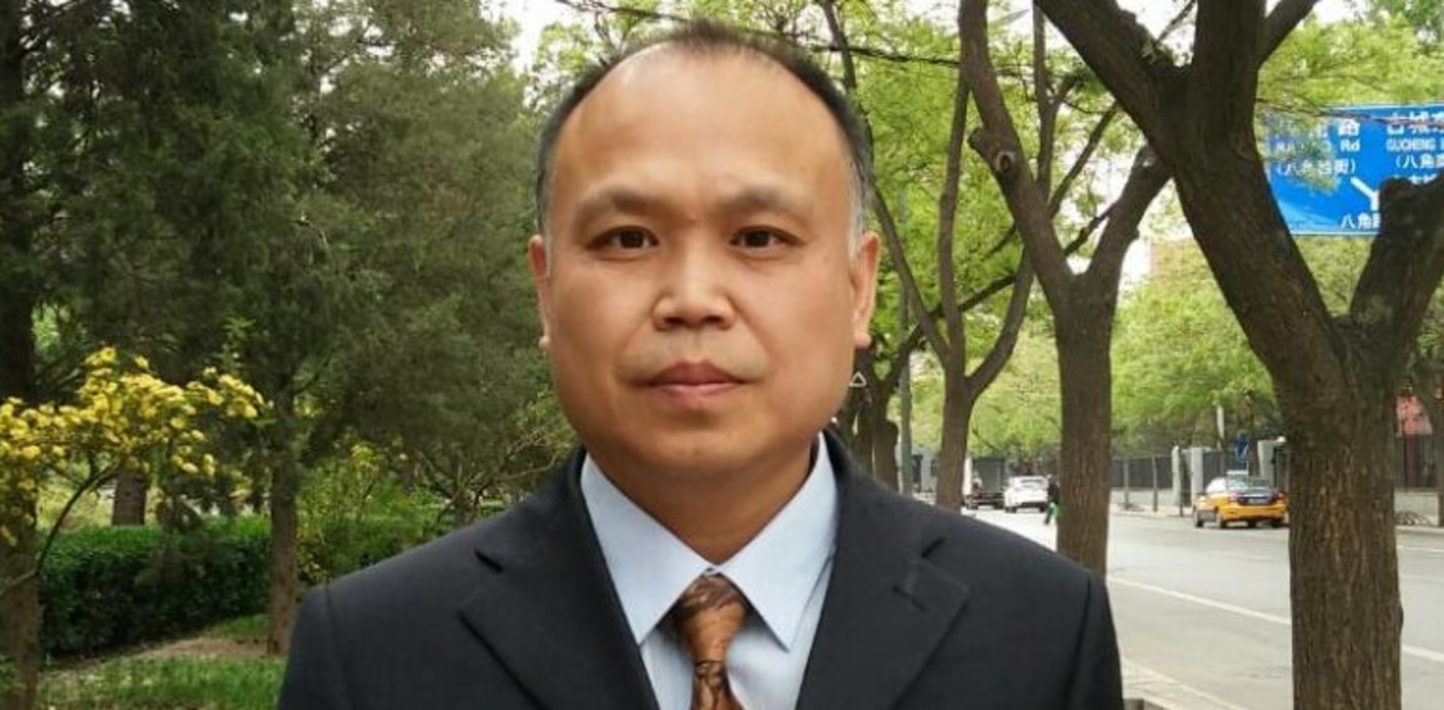
Responding to the rejection of Chinese human rights lawyer see also:s appeal against his three-year prison sentence for “inciting subversion of state power”, Amnesty International’s Interim Regional Deputy Director for Research Kate Schuetze said on 6 January, 2025: “The charges against Yu Wensheng and his wife, activist Xu Yan – who was convicted of the same offence – are entirely baseless. They reveal the authorities’ inability to provide any legitimate justification for their imprisonment.

“The Chinese government has used Yu’s online comments and his numerous international human rights awards as an excuse to label him a threat to national security. But all this really demonstrates is Beijing’s deep fear of human rights defenders who dare to dissent.

“Yu Wensheng and Xu Yan have been imprisoned solely for exercising their right to freedom of expression and they must be released immediately and unconditionally.”

Yu Wensheng is the winner of the 2021 Martin Ennals Award. [https://www.trueheroesfilms.org/thedigest/laureates/69fc7057-b583-40c3-b6fa-b8603531248e]

See also: https://humanrightsdefenders.blog/tag/yu-wensheng/

Nigerian atheist Mubarak Bala freed from prison (but fear still persists)

January 8, 2025

The President of the Humanist Association of Nigeria, Mubarak Bala, was apprehended at his home in Kaduna State on 28 April 2020. See:

The prominent Nigerian atheist, who was freed on 8 January 2024 after serving more than four years in prison for blasphemy, is now living in a safe house as his legal team fear his life may be in danger…

In 2024, the UN Working Group on Arbitrary Detention (UNWGAD) released its opinion that the Nigerian State violated international law by detaining Bala. Concluding that he was wrongfully imprisoned for exercising his right to freedom of thought, conscience, religion or belief and that because of this violation no trial should have taken place.

Humanists International welcomes news of the release of Mubarak Bala, however, it reiterates that he should never have been detained in the first place. The organization once again thanks all those individuals and organizations without whose support this work would not have been possible. The organization hopes that Bala will one day be able to return to his homeland, and resume his work.

[https://humanists.international/]

Andrew Copson, President of Humanists International stated:

Today, we celebrate Mubarak Bala’s release – a hard-won victory that fills us with immense joy and relief. This triumph would not have been possible without the unwavering dedication of Humanists International’s staff, the tireless advocacy of Leo Igwe, the expertise of James Ibor and Bala’s legal team, and the invaluable support of our partner organizations. We extend our deepest gratitude to each and every one of them. While we rejoice in Mubarak’s freedom, we remain committed to fighting for the countless others who remain unjustly imprisoned for their beliefs. Their struggle is our struggle, and we will not relent until they too are free.”

https://www.bbc.com/news/articles/c62zpk4nnxdo

McGovern Foundation awards $73.5 million for human-centered Artificial Intelligence

January 6, 2025
McGovern Foundation awards $73.5 million for human-centered AI

The Boston-based Patrick J. McGovern Foundation has announced on 23 December 2024 grants totaling $73.5 million in 2024 in support of human-centered AI.

Awarded to 144 nonprofit, academic, and governmental organizations in 11 countries, the grants will support the development and delivery of AI solutions built for long-term societal benefit and the creation of institutions designed to address the opportunities and challenges this emerging era presents. Grants will support organizations leveraging data science and AI to drive tangible change in a variety of areas with urgency, including climate change, human rights, media and journalism, crisis response, digital literacy, and health equity.

Gifts include $200,000 to MIT Solveto support the 2025 AI for Humanity Prize; $364,000 to Clear Globalto enable scalable, multilingual, voice-powered communication and information channels for crisis-affected communities; $1.25 million to the Aspen Instituteto enhance public understanding and policy discourse around AI; and $1.5 million to United Nations Educational, Scientific and Cultural Organization(UNESCO) to advance ethical AI governance through civil society networks, policy frameworks, and knowledge resources.

Amnesty Internationalto support Amnesty’s Algorithmic Accountability Lab to mobilize and empower civil society to evaluate AI systems and pursue accountability for AI-driven harms ($750,000)

HURIDOCSto use machine learning to enhance human rights data management and advocacy ($400,000)

This is not a moment to react; it’s a moment to lead,” said McGovern Foundation president Vilas Dhar. “We believe that by investing in AI solutions grounded in human values, we can harness technology’s immense potential to benefit communities and individuals alike. AI can amplify human dignity, protect the vulnerable, drive global prosperity, and become a force for good.

https://philanthropynewsdigest.org/news/mcgovern-foundation-awards-73.5-million-for-human-centered-ai

Amnesty Tech call for nominations for 3rd Digital Forensics Fellowship

January 6, 2025

On 2 January 2025 Amnesty Tech – a global collective of advocates, hackers, researchers, and technologists – announced the launch of the third Digital Forensics Fellowship (DFF).

This innovative Fellowship is an opportunity for 5 – 7 human rights defenders (HRDs), journalists, and/or technologists working in civil society organisations around the world to train with Amnesty Tech’s Security Lab to build skills and knowledge on advanced digital threats and forensic investigation techniques. This is a part-time Fellowship that will last 3-4 months and will come with a stipend.

Fellowship start and end date: The Fellowship is expected to run from April – July 2025.

Application Deadline, 23 January 2025 
Location: dependent upon the suitable applicant’s location.

Remuneration: Successful applicants will be given a stipend of £500/month for their time.

Background

Across the world, hard-won rights are being weakened and denied every day. Increasingly, much of the repression faced by HRDs and journalists begins online. Since 2017, Amnesty Tech’s investigations have exposed vast and well-orchestrated digital attacks against activists and journalists in countries such as Morocco, Egypt, Azerbaijan, Qatar, Serbia, Mexico and Pakistan.

Advanced technical capacity is needed in all world regions to tackle the mercenary spyware crisis. By fostering a more decentralised, global, and diverse network of well-trained incident responders and investigators, we can jointly contribute to more timely and effective protection of HRDs and journalists against unlawful surveillance.

The spyware landscape changes rapidly, and creativity and persistence are needed to research and identify new trends, tools, and tactics used to target civil society. The curriculum for the third edition of the DFF will be tailored to the cohort and will be future facing to prepare Fellows to work on current and future spyware threats. [see also: https://humanrightsdefenders.blog/2024/05/16/two-young-human-rights-defenders-raphael-mimoun-and-nikole-yanez-on-tech-for-human-rights/]

Objectives and deliverables

Participants in the Digital Forensics Fellowship will be expected to:

  • Attend an in-person, week-long convening where the majority of trainings will be conducted. This training will take place in June 2025, the exact location is set to be confirmed shortly.
  • Dedicate approximately 10 – 12 hours per month to the Fellowship, outside of the convening, by participating in remote training sessions and through independent work outside of scheduled sessions to deepen understanding of training topics.
  • Engage with the programme cohort and the Security Lab during the in-person and remote trainings, and in discussion groups on an ad-hoc basis.

Essential Requirements

  • An understanding of the technical threats, digital attacks and challenges faced by journalists, HRDs, and civil society organisations in their local contexts.
  • Demonstrated interest in conducting investigations to identify digital attacks against civil society, with the goal of building resilience among civil society actors in the face of surveillance after the Fellowship.
  • Familiarity using command line tools and basic knowledge of scripting languages like Bash and Python to analyse data.
  • An understanding of how internet infrastructure works, for example the role of IP addresses, TLS certificates, and DNS queries.
  • Technical familiarity with GNU/Linux operating systems, as well as Android and iPhone systems.
  • Engaging with the English language as the primary language throughout the Fellowship.
  • Application instructions:

To apply, applicants will be required to submit the following via our recruitment system eArcu – please upload all relevant documents to the CV section of the application portal.

  1. A copy of your most recent CV.
  2. A cover letter explaining your motivation and interest in the Fellowship and outlining how you meet the essential requirements outlined in the job description.

Applications must be in PDF, Word, PowerPoint or Excel format.

Application Process:

Shortlisted applicants will be invited to complete a record video interview week commencing 10th February, answering a series of pre-set questions via video, which allows us to learn more about you and your suitability for the Fellowship. Successful applicants from this process will be invited to a Microsoft Teams interview with the panel week commencing 3rd March.

How to apply;

Careers | Amnesty International

Amnesty International

Youth tell stories of human rights success

January 6, 2025

on 31 December 2024 the UN Human Rights Podcast showcases the stories of five of the members of the  Youth Advisory Board. The board is made up of young people who work on issues that mobilize and empower others to stand up for human rights. The Board is in partnership with Education Above All and Silatech, to empower young people, especially those in conflict and vulnerable situations.

The 7th Human Rights summit of Southern Defenders took place in November in Johannesburg – reports Puleng Motaug

December 23, 2024

ACTSA intern Puleng Motaung reports back on the 7th Human Rights summit of Southern Defenders

Being at the Southern Human Rights Defenders summit in Johannesburg was exceptional, I had a chance to meet with people who put others’ wellbeing before their own. People who sacrifice their lives for the benefit of others. The greatest part was hearing survivors tell their traumatic stories first hand, hearing about the challenges that civil societies face, and learning about Khenana community, in South Africa, the murders that take place there and the trauma that the kids are going through, seeing their parents killed in front of them.

I had an opportunity to network with people from different organisations and backgrounds, and the outstanding interaction was with a lady named Zanele from Eswatini who works for Swavisa a struggling organisation that focuses on helping the victims of the 2021 uprising who got injured and can’t afford medication to treat their injuries due to financial strains.

Across the Southern African region, the civic space continues to shrink as governments suppress and silence civil societies. Many defenders have been imprisoned, injured and even killed in the fight for equality and dignity. The issue of Israel was also raised and that all civil societies must stand in solidarity with Gaza.

I met Robson Chere, a teacher and trade unionist, and the Secretary General of the Amalgamated Rural Teachers Union (ARTUZ) in Zimbabwe, which advocates against teachers’ low wages, lack of electricity in rural schools and poor working conditions as well as unsafe learning conditions for students. Along with Namatai Kwekweza and Samuel Gwenzi, he was hauled off a plane by police on 31 July, then tortured and held without bail for 35 days by the Zimbabwe regime. Their release on bail only came after much international pressure.

When civil space is stifled, said Adriano Nuvunga, Chairperson of Southern Defenders, we lose the foundation of democracy. He continues that it is up to us to ensure that the elections across Southern Africa reflect true will of the people, fostering trust, inclusion and hope for a democratic future. “Together we must ensure that the future is one where justice, freedom and human rights prevail, where every voice is heard and every right is protected”.

Adriano Nuvunga’s statement had me wondering: what am I doing to better the future of the upcoming generation?

I learnt that being a Human Rights Defender (HRD) isn’t easy because of the traumatic experiences people go through, but Mary Lawlor, UN Special Rapporteur on the situation of Human Rights Defenders, said “don’t buy the narrative that it is the worst time ever to be a human rights defender”. The most important resources in civil space are networks, unity and trust. That gave me hope…

My takeaway as a young person is that I must stand up and lead the pack. It’s never been more necessary for people to band in solidarity with southern African Human Rights Defenders. We need to protect the civil space. It is about time we as young people go out and occupy spaces, because the youth are the heartbeat of the revolution.

Dejusticia 2025 fellowships for defenders from the Global South

December 20, 2024

Members of the 2024 cohort of our Global South Defenders program.

This opportunity allows human rights defenders from countries in the Global South who are in emergency or high-risk situations to develop their projects and participate in an academic and cultural exchange in a safe space.

There are 14 thematic areas within Dejusticia to whichyou can apply.

The fellowship will begin in the second semester of 2025.

Who is eligible to be part of the program?

We seek human rights defenders from the Global South who meet the following criteria:

  • They come from an emergency or high-risk context. This includes regions affected by armed conflict, civil unrest, or authoritarian regimes, where there is an imminent threat to the security of the grantee. This may involve situations where the grantee and/or their organization have been subjected to threats, intimidation, or populist propaganda, or where they have been excluded from funding due to government or private sector influence.
  • The grantee may be at risk of burnout and is seeking a quiet place to continue working on human rights issues, but in a different context.
  • They belong to human rights organizations in the Global South that are interested in engaging in exchanges and joint research or advocacy work with Dejusticia.
  • They aim to build lasting relationships with other fellows and with Dejusticia. This ensures that our fellowships function as acceleration hubs for connections that will make the human rights movement more cohesive and impactful.

What will fellows receive from Dejusticia?

Dejusticia will cover travel expenses (visa, tickets) and provide a monthly stipend based on the fellow’s profile and experience. Although Dejusticia will offer support at the beginning of the process, including a two-week training period on applied research and on the fellow’s specific work, it is important to note that fellows will be responsible for managing their stipend to cover housing, transportation, and food expenses.

What are the commitments of the Global South Fellow?

The fellow will allocate their time at Dejusticia as follows:

How to apply for the fellowship program?

Before January 31, 2025, please fill out the form

CF: 2024:

EUROPEAN MASTER’S DEGREE IN HUMAN RIGHTS & DEMOCRATISATION (EMA)

December 20, 2024

The European Master’s Programme in Human Rights and Democratisation (EMA)EMA is a one-year, full-time interdisciplinary programme that reflects the indivisible links between human rights, democracy, peace and development. The programme offers an action- and policy-oriented approach to studying human rights and democratization as well as offering an interdisciplinary approach to the intellectual frameworks that underpin human rights and democratization such as law, international relations, philosophy, history and anthropology.

While studying in a multicultural environment, students have the opportunity to be taught by leading academics representing the 43 EMA participating universities, representatives of international organizations (including the European Union, the United Nations and the Council of Europe), NGO experts and activists and human rights defenders.

EMA is both a residential and an exchange programme, structured in two semesters. Students spend their first semester (September to January) at the Global Campus of Human Rights headquarters in Venice. During the second semester they are hosted by one of the participating universities where they follow courses and prepare a research thesis.

The call for applications for the academic year 2025/2026 is now open

Deadline for both scholarship and self-funded applicants: 2 February 2025

Additional information can be found at: https://emahumanrights.org/

The North-South Centre celebrates young people’s contributions to Human Rights

December 17, 2024
The North-South Centre celebrates young people's contributions to Human Rights

On Human Rights Day 2024, in the year of its 35th anniversary, the North-South Centre celebrated the invaluable contributions of young people to the promotion and protection of Human Rights. Over the years, youth have played important roles as experts, multipliers, representatives, and active participants in our initiatives.

Young people are essential stakeholders in any meaningful effort to protect and strengthen Human Rights. The new Human Rights Education for Youth (HEY) programme is a reflection of that approach. It seeks to contribute to an increased youth capacity to engage in Human Rights protection through further awareness about European and International standards, and how they can be used by young people to protect themselves and their communities. 

HEY joins a series of initiatives by the North South Centre where young people lead the way in championing Human Rights. These include the Rule of Law Youth Network, and the many activities in the field of Global Education and Youth Cooperation, such as the Youth Summer Universities that have engaged thousands of young people from all over the world. The youth focus was also present at the 2024 North-South intercultural conference, which resulted in the Kotor Declaration, with recommendations on youth initiatives to combat racist and xenophobic acts through computer systems.

https://www.coe.int/en/web/north-south-centre/-/the-north-south-centre-celebrates-young-people-s-contributions-to-human-rights