Judge Temirbek Mamatov, who reviewed the case following the ruling by the nation’s Supreme Court, refused to drop the charges and acquit the journalist who participated in the hearing via a web link from the prison colony, Radio Azattyk reported. Mamatov also imposed a travel ban on Tajibek kyzy, and her case is expected to be retried.
On 23 March 2026 Civil Rights Defenders welcomed the decision allowing Makhabat Tajibek kyzy to return home and to finally reunite with her family and teenage son. We also repeat the call that Civil Rights Defenders and other human rights groups have made since the day Tajibek kyzy and her colleagues were arrested: Kyrgyzstani authorities should drop all unsubstantiated charges brought in retaliation for her legitimate journalistic work. Makhabat Tajibek kyzy needs to be fully acquitted and rehabilitated.
The director of anti-corruption investigative outlets Temirov Live and Ait Ait Dese, Tajibek kyzy was arrested in January 2024 along with 10 other current and former staff members and sentenced in October of that year to six years in prison on charges of calling for mass unrest. Until today, all of her co-defendants in the case have been released from jail under probation, pardoned or acquitted.
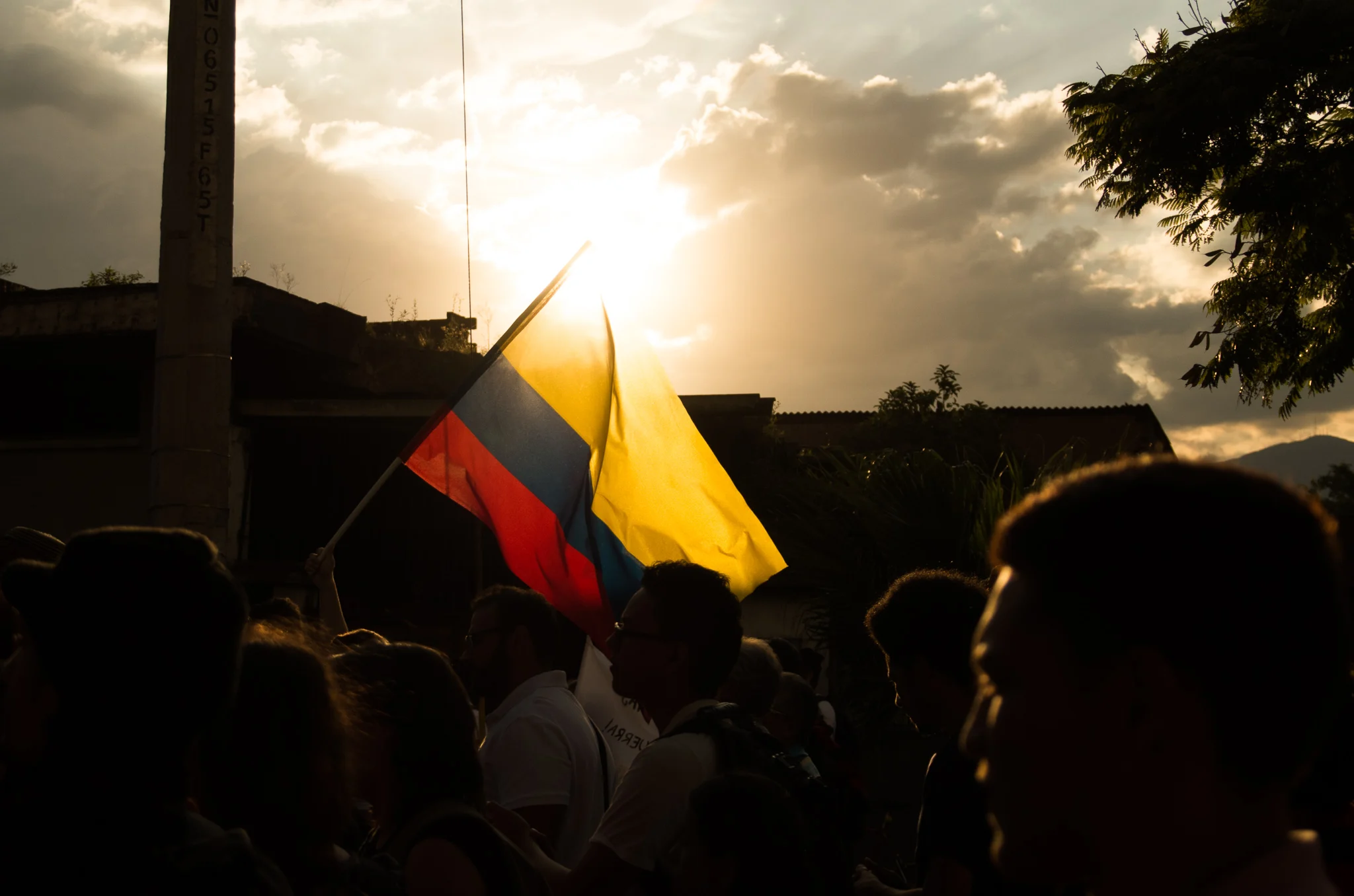
The 972 deaths recorded between 2016 and 2025 make Colombia “one of the most dangerous countries in the world” for such activists, according to the UN’s High Commissioner for Human Rights, Volker Türk.
Following the historic peace accords between the government and the Revolutionary Armed Forces of Colombia (FARC) in 2016, the report noted a gradual increase in assassinations. This was linked to the state’s inability to maintain a strong presence in areas previously controlled by the guerrilla group.
Over 70% of identified perpetrators were armed non-state actors, with the majority of cases analyzed by the report involved in drug trafficking, illegal mining, illegal logging, and human trafficking. The number of attacks and threats against human rights defenders investigated by the UN between 2022 and 2025 was 2,018, however this is thought to represent “only a fraction” of the true number due to underreporting and the lack of efficient government records of such cases.
The report recognized the work of the current Historic Pact (Pacto Histórico) government of Gustavo Petro, which has publicly recognized the gravity of the situation and worked to develop a national strategy to counter it. This included the 2022 law that established peace as a matter of state policy, recognizing the state’s responsibility to “guarantee human security” through a “territorial and intersectional approach”.
However, the UN says the state’s response has failed human rights defenders due to its fragmented nature that lacks coordination between national, departmental, and municipal authorities.
“In addition to ensuring accountability for the murders that have taken place, addressing the structural causes of this human tragedy through a comprehensive approach must be a priority for all relevant authorities in Colombia, in order to protect human rights defenders and enable them to carry out their vital work safely,” Türk said.
High levels of impunity have also persisted, with only 55 out of the 800 cases investigated between 2022 and 2025 ending in sentencing. In over half of these cases, no suspects have been identified.
Nearly a quarter of victims identified by the UN were Indigenous (23%) highlighting a disproportionate effect on this population that represents less than 5% of Colombians.
Other disproportionately affected groups include Afro-Colombians, LGBTQ+ individuals, rural community leaders and environmental protectors, as well as political leaders.
The report concluded by urging the Colombian state to take action to combat this issue, recommending institutional reforms and criminal investigations into perpetrators.
Srinagar: A coalition of international human rights organizations has called for the immediate release of Kashmiri journalist Irfan Meraj, three years after his arrest by India’s National Investigation Agency (NIA).
According to Kashmir Media Service, nearly three dozen human rights groups, including Amnesty International, Human Rights Watch and the Committee to Protect Journalists, said Meraj’s continued detention is based on charges they believe are politically motivated and linked to his work documenting human rights issues in occupied Jammu and Kashmir.
The organizations said that the case reflects growing pressure on journalists and researchers working on sensitive issues in the territory. The advocacy groups highlighted the detention of Kashmiri human rights defender Khurram Parvez, coordinator of the Jammu Kashmir Coalition of Civil Society (JKCCS), who has been held since 2021. Investigators previously described Mehaj as an associate of Parvez, a fact that rights organizations say forms part of the basis for the charges against him.
The coalition urged the Indian government to end what they described as reprisals against journalists and human rights defenders in occupied Jammu and Kashmir and to reconsider laws that allow extended detention without trial. They also criticized the Modi-led Indian government for failing to respond to several inquiries previously raised by UN human rights experts regarding alleged violations in the region.
The groups called on the international community to monitor the situation closely and encourage greater protection for journalists and civil society organizations, stating that continued attention from international institutions may be necessary to ensure that press freedom and basic civil liberties are upheld in the territory.
Meraj was arrested in March 2023 during an investigation conducted by India’s National Investigation Agency for uploading posts on brutalities of Indian forces in the territory.
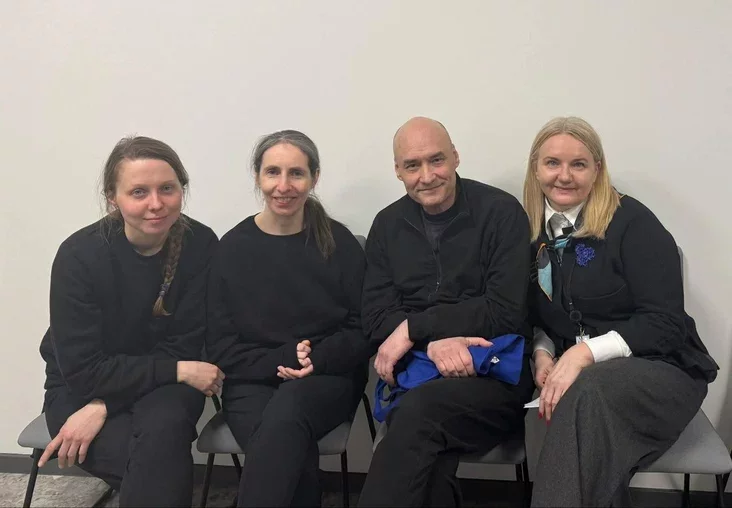
The Human Rights Center “Viasna” published a joint photo of three of its employees — Marfa Rabkova, Nasta Loika, and Valiantsin Stefanovich — who were released.
Belarusian leader Alexander Lukashenko released 250 political prisoners on 19 March 2026, the largest group freed so far, as the United States moved to lift more sanctions, The releases are part of a broader effort by Minsk to improve ties with Washington after years of isolation and sanctions. Among those freed was Katsyaryna Andreyeva, a journalist with Polish Belarusian-language broadcaster Belsat, according to reports.
Also released was Marfa Rabkova, an activist with Belarusian human rights group Viasna who was arrested in September 2020 and sentenced to 14 years and nine months on charges including “extremism,” the Reuters news agency reported.
Coale – an envoy for US President Donald Trump – said he expected all remaining political prisoners to be released by the end of the year, adding that Washington would lift all sanctions imposed over the 2020 crackdown on protesters if that happens, Reuters reported. He also said Lukashenko had been urged to halt further arrests. The United States has agreed to lift sanctions on several Belarusian banks and the country’s finance ministry, as well as fertiliser producers, according to the AFP news agency.
Exiled Belarusian opposition leader Sviatlana Tsikhanouskaya welcomed the latest prisoner release as a moment of “great joy” and “huge relief.”
Civil Rights Defenders welcomes the news that human rights defender Nasta Loika has been released from prison in Belarus as part of the country’s largest mass release of political prisoners to date. Nasta is a longstanding advocate for human rights in Belarus and an alarm bearer in the Natalia Project, the world’s first alarm and positioning system for human rights defenders at risk.
“We are deeply relieved that Nasta Loika is finally free. Her courage, resilience, and commitment to human rights have inspired countless people in Belarus and beyond. While we celebrate her release, it comes after years of unjust persecution. No one should ever be imprisoned for defending fundamental rights,” says Gabrielle Gunneberg, Global Department Director at Civil Rights Defenders.
Reacting to the release of 250 individuals imprisoned in Belarus on politically motivated grounds, including human rights defenders Marfa Rabkova and Nasta Loika, as a part of a deal with the United States, Marie Struthers, Amnesty International’s Eastern Europe and Central Asia Director, said:
“While the release of hundreds of individuals unjustly detained on politically motivated charges is a welcome step, it must not be mistaken for justice. Marfa Rabkova, Nasta Loika, Valiantsin Stefanovich and others should not have spent a day in prison. Freedom should never be the product of geopolitical bargaining in human beings. Justice will not be served until those responsible for their unlawful imprisonment are held accountable.
Human rights activist and Nobel Peace Prize laureate Ales Bialiatski reacted to the release of fellow human rights defenders:
“I am immensely happy, like all my colleagues, about the release of our friends, our colleagues: Valiantsin Stefanovich, Marfa Rabkova, and Nasta Loika. The thing that we expected — I have been expecting it for the last three months, and my colleagues have been expecting it for more than five years — has come true. Because Marfa Rabkova served five and a half years, Valiantsin Stefanovich served four and a half years, and Nasta Loika served several years. And it was an absolute injustice, it shouldn’t have been like this.
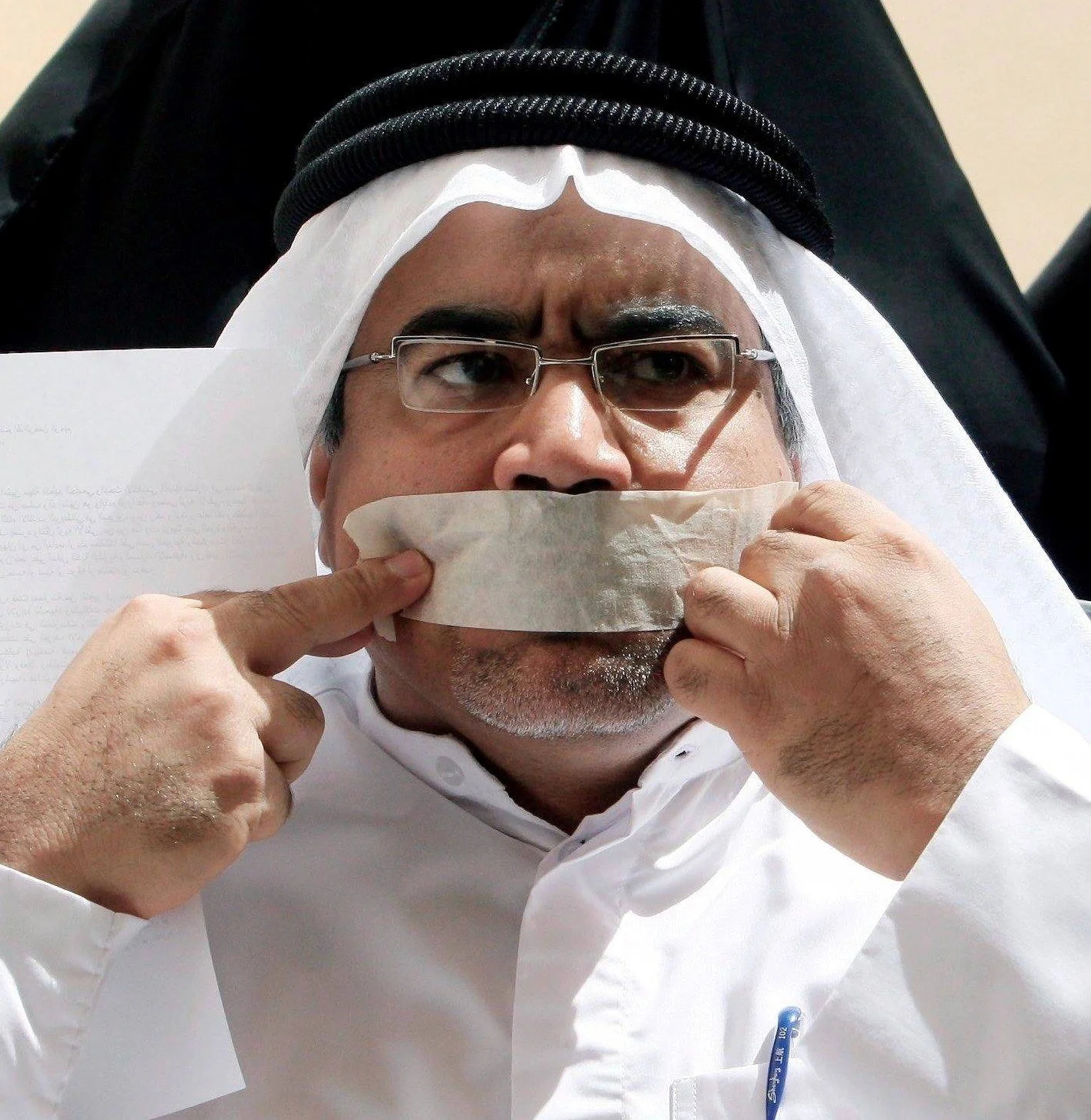
Dr Abduljalil AlSingace – Bahrain – Credit Hasan Jamali
17 March 2026: PEN International, together with a coalition of human rights organisations, wrote to King Hamad bin Isa Al Khalifa and Crown Prince Salman bin Hamad Al Khalifa of Bahrain, urging the release of Dr Abduljalil Al-Singace, a 64-year-old human rights defender imprisoned for fifteen years for his pro-democracy activism. The letter highlights his deteriorating health due to denial of medical care, including delayed surgery and lack of physiotherapy, and his hunger strikes protesting the confiscation of his manuscripts and research. The organisations call on Bahraini authorities to release Dr Al-Singace, provide adequate healthcare, and return his confiscated work, noting that his release ahead of Eid Al-Fitr would be a meaningful act of compassion and reconciliation amid ongoing regional turmoil.
Your Majesties,
We are writing to respectfully urge Your Majesties to order the release of human rights defender Dr Abduljalil Al-Singace, who has now completed fifteen years of arbitrary imprisonment while serving a life sentence for his role in the pro-democracy movement.
Bahrain is currently facing unprecedented challenges as the regional conflict intensifies. The country has been subjected to multiple attacks and its airspace has been closed. At such a difficult time for the nation, acts that promote compassion, unity, and reconciliation are more important than ever. The release of Dr Al-Singace and others imprisoned for their human rights work and political views would send an important message during this difficult time.
Dr Al-Singace, now 64 years old, has been held in medical facilities since July 2021 and is currently detained at Muharraq Specialised Health Care Centre. He began a hunger strike in protest of the confiscation of his manuscripts and academic research. Since then, he has survived primarily on liquid intake, including multivitamin supplements. At times, he has resorted to full hunger strikes to protest the denial of medication and access to specialised medical treatment.
In November 2025, the UN Committee against Torture expressed serious concerns regarding his ongoing detention and urged Bahrain to release Dr Al-Singace, alongside fellow human rights defenders Hassan Mushaima and Abdulhadi Al-Khawaja.
We remain deeply concerned that Dr Al-Singace continues to suffer from the systematic denial of adequate medical care. For example, since 2021, he has experienced severe shoulder pain. After prolonged delays in obtaining a proper diagnosis, he finally received an MRI scan last year and doctors advised that surgery is required. However, there has been no indication as to when this operation will take place. He also continues to be denied physiotherapy despite his disability. These medical concerns should be addressed without further delay.
With Eid Al-Fitr approaching, an occasion traditionally marked by royal pardons, we respectfully ask that Dr Al-Singace be included among those pardoned. In the meantime, we urge Your Majesties to ensure that he is held in conditions that meet international standards, receives his medication without delay, and has access to adequate healthcare in compliance with medical ethics. We also urge the relevant authorities to facilitate the return of his confiscated research to his family at the earliest opportunity.
At a time when the region is experiencing profound turmoil, the release of political prisoners, including Dr Al-Singace, would offer a meaningful gesture of compassion and help ease the suffering felt by many families in Bahrain.
Yours sincerely,
ALQST for Human Rights
ARTICLE 19
Bahrain Centre for Human Rights
Bahrain Institute for Rights and Democracy (BIRD)
The British Society for Middle Eastern Studies Committee on Academic Freedom
CIVICUS
Committee to Protect Journalists (CPJ)
DAWN
English PEN
The Free Al-Khawaja Campaign
Gulf Centre for Human Rights (GCHR)
International Federation for Human Rights (FIDH), within the framework of the Observatory for the Protection of Human Rights Defenders
The Right Livelihood Foundation and partners have gone into the problems faced by Human Rights Defenders in exile:
Leaving your country means more than crossing a border. It means stepping into uncertainty, a place where language falters, futures blur and belonging must be rebuilt. But exile can also open doors. It can broaden perspectives, forge new alliances and inspire people to rebuild on their own terms.
Through the project “Reconceptualising exile”, Right Livelihood together with theGlobal Campus of Human Rights, work with a group of 14 fellows living in exile to rebuild life, regain identity and purpose while the ground they left behind remains too dangerous to return to. This visual story challenges what you think exile means. It invites you to see how it feels and how people rebuild from fragments, carrying language, memory and conviction across borders.
What forces someone into exile? Behind those numbers are real people punished for what they believe in:
For Natallia Satsunkevich, a human rights defender from Belarus, it was fighting for democracy in the face of the dictatorship.
For Viacheslav (Slava) Samonov, a Russian lawyer and LGBTQ+ activist, the dissolution of his NGO amid the post-invasion crackdown and the rapidly escalating repression against LGBTQ+ people.
For Askold Kurov, a Russian documentary filmmaker, it was promoting free media and LGBTQ+ rights.
For Helen Mack Chang, it was challenging the rampant corruption in Guatemala.
For Abdul Rahman Yasa, it was standing up for human rights, women’s issues and youth advocacy under the Taliban.
The purpose of Front Line Defenders Rest & Respite Programme is to enable human rights defenders to take some time out and to recharge their batteries in a safe environment while at the same time enhancing their skills so that they can work more effectively when they return home.
The programme has a flexible approach and tries to respond to the needs of the HRD. Some human rights defenders are hosted in Ireland, others choose a destination closer to home, where they have a particular interest or existing contacts. It is generally for short stays ranging from one week to three months.
Human rights defenders can take some well-earned rest and escape the stressful and difficult circumstances in which they work for a short time. They can focus exclusively on their health and well-being or spend some quality time with their family. They can also choose to work on a specific project, learn about digital security or improve other skills relevant to their work.
Rest & Respite opportunities are offered on an invitation-only basis.
“This programme is great for women human rights activists who have been subjected to stressful, tense and often dangerous and threatening situations in their work.“ – HRD, Afghanistan, Rest & Respite Programme
“Before the support, I had serious burnout caused by the stress from my work, especially from a domestic violence case I was working on when I was attacked and my computer and phones taken. I had a constant headache and was very stressed, but I’m feeling well again and am back to work.“ – HRD, Cameroon, Rest & Respite Programme
My ordeal started at about 2am one morning in February 2018, when I was arrested by the Greek police. People were fleeing conflicts at home and coming to Europe seeking safety in unseaworthy boats and I was helping the Emergency Response Center International to conduct search and rescue activities.
I was detained without understanding what exactly was happening; we were provided neither a lawyer nor an interpreter. After two nights, we were released “pending further investigation.” We continued to do search and rescue. After all, we had done nothing wrong. In fact, we continued to cooperate with the very authorities that had arrested us.
Then, in August 2018, six months after our initial arrest, my colleague and I were detained again. This time, we were charged with serious crimes, including forgery, the illegal use of radio frequencies, espionage, money laundering, being members of a criminal organization, and facilitating illegal entry….Finally, on 15 January this year, I was acquitted. The prosecutor at trial stated there was no evidence of criminality, and the panel of judges unanimously agreed that my 23 co-defendants and I were motivated by, and engaged in, legal humanitarianism.
Whilst I am delighted not to be returning to prison, it has taken far too long for this absurd prosecution to collapse. In the interim, the damage has already been done. EU states’ authorities have obstructed civilian rescue efforts, and over 32,000 lives have been lost at Europe’s borders since 2014. Meanwhile, dozens of humanitarians across Europe face similar prosecutions, obstruction, intimidation and harassment. Sadly, my case was not the exception but part of a wider pattern of states criminalizing humanitarian work.
The current effort to reform EU anti-smuggling legislation, the so-called “Facilitators Package” offers an opportunity to address some of the issues that have led to our baseless prosecution. However, the proposed revisions to the legislation might inadvertently increase the risk of criminalizing rescue workers – meaning future prosecutions will still be possible and may not end in acquittals like mine. They will also impact migrants, people of migrant origin and racialized people who all too often suffer from these policies.
As Amnesty International has highlighted, the proposal’s broad and vague provisions risk perpetuating the criminalization of refugees, migrants and human rights defenders. Any reform should clarify explicitly and in a binding manner that acts of humanitarian assistance or solidarity should be exempted from prosecution or punishment. Migrants who may have been smuggled themselves, or people assisting their family members should also be protected from criminal liability.
Through this reform, the EU has an opportunity to align with the EU Charter, UN Conventions and Smuggling Protocols, and treaties on maritime search and rescue, and to explicitly protect the right to life, the right to seek asylum, and the duty to render assistance.
As it stands, the proposal tries to expand the avenues to pursue humanitarian workers by introducing the crime of “public instigation” of irregular migration. This vague new provision could be misconstrued to harm refugees and migrants, advocates and activists protesting unjust migration laws or professionals providing legal information or assistance.
Prosecutors should focus on exploitation and violence, including by authorities summarily force people across land or sea borders.
Last year, the European Court of Human Rights found “serious evidence” of systematic pushbacks in Greece. Evidence of similar practices has been mounting across European borders. Without border monitoring, this already opaque crime becomes ever more obscure. Finally, trafficking, another cross-border crime, is arguably exacerbated by EU policy. A UN report published in 2018 found that asylum seekers in Libya face “unlawful killings, torture, arbitrary detention, gang rape, slavery, forced labour and extortion,” with apparent complicity by State actors. Nevertheless, the EU has for years financed the so-called Libyan Coast Guard.
Whether in the Facilitators Package or in its wider border policies, the EU must respect the rule of law and human rights.
The way to stop people taking dangerous journeys is providing safe and legal pathways for protection, commensurate in scale with the need for protection, and channels for regular migration for those seeking a better life. By denying safe routes, the EU pushes people into the arms and boats of smugglers and traffickers.
All the while, EU laws and narratives on stopping smugglers continue being used to criminalize migrants and people doing what they can to save lives or offer assistance. Unless the reform of the Facilitators package takes serious steps to uphold the duty to rescue and defend humanitarians, people will continue to risk jail for doing what is normal, human behaviour: helping others at risk.
Watch Seán as he discusses his case, his reflections and hopes for the future.
Listen to Séan’s full story in the first season of Amnesty’s podcast ‘On the Side of Humanity’.
Drivetime on RTE Radio of 13 March 2026 carries an interview with Mary Lawlor the departing UN Special Rapporteur on Human Rights Defenders about her work as a human rights activists.
On 13 the Havana Times follows up on Amnesty International’s international campaign for Indigenous Leader Brooklyn Rivera of Nicaragua.
Brooklyn Rivera, former deputy of the indigenous YATAMA political party. File photo: Confidencial
The Mechanism for the Recognition of Political Prisoners is demanding that the regime of Daniel Ortega and Rosario Murillo provide “proof of life” in the case of Brooklyn Rivera, the Miskito indigenous leader. Rivera was abducted by police on September 29, 2023, and has been in a state of “forced disappearance” ever since.
Sources linked to the Nicaraguan Army told CONFIDENCIAL that the indigenous leader, who until his arrest served as National Assembly representative for the indigenous YATAMA party, is in “dangerously poor health.” According to these sources, Rivera is currently “in police custody at a state-run hospital in Managua.”
On Thursday, March 12, 2026, the Mechanism reported that since his detention, his family members “haven’t heard anything from him. They have not been able to see him or obtain information on his whereabouts.” To date, his family has gone “895 days without knowing where he is,” and, according to that organization, concern is “even greater due to his delicate state of health.”
The 73-year-old indigenous leader was arrested at his home in Bilwi (Puerto Cabezas), on Nicaragua’s North Caribbean Coast. Since then, there has been no official information regarding his whereabouts, and his family has been unable to see him or communicate with him. “Rivera reportedly suffers from high blood pressure and, following his arrest, was reportedly transported by ambulance due to his medical condition,” the Mechanism noted.
The lack of official information has left his condition unclear. Since his arrest, his family has been subjected to threats, harassment, and persecution by the National Police and prison authorities.
For decades, Rivera was one of the most prominent voices in the defense of the territorial, political, and cultural rights of the Miskito people and other indigenous communities in the region. In July 2025, Tininiska Rivera, daughter of the Miskito indigenous leader, denounced the repression against indigenous leaders to the UN Expert Mechanism on the Rights of Indigenous Peoples. “As a daughter, I have been forced into exile after receiving threats and living under a constant atmosphere of persecution,” she reported.
The human rights organization Amnesty International included Rivera in an international campaign calling for the release of three prisoners of conscience worldwide, including lawyer Sonia Dahamani of Tunisia and photojournalist Sai Azael Thaike of Myanmar.




 Hans Thoolen on Human Rights Defenders and their awards