This event will take place on 16 June 2025, from 1:00PM – 2:00PM CEST, in Room XXV, of the Palais des Nations in Geneva Add to calendarpdf Download event flyer
In the face of the triple planetary environmental crisis, of conflict, genocide and apartheid, of the consolidation of authoritarian ideologies and narratives around the globe, and the erosion of the rule of law as well as the closing of civic space, never have we needed a robust international human rights system so badly.
But the UN human rights system is in crisis. As essential users and actors of the system, human rights defenders’ views are valuable. The event provides a space to be hearing directly from them not only about why they need an effective, efficient, responsive UN human rights system to support their activism especially in the current context, but also about the ways in which the UN system needs to grow, evolve, adapt and reform itself to deal with the crisis of credibility and legitimacy it is currently facing.
Panelists:
Laura Restrepo, Committee for Solidarity with Political Prisoners (CSPP) & FDSS, Colombia
Mariama Jumie Bah , Human Rights Defenders Network Sierra Leone
Elena Petrovska , LGBTI Equal Rights Association (ERA), Western Balkans/Turkey
Douglas Javier Juárez Dávila, American Friends Service Committee (AFSC), Guatemala
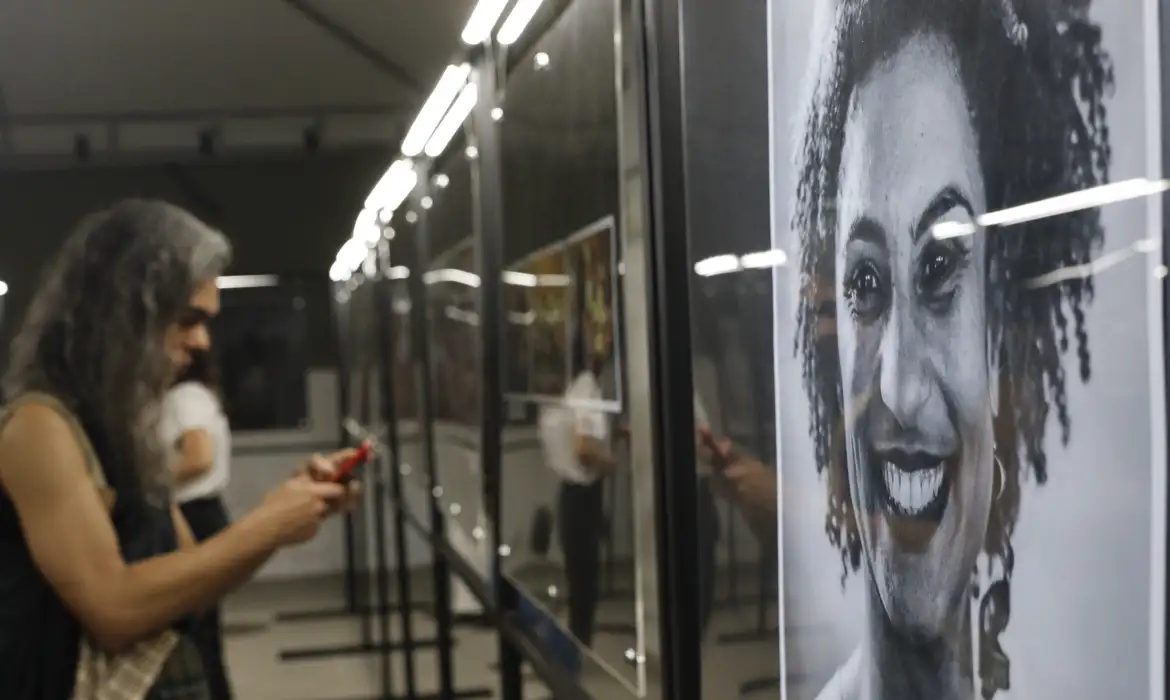
The Brazilian lower house on Monday (26 May 2025) approved a bill establishing the National Marielle Franco Day for Human Rights Advocates. The date established is March 14—the day the Rio de Janeiro councilwoman and her driver Anderson Gomes were murdered in 2018 after leaving an event. The text will now be considered by the Senate.
Among the actions listed are promoting the public debate on the role of human rights defenders; encouraging the participation of women, black people, indigenous people, and other historically marginalized groups in decision-making processes; and spreading the word about both Brazilian and international protection mechanisms for advocates.
The bill was drawn up by former Representative David Miranda, who died in 2023, as well as other PSOL members. The proposal’s rapporteur, Representative Benedita da Silva, of the PT, said that institutional recognition of the role of human rights defenders helps strengthen Brazilian democracy as it values individuals who have fought for the enforcement of fundamental rights.
“By establishing a date of recognition and remembrance, the bill not only pays tribute to Marielle [Franco] and so many others, but also raises national awareness about the importance of guaranteeing the physical, psychological, and political integrity of these individuals,” the rapporteur said.
“The creation of the National Human Rights Defenders’ Day acts as a symbolic and political gesture to reaffirm the Brazilian state’s commitment to the principle of human dignity and respect for public liberties—essential elements of any democratic state governed by the rule of law,” she concluded.
The representative also noted that the date is already a landmark of resistance and remembrance in different parts of Brazil. The legislative assemblies of the states of Pará, Paraíba, and Pernambuco have approved similar proposals, as has the Porto Alegre City Council.
In Rio de Janeiro, the Legislative Assembly established the Marielle Franco Human Rights Award in 2021 as a permanent way of recognizing initiatives aligned with the agendas that marked her political work—such as the rights of black women, LGBTQIA+ people, favela residents, and human rights activists.
In São Paulo, the city council also created the Marielle Franco Human Rights Award in 2023, which is already in its second edition and in 2025 honored historic leaders from the outskirts of the city, like Dona Olga Quiroga.
On May 28, 1961 -64 years ago today – a British lawyer named Peter Benenson penned a letter for the Observer newspaper in the UK launching the “Appeal for Amnesty 1961,” a campaign calling for the release of people imprisoned around the world because of the peaceful expression of their beliefs. This movement galvanized into what is now Amnesty International, an organization founded on the idea that ordinary people around the world could protect human rights by coming together to take action on behalf of others.
Sixty-four years later, Amnesty is a worldwide movement for human rights with a collective power of 10 million people, each one committed to fighting for justice, equality and freedom everywhere.
Today, Amnesty is needed more than ever to confront a backlash against human rights and increasing authoritarian practices, including right here in the United States.
As a global movement, we have—and continue to—show up in solidarity for communities and across issues and geographies. Caring, compassionate people have powered our movement for decades as we’ve shined a light on injustice and defended human rights. We will raise the political cost of authoritarian practices through direct advocacy, constituent pressure on Congress and other leaders to use their power in the defense of human rights, and other impactful campaigning efforts……
As we mark our anniversary, we are recommitting to our efforts to champion and protect human rights, here in the United States, and around the world.
12 tips from Amnesty International leaders around the world:
Fight hard against early attacks against individuals and institutions, and ask, “If we lose now, who will they come for next.”
Watch for new government agencies and data collection designed for repression. Leaders who embrace authoritarian tactics create “lists” to target effective activists, often using social media. Surveillance is a red flag.
Elections are dangerous flashpoints for accelerators of repression. Crackdowns and laws passed to restrict civic space often spike pre-elections.
Resist the legal system being weaponized. Governments will use trumped up charges, long pretrial detentions and lengthy trials to sideline activists, denying bail and delaying appeals.
Read new “unrelated” laws carefully with an eye on civic space and freedom of expression. Not every attack on rights will be direct and obvious.
Be ready for fake “facts” and smear campaigns to paint human rights defenders as corrupt or criminal. How are you going to get the truth out quickly and widely?
Catch repressive legislative drafts early and fight back hard and publicly. And don’t stop until bills are dead and won’t come back.
Stay inspired about a pro-rights future, but create strategies and stay ready for worsening anti-rights scenarios.
Public narrative matters. Anti-rights actors will reframe human rights as threats, to shrink civic space. Don’t let them. Resist and frame a public narrative that speech, protest and assembly are essential to defend all the other rights.
Protect yourself, your wellbeing and your safety. Threats come in many forms and will be experienced differently by each activist. Do what is right for you.
Be a good partner. Solidarity wins. Build coalitions, share resources, lean on allies and let them lean on you.
Keep an eye on other contexts. Repressive leaders learn from each other. Human rights activists need to do the same.
From Hungary to China to Venezuela, and anywhere else leaders think they can act with impunity—we have fought back at every turn.
Now finally there is some closure as reported by ANP on 4 June 2025:
In El Salvador, three suspects have been found guilty of murdering four Dutch journalists that were working for IKON in 1982. All three were handed a prison sentence of 15 years, several Salvadorian media outlets reported, including the newspaper Diario El Salvador.
After a hearing that took longer than 11 hours, the jury ruled that all the suspects were involved in the death of the journalists. The suspects are the former Minister of Defense, Guillermo Garcia (91), former director of a special police service, Francisco Antonio Moran (93), and former colonel Mario Reyes Mena (85).
Koos Koster, Jan Kuiper, Hans ter Laag, and Joop Willemsen, four journalists who worked for the now defunct broadcaster IKON, were reporting on the civil war in the country in 1982. They walked into an ambush at Chalatenango and were killed. A now-repealed amnesty law prevented the prosecution of the perpetrators for years.
Sonja ter Laag (70), the sister of Hans ter Laag, responded to the verdict. “I am very happy that the people who murdered my brother have been convicted. And that they will go to their graves as murderers. We can finally close this after 43 years.”
She added that the victim’s relatives have been living in a state of hope and desperation for the convictions for 43 years. “That costs a lot of energy, you don’t want to know. And now it is over. The people who gave the order to murder my brother, an innocent 25-year-old boy, will be punished.” Ter Laag did not mind that the elderly men would not have long to live anymore. “In any case, they will not go to their grave decorated.”
The judges imposed a lower sentence than the maximum set by the law. Instead of a prison sentence of 30 years, they imposed 15 years because of the defendants’ age and poor health.
García and Morán are being treated in a private hospital. El Salvador has requested the extradition of Reyes Mena. He currently lives in the U.S.
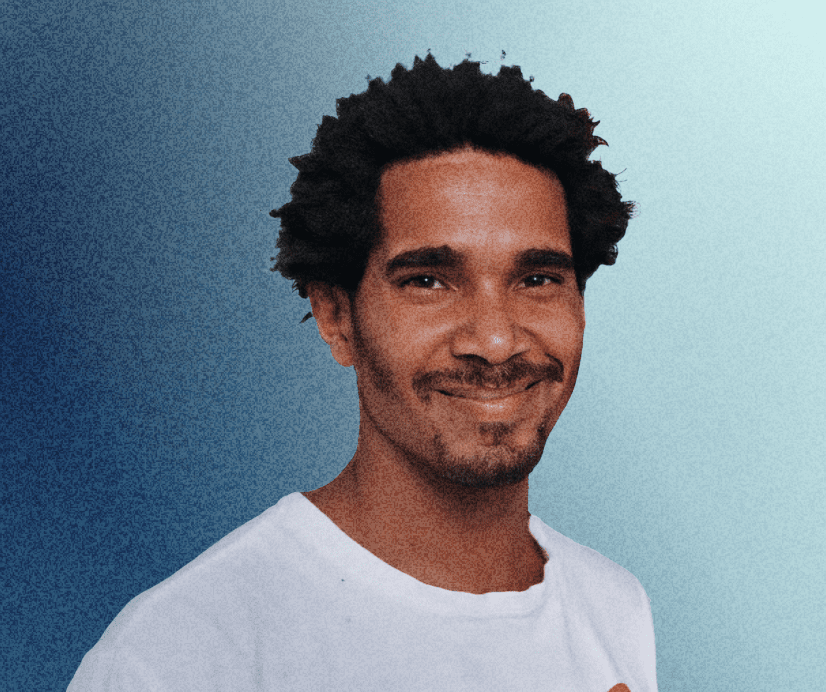
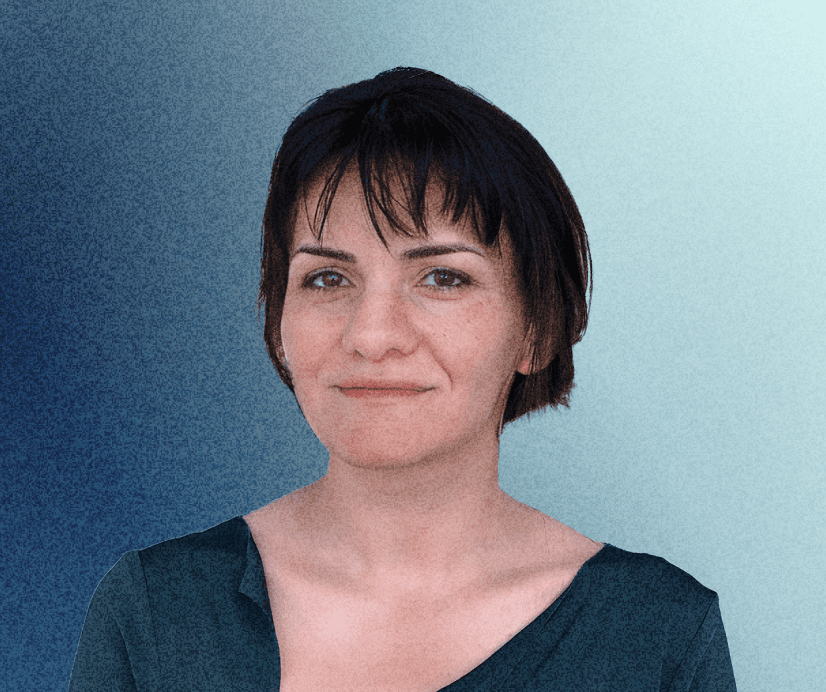
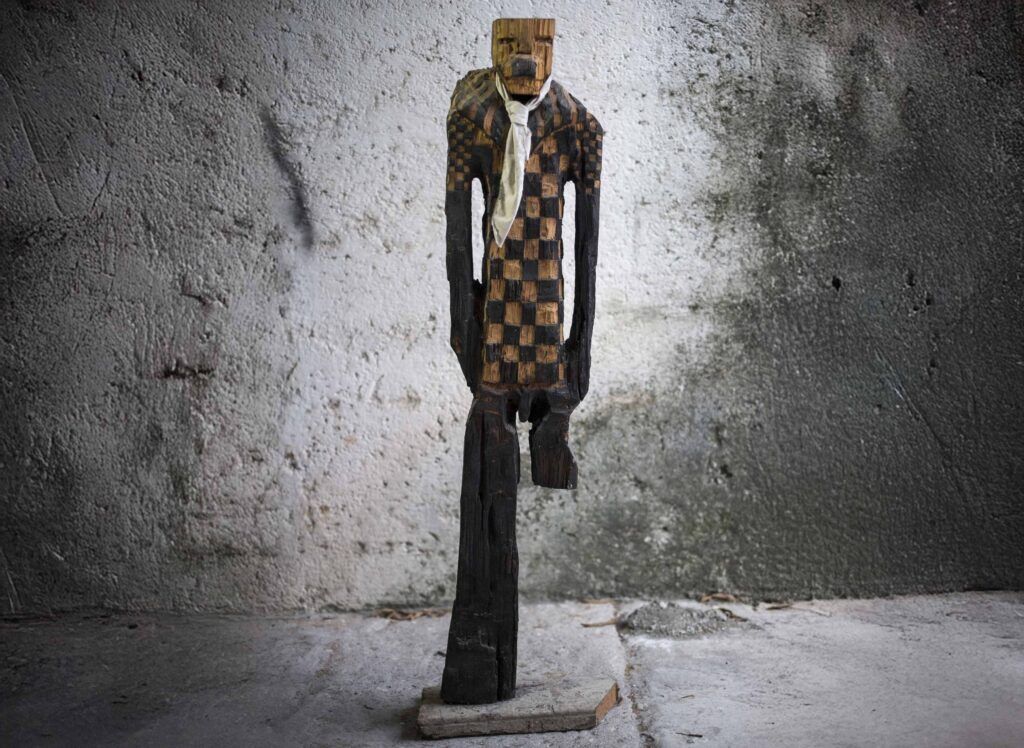
On 1 May 2025 the Human Rights Foundation announced the recipients of the 2025 Václav Havel International Prize for Creative Dissent: Cuban artist and pro-democracy activist Luis Manuel Otero Alcántara, Syrian activist and artist Azza Abo Rebieh, and Russian artist, poet, and musician Sasha Skochilenko.
He gained international attention for his performance art and peaceful protests, including hunger strikes and symbolic acts of resistance. He was arrested during Cuba’s historic 2021 protests and sentenced to five years in prison following a closed trial. In 2022, following a submission by HRF, the United Nations Working Group on Arbitrary Detention declared his imprisonment to be arbitrary and urged the Cuban regime to release him immediately. He is being held in Guanajay maximum-security prison.
Luis Manuel Otero Alcántara, “Los Heroes no Pesan.” Courtesy of the artist.
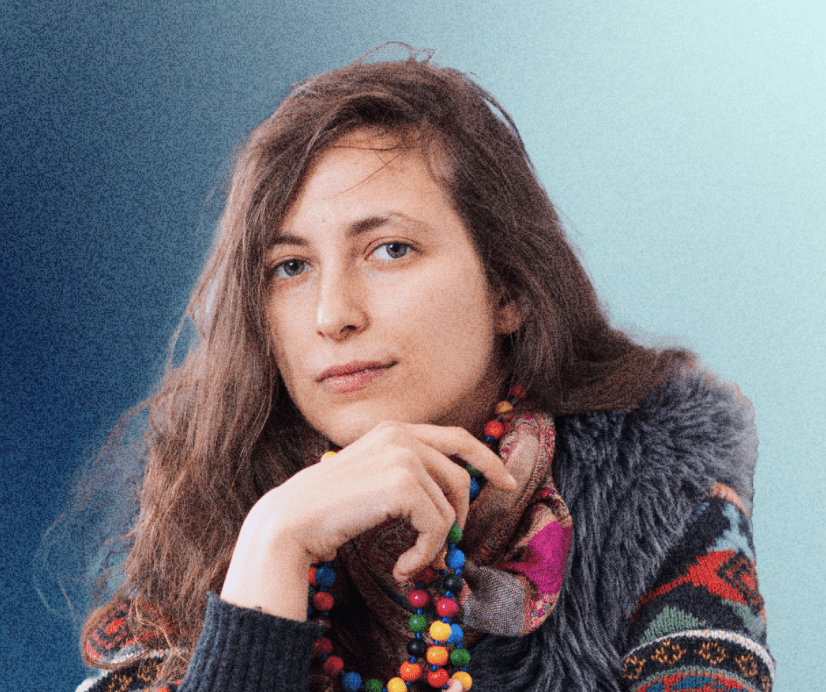
AZZA ABO REBIEH
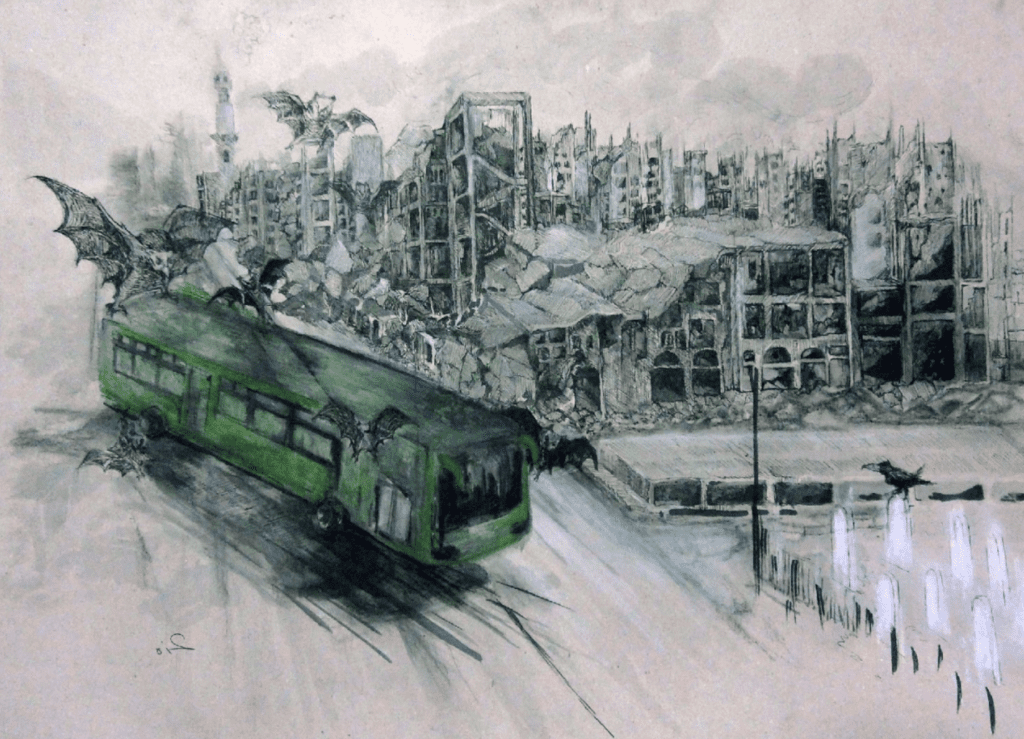
Azza Abo Rebieh is a Syrian artist born in Hama in 1980. During the Syrian revolution, she created graffiti, led workshops with women, and organized puppet theater for children in rural villages. In 2015, she was detained by the regime of Bashar al-Assad.
Art became her solace during her imprisonment in Adra prison, where she shared a cell with 30 women, many of whom were illiterate. Azza drew her cellmates, dignifying them through reminders and glimpses of themselves through sketches. Following her release, her prison drawings were exhibited at the Drawing Center in New York. Her work explores memory, resistance, and survival and is held in collections including the British Museum and Institut du Monde Arabe.
Azza Abo Rebieh, “Hindmosts.” Courtesy of the artist.
SASHA SKOCHILENKO
Sasha Skochilenko is a Russian artist, musician, poet, and former political prisoner. She was arrested in 2022 for distributing anti-war messages and sentenced in 2023 to seven years in prison under Russia’s so-called “fake news” law.
Skochilenko was released in 2024 as part of the Ankara prisoner exchange between the United States and Russia. She lives in Germany, where she continues her artistic work, participating in exhibitions in Paris, Amsterdam, and London to showcase the drawings she created in prison. Beyond activism, she’s the author of “Book About Depression,” which played a significant role in destigmatizing mental health issues in Russia.
Sasha Skochilenko replaced pricing labels with anti-war messages (seen here in English translation).
You don’t need experience to make a difference. You just need the belief that things can be better – and the courage to take that first step. At Amnesty, we’ll support you to get involved in a way that works for you. Whether you’ve got five minutes or a few hours a month, there’s a place for you in our movement.
….
🌈 Ready to Take Action? Sign up Today.
Once you sign up, we’ll guide you through a short online induction module that introduces you to who we are, what we do, and how you can help. From there, you’ll be connected with the right support to help you
On 29 May the Committee to Protect Journalists and fourteen other organisations have urged Pakistan to immediately halt deportation of Afghan journalists and other vulnerable Afghan migrants. The fifteen advocacy groups expressed deep concern over Pakistan’s ongoing deportation plan, first announced on 3 October 2023, which targets undocumented Afghan nationals. The joint statement highlights the heightened risks faced by Afghan journalists, writers, artists, human rights defenders, and others who fled Taliban persecution and are now at risk of being forcibly returned.
Among the signatories are prominent international organisations such as PEN Germany, CPJ, Unlimited Free Press, Front Line Defenders, International Cities of Refuge Network (ICORN), Nai – Supporting Open Media in Afghanistan, and Reporters Without Borders (RSF).
The organisations also called on the international community to provide safe resettlement opportunities for these individuals, recognising the dangers they face if returned to Taliban-controlled Afghanistan. Pakistan’s deportation policy has faced sharp criticism from local and international bodies, including the Pakistan Human Rights Commission, the United Nations High Commissioner for Refugees (UNHCR), and the International Organisation for Migration (IOM). These entities have urged Pakistan to uphold its international obligations and provide protection to those fleeing conflict and persecution.
Despite repeated calls for restraint, the Pakistani government has accelerated forced returns in recent months. In April alone, more than 300,000 Afghans were deported, drawing further condemnation from human rights organisations.
——
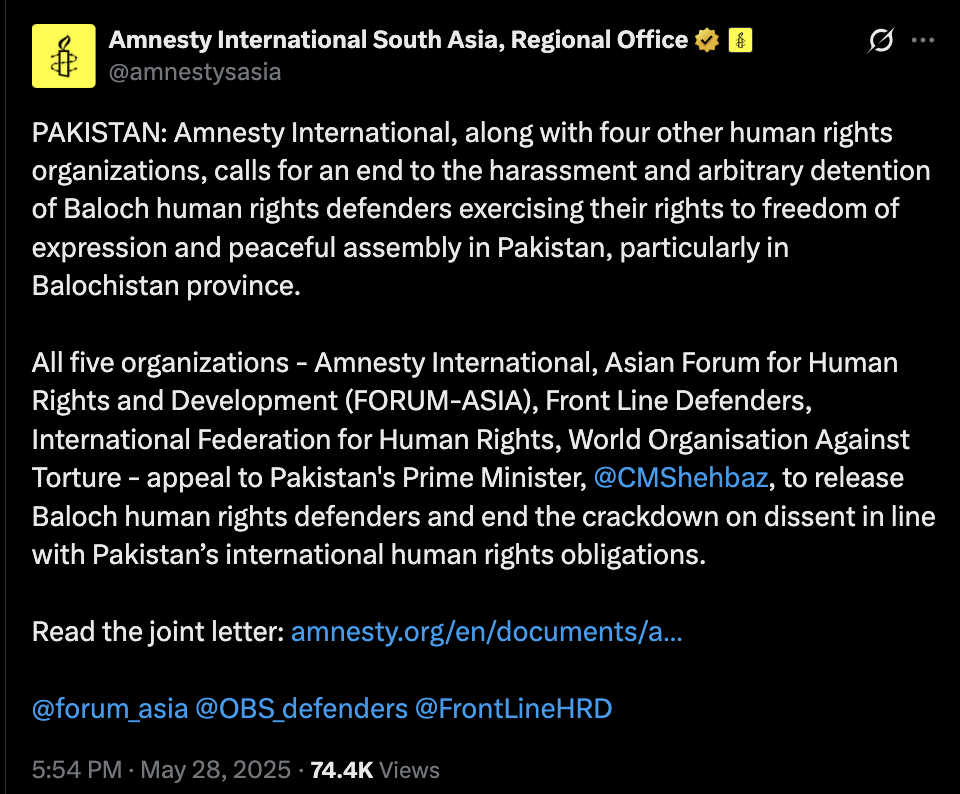
On 28 May Amnesty International along with four other human rights organizations wrote to the Pakistani prime minister, calling for an end to the “harassment and arbitrary detention” of Baloch human rights defenders (HRDs) exercising their rights to freedom of expression and peaceful assembly, particularly in Balochistan province.
The letter comes in the wake of Dr. Mahrang Baloch, one of the leading campaigners for the Baloch minority and the leader of the Baloch Yakjehti Committee (BYC), and a number of other activists, being arrested in March on charges of terrorism, sedition and murder. ..
The five organizations — Amnesty International, Asian Forum for Human Rights and Development (FORUM-ASIA), Front Line Defenders, International Federation for Human Rights, World Organization Against Torture — appeal to Pakistan’s Prime Minister to release Baloch human rights defenders and end the crackdown on dissent in line with Pakistan’s international human rights obligations;
A dozen UN experts called on Pakistan in March to immediately release Baloch rights defenders, including Dr. Baloch, and to end the repression of their peaceful protests. UN special rapporteur for human rights defenders Mary Lawlor said she was “disturbed by reports of further mistreatment in prison.”
Balochistan is the site of a long-running separatist movement, with insurgent groups accusing the state of unfairly exploiting Balochistan’s rich gas and mineral resources. The federal and provincial governments deny this, saying they are spending billions of rupees on the uplift of the province’s people.
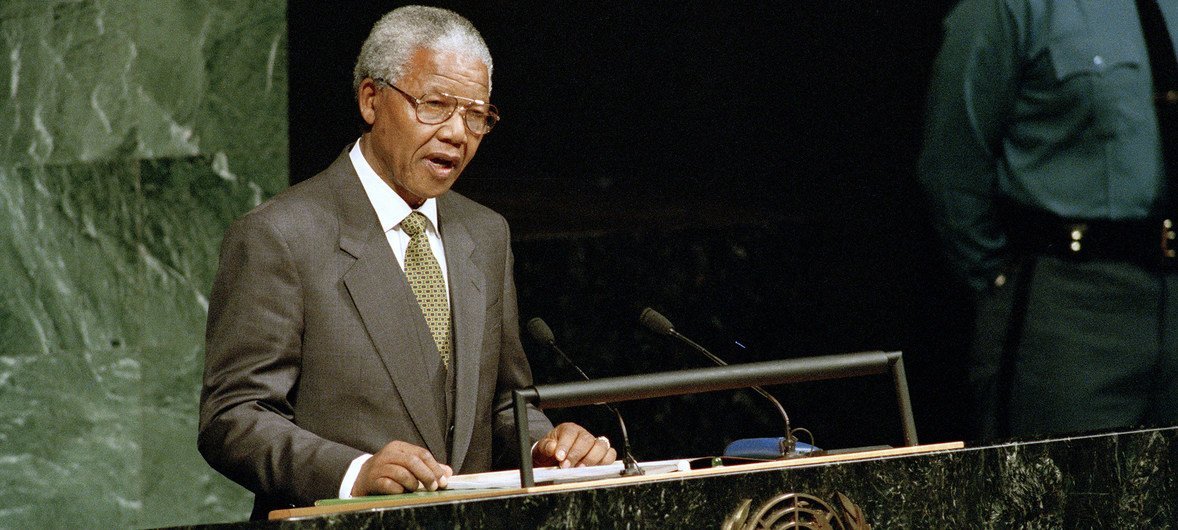
UN Photo/Evan Schneider President Nelson Mandela addresses the 49th session of the General Assembly October 1994.
An Indigenous social worker from Canada and a social entrepreneur from Kenya are the laureates of the 2025 Nelson Rolihlahla Mandela Prize, the United Nations announced on28 May 2025.
Secretary-General António Guterres will present the award to Brenda Reynolds and Kennedy Odede on 18 July, Nelson Mandela International Day. “This year’s Mandela prize winners embody the spirit of unity and possibility – reminding us how we all have the power to shape stronger communities and a better world,” said Mr. Guterres.
A Status Treaty member of the Fishing Lake Saulteaux First Nation in Saskatchewan, Canada, Brenda Reynolds has spent decades advancing Indigenous rights, mental health, and trauma-informed care. In 1988, she supported 17 teenage girls in the first residential school sexual abuse case in Saskatchewan. Later, she became a special adviser to the Truth and Reconciliation Commission (TRC), helping shape survivor support and trauma responses. She is most recognised for her key role in Canada’s court-ordered Indian Residential Schools Settlement Agreement and her subsequent development of the Indian Residential School Resolution Health Support Program—a national initiative offering culturally grounded mental health care for survivors and families. In 2023, she was invited by the UN High Commissioner for Human Rights and the European Union to share her expertise on trauma and cultural genocide.
Kennedy Odede
Living in Kenya’s Kibera Slum for 23 years, Kennedy Odede went from living on the street at 10 years old to global recognition when he was named one of TIME magazine’s 2024 100 Most Influential People. His journey began with a small act: saving his meagre factory earnings to buy a soccer ball and bring his community together. That spark grew into Shining Hope for Communities (SHOFCO), a grassroots movement he now leads as CEO. SHOFCO operates in 68 locations across Kenya, empowering local groups and delivering vital services to over 2.4 million people every year. Mr. Odede is also a New York Times bestselling co-author and holds roles with USAID, the World Economic Forum, the Obama Foundation, and the Clinton Global Initiative.
——-
Also interesting to note that according to the Sahara Press Service of29 May 2025 an unexpected and high-profile controversy led to the elimination of Moroccan nominee Amina Bouayach President of CNDH from the shortlist. Bouayach’s candidacy sparked a wave of international protest, with letters, petitions, and statements of condemnation sent to the selection committee from both Sahrawi organizations and Moroccan human rights defenders, who denounced the nomination as a betrayal of Mandela’s legacy.
The opposition was led by victims of human rights abuses—Sahrawis, Rifians, journalists, and former political prisoners—who expressed deep outrage that a figure associated with the whitewashing of Morocco’s ongoing violations could be considered for a prestigious prize meant to honor defenders of dignity and freedom.
In a series of forceful statements, the Sahrawi National Council and the Sahrawi Human Rights Commission described Bouayach’s nomination as “an insult” to Mandela and accused her of legitimizing repression in Western Sahara and within Morocco. Notably, Moroccan activists also voiced rare public criticism, calling the nomination a distortion of both the United Nations’ credibility and Mandela’s ideals…
Her leadership at the Moroccan National Human Rights Council has been, and still is marked not by independent advocacy, but by efforts to legitimize state atrocities even as reports of abuses against Sahrawis, Rifians, journalists, and peaceful dissidents have continued to mount. ..
According to sources close to the selection process, the committee was “taken aback” by the level and breadth of resistance, especially the coordinated objections from across the political and geographic spectrum. This pressure ultimately led to Bouayach’s exclusion from consideration.
‘In 2024, we have witnessed extraordinary levels of hostility towards democracy, from rampant disinformation and information manipulation by foreign actors, to the silencing of media and human rights defenders, and a strong pushback against gender equality and diversity, undoing years of progress in many countries across the globe. Today, only 29% of the world’s population live in liberal democracies. At the heart of these challenges lies peace. Peace is not simply the absence of war. It is the active cultivation of justice, the protection of the most vulnerable, the realisation of all human rights and the commitment to dialogue and reconciliation.’ – High Representative, Kaja Kallas
The publication of the EU’s Annual Human Rights Report takes place in the context of multiple and cascading crises, including war on the European continent and the resurgence of conflict in many other areas of the world. These developments underscore the strong links between peace, human rights and democracy. Climate change, digital transformation, and rising inequalities add to the growing human rights challenges worldwide.
The report follows the structure of the EU’s Action Plan on Human Rights and Democracy, particularly the EU’s work on protecting and empowering individuals, building resilient, inclusive and democratic societies, promoting a global system for human rights and democracy, harnessing opportunities and addressing challenges, and ensuring that the EU delivers by working with our partners.
The EU continues to support the strengthening of inclusive, representative and accountable institutions, and promoted a collaborative approach to democracy through the Team Europe Democracy initiative. The fight against information manipulation and interference also continues to be a priority through initiatives such as EUvsDisinfo. Over the past year, the European Endowment for Democracy has kept up its work on fostering democracy and working with free media and civil society in challenging circumstances in Belarus, and Ukraine among others. The EU has carried on supporting and empowering people on the frontlines of human rights advocacy.
While the global outlook is challenging, the EU is steadfastly pursuing deeper international cooperation and stronger early warning and prevention mechanisms. Efforts to ensure accountability for violations and abuses of human rights continue to be a key priority. Together with its partners, the EU is determined to protect the multilateral human rights system and uphold the central role of human rights and democracy in fostering peace, security and sustainable development.
Some States are using travel bans to punish and silence human rights defenders who dare to speak out at the United Nations. These acts of reprisal — from confiscating passports to unjustly labeling activists as terrorists — are designed to isolate, intimidate, and silence voices demanding accountability and justice. A travel ban may be less visible than a prison cell, but its impact is no less damaging. It prevents defenders from attending UN meetings, carrying out their work, reuniting with loved ones, or seeking safety.
Mohamed El-Baqer (Egypt), who, though pardoned after being unjustly detained for 5 years, is still listed on a terrorist list and barred from travelling.
Anexa Alfred Cunningham (Nicaragua), an Indigenous leader who was banned from returning to her country and her land.
These are not isolated cases — they are part of a pattern of reprisals meant to silence dissent and deter others from engaging with the UN.
What the International Service for Human Rights demand is:
The lifting of travel bans and restrictions against Loujain, Mohamed, Anexa, and Kadar.
The inclusion of their cases in the UN Secretary-General’s annual report on reprisals. This is the first step to recognise they are cases of reprisals which need to be addressed and resolved.
Concrete action from States to publicly condemn and raise these cases at the Human Rights Council and General Assembly. According to our research, we found that more publicity and peer-pressure bring more probability for the reprisal case to be resolved (i.e. here, for the bans to be lifted).
The establishment of clear UN protocols to prevent and respond to acts of reprisal.
You can help us achieve our goals:
The first step, is for the Secretary-General to include these cases in his reprisals report. You can contribute by:
👉 Signing our petition to the UN Secretary-General to ensure Loujain, Mohamed, Anexa, and Kadar are included.





 Hans Thoolen on Human Rights Defenders and their awards