The Stockholm-based Olof Palme Memorial Fund said in a statement today that the Chinese pro-democracy activist Xu Youyu, who was among key signatories of a 2008 manifesto seeking sweeping political reforms in China, has won the Olof Palme human rights prize [http://www.brandsaviors.com/thedigest/award/olof-palme-prize]. Born in 1947, Xu is a philosophy professor at the Chinese Academy of Social Science and was one of the most prominent signatories of the 2008 Charter 08 manifesto that urged a series of reforms in China. He was detained in May this year in a crackdown on dissent ahead of the 25th anniversary of the Tiananmen Square massacre.
“He has worked consistently for a democratisation of Chinese society, while condemning any form of violence as a political method,” the Fund stated. “Through his research and dialogue-oriented debate articles, Xu Youyu has made a great contribution to the peaceful and democratic development in China.”
Former NSA contractor turned whistleblower Edward Snowden was given the Carl von Ossietzky Medal in Berlin on Sunday, a medal which honors those who exhibit extraordinary civic courage or commitment to the spread and defense of human rights. According to website of the International League for Human Rights in Berlin, which has awarded the prize since 1962, Snowden was chosen because of his “momentous decision of conscience … to put [his] personal freedom on the line” to expose the “abuse of power” exercised by the US and Germany.
Snowden shares the medal with Glenn Greenwald, the Guardian journalist who broke his story, along with Laura Poitras, the documentary filmmaker who was in Berlin to accept it on the whole trio’s behalf [Snowden appeared on skype]. Several speeches were given, including one from former federal Interior Minister Gerhart Baum and human rights lawyer Wolfgang Kaleck, who represents Snowden. Baum spoke of how the Snowden had “opened our eyes to the largest intelligence surveillance scandal I know.” See more: https://thoolen.wordpress.com/tag/snowden/
The von Ossietzky medal is named after the German Nobel Peace Prize winner who spoke out actively against the Nazi regime. Not to be confused with two other awards in the name of Ossietzky.
AFP, Front Line, Human Rights Watch’ Moscow office report that the office of the Joint Mobile Group (JMG)in Grozny, Chechnya, was torched after they criticised the Kremlin-supported Chechen leader, Ramzan Kadyrov, who had called for collective punishment against families of Islamist insurgents (such as burning their houses). It is only the latest chapter in years of harassment and murder of human rights defenders investigating torture, kidnapping and war crimes in Chechnya. Read the rest of this entry »
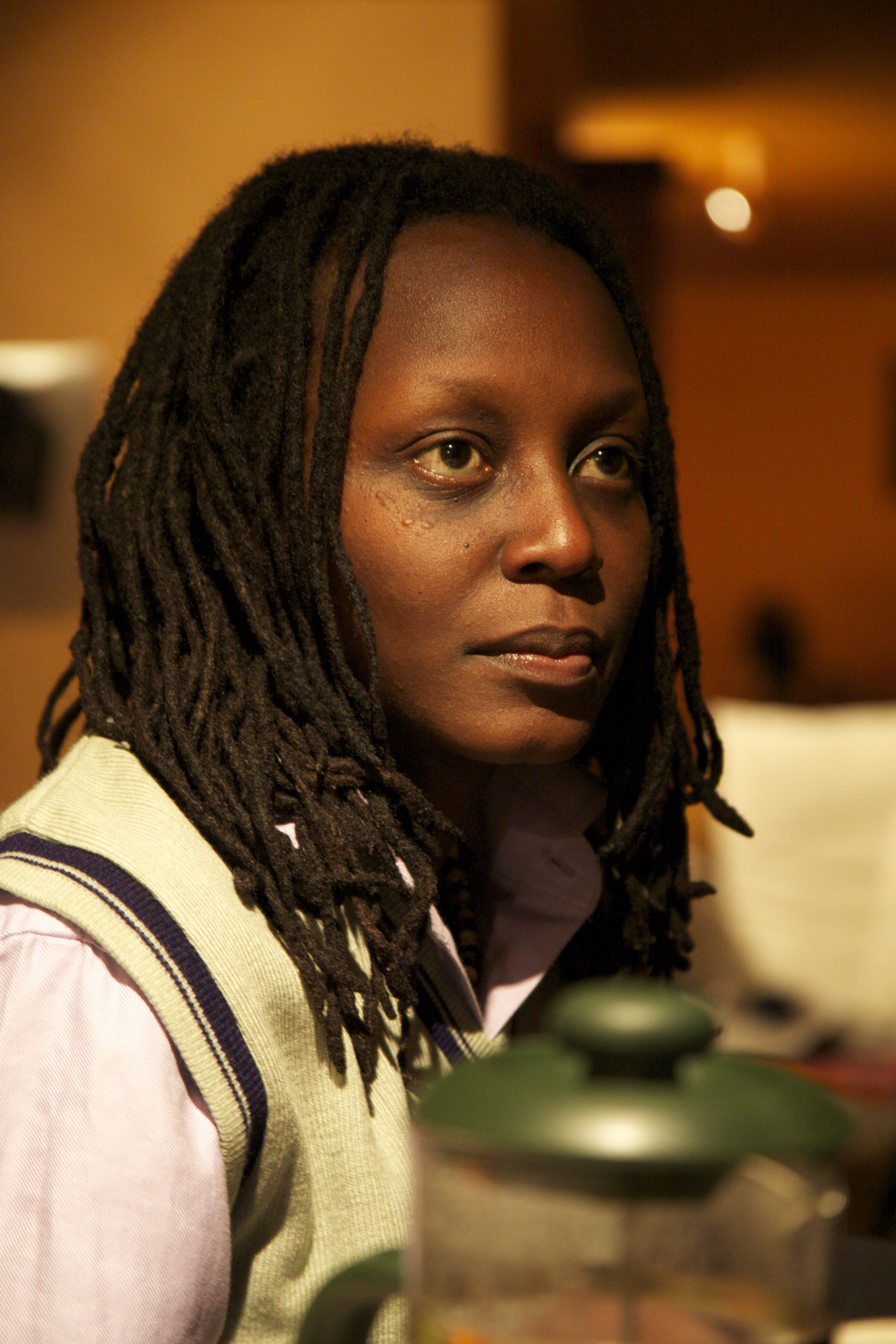
Under the title “FAMED UGANDAN ACTIVIST URGES UK HOME OFFICE NOT TO DEPORT LESBIAN” Melanie Nathan reports in her post of 11 December 2014 on O-blog-dee-o-blog-da that Kasha Jacqueline Nabagesera, the MEA laureate of 2011 has intervened strongly with the UK not to force Judith Twikiriz back to Uganda. “The UK has been very supportive of the Uganda Gay rights movement and it will be an embarrassment that your office doesn’t live up to its expectations in protecting those that need the protection most from persecution” Kasha writes in her letter. She would be sent back to the country where she already experienced torture and where she now faces likely persecution. The letter contains detailed arguments against deportation.
COPY OF THE LETTER to be found in the original post:
On 9 December, on the eve of Human Rights Day, Zainab Al-Khawaja was sentenced to 4 years and 4 months in two separate court hearings in Bahrain. Front Line, Human Rights First and others have reported extensively on this courageous human rights defenders [see also: https://thoolen.wordpress.com/tag/zainab-al-khawaja/] .
She was sentenced to 16 months’ imprisonment for “sabotaging properties belonging to the Ministry of Interior” and “insulting a public official” to three months’ imprisonment and fined 3,000 Bahraini Dinar (approx. 6,400 Euro) for “tearing up a photograph of the King”.
also shockingly reports that on the same day as her sentencing, the European Union presented a human rights awardto Bahrain’s National Institution for Human Rights and the Ombudsman of the Ministry of the Interior! Although this concerns a relatively unknown regional award (the Chaillot Prize is presented annually by the Delegation of the European Union in Riyadhhttp://www.ambafrance-bh.org/Press-release-Delegation-of-the.) the state press has been making the best of it [http://www.gulf-daily-news.com/NewsDetails.aspx?storyid=391213] and it is hard to see this as in line with the EU policy on Human Rights Defenders.
(The four winners of this year’s Right Livelihood Award (from left): Asma Jahangir, Bill McKibben, Alan Rusbridger and Basil Fernando. US whistle-blower Edward Snowden (not pictured) also received an honorary award)
Qantara.de 2014 on 9 December 2014 published an interesting interview by Roma Rajpal Weiss with Asma Jahangir, a prominent human rights defenders, winner of the Right Livelihood Award of this year and Laureate of the MEA as far back as 1995. The title “Every restriction is justified in the name of religion” is taken from Asma’s statement that most restrictions on the human rights of women in Pakistan are justified by arguments (perhaps rather feelings) based on religious or tradition. Read the rest of this entry »
Coinciding with the 30th anniversary of the UN Convention against torture, the OMCT HAS launched its Campaign “10 Days of Activism against torture and ill-treatment” from the 1st to the 10th of December 2014. This is the first episode figuring human rights defender Adilur Rahman Khan, from Bangladesh. He was one of the 3 final nominees of the MEA 2014.
For the 3rd UN Forum on Business and Human Rights (going on at the moment), ISHR published also an article by Alejandra Ancheita, 2014 Martin Ennals Award Laureate and Executive Director of ProDESC. Women defenders and those working on business and human rights represent two groups facing particular risks yet, in Mexico, the State’s response is falling short, concludes Alejandra Ancheita in her article:
“The challenges and risks that human rights defenders (HRDs) are facing in Mexico and other Latin American countries are diverse and growing daily in the absence of comprehensive State action to address this situation. The inadequate response of the Mexican government to the hundreds of cases of attacks and intimidation has become evident in various spaces. For instance in the recent Universal Periodic Review of the United Nations, the Mexican State received 24 recommendations on the situation of human rights defenders and journalists in the country, whilst the Protection Mechanism for Human Rights Defenders and Journalists, in the Interior Ministry, has received 130 applications for protection. Its response has been insufficient, particularly for those groups of defenders who face particular and heightened risks. As a woman human rights defender who works on issues related to business and the environment, I ought to know.……
Importantly, the fact that women human rights defenders face specific threats has been well established. However, existing protection mechanisms have not yet adjusted to incorporate this reality into their functioning, thus leaving women defenders vulnerable to gender-specific threats and aggressions. This is a global phenomenon and, in over 15 years as a human rights defender in Mexico, I have personally suffered violations of my human rights because of my gender and numerous colleagues have found themselves in the same situation.….
Integral security for women defenders must also seek to transform public opinion to understand and support our work. The first step in this regard is for States to recognize that working to defend certain rights can make women HRDs particularly vulnerable, for example by working on indigenous land rights in Latin America. Public statements made by public officials on the importance of our role and the legitimacy of our work are key. Authorities must investigate and punish those responsible for statements that seek to defame or attack defenders or delegitimize their work, even when such statements are made by non-State actors like community leaders or company representatives. Given the severe impact inflammatory statements have on women defenders’ work and wellbeing, they must be treated as aggressions in and of themselves.…..
In the vast majority of countries there are no specific mechanisms in place to protect human rights defenders. Where mechanisms have been created they are often hindered by operational failings, a lack of financial or human resources, the absence of gender-sensitivity, limited options for collective or community measures, and absent political will…..
As my work is based in Mexico, and due to my incorporation into the Federal Protection Mechanism for human rights defenders and journalists last year, this is the Mechanism I am best-placed to comment on. One very positive aspect of the mechanism is that four of the nine members of the decision-making body come from civil society. However, the Mechanism is also faced with several challenges.
The Mechanism falls short in the preventative aspect. Recently, various actors including Amnesty International, Human Rights Watch and the CEDAW Committee have highlighted impunity for violations against women defenders as the greatest obstacle in improving their safety. In spite of this concern, the law establishing the Mechanism does not guarantee the adequate investigation and prosecution of perpetrators.
The Mechanism also fails to incorporate a gender perspective to better understand the situation facing women HRDs. I believe that the Mexican authorities have the opportunity to set best practices in this regard, by providing gender-sensitive training to staff and by developing gender indicators to guide the granting, planning and implementation of protection measures.
Mexican authorities responsible for the Mechanism must also effectively involve defenders in the design and implementation of protection measures, as well as conducting risk assessments in a more transparent way. This is particularly important in the case of defenders working on issues that impact upon private actors such as business, or those defending land rights in isolated communities. Finally, cooperation and coordination between federal, state and local authorities in the implementation of protection measures need to drastically improve……..”
The Solomon Islands do not figure prominently in any blogs on human rights. So this is special: An exhibition highlighting the recipients of the US Department of State International Women’s Award was held last Saturday at the King Solomon Hotel, as part of the 16 Days of Activism Against Violence Against Women Campaign, which started last Tuesday. It was organised by SEIF PLES (Gender-based Violence Crisis and Referral Centre) to mark International Women Human Rights Defenders Day (IWHRD).
On the occasion of Human Rights Day, the Geneva-based NGO Alkarama will present the 2014 Alkarama Award for Human Rights Defenders to Shireen Issawi, prominent lawyer and human rights defender from the Occupied Palestinian Territories. The event will be held on 11 December 2014 at 18:30 at the Ecumenical Center in Geneva (Switzerland).




 Hans Thoolen on Human Rights Defenders and their awards