‘Making a movement: The history and future of human rights“. To mark the 75th anniversary of the Universal Declaration of Human Rights, The Carr Center for Human Rights Policy asked 90 Harvard faculty and affiliates to offer thoughts on a document that changed the world.
“THE CREATION OF SUCH A DOCUMENT— its mere existence—must count among the greatest achievements in human history.” That is how Mathias Risse, the Berthold Beitz Professor in Human Rights, Global Affairs and Philosophy, and faculty director of the Carr Center for Human Rights Policy at HKS, describes the impact of the Universal Declaration of Human Rights (UDHR), which turns 75 this year. Yet Risse and other human rights defenders say the UDHR has done much more than exist—it paved the way for more than 70 enforceable human rights treaties around the globe and marked the first time the world had a documental agreement that all humans were equal and free. That global standard is vital even if the world community continues to fall short of achieving the UDHR’s promise, Risse says. “The human rights movement will always register shortfalls much more than achievements and would miss its purpose otherwise,” he says. “Regardless, the change that these decades of developments have brought is very real.”
To honor the UDHR, the Carr Center commissioned short essays from 90 scholars, fellows, and affiliates across HKS, Harvard, and beyond to explore the past, present, and future of the human rights movement it inspired. A selection of excerpts follows below. The complete collection of essays in their entirety can be found on the Carr Center website.
On 27 January 2024, Olivia Biliunaand Madison Whittemore in the Davis Vanguard produced a useful summary of the 2024 Human Rights Watch Report
After reflecting on the formidable human rights challenges of 2023, it has become evident that changes in how human rights are approached will be needed in 2024 to prevent the atrocious suppression and human rights crises that have been prominent in the past year, according to Human’s Rights Watch’s “World Report 2024: Our annual review of human rights around the globe.” [see: https://www.hrw.org/world-report/2024]
However, despite the human rights atrocities seen in 2023, the group added that there appears to be some hope for upholding human rights in 2024 through enforcing principles of international human rights law.
Looking back on 2023, the 2024 World Report reflects on renewed conflicts between Israel and Hamas that resulted in the abuse of many and a tragic loss of life, and other countries such as Ukraine and Myanmar that continue to struggle with their own intense conflicts.
Human Rights Watch notes that in accordance with the aforementioned conflicts, “Economic inequality rose around the world, as did anger about the policy decisions that have left many people struggling to survive.”
However, while many are quick to blame the government for being complicit in these human rights crises, the report maintains action is needed outside of just government action alone to help diminish these threats, since they “often transcend borders and cannot be solved by governments acting alone.”
In fact, the report notes the often forgotten importance of universal principles of international human rights and the rule of law which are more critical now than ever.
The 2024 World Report argues governments have the ability to help improve human rights and that they have double standards in “applying the human rights framework,” as stated in the 2024 World Report, and “chips away at trust in the institutions responsible for enforcing and protecting rights.”
The legitimate laws and universality of human rights are weakened when governments that are vocal about denouncing the Israeli government war crimes against Gaza citizens do not speak up about the crimes against humanity in Xinjiang, China, according to the 2024 World Report.
Governments have found it is easier to disregard international human rights matters because internationally there is no challenge to human rights nationally, writes Tirana Hassan, the executive director.
Hassan also noted that autocrats across regions have taken away both the independence of key institutions to protect human rights and the freedom of dissent, as stated by the 2024 World Report, “with the same endgame in mind: to exercise power without constraint.”
Hassan explains that with campaigning of civil rights groups and years of diplomatic negotiations, 83 countries were able to protect their citizens by adopting a political declaration that provided protection from explosive weapons in populated areas.
The international pledge to recognize the “long-standing practice of warring parties to use aerial bombing, artillery, rockets, and missiles in villages, towns, and cities” is the first to address this issue as the 2024 World Report states.
Some countries are addressing long-marginalized communities. With years of pressure, the Japanese government parliament has passed its first law to protect LGBT people from “unfair discrimination,” the 2024 World Report states.
With the humanitarian crises there has been questioning on the effectiveness of the human rights framework in the realm of protection, notes the 2024 World Report, adding, “especially in the face of selective government outrage, transactional diplomacy seeking short-term gain, growing transnational repression, and the willingness of autocratic leaders to sacrifice rights to consolidate their power.”
With that, the 2024 World Report also suggests the human rights framework will continue to be the plan to build “thriving, inclusive societies” and governments need to be persistent and, with urgency, defend human rights to handle the global and existential threats to humanity.
As also highlighted by Hassan in the report, the assault on Israel by Hamas-led fighters on Oct. 7 that deliberately killed hundreds of vulnerable civilians led to swift condemnation from many countries around the world.
In retaliation to the Oct. 7 attack, the Israeli government ceased all running water and electricity in the Gaza strip, “blocking the entry of all but a trickle of fuel, food, and humanitarian aid – a form of collective punishment that is a war crime,” the 2024 World Report noted.
The Israeli government and military continue frequently bombing the Gaza strip. Following these attacks, countries were outraged after they found out that Israel used a chemical called white phosphorus during the indiscriminate attacks on Gaza, with many countries even highlighting the attacks as “apparent war crimes,” stated by Human Rights Watch.
However, despite world-wide outrage after Israel’s war crimes on Gaza, countries have failed to publicly call the Israeli government out on its war crimes resulting in severe human rights abuses, the report detailed, noting even the U.S. and the European Union have acknowledged Israel’s human rights abuses on Gaza citizens, yet have continued to be complicit in the “ongoing crimes against humanity of apartheid and persecution against Palestinians.”
The report asserted the repercussions of governments failing to intervene undermine the legitimacy of the rules system designed 75 years ago to safeguard all citizen’s rights. In response to the inconsistencies, Hassan cites that governments like Russia and China aim to take advantage of the shaky legitimacy by attempting to infringe on human rights and take advantage of the system that is supposed to punish both countries.
Another example used by the 2024 World Report that displays these inconsistencies is the power battle between two influential generals in Sudan, Gen. Abdelfattah al-Burhan and Gen. Mohamed Hamdan Dagalo.
This conflict resulted in civilians facing deadly abuses and human rights infringements in the Darfur region—with numerous countries listed in the 2024 world report allegedly ignoring the horrendous abuses and abstaining from intervening.
Despite nations such as Gabon, Ghana, and Mozambique being on the Security Council, “the UN, under pressure from the Sudanese government, shuttered its political mission in Sudan.” the 2024 World Report stated, also concluding that “This marked the conclusion of the UN’s limited capacity in the country to safeguard civilians and openly address the human rights situation.”
Regardless of African governments refusing to hold the Sudanese government accountable, the report highlights that many have been strong advocates for resolving the human rights issues in other places like Palestine, even leading a full-fledged effort to investigate its human rights abuses last November and recently asserting that “Israel violated its obligations under the 1948 Genocide Convention in its military operations in Gaza.”
Domestic policies and foreign policies should hold value in human rights and their rules of laws at the forefront of governments, charged the 2024 World Report.
Even rights-respecting governments hold these principles as “optional, seeking short-term, politically expedient “solutions” at the expense of building the institutions that would be beneficial for security, trade, energy, and migration in the long term,” according to the 2024 World Report, adding transactional diplomacy carries a human cost that extends past borders, the group adds.
The 2024 Report writes that without awareness while making transactional diplomacy, risks are created. Removing human rights and the rule of law from a sensible direction creates leverage for right-violating governments too, the 2024 World Report adds, arguing, “It can also contribute to further human rights violations, including transnational repression,” which governments do when they commit human rights abuses against their nationals abroad or to those families living at home, the report continues.
According to the World Report of 2024, India, a democracy, under its Prime Minister Narenda Modi has moved toward an autocracy “with authorities targeting minorities, tightening repression, and dismantling independent institutions, including federal investigative agencies.”
Additionally, as cited in The Report, the US, Australia, the UK, and France chose trade and security over raising human rights concerns.
As reported by Executive Director Hassan, the Modi government’s repressive tactics went past borders and were empowered to do so from the Indian government’s “silence on the Indian government’s worsening rights record…including to intimidate diaspora activists and academics or restrict their entry into India.”
Rwandan’s government has had three decades of no punishment for their repression of civil and political rights at home, the 2024 World Report states, writing “to stifle dissent beyond its borders,” and noting, Rwanda, despite having risen on the international stage, has failed to recognize its problematic human rights violations.
Similarly, Chinese government abuses in Beijing escalate its repression against both Chinese and non-Chinese with failure of resistance from other countries, according to the 2024 World Report, explaining a Laos lawyer and human rights defender, Lu Siwei, received pressure from the Chinese government to return and authorities pushed out warrants.
The 2024 World Report claims nowhere is safe if repressive governments can get away with “strong approaches to silence human rights defenders, exiled politicians, journalists, and critics beyond their borders.”
As reported by the Human Rights 2024 World Report, with almost half of the global population being eligible to vote in 2024, both citizens and independent institutions need to participate in order to effectively have leaders who defend human rights, regardless of society and many institutions having “become renewed battlegrounds for autocratic leaders around the world looking to eliminate scrutiny of their decisions and actions.”
According to Hassan, the nations of Guatemala and Nicaragua are two stories of autocratic leaders consolidating power and failing to prioritize civil society.
For example, after Guatemala’s President-elect Bernardo Arévalo ran on an anti-corruption platform, a corrupt judiciary attempted to overturn Arévalo’s election triumph.
Similarly, the report refers to Nicaragua, where corrupt and authoritarian President Daniel Ortega uses “abusive legislation to shut down over 3,500 nongovernmental organizations” in order to dominate the political landscape and wield unchecked power.
The Human Rights report insists these “vital” checks and balances continue to be eroded, it poses great harm to human rights.
Judicial independence has also been drastically sabotaged in Poland, the report alleges, with the Polish government suppressing civil society groups through law enforcement and incarceration. Polish freedom and independence are extremely threatened, with the Law and Justice party most notably encroaching on women’s reproductive rights and essentially banning abortion, Hassan suggested in the report.
“In May 2023, an abortion rights activist was convicted of helping a woman to get abortion pills and was sentenced to eight months of community service – the first known prosecution of its kind in the EU,” the 2024 World Report noted.
On an environmental note, with the impending issue of global warming, the 2024 report highlights activists being shot by governments across the globe who want to “deter the climate movement.”
In another example, the report cites how one of the largest oil producers, the United Arab Emirates (UAE), continues to expand its production of fossil fuels; however, people are discouraged from exposing the UAE unless they are willing to face grave punishment.
Apart from punishing dissent, governments are using technology and social media platforms to “silence critics and censor dissent,” the 2024 World Report notes, citing a 54-year-old retired Saudi Arabian teacher named Muhammad al-Ghamdi, who received the death penalty after he expressed his opinions on X and Youtube and allegedly went against the country’s counterterrorism law.
Despite everything that occurred in 2023, there were also positive moments for human rights where institutions and movements succeeded, the 2024 World Report states, arguing, “Indeed, these successes illustrate why self-serving politicians and repressive governments work so hard to curtail them – and why all governments should recognize and support these fragile successes.”
Additionally, according to the Executive Director Hassan, the ICC issued warrants for Russia’s President Vladimir Putin and his children’s rights commissioner for war crimes related to deporting and transferring children and a court ruled that South Africa had a commitment to arrest Putin.
According to the 2024 World Report, the Xokleng Indigenous people succeeded when the Brazil Supreme Court, as noted by the 2024 World Report, “upheld all Indigenous peoples’ rights to their traditional lands,” despite efforts by the Santa Catarina state.
The 2024 World Report said, “These victories highlight the tremendous power of independent, rights-respecting, and inclusive institutions and of civil society to challenge those who wield political power to serve the public interest and chart a rights-respecting path forward” and that “all governments, in their bilateral relations and at the multilateral level, should redouble efforts to uplift key institutions and protect civic space wherever it is under threat.”
The human rights crisis highlights the importance for “mutually agreed principles of international human rights law everywhere,” the 2024 World Report notes.
It also points out that through governments centering their human rights obligations through moral governing, it will provide a diligent change to those affected.
The 2024 World Report concludes that consistently upholding human rights, “across the board, no matter who the victims are or where the rights violations are being committed, is the only way to build the world we want to live in.”
Kai Ambos in a post on IPS of 23 January 2024 asks: “South Africa is taking Israel to the International Court of Justice. But what are the real chances of a guilty verdict?”
Challenges to freedom of religion and belief and abuses to the human rights of religious minorities are on the rise across the world, with increased violence, harassment, and threats often met with a lack of accountability. They occur against a backdrop of long-standing social, political, economic, and cultural marginalization and exclusion, particularly for those who face intersectional discrimination, such as religious minority women or persons with disabilities.
It is, therefore, vital to support organizations and activists representing these communities who work towards strengthening the rights of minorities of faith and belief and combatting the discrimination, prejudices and persecution these communities experience daily.
What is the course about?
The free, 7-week online course aims to build an understanding of regional and international minority rights mechanisms and ways to implement these rights frameworks at the national and local levels and build the capacity of human rights defenders (HRDs) to advocate for the rights of minorities.
The course will offer opportunities to exchange and collaborate with other HRDs to:
Monitor and report on violations against religious minorities
Raise awareness amongst key stakeholders of the human rights violations, persecution and discrimination these communities face
Campaign from local to international levels to secure commitments from key stakeholders to improve the situation of religious minorities
Train Graduates will also have the opportunity to follow up with access to a Training of Trainers that will give them the opportunity to develop their skills and share the knowledge they learned
Who can apply for this course?
Civil society organizations and activists representing religious minority and indigenous communities from two regions of the world where religious minorities are suffering from serious human rights violations, widespread discrimination and marginalization are welcome to apply.
Applicants from and/or based in the following countries will be prioritized: Bangladesh, Egypt, India, Indonesia, Iraq, Iran, Lebanon, Morocco, Myanmar, Nepal, Pakistan, Sri Lanka, Syria, Thailand, Tunisia.
Basic Concepts in Human Rights and Minority Rights
UN Declaration on the Rights of Persons Belonging to National or Ethnic, Religious and Linguistic Minorities
UN Treaties and Human Rights Mechanisms
Freedom of Religion or Belief (FoRB)
UN Mechanisms to Protect Minorities
Regional Human Rights Systems and Mechanisms
Advocacy Campaigns
To complete the course, participants must submit three written assignments: a briefer, an outline of a shadow report and an advocacy plan.
How many hours a week is the course?
The course will require approximately 3 hours per week for the duration of the course. Your participation will be facilitated by a tutor who will offer mentoring on a one-on-one basis as required. Our tutor is an expert in minority rights and community networking.
During the course we also organize a webinar, which offers a unique opportunity to learn more about the mandate of the UN Special Rapporteurs and engage in a Q&A session with them.
On 22 January 2024, Amnesty International published an interesting piece by Alex, a 31-year-old Romanian activist working at the intersection of human rights, technology and public policy.
Seeking to use her experience and knowledge of tech for political change, Alex applied and was accepted onto the Digital Forensics Fellowship led by the Security Lab at Amnesty Tech. The Digital Forensics Fellowship (DFF) is an opportunity for human rights defenders (HRDs) working at the nexus of human rights and technology and expand their learning.
Here, Alex shares her activism journey and insight into how like-minded human rights defenders can join the fight against spyware:
In the summer of 2022, I watched a recording of Claudio Guarnieri, former Head of the Amnesty Tech Security Lab, presenting about Security Without Borders at the 2016 Chaos Communication Congress. After following the investigations of the Pegasus Project and other projects centring on spyware being used on journalists and human rights defenders, his call to action at the end — “Find a cause and assist others” — resonated with me long after I watched the talk.
Becoming a tech activist
A few days later, Amnesty Tech announced the launch of the Digital Forensics Fellowship (DFF). It was serendipity, and I didn’t question it. At that point, I had already pushed myself to seek out a more political, more involved way to share my knowledge. Not tech for the sake of tech, but tech activism to ensure political change.
Alex is a 31-year-old Romanian activist, working at the intersection of human rights, technology and public policy.
I followed an atypical path for a technologist. Prior to university, I dreamt of being a published fiction author, only to switch to studying industrial automation in college. I spent five years as a developer in the IT industry and two as Chief Technology Officer for an NGO, where I finally found myself using my tech knowledge to support journalists and activists.
My approach to technology, like my approach to art, is informed by political struggles, as well as the questioning of how one can lead a good life. My advocacy for digital rights follows this thread. For me, technology is merely one of many tools at the disposal of humanity, and it should never be a barrier to decent living, nor an oppressive tool for anyone.
Technology is merely one of many tools at the disposal of humanity. It should never be a barrier to decent living, nor an oppressive tool for anyone.
The opportunity offered by the DFF matched my interests and the direction I wanted to take my activism. During the year-long training programme from 2022-2023, the things I learned turned out to be valuable for my advocacy work.
In 2022, the Child Sexual Abuse Regulation was proposed in the EU. I focused on conducting advocacy to make it as clear as possible that losing encrypted communication would make life decidedly worse for everyone in the EU. We ran a campaign to raise awareness of the importance of end-to-end encryption for journalists, activists and people in general. Our communication unfolded under the banner of “you don’t realize how precious encryption is until you’ve lost it”. Apti.ro, the Romanian non-profit organisation that I work with, also participated in the EU-wide campaign, as part of the EDRi coalition. To add fuel to the fire, spyware scandals erupted across the EU. My home country, Romania, borders countries where spyware has been proven to have been used to invade the personal lives of journalists, political opponents of the government and human rights defenders.
The meaning of being a Fellow
The Security Lab provided us with theoretical and practical sessions on digital forensics, while the cohort was a safe, vibrant space to discuss challenges we were facing. We debugged together and discussed awful surveillance technology at length, contributing our own local perspective.
The importance of building cross-border networks of cooperation and solidarity became clear to me during the DFF. I heard stories of struggles from people involved in large and small organizations alike. I am convinced our struggles are intertwined, and we should join forces whenever possible.
Now when I’m working with other activists, I try not to talk of “forensics”. Instead, I talk about keeping ourselves safe, and our conversations private. Often, discussions we have as activists are about caring for a particular part of our lives – our safety when protesting, our confidentiality when organizing, our privacy when convening online. Our devices and data are part of this process, as is our physical body. At the end of the day, digital forensics are just another form of caring for ourselves.
I try to shape discussions about people’s devices similarly to how doctors discuss the symptoms of an illness. The person whose device is at the centre of the discussion is the best judge of the symptoms, and it’s important to never minimize their apprehension. It’s also important to go through the steps of the forensics in a way that allows them to understand what is happening and what the purpose of the procedure is.
I never use a one-size-fits-all approach because the situation of the person who owns a device informs the ways it might be targeted or infected.
The human approach to technology
My work is human-centred and technology-focused and requires care and concentration to achieve meaningful results. For activists interested in working on digital forensics, start by digging deep into the threats you see in your local context. If numerous phishing campaigns are unfolding, dig into network forensics and map out the owners of the domains and the infrastructure.
Secondly, get to know the person you are working with. If they are interested in secure communications, help them gain a better understanding of mobile network-based attacks, as well as suggesting instant messaging apps that preserve the privacy and the security of their users. In time, they will be able to spot “empty words” used to market messaging apps that are not end-to-end encrypted.
Finally, to stay true to the part of me that loves a well-told story, read not only reports of ongoing spyware campaigns, but narrative explorations from people involved. “Pegasus: The Story of the World’s Most Dangerous Spyware” by Laurent Richard and Sandrine Rigaud is a good example that documents both the human and the technical aspects. The Shoot the Messenger podcast, by PRX and Exile Content Studio, is also great as it focuses on Pegasus, starting from the brutal murder of Jamal Khashoggi to the recent infection of the device of journalist and founder of Meduza, Galina Timchenko.
We must continue to do this research, however difficult it may be, and to tell the stories of those impacted by these invasive espionage tactics. Without this work we wouldn’t be making the political progress we’ve seen to stem the development and use of this atrocious technology.
Nominations are open for the Martin Ennals Award 2024! The Martin Ennals Award for Human Rights Defenders honours individuals and organizations who have shown exceptional commitment to defending human rights, despite the risks involved. We are proud to celebrate the 30th anniversary of the Award in 2024, in partnership with the City of Geneva, the Jury member organizations, the extended family of Laureates around the world, and our wonderful donors. To qualify for the Award 2024, the nominees must:
Be currently active in the promotion and protection of human rights
Not employ or advocate violence
Not be self-nominated
Be in need of protection
We encourage nominations of activists under 30 years of age to reflect the growing number of young persons joining the human rights movements in their countries. Post-humous nominations are not eligible.
Meet Joey Siu, a Human Rights Foundation (HRF) Freedom Fellow and Hong Kong activist based in Washington, D.C. Siu played a vital role in Hong Kong’s 2019 pro-democracy protests, co-founding a student advocacy coalition and organizing city-wide demonstrations. After fleeing Hong Kong in 2020, Siu served as an advisor to the Inter-Parliamentary Alliance on China and a policy advisor to Hong Kong Watch. Siu is currently an Asia Pacific coordinator for the World Liberty Congress, an advisor to the Athenai Institute, and oversees the Hong Kong program at the National Democratic Institute.
In exile, Siu remains a dedicated advocate for Hong Kongers, Tibetans, Uyghurs, and other communities oppressed by the Chinese Communist Party (CCP). Learn more about her activism in the exclusive interview below.
Q: Tell us a little bit about yourself and your current projects.
A: I am a human rights activist from Hong Kong (HK). Back in 2019, when the pro-democracy movement in Hong Kong first started, I was one of the student leaders who led many of the on-campus activities and city-wide protests and demonstrations. In 2019, I also co-founded a student coalition with other student activists in HK to solidify international advocacy efforts for HK. I was forced to flee HK in late 2020 and settled in Washington, D.C. Since then, my efforts have been focused on international advocacy for HK’s democratic freedoms overseas.
I am establishing a regional activist network for women advocates to connect, amplify, and empower one another and to elevate women leaders in this space. Beyond that, I am very active in the HK diaspora community and working to foster cross-movement solidarity with other communities under the repression of the Chinese Communist Party (CCP).
Q: How do you feel about the bounty HK authorities placed on your head?
A: On Dec. 13, I woke up to the news that HK authorities issued an arrest warrant and a $1 million HK bounty on me. Ever since I fled, I knew this could happen given the Chinese and HK authorities’ efforts to silence dissent, not just from those in HK but from those in exile. But this bounty is like a death certification — I can really never go back. I was overwhelmed by the news and the actions I’ve had to take to step up my personal security.
I — and the 12 others with bounties on their heads — saw this coming. They issued the bounty to threaten us, to deter us from continuing our advocacy, to scare us, and to really intimidate us. But that will not work on me. I will not stop; I will continue my advocacy until I can return to HK.
Q: What tactics does the Chinese regime employ to suppress activists like yourself?
A: The overseas communities have lobbied for international attention on China and HK and all of the human rights atrocities committed by the CCP. That is why the CCP is trying so hard to silence us.
Over the past few years, the CCP and the HK authorities have stepped up their transnational repression. We’ve witnessed a wide variety of tactics employed by the CCP, from holding our loved ones back home as hostages to infiltrating our communities, setting up secret police stations all across the world, including in the United States, to coercing different stakeholders and industries to spy on their behalf.
These tactics have not been used just against Chinese and Hong Kongers but also against Uyghurs and Tibetans. And we’ve seen other authoritarian regimes copying the CCP’s tactics, including Russia, Iran, and Belarus. In fact, these regimes are working hand-in-hand to silence dissent overseas.
Q: Should democracies be paying more attention?
A: I want to stress that the impact of transnational repression extends beyond the activists. Beyond spying on dissidents overseas, tactics include economic coercion, brainwashing, and education through Confucius institutes in American universities and colleges. Those tactics impact every individual living in a democracy.
Democracies all across the world should pay attention to this and take concrete steps to combat transnational repression on their soil and in other democracies. Securing the safety and security of dissidents like me is an essential step to allowing us to have the freedom to continue speaking up and to continue confronting authoritarianism.
Q: How has the Freedom Fellowship supported you in your work?
A: The Fellowship allowed me to meet activists from communities I otherwise would not have been in touch with as actively or frequently. In my cohort, I met activists from Bolivia, Cuba, Myanmar, Morocco, Egypt, and more. I got to talk with them and learn the tactics they’ve used to overcome challenges and unite their communities. Fostering relationships and strategizing on campaigns together was the most valuable experience for me.
Building that cross-community solidarity is essential. We see dictators working together and it is of the utmost importance that we, human rights activists, are working together. Democratic backsliding is not an issue faced by one community alone; it is an issue faced by all communities under oppression.
Q: What have you recently been doing? What do you hope to achieve in 2024?
A: After the news about the HK bounty broke, I had several meetings with US congressional offices. I met with the House Foreign Affairs Committee, Chairman Mike Gallagher of the House Select Committee on the Chinese Communist Party, and Sen. Jennifer Sullivan. Hopefully, these meetings will lead to legislation to combat transnational repression, but we require a coordinated and bipartisan effort in Congress. I hope to see something like the Transnational Repression Policy Act advanced and adopted in this Congress.
With the ongoing reports of the bounty on me and other activists, Jimmy Lai’s case, and the upcoming sentencing of the 47 activists in HK, we can hopefully take advantage of the momentum. We can push the US government and other democracies to take action.
Additionally, during the 2023 Freedom Fellowship retreat, I came up with the idea of the regional women’s network. In the upcoming months, I want to turn this idea into something concrete—start inviting people to be founding members and board members, start the registration process, and establish a financial foundation and fundraising plan.
You can now apply for the Incident Emergency Fund, which is a rapid response mechanism for human rights defenders, journalists, activists and organisations facing digital threats and attacks.
Funding Information
The IEF provides up to €10,000 and can be used to cover costs which will directly reduce the risk or impact of a digital attack. The funding covers activities for a maximum of four months, and they aim to respond to requests within two weeks.
What does the IEF cover?
Replacement of hardware or software which has been taken, lost or stolen.
Purchase of more secure hard- and/or software and costs related to installation of the new systems.
Technical or non-technical activities to respond to urgent issues such as internet blockages.
Measures to improve physical security (related to information management and digital security).
Measures to address the psychological and psychosocial impacts of digital threats and risks.
Who can apply?
DDP target groups are women, feminist and LGTBQIA+ organisations; land and environmental rights defenders; and journalists and other actors who make information available to the public. However, each regional team defines the target groups for each call.
The United Nations Educational, Scientific and Cultural Organization (UNESCO) is accepting applications for the Guillermo Cano World Press Freedom Prize 2024 to honour a person, organization or institution that has made an outstanding contribution to the defence and, or promotion of press freedom anywhere in the world, and especially when this has been achieved in the face of danger. Deadline: 15 February 2024
On January 12, 2024, Thomas Antkowiak in Just Security reflects on dangers of HRDs in Mexico and Latin america generally, motivated by the fate of his friends Ricardo and Antonio Díaz Valencia.
…Strategic use of the legal mechanisms—bolstered by the research and financial resources, political leverage, reputations, and media connections of Northern institutions—can be very effective to obtain remedies for victims of rights violations, and even to bring about legal reform and structural change. But the methods are toothless, and even misguided, without partners like Ricardo, the expert local attorneys. Truly, without such counterparts, this kind of human rights project lacks legitimacy. Without sustained connections to the affected communities, it would become just another decree handed down from the ivory tower.
In our isolated and polarized world, virtual meetings may have increased productivity in international lawyering, but they can further insulate us—cutting off deeper engagements to our clients abroad and the communities we hope to work with. In contrast, frontline defenders are fully connected and, of course, face all the risks. Authoritarian governments, criminal organizations, and complicit transnational corporations are all closing in. Can we still sense their peril?
If these human rights advocates are in more jeopardy than ever, so are the human rights themselves. Frontline defenders are the torchbearers of the international human rights movement. As such, they deserve the honors, the funding, and the protection. For the work to continue, we urgently need to do our part: the Global North’s human rights organizations, governments, universities, foundations, and businesses must coordinate to shield and support them.
Certainly, someinstitutions are already doing good work. Where to redouble our efforts? First, let’s ask the defenders themselves what they most need, recalling that their role is primary and their safety paramount. In the case of Mexico, there is almost total impunity for these types of cases. If the cartels, corrupt officials, and their accomplices cannot be held accountable, the killings will continue unabated (and thousands will keep fleeing from the violence to the southern U.S. border). When the defenders’ work becomes too hazardous, asylum must be streamlined—and the opportunity forever preserved. U.S. legislation and political pressure on Mexico play key roles here. So does divestment from colluding transnational corporations.
Every day, I wish that we could have somehow prevented the disappearance of my cherished friend and long-time collaborator. Through various channels, Global Rights Advocacy, other colleagues, and my clinic continue to push the Mexican government to find Ricardo and Antonio, and to prosecute the case. The world cannot afford the loss of another Ricardo, Berta Cáceres, Thulani Maseko. Without such guiding lights, we won’t be marking another 75 years of the international human rights movement.

 “THE CREATION OF SUCH A DOCUMENT— its mere existence—must count among the greatest achievements in human history.” That is how Mathias Risse, the Berthold Beitz Professor in Human Rights, Global Affairs and Philosophy, and faculty director of the Carr Center for Human Rights Policy at HKS, describes the impact of the Universal Declaration of Human Rights (UDHR), which turns 75 this year. Yet Risse and other human rights defenders say the UDHR has done much more than exist—it paved the way for more than 70 enforceable human rights treaties around the globe and marked the first time the world had a documental agreement that all humans were equal and free. That global standard is vital even if the world community continues to fall short of achieving the UDHR’s promise, Risse says. “The human rights movement will always register shortfalls much more than achievements and would miss its purpose otherwise,” he says. “Regardless, the change that these decades of developments have brought is very real.”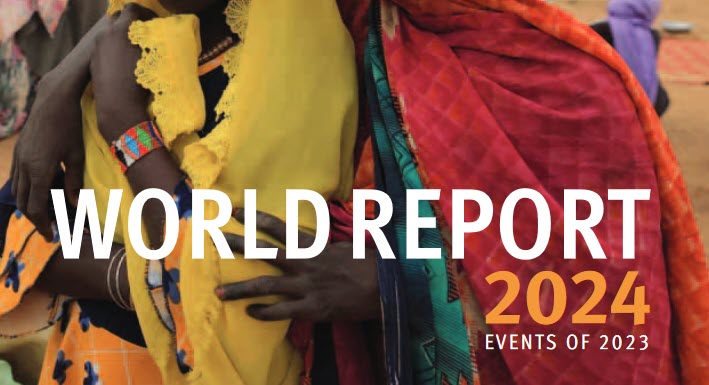




 Hans Thoolen on Human Rights Defenders and their awards