The NGO Bussines and Human Rights Resource Centre has made a useful “Compilation of recommendations to companies and investors on HRDs & civic freedoms” (last updated January 2020)
Several national and international non-governmental organizations, think-tanks, coalitions and UN bodies and experts have made recommendations to businesses and investors about how to ensure respect for human rights defenders and civic freedoms. This non-exhaustive list brings together these recommendations.
Working Group on Business and Human Rights, as part of its mandate to promote the UN Guiding Principles, decided to give focused attention to the issue of HRDs and civic space – this is the summary of UNWG’s efforts on this issue to date and includes draft guidance for companies
CIVICUS’ 2017 State of Civil Society Report addressed the theme of civil society and the private sector, gathering a range of informed views from 27 different stakeholders that wrote about different aspects and produced a set of recommendations for the private sector
Toolkit that aims to assist independent accountability mechanisms (IAMs) to address the risk of reprisals within the context of their complaint management process
Finance & banking
Independent Consultation and Investigation Mechanism (IDBG)
January 2019
This list will continue to be updated – please notify the NGO at zbona(at)business-humanrights.org, if there is a set of recommendations missing from it.
This new film directed by Greg Barker [see also: https://humanrightsdefenders.blog/2014/01/23/we-are-the-giant-film-about-the-arab-spring-here-is-the-trailer/] and based on his own award-winning documentary, confusingly also called Sergio, is a biographical drama about Sérgio Vieira de Mello, a diplomat from Brazil who worked for the United Nations High Commissioner for Refugees (UNHCR) for most of his life and was briefly High Commissioner for Human Rights. He was celebrated as a pre-eminent humanitarian before tragically dying in the Canal Hotel bombing in Iraq alongside many of his staff in 2003. The fiction film Sergio made its premiere at the Sundance Film Festival on 28 January 2020 before heading to Netflix.
Kayleigh Donaldson in Screenrant of 2 january 2020 wrotes perhaps a bit too breathlessly that the film Sergio is “one of the most anticipated Netflix original movies in 2020“.
Now the first two reviews are out and they indicate that it is foremost a romantic story that is well acted but diverts a lot from reality.
Jessica Kiang in Variety of 29 January 2020 is the more critical and – in my view – serious voice:
… handsome, heroic, charismatic de Mello (played with persuasive charm by Wagner Moura) certainly does seem like a man whose present was shaped by …the better, brighter, freer global future he believed the U.N. could be instrumental in achieving and that he personally could help midwife into being. Such noble intentions and such impact on world affairs does render understandable Barker’s rather starry-eyed approach, but [puts] unnecessary length and sentimental emphasis on the man’s romantic life…
..First, we spin forward to the 2003 bombing of the U.N. headquarters in Baghdad, which was ordered by terrorist leader Abu Musab al-Zarqawi and which claimed at least 22 lives and wounded over 100 people, and here provides a loose framing device. De Mello and close associate Gil Loescher (Brian F. O’Byrne), both critically wounded, were trapped under tons of rubble in the blast, and … screenwriter Craig Borten imagines a borderline delirious de Mello reliving moments of significance from his storied life. Chief among these reminiscences is the tale of his romance with Carolina Larriera.. .an Argentinian U.N. economic adviser whom the married father-of-two met while brokering a peace deal between the rebels and the Indonesian government in East Timor.
In Adrian Teijido’s calm, throughful photography (it’s a refreshing choice to not go the shaky handheld docudrama route), de Armas and Moura make an attractive couple, and de Armas is able to imbue Carolina — whose role seems just a little wispy on the page — with an intelligence and will that makes her more than just de Mello’s romantic foil. But Barker’s emphasis on this love story at the expense of a deeper exploration of the exceptional talents that earned de Mello his reputation for feats of diplmatic wizardry in highly fraught situations where others had tried and failed, also has a curiously flattening effect.
Although the relationship with Larriera was doubtless crucially important to de Mello, it was not the thing that made him extraordinary in the eyes of the world. And so the hesitant courtship, the smouldering looks, and the romancing, including a tasteful but unnecessarily lengthy sex scene over which Fernando Velázquez’ otherwise rather generic political-thriller score crescendos like it’s high drama, all feel like a distraction from the more thorny and politically provocative side of de Mello’s story. That’s especially irksome given that the scenes of geopolitical debate, diplomatic argument and even ego clash between de Mello and the world-wearily witty Loescher … are actually where the film crackles to life.
…But this sentimental approach glosses over much of the potential drama that is set up only to dissipate: de Mello’s prickly relationship with U.S. Envoy Paul Bremer (Bradley Whitford); his association, criticized by Loescher, with war criminals and terrorists if he believed it could achieve his ends; and his fateful decision to send the U.S. Army guards away from the U.N. office in Baghdad in 2003. Sergio Vieira de Mello was, by all accounts, not a man who let fear of making the wrong decision stop him from acting decisively, and it’s a shame that the soft-edged romantic prevarications of “Sergio” prevent the film from embodying that same dynamism.
Courtesy of Sundance
John DeForein Hollywood Reporter of 30 January 2020 sees a more than successful transition from documentary to a feature film:
… Rather, it’s one of those rare films .. in which a genuine concern for geopolitics coexists perfectly well with romance and old-fashioned moviegoing pleasures. This portrait of influential U.N. diplomat Sergio Vieira de Mello benefits immensely from two magnetic leads, Wagner Moura and Ana de Armas, whose onscreen chemistry is undeniable; but its deft sense of structure is of equal importance, making it an engrossing picture even for those who know next to nothing about its subject or settings.
..Sergio and refugee expert Gil Loescher were trapped alive in the rubble; as a framing device, Sergio sets flashbacks to various points in his career during the hours when two American soldiers (Garret Dillahunt and Will Dalton) worked to extract the pinned men. These episodes help cement the diplomat’s reputation as an idealistic fix-it man for some of the world’s trickiest conflicts. …Sergio is out for a jog during his East Timor assignment when he passes another jogging foreigner, Carolina Larriera (de Armas). The attraction is immediate, but the film savors its development: …While the film plays up Sergio’s attractiveness to the younger woman (shirtless, the 50 year-old man probably bore little resemblance to Moura), it’s not blind to emotional flaws: He’s ignorant of key facts about his two sons’ lives, and he admits he’s most attentive to relationships and projects whose timeframe is finite.
Also on hand in East Timor is Loescher (Brian F. O’Byrne), who will be trapped by his side in Baghdad. The real Loescher, who had two legs amputated in his rescue from the site, was an independent expert who was only in Sergio’s Baghdad office (along with Arthur Helton – see: https://en.wikipedia.org/wiki/Arthur_Helton) to interview him for a column on openDemocracy.net. In Sergio, Loescher is a composite, depicted as Vieira de Mello’s right-hand man for multiple U.N. missions — the conscience who argues against his boldest moves. As a storytelling device, this works quite well; but using Loescher’s real name is an unexpected choice for a documentarian, and confuses the truth for no reason. [my view: INDEED – see also: https://humanrightsdefenders.blog/2017/06/07/gil-loescher-life-long-defender-of-rights-of-refugees-honored/ and https://www.imdb.com/title/tt0479980/]
Those who know the history intimately may take issue with other condensations that play perfectly well to a layperson: Sergio’s interactions with U.S. diplomat Paul Bremer (Bradley Whitford) are dramatically satisfying, and seem to capture the general nature of U.S./U.N. friction at the time; a question regarding the U.S. Army’s protection of Sergio’s office is probably also finessed for maximum thematic effect. The picture is most vulnerable to Hollywoodisms in scenes set after the bombing, as Carolina looks frantically for Sergio; the latter dreams of a sunny beach in his native Rio de Janeiro; and those soldiers heroically try to extract him despite having none of the necessary rescue equipment. But, coming late in the film as they do, these indulgences feel appropriate to the film’s lionization of its subject and investment in the couple’s relationship. Sergio believes in heroes and big ideals, and hopes we’re capable of the same belief…
Monica Castillo in NBC of 31 January 2020 adds an interview with the star Wagner Moura who “was so intrigued by Vieira de Mello’s story that he signed on as a producer for the movie. In the interview with NBC News, Moura said that this is the first of many stories he’d like to share to address the lack of Latinos on the screen. In the interview he also says “this guy is kind of a personal hero for me, and I’ve been working with the U.N. for a while; I’m a goodwill ambassador for the ILO [International Labour Organization] and the fight against slave labor..[Sergio] was a man who dedicated his life to human rights. When he was killed, he was the high commissioner for human rights; when he started in the U.N., he was the high commissioner for refugees“. Well he was NOT, he worked for the UNHCR.
On Monday 27 January 2020, Football365.comcarried the story about Amnesty International calling the take-over of footbal club Newcastle by Saudi Arabia a case of ‘sportswashing’. Two days later the BBC reported on the conflicting feelings within the supporters group.
A Saudi takeover of Newcastle United would be “sportswashing, plain and simple” according to human rights body Amnesty International.The Premier League club are in talks with two potential buyers, including a consortium which features the Saudi Arabian Sovereign Wealth Fund, controlled by Crown Prince Mohammed bin Salman. Saudi Arabia has recently engaged on a large scale in buying a positive image with events such as Anthony Joshua’s heavyweight boxing match against Andy Ruiz, Spain’s Super Cup and the Dakar ralley.[see also: https://humanrightsdefenders.blog/2020/01/13/saudi-arabia-finds-that-celebrities-are-easier-to-buy-than-human-rights-ngos/ ]
Amnesty sees this as an attempt to use sport to clean up its image, describing the country’s human rights record as “abysmal”.“ It’s not for us to say who should own Newcastle, but players, back-room staff and fans alike ought to see this for what it is – sportswashing, plain and simple,” Amnesty’s UK head of campaigns Felix Jakens said.
The Wall Street Journal has reported that Newcastle owner Mike Ashley is considering a £340million bid by the consortium, which is led by Amanda Staveley a businesswoman and financier, who failed to buy the club two years ago.
Alistair Magowan of BBC Sport spoke to some of the people involbed and concluded that ‘Saudi Arabian takeover could leave fans ‘conflicted’. A poll in the Newcastle Chronicle suggested that 80% of fans would back the bid, but Riley, who is also a member of the 9,000-strong Newcastle United Supporters Trust, told BBC Sport he was very conflicted by the idea of the club being owned by a country which has committed and commits human-rights abuses. “A lot of Saudi government policy, I find abhorrent, so if the deal goes through I will have to re-assess my relationship with the club, absolutely no doubt about it. “I wouldn’t take the poll as a reflection of how people feel. I think there will be a lot of people feeling conflicted. A lot of people will still support the club, I will still support the club, but the level of support might be the difficult part. “If it goes through, I think there will be a lot of soul searching. In general, people care about human rights. There is a desperation to get rid of Mike Ashley, it’s just how far people are willing to go in that desperation.” A statement from a collection of Newcastle fans groups said: “Ashley should not stand in the way of this once in a lifetime opportunity for our club, our communities and our proud city.”
Nelson Renteria of WTVB (The Voice of Branch County) came with the surprising report that the U.S. State Department issued a public designation for 13 current and former Salvadoran military officials for what it called gross human rights violations during El Salvador’s civil war three decades ago, for their alleged involvement in the planning and execution of the extrajudicial killings of six Jesuit priests and two others on a university campus in 1989.
The crime is one of the most emblematic of the Central American country’s civil war that pitted then-leftist guerrillas the Farabundo Marti National Liberation Front (FMLN) against the U.S.-backed Salvadoran army. The FMLN is now a political party. The case had a lot in common with the killings of the Dutch IKON TV crew a few years earlier [see: https://humanrightsdefenders.blog/2018/09/25/murder-of-dutch-ikon-journalists-in-1982-in-el-salvador-revisted/]
In a statement, the U.S. Secretary of State said it had “credible information” that the current or former officials were directly or indirectly involved in “a gross violation of human rights or significant corruption.” It was not clear what had prompted the United States to issue the designation at this point in time.
[In El Salvador, the Supreme Court of Justice declared a 1993 amnesty law unconstitutional in 2016 and ordered lawmakers to create a new law that would guarantee justice and reparation for victims. However, the process has been delayed.]
Facing destitution when her marriage broke down, 72-year-old Agnes Sithole went to court – with the help of the Legal Resources Centre (LRC) – to challenge a sexist law – and won not only a share of her husband’s property but a legal victory that will protect some 400,000 other black South African women. Under South African law, married couples own all their assets jointly and both must consent to major transactions.
But for black women married prior to 1988, the husband owned all matrimonial assets and could sell them without consulting his wife – until Sithole’s landmark High Court win this month which overturned the discriminatory law. “This is a major judgment for South African women,” said Aninka Claassens, a land rights expert at the University of Cape Town, responding to the ruling against sections of the Matrimonial Property Act of 1984 and amendments made in 1988. “If you haven’t got property rights as a woman, you are more vulnerable to stay in an abusive marriage. This case changes these rights,” she told the Thomson Reuters Foundation.
Traditionally, women are regarded as inferior to men in Sithole’s KwaZulu-Natal province, said women’s land rights activist Sizani Ngubane, who has campaigned against evictions and abuse of women in rural areas for more than 40 years. Male-dominated tribal authorities hold great sway over rural communities, with the Zulu King Goodwill Zwelithini controlling 2.8 million hectares of land, an area the size of Belgium, under an entity called the Ingonyama Trust. Ngubane, nominated as one of three finalists in the 2020 Martin Ennals Award, said this month’s Durban court ruling was significant.
“This will make a difference in terms of women’s land and property inheritance,” said Ngubane [https://humanrightsdefenders.blog/2019/11/26/breaking-news-mea-has-3-women-hrds-as-finalists-for-2020/]. Ngubane has gone to court to challenge the Ingonyama Trust, which she said only leases land under its control to men, with widows being evicted from their homes when their husbands die. Despite the legal victory, women’s rights experts were wary of celebrating too soon…….For Ngubane, such grassroots work is critical in improving the lives of rural South African women. “We know the courts can protect women,” she said. “The biggest challenge for us is changing attitudes of men on the ground who believe that women are children. We are so much more than that.”
Over the past four years, Turkish authorities have detained and prosecuted perceived government opponents, journalists, activists and human rights defenders on broad and vague terrorism and other charges for peacefully exercising their freedom of expression and other non-violent activities. The rights to assembly and association have been severely curtailed across the country, and the government has exerted heavy political control over the courts, whose judges have all too easily handed down convictions and harsh sentences in defiance of human rights norms, HRW said in a statement on Monday.
“The huge number of journalists, politicians, and perceived government critics in prison and on trial flies in the face of the Turkish government’s public statements about the state of human rights in the country,” said Hugh Williamson, Europe and Central Asia director at HRW. “Countries at the UN review should urgently press Turkey to address the sharp decline in respect for fundamental rights and freedoms and to carry out real reform.”
In the post-coup period, President Erdoğan has assumed greater powers with the introduction of a presidential system that removes checks and balances and brings the judiciary under executive control. HRW said UN member states participating in Turkey’s UPR review should urge President Erdoğan’s administration to end the arbitrary and prolonged detention of activists, politicians, human rights defenders, journalists and writers and prosecutions based on their non-violent activities instead of credible evidence of criminal activities; ensure an impartial judiciary; remove political pressure on judges and prosecutors and put laws in place that protect human rights; end the use of blanket bans to impose arbitrary and disproportionate restrictions on the right to peaceful assembly; carry out the European Court of Human Rights’ rulings that jailed businessman Osman Kavala (see more below) and jailed Kurdish politician Selahattin Demirtaş be immediately released from their prolonged and arbitrary detention; and review all articles of the Turkish Penal Code, the Anti-Terror Law and other laws that are used to restrict the rights to freedom of expression, association and assembly and the right to access to information, with a view to repealing or amending them to comply with international human rights standards.
“Turkey’s disregard of human rights is a disservice to its citizens, who deserve to live with dignity and freedom,” Williamson said.
———–
The same day – 28 January, 2020 – Dorian Jones for the Voice of America reports that an Istanbul court has defied the European Court of Human Rights, ruling in favor of the continued detention of philanthropist Osman Kavala. In December, the European Court demanded the immediate release of Kavala, who is on trial for sedition.
A journalist stands in front of a poster featuring jailed philanthropist Osman Kavala, during a press conference given by his lawyers, in Istanbul, Turkey, Oct. 31, 2018.
Kavala and 15 other civil society activists are accused of supporting anti-government protests in 2013 against then-Prime Minister Recep Tayyip Erdogan, who is now president. The protest action came to be known as the Gezi movement, named after an Istanbul park where the unrest started. Prosecutors are calling for life imprisonment without parole. The ECHR condemned the case, calling for an end to Kavala’s more than two years in prison and describing it as “arbitrary” and “politically motivated.”
The Istanbul court ruled Tuesday the ECHR decision was provisional because Ankara was appealing the verdict and that Kavala should remain in jail. The court’s decision is flawed because the European Court ruling was clear in its call for Kavala’s immediate release,” said Emma Sinclair Webb, Turkey researcher for New York-based Human Rights Watch.
“We saw multiple signs of how unfair this trial is,” said Webb, speaking after attending Tuesday’s court hearing. “The lawyers for Kavala raised many objections to the way witness evidence is used in this case. The court turns a deaf ear to all objections. It’s a shocking indication that once again, Turkey’s judiciary seems to be under heavy pressure of the executive.”
Tuesday’s court hearing was marred by chaos, with Kavala’s lawyers challenging the judge’s decision to hear some witnesses without their presence, prompting the lawyers to walk out of the room. Ankara strongly rejects the ECHR verdict, maintaining that the judiciary is independent. But observers note the case has strong political undertones. Three months ahead of Kavala’s prosecution, Erdogan accused him of “financing terrorists” and that Kavala was a representative for “that famous Jew [George Soros,] who tries to divide and tear up nations.” Erdogan did not elaborate on the comments about George Soros, who is an international philanthropist. Erdogan’s allegations against Kavala resemble the prosecution case against the jailed activist. Kavala is a pivotal figure in Turkey, using his wealth to help develop the country’s fledgling civil society after a 1980 military coup.
“Osman Kavala is very prominent within the civil society in this country,” said Sinan Gokcen, Turkey representative of Swedish-based Civil Rights Defenders. “He is not a man of antagonism; he is a man of preaching dialogue, a man of building bridges.”….
With the U.N. having few tools to sanction Turkey, the European Union is seen as offering the best hope by human rights advocates of applying pressure on Ankara. Turkey’s EU membership bid is already frozen, in part due to human rights concerns. But Ankara is seeking to extend a customs union, along with visa-free travel for its citizens with the EU. “It’s time all European countries should be speaking out very loud and clear on cases like this [Kavala],” said Sinclair-Webb. But even high-profile cases like Kavala’s have seen Brussels offer only muted criticism of Ankara. German Chancellor Angela Merkel’s visit to Istanbul Friday for talks with Erdogan saw little criticism of Turkey’s human rights record. Instead, discussions focused on Ankara’s recent deployment of soldiers to Libya and the upholding of an EU-Turkish agreement controlling migrants entering Europe. “There are many issues to talk about with Turkey,” said Sinclair Webb. “Syria, Libya, Turkey, hosting so many refugees from Syria, and this often takes priority over Turkey’s domestic human rights crisis. This means there isn’t sufficient clarity on cases like this. What we are seeing is Turkey defying Europe’s human rights court.” Some analysts suggest Brussels could yet be lobbying behind the scenes for Kavala’s release, tying Ankara’s calls for extra financial assistance for refugees to gestures on human rights.
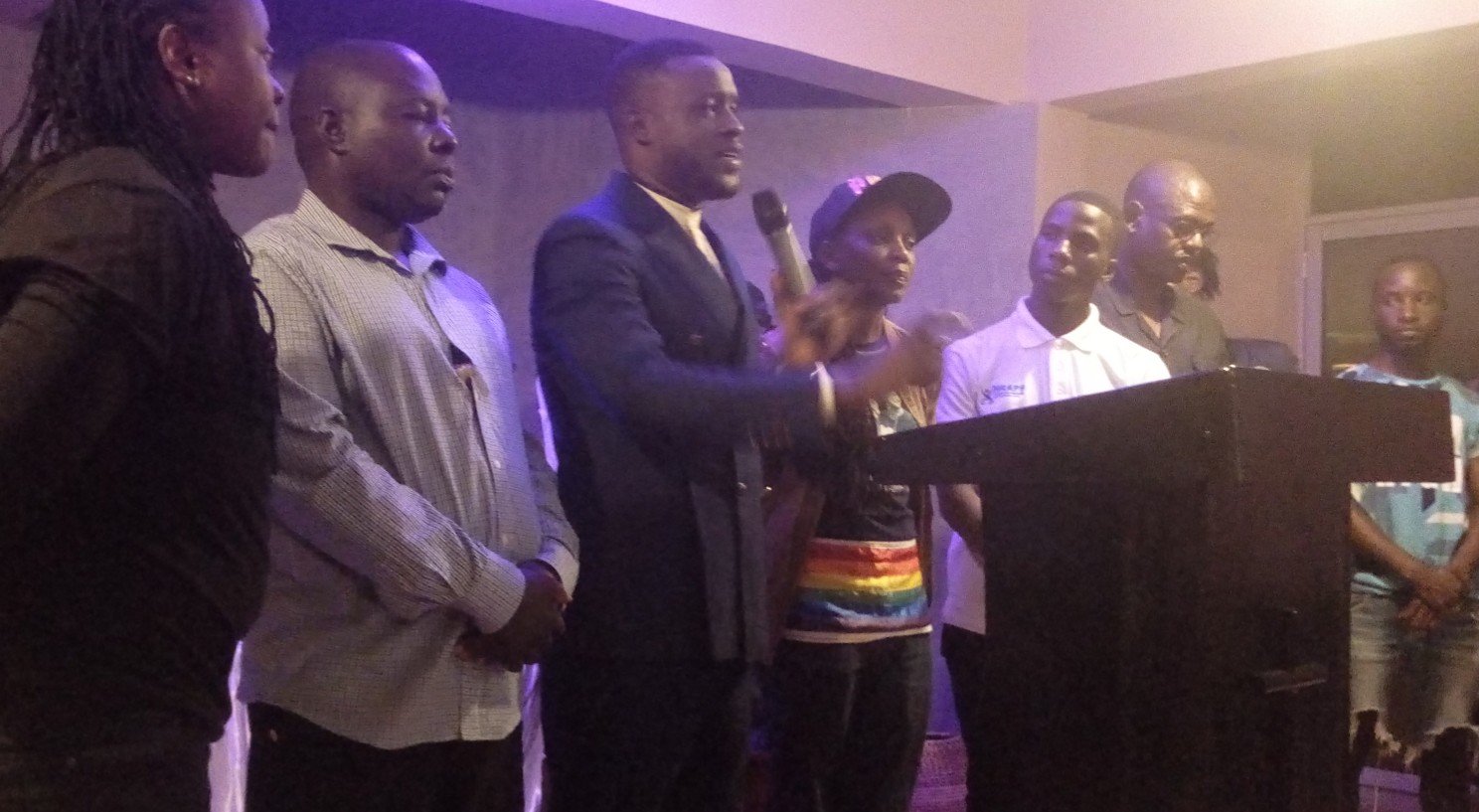
A report on how Ugandan LGBT rights defenders celebrated Kuchu Memorial Day was posted by Kikonyogo Kivumbi on 28 in ‘Erasing 76 Crimes’. Human rights defenders in Uganda have earmarked January 26 as Kuchu Memorial Day to remember and celebrate the life of David Kato and other LGBT human rights defenders killed because of their activism and sexuality.
Pastor Simon Anthony addresses the Kuchu Memorial Day service in Kampala. Kasha Nabagesera stands beside him. (UhspaUganda photo)
At a memorial church service on Sunday, 26 January in Kampala, human rights defenders paid tribute to David Kato (murdered that day in 2011, at his home).
The remembrance service was led by Pastor Simon Anthony, a senior pastor from The Fellowship of Affirming Ministries (TFAM) Uganda. The fellowship embraces all people with love, irrespective of their sexuality or any other considerations.
On 28 January 2020 The Human Rights Foundation in New York expressed its sadness at the passing of Tunisian activist, journalist, and educator Lina Ben Mhenni, after a long battle with a chronic illness (1983-2020).
“Lina was a force who fought tenaciously until her last breath. She fought censorship, corruption, and human rights abuses, all while grappling with serious illness. But nothing stood in her way. Her voice and cause will resonate with generations to come,” said Thor Halvorssen, president of HRF. “She will forever be an inspiration to all of us at HRF and in the Oslo Freedom Forum community to never give up even in the darkest moments. We will truly miss our beloved friend Lina.”
Lina was one of the only Tunisians to criticize the repressive government openly on international broadcasts before the Jasmine Revolution began in 2011. She is often described as one of the bravest bloggers in the world, whose work was instrumental in documenting, informing, and mobilizing citizens during the Revolution. Lina’s impactful achievements led her to be nominated for the 2011 Nobel Peace Prize. She authored and published a book the same year entitled, “Tunisian Girl: A Blogger for an Arab Spring.” Much of her writing was focused on freedom of expression and rights of women and students in Tunisia.
“Lina’s life experiences went beyond her 36 years. Many people know about Lina – whether through the media or different social platforms – but no amount of reporting on her could do justice to the values and principles for which she fought during Tunisia’s era of tyranny and after the Revolution,” said Aymen Zaghdoudi, MENA Legal Advisor at Article 19 in Tunisia. “Lina stood with the weak, the deprived, and the oppressed – even at the expense of her own health – and turned her pain into inspiration and hope for those around her.”
Lina spoke at the 2011 Oslo Freedom Forum, urging the outside world to continue to pay attention to events in Tunisia and other Arab countries where recent revolutions appeared to have ended. Upon joining the HRF community that year, she was actively involved in the discussions unfolding about the Arab Spring.
In recent years, Lina continued to press for human rights and continued democratic reform. In 2016, she started a campaign called “Books to Prison,” to counter extremism within Tunisia’s prisons. She was inspired by her father, who was a political prisoner, and had once told her that prisoners had so little to read to change their minds or be inspired. By November 2019, her campaign had collected more than 45,000 books, helping to free the minds of tens of thousands of people. Apart from her calls for democratic reform, Lina taught linguistics at a university in Tunisia and was a professional translator. She also brought awareness to the issue of organ donation and after a kidney transplant, amazingly received silver medals in the World Transplant Games.
You can read Lina Ben Mhenni’s blog “A Tunisian Girl” here.
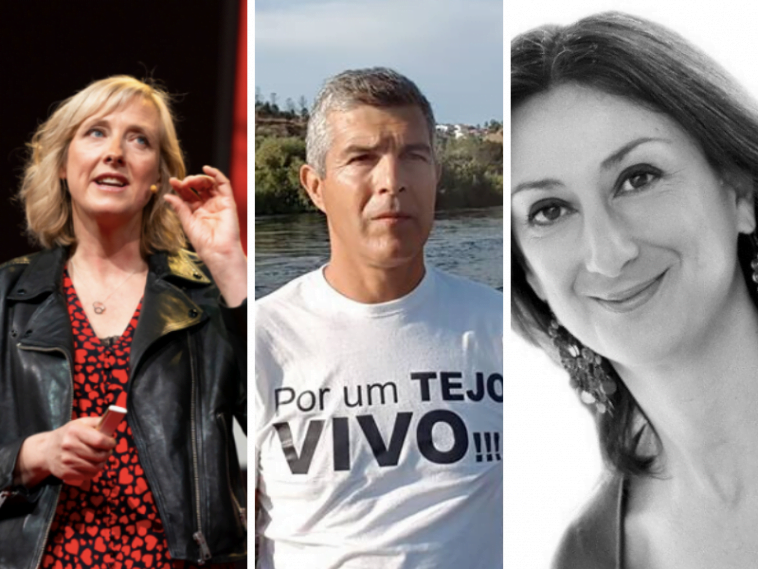
Journalist Carole Cadwalladr, activist Arlindo Marquês and slain journalist Daphne Caruana Galizia have all being victims of SLAPP.
.Joanna Demarco to European Commissioner Vice President Věra Jourová ahead of proposed new laws. The NGOs want to ensure that EThe organisations include the Daphne Caruana Galizia Foundation, Reporters Without Borders, Greenpeace and Friends of the Earth Europe.
Jourová is preparing legislation which will work to deter such lawsuits.
“In essence, SLAPPs are used to silence individuals and organisations that play a watchdog role and hold those in positions of power to account,” they wrote. Naming journalists within the European Union affected by SLAPP, the groups called the lawsuits received by assassinated journalist Daphne Caruana Galizia one of “the most striking examples which include journalists”. “Maltese reporter Daphne Caruana Galizia had 47 law suits pending against her at the time of her assassination,” they said. (The Maltese government has refused to ban the use of SLAPP suits in Malta, rejecting a motion by the Opposition in parliament).
The Shift, which works with international organisations to fight the threats against journalists, has also itself faced threats of SLAPP suits twice – one by a Russian banker and another by Henley & Partners, Malta’s concessionaire for the cash for passports scheme. The same firm also targeted Caruana Galizia prior to her assassination. In both cases, The Shift did not back down. Journalist Carole Cadwalladr, who exposed the Cambridge Analytica data-harvesting scandal, is also facing SLAPP action, the organisations noted. British co-founder of the Leave.EU campaign Arron Banks is refusing to drop the final two SLAPP lawsuits against the journalist who now started a crowdfunding campaign to cover the massive legal costs.
The organisations said that SLAPP lawsuits are not limited to journalists, but are also targeted at academia, trade unionists, activists, civil society organisations and individual citizens, including human rights defenders. Strong EU anti-SLAPP measures, including legislation and legal funds for victims, at a time when there is no such legislation in force in any EU member state will help protect those who are vulnerable to this type of legal harassment, they said. Such measures would also “send a strong political message that the EU is ready to stand up for its citizens and protect fundamental rights,” they continued.
Teresa Donnelly, who leads the LSO’s Human Rights Monitoring Group, spoke at the Osgoode Hall event in Toronto commemorating International Day of the Endangered Lawyer 2020.
When supporting colleagues abroad, lawyers should consider offering behind-the-scenes support as well as making public statements, a Pakistan-based journalist told an audience at the Law Society of Ontario last week. “What has to be really kept in mind is how that support is voiced and contextualized,” said Beena Sarwar. “If it takes a simplistic view or plays into anti-Pakistan rhetoric …. it’s so easy to make Pakistan a scapegoat and target.” Sarwar, whose blog has gained international acclaim for its coverage of freedom, human rights, peace and even influential jurists, was one speaker at the Law Society of Ontario’s International Day of the Endangered Lawyer 2020, hosted at Osgoode Hall in Toronto on 24 January by the Lawyers’ Rights Watch Canada,Human Rights Watch and Amnesty International.
This year, lawyers organized a protest at the Pakistani embassy at the Hague. Past events focused on Egypt, Turkey, China and Honduras, among others.
The LSO’s Human Rights Monitoring Group has issued several statements about treatment of lawyers in Pakistan over the past few years. In the aftermath of the Kasi attack, the LSO urged the Pakistani government to “put an end to all acts of violence against lawyers and human rights defenders in Pakistan,” and “ensure that all lawyers can carry out their legitimate activities without fear of physical violence or other human rights violations.”
Other incidents that have been condemned by the LSO are the 2015 murder of Samiullah Afridi (a lawyer who defended a doctor that allegedly assisted CIA agents with their hunt for al Qaeda leader Osama bin Laden); and a suicide bomb attack on the Pakistani judiciary.
“Over the past decades, lawyers in Pakistan have been subjected to acts of mass terrorism, murder, attempted murder, assaults, (death) threats, contempt proceedings, harassment and intimidation, as well as judicial harassment and torture in detention, merely for engaging in their professional duties as lawyers,” a letter from Lawyers’ Rights Watch Canada said earlier this month. “Their families also have been targeted, and some have even been murdered. Some lawyers have also been threatened with disbarment and/or had their homes and offices raided by the police.”
At the event, bencher Teresa Donnelly read a letter the law society had received from a Pakistani lawyer. Lawyers cannot become “heroes,” Donnelly recounted from the email. Instead, she said, the writer felt the role of lawyers was to “focus on their work improving the justice system.” While support is needed for the Pakistani bar, Sarwar explained that Western organizations must be careful not to jump to issue statements that play into conspiracy theories about Western involvement. Abdul (Hamid) Bashani Khan, a lawyer at the Abdul Hamid Khan Law Office in Mississauga, also spoke on the panel, where speakers highlighted some of the common misunderstandings of the situation in Pakistan, particularly amid anti-Muslim rhetoric publicized in the post-911 era. For example, panelists said the bench and bar are portrayed as both very strong — given the influence of the lawyers’ movement of Pakistan — and also very weak, in the fight for judicial independence and public support. In 2014, a lawyer was killed after representing a high-profile professor charged with blasphemy.
To mark the Day of the Endangered Lawyer, the International Bar Association’s Human Rights Institute released a toolkit to help the legal community navigate the complex task of protecting lawyers at risk. The three-part kit includes supports for risk management, human rights mechanisms, emergency protocols, legal frameworks, international protection, security plans and response chains.


 Pastor Simon Anthony addresses the Kuchu Memorial Day service in Kampala. Kasha Nabagesera stands beside him. (UhspaUganda photo)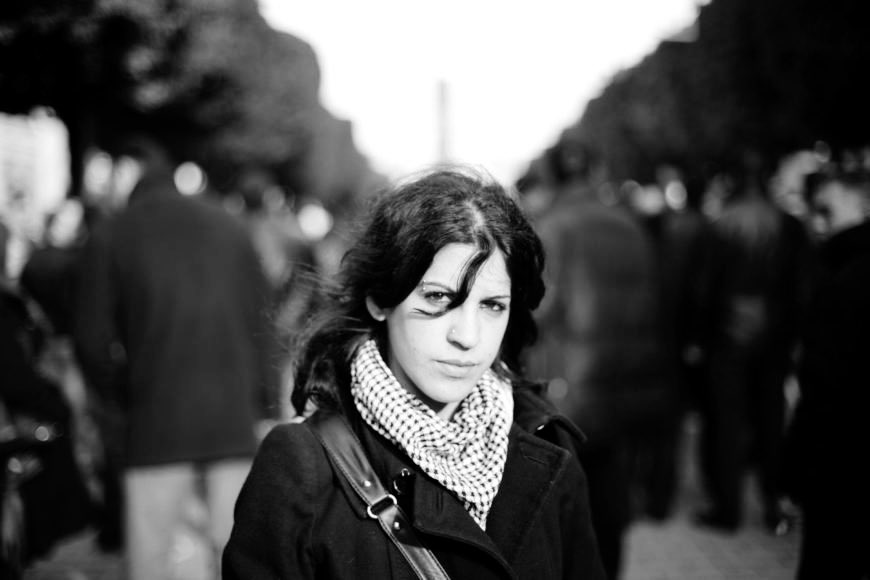
 Joanna Demarco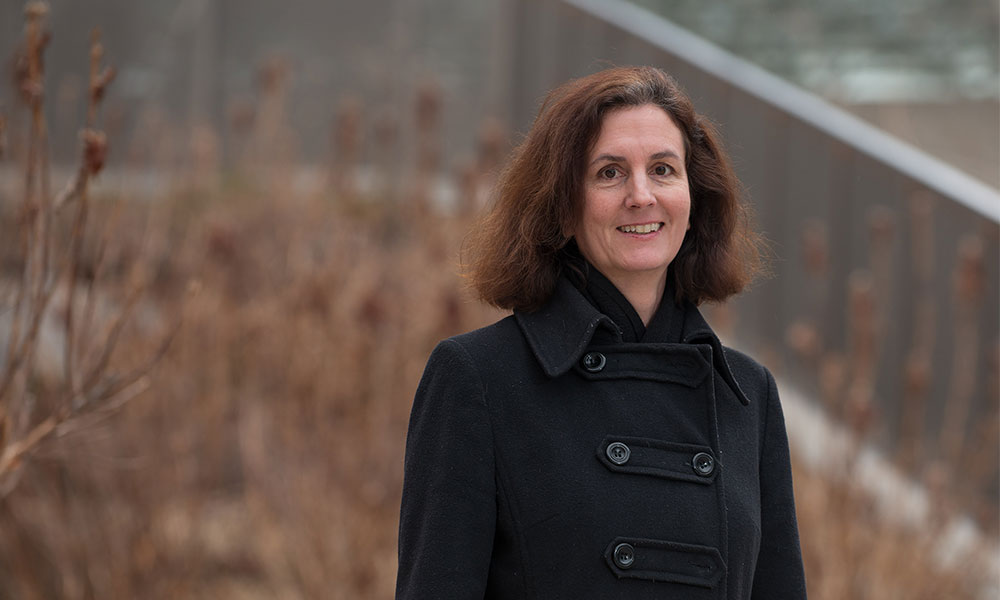
 Hans Thoolen on Human Rights Defenders and their awards