Author Archive

IDREAM Project: Training support to displaced or exiled Human Rights Defenders

February 8, 2020

Call for Applications: IDREAM Project.

The Center for Victims of Torture (CVT) has launched a Call for Applications for a new human rights training and mentoring project, the “Incubator for Defenders Remaining in Exile to Advance Movements.”

This application package includes detailed 3 documents – applicants should complete their application online. :

(1) Call for Applications: IDREAM Project

(2) Guidelines

(3) Instructions for Applicants

The IDREAM Project provides support to displaced or exiled Human Rights Defenders (HRDs) and their organizations in three technical areas, which are described in the documentation.  IDREAM seeks to enable displaced or exiled HRDs and civil society organizations to continue their work advocating for fundamental freedoms despite forced relocation due to threats or attacks they have experienced as a result of conducting their human rights work. HRDs who are selected to join the IDREAM project (“partner HRDs”) will benefit from participation in a range of capacity building and mentoring activities and exercises.

https://www.surveygizmo.com/s3/5421839/IDREAM-APPLICATION

Defending the Monarch Butterfly in Mexico costs lives

February 7, 2020

Mexican authorities are investigating the death of an employee of one of Mexico’s largest butterfly reserves. Raúl Hernández Romero was the second person connected to the reserve found dead in less than a week. The first death was Homero Gómez González — an environmental activist and well-known defender of the Rosario Monarch Butterfly Preserve in the Michoacan state. The deaths have alarmed environmental activists and human rights defenders in the country.

Amnesty International said it is alarmed. Twelve environmental defenders were already killed in Mexico in 2019. [see also: https://humanrightsdefenders.blog/2019/07/30/in-2018-three-murders-per-week-among-environmental-human-rights-defenders/]. The World’s host Marco Werman spoke with Erika Guevara Rosas, director of Amnesty International Americas, about the killings. Marco Werman: Homero Gómez González was very well-known for his protection of the monarch butterfly in Michoacán. He administrated sanctuaries to protect the monarch butterfly. But he was also a protector of the environment. He denounced, many times, illegal logging in the area and the increased presence of groups of organized crime that were trying to take over certain territories and land and threatened the environment where these monarch butterflies arrive every year in Mexico. Erika Guevara Rosas: We get a nice sense of his commitment to what he was doing with a video he posted just last month on Twitter. He’s in his butterfly sanctuary and thousands of butterflies are swirling all around him. He’s pretty happy and proudly declares in his tweet that the sanctuary in Michoacan is the biggest in the world. It’s kind of a sad video in retrospect, shot a couple of weeks before Gomez Gonzalez was killed. [https://twitter.com/miblogestublog/status/1222901129199009798]

Hernández Romero’s death, “along with the death of Homero Gómez, demands immediate investigation and full accountability,” tweeted Richard Pearshouse, head of crisis and environment at Amnesty.

‘Horrific’, adding that Raúl Hernández Romero’s family says he received threats regarding his work campaigning against illegal logging in the weeks before he disappeared. El Rosario sanctuary provides a home for millions of migrating monarch butterflies each year and draws thousands of tourists annually. But the reserve has also drawn the ire of illegal loggers in Mexico, who are banned from cutting down trees in the protected area. Before the ban, more than 1,000 acres of the woodland were lost to the industry between 2005 and 2006.

https://www.wvxu.org/post/killing-environmental-activists-has-become-norm-mexico-activist-says#stream/0

https://www.commondreams.org/news/2020/02/03/horrific-human-rights-advocates-call-investigation-death-second-monarch-butterfly

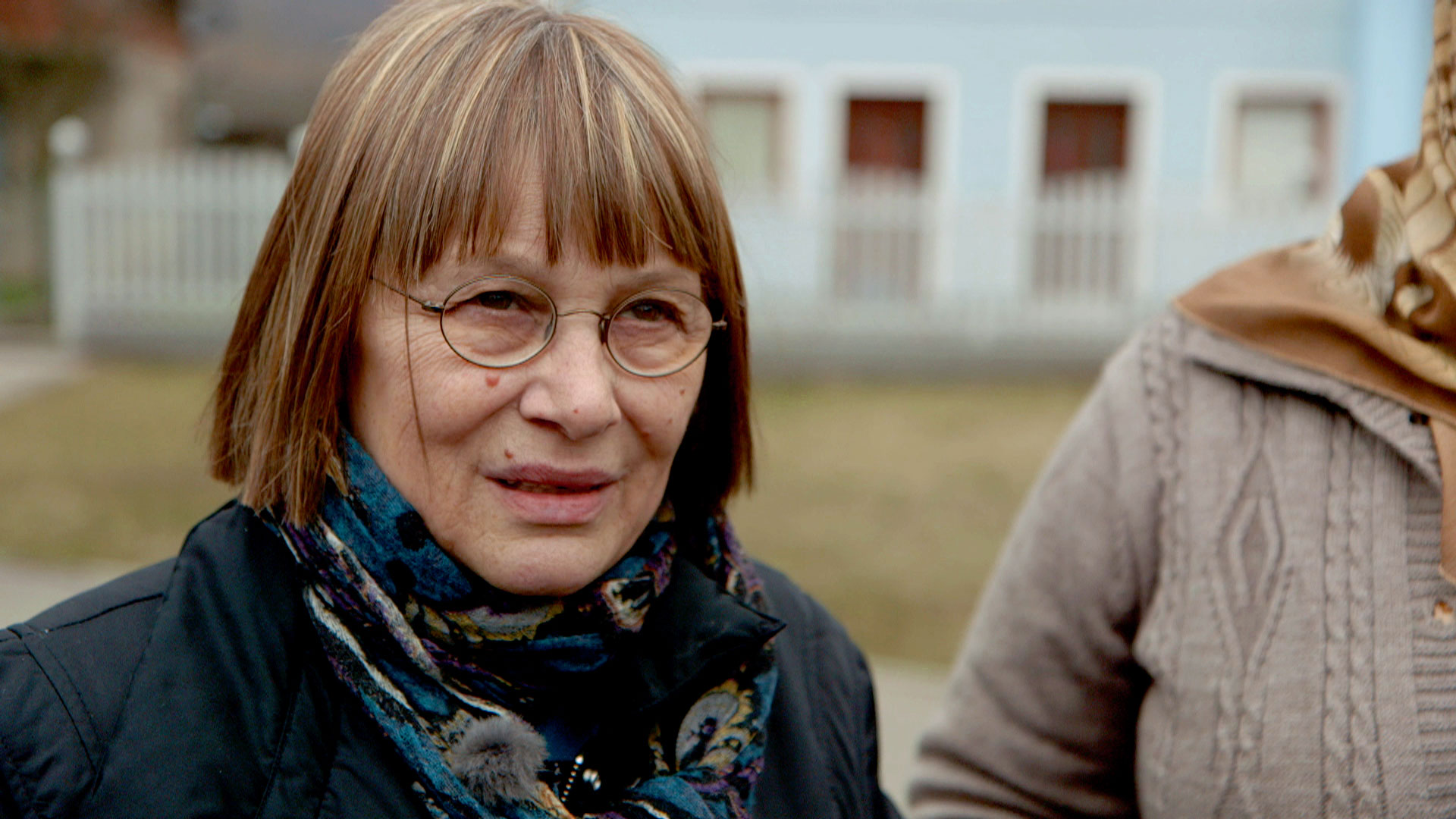
Ultranationalists attack human rights defenders, including Natasa Kandic, in Belgrade

February 7, 2020
Nataša Kandić, the founder of the Humanitarian Law Center (HLC), an NGO documenting human rights violations across the former Yugoslavia, along with five other human rights defenders, organized a protest against Vojislav Šešelj’s book launch. Although the International Criminal Tribunal of the UN found Vojislav Šešelj guilty of crimes against humanity and sentenced him to ten years in prison in 2018, today he is the leader of the Serb Radical Party (SRS), and a member of Serbian parliament. At the book launch on 5 February 2020, he was promoting his latest book, in which he denies the Srebrenica genocide. The protesters were physically attacked and removed from the event by force.

The human rights defenders (members of the HLC, the Youth Initiative for Human Rights, and Forum ZFD) intended to hand out copies of an HLC report detailing Serbian war crimes committed against Croats, documents that had a crucial role in Šešelj’s Hague trial as well. Speaking to the Belgrade office of Radio Free Europe, Nataša Kandić said that they were pushed to the ground and kicked by SRS members following an order coming from Šešelj, the party’s leader. Ivana Žanić, executive director of HLC, shared a video showing this on her Twitter channel.

The founder of the Humanitarian Law Center (HLC), along with five other activists of HLC, the Youth Initiative for Human Rights (YiHR) and Forum ZFD, was physically assaulted by members of the far-right Serbian Radical Party at an event promoting books which deny genocide and crimes against humanity in the former Yugoslavia.

The human rights activists attempted to distribute a HLC report detailing war crimes committed against Croats in the Vojvodina province when they were confronted by supporters of the Radical party . On orders of the party’s president, convicted war criminal Vojislav Seselj, they proceeded to push, hit and verbally abuse the activists; violently forcing them out of the public hall.

The attack took place at the premises of the municipality Stari Grad in Belgrade, which is a public space, yet no staff or security personnel attempted to intervene to prevent the confrontation.

Natasa Kandic is the recipient of many (eight) human rights awards including the Martin Ennals Award in 1999 the first award by Civil Rights Defenders 2013. Its Director for Europe, Goran Miletic, commented “it is very concerning that time and again, every discussion on Serbia’s involvement in war crimes during the nineties is met with violent abuse and harassment. Events promoting genocide-denial are completely unacceptable in any democratic society, let alone an aspiring EU member state. Not only should public authorities not provide public spaces for such manifestations, but they should take an active position against the promotion of war criminals.

See also: https://humanrightsdefenders.blog/tag/natasa-kandic/

http://www.osaarchivum.org/press-room/announcements/ultranationalists-attacked-natasa-kandic

Attack Against Civil Rights Defender of the Year Recipient Natasa Kandic in Belgrade


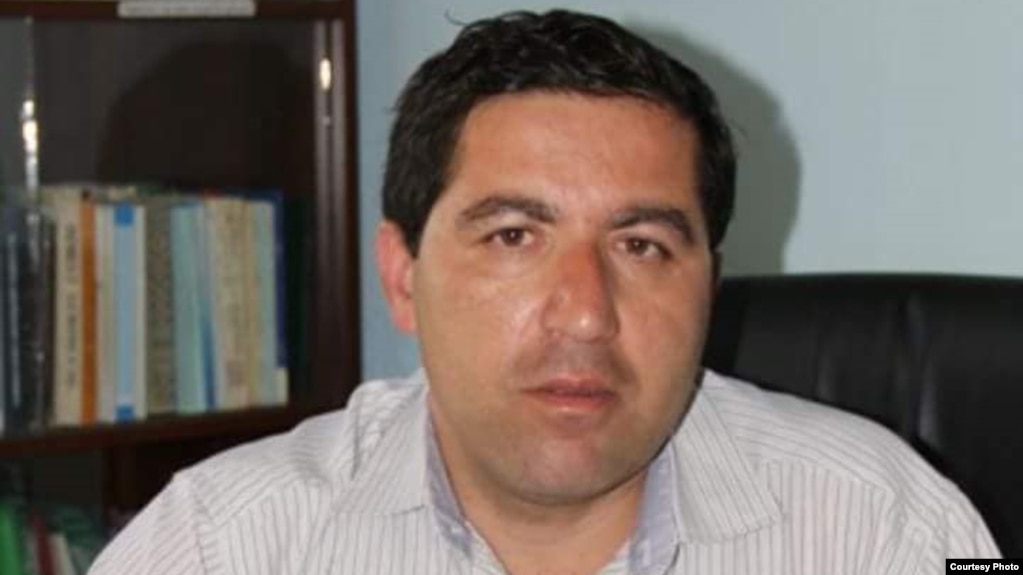
Tajikistan’s jailed human rights lawyer Buzurgmehr Yorov awarded Homo Homini award 2020

February 7, 2020
Tajik lawyer Buzurgmehr Yorov (file photo)

The Prague-based NGO People in Need has awarded its annual Homo Homini prize to Tajikistan’s jailed human rights defender Buzurgmehr Yorov for his “commitment to defending basic human rights and to assure a fair trial to all citizens” of his country.  For more on this and similar awards, see: http://www.trueheroesfilms.org/thedigest/awards/homo-homini-award.

Yorov has been promoting human rights in Tajikistan for many years despite facing severe persecution as a result of his work. He did not hesitate to defend clients who were targeted by politically motivated charges, whose cases other lawyers were not willing to take,” the NGO said on 5 February 2020. “As a result of doing his job, this prominent lawyer lost both his property and his freedom,”.

Yorov was sentenced in October 2016 on charges of issuing public calls for the overthrow of the government and inciting social unrest. His 23-year prison term was later extended by five years after he was found guilty of contempt of court and insulting a government official. Last year, his prison term was cut by six years as part of a mass amnesty. [see https://humanrightsdefenders.blog/2019/09/29/in-tajikistan-lawyers-have-to-be-human-rights-defenders/]

The Homo Homini Award will be presented on March 5 to his brother, Jamshed Yorov, at the opening of the One World Film Festival, a human rights film festival held annually in the Czech Republic.

https://www.rferl.org/a/jailed-tajik-lawyer-yorov-awarded-homo-homini-human-rights-prize/30418801.html

Women human rights defenders and climate: a treasure of references

February 5, 2020
14961626755_df9d75d853_c

On 4 February 2020 wrote in the New Security Beat an informative pieceUnsung Sheroes, Climate Action, and the Global Peace and Security Agendas“.

The December 2019 workshop on Gender, Peace and the Environment convened by the London School of Economics’ Centre for Women, Peace and Security and the University of Rosario’s Law School in Bogotá, Colombia, brought all of these interrelated perspectives together. Among other conclusions, the workshop acknowledged that indigenous women and girls are vital to more effective climate solutions, including building climate resilience in communities affected by violent conflict. However, their work is becoming increasingly fraught with danger. Criminal gangs, paramilitary groups, and private security forces from industries like mining, logging, dam construction, and agribusiness often target these indigenous environmental and human rights activists……

London School of Economic’s Keina Yoshida, one of the participants in the workshop on Gender, Peace and the Environment, reminded us of the “gender power structures, which result in violence against environmental, indigenous and women’s rights defenders such as Berta Cáceres.” Yet, as Ambassador Melanne Verveer notes in her Foreword to the Georgetown Institute for Women, Peace and Security’s report on Women and Climate Change, women are contributing to both adaptation and mitigation efforts and are creating innovative and localized solutions to build resilient communities. There is a reason for hope.

The article contains a helpful listing of relevant reports and documents on the role of women human rights defenders and climate change:

For some of my earlier posts: https://humanrightsdefenders.blog/tag/women-human-rights-defenders/


Unsung Sheroes, Climate Action, and the Global Peace and Security Agendas


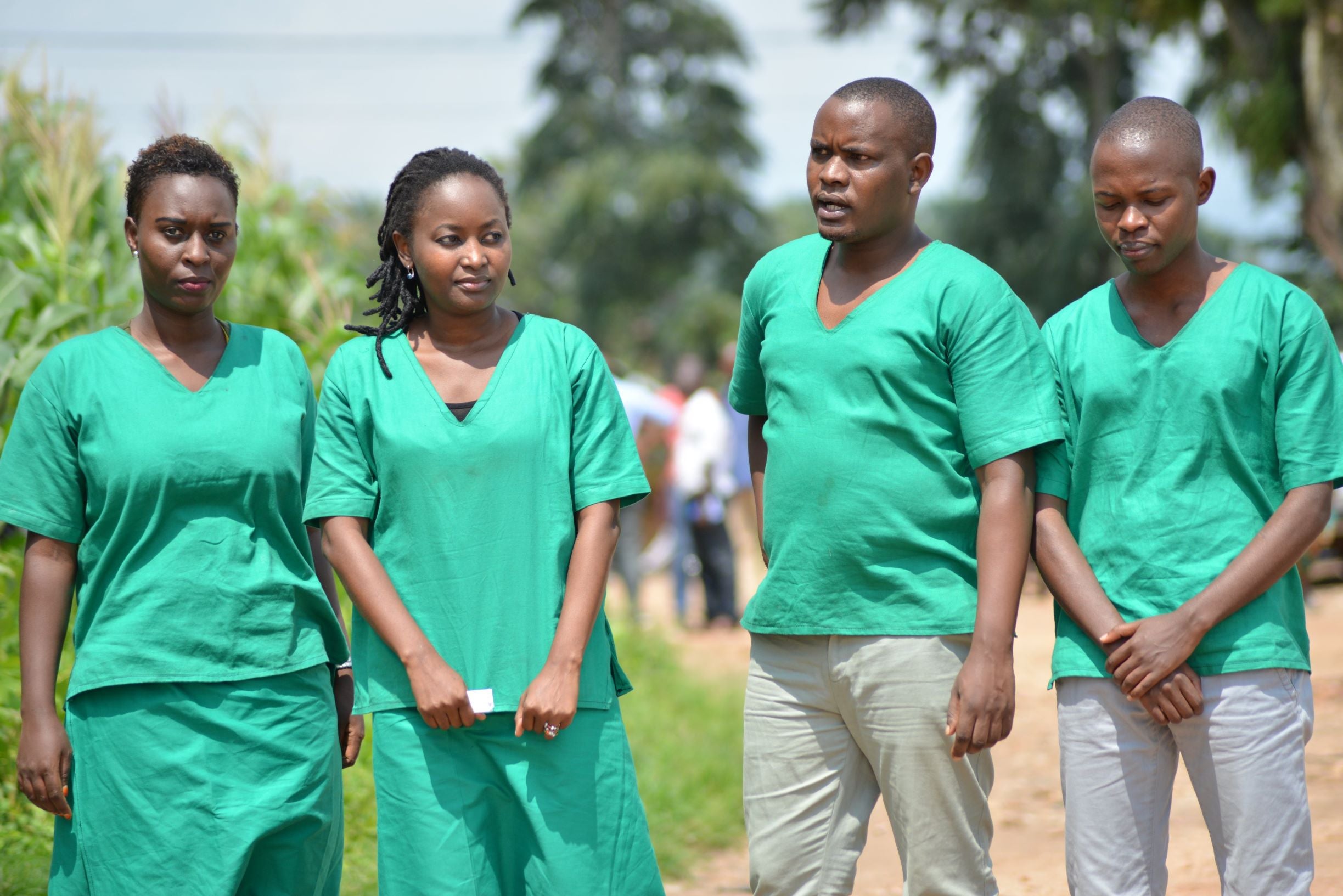
Burundi elections start with convicting 4 journalists

February 5, 2020

EU’s Fundamental Rights Agency has new website to serve mobile users better

February 5, 2020

It prominently highlights useful tools like FRA’s EU Fundamental Rights Information System (EFRIS). This section steers users to key resources, such as promising practices from across the EU on how to combat hate crime or collect equality data, which they could use in their own work. In addition, country-specific information is more prominent so users can find local information from their country. It also flags which information is available in other EU languages. Users can also sign up for project updates via email so they can keep abreast of the latest agency developments. The site reflects FRA’s convening power as a hub for all human rights defenders which they can draw on for their work. It also aims to mirror FRA’s communicating rights mantra to maximise impact and outreach, helping to make a difference for people across the EU.

Accessibility remains a key consideration in the new design of the site.

https://fra.europa.eu/en/news/2020/new-modern-fra-website-promises-better-user-experience

Human Rights and Climate defenders should join hands says Andrew Gilmour

February 5, 2020

The Korea Herald of 4 February 2020 carries an opinion piece by Andrew Gilmour (former UN assistant secretary-general for human rights) entitled “Preventing climate change is a human rights issue”. In it he makes a strong case for human rights and climate groups to work more togehter:
…They’d seem to be natural allies. They both regard (with good reason) today’s situation as the worst in their movements’ existence. Second, they share common foes: Leading climate change deniers and environmental despoilers tend to be dismissive of human rights (Presidents Rodrigo Duterte, Donald Trump, or Jair Bolsonaro, to name but three). Third, both movements are accused of being “elitist” by their opponents, a charge neither group of activists has done enough to overcome.  But the two groups haven’t historically worked closely together.

…. In a seminal UN report last spring, Philip Alston castigated the human rights community for its failure to face up to the fact that “human rights might not survive the coming upheaval.” The idea that democratic systems failed to prevent global heating may well take hold, with a resulting urge to strengthen state powers at the cost of rights and freedoms.

To prevent this from happening, human rights advocates and environmentalists both need to broaden their mobilization campaigns by reaching out to groups who have traditionally not been allies of either movement. From Europe to the US to Australia, an alliance of populist leaders, corporate lobbyists and the Murdoch-owned press have pushed the idea that any gains for human rights or environmental protection will come at the expense of jobs. For example, the “gilets jaunes” protests in France were provoked, in part, by a fuel tax hike designed to reduce carbon emissions. (“Fin du monde, fin du mois” was one rallying cry — stop talking about the end of the world, when we’re just trying to get to the end of the month.)

Fossil fuel workers, cattle farmers and others need to know that they will still have livelihoods after serious measures have been taken to reduce global heating. Governments, NGOs and the private sector can offer such assurances through reskilling programs and subsidies for alternative land management and carbon sequestration. Without job security, too many people will remain vulnerable to wealthy climate science deniers — such as the Koch brothers — who have been able to convince them that climate change is basically a hoax against the “people” perpetrated by the “elite.”

Activists and sympathetic local officials must also work harder to win over indigenous people. In many countries, including Brazil, the Philippines and Honduras, there are examples of indigenous groups resisting renewable energy projects. Not because they are politically opposed to renewable energy, but because they have traditionally not been consulted about enterprises inflicted on them within their traditional lands and waters.

Climate and human rights activists should be reaching out to these groups to get their buy-in. Governments should be transferring ownership of forested land back to the indigenous communities who have proven time and again to be the most effective guardians of their own ecosystems. Instead, indigenous people are being attacked — literally. In 2017, an average of three indigenous, environmental or land rights defenders were killed every week worldwide.

Collaboration between human rights advocates and environmentalists will make it more likely that we come together to reduce emissions and mitigate the worst effects of climate change — and that we do so equitably. But the first step is to create far stronger bonds between the leaders and activists of each cause. Until both sides have fully recognized that neither agenda can be achieved without the other, they will continue to under-perform against their powerful opponents.

http://www.koreaherald.com/view.php?ud=20200203000932

German opera comes to its senses and rescinds award ceremony for General Sisi

February 5, 2020
The Semper Opera House in Dresden, Germany (AFP
The Middle East Eye correspondent reported on 4 February 2020 that an annual awards ceremony at the Semper Opera House in Germany’s Dresden has been cancelled after the decision to grant Egyptian President Abdel-Fattah el-Sisi a presitigious prize created a public relations crisis.

Sisi, the general-turned-president who is a chief architect of serious human rights violations [for just a few examples, see: https://humanrightsdefenders.blog/tag/egypt/], was set to receive the Order of St George at the Semper Opera Ball on Friday. It is awarded to “those who have, like St. George, been a force for good in the world, despite all opposition – those who swim against the current.

Though the Semper Opera Ball will go ahead, hosting 2,500 guests, its PR agency Zastrow + Zastrow told Middle East Eye that the award ceremony traditionally accompanying it has been scrapped. Sisi, however, has already been handed the prize. A delegation from the Opera Ball Association, led by its director Hans-Joachim Frey, visited Cairo on 26 January and presented the award to Sisi at the presidential palace. News about the award quickly sparked a backlash against the event and its organisers.

At the time, Frey defended the award as a token of appreciation for what he described as Sisi’s role in restoring stability and peace to Egypt and Africa. But that characterisation has been denounced by human rights defenders. On Tuesday, Vanessa Ullrich, an expert at Amnesty International Germany, told MEE that those granting Sisi an award have a “responsibility to carefully consider who is the right person to honour in public and who is being called an outstanding bridge-builder and peacemaker”.

MDR, the main broadcaster of the event, condemned the award as “wrong”, saying the media organisation had no influence on the decision. The network’s entertainment chief, Peter Dreckmann, promised his team would not broadcast any part of the event that features Sisi’s award.

Multiple celebrities who had been invited to the ball have also distanced themselves from the event, in the aftermath of what German media described as a “scandal”. The latest were German billionaire Dietmar Hopp and former Bayern FC president Uli Hoeness.

Hopp, who was due to be awarded the same medal as Sisi, said on Tuesday he has turned down the award. Hoeness, who had been chosen to present the award to Hopp, has also followed suit, according to the German press agency DPA. The gala’s main host, prominent TV anchor Judith Rakers, announced on Wednesday she was pulling out altogether, complaining the Semper Opera Ball had been turned into a political event. Following Rakers’ withdrawal, her nominated replacement Mareile Hoppner also announced her rejection of the role. She cited the “very justified criticism of the selection of a prize winner”.

In response to the outcry, Frey apologised for the award. “We are aware of the irritation that has arisen and we sincerely regret it,” he said in a statement. “We would like to apologise for the award ceremony and distance ourselves from it. The award ceremony was a mistake.” Frey also said the award will not be part of the Semper Opera Ball programme, “in word or picture”.

Despite Frey’s apology, public figures have continued to pull out of the event. Dresden’s mayor was among those who denounced the honour.  “It is inconceivable for me how this honour has come about and which criteria were followed,” Mayor Dirk Hilbert said. “I am reserving the right to decide whether I will appear officially in the programme as I have done before, and whether I will take part in the ball with my guests.

Still, It was not immediately clear whether the award will be reversed. Sisi is not attending the gala.

[ The Award Committee seems to have problems in slecting winners anyway: In 2009, the Order of St George was controversially awarded to Russian President Vladimir Putin. Three years ago it was handed to Saudi Arabia’s Prince Salman bin Abdulaziz bin Salman].

https://www.middleeasteye.net/news/german-opera-crisis-over-sisi-award

Daily Maverick in South Africa keeps a weekly calendar of civil society events

February 3, 2020

South Africa‘s Daily Maverick has a weekly feature to inform readers of a cross-section of events organised by civil society organisations, including those by human rights defenders. Here some excerpts as illustration: .

2020 is in full swing. Last week the Maverick Citizen team met in Cape Town to discuss civil society plans and priorities for 2020 in South Africa and internationally and how best to report them. As our popular Civil Society Outlook showed, it’s going to be a pivotal year, and the reports we provided of activists’ plans were only the tip of the iceberg:

starting on Monday 3 February, civil society and human rights defenders from 30 countries will be meeting a few kilometres down the road at the Alternative Mining Indaba (AMI). The AMI is in its eleventh year and is hosted by the Economic Justice Network of the Fellowship of Christian Councils in Southern Africa (EJN of FOCCISA). Its theme is “environmental and economically sustainable mineral economies in an era of climate change catastrophe”.
Monday 3 February, watch out for the judgment of the Constitutional Court in Malawi on the fairness and legality of last year’s presidential elections in that country. Since the elections, Malawian civil society organisations have been at the forefront of protests. NGOs such as the Malawi Human Rights Defenders Coalition and Freedom House are calling on the Malawian government to respect the rule of law and the decision of the court.
Wednesday February 5th is the 38th anniversary of the murder of Neil Aggett by the brutal apartheid security police. Next week will mark the third week of the inquest into his death. (FAWU) to South Gauteng High Court to demand the prosecution of his murderers.
Important public hearings are underway on the controversial and highly contested Traditional Courts Bill. However, Parliament, through omission or commission, seems to want to keep them as unpublic as possible. Last week, hearings took place in the Northern Cape. However, the Land and Accountability Research Centre (LARC), one of the bill’s most informed and vocal critics, only received a notification on Tuesday 28 January. The Gauteng hearings are scheduled to take place in February but dates are not yet confirmed.
Finally, an issue that should occupy us all every day. The Climate Justice Coalition is asking for your input on the draft Climate Justice Charter which it intends to present to Parliament later this year.
February: SONA, the budget and the civil society campaigns that attempt to arc society towards social justice. 

…… On Friday we will continue with our weekly profile of women activists who lead civil society.  

(If you have events or meetings which you think other activists ought to know about, write to us at: maverickcitizen@dailymaverick.co.za)


https://www.dailymaverick.co.za/article/2020-02-02-civil-society-watch-3-10-february-2020/