Amnesty International Germany has awarded its human rights prize to the “luventa10“, the crew members of a sea rescue ship that saved refugees stranded at sea. The activists currently face human trafficking charges in Italy. For more on this and similar awards: http://www.trueheroesfilms.org/thedigest/awards/a-i-germanys-human-rights-award. This was announced on Tuesday.
In 16 operations between July 2016 and August 2017, the Iuventa crew allegedly helped rescue more than 14,000 people at sea, Amnesty said. Run by the German non-governmental organization Jugend Rettet (“Youth Rescues”), the Iuventa was confiscated by Italian authorities in Lampedusa in August 2017 under the suspicion that the organization was aiding illegal immigration and working with Libyan smugglers. See also: https://humanrightsdefenders.blog/2019/05/15/european-governments-should-stop-treating-solidarity-and-compassion-as-a-crime/
Criminal investigations have been brought against ten ocean rescue activists from Germany, the UK, Spain, and Portugal, “even though all they’ve done is save humans from drowning in the Mediterranean Sea,” Amnesty said, explaining its reasoning behind the choice.
An Italian court has charged the activists with “aiding and abetting illegal immigration.” Markus Beeko, secretary-general for Amnesty International Germany, calls the charges “more than shaky.” Iuventa10 stands as an example of how those that help “are criminalized for not forsaking people fleeing their home countries in their moment of need,” the organization said. An awards ceremony will take place in Berlin on April 22.
An algorithmic risk rating system implemented by the Dutch state to try to predict the likelihood that social security claimants commit benefits or tax fraud violates human rights laws, a court in the Netherlands ruled. The Dutch Risk Indication System (SyRI) legislation uses an undisclosed algorithmic risk model to profile citizens and has been directed exclusively to neighborhoods with mostly low-income and minority residents. Human rights defenders have called it a “welfare surveillance state.”
Several civil society organizations in the Netherlands and two citizens instigated legal action against SyRI, seeking to block its use. The court today ordered an immediate stop to use the system. The ruling is being hailed as historical by human rights defenders, and the court bases its reasoning on European human rights law, specifically the right to privacy established by article 8 of the European Convention on Human Rights ( ECHR) instead of a specific provision in the EU data protection framework (GDPR) that relates to automated processing.
Article 22 of the GDPR includes the right of individuals not to be subject to automated individual decision-making only where they can produce significant legal effects. But there may be some uncertainty about whether this applies if there is a human somewhere in the circle, such as reviewing an objection decision. In this case, the court has avoided such questions by finding that SyRI directly interferes with the rights established in the ECHR. Specifically, the court determined that the SyRI legislation does not pass an equilibrium test in Article 8 of the ECHR that requires that any social interest be considered against the violation of people’s private life, and a fair and reasonable balance is required.
In its current form, the automated risk assessment system did not pass this test, in the opinion of the court. Legal experts suggest that the decision sets some clear limits on how the public sector in the United Kingdom can make use of AI tools, and the court is particularly opposed to the lack of transparency on how the algorithmic rating system worked….
The UN special rapporteur on extreme poverty and human rights, Philip Alston, who intervened in the case by providing the court with a human rights analysis, welcomed the ruling, describing it as “a clear victory for all those who are justifiably concerned about the serious threats that digital welfare systems represent for human rights. ” “This decision sets a strong legal precedent for other courts to follow. This is one of the first times that a court stops the use of digital technologies and abundant digital information by welfare authorities for human rights reasons, ”he added in a press release.
In 2018, Alston warned that the UK government’s rush to apply digital technologies and data tools to socially redesign the provision of large-scale public services risked having a huge impact on the human rights of the most vulnerable. Therefore, the decision of the Dutch court could have some short-term implications for UK policy in this area.
The ruling does not close the door to the use by states of automated profiling systems, but it does make it clear that in Europe human rights laws must be fundamental for the design and implementation of risk tools.
..It remains to be seen whether the Commission will push pan-European limits to specific uses of AI in the public sector, such as for social security assessments. A recent leaked draft of a white paper on AI regulation suggests that it is leaning towards risk assessments and a mosaic of risk-based rules.
On 10 February 2020 the Office of the United Nations High Commissioner for Human Rights (OHCHR) invited applications for its Minorities Fellowship Programme, a training programme for human rights and minority rights defenders belonging to national or ethnic, religious and linguistic minorities. During the Programme, human rights defenders will get an opportunity to establish contacts with other activists from different parts of the world.
Applicants of the fellowship must belong to a national, ethnic, linguistic or religious minority group. Selected persons will get a ticket from the country of residence to Geneva and stipend.
The application form for the fellowship can be download from the website of OHCHR (click here). Applications form along with the relevant documents can be sent to email id minorityfellowships@ohchr.org or by post to “Mr. Morse Caoagas Flores Coordinator, Indigenous & Minorities Fellowship Programmes Indigenous Peoples and Minorities Section Office of the High Commissioner for Human Rights 48, Avenue Giuseppe-Motta, Office 2-05 CH-1211 Geneva 10, Switzerland”. The deadline is 28 February 2020.
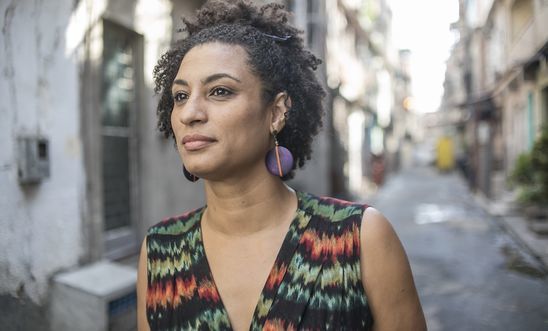
In response to the recent death of Adriano da Nóbrega, a former policeman suspected of involvement in the murder of human rights defender Marielle Franco and her driver Anderson Silva, Amnesty International Brazil’s Executive Director, Jurema Werneck, said:
“After almost two years of investigation into the death of Marielle and Anderson, we demand transparency from the authorities. It is essential for Brazilian society to have full confidence in the efforts to find out who carried out these cruel murders…The information circulating today, like many of the leaks that have occurred since October last year, just sends a public message that the authorities are trapped in doubt.
“Events related to the investigations raise more questions than answers. For almost two years now the whole world has been looking closely at Brazil, waiting for the truth. While we understand the need for confidentiality, this cannot be confused with a lack of transparency…To guarantee justice for Marielle is to guarantee the rights of all human rights defenders to do their work with dignity and security, defending a fairer society.”
Adriano da Nóbrega was killed on Sunday 9 February after he fired on police officers trying to arrest him in Northern Brazil. Nóbrega is thought to have led a paramilitary group suspected of ordering the murder of Marielle Franco.
Human rights defender Rehman presented an overview of the human rights situation in Pakistan at the first ‘Asma Jahangir Memorial Lecture’ held on Tuesday 12 February 2020. On this occasion he warmly recalled HRCP’s co-founder, remembering her as the ‘voice of sanity and compassion’. Rehman spoke about people’s fundamental right to ‘economic justice’. Citing examples ranging from bonded labourers and small farmers to lady health workers and journalists, he said that people’s economic rights – the ‘right to employment, and just and equitable conditions of work’ should not be subject to the “availability of resources.” He also reminded the government of their international commitments for political and civil rights.While the Constitution protected people’s social and economic wellbeing, said Rehman, it was critical to secure the substance of these rights, their availability to all citizens and their incremental expansion. “Economic justice must not, therefore, be sacrificed at the altar of national security,” he said. He reminded the audience that ‘all citizens of Pakistan’ had the right to economic justice, and that Asma Jahangir would not have stood quietly by in such a situation.
Human Rights Commission of Pakistan (HRCP) Secretary-General Harris Khalique announced that the Commission was instituting the Asma Jahangir Award for Human Rights Defenders, and resuming the Nisar Osmani Award for Courage in Journalism and the I. A. Rehman Research Grant in Human Rights.
Lam LeThailand’s female land rights defenders for whom activism is a daunting necessity. The country’s 2014 forest reclamation policy was meant to target businesses, but smaller farmers have been disproportionately threatened with eviction. As more women join the fight, rights groups say more than 200 women have been subjected to judicial harassment, while two have been murdered
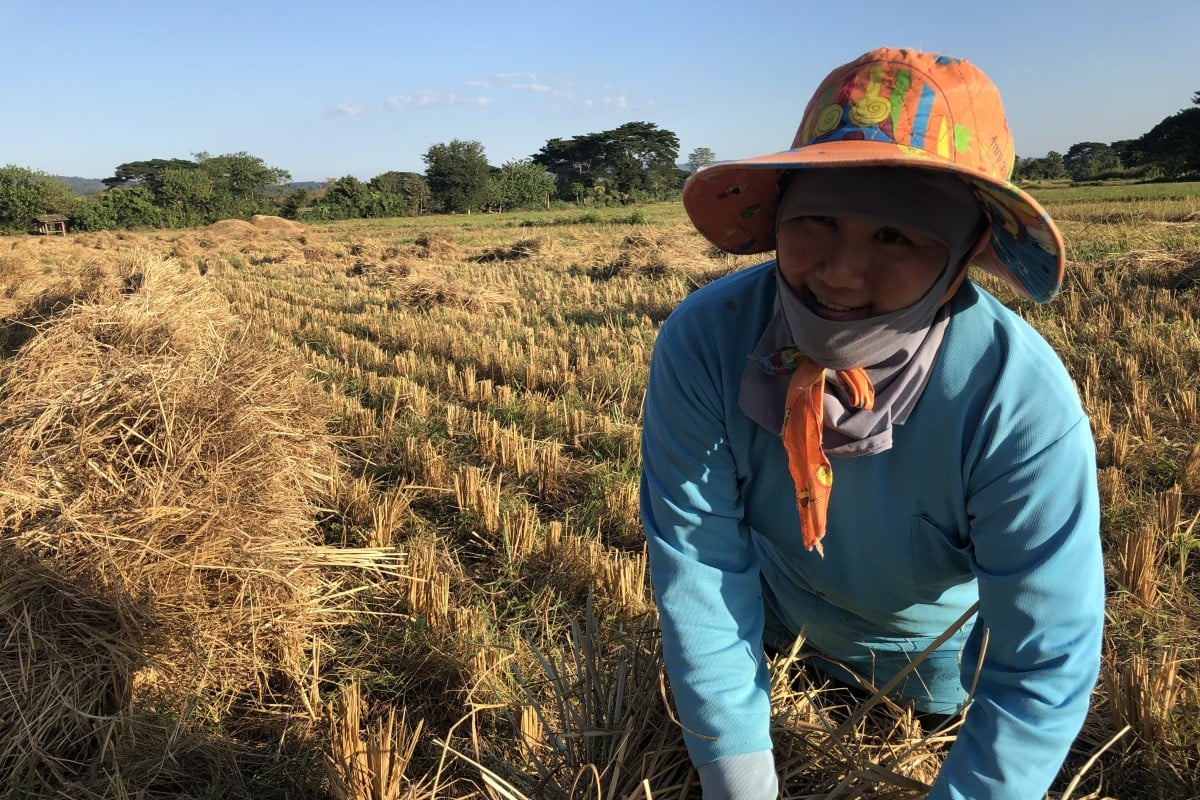
Thai land rights activist Waewrin Buangern, or Jo, working in the fields in Ban Haeng village. Photo: Lam Le
Growing up, cassava farmer Nittaya Muangklang did not think she would ever become an activist – let alone that she would lead a group of land rights defenders in the first-ever bid to challenge Thailand’s government and its “take back the forests” policy at the Supreme Court. “We did encroach on the national park, but as poor farmers, we should be eligible for exemption,” said Muangklang, who is fighting eviction, imprisonment and fines. Faced with what farmers and rights groups perceive as increasing judicial harassment, more women living in rural areas have joined the fight for land rights in Thailand – amid the spectre of intimidation and the threat of jail time or even being killed for their activism. The appeal court last year sentenced Muangklang and 13 other land rights defenders from Ban Sap Wai village in Thailand’s northeast to up to four years in prison, and ordered them to pay fines of between 40,000 and 1.6 million baht (between US$1,300 and US$52,000) for encroaching on and damaging land in Sai Thong National Park. The court said the farmers failed to prove they had occupied the land before the park was established in 1992. Muangklang, out on bail since last August, said her family had not applied for a land certificate when they moved to Ban Sap Wai in 1986 because they never thought it necessary until the day they faced eviction.
..Thai NGOs estimate that at least 8,000 households have been threatened with eviction since 2015. Meanwhile, Thailand’s ruling junta has in the past five years given away around 999 hectares of forest conservation land as concessions to large corporations, including cement and mining companies, according to Land Watch Thai. Muangklang’s case caught the attention of United Nations special rapporteurs, who last August expressed their concern that Thailand was misusing the forest reclamation policy. In a letter to the government, the UN said Muangklang’s prosecution “appears to be a result of her work as a community leader”, and pointed out that the eviction of the Ban Sap Wai farmers might violate their human rights. The Thai government has yet to respond to the UN’s request to justify its prosecution of the farmers. Thailand’s Ministry of Natural Resources and Environment did not respond to This Week in Asia’s request for comment.
Being a female advocate for land rights in Thailand is a dangerous calling. In 2012, female activists Montha Chukaew and Pranee Boonnak were brutally killed. Since 2014, 225 female human rights defenders from Thailand’s rural areas have been subjected to judicial harassment, according to NGO Protection International, which estimates that 70 per cent of these activists are land rights defenders accused of encroaching on national parks and other lands. However, their work is often overlooked and underappreciated…Even when efforts are made to enshrine women’s rights, as is the case with gender equality in the United Nations’ Sustainable Development Goals (SDGs) – a 17-section blueprint on achieving a sustainable future by 2030 – on-the-ground implementation when it comes to female land rights defenders tends to be lacking. “There’s a challenge there because many times states are not really connecting a human rights-based approach with [the SDGs’] development approach,” said Dubravka Simonovic, UN special rapporteur on violence against women. Thai human rights activist Matcha Phorn-in, who works with marginalised communities, agrees. “When the government is the key actor, [SDGs won’t work for] many people who oppose the government because of violations of human rights,” she said, explaining that this meant a lack of indicators and data to assess how female land rights defenders were being affected….On top of this, Phorn-in fears that millions of people could be affected, now that officials involved in the forest reclamation policy have search-and-destroy powers they can use without first needing court orders.
Protection International’s Somwong explained that with the labour involved in household and family-care duties, female activists were essentially “doing double work” while also facing the risk of sexual harassment. Consequently, rights groups have been calling for gender-sensitive support for these activists. “When you’re not protecting women, you’re not protecting the family, the community, or the movement,” Somwong said. Nine of the prosecuted Ban Sap Wai farmers are women.
…..
…Waewrin Buangern, or Jo, said it was her habit of questioning authority that led her to activism. She contended that the local authorities and the Kiew Lueng Company, which oversees the project, had not been transparent with local villagers on the environmental and economic impact of the mine. As a result, she and members of the conservation group have faced more than a dozen defamation lawsuits from the mining company as well as the local government. The project was put on hold in 2015 after the group counter-sued. The company got a mining permit in 2015 but has not been able to move forward since then due to the lawsuits. Jo has paid a steep price for her perseverance. She lost her job at the local school, another job as assistant to the village chief, and suffered two miscarriages due to the stress of activism, which also took its toll on her marriage and saw her divorce her husband. At 36, Jo’s main sources of income are farming and being an administrator of a Facebook group. But she has found a different family. Of the Rak Ban Haeng Conservation Group’s 1,400 members, 70 per cent are women. …….
Early last year, Ban Haeng villagers received a note that the government was planning to annex the forest the community had been relying on as a source of livelihood, and turn it into a national park. The villagers have submitted a letter of objection, stating that people are living in the area. Jo is positive that no one will get evicted. Unlike the Ban Sap Wai case, she said, the people of Ban Haeng had clear proof of the village’s history – a namesake temple that dates back to 1851….
The MARTIN ENNALS AWARDS CERMONY 2020 will take place on Wednesday 19 February 2020, 18h00, at the Salle communale de Plainpalais in Geneva. It wil honour three women human rights defenders for their exceptional courage and dedication:
Miriam Jackson writes for the Union Journal of 7 28 NGOs on Tuesday 5 February prompted the European Parliament to delay permission for the EU-Vietnam Free Trade Agreement (EVFTA) and Investment Protection Agreement (IPA) until Vietnam’s federal government agrees to protect the rights of workers and implement certain civils rights. The FTA must be approved by the European Parliament on Tuesday 11 February.
The signing NGOs include Human Rights Watch, Defend the Defenders, The 88 Project, and the Independent Journalists Association of Vietnam.
“There are notable precedents of the European Parliament setting human rights benchmarks to be met before giving their consent to bilateral deals in order to promote human rights progress,” the NGOs claim pointing to a 2016 case in Uzbekistan and the EP’s rejection in March 2019 of the EU-Turkmenistan Partnership and Cooperation Agreement. “The European Parliament needs to take the exact same strategy with Vietnam, withholding Parliament’s permission and authorizing an identical resolution outlining the civils rights problems that Vietnam must satisfy for MEPs to greenlight the offer,” the NGOs claimed.
Only once a series of human rights concerns have been duly addressed by the state authorities, MEPs should give their consent to the deals.
Kjell Magne Bondevik (former Prime Minister of Norway and currently President of the Oslo Centre for Peace and Human Rights) wrote a thoughtfull piece on a thorny issue: “The UN Must Take the Lead in Kashmir”.
...After more than 70 years of terror, killings, torture, and disappearances, the international community must renew its efforts to end the conflict in Kashmir. In 2018 and 2019, the Office of the United Nations High Commissioner for Human Rights released reports that documented a wide range of abuses – including kidnappings, the killing of civilians, and sexual violence – perpetrated by both sides in the conflict. The UN needs to take the lead in stopping Kashmir’s torment. ……The conflict has consumed resources that should have been used for development; instead, they were channeled to arms purchases or a regional race to develop weapons of mass destruction. Everyone, regardless of age, religion, or ethnicity, has suffered, whether as a result of displacement, family separation, loss of property, the death or disappearance of friends and close relatives, grinding poverty, or simply the prospect of a future as bleak and constricted as the present.The international community has, at times, attempted to mediate between India and Pakistan. The UN has adopted resolutions demanding a referendum on Kashmir’s future status. But, even though it has long been evident that there is no military solution to the conflict – temporary ceasefire initiatives have never resulted in a lasting agreement – India to this day has resisted a plebiscite. In 2003, Pakistan’s then-president, Pervez Musharraf, formulated a four-step approach to a political solution. Without insisting on a referendum, India and Pakistan would begin a dialogue; recognize Kashmir as the main source of bilateral hostility; identify and eliminate what was unacceptable to each side; and strive for a solution acceptable to both countries – and especially to the people of Kashmir. Subsequently, a ceasefire was declared, and high-level meetings took place, but, following a terrorist attack, India terminated the talks. In 2012, Pakistani President Asif Ali Zardari and Indian Prime Minister Manmohan Singh tried unsuccessfully to revive the process.
I have been personally engaged with the Kashmir issue for some time. Last year, I held meetings with senior politicians in Pakistan and India. I am well aware that India wants to treat the Kashmir conflict solely as a bilateral issue. But in that case, it should take the initiative in starting talks with Pakistan. If that does not happen, the international community must demand that the parties come together to negotiate a peaceful solution.
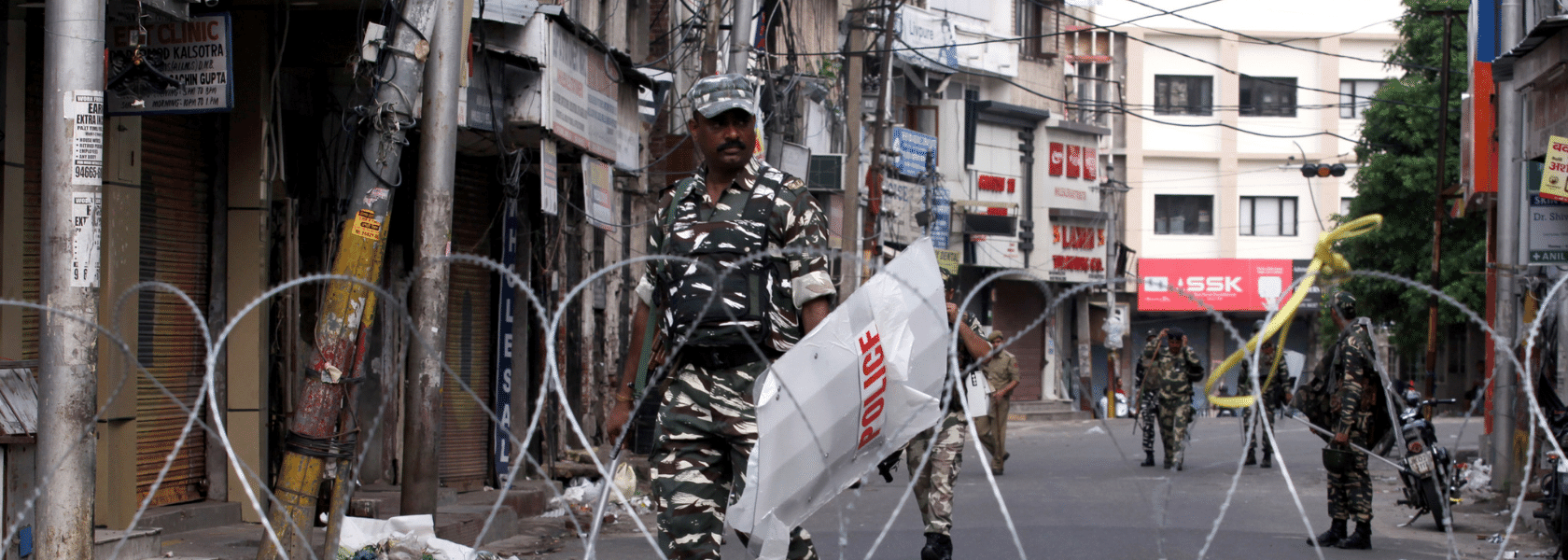
Again, it is not up to the UN or anyone else to impose a solution on the parties. The current situation is rooted in a highly complex mix of history and politics, and any viable settlement must reflect Kashmir’s unique circumstances. A major issue to be addressed is the “line of control” separating Indian- and Pakistani-administered Kashmir, which hinders the free movement of people, divides families, and impedes business and trade. And, of course, Kashmir’s future status is the main question that must be resolved. During my last visit to Kashmir, I saw firsthand the level of violence and the severity of human-rights violations. Conditions have deteriorated further since India repealed Jammu and Kashmir’s special status in October 2019, dissolved it as a state, and reorganized it as two “union territories” – all enforced by the security forces with a wave of arrests, a ban on assembly, and an Internet and media blackout.At a time of war in Syria and Yemen, and heightened tensions between the United States and Iran, it is difficult to get the international community to focus on Kashmir. But it is crucial that the conflict not be allowed to spiral out of control, especially given that both countries are nuclear powers. Above all, the people of Kashmir deserve a ceasefire, reconciliation, and stability, and it is the duty of the UN to advance this goal. I urge the UN to appoint a special envoy to Kashmir. And I appeal to UN Secretary-General António Guterres to seize the initiative and help deliver a long-overdue and lasting peace to this region…
“The Indian government must immediately end all draconian restrictions on fundamental freedoms in Jammu & Kashmir, and fully reinstate communications”, FIDHand its member organization People’s Watch urged on 5 February 2020. In conjunction with its call, FIDH released a briefing note that highlights some of the human rights concerns that have remained unaddressed since 5 August 2019. “For the past six months, the people of Jammu & Kashmir have been living under siege and denied their fundamental rights under the most draconian of measures. These grave violations of human rights must come to an end, and accountability must be established for the serious violations that have occurred since 5 August.” Adilur Rahman Khan, FIDH Secretary-GeneralSince the evening of 4 August 2019, internet communications, and initially telephone lines, have been cut in Jammu & Kashmir, effectively isolating residents from the rest of the world. Although phone lines were gradually reinstated and internet access restored in certain places, personal internet connections are limited to 301 government-approved websites through a very slow 2G connection. Although accurate figures are unavailable, thousands of arbitrary detentions have been reported since 5 August 2019, including hundreds of detentions under the abusive 1978 Public Safety Act (PSA). Many detainees, particularly youth and low-ranking political activists, have been transferred to jails outside of Jammu & Kashmir, the location of which is unknown in many cases. There have also been numerous reports of excessive use of force by army and police forces, including reports of deaths and injuries as a result of the improper use of pellet guns and teargas. The reorganization of Jammu & Kashmir has also resulted in a number of measures that will have long-term implications for the human rights situation in the region, including the disbanding of the State Human Rights Commission (SHRC) of Jammu & Kashmir – one of the few avenues for justice available to local people – at the end of October 2019. More than 500 cases of alleged enforced disappearances were pending before the SHRC at the time of its disbandment. [see also: https://humanrightsdefenders.blog/2019/03/17/fidh-dares-to-publish-a-report-on-key-human-rights-issues-of-concern-in-kashmir/]
“Human rights violations of the gravest nature are nothing new in Jammu & Kashmir, and have gone unpunished for decades. But taking away the little autonomy the state had will only make the situation worse, especially when the people most affected by these changes have been denied their right to express their opinions.” added Henri Tiphagne, People’s Watch Executive Director
On 5 February the Observatory for the Protection of Human Rights Defenders, a partnership of FIDH and the World Organisation Against Torture (OMCT), requested an urgent intervention in the case of Mr. Miyan Abdul Qayoom, a human rights lawyer and President of Jammu & Kashmir High Court Bar Association. Mr. Qayoom, 70, suffers from multiple health conditions, including diabetes, double vessel heart disease, and kidney problems.
According to the information received, during the evening of January 29, 2020, Mr. Qayoom’s family received a phone call from Agra Central Jail’s authorities, in Uttar Pradesh State, informing them that Mr. Qayoom had been transferred to Sarojini Naidu Medical College after complaining of chest pain, breathlessness and his pulse rate had significantly gone down to 44pm, and asking them to visit him. On January 30, 2020, upon reaching Agra Central Jail, Mr. Qayoom’s relatives discovered that Mr. Qayoom had been taken back to the jail’s dispensary, even though his health condition had not improved. On February 3, 2020, Jammu & Kashmir High Court Srinagar bench, after hearing the final arguments, reserved its judgement regarding Mr. Qayoom’s habeas corpus request. The scheduled date of the judgement was not known as of the publication of this Urgent Appeal…..
Cuban human rights defenders who participated to the project of presenting a report on EU’s agreement with Cuba. [Civil Rights Defenders]
The EU needs to change strategy if it wishes to stand for democracy in Cuba by opening up to independent civil society, write Anders L. Petersson and Erik Jennische (of the NGO Civil Rights Defenders) on 4 February 2020. On Saturday 1 February. five Cuban democracy activists were stopped at the airport in Havana as they were on their way to Brussels to speak at the European Parliament today. They were banned from leaving the country by the Cuban authorities. Instead, the seminar at the European Parliament was held with Cuban activists based outside the country, and five empty chairs – a vivid reminder of the current strategy’s shortcomings. [Instituto Patmos has shown that at least 226 activists were banned from travelling abroad during 2019]. The five democracy activists were supposed to present their ideas on what the EU could do to promote respect for human rights and democratisation in the country. Their proposals form part of a report by Civil Rights Defenders – a total 30 letters from Cuban democracy activists and organisations – as a contribution to the EU’s policy development.
Although the EU and Cuba in their Agreement recall “their commitment to the recognised principles of democracy”, Civil Rights Defenders regrets that the EU remained silent on the sham elections and the transfer of power that followed. Apparently, it was all acceptable under the new Agreement…..When Federica Mogherini visited Cuba for the last time as High Representative for Foreign Affairs in September 2019, she rather perplexingly concluded that “after completing its generational transition and adopting a new Constitution, Cuba now faces major challenges in carrying out its economic modernization”.
….Reflecting on the stories of harassed and imprisoned activists in Cuba, we cannot afford to make such surrender again. The EU needs to change strategy if it wishes to stand for democracy in Cuba. It needs to build a formal and open dialogue with Cuba’s independent civil society. Since the negotiations began on the Agreement in the spring of 2014, the EU has not invited civil society to a single formal discussion on the content of the Agreement or its implementation. When the EU and Cuba held its human rights dialogue in October 2019, the Cuban government took the liberty to decide which European and Cuban organisations could participate. The papers in the report of CRD hold a great number of proposals and ideas – the two core messages being:
That both European and Cuban civil societies need to be recognised as formal partners to the EU in its relations to Cuba.
That the EU needs to speak out on the absence of democracy in Cuba and denounce all human rights violations.
The EU can never contribute to positive change in Cuba via a dialogue with the Cuban government. The only way is to give legitimacy and support to the civil society that openly and peacefully supports democratisation. It is time for the EU to include civil society in its relations with Cuba.
One of the award-winning Cuban dissident who was detained this week announced that he has been released without charge but barred from a planned trip to Europe for a meeting on human rights. Guillermo Farinas, a 58-year-old psychologist, is a leading voice in the opposition to Cuba’s communist government and won the European Parliament’s Sakharov human rights prize in 2010. Farinas was arrested Tuesday in the central city of Santa Clara, where he lives, as he planned to go to the Spanish Embassy in Havana to pick up travel documents. He had been due to take part in a meeting of the human rights commission of the European Parliament. “The main reason for my arrest was to keep me from traveling to Europe,” Farinas told AFP.






 Hans Thoolen on Human Rights Defenders and their awards
...After more than 70 years of terror, killings, torture, and disappearances, the international community must renew its efforts to end the conflict in Kashmir. In 2018 and 2019, the Office of the United Nations High Commissioner for Human Rights released reports that documented a wide range of abuses – including kidnappings, the killing of civilians, and sexual violence – perpetrated by both sides in the conflict. The UN needs to take the lead in stopping Kashmir’s torment. ……The conflict has consumed resources that should have been used for development; instead, they were channeled to arms purchases or a regional race to develop weapons of mass destruction. Everyone, regardless of age, religion, or ethnicity, has suffered, whether as a result of displacement, family separation, loss of property, the death or disappearance of friends and close relatives, grinding poverty, or simply the prospect of a future as bleak and constricted as the present.The international community has, at times, attempted to mediate between India and Pakistan. The UN has adopted resolutions demanding a referendum on Kashmir’s future status. But, even though it has long been evident that there is no military solution to the conflict – temporary ceasefire initiatives have never resulted in a lasting agreement – India to this day has resisted a plebiscite. In 2003, Pakistan’s then-president, Pervez Musharraf, formulated a four-step approach to a political solution. Without insisting on a referendum, India and Pakistan would begin a dialogue; recognize Kashmir as the main source of bilateral hostility; identify and eliminate what was unacceptable to each side; and strive for a solution acceptable to both countries – and especially to the people of Kashmir. Subsequently, a ceasefire was declared, and high-level meetings took place, but, following a terrorist attack, India terminated the talks. In 2012, Pakistani President Asif Ali Zardari and Indian Prime Minister Manmohan Singh tried unsuccessfully to revive the process.