On Human Rights Day 2024, in the year of its 35th anniversary, the North-South Centre celebrated the invaluable contributions of young people to the promotion and protection of Human Rights. Over the years, youth have played important roles as experts, multipliers, representatives, and active participants in our initiatives.
Young people are essential stakeholders in any meaningful effort to protect and strengthen Human Rights. The new Human Rights Education for Youth (HEY) programme is a reflection of that approach. It seeks to contribute to an increased youth capacity to engage in Human Rights protection through further awareness about European and International standards, and how they can be used by young people to protect themselves and their communities.
HEY joins a series of initiatives by the North South Centre where young people lead the way in championing Human Rights. These include the Rule of Law Youth Network, and the many activities in the field of Global Education and Youth Cooperation, such as the Youth Summer Universities that have engaged thousands of young people from all over the world. The youth focus was also present at the 2024 North-South intercultural conference, which resulted in the Kotor Declaration, with recommendations on youth initiatives to combat racist and xenophobic acts through computer systems.
Mehmet Onat Sarıtaş, UN Volunteer with UNICEF in Türkiye supports the design and implementation of climate change-related programmes.
Diana Assenova, Mehmet Onat Sarıtaş and Madinabonu Salaidinova have one thing in common — They are young volunteers who believe that progress cannot be made without youth. Let’s hear from them in their own words.
“By investing in education, building the capacity of community members, and fostering global citizenship, young people play a crucial role in creating a better future that is inclusive, equitable, and sustainable for generations to come.” The words of Diana Assenova, a UN Volunteer Education Assistant with the UN Refugee Agency (UNHCR) in Kazakhstan resonate with the importance of youth and progress.
Diana focuses on the rights of youth refugees by making sure they have equal access to education. She coordinates the DAFI Scholarship Programme, through which, young refugees get education support. She encourages many more opportunities for education for refugee youth in Kazakhstan via awareness and advocacy campaigns.
The enthusiasm of youth propels her efforts — she recounts how she volunteered to organize a summer camp for teenagers from the displaced population.
The energy of working together with young people was unforgettable! This reaffirmed my dedication to making a positive impact through volunteerism.” Diana Assenova, UN Volunteer with UNHCR Kazakhstan
Another young and skilled UN Volunteer is Mehmet Onat Sarıtaş who serves with the UN Children’s Fund (UNICEF) in Türkiye as an Adolescent Development and Participation Assistant. Onat is witness to the disproportionate impact of climate change on the lives of children and adolescents in Türkiye and that is when he decided to volunteer. He values collective volunteer action to create a greener world for children.
Onat supports the design and implementation of environment-related projects. He also coordinates UNICEF’s climate-focused youth platforms, performs administrative tasks and collects data.
Youth platforms give Onat the opportunity for peer-to-peer support and technical assistance to young people. This close communication and learning has helped strengthen UNICEF’s relations with young people, he notes.
Next, we have the voice of UN Volunteer, Madinabonu Salaidinova, “I focus on increasing the engagement of young leaders from the south of Kyrgyzstan in civic activism and strengthening their potential to promote human rights.”
Madinabonu serves as a Legal and Monitoring Volunteer with the Office of the United Nations High Commissioner for Human Rights (OHCHR) Regional Office for Central Asia in Kyrgyzstan.
She monitors media channels, observes trials, and engages with the government and civil society partners, including human rights defenders. She also responds to individual complaints of alleged human rights violations submitted to OHCHR from five Central Asian countries — Kazakhstan, Kyrgyzstan, Tajikistan, Turkmenistan and Uzbekistan.
Including youth in decision-making is crucial, says Madinabonu. She feels that her voice is heard and appreciated. This gives her momentum to bring her ideas to fruition.
I appreciate that OHCHR gives me opportunities to integrate my interests and ideas into my work. I feel that I’m where I’m supposed to be right now.” Madinabonu Salaidinova, UN Volunteer with OHCHR Kyrgyzstan.
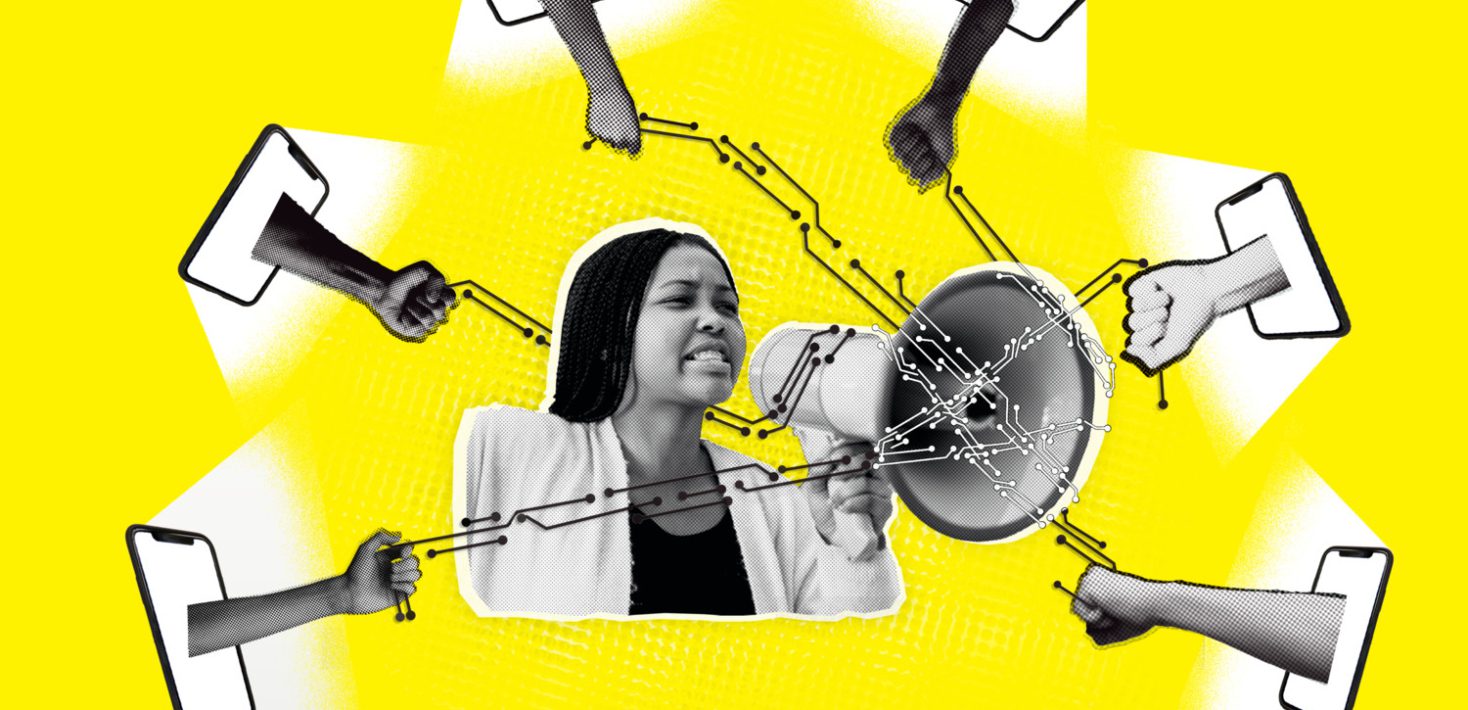
On July 1, 2024 AI published the findings of a survey which says that three out of five child and young human rights defenders face online harassment in connection with their activism, according to a new analysis of 400 responses to an Amnesty International questionnaire, distributed to young activists across 59 countries. More than 1400 young activists participated in the survey conducted as a part of Amnesty International’s global campaign to “Protect the Protest.”
Of those, 400 youth activists aged between 13 to 24 years agreed to the publication of their data.
They faced harassment in the form of hateful comments, threats, hacking and doxing which is often linked to offline abuse and political persecution often perpetrated by state actors with little or no response from Big Tech platforms resulting in the silencing of young people.
The highest rates of online harassment were reported by young activists in Nigeria and Argentina.
“I have been harassed […] by a stranger because of my pronouns. The stranger told me it is not possible to be a ‘they/them’ and kept sending messages about how I am crazy for identifying the way I identify. I had to ignore the person’s messages,” said a 17-year-old Nigerian queer LGBTI activist who asked not to be identified.
Another young activist – 21-year-old male Nigerian LBGTI rights activist said, “People disagree with my liberal progressive views, and immediately check my profile to see that I am queer Nigerian living in Nigeria, and they come at me with so much vitriol. I am usually scared to share my opinion on apps like TikTok because I can go viral. The internet can be a very scary place,” he said adding that, “Someone cat fishing as a gay man, lured me into coming out to see him after befriending me for a while, and then he attacked me with his friends. This is Nigeria, I couldn’t go to the police for secondary victimization.”
Twenty-one percent of respondents say they are trolled or threatened on a weekly basis and close to a third of the young activists say that they have censored themselves in response to tech-facilitated violence, with a further 14 percent saying they have stopped posting about human rights and their activism altogether.
“I always think twice before making a comment, when I express my political position, I start to get many comments that not only have to do with my position, but also with my body, my gender identity or my sexuality,” said Sofía*, a 23-year-old human rights defender from Argentina shared her experience on X formerly known as Twitter.
The survey respondents said they faced the most abuse on Facebook, with 87 percent of the platform’s users reporting experiences of harassment, compared to 52 percent on X and 51 percent on Instagram.
The most common forms of online harassment are upsetting and disrespectful “troll” comments (60 percent) and upsetting or threatening direct messages (52 percent).
Five percent of the young activists say they have faced online sexual harassment, too, reporting that users posted intimate images (including real and AI-generated images) of them without consent.
For many of the survey participants harassment in relation to their online activism is not limited to the digital world either. Almost a third of respondents reported facing offline forms of harassment, from family members and people in their personal lives to negative repercussions in school, police questioning and political persecution.
Twenty-year-old non-binary activist Aree* from Thailand shared their experience of facing politically motivated prosecution in five different cases whilst they were still a child.
Abdul* a 23-year-old Afghan activist reported being denied work at a hospital after authorities found out about his social media activism.
The Israel-Gaza war currently stands out as an issue attracting high levels of abusive online behaviour, but the threat of online harassment appears to be omnipresent across all leading human rights issues. Peace and security, the rule of law, economic and gender equality, social and racial justice, and environmental protection all served as “trigger topics” for the attacks.
However, the way young activists are targeted varies and appears to be closely linked to intersectional experiences of discrimination, likely harming survivors of identity-based abuse in longer lasting ways than issue-based harassment.
Twenty-one percent of respondents say they have been harassed in connection with their gender and twenty percent in connection with their race or ethnicity. Smaller percentages said they face abuse in connection with their socio-economic background, age, sexual orientation and/or disabilities.
“At first it was simply hateful comments since the posts I published were daring and spoke openly about LGBT rights, which later made me receive threats in private messages and it went further when my account was hacked,” said Paul a 24-year-old activist from Cameroon, on being targeted for his LGBTI related activism adding that, “For 2 years, I have been living in total insecurity because of the work I do as an advocate for the rights of my community online.”
For Paul and many other young activists, online harassment is having deep effects on their mental health. Forty percent of the respondents say they have felt a sense of powerlessness and nervousness or are afraid of using social media. Some respondents have even felt unable to perform everyday tasks and felt physically unsafe. Accordingly, psychological support is the most popular form of support which young activists call for, ahead of easier to use reporting mechanisms and legal support.
Many of the young activists voiced frustrations over leading social media platforms’ failure to adequately respond to their reports of harassment saying the abusive comments are left on the platforms long after being flagged.
Some respondents also felt that social media platforms are playing an active part in silencing them; multiple activists reported that they found posts about the war in Gaza removed, echoing previous reports of content advocating for Palestinian rights being subject to potentially discriminatory moderation by various platforms.
Others highlighted platforms’ role in enabling state-led intimidation and censorship campaigns, undermining activists’ hope for government regulation to provide answers to the challenge of tech-facilitated violence.
UN Report Unveils Strategies to Shield Child, Youth Human Rights Defenders
Emmanuel Abara Benson, on 6 March 2024, unveils in BNN a new UN report which highlights the challenges faced by young activists, advocating for global support and legal frameworks to safeguard their rights and efforts:
Amnesty International heralds a new UN report as a significant advancement for young activists worldwide, set to be introduced by UN Special Rapporteur Mary Lawlor during the 55th Session of the Human Rights Council on 12 March 2024. The document, titled “We are not just the future”: challenges faced by child and youth human rights defenders”, highlights the unique challenges faced by young activists, including oppression, age-based discrimination, and barriers to resources and legal aid.
The report by Mary Lawlor sheds light on the considerable obstacles child and youth defenders encounter, such as intimidation, threats, and attacks, both in physical and digital realms. Amnesty International’s Sara Vida Coumans emphasizes the overdue recognition of the distinct experiences and adversities young defenders face compared to their adult counterparts. The report also addresses the issue of “gatekeeping” by adult-led groups, which hampers the ability of young activists to access necessary resources and participate in decision-making processes.
Amnesty International has documented numerous instances of abuses against young human rights defenders. Examples include Fatima Movlamli from Azerbaijan and Mahmoud Hussein from Egypt, who faced intimidation and arbitrary detention, respectively, due to their activism. Moreover, the report mentions the plight of child climate defender Leonela Moncayo in Ecuador, who was intimidated with an explosive device outside her home, highlighting the risks young activists face. The organization calls for governments worldwide to heed the Special Rapporteur’s recommendations, particularly in providing legal aid and support for young defenders. See also: https://humanrightsdefenders.blog/2023/11/13/hrw-submission-to-special-rapporteur-focuses-on-child-and-youth-human-rights-defenders/
The document not only brings to the forefront the specific challenges faced by child and young human rights defenders but also underscores the importance of global support and legal frameworks to safeguard these individuals. By spotlighting the adverse impact of social media, the right to peaceful assembly, and the effects of climate change on young people, the report advocates for a more inclusive and supportive environment for young activists. Governments are urged to adopt the recommendations, recognizing the vital role of young defenders in advocating for human rights and democratic reforms.
This groundbreaking report marks a pivotal moment in the recognition and support of child and young human rights defenders. By highlighting the unique challenges they face and offering targeted strategies for protection, the UN and Amnesty International are paving the way for a more inclusive and equitable future for young activists. The global community’s response to these recommendations will be instrumental in ensuring that young voices are not only heard, but also protected in their brave efforts to defend human rights.
On 3 January 2023 it was reported that a prominent Ugandan LGBTQ+ activist Steven Kabuye was stabbed by unknown assailants on a motorbike after receiving death threats. Steven Kabuye, 25, suffered knife wounds and was left for dead on the outskirts of the capital Kampala.
Human rights defenders have been warning about the risk of attacks on members of the LGBTQ+ community after Uganda last year adopted what is considered one of the harshest anti-gay laws in the world.
Kabuye told detectives investigating the incident that he had been receiving death threats, according to a statement issued by police spokesperson Patrick Onyango.
Richard Lusimbo, head of the community action group Uganda Key Populations Consortium, said: “All our efforts at the moment [are to ensure] that he gets the medical attention he deserves and also the perpetrators of this heinous act are held responsible.”
Ugandan gay rights activist Hans Senfuma said in post on X that the attackers wanted to kill Kabuye. “Steven claims that these two guys’ intentions were to kill him, not robbing, and also claims that it seems they have been following him for several days,” Senfuma wrote.
Kabuye, who works with the Coloured Voices Media Foundation, which campaigns on behalf of LGBTQ+ youth, told investigators who visited his bedside that he had been receiving death threats since March 2023. He had returned to Uganda in December for Christmas after travelling abroad in June.
On 8 December, 2023 the United Nations lead agency on international development, UNDP, posted its commitment to human rights:
..Protecting our rights to do so was enshrined in the Universal Declaration of Human Rights 75 years ago, and it has been our North Star for human rights ever since. The past three years have been defined by crises on a global scale. Conflict is at its highest since the Second World War. From Gaza to Ukraine, Sudan and Myanmar, people’s right to live without fear is being undermined. Climate change, brought about by humanity’s own actions, is stripping away the right of our children to a healthy and prosperous future. The COVID-19 pandemic brought to stark light the value of the right to health for all.
Three-quarters of a century on, we are at an important inflection point, where we must recalibrate and reconnect with the principles of the Universal Declaration of Human Rights if we want to shape a future that lives up to its vision. Doing so will not be easy. It will require action across many different spheres of life. Recognizing this, UNDP is prioritizing seven key areas where it is working to strengthen human rights.
Dignity and equality of rights is needed for all people and the rights of people living in crisis and conflict must be assured
If we don’t invest in human rights, we won’t achieve the Sustainable Development Goals
Ninety percent of Sustainable Development Goals (SDGs) targets align with the obligations outlined in international human rights frameworks. However, halfway to the 2030 deadline, development progress and the realization of Agenda 2030 is under threat due to the combined impacts of climate change, conflict, overlapping energy, food and economic shocks, and lingering COVID-19 effects. Human rights can be part of proactive solutions helping to address contemporary development challenges and pushing progress towards Agenda 2030. By adopting a human rights-based approach, UNDP is working to ensure that no one is left behind as we strive for sustainable development. For example, UNDP has worked to promote synergies between human rights and SDG systems in eight countries, including Sierra Leone, Uruguay and Pakistan, boosting both the efficiency and effectiveness of national efforts to advance human rights and sustainable development.
Human rights defenders must be able to speak out without fear
Human rights defenders face alarming threats, including intimidation and reprisals, in the pursuit of a goal that should be a shared aspiration for all – the creation of fair and peaceful societies. In 2022, there was a 40 percent increase in the killings of human rights defenders, journalists, and trade unionists compared to 2021. UNDP works with civil society, human rights defenders and national human rights institutions around the world to ensure those that want to speak out have the freedom to do so. In Thailand, UNDP conducted a study looking into the protection of human rights defenders at the request of the Ministry of Justice.
Young people must be included in efforts to protect the rights of future generations
Business can be a powerful driver of sustainable development, offering access to social and economic opportunities and a pathway to prosperity for many.
Human rights and the environment are interconnected
In the next 25 years, building resilience to biodiversity loss and climate change will be key to the realization of all human rights – including the right to a clean, healthy and sustainable environment.
Digital technology must unite, not divide
Technology can be a great enabler of equality and development by improving connectivity, financial inclusion, and public services, positively impacting the realization of human rights. But it can also have a dangerous downside, exacerbating existing inequalities and vulnerabilities. While over 80 percent of developed countries have access to the internet, only 36 percent of individuals in least-developed countries are online. UNDP puts human rights at the centre of its Digital Strategy, and supports countries to harness digital technology as a means to advocate for, protect, access, report on, and exercise human rights…
ISHR and Freedom House hosted a group of young defenders from the diaspora for a training on UN human rights mechanisms and joint advocacy meetings in Geneva.
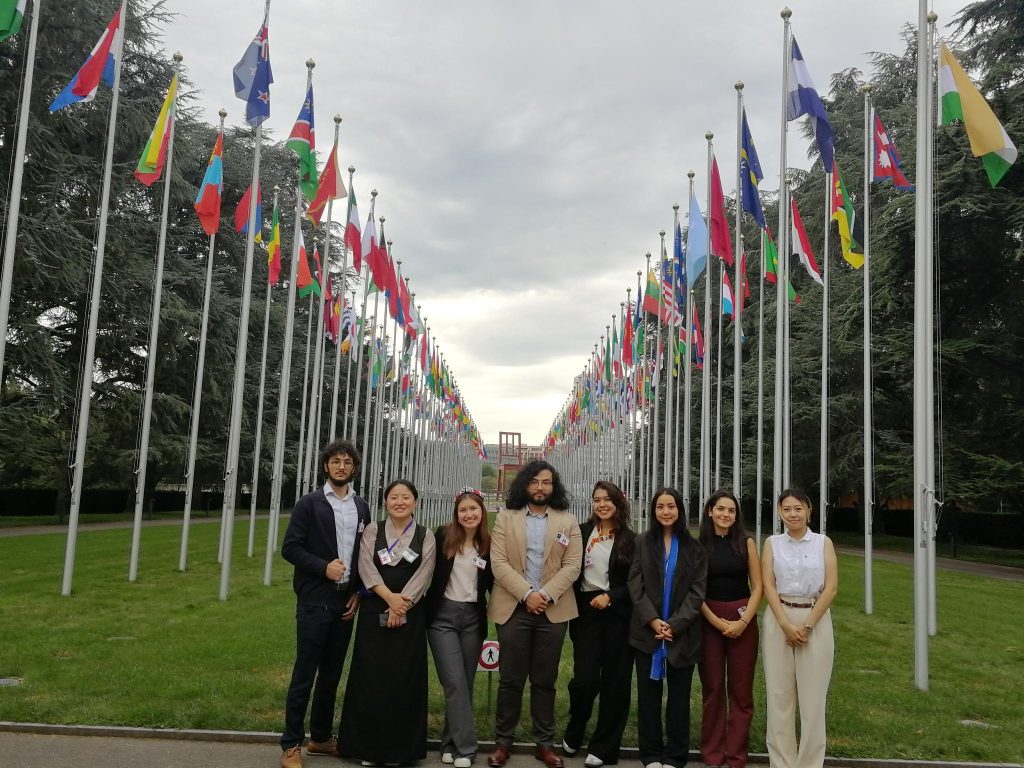
Eight activists working on Uyghur, Tibetan and Hong Kong rights across six countries, including Canada, Germany, India, the Netherlands, the United Kingdom and the United States, participated in the United Nations Advocacy Training (UNAT) program to learn and strategise together on ways to hold the Chinese government accountable for its human rights violations at the international level.
Why a training for youth diaspora activists?
Young activists play a critical role in diaspora movements to address and counter the Chinese government’s persecution of peoples from the Uyghur region, Tibet, and Hong Kong. When capacity building and support are available to them, they can meaningfully engage their host governments and international institutions, like the UN, to hold the Chinese government accountable for its ongoing abuses against their communities inside the People’s Republic of China, and acts of transnational repression outside Chinese borders. Unfortunately, youth diaspora activists don’t have many opportunities to convene and collaborate in those international spaces.
Working together as allies and partners, these groups can help increase the confidence in their efforts and improve impact and sustainability. Opportunities to network, train together, and work on joint advocacy efforts will help individual diaspora groups communicate and coordinate more effectively amongst themselves and with other relevant local and international groups to amplify and sustain pressure on the Chinese government for meaningful human rights change.
Aged between 19 and 28 years old, this was the first time that young activists from these communities came together in Geneva to work on cross-cutting community issues and build solidarity. Participants are engaged in rights advocacy through their work with established groups like the Hong Kong Democracy Council, Free Uyghur Now, and the Uyghur Human Rights Project or have founded impactful youth led organisations in their host countries, such as Students for a Free Tibet, Harvard College Students for Uyghur Solidarity, and Uyghur Youth Initiative. They are working toward better visibility and accountability towards violations outlined in the UN’s Xinjiang report published last August 2022, including the curtailment of free assembly and expression, mass surveillance, forced labour, and cultural and religious persecution.
During the interactive training programme, participants engaged with one another through peer check-in sessions, with human rights experts and advocates through live Q&As, discussions on the Human Rights Council, Special Procedures, Treaty Bodies and the Universal Periodic Review, and considered how to engage in advocacy activities at the UN in order to effect change for their communities.
The in-person training was designed to coincide with the 54th Session of the Human Rights Council so that the participants could attend the United Nations for the first time in their careers. As well as receiving additional advocacy training modules on all the UN human rights mechanisms from a range of experts, participants had the opportunity to build networks in Geneva and around the world, engage in meetings with UN member States and UN staff, and produce a powerful solidarity video statement which summarises their call to action to the UN States members.
All of the participants expressed they were satisfied with the training and increased their skills and networks to engage in advocacy at the UN. Freedom House and ISHR will continue to support these participants as they develop joint advocacy initiatives and build solidarity among their communities.
Participants in front of the flags of UN Member States, at UN Office, Geneva
Mary Lawlor, UN Special Rapporteur on Human Rights Defenders, shows on her LinkedIn page young human rights defenders who are the ones who will carry the human rights movement into the future, and to who we need to listen now.
👉 e.g. meet Zeinab, a young WHRD from #Kenya who took part in the 2023 Vienna Youth & Children HRD conference:
The ASEAN Human Rights Advocacy Academy is a 15-hour online capacity building workshop (spread into weekly sessions) for young activists and professionals in Southeast Asia on effective human rights advocacy in ASEAN.
Organised by FORUM-ASIA, the Academy will bring together the expertise of human rights practitioners and provide necessary tools to enhance participants’ knowledge on the role of ASEAN and its human rights mechanisms.
What will participants learn?
Human rights situation in ASEAN
ASEAN human rights framework
Best practices and case studies on human rights mechanisms
Advocacy strategy
Programme Duration: 2 to 30 September 2021, 2-5 PM every Thursday (GMT+7)
Platform: Zoom
Who can apply?
Southeast Asian and Timor Leste nationals in their junior and mid-level career (those with 2 to 5 years of relevant experience working in NGOs, Think Tanks, academic institutions, non-profit and social enterpreneurship collectives) and working in the fields of social justice, human rights, peace and conflict, and democracy in Southeast Asia (local, national, or regional level)
Those with two to five years experience in the above-mentioned fields;
Have prior knowledge and engagement with ASEAN and its human rights mechanism (can be in terms of activism, research, and other means of engagement);
Those who do not have prior knowledge and engagement with ASEAN (e.g. university students) will need to demonstrate how participating in the Academy will contribute to their work or associated organisations towards advancing human rights in the region;
Excellent command of English, both spoken and written.
All qualified individuals regardless of age, race, colour, sex, gender orientation, religion, national origin, disability, or veteran status are encouraged to apply.
How can you apply?
To register for the workshop, kindly fill up the necessary information and submit your CV (maximum 3 pages) through this link: https://bit.ly/ASEANHRAcademy



/bnn/media/media_files/7d7279a6fe08cbdd641cda8431af6038216be3c9c100f79beacc07763c194f26.jpg)


 Hans Thoolen on Human Rights Defenders and their awards