Posts Tagged ‘woman human rights defender’

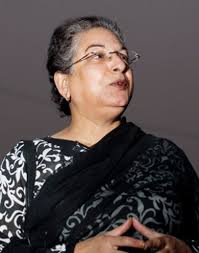
On 25 June 2016 Hina Jilani gives International Human Rights Lecture at the Mary Robinson Centre

June 6, 2016

Hina Jilani will speak on the subject of “Protecting Human Rights Defenders Worldwide.” Ms Jilani, from Lahore in Pakistan, is a lawyer, civil rights activist, and an advocate of the Supreme Court of Pakistan. She has been active in the movement for peace, human rights, and women’s rights in Pakistan for more than three decades and is internationally recognised for her expertise in critical human rights investigations. especially as the first UN rapporteur on Human Rights Defenders. The event will incorporate an interview with Ms Jilani and Mrs Robinson. The lecture is free of charge and open to the public. For more information or to reserve a seat visit www.maryrobinsoncentre.ie/events.

Hina Jilani 2014

Source: International Human Rights Lecture 2016 – The Mary Robinson Centre – Ireland’s first Presidential Library


More posts about Hina Jilani: https://thoolen.wordpress.com/tag/hina-jilani/


She won the 2000 Ginetta Sagan award and the 2008 American Bar Association Human Rights Award.

Profile of human rights defender Tuisina Ymania Brown, a Fa’afafine from Samoa

June 2, 2016

Samoa does not figure often in this blog. So, courtesy of the International Service for Human Rights (Monitor 2 May 2016), here is the profile of Tuisina Ymania Brown of the Samoa Fa’afafine Association which represents and promotes the rights of indigenous lesbian, gay, bisexual, transgender and intersex (LGBTI) people in Samoa.  Read the rest of this entry »

Profile of Pedan Marthe Coulibaly, human rights defender from Côte d’Ivoire

May 27, 2016

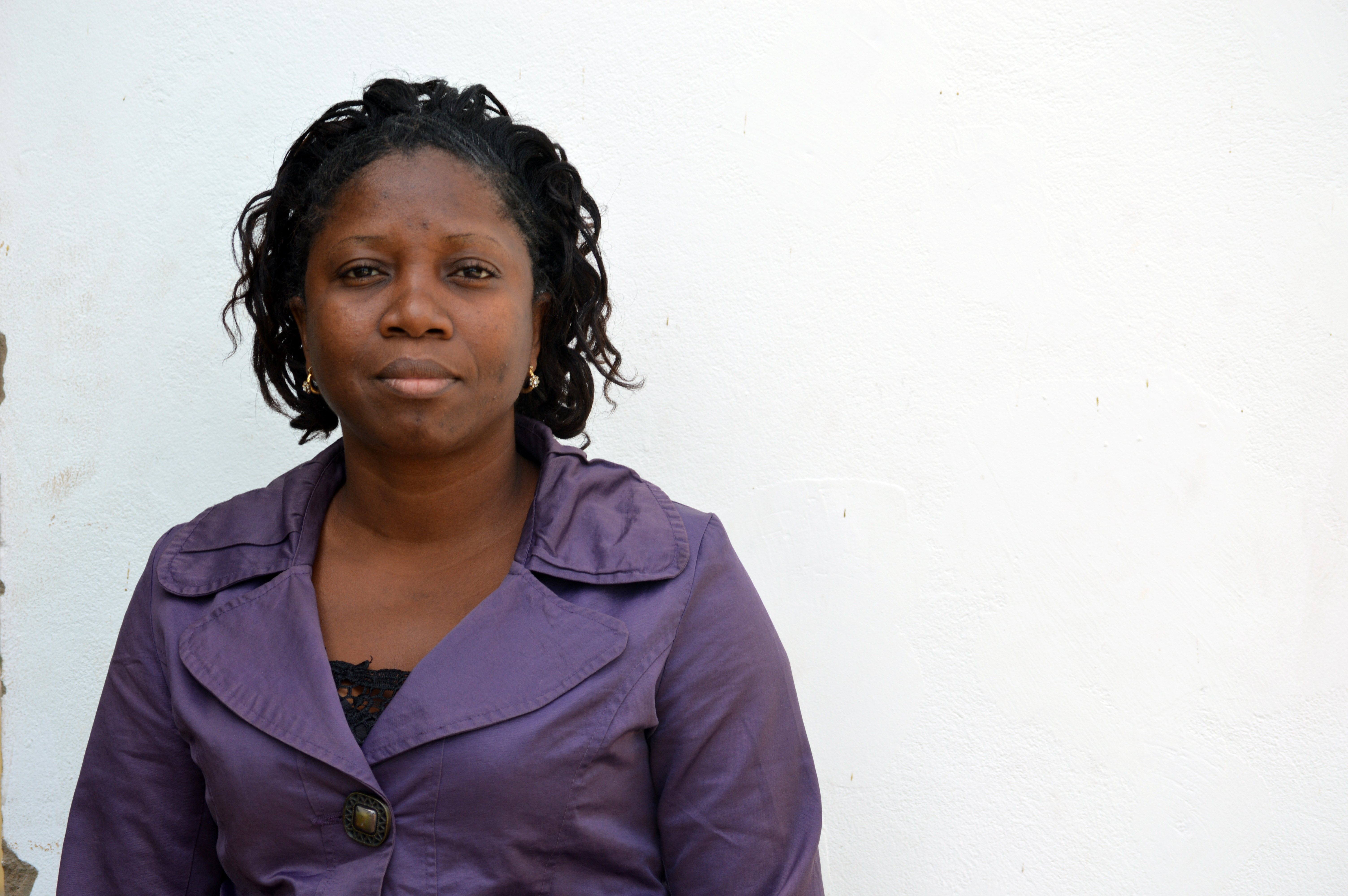
Pedan Marthe Coulibaly human rights defender Côte d'Ivoire.


Pedan Marthe Coulibaly, human rights defender from Côte d’Ivoire

Ms Pedan Marthe Coulibaly is the national coordinator of the “Coalition Ivoirienne des défenseurs des droits humains” (human rights defenders coalition from Côte d’Ivoire). She was part of the NGO delegation sent by ISHR to participate in the 58th session of the African Commission on Human and Peoples’ Rights. On 11 April 2016 ISHR published the following interview on her work

The Coalition Ivoirienne des Défenseurs des droits humains (CIDDH) was founded in 2004 and gathers together more than a dozen national civil society organisations. Its two main missions are to protect human rights defenders and to promote their rights. This work mostly involves raising awareness of and increasing the capacity of defenders to make use of human rights protection mechanisms. A founding member of the Centre féminin pour la démocratie et les droits humains (Women’s centre for democracy and human rights) in Côte d’Ivoire, Ms Coulibaly has been advocating for human rights in general, and women’s rights in particular, for over a decade. She started engaging on these issues immediately after graduating, when she realised that during the 2002 national crisis women were among the most exposed to human rights violations.

What does the coalition do?

The first activity of CIDDH is to ‘connect with the member organisations on a regular basis and seek information about the realities of their work’. The aim is to stay in tune with the challenges facing grassroots human rights defenders and, when needed, to identify ways of assisting them.

When informed about a difficulty facing a defender, the coalition carries out a risk analysis of the situation. If the risk is deemed high, the coalition can decide to alert partners, such as the West African human rights defenders network; send communications to the United Nations and African Commission Special Rapporteurs on human rights defenders; or collect resources among its network in order to ‘move the defender to a safe place’.  Sometimes, the coalition may also publish press releases for distribution at press conferences.

Who are the most exposed defenders in Côte d’Ivoire? 

Given her pivotal role within CIDDH, Ms Coulibaly has been able to identify some of the most at risk defenders in Côte d’Ivoire, who are typically those working on sensitive issues, such as extractive industries. 

‘When they go to the field, defenders working on extractive industries are often forced to hide their true identity and the name of their organisations. (…) They can be subject to intimidations or threats from industries, sometimes with the support of administrative authorities.’

Defenders who question certain cultural practices, such as female genital mutilation, are also often the targets of  hostile community reactions.

The role of the coalition in the development of the HRD law

CIDDH was at the frontline throughout the drafting and adoption process of the recent law on human rights defenders in Côte d’Ivoire. The coalition was first invited by the Ministry of Human Rights to participate in the validation session of the draft law. CIDDH then initiated an intensive advocacy campaign to ensure the recommendations and concerns they shared at the validation session had been taken into account.

CIDDH also intended to check if the parliamentarians targeted during the advocacy campaign had appropriated the recommendations as their own and shared them during the adoption process. One of the concerns exposed by the coalition was the need to include the notion of ‘threat’ in the list of dangers facing women human rights defenders. This concern was duly included in the adoption process. Regretfully, the coalition’s opposition to the obligation for human rights defenders to submit annual reports to the State fell on deaf ears.

The coalition subsequently attended, as an observer, the parliamentary session to adopt the law, where they were relieved to witness that most of the recommendations made by human rights defenders had been retained.

Following the adoption, CIDDH focused on training human rights defenders so they could get to know the content of the law and ‘make it theirs so as to promote their own rights’. The coalition intends to continue advocating for the adoption of an implementation decree for the law, as well as for an implementation mechanism to be put in place.  

More proactivity for better protection 

While recognising the crucial role of ‘emergency funds’ provided by partners such as Frontline Defenders when defenders’ rights are violated, Ms Coulibaly insists on the need for and the difficulty in achieving a more proactive approach.

 ‘We should not wait to see real dangers before starting to collect resources to protect defenders (…) If the coalition had permanent resources for a staff member dedicated to the protection of defenders, this would make the work of defenders a lot easier.’

Ms Coulibaly also calls for the international community to step in for the protection of human rights defenders. She stresses that ‘collaboration with the international community should go beyond exchange of information, communications or reports’ and take the form of ‘concrete measures’ to protect defenders.

Putting defenders at the heart of the African Year of Human Rights

With 2016 being declared the African Year of Human Rights by the African Union there is an opportunity to make an assessment of the situation of human rights defenders in Africa, says Ms Coulibaly. The progress made to date and remaining challenges should be identified. It is also essential that each country sets up strategies to implement laws protecting human rights and that these laws have a real effect on the ground.  

‘It is a real problem: protocols are being adopted, legal instruments are being adopted, but these documents have no impact on real life. No one can feel any change.’

Source: Defender profile : Pedan Marthe Coulibaly, woman human rights defender from Côte d’Ivoire | ISHR

Peter Gabriel and Susan Sarandon encourage UN Rapporteur on Extrajudicial Executions, Christof Heyns, in visit Honduras on 23 May

May 19, 2016
Berta Cáceres, an indigenous environmental human rights defender was killed two months ago. Berta was leading the fight against the Agua Zarca hydroelectric dam project that is an environmental and cultural threat to the Lenca community [see: https://thoolen.wordpress.com/tag/berta-caceres/]. The UN Special Rapporteur is visiting Honduras as from 23 May. One should hope that the NGOs pressure [https://thoolen.wordpress.com/2016/03/07/exceptional-response-from-ngo-world-on-killing-of-berta-caceres/] as well as the short video messages by Peter Gabriel and Susan Sarandon published on 12 May by Witness will help to get justice:


The Special Rapporteur on extrajudicial, summary or arbitrary executions, Christof Heyns, Read the rest of this entry »

Conversation with Yanar Mohammed on trafficking in Iraq

May 19, 2016

The Organization of Women’s Freedom in Iraq focuses on protecting women’s human rights, including fighting against trafficking of women and girls, and operates six safe houses for women survivors of violence. The Global Fund for Women interviewed its President, Yanar Mohammed who speaks about her work and the impact from the conflict with ISIS.

Yanar, you’ve been an activist and a defender of women’s rights in Iraq for over 13 years. What do you think are the main challenges women in Iraq are facing right now?
We focused in the last year on working against trafficking in women and girls and expanding a new network, the Network of Anti-Trafficking of Women in Iraq. We started the network in 2013, barely nine months before ISIS began gaining ground in Iraq. As ISIS grew, they started their attacks against women in the north of Iraq, including against the women of Yazidi faith. They trafficked them in broad daylight.

Trafficking in women and girls is now a tactic used by opposing groups in instances of sectarian violence in Iraq. Women and girls are looked upon as the representatives of a community’s honor, and so the sexual exploitation of women and girls belonging to a certain community is seen as the most effective way to humiliate and break it. Unfortunately, it is therefore not a surprise that the so-called Islamic State, ISIS, as a Sunni group, has targeted non-Sunni Muslim women and girls such as Shi’a Muslims, Christians, and Yazidis. Retaliations ensue and wars are led on women’s bodies.

When ISIS began to enslave women, we found that this was the time when we should rise to the occasion and highlight the issue of trafficking in society and the government. This is an issue that needs to be addressed by laws, practices, programs, and by some understanding from the society as to what it means that a woman gets compromised, gets exploited, and gets enslaved. So we set up this network, which is now about 40 NGOs working together on the issue. We began to talk about trafficking in women and girls, especially sexual exploitation, and address it as something that’s not only happening under ISIS but also happening in Iraq more broadly, without anybody daring to give it any importance.

Beyond ISIS, orphans and widows of war in Iraq who are extremely impoverished have fallen prey to sexual exploitation. They are being used and exploited and violated daily in Iraq, without anybody thinking of it as a human rights issue. So this is our focus; we have decided we will work on this until we get the government to pass laws that make the suffering of these women less, and also that open the way for us to protect the women from this kind of violence.

Is there any legislation right now against trafficking?
We demanded that the government pass a law for the financial support of Yazidi women when they step out of their enslavement. When they come back to areas of Iraq that are not under ISIS control, they should be compensated just like prisoners of war for the sufferings they went through. And we were so happy when it took only a few months and the Iraqi government decided to give monthly stipends for survivors in May 2015. That was the first success of the network. At the time nobody else had demanded this kind of support for ISIS survivors, so we felt that we were on the right track and that we should proceed to the rest of our demands that we needed in order to address violence against women.

What would you say is the level of public awareness around the issue of trafficking?
We have struggled a lot to make many words and terms debatable in our society—to remove the taboo. I will give you an example: in 2003 when we began to talk about honor killings and how it needs to stop, everybody was disgusted with us and saying that women’s groups should refrain from speaking about taboo and sexual issues, and that we do not address women’s rights in a way that they find acceptable. It took us almost 5 years to make discussion of honor killings a mainstream argument. Now when you go to Iraq, the issue of honor killing has become such a regular thing to talk about. There are so many NGOs that are standing against it, talking about it, are lobbying against it. Whenever we have an issue like this, we find ourselves the first ones on the front lines to address it until, it becomes a mainstream argument. Now as we talk about trafficking and discuss sexual exploitation of women and girls this issue is a very taboo and difficult issue to address.

How many women and girls in Iraq are at risk of being trafficked?
The dilemma of displacement in Iraq is huge because of ISIS. The number of displaced people is two million, going to three million. Most of these are women, because the men are either in the Iraqi army fighting ISIS or have been recruited into militias also heading to fight ISIS, or stuck in the cities defending them. It may be impossible to give the exact number, but we can estimate that out of the 1.5 million women who are displaced, half of them are between ages 16 and 30—the biggest age group at risk of trafficking. So I would say not less than 100,000 women are being trafficked at this point in Iraq.

So the political instability caused by ISIS is increasing the threat of trafficking for women and girls, even if ISIS is not doing the trafficking directly.
Yes. ISIS has created the most ugly reality of trafficking, where they defend it as a religious right. They say it is their right to enslave the “spoils of war” who are not of Muslim faith. They describe them as faithless and as less of human beings whose enslavement makes them better, makes them closer to Islam. ISIS has brought an example that has totally shocked the region and shocked it in a way as to taking us back to a time when people had no human rights, basically. And they are trying to make it a fact to force on the people of Iraq, Syria, and maybe other places if they are allowed to expand.

Can you tell me about the shelters that your group runs?
Our shelters are currently keeping safe women who survive trafficking. They are also getting educated; our shelters are not only a place for women to rest and be safe, they are also schools for social transformation for women to turn from victims into defenders of women. We only had one shelter until 2008; since then we have expanded to have six shelters all over the country. We also have a pipeline from the southern city of Busra, to direct violated women to our shelters in Baghdad. And we have many supporters in the network of the 40-plus NGOs, who are our eyes and ears in more than nine cities in Iraq and are guiding women who are in need of shelter to us. I like to put it in a very short story: our organization was able to spread its wings over most of the Iraqi cities in the last few years.

However, the Iraqi government is not facilitating our undertaking of women into our shelters. And it boils down to one point—we need a piece of legislation from the Iraqi government to provide legal status to shelters that are run by NGOs or other private sector groups. Although the government does not have a law that says that our shelters are illegal, they do have a law that allows the ministry of social affairs to determine if they should stay open. So some of the tribal and misogynist officials did tell us in the past that we are doing an illegal thing, but they did not shut us down.

So, although we are protecting women from trafficking and domestic violence and all that—although we are doing the duty of the government, the duty the government is not taking seriously and do not want to move on, and although they should be supporting us and applauding us for doing their job, in reality they confront us, telling us that our sheltering of women is promoting promiscuity, that it is encouraging women to go against their families and have full sexual freedoms and come stay in our shelters. So some governmental officials have intimidated us in the past, telling us we are doing something illegal, when we are protecting women.

What can the international community do to help Iraqi women be empowered and experience less violence?
We are asking the international community to ask the legal committee in the Iraqi parliament to legislate for the legal status of our shelters. Letters that are addressed to the Iraqi parliament—and specifically to the legal committee of the Iraqi parliament—asking them to legislate for the legal status of women’s shelters that are run by the NGOs. This would be a great help to us.

Would you say that action now is especially important to protect women? Is right now a critical moment?
Right now is a very critical moment because ISIS is at the point where it can be defeated. It has lost the social support of those among the Sunni groups in Western Iraq that were supporting it because people saw the atrocities that ISIS can commit against them. It is a very special moment in time to act against ISIS, but is the kind of action we are seeking a military one, where we have more US army in Iraq? No.

Our experiences of the last 13 years tell us that US intervention in Iraq never brought us anything good. It always has caused more deterioration. Now is the time to have a political intervention, and to ask the Iraqi government to stop its sectarian, politics that gave way to ISIS, as well as empower the Iraqi army so that they can regain the cities that were taken by ISIS.

What are some of the other forms of violence that women come up against in Iraq?
We have many kinds of violence we undergo, and we know what is making this kind of violence worse, which is Islamist extremist parties reaching power. Some of these parties have shown us a terrible example of what they want to bring to Iraq, including legislating for Jaafari law. This law allows the marriage of a 9-year-old girl to an adult man—in other words it legalizes pedophilia in Iraq. It also allows men to be polygamous, and allows for getting rid of wives if they are not sexually pleasant for husbands.

The amount of humiliating material in this law against women is incredible, and out of this era. It’s something that modern humanity cannot even bear to hear of. We must keep this legislation outside of parliament, because the law was not passed, but it is still waiting for us. The Islamist political parties are just waiting for some stability and for the moment when they feel stronger to bring back this legislation. And that would really be the end for Iraqi women.

Source: In Conversation: Yanar Mohammed on trafficking in Iraq – Global Fund for Women

Salvadoran human rights defender Angélica Miriam Quintanilla Hernández murdered

May 18, 2016

American Jewish World Service (AJWS) reported that on Friday, 6 May 2016, Salvadoran human rights defender, Angélica Miriam Quintanilla Hernández, was killed. Angélica, a sex worker activist, leader and AJWS grantee, was assassinated just two blocks from her office in El Salvador. Read the rest of this entry »

2016 Havel Prize of the Human Rights Foundation goes to Atena Farghadani, Petr Pavlensky, and Umida Akhmedova

May 5, 2016

The New-York based Human Rights Foundation announced on 5 May 2016 that the laureates of the 2016 Václav Havel International Prize for Creative Dissent are:

  • Iranian cartoonist Atena Farghadani,
  • Russian performance artist Petr Pavlensky, and
  • Uzbek photojournalist Umida Akhmedova.
2016 Havel Prize Awarded to Atena Farghadani, Petr Pavlensky, and Umida Akhmedova

Read the rest of this entry »

Berta Cáceres death may lead to reconsidering financing of Agua Zarca dam

March 16, 2016

The killing of Honduran human rights defender Berta Cáceres [http://wp.me/pQKto-20p] has resonated widely in the media and may (finally) lead to some real action in the world where the dam is being financed. Peter Bosshard, Interim Executive Director, International Rivers, wrote under the heading “Agua Zarca: A Stain on the Dutch and Finnish Human Rights Record” (15 March 2016) that the Dutch government announced that it will send an ambassador to Honduras “to express concern over the killing of human rights activist Berta Cáceres” and presumably assess the state of the Agua Zarca Project. In response to International Rivers’ online action, FMO (the financial arm of development aid) said that it would decide about continued involvement in the dam project on the basis of this visit. Finn fund says that speculation about an exit from Agua Zarca is “at the moment premature,” but the financier would probably follow if FMO pulled out of the project. 

Read the rest of this entry »

Remember: 2nd anniversary of the death of Cao Shunli

March 15, 2016

Yesterday, 14 March 2016 was the second anniversary of the death of Cao Shunli, a Chinese human rights defender who was detained and denied adequate medical treatment in police custody for five months, before dying in a military hospital in Beijing in 2014. This happened shortly after she was shortlisted for the Martin Ennals Award in that year. [see also https://thoolen.wordpress.com/2016/02/12/cao-shunli-a-profile-and-new-award-in-her-name/]. Has the situation improved…? Read the rest of this entry »

Exceptional response from NGO world on killing of Berta Cáceres

March 7, 2016

A group of over 50 international organizations has written to the President of Honduras to express their shock over the recent killing of Berta Cáceres [https://thoolen.wordpress.com/2016/03/03/berta-caceres-human-rights-defender-assassinated-today-in-honduras/], to demand an international investigation and the immediate protection of Gustavo Castro Soto, a Mexican activist, who witnessed her assassination. Here is the letter and signatories in full: Read the rest of this entry »