Andrea Ixchíu Hernandez is an indigenous rights defender working for several organisations in Guatemala. She talks – in English – to ISHR (International Service for Human Rights) about her work to build up community media so the voices of indigenous people are heard and the violations they face are publicly unveiled.
Cuban blogger Yoani Sánchez explains how technology is helping to break the information monopoly the Castro dictatorship has maintained for more than fifty years. In a country where purchasing internet access costs up to a third of the average salary, Sanchez says thumb-drives loaded with information are a vital tool of progress. Cuba is the last dictatorship in the Americas, but change is coming, and Sánchez is convinced that—aided by more information and education—the next revolution will lead to the democracy the Cuban people desire and deserve. This video is a bit older (Oslo Freedom Forum 2014) but still relevant.
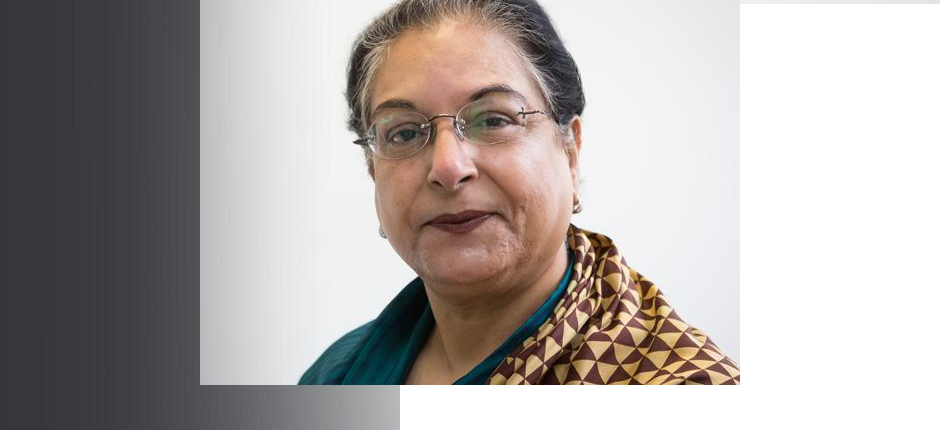
On 29 November 2016 OMCT announced thatHina Jilani, a prominent Pakistani human rights defender, is the newly elected President of the World Organisation Against Torture (OMCT).
Ms. Jilani was elected to a four-year term on Saturday 26 November at the organization’s General Assembly meeting held every four years. Addressing OMCT partners and members of its SOS-Torture network of more than 200 non-governmental organizations around the world, she said she would focus on boosting its cohesion to make its voice louder. “We can’t just condemn points of view; we have to convince people,” she said. “We have to show them that these values did not come out of nothing, that they are worth being preserved. We have to show that undermining these values is not in the best interest of humanity.”
Hina Jilani created Pakistan’s first all-women law firm and co-founded Pakistan’s first legal aid centre in 1986. In 1991 helped set up a shelter for women fleeing violence and abuse and presented one of the first cases of domestic violence in the country. Ms. Jilani was also one of the founders of the Human Rights Commission of Pakistan, an NGO promoting human rights in Pakistan. She also created Pakistan’s Women Action Forum, a prominent women’s rights group whose campaigns have been at the heart of the democracy movement in the country. Ms. Jilani has been a lawyer at the Supreme Court of Pakistan since 1992.
At the international level, she was the first United Nations Special Representative of the Secretary-General on the situation of Human Rights Defenders from 2000 to 2008. She was appointed in 2006 and 2009, respectively, to the UN International Fact-Finding Commissions on Darfur and on the Gaza Conflict.
Her expertise and lifelong dedication to human rights has earned her international recognition. In 2013, she joined The Elders, a group of statesmen, peace activists and human rights advocates, brought together by Nelson Mandela. In 2000 she was honoured with the Amnesty International Ginetta Sagan Award for Women’s Rights, just a year after she was awarded the Human Rights Award by the Lawyers Committee for Human Rights. In 2008 she received the human rights award of the American Bar Association.
She spoke after a two-day forum organized on the occasion of the 30th anniversary of OMCT and its SOS-Torture network, along with UN Human Rights Commissioner Zeid Ra’ad Al-Hussein, who shared concern that many countries were “returning to authoritarianism”, human rights defenders around the world were under “enormous pressure”, and that reprisals and arbitrary detentions were increasingly done under the pretext of fighting terrorist activities. The High Commissioner said he feared that declarations such as United States President-elect Donald Trump’s campaign declarations (condoning ill treatment such as “waterboarding”, for instance) might inspire other Governments to resume resorting to torture, hence exacerbating the practice around the world.
She also seemed undeterred by the consequent risks of wavering support of multilateral institutions, since the US election and the British “Brexit” vote triggered a wave of speculation as to a possible shift in funding priorities away from international aid, and since the withdrawal by several States such as South Africa, Burundi, Gambia and Russia from the International Criminal Court, triggered concerns over the deconstruction of a system built up to protect victims of serious human rights violations. “This is not an easy time for human rights defenders, but when has it been for us? We keep our determination despite all the challenges,” she told activists. “The global donors must understand that if there is hesitation in supporting these human rights defenders and their networks it will only reduce our outreach. But we did it before we had money. We have no reason to believe that this is a favour to any one organization or community.”
Ms. Jilani said that OMCT was one of the organizations best placed to uphold human rights and combat torture, adding: “It has the experience, the capacity, and the knowledge to take this challenge forward.”
I am using this little known country (Virgin Islands) to highlight a little-known programme: the Virgin Islands Consortium reports that Deputy Elections System Supervisor Genevieve Whitaker has been selected as a fellow for the 2016 Fellowship Programme for the People of African Descent of the UN.
Ms. Whitaker has been involved with human rights from an early age. She received her law degree from Stetson University College of Law, serving as a public service fellow and received the Public Service Recognition Award from Stetson’s Advocacy Board for her exemplary service locally and worldwide. She was instrumental in the establishment of Stetson’s Amnesty International Student chapter. She obtained certificates in human rights and humanitarian law during her legal studies at the University of Oxford School of Law and Santa Clara University Law School, respectively. There she joined Amnesty International USA, and United Nations Association of the USA. Ms. Whitaker is also a former board member of the DC-based Partners for Freedom & Democracy, a nonprofit organization for which she organized a human rights-based youth leadership development summit that took place in Abuja, Nigeria in 2008.
In 2009 she co-founded the Virgin Islands Youth Advocacy Coalition, Inc., a nonprofit established to promote the political and civic engagement of the young people of the Virgin Islands. Ms. Whitaker’s human rights work also includes service on the Board of the Caribbean Institute for a New Humanity, which housed the Virgin Islands Reparations Movement (ACRRA). Ms. Whitaker served as an international election observer with the Organization of American States for the February 25, 2016 Jamaican Parliamentary elections.
Ms. Whitaker says she plans on bringing back to the territory the knowledge she gains during her training to promote the important work of decolonization, by obtaining support among the key stakeholders who will be dedicated to the cause for the human right to self-determination, she says. The goal is centered on achieving the political, social, economic and cultural right advancement for people of African descent and all those negatively affected/impacted by the resultant human rights abuses tied to our colonial status, according to Ms. Whitaker.
The Diplomatic Courierof 9 November 2016 carries a long and serious interview with Hina Jilani, First UN Special Representative for Human Rights Defenders (2000-2008). In 2006, she was appointed to the UN International Fact-Finding Commission on Darfur, Sudan. In 2009, she served on the United Nations Fact Finding Mission on the Gaza Conflict. In 2013, she joined The Elders, a group of world leaders and human rights leaders, brought together by Nelson Mandela. A preeminent lawyer, Hina Jilani co-founded the first all women law firm in Pakistan and the National Human Rights Commission of Pakistan. Hina Jilani has been in the forefront of human rights in Pakistan beginning from Zia Ul-Haq’s dictatorship in the 1970s.
You served as the first mandate holder of the UN Secretary General’s Special Representative for Human Rights Defenders from 2000 to 2008 and shaped that seminal mandate. Please tell us some of the key aspects of that mandate?
HJ: Respect for human rights necessarily includes recognition of the legitimacy of the work of defenders. As a response to the deteriorating situation of human rights defenders, the United Nations adopted the Declaration on human rights defenders in 1998. On the one hand this was recognition of the dangers that human rights defenders confront and, on the other, a step taken by the international community to create norms for the protection of human rights activity. The Declaration makes it the primary responsibility of the State not only to guarantee the safety of human rights defenders, but also to ensure that conditions exist in which they can carry out their activities. The mandate to oversee the implementation of the Declaration was established by the UN Secretary General in 2000. The mandate required the SRSG seek, receive examine and respond to information on the situation of human rights defenders and to establish cooperation and conduct dialogue with Governments and other interested actors on the promotion and effective implementation of the Declaration as well as on improving the protection of human rights defenders.
In a world where there is rising violent extremism and heightened crackdown on human rights defenders, please share some key challengers of human rights defenders around the world?
HJ: Establishing promoting and sustaining democracy, maintaining international peace and security and providing or advancing a people oriented agenda for development cannot be accomplished without the contributions that human rights defenders make. Defenders bring to the fore information on the realities of situations to be addressed without which national and international efforts would be ineffective. They contribute to poverty alleviation, humanitarian assistance, post-conflict reconstruction, and to improving individual indicators of development such as access to health care and adult literacy, among many other activities. In situations of crises, defenders can monitor an overall situation, rapidly investigate allegations of possible violations and report their conclusions, providing a measure of accountability. They also provide the international community with some independent verification of what is actually happening within an emergency situation, informing the process of taking decisions on possible actions. This was not easily done. Human rights defenders have suffered harm and face grievous threats to their life, liberty, security, independence and credibility. State apparatus, oppressive laws and other tools of repression continue to be used against defenders in attempts to deter them from the valuable work they contribute to the promotion of human rights. Human rights defenders all over the world continue to be subjected to assassinations, disappearances, illegal arrest and detention, torture, harassment and even exile.
……Can you speak of Blasphemy laws that target minority Muslim populations in Pakistan? How did you face death threats and attacks on your family because of your struggles against Blasphemy laws and other human rights atrocities in an environment of impunity?
What are called “blasphemy laws” in Pakistan are provisions introduced in the Pakistan Penal Code by Zia’s regime, ostensibly to enforce respect for Islamic personalities and the Holy Quran. In reality this was a ploy to instill fear in the population. One particular provision disregards fundamental principles of criminal justice and makes mens rea irrelevant to a finding of guilt. It also prescribes a mandatory death sentence upon conviction. The law is not only flawed in legal aspects it has been used for malicious prosecution and has targeted religious minorities – not just non-Muslims, but also different minority sects of Muslims in Pakistan. Special laws were promulgated to restrict the freedom of religion of the Ahmediya community in Pakistan, that still remains a persecuted and threatened community in Pakistan. Any one raising their voice against this law is exposed to extreme violence at the hands of organized religious terrorists, who operate with impunity in Pakistan. The State has been both unwilling and unable to perform its duty to protect in cases where people are either threatened or have actually been harmed by these groups. Lawyers defending those who are accused of blasphemy, judges who have acquitted the accused persons and public figures who have pointed out the flaws in the law or the political and malicious use of the law have been killed. There is an apparent policy of silencing criticism through fear. There are, therefore, only a few voices that continue to be raised and these are people who remain extremely vulnerable to harm.
…….What is your advice to the new Secretary General of the United Nations?
HJ: The work of the United Nations for promoting peace and improving security of people living in different parts of the world can not be completed without due attention to the respect for human rights, the UN must ensure better coordination of its political and human rights policies and strategies. I would also strongly recommend that the UN Security Council and the UN Human Rights Council seriously consider making reference to the protection of human rights defenders and to the importance and legitimacy of their work in all their resolutions relating to the maintenance of peace and security. None such resolution so far mentions this very critical aspect of the protection and promotion of human rights…
The 2016 Human Rights Tulip has been awarded to the Pakistani internet activist Nighat Dadstated the Dutch Ministry of Foreign Affairs today, 6 November 2016.
Human Rights Tulip Photo: Aad Meijer/Newsroom BZ
The Human Rights Tulip is an annual prize awarded by the Minister of Foreign Affairs to human rights defenders who take an innovative approach to promoting human rights. The prize consists of a bronze sculpture (see picture above) and €100,000, which is intended to enable recipients to further develop their work. [for last year’s award: https://thoolen.wordpress.com/2015/12/12/2015-human-rights-tulip-awarded-to-ira-mauritania/]
‘Human rights defenders are modern-day heroes,’ said minister Bert Koenders ‘Despite the many threats she has received, Nighat Dad continues to fight to improve adherence to human rights in Pakistan in a unique and innovative way. Ms Dad is a pioneer who is working to remove everyday obstacles to internet access, especially those that affect women.’
Ms Dad is a staunch defender of digital rights and the importance of protecting women and girls and marginalised groups on social media. Mr Koenders hopes that this prize will serve as a gesture of support for the freedom of internet users, especially women. In 2012 Ms Dad founded the Digital Rights Foundation, which supports female internet users in the form of digital security training courses, public awareness campaigns and the newly created Cyber Harassment Helpline. Ms Dad’s approach enables her to reach women throughout Pakistan, including those in more remote areas of the country. She was awarded the Atlantic Council Digital Freedom Award 2016 and was among six ‘next generation leaders’ named by TIME Magazine last year.
Foreign minister Bert Koenders will present her with the prize on Saturday 10 December, Human Rights Day, in The Hague.
On 1 November 2016 the Reuter Thompson Foundation published an article on a woman human rights defender, Joan Carling, under the title “Malaria, murder and occupational hazards of indigenous activists in the Philippines“.
Joan Carling, a prominent indigenous rights defender from the Kankanaey tribe of the northern Philippines’ Cordillera region. Photo Reuters
A little over a decade ago, indigenous activist Joan Carling from the Philippines Cordillera region lost three colleagues in the space of a few years – all murdered in one of the world’s deadliest countries for land rights defenders. Then came her turn: a relative in the military told Carling’s father his daughter’s name was on the “order of battle”, the Philippines military’s list of people, including activists, who are deemed enemies of the state. “When you are on the order of battle, you are an open target for extrajudicial killings,” said 53-year-old Carling…She kept her head down, hired a bodyguard, then spent several months at a U.S. university having won a fellowship for frontline human rights defenders.
For decades, Carling has been at the forefront of the fight for land and the environment, which London watchdog Global Witness calls “a new battleground for human rights”, with communities worldwide locked in deadly struggles against governments, companies and criminal gangs exploiting land for products like timber, minerals and palm oil.
In 2015, more than three people a week were killed defending land, forests and rivers against industries, said Global Witness. Of the 185 murders it documented in 16 countries, the Philippines ranked among the most dangerous, with 33 deaths last year alone.
Carling, from the Kankanaey tribe of the northern region of Cordillera, grew up on a logging concession where her parents ran a shop. She got her first taste of protest in the mid-1980s while studying at the University of Philippines in Baguio. She spent two months in the Kalinga tribal areas protesting against four World Bank-funded dams along the Chico River, which activists said threatened to inundate 16 towns and villages and displace an estimated 85,000 people. The World Bank ended up withdrawing its funding for the Chico dams, which were never built, and the episode prompted the bank to develop its policy on indigenous peoples, she said.
In the early 1990s, Carling immersed herself in mountainous tribal villages in the Cordillera and worked with the Cordillera Peoples Alliance (CPA) fighting for land rights, until the day she fell sick and had to be hauled out on a stretcher. “…..After medical treatment, she went straight back to her duties, hanging her dextrose IV bag on the walls of a building in the town center, where she met indigenous people from remote areas who shared grievances about alleged land grabs.
After working with the CPA to help indigenous peoples at home, she moved on to a regional stage, and nearly eight years ago became head of the Asia Indigenous Peoples Pact (AIPP), based in Chiang Mai, Thailand. Through her work with AIPP, she has helped build a network among indigenous peoples from countries including Indonesia, Nepal, Taiwan and Japan – helping them to feel less isolated. She has turned her attention to the impacts of climate change and solutions such as hydropower, which often have a negative impact on indigenous communities.
Carling expressed concern about the “narrow conservation approach” of taking people out of the environment to protect the environment, instead of allowing indigenous peoples to protect the resources and watersheds on their ancestral land. “Indigenous people are actually the natural conservationists because it’s part of our being – to protect and conserve our natural environment because we need to pass it on to future generations,” Carling said. “That is the wisdom of the indigenous people – we only use what we need.”
Nadia Murad was one of thousands of Yazidi women and girls captured and enslaved by Islamic State in August 2014 – copyright EPA
Iraqi human rights defender Nadia Murad was awarded the Vaclav Havel Human Rights Prize by the Council of Europe (prize money 60,000 euro). She is a Yazidi woman who was tortured and raped by Islamic State (IS). The 23-year-old was bought and sold several times, and subjected to sexual and physical abuse at the hands of the jihadists.
Nadia Murad became the face of a campaign to free the Yazidi people and stop human trafficking after escaping IS in November 2014. Miss Murad, who was named a United Nations goodwill ambassador in September, called for the creation of an international court to judge crimes committed by IS extremists in her acceptance speech in Strasbourg. She went on to brand IS’s attack on the Yazidi a “genocide“, adding: “The free world is not reacting.”
Jury members of the Martin Ennals Award speak about Razan Zaitouneh, one of three Finalists for the Martin Ennals Award 2016 . Razan Zaitouneh is a prominent human rights lawyer, activist, and journalist in Syria. Razan has dedicated her life to defending political prisoners and documenting crimes against humanity, whether committed by the Government or rebel forces. This video was uploaded on 25 April 2016. The MEA ceremony will take place in Geneva on 11 October.