To illustrate how international days can influence actions by NGOs, here an example from Syria:
The International Day of the Victims of Enforced Disappearances (30 August) the Platform of Families of Missing and Enforcedly Disappeared Persons in North and East Syria organized a solidarity stand in Qamishlo.
The event took place today under the slogan, “Our doors are still open, waiting for their return,” in front of the office of the United Nations High Commissioner for Refugees (UNHCR) in Qamishlo, Jazira Canton, with participation from relatives of the missing, activists, and human rights defenders.
Participants carried banners with messages in Kurdish, Arabic, and English, including: “A mother is still waiting at the window,” “Absence is a weight heavier than iron,” “No peace and no future without knowing the fate of the missing,” “Knowing the fate is the beginning of holding perpetrators accountable,” and “Our voices will not be silenced; we will continue demanding our loved ones.”
Abbas Ali Mousa, coordinator of the Platform of Families of Missing Persons in North and East Syria, told ANHA agency that the number of families affiliated with the platform ranges between 600 and 700.
Mousa explained that the event was held in solidarity with victims of enforced disappearances and their families, reaffirming their legitimate right to know the fate of their loved ones and emphasizing the necessity of establishing truth and justice.
Ilham Ahmed, the mother of journalist Farhad Hamo, who has been missing by ISIS mercenaries for 11 years, said: “I know nothing about my son or his fate.”
Ahmed added: “Despite repeatedly appealing to human rights organizations and relevant bodies, we have received no response or clarification.” She called on human rights organizations and groups working with abductees to reveal the fate of her son and all missing persons.
Judi Aldalati is a Syrian journalist, a researcher and human rights defender. She told ISHR how seeing the early days of the Arab Spring led her to pursue the defence of human rights and shared her aspirations for the future of Syria amidst the uncertainty that has followed the collapse of the Assad regime.
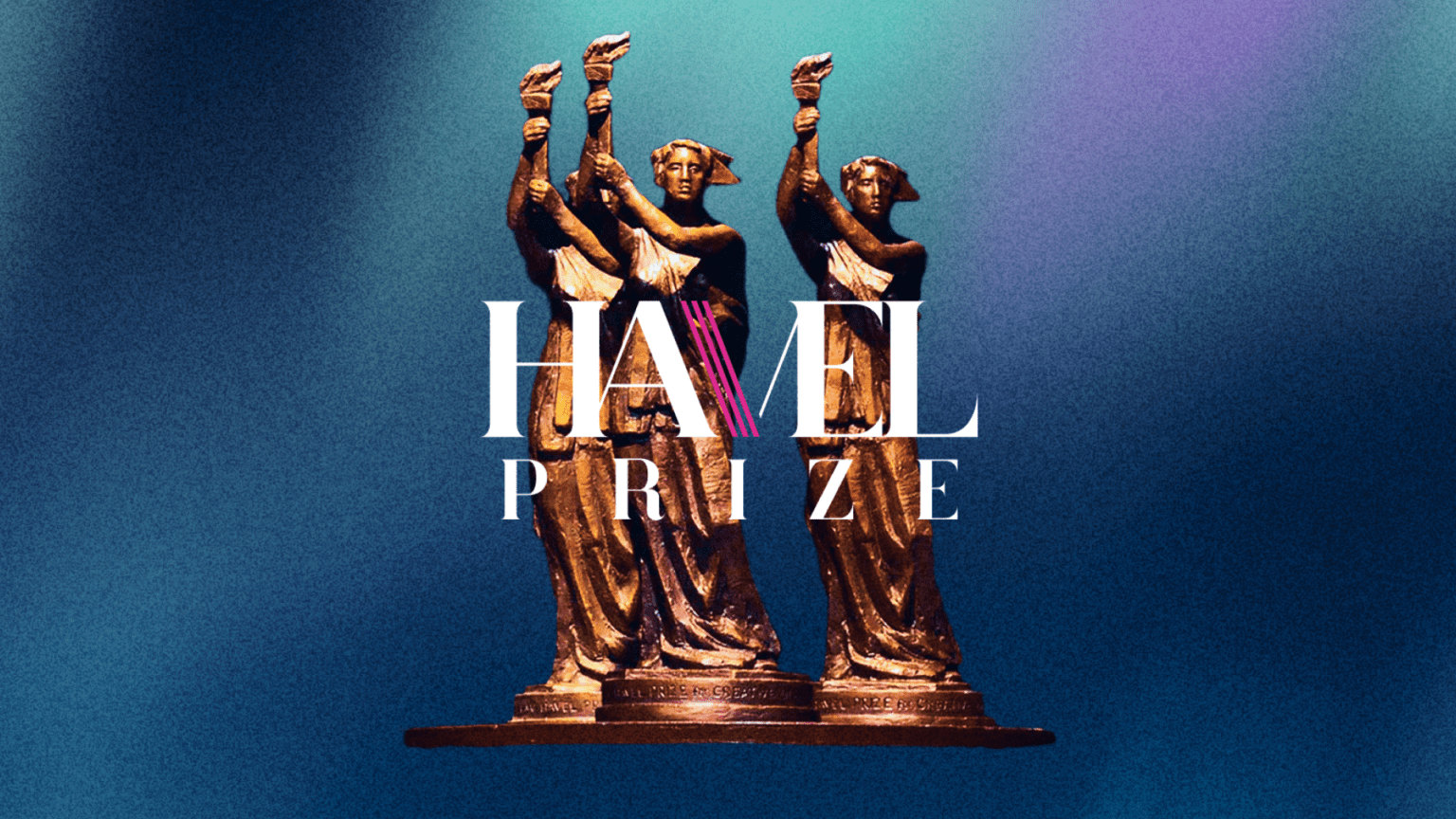
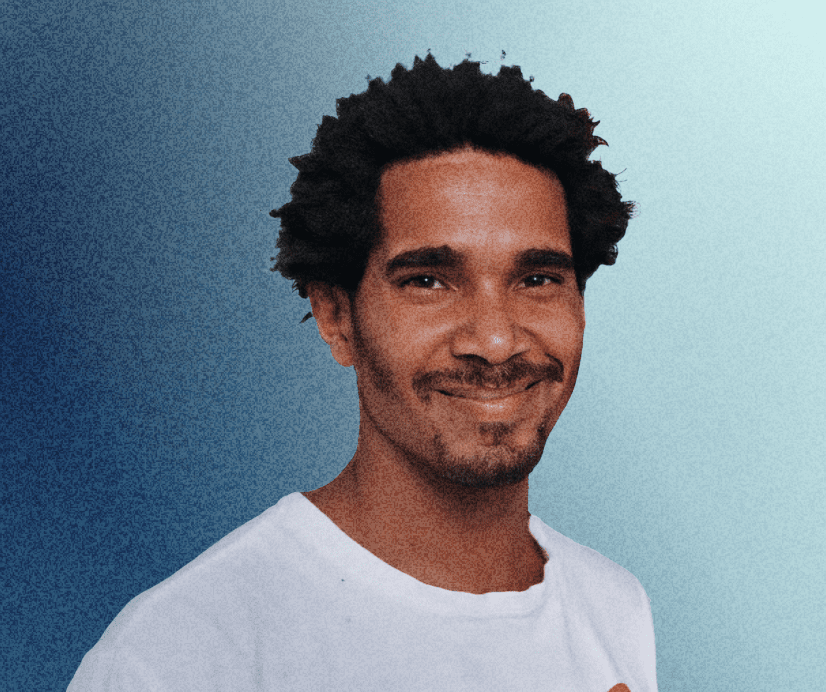
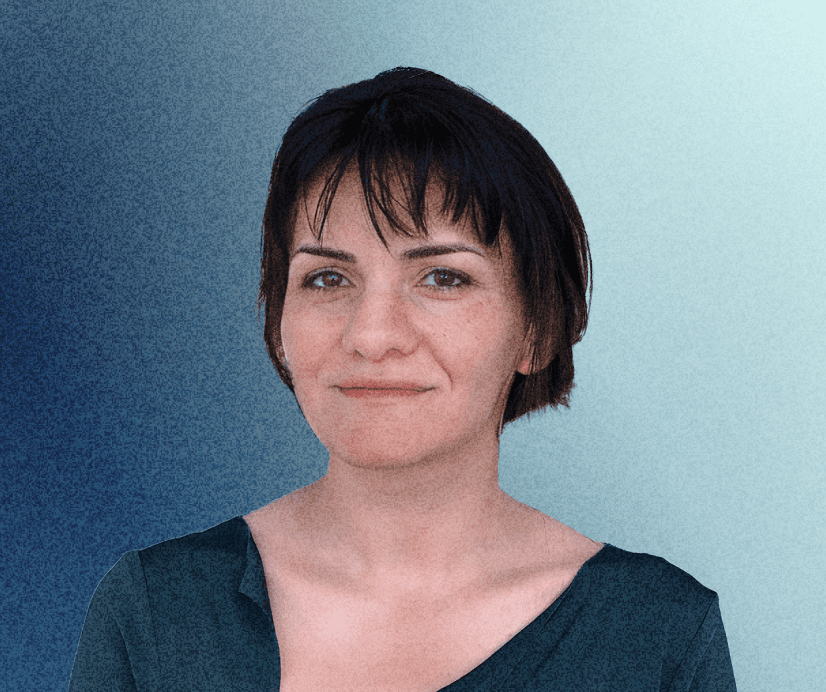
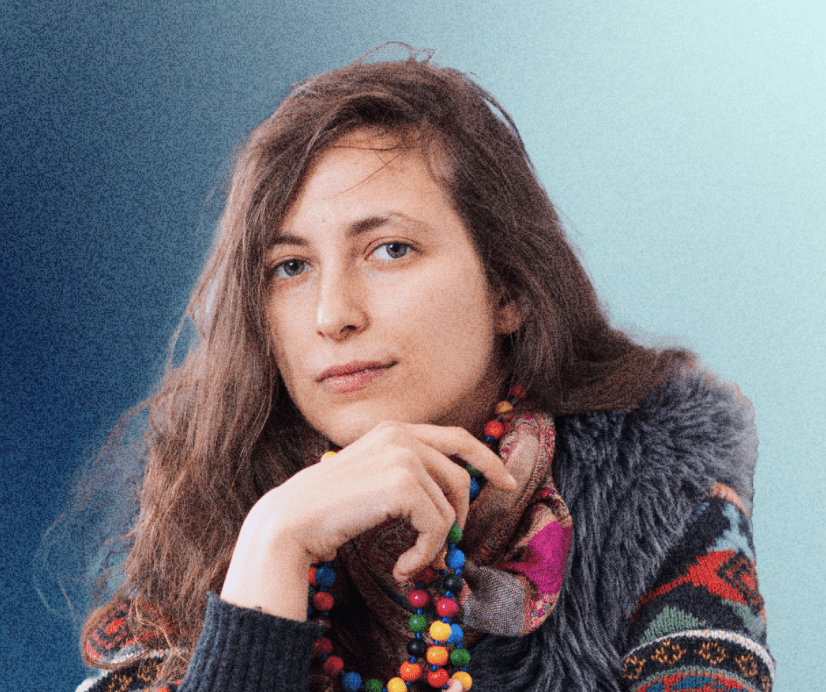
On 1 May 2025 the Human Rights Foundation announced the recipients of the 2025 Václav Havel International Prize for Creative Dissent: Cuban artist and pro-democracy activist Luis Manuel Otero Alcántara, Syrian activist and artist Azza Abo Rebieh, and Russian artist, poet, and musician Sasha Skochilenko.
He gained international attention for his performance art and peaceful protests, including hunger strikes and symbolic acts of resistance. He was arrested during Cuba’s historic 2021 protests and sentenced to five years in prison following a closed trial. In 2022, following a submission by HRF, the United Nations Working Group on Arbitrary Detention declared his imprisonment to be arbitrary and urged the Cuban regime to release him immediately. He is being held in Guanajay maximum-security prison.
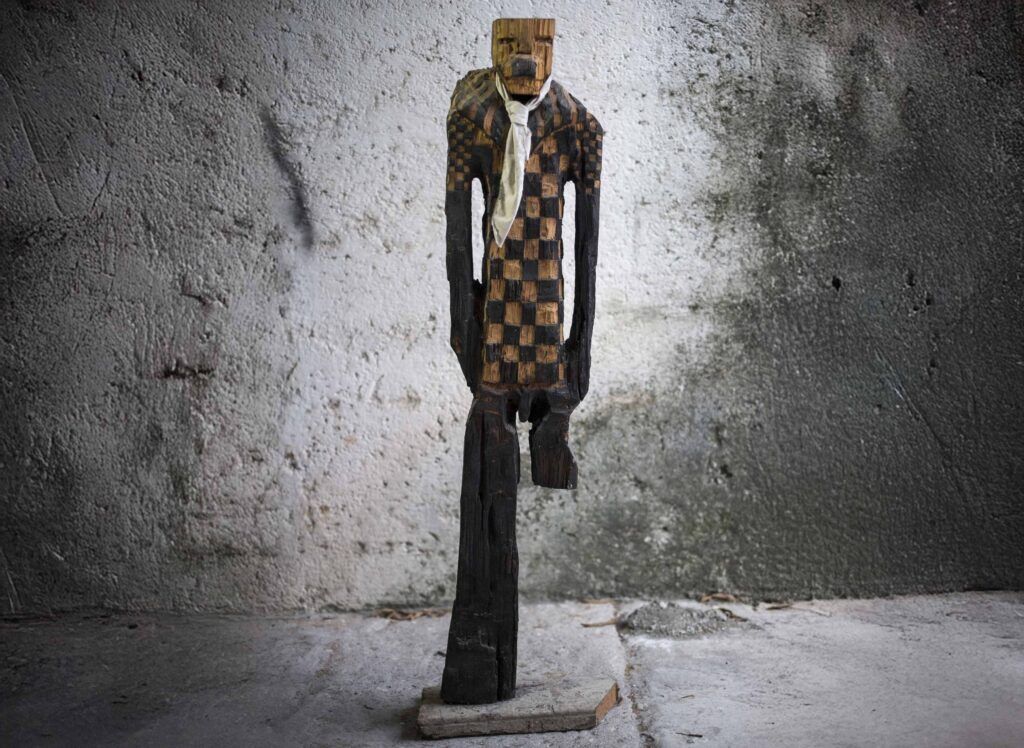
Luis Manuel Otero Alcántara, “Los Heroes no Pesan.” Courtesy of the artist.
AZZA ABO REBIEH
Azza Abo Rebieh is a Syrian artist born in Hama in 1980. During the Syrian revolution, she created graffiti, led workshops with women, and organized puppet theater for children in rural villages. In 2015, she was detained by the regime of Bashar al-Assad.
Art became her solace during her imprisonment in Adra prison, where she shared a cell with 30 women, many of whom were illiterate. Azza drew her cellmates, dignifying them through reminders and glimpses of themselves through sketches. Following her release, her prison drawings were exhibited at the Drawing Center in New York. Her work explores memory, resistance, and survival and is held in collections including the British Museum and Institut du Monde Arabe.
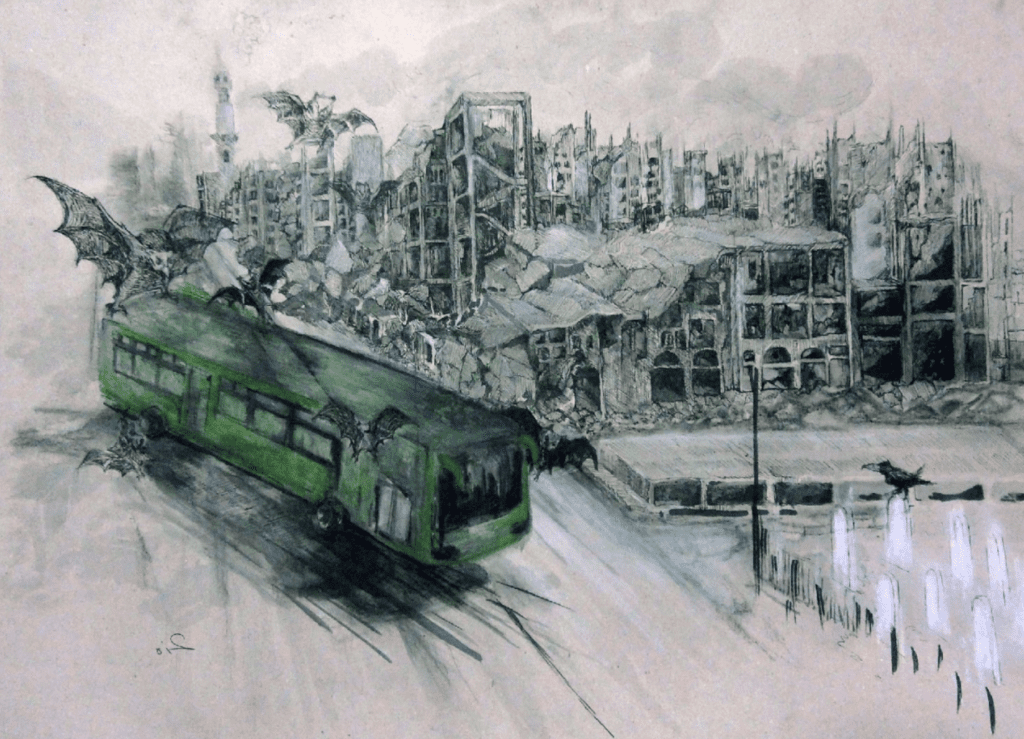
Azza Abo Rebieh, “Hindmosts.” Courtesy of the artist.
SASHA SKOCHILENKO
Sasha Skochilenko is a Russian artist, musician, poet, and former political prisoner. She was arrested in 2022 for distributing anti-war messages and sentenced in 2023 to seven years in prison under Russia’s so-called “fake news” law.
Skochilenko was released in 2024 as part of the Ankara prisoner exchange between the United States and Russia. She lives in Germany, where she continues her artistic work, participating in exhibitions in Paris, Amsterdam, and London to showcase the drawings she created in prison. Beyond activism, she’s the author of “Book About Depression,” which played a significant role in destigmatizing mental health issues in Russia.
Sasha Skochilenko replaced pricing labels with anti-war messages (seen here in English translation).
“Removing a dictator is not enough; real change requires a shift in governance, security, justice.”
Syrians gather in celebration days after the fall of Bashar Assad’s government at Umayyad Square in Damascus on Dec. 12, 2024. | Leo Correa/AP
On 19 May 2025 Bassam Alahmad, Noah Abbas, and Simav Hasan wrote in Global Citizen an interesting piece on how Syrian human rights defenders feel about the changes in their country:
In a previously published Global Citizen In My Own Words article, human rights defender Bassam Alahmad detailed his experiences of being a stateless citizen residing in Syria who stands for justice. In this article, following the fall of Al-Assad, Bassam Alahmad is joined by colleagues from Syrians For Truth and Justice, Simav Hasan, and Noah Abbas, as they share their reflections on what the regime change in the country means for them personally and for their hopes for a democratic Syria.
How would you describe your relationship with Syria and how has the decades-long conflict impacted you?
Bassam Alahmad: I think ‘complicated’ or ‘complex’ is the best way to describe my relationship with Syria. Being born stateless means having no rights, but we love our country because we were born there. We know the people and communities and we belong to the land but I didn’t feel as though I belonged politically. I didn’t feel as though I had full citizenship in the country. I like my country but unfortunately, the way in which the Kurdish people were treated for decades made it so we didn’t feel like we were equal parts of this country.
Noah Abbas: As a Kurdish Syrian national, the long-standing conflict in Syria has profoundly influenced both my personal and professional life. It has not only shaped my views on war and peace, but has also deepened my understanding of resilience and the value of community. Witnessing the enduring struggles of friends, family, and the broader Syrian community has motivated me to advocate for humanitarian causes and pursue solutions that aim to bring lasting peace to the region. The impact of this conflict extends into my academic pursuits as well; I am currently engaged in postgraduate studies in military intelligence and security.
This academic path was chosen with a clear purpose: to shift the perspective on the role of intelligence in Syria. Under Al-Assad’s governance, intelligence agencies were often viewed as instruments of fear, particularly against opponents of the regime. As a human rights activist, I believe it is our duty to transform this perception and demonstrate how intelligence can serve as a cornerstone for justice and societal safety. Joining the efforts of Syrians for Truth and Justice has been crucial in my journey.
Simav Hasan: I am a Kurd from Qamishli, and so my existence here has always been shaped by layers of oppression, resistance, and hope. The decades-long conflict has left scars on my community and on me personally. I’ve witnessed forced displacement, the suffering of victims, and the destruction of lives and history. But more than that, I’ve felt the weight of injustice firsthand — whether through the fight for accountability, the struggle for basic rights, or the ongoing humanitarian crises. Despite everything, I refuse to detach myself from this reality. My work as a journalist and human rights activist is my way of pushing back against the violence, ensuring that the voices of the victims are heard, and trying to carve out a future where justice isn’t just a distant dream. The war has taken much, but it has also strengthened my resolve. Even in the darkest moments, I believe in the power of truth, memory, and resistance.
………
In 2024 the Al-Assad government fell, how did this make you feel?
Alahmad: To be honest, while part of me is very happy that there is no longer the Assad regime, part of me also thinks that there is a big obstacle in the road to democracy, open civic society, and citizenship. As people working in human rights we must not be naive because we know the history and we know that there are human rights violations committed. The main issue is there is a huge gap betweenwhat they say to the west — to the EU, to the US, to the UN — and what they ultimately decide. For example, the national dialogue was kind of a missed opportunity, where instead of having a good version of national dialogue in Damascus and to be more inclusive, they excluded a huge part of Syria, including Kurds and other minorities.
It was a missed opportunity. The same is true with the constitutional declaration adopted in March 2025. They didn’t recognize the Kurdish people or the Kurdish language. They did not recognize diversity. Most of the authority was in the hands of the president. Our main problem is that Syria without the Assad regime is good, but there is no guarantee that we are going towards democracy. The recent Human Rights Watch report on the constitutional declaration clearly states that this constitutional declaration is not a road to a democratic country. This should be very clear for our partners in the US, the EU, and the international community. The most serious thing that happened in the coastal area in Latakia and Tartus is that hundreds of Alawite people were killed based on their identity, because they are from this minority group. A lot of violations happened by the groups linked to the government.
Abbas: The fall of the Al-Assad government, as welcomed by human rights organizations, provoked a complex mix of emotions within me. On one hand, I felt a profound sense of relief and happiness that the brutal regime, known for its relentless human rights violations and oppressive rule, had come to an end. The release of prisoners of conscience and the acknowledgment of the sacrifices made by countless human rights defenders brought a wave of hope for a future where justice and accountability could finally be addressed. However, as a Kurdish-Syrian national, this transition also brought with it significant fears and concerns. The potential for ethnic conflicts or even ethnic cleansing within the new power structures (such as the factions that committed violations in Efrin city, my home town, and other Kurdish cities across the country) was alarming, especially given the historical challenges faced by Kurdish communities in asserting their rights and safety within Syria.
Despite these fears, the fall of the regime marked a critical moment for Syria — an opportunity to rebuild and redefine the nation on the principles of freedom, justice, and human dignity. It was a moment to champion the efforts of Syrians for Truth and Justice and engage more actively in the civil society space dedicated to transitional justice and documenting human rights violations.
Hasan: With the fall of the Assad government, I felt a sense of cautious optimism. It marked the end of a regime responsible for decades of repression, war crimes, and mass atrocities — a moment many victims and survivors had long awaited. There was hope that this could be the beginning of rebuilding Syria on principles of justice, accountability, and human rights. However, I remained wary. The fall of a regime does not automatically guarantee freedom or stability. Power vacuums in Syria have often led to new forms of repression and external interference. Many armed actors still operate with impunity, and the path to true justice remains uncertain. While this moment was significant, real change depended on what came next. Would justice be pursued? Would the voices of victims and marginalized communities — especially Kurds and other oppressed groups — be heard? The fall of Assad was a turning point, but Syria’s future was still being written.
The 58th regular session of the UN Human Rights Council ran from February 24 to April 4, 2025, resulting in 32 Resolutions and 14 Universal Period Review adoptions.
The session included a high-level segment attended by over 100 dignitaries, thematic panels addressing the rights of specific vulnerable groups, interactive dialogues, and debates on country-specific reports. This session also marked key anniversaries of the Beijing Declaration and the Convention on the Elimination of All Forms of Racial Discrimination. The Human Rights Council plays a crucial role in addressing global violations and continues to serve as a platform for activists and victims of violations. In the face of multiple intersecting crises and conflicts, democracy erosion, and authoritarianism on the rise, Council decisions continue to wield considerable power to improve civil society conditions, particularly in fragile contexts where civic actors are particularly affected by widespread human rights violations and abuses, while offering unique opportunities for the negotiation of higher human rights standards.
I have on the past used other such reports by the ISHR and the UHRG (see below) but thought that this time I should highlight other NGOs:
CIVICUS contributed to the outcomes of the Council session through engagement on key Resolutions, delivery of statements, and organisation of events. We sounded the alarm on the global erosion of civic space and the growing repression of civil society across multiple regions.
Regional Developments: Africa
A strong Resolution on South Sudan was adopted, extending the mandate of the Commission on Human Rights in South Sudan (CHRSS).
Regional Developments: Asia Pacific
A Resolution on Myanmar’s human rights situation was adopted by consensus amid escalating violence and widespread impunity.
Regional Developments: Americas
The Resolution on Nicaragua renewed the mandate of the Group of Human Rights Experts (GHREN) on Nicaragua.
Regional Developments: Europe
Key resolutions were adopted on Ukraine and Belarus, continuing international monitoring mechanisms.
Regional Developments: Middle East
Resolutions on Iran and Syria were adopted, with mixed results on addressing severe human rights concerns.
Several important thematic resolutions were adopted during the session.
Civil Society Challenges
Ahead of the 58th session, CIVICUS raised attention on the increasing restrictions imposed on civil society. CIVICUS engaged in key side events during HRC58, spotlighting democracy, child human rights defenders, and intersectional approaches to civic space.
A detailed post-session report is available via this link.
The International Commission of Jurists (ICJ):
The International Commission of Jurists (ICJ), together with partner organizations, participated actively in the 58th session. Civil society’s critical engagement is essential in calling on the Council and its member States to respond to the plight of victims of human rights violations. In this regard, the ICJ was pleased to ensure that our partner from the African Albinism Network delivered our joint statement on the tenth anniversary of the mandate of the Independent Expert on the enjoyment of human rights by persons with Albinism. Maintaining effective access to the UN in Geneva for civil society is key to ensure that people can themselves participate or be represented in the discussions at the Council that concern them directly. With regard to this, the ICJ denounces all attempts to undermine civil society participation, including the intimidation of human rights defenders during side events, observed again at this HRC session.
At the outset, the ICJ welcomes the adoption of a number of important resolutions renewing, extending or creating mandates under the HRC purview, among which the following were adopted without a vote:
a resolution extending the mandate of the Independent International Commission of Inquiry on the Syrian Arab Republic for a period of one year;
a resolution establishing an open-ended intergovernmental working group for the elaboration of a legally-binding instrument on the promotion and protection of the human rights of older persons;
a resolution renewing the mandate of the Special Rapporteur on the promotion and protection of human rights and fundamental freedoms while countering terrorism for a period of three years;
a resolution renewing the mandate of the Special Rapporteur on the right to food for a period of three years;
a resolution extending the mandate of the Special Rapporteur on the situation of human rights in Myanmar for a period of one year;
a resolution renewing the presence of the Office of the High Commissioner in Seoul, for a period of two years with the same resources and extending the mandate of the Special Rapporteur on the situation of human rights in the Democratic People’s Republic of Korea(DPRK) for a period of one year.
While regretting the failure to adopt them by consensus, the ICJ also welcomes the adoption of other important resolutions by a majority of the votes:
a resolution extending the mandate of the Commission of Inquiry on Ukraine for a period of one year;
a resolution renewing the mandate of the Special Rapporteur on the situation of human rights in Belarus for a period of one year and extending the mandate of the Group of Independent Experts on the Situation of Human Rights in Belarus for a period of one year;
a resolution renewing the mandate of the Group of Human Rights Experts on Nicaragua for a period of two years;
a resolution extending the mandate of the Special Rapporteur on the situation of human rights in the Islamic Republic of Iran for a period of one year and deciding that the Independent International Fact-Finding Mission on the Islamic Republic of Iran should continue for one year with an updated mandate to address the recent and ongoing violations of human rights; and
a resolution extending the mandate of the independent human rights expert tasked with undertaking the monitoring of the human rights situation in Haiti, for a renewable period of one year.
This session discussed armed conflicts whose intensity had continued to increase, including in Gaza, Ukraine, the DRC and Myanmar.
……Unsurprisingly, the situation in the Occupied Palestinian Territory was one of the most-discussed throughout the 58th session. Many countries voiced strong support for the Palestinian people and their human rights, with many calling for a two-State solution based on Israel’s withdrawal to its pre-1967 borders and with East Jerusalem as Palestine’s capital. The ICJ commends the many States who intervened during the negotiations and adoption of the resolutions on the situation in the OPT to emphasize the need for accountability, and who voiced their support for the International Criminal Court and the International Court of Justice and their respective recent decisions on Israel/Palestine. The resolution adopted at this session titled “the human rights situation in the Occupied Palestinian Territory, including East Jerusalem, and the obligation to ensure accountability and justice” invited the General Assembly to consider establishing an ongoing international, impartial and independent mechanism to assist in the investigation and prosecution of persons responsible for the most serious crimes under international law committed by all parties in the Occupied Palestinian Territory, including East Jerusalem, and Israel since 2014.
Earlier in the year, on 7 February 2025, the Council had already held a special session to discuss the human rights situation in the east of the Democratic Republic of the Congo, where armed clashes between Congolese forces and the Rwanda-backed M23 movement had been ongoing, and had escalated since January 2025. The special session had resulted in the adoption of a resolution requesting the High Commissioner to urgently establish a fact-finding mission to report on events since January 2022. The resolution had also established an independent COI composed of three experts appointed by the HRC President to continue the work of the fact-finding mission. At the 58th session, the ICJ and many countries expressed grave concern about the human rights situation in the DRC, and during the Enhanced Interactive Dialogue with the High Commissioner and the Team of Experts at the end of the session many of the same themes and concerns heard during the special session were raised again.
Threats to Multilateralism
This 58th session took place in the context of increasing threats against multilateralism. In particular, this session started in the aftermath of the United States and Israel announcing that they would boycott the Council by not engaging with it. In addition, on 27 February – the day before the interactive dialogue with the Group of Human Rights Experts on Nicaragua, when the HRC was scheduled to discuss the serious human rights violations committed by the State apparatus, including executions, torture and arbitrary detentions – Nicaraguaannounced its decision to withdraw from the Council.
Accountability
The ICJ regrets the attempts by some countries at this session to undermine accountability mechanisms by presenting them as political tools purportedly interfering in the internal affairs of the States concerned and encroaching upon their sovereignty. The human rights organization recalls that such spurious arguments contradict the international human rights law obligations freely agreed upon and undertaken by States and disregard the fact that, as the 1993 Vienna Declaration states, “the promotion and protection of all human rights is a legitimate concern of the international community”.
With regards to the situation in Syria following the fall of the Assad regime, the need for accountability was high on the HRC’s agenda throughout the 58th session. ….In this regard, the ICJ particularly welcomes the adoption of the resolution on the situation in Syria, which encouraged the interim authorities to grant the COI necessary access throughout the country and to cooperate closely with the Commission. The ICJ also notes the authorities’ declared commitment to investigating the recent spate of violations and abuses, including through the newly established fact-finding committee to investigate the events in the west of the Syrian Arab Republic in March 2025. In this connection, the human rights organization called for investigations to be demonstrably independent, prompt, transparent and impartial…
As usual, a number of country situations were not on the agenda of the Council but would actually require much greater scrutiny. At the 58th session, the ICJ expressed particular concern on the situation in Tunisiaand Eswatiniamong others, where attacks on independent judges and lawyers are a key manifestation of deepening authoritarianism in these countries…
The impact of the liquidity crisis and the withdrawal of critical support was also discussed during informal negotiations on the resolution renewing the mandate of the Special Rapporteur on the promotion and protection of human rights and fundamental freedoms while countering terrorism. While in the end the resolution is short, there was much debate about specific phrasing concerning the resources provided to the mandate. The ICJ participated in the interactive dialogue with the Special Rapporteur, stressing the need for coordination and cooperation between civil society and regional systems to address counterterrorism laws that violate human rights and fundamental freedoms of civil society actors, highlighting in particular the situations in Venezuela and Eswatini. The ICJ reiterated the importance of the Special Rapporteur being adequately resourced in order to fully address these challenges.
On 23 April 2025 Front Line Defenders expressed its serious concern for Syrian woman human right defender Hiba Ezzideen Al-Hajji, as well as her family and the ‘Equity and Empowerment’ organisation, who are being targeted by a defamation campaign on Facebook which seeks to incite violence against them. The online campaign, initiated both by individuals known to support the new government and unknown users, has targeted Hiba Ezzideen Al-Hajii for a Facebook post she made on 20 April 2025, in which she advocated against forced marriages. This bombardment of defamatory messages has included calls for violence, including death threats, constituting a clear case of harassment.
Hiba Ezzideen Al-Hajji is a Syrian feminist and woman human rights defender. She is the CEO of the Equity and Empowerment organisation and the Chairperson of the Board of Directors in Shan network for peace building. Equity and Empowerment is a women-led organisation which works on gender equality, focusing on digital security, economic and political empowerment. [see also: https://humanrightsdefenders.blog/2023/08/10/syrian-woman-human-rights-defender-hiba-ezzideen-al-hajji-threatened/]
Since 20 April 2025, Hiba Ezzideen Al-Hajii’s Facebook account, through which she posted about women’s rights, has been used to start a defamation campaign and incite violence against her, as well as her family and the Equity and Empowerment organisation, both based in Idlib, Syria. The online campaign has led to Hiba Ezzideen Al-Hajii receiving numerous death threats on the social media platform, both through private messages and through a flood of posts on her own account, as well as on Equity and Empowerment’s page. The online mob, formed by unknown users, have urged followers to post defamatory content against her online and called for physical violence, inciting people to burn down the center of Equity and Empowerment in Idlib, with the objective of killing Hiba Ezzideen Al-Hajii and harming her family. They have distorted the meaning of an old video, in which she stated that it is unnecessary to use the veil in the centers of Equity and Empowerment where there are only women, to falsely accuse her of insulting the Hijab and Islam. The online mob have also attempted to distort her Facebook post in which she urged authorities to investigate cases of women’s abduction, in order to allow for accountability.
Several public figures have taken advantage of this defamation campaign in order to falsely accuse the woman rights defender of being an agent to Assad security branches, despite her clear stands against the Assad regime and extensive record of human rights activism against it. Subsequently, on 22 April, the police in Idlib closed down the center of Equity and Empowerment. Furthermore, the governor of Idlib announced via Facebook that he has requested the public prosecutor to file a lawsuit against Hiba Ezzideen Al-Hajii for insulting the hijab. The woman human rights defender has expressed a profound concern for her personal safety and well-being. She has reported fearing for her life, as well as the lives of her family and team at Equity and Empowerment.
Front Line Defenders condemns the defamation and online campaign seeking to incite violence, as well as subsequent acts of intimidation against woman human rights defender Hiba Ezzideen Al-Hajii, her family and her organisation Equity and Empowerment. Front Line Defenders believes that the defamation campaign and online harassment is directly related to Hiba Ezzideen Al-Hajji’s work in the defence of human rights, particularly her work towards the promotion of women’s rights in Syria.
Front Line Defenders also expresses concern with the recurrent use of Facebook as a tool to incite violence against woman human rights defenders in Syria. The organisation urges Meta to immediately take down all Facebook posts against woman human rights defender Hiba Ezzideen Al-Hajii and her organisation Equity and Empowerment, suspend any groups, pages and profiles used to defame her or organise attacks and incite violence against her and her organisation, while also storing data that is relevant for future investigations and accountability. Meta must fulfill their responsibility to protect human rights, in accordance with international human rights standards. They must take the necessary steps to guarantee the safety of human rights defenders online, ensuring their platforms do not contribute to violent and dangerous campaigns, or allow users to incite targeted violence against defenders, particularly woman human rights defenders, which puts their lives at serious risk. Front Line Defenders stands ready to assist Meta with identifying the defamatory and violent content in question and the accounts on which they are hosted or shared.
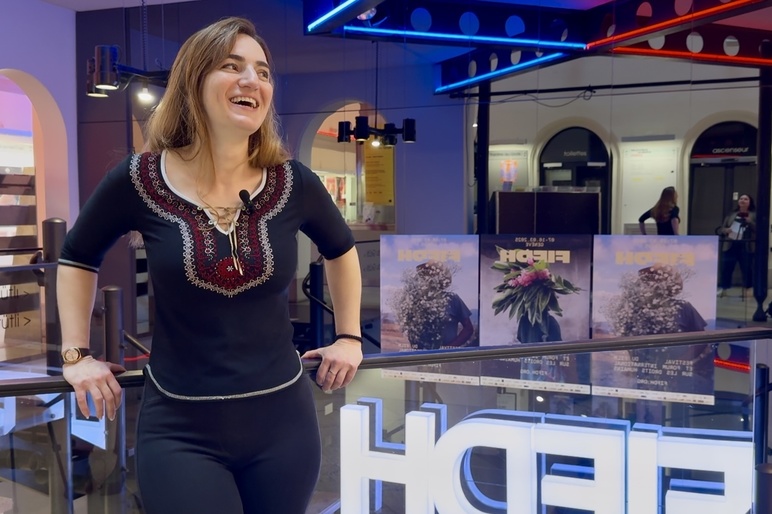
Born in Damascus, Syria, Lina is a filmmaker, journalist, and human rights defender, who in 2011 decided to pick up her camera and start filming, without a plan, but with the knowledge that she has a story to tell. What ensued are five years of conflict, arbitrary arrests, as well as torture and ill-treatment in detention, but also of hope that things would get better, despite a veto. Five Seasons of Revolution was recently screened at the International Film Festival and Forum on Human Rights in Geneva, in an event co-hosted by OMCT, partner of the festival. In this interview, Lina tells us more about her process and the challenges she encountered in the making of the film, as well as her hopes for the future of Syria.
What made you decide to start filming?
We started shooting in the summer of 2011, and a lot was already happening in Syria, but it was not clear how things were going to go. I was optimistic, thinking it would be over in six months, maybe a year, with a release within two years. It took 12 years.
It took more than five years of filming, and then many more to edit, because the country hadn’t stabilised, and the characters’ decision to participate in the film shifted with every new development, for their own safety. We had to go back, take characters out, then put them back in, and make amendments to the storyline. But it wasn’t all negative. During this time, deepfake technology improved and gave us a solution for the anonymity issue of some of the characters who chose to stay in Syria in a way that is safe and does not interfere with the visual narrative.
What was the most challenging part about the filming process?
Not knowing where it’s heading. As a filmmaker, you have, even in documentaries, a rough script, or an idea of where you are heading, but we couldn’t. It was like surfing, we just had to keep up with weird twists and turns. At some point, there were so many arrests in the group that I was filming, the characters just kept going in and out of jail, and at any given moment, we would lose one of them. I was arrested several times and the rest of the film crew had to come up with plan Bs for ‘what if we lose the director, who also happens to be the camera person and the sole contact to all the other characters, how do we finish the film?’ There was even one editing session that was held in my absence because I was detained, and they didn’t know when I would be released. It was really challenging.
What was the most challenging part about having to change your identity several times throughout filming?
It was very confusing, but it was also very necessary. In order to make it work, you have to internalise it to a certain extent, which was challenging. This confuses your relationships with the people you’re working with, with the people you’re socialising with, with the people that trust you, despite only knowing your fake name. Very strong bonds are formed under extremely difficult conditions and something always felt wrong about not being able to be fully honest with people. it also created these compartments of who I am because different parts of me had different names in different places… and they didn’t always get along. Walking out of it was also a challenge. Normalising being one person and only using one name, only answering to one name. It was quite a journey.
Towards the end of the documentary, you talk about your experience with your arrest. Did what you experienced in custody change your approach to the film, or your activism?
I did not encounter anything during my arrest that I did not previously know exists and happens. What was detrimental was the repetition of detentions because you know you might get away with it once, maybe twice, if you’re lucky three times. But when I was released for the third time, I realised I did not know anybody that survived a fourth arrest. I felt like a cat with seven lives and I was really running out of them. I think this affected not only my decision-making in the film, but decision-making in my life in general, which obviously had consequences.
What are three things you hope people remember after watching your film?
Number one is that simplistic reductionist scenarios of war into black and white, good and bad are never true. Number two is that nobody has a blueprint for what to do in these cases. People improvise, people try to find solutions on the spot under pressure, and these are not always ideal. But also, people can be much braver than they think, because at the end of the day we are survivors, all of us, and there is a lot more to us than we sometimes give ourselves credit for. And number three, friendship is really important.
You are a filmmaker, but also a human rights defender. What are your hopes now for Syria and its people?
I hope people will be able to recover. I hope people will be given a break, given a chance to process everything they went through, given a bit of time to find a way out of this gigantic mess. It will take generations to rebuild the country. I understand that people have endured so much for so long that they cannot take one more day of it, so there is understandably also a lot of emotions. I just hope that we have the ability to open our hearts a bit more, understand each other a bit more and that people will in return give us the chance to process everything….
“I’m the only girl of six siblings. And suddenly I lost five brothers between 2012 and 2014,” said Yasmine Al-Mashaan, a Syrian human rights defender and victim. “Before they were taken, they were around to love and protect me. I think it’s my duty to give them a little bit of their love and to fight for truth and justice for them and for everyone,” said Al-Mashaan, a former pharmaceutical assistant.
She spoke during an enhanced interactive dialogue on transitional justice at the 58th session of the Human Rights Council in Geneva, Switzerland, where UN Human Rights Chief Volker Türk presented a report on lessons learned and good practices related to transitional justice in the context of sustaining peace and sustainable development.
“In 2018, I co-founded, along with other families of forcibly disappeared persons, the Caesar Families Association, which brings together families who identified their loved ones among the victims in the photos smuggled out of Syria in 2013, known as the Caesar Photos,” Al-Mashaan said.
Her brother Oqba, one of her two disappeared brothers, was among the photos.
Türk emphasized that transitional justice tackles the demons of the past to build a better future.
“It grapples with difficult questions about truth and memory. It looks for justice, in all its complex and myriad forms,” he said. “And it helps to repair the institutional and social fabric of fractured societies. Above all, transitional justice is about victims, dignity and healing.”
According to the Office’s report, in the aftermath of a conflict or large-scale and serious human rights violations and abuses, States have an obligation to provide truth, justice, reparation and guarantees of non-repetition. The report showcases some 36 victim-centred, inclusive, and gender-responsive transitional justice efforts led by victim associations and grass-roots organizations from dozens of countries, from Colombia to Syria, and Chad to Timor Leste.
However, Türk said, the path to peace is never easy.
“Transitional justice is often held up and slowed down by political instrumentalization, discriminatory or selective design and focus, insufficient buy-in of affected populations, and weak State institutions,” he said.
Women and youth as a driving force
Türk said that civil society, including grass-roots organizations often led by women and youth, play a crucial role in overcoming these challenges.
Sofija Todorovic, Programme Director of Youth Initiative for Human Rights in Serbia, who also participated in the dialogue, believes the role of youth organizations in transitional justice is indispensable.
“These organizations ensure that the voices and perspectives of young people are integrated into the policies and strategies shaping their future,” she said. “In many cases, their mission extends to educating youth about the history that has been deliberately concealed from them.”
Todorovic’s determination was fuelled by the realization that her country had hidden the truth from her.
“My State and the institutions within my State didn’t give me the right to truth and to make informed conclusion about the past, but rather they forced only one side of the story of the past,” she said. “And I think that that it’s unfair.”
She emphasized the need to address intergenerational trauma in transitional justice efforts.
“Only people who have space to heal can be able to build functional democracy,” she said. “We need a political climate that will resolve the trauma, not exploit it.”
Both Todorovic and Al-Mashaan’s organizations exemplify the power of women’s leadership, resilience, and strategic action in advancing transitional justice despite significant obstacles.
Justice and peace
Leyner Palacios Asprilla, a Colombian human rights defender and former Truth Commission member currently leading the Unit for Victims of the Chocó Region, participated in the dialogue via video message. The situation in his region remains so critical that he couldn’t leave the victims he works with alone.
For Palacios Asprilla, UN Human Rights in Colombia has been instrumental in navigating the challenges of consolidating peace, protecting victims, and defending human rights.
“Today, the world cannot forget our country because we have not yet crossed the finish line or overcome the obstacles to reach a point of tranquillity,” he said. “Colombia is an example to the world in its commitment to consolidating peace. But the world must not forget that this task is not yet complete.”
Türk said that in this fragmented world, transitional justice is an essential and creative problem-solving approach. It must be grasped, nurtured and used to build durable peace.
Many countries, including Nepal, Syria, and Bangladesh, have enormous opportunity to move towards justice and peace, he said.
Key takeaways
In preparing the report, UN Human Rights organized consultations with 70 women and 70 men from more than 77 countries, including representatives of national entities implementing transitional justice measures, victims’ associations and civil society organizations, regional and international human rights protection systems, and transitional justice experts and practitioners.
The report identifies seven key lessons in advancing transitional justice:
Documenting human rights violations is essential for accountability and future justice.
Marginalized victims must be included, ensuring their experiences are recognized.
Victims’ associations play a crucial role in advocacy and justice efforts.
Immediate legal, medical, and psychological support helps victims navigate trauma.
International human rights mechanisms provide accountability when national justice fails.
Universal jurisdiction and international courts offer alternatives when domestic options are blocked.
Grassroots memory and memorialization preserve historical truth and prevent future atrocities.
If the world knew about the extent of the brutality of Assad’s regime against its own people, it was in part because of Mazen, an activist who was an outspoken critic of the regime. On Sunday 8 December 2024, his body was found in the notorious “slaughterhouse”, Seydnaya prison in Damascus. It bore signs of horrific torture. A doctor who examined it told the BBC he had fractures, burn marks and contusions all over his body, allegations corroborated by Mazen’s family.
“It’s impossible to count the wounds on his body. His face was smashed and his nose was broken,” his sister Lamyaa said.
A protester when the uprising in Syria began in 2011, Mazen Al-Hamada was arrested and tortured. Released in 2013, he was given asylum in the Netherlands. He began to speak openly about what he was subjected to in prison. In the documentary Syria’s Disappeared by Afshar Films, Mazen describes how he was raped, his genitals clamped, and how his ribs were broken by a guard jumping on his chest over and over again.
While in asylum, Mazen’s nephew Jad Al-Hamada says he began suffering from severe depression and other mental health issues. …In 2020, he decided to return to Syria.
“The government told him he had a deal and that he would be safe. He was also told that his family would be arrested and killed if he didn’t return,” Lamyaa said. He was arrested as soon as he arrived in the country. And his family believes he was killed after rebels took Hama last week, shortly before the regime fell.
Hamada was detained and tortured alongside tens of thousands of people after the 2011 uprising against Assad’s rule. “Mazen had endured torture so cruel, so unimaginable, that his retellings carried an almost otherworldly weight. When he spoke, it was as if he stared into the face of death itself, pleading with the angel of mortality for just a little more time,” wrote Hamada’s friend, the photographer and director Sakir Khader. He “became one of the most important witnesses against Assad’s regime”, he said.
The Syrian network for human rights (SNHR) recorded 15,102 deaths caused by torture in prisons run by the regime between March 2011 and July this year. It said 100,000 more people were missing and thought to be detained, and some might be found now that prison populations have been set free.
Fadel Abdulghany, the head of SNHR, which tracks people who have been “forcibly disappeared”, broke down on live television this week as he said that all 100,000 people had probably “died under torture” in prison.
Hamada was released in 2013 and granted asylum in the Netherlands in 2014, after which he began touring western capitals, bringing audiences to tears as he showed them his scars and described what he had endured at the hands of the Syrian authorities. Then, in a decision that terrified and confused his friends and rippled through the community of dissident exiles, Hamada disappeared in early 2020 after seemingly deciding to return to Syria.
That someone who had experienced the worst of Syria’s torture chambers would choose to return led many to believe he was enticed to do by elements of Assad’s regime to prevent him from speaking out.
Rebel forces said they found 40 corpses piled in the morgue at Sednaya showing signs of torture, with an image circulating online showing Hamada among them.
The discovery of his body indicated he was probably killed shortly before prison inmates were liberated by insurgents. Khader described his friend’s suffering as “the unimaginable agony of a man who had risen from the dead to fight again, only to be condemned to a slow death in the west”.
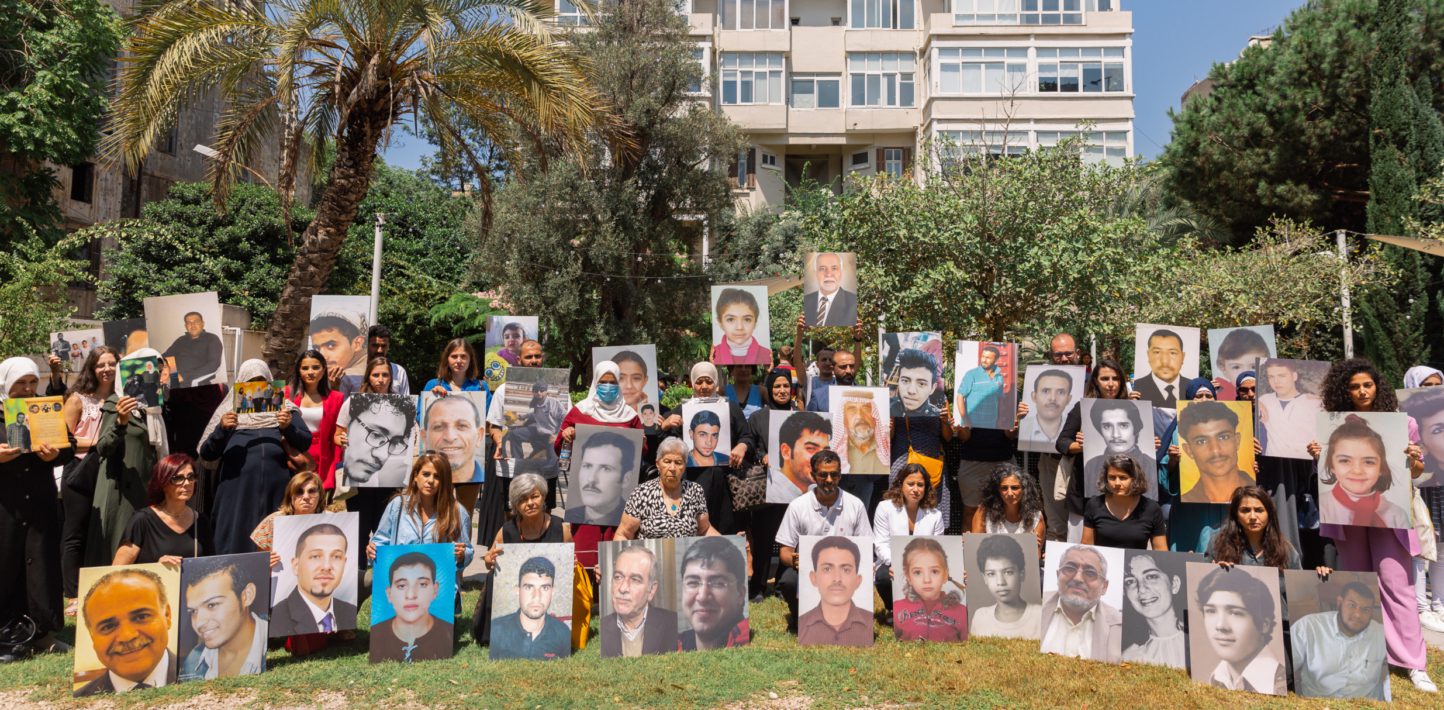
On 30 August 2023, Amnesty International reported on that Representatives of the families of people forcibly disappeared in Iraq, Lebanon, Syria and Yemen gathered in Beirut to demand that their governments uphold their rights to truth, justice and reparation, during an event organized by AI to mark the International Day of the Victims of Enforced Disappearances.
Across the Middle East, both state authorities and non-state actors, such as armed opposition groups, abduct and disappear people as a way to crush dissent, cement their power, and spread terror within societies, largely with impunity.
While most governments in the region have not yet investigated disappearances nor provided accurate numbers of those missing or disappeared, civil society organizations and UN bodies have published estimated numbers of people abducted and disappeared in each country. These numbers in Iraq, Lebanon, Syria and Yemen, when multiplied by a conservative estimate of the total years these individuals have been missing, suggest that families have spent more than a million years waiting for answers – an agonizing length of time.
“In the face of their governments’ apathy and complicity for the crime of enforced disappearances, the families of the disappeared across the Middle East have led the charge, year after year, in demanding their right to know what happened to their loved ones and to get justice and reparation – often at great personal risk,” said Aya Majzoub, Amnesty International’s Deputy Director for the Middle East and North Africa.
“Today we honour their perseverance and add our voice to theirs in calling for authorities to take real action to investigate these crimes, hold those suspected of criminal responsibility accountable and ensure these crimes are not committed again.”
Iraq
In Iraq, the UN estimates that between 250,000 to 1,000,000 individuals have been disappeared since 1968 – making it one of the countries with the highest number of disappearances in the world. Disappearances are still being carried out today at hands of militias affiliated with the government. Consecutive Iraqi governments have repeatedly failed to take meaningful steps to investigate disappearances or hold those suspected of criminal responsibility to account. Widad Shammari from Iraqi organization Al Haq Foundation for Human Rights, whose son has been missing since 2006, said: “I was a single protester until I met many others who shared my struggle, and we formed a strong coalition who fights for the truth for all the disappeared in the Arab region, not just Iraq.”
Lebanon
In Lebanon, the official estimate of those abducted or missing as a result of the 1975-1990 civil war is 17,415. Every year, on 13 April – the anniversary of the start of the Lebanese Civil War – the families of the missing and disappeared gather to mark the beginning of the conflict, repeating the mantra, “Let it be remembered, not repeated.”
The Lebanese authorities granted amnesty to the perpetrators of crimes that occurred during the civil war, but after years of campaigning, in 2018, the families of the disappeared successfully pressured the government to acknowledge the disappearances that took place. The government also passed a law that established the National Commission for the Missing and Forcibly Disappeared with a mandate to investigate individual cases, locate and exhume mass graves and enable a tracing process.
However, Wadad Halawani, whose husband was kidnapped in 1982 and who leads the Committee of the Kidnapped and Missing in Lebanon said: “Today, we raise our voice and shout out loud. The National Commission for the Missing and Forcibly Disappeared is 3 years old already. Only two years remain in its mandate. The Commission established a clear strategy for its work, but it cannot carry on without the needed financial and logistical support. The government must provide it with all the needed resources immediately.”
Syria
Since 2011, the Syrian authorities have forcibly disappeared tens of thousands of its actual or perceived opponents, including political activists, protestors, human rights defenders, journalists, lawyers, doctors, and humanitarian aid workers, as part of a widespread and systematic attack against the civilian population that amounts to crimes against humanity. Thousands have also gone missing after being detained by armed opposition groups and the so-called Islamic State. Given the Syrian government’s role in orchestrating the campaign of enforced disappearances, there has been total impunity for these crimes in Syria. The families have therefore resorted to international justice mechanisms.
In a momentous victory for the families, on 29 June 2023, the UN General Assembly voted to establish an international institution dedicated to shedding light on the fate and whereabouts of those missing and disappeared since the start of the armed conflict in Syria.
Fadwa Mahmoud from Families for Freedom, whose husband and son were disappeared in Syria in 2012 said: “We had big dreams in 2011. But we paid a very heavy price. My husband and son have been disappeared since September 2012… We faced our fears and raised our voice until it reached the United Nations …this [institution] is the product of our labour as the families of the detained…and this is its strength. We are demanding that we have an instrumental role in the institution.”
My husband and son have been disappeared since September 2012… We faced our fears and raised our voice until it reached the United Nations …this [institution] is the product of our labour as the families of the detained…and this is its strength.Fadwa Mahmoud from Families for Freedom, whose husband and son were disappeared in Syria in 2012
Yemen
In Yemen, human rights organizations have documented 1,547 cases of disappeared and missing people since 2015. All parties to the conflict, including the Huthi de facto authorities and the internationally recognized government forces, are still committing these crimes with impunity at a time when the world’s attention has turned away. Since the Human Rights Council voted in 2021 to end the mandate of the Group of Eminent Experts, following heavy lobbying from Saudi Arabia, efforts to hold all those suspected of criminal responsibility accountable in fair trials and realize victims’ rights to reparations have stalled.
The Abductees’ Mothers Association in Yemen said: “We were harassed and threatened and beaten-up during demonstrations, but we will not give up and we are determined at ensuring some progress every step of the way. We are not mothers of our own disappeared family members only; we consider ourselves mothers of every single disappeared person in the region and we will continue our fight for the truth for all of them.






 Hans Thoolen on Human Rights Defenders and their awards