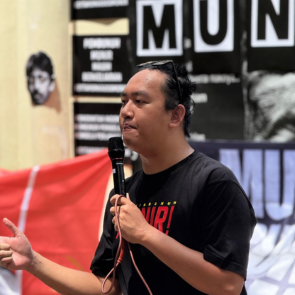
Front Line, Amnesty International, Forum Asia and several newspapers reported on this shocking event: On the evening of 12 March 2026, human rights defender Andrie Yunus became the victim of a targeted acid attack by two unidentified perpetrators in Central Jakarta. The human rights defender sustained severe chemical burns, including on his hands, face, chest, and eyes. The attack occurred immediately after Andrie Yunus participated in a podcast on ‘Remilitarism and Judicial Review in Indonesia’, a central topic of his human rights work. The human rights defender fell from his motorcycle, experiencing severe pain. He was immediately brought to the nearest hospital for emergency treatment. Medical examination confirmed burns on approximately 24% of his body.
Andrie Yunus is a human rights defender and the Deputy Coordinator for External Affairs of KontraS, the Commission for the Disappeared and Victims of Violence (Komisi untuk Orang Hilang dan Korban Tindak Kekerasan). Founded in 1998, it is one of Indonesia’s leading human rights organisations. KontraS monitors human rights situation in Indonesia and documents cases of enforced disappearances and state violence. Andrie Yunus was among the human rights defenders and activists who participated in the Fairmont Protest in March 2025. Since then, he has repeatedly been targeted with intimidation and harassment in connection with his human rights work. At the Fairmont Protest, Andrie Yunus was part of the efforts to oppose the revision of Indonesia’s Military Law (RUU TNI), which allows active-duty military officers to hold positions in 14 state institutions without needing to resign. The ratification of this law in March 2025 led to a significant expansion of the military into civilian and political affairs.
According to KontraS, none of Andrie Yunus’s belongings were stolen during or after the attack, indicating that robbery was not the motive. The organisation affirms that the attack was premeditated as the perpetrators selected the specific time and location immediately after Andrie Yunus’s public engagement on militarism in Indonesia. This attack has been the most severe incident in the series of intimidation attempts and violations against KontraS and its staff members. Since March 2025, KontraS’s office in Jakarta has been surveiled by unidentified persons and on multiple occasions in March and April 2025, army vehicles were observed stopping outside the office and photographing the premises.
Front Line Defenders strongly condemns the acid attack against human rights defender Andrie Yunus and asserts that it was a reprisal for his legitimate and peaceful work in the promotion and protection of human rights in Indonesia. Front Line Defenders is gravely concerned that this attack forms part of a broader and escalating pattern of intimidation targeting KontraS and other human rights defenders in the country.
Moreover: Unidentified assailants ambushed Veronika Lumban Tobing in Jakarta, beating her and warning her to halt activism on corruption and indigenous land rights. This violence directly ties to her exposés on elite-driven encroachments in North Sumatra, mirroring patterns where Human Rights advocates face retaliation for public interest work.
On 5 August 2025, human rights defender Enes Hocaoğulları was detained at the Ankara Esenboğa Airport, on his return to Türkiye due to an arrest warrant issued by an Istanbul court, in connection with ongoing investigations into a speech he made at the 48th session of the Congress of Local and Regional Authorities of the Council of Europe on 27 March 2025.
Enes Hocaoğulları is a youth and LGBTI+ rights defender based in Ankara, Türkiye. Since 2022, he works as the International Advocacy and Fundraising Coordinator at ÜniKuir Association, an LGBTI+ rights organisation in Türkiye. His focus is on diplomatic engagement, monitoring youth rights, reporting and advocacy. His climate activism during his high school years eventually evolved into a fight for human rights and democracy. In February 2025, he was selected as the youth delegate from Türkiye for the Congress of Local and Regional Authorities of the Council of Europe.
On 5 August 2025, human rights defender Enes Hocaoğulları was detained at the Ankara Esenboğa Airport, on his return to Türkiye due to an arrest warrant issued by an Istanbul court, in connection with ongoing investigations into a speech he made at the 48th session of the Congress of Local and Regional Authorities of the Council of Europe on 27 March 2025.
The judgeship ruled for the pre-trial detention of Enes Hocaoğulları, justifying the decision by stating that there is strong suspicion that the human rights defender might flee. This is despite the fact that he returned to Türkiye aware of the risk of arrest upon arrival. Following the pre-trial arrest decision, he was transferred to Sincan Prison in Ankara.
In February 2025, Enes Hocaoğulları was selected as the youth delegate of Türkiye for the Congress of Local and Regional Authorities of the Council of Europe. On 24-27 March 2025, the human rights defender attended the 48th session of the Congress, where he delivered several speeches, including on 27 March 2025, when he gave a speech detailing police violence imposed on protesters in Türkiye, including attacks with tear gas, rubber bullets and water cannons, and the strip search of detained students. He called on the international community to act against the human rights violations in Türkiye.
The speech, which was recorded and posted online, went viral on social media. This led to a smear and hate campaign against the youth and LGBTI+ rights defender, accusing him of being a traitor, foreign agent and a queer who wants to “spread LGBTI+ ideology”. Additionally, investigations were initiated by Ankara and Istanbul Chief Public Prosecutors’ Office under articles 216 (inciting public to hatred and hostility) and 217/A (defamation law) of the Turkish Penal Code respectively, which were later consolidated under Ankara prosecutor’s office. An additional investigation was initiated by the Kırşehir Prosecutor’s Office under article 301 of the Turkish Penal Code (insulting the Turkish nation, the Republic of Turkey, or the institutions and organs of the state).
Front Line Defenders believes that the human rights defender was solely arrested for his peaceful human rights work and for exercising his right to free expression to explain the human rights violations that he has personally witnessed. It is particularly worrying that he was targeted for a speech that he made at the Council of Europe, which Türkiye is a member of.
Kadar Abdi Ibrahim is a human rights defender and journalist from Djibouti. He has drawn inspiration from iconic figures in the human rights movement in the hopes of building a genuine and lasting democracy in his country.
Kadar Abdi Ibrahim has also been the subject of acts of reprisals by his government for his engagement with international bodies. In 2018, days after returning from Geneva where he carried out advocacy work ahead of Djibouti’s Universal Periodic Review, intelligence service agents raided his house and confiscated his passport.
On 14 February 2022 FIDH published a joint statement to support Sri Lankan human rights defender Ambika Satkunanathan:
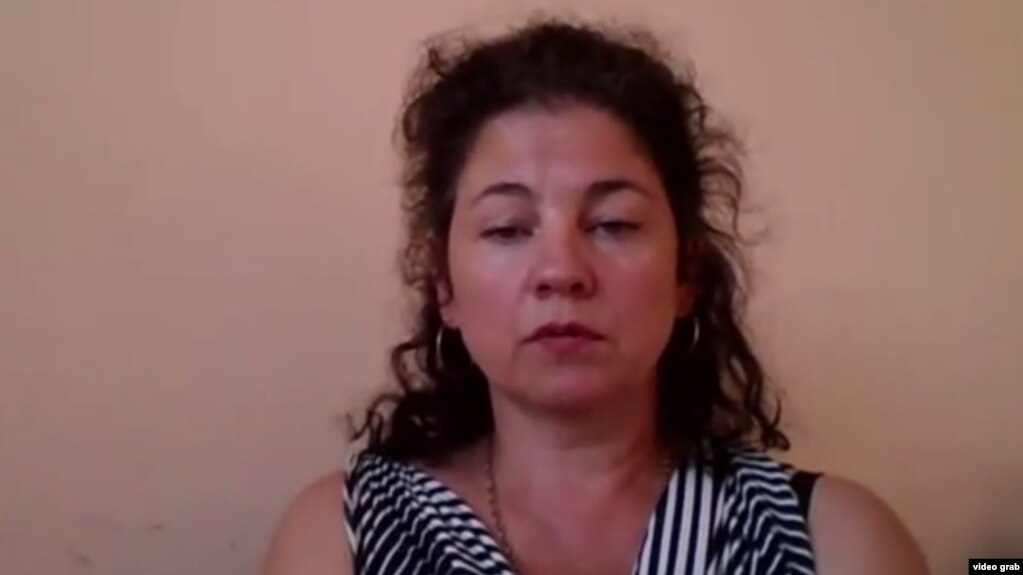
We the undersigned human rights organizations, express our deep concern about the statement issued by the Sri Lankan Foreign Ministry on February 4, 2022, in which the government denounced testimony given by Ambika Satkunanathan, a leading human rights lawyer, to the European Parliament on January 27. The government statement clearly constitutes an act of harassment and intimidation. We condemn the Sri Lankan government’s tactics to intimidate human rights defenders, and express our full solidarity with Ms. Satkunanathan, a well-known, respected and courageous human rights defender. Targeting her for providing accurate testimony about the human rights situation in Sri Lanka to the European Parliament is completely unacceptable, and sends a chilling message to all Sri Lankan civil society, especially those in the north and east, who are already operating under considerable duress under the current administration.
Sri Lanka’s international partners, including the European Union, should publicly condemn the Sri Lankan government’s statement and express solidarity with Ms. Satkunanathan, who has been targeted for her international engagement, and increase their efforts to engage with Sri Lankan civil society at large.
The Foreign Ministry’s statement contains numerous false claims in an attempt to disparage and delegitimize a distinguished human rights advocate, placing her at risk of physical danger in retribution for her brave work. The government’s claim that her testimony was “reminiscent of LTTE [Liberation Tigers of Tamil Eelam] propaganda that once stoked hatred among communities,” and that “such allegations need to be refuted in the interest of social harmony” Is particularly insidious and dangerous.
The government’s statement mirrors its repeated practice of falsely equating human rights defenders and human rights advocacy with those pursuing “terrorism.” The statement’s language aligns these baseless allegations with vague and frequently abused provisions under the Prevention of Terrorism Act (PTA), exposing Ms. Satkunanathan to a heightened risk of threats, attacks and persecution.
Ms. Satkunanathan was a commissioner of the National Human Rights Commission of Sri Lanka before that body’s independence was compromised under the current administration and led the first national study on Sri Lanka’s prisons. Prior to that, she was for many years a legal consultant to the Office of the United Nations High Commissioner for Human Rights. She is the author of an important recent report on abuses committed during the so-called “war on drugs.”
We are concerned that the government’s statement seeks to place the blame on human rights defenders if the European Union determines that Sri Lanka failed to meet its human rights commitments under GSP+, the preferential tariff system. The European Union should remind the Sri Lankan government that the responsibility to uphold its international human rights obligations rests with the government. The government’s treatment of human rights defenders reflects its lack of respect for international human rights law.
We support Ms. Satkunanathan’s testimony to the European Parliament, which accurately described a situation already reported by the United Nations and many domestic and international human rights organizations. The government’s response contains numerous false statements, including:
The government claims to be “engaged in long standing cooperation with the UN human rights mechanisms and the UN Human Rights Council.” On the contrary, in February 2020, soon after taking office, the government of President Gotabaya Rajapaksa withdrew Sri Lankan support from consensus resolutions of the council, repudiating commitments made by the previous government. Special Procedures mandate holders of the Council issued a statement on February 5, 2021, noting that their recommendations, including on torture, the independence of the judiciary, arbitrary detention, enforced disappearances, minority rights, counterterrorism, freedom of religion or belief, and freedom of assembly and association, had been ignored.
The government claims to be “strengthen[ing] rule of law, access to justice and accountability.” However, President Rajapaksa campaigned on a platform of protecting “war heroes” from prosecution, and has appointed individuals implicated in war crimes to senior government posts. His presidential commission on “political victimization” has sought to interfere in judicial proceedings and block trials and investigations in human rights cases implicating the president’s associates and the president himself. The president pardoned Sunil Ratnayake, one of very few members of the armed forces ever convicted of human rights violations, who murdered eight Tamil civilians including children.
The government denies that civic space is shrinking, as Ms. Satkunanathan described in her testimony. Yet under the current government, many human rights defenders have said that they are subjected to continual government intimidation, intrusive surveillance, and attempts to block their access to funds. In her most recent update to the Human Rights Council, High Commissioner Michelle Bachelet wrote that, “surveillance, intimidation and judicial harassment of human rights defenders, journalists and families of the disappeared has not only continued, but has broadened to a wider spectrum of students, academics, medical professionals and religious leaders critical of government policies.” The UN Special Rapporteur on contemporary forms of slavery in his end-of-mission statement last December documented government intimidation of civil society and a “shrinking civic space.”
The government claims there is no “concrete evidence of discrimination against minorities.” In fact, for nearly a year the government banned the burial of people said to have died with Covid-19, causing immense distress to the Muslim community without any medical justification in what is only but one example of discrimination against ethnic and religious minorities. Such burials are now permitted only at a single remote site. In January 2021 High Commissioner Bachelet found that, “Tamil and Muslim minorities are being increasingly marginalized and excluded in statements about the national vision and Government policy… Sri Lanka’s Muslim community is increasingly scapegoated.” The High Commissioner’s findings are in line with reports by Amnesty International, Human Rights Watch, and others that the Prevention of Terrorism Act is used almost exclusively against members of the Tamil and Muslim communities. The government continues to deny efforts to commemorate war victims belonging to the Tamil community.
The government denies Ms. Satkunanathan’s description of alleged extrajudicial killings committed in the context of Sri Lanka’s “war on drugs.” However, these abuses are widely documented. In September, High Commissioner Bachelet said, “I am deeply concerned about further deaths in police custody, and in the context of police encounters with alleged drug criminal gangs, as well as continuing reports of torture and ill-treatment by law enforcement officials.”
The Sri Lankan government’s statement attacking Ambika Satkunanathan for her testimony to the European Parliament’s Sub-Committee on Human Rights exemplifies threats faced by human rights defenders, particularly when they engage with foreign and international forums, and it further shows the government’s refusal to address the ongoing serious human rights violations taking place in the country. Instead of trying to silence those who seek to defend human rights, the government should give serious consideration to their input and contributions, and take urgent action to ensure that they can work in a safe environment without fear of reprisals.
“I think it’s because of my active role in nominating Professor Ilham Tohti for the Sakharov Prize,” Ilhan Kyuchyuk told RFE/RL when asked why he was among 10 European individuals blacklisted by Beijing on March 22.
China’s Foreign Ministry announced that Kyuchyuk was on its tit-for-tat blacklist list after coordinated Western sanctions were imposed against Chinese officials and companies over the abuse of the rights of the mainly Muslim ethnic-Uyghur community in the Xinjiang region.
In addition to Kyuchyuk, Beijing sanctioned four other members of the European Parliament – Reinhard Butikofer and Michael Gahler from Germany, Raphael Glucksmann from France, and Miriam Lexmann from Slovakia.
On 5 November 2020 the UN’s Committee on the Elimination of Discrimination against Women (CEDAW) expressed concern at the deteriorating health condition of detained Saudi women’s rights activist Loujain al-Hathloul.
“The committee is seriously concerned by recent information concerning the conditions of Ms. Al-Hathloul’s prolonged detention, including reports that she is not allowed regular contact with her family,” read the statement.
Her case was singled out in a call by the CEDAW to release all detained women human rights defenders ahead of International Women Human Rights Defenders Day to be observed on Nov. 29.
Al-Hathloul was involved in promoting women’s rights in her country, including campaigns to allow women to drive and end male guardianship laws. She met the CEDAW in Feb. 2018 to speak on the state of women’s rights in Saudi Arabia.
On May 15, 2018, she was arrested on the pretext of national security, which allows arbitrary arrest and detention. “In February 2020, the Kingdom of Saudi Arabia assured the committee that Ms. Al-Hathloul’s trial would take place in March 2020. However, it has been postponed several times since then,” said the CEDAW.
The committee said it “is alarmed” by the recent information concerning Al-Hathloul’s prolonged detention conditions, which have prompted her to start a hunger strike.
“Unlike other detainees, and contrary to UN Rules 26 and 42 that stipulates the treatment of women prisoners and non-custodial measures for women offenders, Ms. Al-Hathloul is neither allowed to have regular contact with her family nor to exercise activities, according to reports received,” CEDAW said.
Human rights defenders are entitled to “free and unhindered access” to communication without “fear or retribution”, CEDAW recalled. The Committee called these women “key partners in the dissemination, implementation and follow up of its recommendations”, and expressed concern over the situation of those facing reprisals in many parts of the world. MW
In the meantime Lewis Hamilton has been urged to speak out against Saudi Arabia’s “appalling” human rights record after it was announced that the country will stage its first Formula One race in 2021.
Trang, a 42-year-old former journalist-turned-activist, was arrested at her home in Ho Chi Minh City on Tuesday night, and charged with “conducting anti-state propaganda”, an offence that carries a jail term of long as 20 years, Defending the Defenders said in a statement.
So far this year, Vietnam has arrested at least 25 activists as well as 29 land petitioners, bringing the total number of prisoners of conscience to 258, the rights group added. Phil Robertson, Human Rights Watch’s Asia deputy director, said Vietnam was taking a “scorched-earth response” to political dissent.
“Despite suffering years of systemic government harassment, including severe physical attacks, Trang has remained faithful to her principles of peaceful advocacy for human rights and democracy,” Robertson said. “Her thoughtful approach to reforms and demands for people’s real participation in their governance are messages the Vietnam government should listen to and respect, not repress.”
Trang’s writing covers a wide range of issues including LGBTQ rights, women’s rights, the environment, and democratic activism. Most of her work is published clandestinely including the best-selling Politics for the Common People, which is akin to a guide for fledgeling activists.
She is also known for her on-the-ground activism, taking part in rallies in support of imprisoned dissidents, the environment and in response to China’s maritime claims in the South China Sea.
Trang has been on the radar of the security forces for more than 10 years and has been detained and harassed a number of times, including while she was on her way to a meeting with then-US President Barack Obama in 2016, and, a year later, after she met a European Union delegation on a fact-finding mission ahead of its annual human rights dialogue with Vietnam.
Her latest arrest came only a few hours after Vietnam had wrapped up its annual human rights dialogue with the US. The US State Department said in a statement that the virtual meeting lasted three hours and covered a range of rights issues including “continued progress and bilateral cooperation on the rule of law, freedom of expression and association, religious freedom and labor rights”.
On 27 November 2019 the Middle East Monitor reports that after 167 days of forcible disappearance housing researcher Ibrahim Ezz-Eldin has appeared in the Supreme State Security Prosecution. Ezz-Eldin was kidnapped by plain clothes police officers on 12 June this year near his home in Moqattam. When his family and lawyer enquired about his whereabouts authorities denied he was in custody.
Ezz-Eldin is a housing rights researcher for the Egyptian Commission for Rights and Freedoms (ECRF) NGO and worked on forced evictions in Egypt. He criticised how authorities managed slums and megaprojects, saying their investment into the new administrative capital would have been better spent on improving water sanitation and housing developments. His arrest followed a visit to Egypt by the UN Special Rapporteur on the right to housing, Leilani Farha, after which human rights defenders and lawyers who met with her were summoned for interrogation, receiving threatening phone calls or were forcibly evicted from their homes. See also: https://humanrightsdefenders.blog/2018/12/07/egypt-denounced-for-reprisals-against-human-rights-defenders-who-talked-to-visiting-un-delegation/.
“Egypt has failed to adhere to the assurances provided to me that no person would be harassed, intimidated or subjected to reprisal for meeting or providing information to me or my delegation in the context of my visit,” Farha said afterwards.
The authorities in the United Arab Emirates (UAE) should reveal the whereabouts of prominent human rights defender and citizen-journalist Ahmed Mansoor and release him immediately and unconditionally, an impressive group of over twenty human rights organisations said on 20 March 2018. This day marks one year since security forces arbitrarily arrested Mansoor, winner of the Martin Ennals Award for Human Rights Defenders in 2015, at his home in Ajman. The UAE authorities have continued to detain him in an unknown location, despite condemnation from UN human rights experts and independent human rights organisations.
The authorities have subjected Ahmed Mansoor to enforced disappearance since his wife last saw him in September 2017. They must reveal his whereabouts to his family and grant him regular access to them and to a lawyer of his choosing. Following his arrest on 20 March 2017, the authorities announced that he is facing speech-related charges that include using social media websites to “publish false information that harms national unity.” On 28 March 2017, a group of UN human rights experts called on the UAE government to release Mansoor immediately, describing his arrest as “a direct attack on the legitimate work of human rights defenders in the UAE.” They said that they feared his arrest “may constitute an act of reprisal for his engagement with UN human rights mechanisms, for the views he expressed on social media, including Twitter, as well as for being an active member of human rights organisations.” Since his arrest, Mansoor has not been allowed to make telephone calls to his family and has been allowed only two short visits with his wife, on 3 April and 17 September 2017, both under strict supervision. He was brought from an unknown place of detention to the State Security Prosecutor’s office in Abu Dhabi for both visits. The authorities have refused to inform his family about his place of detention and have ignored their requests for further visits.
In February 2018, a group of international human rights organisations commissioned two lawyers from Ireland to travel to Abu Dhabi to seek access to Mansoor. The UAE authorities gave the lawyers conflicting information about Mansoor’s whereabouts. The Interior Ministry, the official body responsible for prisons and prisoners, denied any knowledge of his whereabouts and referred the lawyers to the police. The police also said they had no information about his whereabouts. The lawyers also visited Al-Wathba Prison in Abu Dhabi following statements made by the authorities after Mansoor’s arrest, which suggested that he was held being held there. However, the prison authorities told the lawyers there was nobody matching Mansoor’s description in the prison. Instead of protecting Mansoor, the authorities have detained him for a year with hardly any access to his family and no access to a lawyer of his choosing. Their contempt for human rights defenders and brazen disregard for their obligations under international human rights law is truly shocking. [https://humanrightsdefenders.blog/2018/02/27/somewhere-in-a-prison-in-the-emirates-is-ahmed-mansoor-but-authorities-claim-not-to-know-where/]
Mansoor is a member of GCHR’s Advisory Board and a member of the advisory committee of Human Rights Watch’s Middle East and North Africa Division.
Signed:
Americans for Democracy and Human Rights in Bahrain
Amnesty International
Arabic Network for Human Rights Information (ANHRI)
ARTICLE 19
CIVICUS
Committee for the Respect of Freedoms and Human Rights in Tunisia
English PEN
Freedom Now, Morocco
Front Line Defenders
Gulf Centre for Human Rights (GCHR)
Human Rights First
Human Rights Watch
International Commission of Jurists (ICJ)
International Federation for Human Rights (FIDH), under the Observatory for the Protection of Human Rights Defenders
International Service for Human Rights (ISHR)
Maharat Foundation
Martin Ennals Foundation
Moroccan Association for Human Rights
PEN International
Reporters Without Borders
Scholars at Risk
Tunisian Association for Academic Freedoms
Tunis Center for Press Freedom
Tunisian Forum for Economic and Social Rights
Tunisian League for Human Rights (LTDH)
Tunisian Organisation against Torture
Vigilance for Democracy and the Civic State
World Organisation Against Torture (OMCT), under the Observatory for the Protection of Human Rights Defenders


 The government claims to be “engaged in long standing cooperation with the UN human rights mechanisms and the UN Human Rights Council.” On the contrary, in February 2020, soon after taking office, the government of President Gotabaya Rajapaksa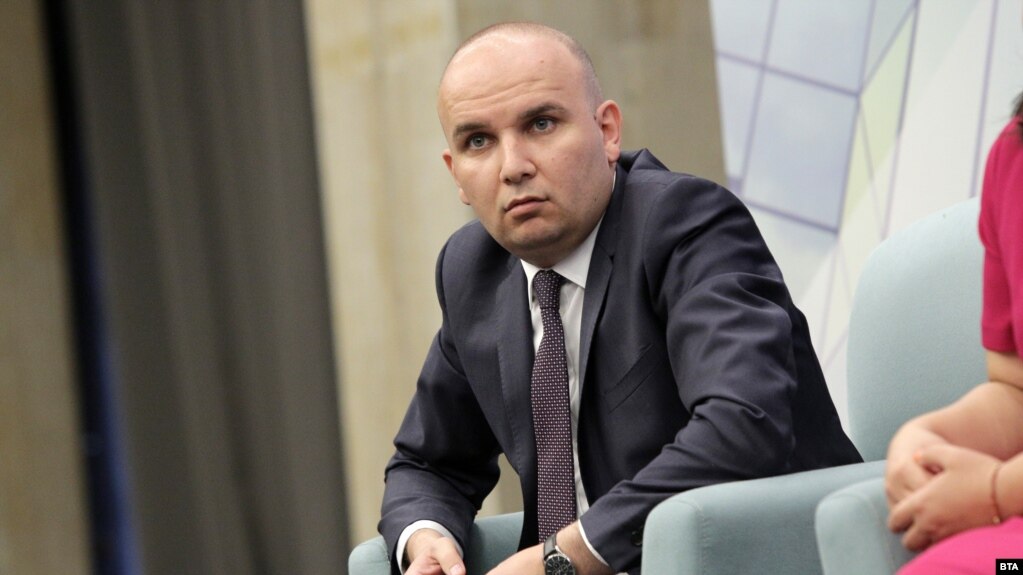
![Prominent Vietnamese activist Pham Doan Trang was arrested on the night of October 6 [File: Adam Bemma/Al Jazeera]](https://www.aljazeera.com/wp-content/uploads/2020/01/263bac0ab4684742b687c74619062a2c_18.jpeg?resize=770%2C513)
![Egyptian researcher Ibrahim Ezz-Eldin [Twitter]](https://i0.wp.com/www.middleeastmonitor.com/wp-content/uploads/2019/11/-عزالدين-e1574860693122.jpeg?resize=577%2C385&quality=85&strip=all&ssl=1)

 Hans Thoolen on Human Rights Defenders and their awards