Members of the Foreign Affairs and Development Committees of the European Parliament voted on Thursday for the three finalists for the 2025 Sakharov Prize for Freedom of Thought (in alphabetical order):
-Imprisoned journalists fighting for your freedom and ours, Andrzej Poczobut from Belarus and Mzia Amaglobeli from Georgia
-Journalists and Humanitarian Aid Workers in Palestine and all conflict zones, represented by the Palestinian Journalists Syndicate, the Red Crescent, and UNRWA ;
-Serbian students
Find the biographies of the candidates and finalists by following this link.
The Conference of Presidents, comprising European Parliament President Roberta Metsola and the leaders of the political groups, will choose the 2025 laureate from this shortlist. Their decision will be announced in the Strasbourg Hemicycle during the plenary session on 22 October 2025.
On 15 October 2025 Sam Ellefson of ICII summarises the new report, which recounts recent reprisals from two dozen countries, underscores ICIJ’s reporting on how Beijing abuses international institutions in its campaign to silence critics abroad
The targeted repression of human rights activists across borders is becoming more frequent and sophisticated, according to the latest annual U.N. report detailing acts of intimidation and reprisals inside the international organization.
Two Hong Kong pro-democracy activists and a Uyghur linguist are among the cases compiled by the secretary-general between May 2024 and 2025, alongside updates on reprisals included in previous reports.
“Allegations of transnational repression across borders have increased, with examples from around the world,” the report said. “Targeted repression across borders appears to be growing in scale and sophistication, and the impact on the protection of human rights defenders and affected individuals in exile, as well as the chilling effect on those who continue to defend human rights in challenging contexts, is of increasing concern.”
Raphäel Viana David, the China and Latin America program manager at the International Service for Human Rights, a nonprofit that trains activists in U.N. advocacy, said the report reflected a shift within the U.N. in recognizing transnational repression as a tool states use to carry out reprisals.
In China Targets, ICIJ and 42 media partners exposed how Beijing has misused international institutions such as the U.N. and Interpol to target overseas dissidents. The investigation included interviews with 105 individuals across 23 countries who detailed how the Chinese government had reached beyond its borders to silence them.
After persistent speculation about the possibility of the prize going to Donald Trump [see e.g.: https://humanrightsdefenders.blog/2025/07/24/nobel-peace-prize-choice-between-trump-and-albanese/], it was announced today 10 October that the Venezuelan opposition leader María Corina Machado has won the 2025 Nobel Peace Prize, winning more recognition as a woman “who keeps the flame of democracy burning amid a growing darkness.”
The former opposition presidential candidate was lauded for being a “key, unifying figure” in the once deeply divided opposition to President Nicolás Maduro’s government, said Jørgen Watne Frydnes, chair of the Norwegian Nobel committee. “In the past year, Ms. Machado has been forced to live in hiding,” Watne Frydnes said. Despite serious threats against her life, she has remained in the country, a choice that has inspired millions. When authoritarians seize power, it is crucial to recognize courageous defenders of freedom who rise and resist.”
The Nobel Prize Committee clarified that “Maria Corina Machado meets all three criteria stated in Alfred Nobel’s will for the selection of a Peace Prize laureate. She has brought her country’s opposition together. She has never wavered in resisting the militarisation of Venezuelan society. She has been steadfast in her support for a peaceful transition to democracy.
Maria Corina Machado has shown that the tools of democracy are also the tools of peace. She embodies the hope of a different future, one where the fundamental rights of citizens are protected, and their voices are heard. In this future, people will finally be free to live in peace.”
Human Rights Watch stands with civil society and signed this letter, alongside more than 3700 other organizations, condemning the Trump administration’s attacks. It is a testament to our community’s solidarity.
“We are a coalition of nonprofit and nonpartisan organizations formed to champion causes dear to all Americans. We work in communities across the country to protect our air and water, our right to vote, to worship, and to organize; we fight for consumers, workers, and our children; we advocate for civil and human rights at home and abroad; we have made it safer to drive on our roads, easier to start a business, and healthier to live in our cities. We span the full ideological spectrum. And today, we stand together for our democracy and in solidarity with the nonprofit groups unjustly and illegally targeted by the Trump administration, including in a new September 25 presidential memorandum.
We of course unequivocally reject political violence. But we won’t mince words. No president–Democrat or Republican–should have the power to punish nonprofit organizations simply because he disagrees with them. That is not about protecting Americans or defending the public interest. It is about using unchecked power to silence opposition and voices he disagrees with. That is un-American and flies in the face of the Constitution, including the First Amendment bar on targeting organizations for their advocacy.
Charities perform crucial functions in every community across our country, including providing healthcare, housing, education, religious services, food and water, and so much more. Like other nonprofits, the organizations threatened by President Trump have a mission to serve the public good and are composed of everyday people fighting for dignity, safety, and opportunity.
This attack on nonprofits is not happening in a vacuum, but as a part of a wholesale offensive against organizations and individuals that advocate for ideas or serve communities that the president finds objectionable, and that seek to enforce the rule of law against the federal government. Whether the target is a church, an environmental or good government group, a refugee assistance organization, university, a law firm, or a former or current government official, weaponizing the executive branch to punish their speech or their views is illegal and wrong. It is also an attack on the very notion that government power must serve the people, not those in office.
Charitable organizations serve our communities in various ways, playing a central role in public protection, health, accountability, anti-discrimination, and in creating the moral fabric of our nation. That is, of course, precisely why this administration is targeting them. They know that the organizations they are attacking exist to lift up the voices of everyday Americans and shine the spotlight of accountability on those who seek to abuse power.
Political violence is unacceptable. But efforts by the president of the United States to defund, discredit, and dismantle nonprofit groups he simply disagrees with are reprehensible and dangerous—a violation of a fundamental freedom in America. This Administration is trying to bully people into silence but speaking out is, and has always been, our collective mission. We stand with those wrongly targeted and with each other. No exceptions.”
Marie Louise Baricako, a women’s rights activist from Burundi, in Geneva for the Human Rights Council (Geneva Solutions/Michelle Langrand)
Michelle Langrand in Geneva Solutions of 8 October 2025, talks with Burundian women’s rights defender Marie Louise Baricako – who was In Geneva to attend the Human Rights Council. She warns that her country is sinking deeper into crisis as the region teeters on the brink, urging the international community to push for a national dialogue.
Marie Louise Baricako recalls the Arusha negotiations with a mixture of pride and sorrow. In the late 1990s, she pushed for women to have a seat at the table in the talks aimed at ending Burundi’s inter-ethic civil war – and yet, 25 years on, much of the agreement’s promises remain unfulfilled.
“If women are left out, Burundi will keep losing,” she says. “How can you hope to develop when 52 per cent of your population are left aside?”
Baricako has spent a lifetime trying to empower that 52 per cent. In 1988, she became the first Burundian woman to earn a PhD, studying in Cameroon, and later led the English department at the University of Burundi. Born in Muramvya province, she spent much of her adult life abroad, including in The Gambia, where she joined Femme Africa Solidarité, a feminist network founded in Geneva in 1996 to promote female leadership in peace, security and development……
Fortuné Gaetan Zongo, UN special rapporteur on Burundi since 2021, warns of a “real risk” of regional destabilisation. “If Kinshasa were to fall, Burundi would be deeply affected,” he tells Geneva Solutions. Some 78,000 Congolese refugees fleeing the violence have crossed into Burundi since the beginning of the year, raising questions about how Burundi, already struggling, can cope with their humanitarian needs while the UN aid system is strapped for cash.
Baricako sees how ethnic narratives continue to be exploited by those in power. “This is what our leaders today are nourishing, because in their mind, Tutsi had kept power for so long alone, excluding Hutus. Now, they say ‘we have taken it, we shall not release it, until Jesus comes back’,” she says.
Yet repression is not limited to a group. “When women or human rights defenders dare to speak out on any violation, the next day, either they are in prison or they are killed,” she says…
Despite the bleak prospects, Baricako places hope in ordinary Burundians. “They have had time to believe in these stories of Hutus or Tutsi being the enemy. Now I believe people have realised that it is not about the ethnic group,” she says. “Burundians want a peaceful country, and they are ready to work as hard as they can to rebuild Burundi.”
Baricako stresses that talks would lead to more unfulfilled promises without the participation of those in power. She calls on the African Union and the East African Community to step out of their indifference and pressure Burundi to the table.
Zongo, who has been met with the government’s outright refusal to cooperate with him and other human rights experts, also notes that certain states with good relations with Burundi, like Tanzania, DRC and Cameroon, “can convince Burundi to sit at the table and engage in cooperation.”
For all the setbacks, Baricako remains steadfast. “The support of civil society has been essential in staying strong and not abandoning the fight,” she says. “Peace is our business, whether they want it or not. I will not go to the battlefield with a weapon, but what I have in my heart, I will use it to stand for peace and security of Burundians.”
In a statement delivered before the United Nations Human Rights Council on 2 October 2025 , Euro-Med Human Rights Monitor called to protect human rights defenders in Gaza and to grant international investigators unrestricted access to examine violations committed amid Israel’s ongoing war on the Gaza Strip.
The statement was delivered remotely from Gaza by Maha Hussaini, Head of Media at Euro-Med Monitor, during the Council’s 60th session under Item 8. Hussaini stressed that the continued silence of states and civil society representatives severely undermines international law and enables further violations.
Addressing the Council, Hussaini said: “I speak to you from my last refuge after I was forcibly expelled from my home in Gaza City under relentless Israeli bombardment, though I do not know if by the time you hear these words I will still be alive or buried beneath the rubble.”
She continued: “Gaza is under unprecedented Israeli attacks, and I have been forcibly displaced along with my colleagues at Euro-Med Human Rights Monitor several times now. I’m meant to present this statement as a human rights defender, to document and to advocate. But today I can no longer count the Israeli crimes I witness, because they surround me in every breath and every hour.”
Hussaini further noted: “It is a shame that I had to tear up my business card identifying me as a human rights worker at some point during this genocide to avoid being killed or detained by the Israeli military.”
She concluded: “We demand, not plead, we demand protection for those documenting genocide in Gaza, we demand unhindered access for international investigators, and we demand that perpetrators face justice. Every silence from you, representatives of states and civil society, is another strike of the hammer driving the coffin of international law.”
On 4 October 2025, in its response to a call for input by UN Special Rapporteur on human rights defenders, Mary Lawlor, Al-Haq drew urgent attention to the escalating and systematic efforts to silence Palestinian voices and dismantle the infrastructure of Palestinian civil society. The submission highlights how Israel’s settler-colonial apartheid regime has intensified its campaign to suppress resistance, criminalise advocacy and quash any pursuit of accountability as it pursues Palestinian erasure.
The death of a female Iranian political prisoner in hospital following a series of seizures has sparked outrage from Iran’s two Nobel laureates and right groups who have labeled her death a state-sponsored murder. Somayeh Rashididied after several days in hospital following her transfer from Qarchak Prison near Tehran, Iran’s judiciary-affiliated Mizan news agency reported on Thursday.
Rashidi, born in 1983, was detained in April for allegedly writing anti-government graffiti slogans in Tehran’s Javadieh district.
Nobel Peace laureates Narges Mohammadi condemned her death in custody, describing it as part of a pattern of abuse in detention. “This devastating loss of Somayeh Rashidi is not an accident but the result of a systematic policy of neglect and cruelty inside Iranian prisons,” Mohammadi said in a post on X.
Rights groups and activists including Nobel laureate Shirin Ebadi had previously raised alarm about Rashidi’s deteriorating condition, highlighting her urgent need for medical attention.
Iran International reported earlier this month that Rashidi’s condition had severely declined, with doctors holding little hope for her recovery.
Human rights groups including the Norway-based Iran Human Rights (IHR) have publicly called for the closure of Qarchak, describing it as “one of the darkest symbols of systematic human rights violations in the Islamic Republic.” Rashidi death comes less than a week after another prisoner, Maryam Shahraki, died in Qarchak last Friday. According to Norway-based rights group Hengaw Organizattion, three women have already died in this facility this year due to lack of adequate medical care — Jamileh Azizi on September 19, Shahraki on September 13, and Farzaneh Bijanipour on Januar
The thirteenth Václav Havel Human Rights Prize – which honours outstanding civil society action in defence of human rights – has been awarded to Ukrainian journalist and human rights defender Maksym Butkevych. The prize was presented at a special ceremony on the opening day of the autumn plenary session of the Parliamentary Assembly of the Council of Europe (PACE) in Strasbourg on 29 September 2025
Mr Butkevych is a co-founder of the Zmina Human Rights Centre and of Hromadske Radio. Despite his lifelong pacifism, he volunteered for the Ukrainian Armed Forces at the start of the 2022 Russian invasion and became a platoon commander. Captured and sentenced to 13 years in prison by Russian forces, he endured over two years of harsh imprisonment before being released in a prisoner exchange in October 2024. He remains a powerful symbol of courage and resilience in defence of justice and freedom.
The two runners-up for the 2025 Prize are Georgian journalist Mzia Amaghlobeli and Azerbaijani journalist Ulvi Hasanli. Both of them are currently detained in their home countries.
Opening the ceremony, PACE President Theodoros Rousopoulos said it was no coincidence that all three shortlisted candidates this year were journalists. Urging the immediate release of Ms Amaghlobeli and Mr Hasanli, he said: “Your voice may be silenced, but your testimony is heard loud and clear.” The President – himself a former journalist – also thanked all three candidates for their courage in opposing authoritarianism and for acting as role-models for a whole generation of journalists and human rights defenders: “Governments should not be afraid of the truth,” he declared.
IPS at this occasion published a post critical of the lack of follow up to free the laureates:
The Václav Havel Prize is an important international recognition for those who stand up for human rights and against autocracy, but while recognition through such awards and solidarity matters deeply, it is not enough. The Council of Europe must match its willingness to recognise the courage of human rights defenders with efforts to stand courageously up to autocrats and dictators, even and especially those within its own membership ranks.
For PACE leadership and members, the recognition given to human rights defenders through the Václav Havel Prize must be matched with tireless, persistent and coordinated action to put pressure on the other political bodies of the Council of Europe. This includes adopting resolutions demanding the release of imprisoned laureates; organising visibility campaigns within PACE through side events, exhibitions and public initiatives; building stronger connections and networks with families of prisoners; and consistently deploying all available diplomatic tools to keep political prisoners at the forefront of European media and diplomacy.
At the same time, CoE leaders, including the Secretary General and Commissioner for Human Rights (currently Alain Berset and Michael O’Flaherty, respectively), must put the release of political prisoners at the top of the organisation’s priority list. These leaders have important public platforms that must consistently and relentlessly raise the profile of human rights defenders at risk. Leaders must work to mobilise member states to apply pressure for the release of political prisoners.
Finally, Council of Europe member states – signatories to the European Convention on Human Rights – need to recognise that the continued detention of human rights defenders poses a great risk to the long-term credibility of the institutions. Member states – on their own and through the organisation’s powerful Committee of Ministers – have to use all tools at their disposal to address the rising cases of political prisoners and crackdowns against civil society across the broader region. The Committee of Ministers needs to put enhanced enforcement pressure on member states regarding the judgments of the European Court of Human Rights on fundamental freedoms. These judgements, after all, often affect the fate of political prisoners.[https://www.ips-journal.eu/topics/democracy-and-society/prizes-without-freedom-risk-becoming-trophies-of-hypocrisy-8573/]
Although physical attacks against journalists are the most visible violations of press freedom, economic pressure is also a major, more insidious problem. The economic indicator on the RSF World Press Freedom Index now stands at an unprecedented, critical low as its decline continued in 2025. As a result, the global state of press freedom is now classified as a “difficult situation” for the first time in the history of the Index. See the Index
At a time when press freedom is experiencing a worrying decline in many parts of the world, a major — yet often underestimated — factor is seriously weakening the media: economic pressure. Much of this is due to ownership concentration, pressure from advertisers and financial backers, and public aid that is restricted, absent or allocated in an opaque manner. The data measured by the RSF Index’s economic indicator clearly shows that today’s news media are caught between preserving their editorial independence and ensuring their economic survival.
“Guaranteeing freedom, independence and plurality in today’s media landscape requires stable and transparent financial conditions. Without economic independence, there can be no free press. When news media are financially strained, they are drawn into a race to attract audiences at the expense of quality reporting, and can fall prey to the oligarchs and public authorities who seek to exploit them. When journalists are impoverished, they no longer have the means to resist the enemies of the press — those who champion disinformation and propaganda. The media economy must urgently be restored to a state that is conducive to journalism and ensures the production of reliable information, which is inherently costly. Solutions exist and must be deployed on a large scale. The media’s financial independence is a necessary condition for ensuring free, trustworthy information that serves the public interest.” Anne Bocandé, RSF Editorial Director
Of the five main indicators that determine the World Press Freedom Index, the indicator measuring the financial conditions of journalism and economic pressure on the industry dragged down the world’s overall score in 2025.
The economic indicator in the 2025 RSF World Press Freedom Index is at its lowest point in history, and the global situation is now considered “difficult.”
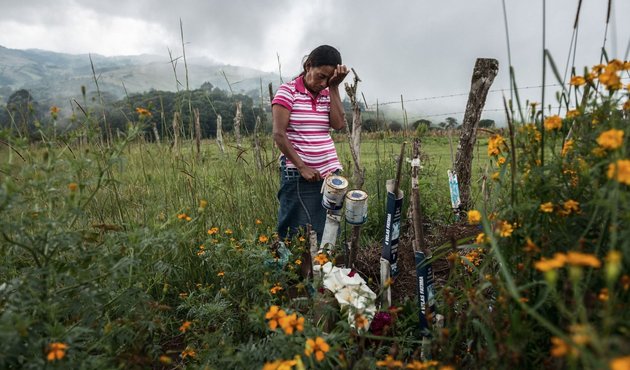
On 17 September 2025 Global Witness published its annual report , documenting killings and long-term disappearances of land and environmental defenders. 2024 shows continuing bad news.
Julia Francisco Martínez stands at the graveside of her husband Juan, a Honduran Indigenous defender who was found murdered in 2015. Giles Clarke / Global Witness
Every year, Global Witness works with partners to gather evidence, verify and document every time a land and environmental defender is killed or disappeared. Our methodology follows robust criteria, yet undocumented cases pose challenges when it comes to analysing data
Global Witness documents killings and long-term disappearances of land and environmental defenders globally. In partnership with over 30 local, national and regional organisations in more than 20 countries, we produce an annual report containing these figures, and we have done so since 2012.
Our methodology involves a year-long process of cross-referencing data from different sources to ensure its credibility. Over 2,200 killings or long-term disappearances of defenders appear in our database since 2012 – with 146 cases documented in 2024.
Every year, we maintain a database to keep a record of these crimes and create a comprehensive global picture of the systematic violence defenders face.
The data provides a snapshot of the underlying drivers behind reprisals and indicates how some defenders and their communities face increased risks. Exposing these trends is the first of many steps to ensure that defenders and their communities are protected and can exercise their rights without fearing for their lives.
Killings and disappearances documented between 2012 and 2024
2,253 defenders have been killed or disappeared since 2012 Global Witness
146 of these attacks occurred in 2024 Global Witness
The accompanying press release goes into considerable detail on the methodology used.




 Hans Thoolen on Human Rights Defenders and their awards