Speculating about the Nobel Peace Prize is a sport that keeps some media busy most of the year.
Although thousands of people, from members of parliaments worldwide to former winners, are eligible to propose candidates (see list in link), it is the group of Norwegian parliamentarians that has nominated the eventual laureate every year since 2014 (with the exception of 2019), according to Henrik Urdal, Director of the Peace Research Institute Oslo. And for this year Russian dissident Alexei Navalny, the World Health Organization and climate campaigner Greta Thunberg are among those nominated by backed by Norwegian lawmakers.
The Norwegian Nobel Committee, which decides who wins the award, does not comment on nominations, keeping secret for 50 years the names of nominators and unsuccessful nominees. But the nominators themselves can choose to reveal their choice and often do.
On 31 January 2021 Gwladys Fouche and Nora Buli started off the guessing season by reporting that, according to a Reuters survey of Norwegian lawmakers, nominees include Thunberg, Navalny, the WHO and its COVAX programme to secure fair access to COVID-19 vaccines for poor countries.
Other names are Belarusian activists Sviatlana Tsikhanouskaya, Maria Kolesnikova and Veronika Tsepkalo for their “fight for a fair election and inspiration for peaceful resistance”, one nominator, Geir Sigbjoern Toskedal, said. Another, Jette Christensen, also named the Hungarian Helsinki Committee, a human rights group, and IUSTITIA, a group of Polish judges defending civil rights. “My nomination this year is … for the fight to preserve democracy as a form of government in Europe,” Christensen said.
Freedom of information is a recurring theme with nominees including the U.S.-based Committee to Protect Journalists; former Charlie Hebdo journalist Zineb el Rhazoui; news website Hong Kong Free Press, the U.S.-based International Fact-Checking Network and Paris-based Reporters without Borders (RSF). Also mentioned are: the Black Lives Matter movement and Stacey Abrams, the former Georgia gubernatorial candidate who has become a leading voting rights advocate.
Other nominees include former U.S. President Donald Trump (by Jaak Madison, a member of the right-wing populist EKRE party) as well as Kushner and Berkowitz for negotiating deals between Israel and the United Arab Emirates, Bahrain, Sudan and Morocco), .
Also on the list are NATO and again the U.N. refugee agency (UNHCR) as well as Aminatou Haidar, for her peaceful campaigning towards an independent Western Sahara, the International Space Station and the International Scout Movement.
https://www.nobelprize.org/nomination/peace/
https://www.kcrg.com/2021/02/02/explainer-how-nobel-peace-prize-nominations-come-about/



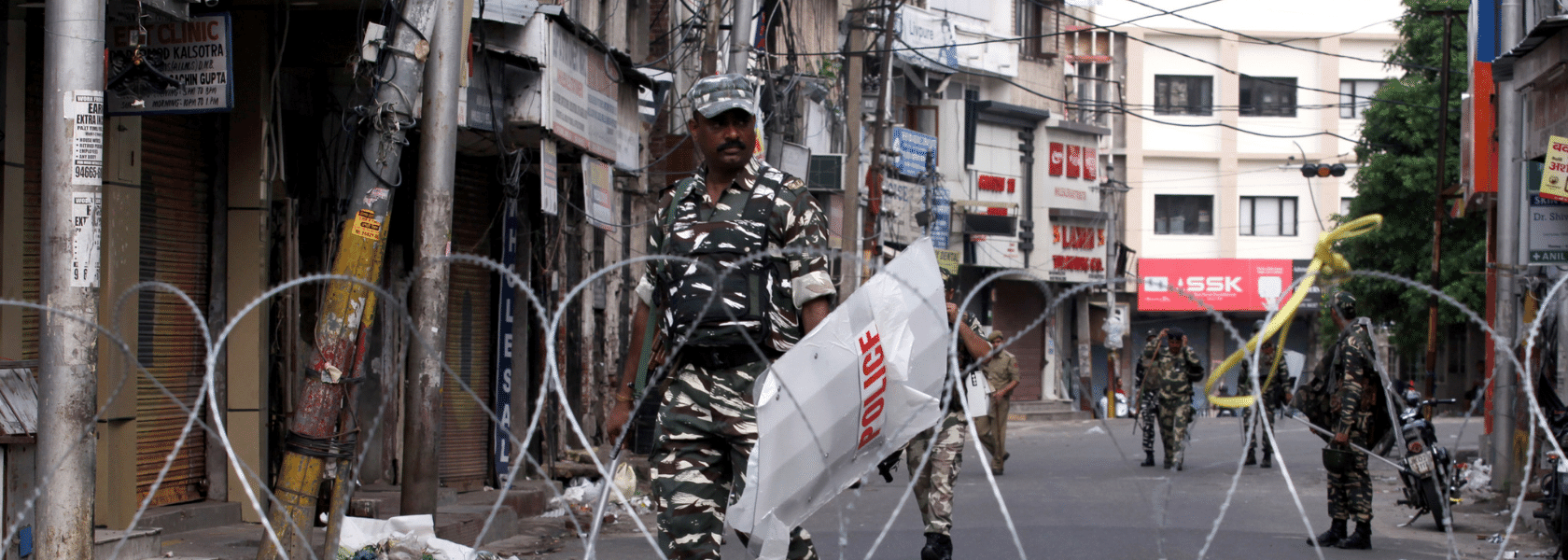


...After more than 70 years of terror, killings, torture, and disappearances, the international community must renew its efforts to end the conflict in Kashmir. In 2018 and 2019, the Office of the United Nations High Commissioner for Human Rights released reports that documented a wide range of abuses – including kidnappings, the killing of civilians, and sexual violence – perpetrated by both sides in the conflict. The UN needs to take the lead in stopping Kashmir’s torment. ……The conflict has consumed resources that should have been used for development; instead, they were channeled to arms purchases or a regional race to develop weapons of mass destruction. Everyone, regardless of age, religion, or ethnicity, has suffered, whether as a result of displacement, family separation, loss of property, the death or disappearance of friends and close relatives, grinding poverty, or simply the prospect of a future as bleak and constricted as the present.The international community has, at times, attempted to mediate between India and Pakistan. The UN has adopted resolutions demanding a referendum on Kashmir’s future status. But, even though it has long been evident that there is no military solution to the conflict – temporary ceasefire initiatives have never resulted in a lasting agreement – India to this day has resisted a plebiscite. In 2003, Pakistan’s then-president, Pervez Musharraf, formulated a four-step approach to a political solution. Without insisting on a referendum, India and Pakistan would begin a dialogue; recognize Kashmir as the main source of bilateral hostility; identify and eliminate what was unacceptable to each side; and strive for a solution acceptable to both countries – and especially to the people of Kashmir. Subsequently, a ceasefire was declared, and high-level meetings took place, but, following a terrorist attack, India terminated the talks. In 2012, Pakistani President Asif Ali Zardari and Indian Prime Minister Manmohan Singh tried unsuccessfully to revive the process.