Posts Tagged ‘Nigeria’
May 1, 2019
On 24 April 2019 the nominees for the Aurora Prize [see http://www.trueheroesfilms.org/thedigest/awards/aurora-prize-for-awakening-humanity] were announced:
- Mr. Mirza Dinnayi, Co-Founder and Director of Luftbrücke Irak (Airbridge Iraq), a humanitarian organization that flies Yazidi victims from Iraq to Germany for medical treatment. Mirza Dinnayi has helped several hundred women escape from the territories controlled by ISIS, personally taking part in missions to bring them back to safety, and delivered food and water to the Yazidis in isolated areas. Driven by his passion to save lives, he has found a way to overcome numerous bureaucratic and logistic obstacles to help the most vulnerable. Mr. Dinnayi has nominated three organizations that provide educational opportunities to underserved students and disaster relief: Air Bridge Iraq, SEED Foundation and Shai Fund.
- Mr. Zannah Bukar Mustapha, lawyer, Director and Founder of Future Prowess Islamic Foundation – a school that provides education to some of the most deprived children in Maiduguri, Nigeria. In October 2016, he secretly traveled to meet with Boko Haram rebels in their Sambisa forest hideout during a media blackout and left with 21 children. Thirteen months later, supported by ICRC, the Swiss government and the Nigerian authorities, he negotiated the additional release of 82 girls. Zannah Bukar Mustapha has nominated three organizations that aim to reduce conflict through strong community effort and good governance: Future Prowess Islamic Foundation, Adab Community Renewal Foundation and Herwa Community Development Initiative.
- Huda Al-Sarari, lawyer and activist. Huda Al-Sarari is a brave and inspiring Yemeni human rights activist, who singlehandedly investigates, exposes and challenges a clandestine network of secret prisons run by foreign governments in Yemen, where thousands of men and boys have faced arbitrary detention. She has amassed incontrovertible evidence of the abuse that takes place within the prisons and succeeded in convincing Amnesty International and Human Rights Watch to take up the cause. She has nominated an international organization that defends victims of extreme human rights abuse and two organizations that combat discrimination and promote equality: Reprieve, Equal Rights Trust and Wethaq Foundation for Civil Orientation.
(The Selection Committee had chosen the three Aurora Humanitarians from 719 nominations for 523 unique candidates submitted from 72 countries)
For last year’s, see: https://humanrightsdefenders.blog/2018/06/10/1-million-aurora-prize-awarded-to-rohingya-human-rights-defender-kyaw-hla-aung/
The 2019 Aurora Prize ceremony will take place on October 14-21, 2019, in Yerevan, Armenia.
http://www.armradio.am/en/11548
Posted in awards, human rights, Human Rights Defenders | 1 Comment »
Tags: Airbridge Iraq, Armenia, Aurora Prize, digest of human rights awards, Huda Al-Sarari, human rights awards, Mirza Dinnayi, Nigeria, nominees, Yemen, Zannah Bukar Mustapha
March 7, 2019
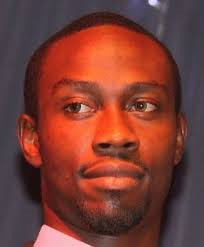 Peter Nkanga, multilingual investigative journalist and former West Africa Representative of the Committee to Protect Journalists (CPJ), has been declared the laureate of the first “Jamal Khashoggi Award for Courageous Journalism” in 2019.
The award is administered by the US-based Inti Raymi Fund. For more information on this and similar awards for journalists, see: http://www.trueheroesfilms.org/thedigest/awards/jamal-khashoggi-award-for-courageous-journalism.
In a letter signed by Anas Talalqa, Human Rights Advisor at Inti Raymi Fund, the organisation congratulated Mr Nkanga for his selection for the award, noting that the “The Award honors the brave journalists who expose abuse of power and corruption, share difficult truths, discuss taboo topics, and work in hostile environments/”
“Today … dedicate this Award to all journalists and human rights defenders in #Africa. The struggle is real, but it is not over until We Win. #JusticeForJamal,” Peter Nkanga tweeted about the award.
Nigerian Peter Nkanga has been at the forefront of the campaign for the rights of journalists in Nigeria and across sub-Saharan Africa. Last year, he spearheaded the advocacy for the release of a journalist, Jones Abiri, publisher of Bayelsa State-based weekly paper, Weekly Source. He also coordinated the advocacy and protests in Nigeria on Jamal Khashoggi, the Saudi journalist who was murdered at the Saudi Arabian Consulate in Istanbul, Turkey, on October 2, 2018.
https://www.premiumtimesng.com/news/more-news/317920-nigerian-journalist-peter-nkanga-selected-for-2019-jamal-khashoggi-award-for-courageous-journalism.html
Posted in awards, Human Rights Defenders | 1 Comment »
Tags: Anas Talalqa, awards, Committee to Protect Journalists, digest of human rights awards, human rights awards, independent journalists, Jamal Khashoggi, Jamal Khashoggi Award for Courageous Journalism, Nigeria, Peter Nkanga
October 16, 2018
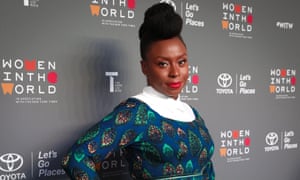
Chimamanda Ngozi Adichie pictured at the Women in the World Summit in 2017. Photograph: Matteo Prandoni/BFA/Rex/Shutterstock
The Nigerian novelist was described by the Jury as “sophisticated beyond measure in her understanding of gender, race, and global inequality”. In her acceptance lecture at the British Library, Adichie said that while writers should not necessarily speak out on political issues, she did not believe “that art is a valid reason for evading the responsibilities of citizenship – which are to think clearly, to remain informed, and, sometimes, to act and speak”.
…The award-winning novelist revealed how she has been criticised in Nigeria for speaking out about its law criminalising homosexuality, and for her efforts to start a “much-needed conversation” about women’s rights in the country….
Adichie said that she did not choose to speak out about social issues because she is a writer. “But my writing gave me a platform to speak about issues that I have always cared about,” she said. “I do not want to use my art as an armour of neutrality behind which to hide. I am a writer and I am a citizen, and I see my speaking out on social issues as a responsibility of citizenship. I am struck by how often this speaking out is met, in Nigeria, not with genuine engagement, whether to agree or disagree, but with a desire to silence me. A journalist once helpfully summed it up for me: people don’t like it when you talk about feminism, they just want you to shut up and write.”
At the ceremony, Adichie named the lawyer and human rights activist Waleed Abulkhair as this year’s International Writer of Courage, a title awarded by the PEN Pinter winner each year. Abulkhair, a founding member of the Monitor of Human Rights in Saudi Arabia .
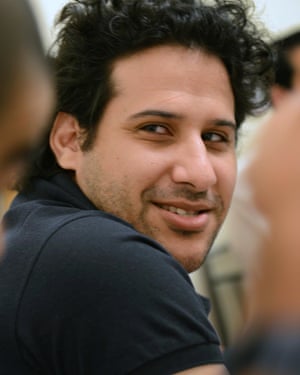
FacebookPinterest Waleed Abulkhair pictured in 2012. The Washington Post/Getty Images
“Waleed has dedicated his life to holding the Saudi authorities accountable for human rights abuses,” said Adichie. “He has dedicated his life to speaking out, to supporting the victims of those abuses. Waleed, like Harold Pinter, has shown a lucid dedication to telling his truth. But rather than being lauded for this dedication, Waleed has paid a heavy price – 15 years behind bars.” She said she was deeply proud to share the prize with Abulkhair, “and I hope that this small act of solidarity will bring him some comfort, and will remind him that his struggle has not been forgotten, nor will it be in vain.”
Previous recipients of the International writer of courage include Bangladeshi publisher and writer Ahmedur Rashid Chowdhury, also known as Tutul; and Italian investigative journalist Roberto Saviano.
https://www.theguardian.com/books/2018/oct/09/chimamanda-ngozi-adichie-accepts-pen-pinter-prize-with-call-to-speak-out
Posted in awards, books, human rights, Human Rights Defenders | Leave a Comment »
Tags: awards, Chimamanda Ngozi Adichie, human rights awards, human rights of women, International Writer of Courage, LGBTI, Nigeria, PEN Pinter Prize, Waleed Abulkhair, writer
April 27, 2018
Africa remains a continent of contrasts, also with regard to human rights defenders. Just to illustrate:
(1) Bikes for human rights defenders: Girls Empowerment Network (GENET) in Malawi has donated 30 bicycles to child protection groups in Dowa district to assist in its ongoing girl child protection programs. Speaking in an interview with the Malawi News Agency Mana after giving out the support at Kayembe Primary school, GENET Programs Officer, Twambilile Kayuni said their organization thought of providing the support as one way of easing transportation challenges among girl child protection groups in the area. “As GENET, we thought it critical to ease the challenge of transport among our village child protection groups so that when any violence has happened to a child they should be able to rush to the scene and take action“. She added that the bicycles have been given to all schools in the area, human rights defenders, mother groups, Area Development Committees (ADCs) and chiefs in order to assist in their child protection duties in a more coordinated manner…Group Village Headwoman Siwinda said:”In my area many girls were being forced to marry but now with the coming of GENET through COMIC relief and OXFAM Malawi things have changed and as of now many girls have gone back to school,” said GVH Siwinda.
Posted in human rights | Leave a Comment »
Tags: Africa, african region, bikes, child rights, CIVICUS, digital security, Girls Empowerment Network (GENET), Internet Freedom Forum, Internet rights, Malawi, Nigeria, Oxfam
January 24, 2018
Human Rights Watch Associate Director, International Justice Program, , wrote an obituary for Oby Theodora Nwankwo, a Nigerian activist who tirelessly advocated for the International Criminal Court (ICC) and women’s rights. She died on 9 December 2017 at the age of 61:
I got to know Oby through our common work to push back against unprincipled attacks by some African leaders on the ICC. The attacks surged after the ICC issued arrest warrants in 2009 and 2010 for Sudanese President Omar al-Bashir for alleged genocide, war crimes, and crimes against humanity in Darfur.
At the time, people had limited knowledge of the ICC’s role as a court of last resort, and many did not know that several African governments had requested the ICC to investigate crimes in their countries. The court’s critics exploited this, spreading false information about the court being biased and targeting Africa. Oby stood out as someone willing to jump in and speak up on behalf of victims, whether in Nigeria or around the world, countering the prevailing narratives in African media. “It is high time African governments and the AU [African Union] put themselves on the right side of history and support justice for victims, not abusive leaders,” she said.
Over the years, Oby was a member of the Committee on the Elimination of Discrimination against Women, and she led the Nigerian Coalition for the International Criminal Court and the Civil Resource Development and Documentation Center. Oby also helped guide the work of the global Coalition for the International Criminal Court through its steering committee.
Oby encouraged strategic activism. When al-Bashir turned up in Nigeria after the ICC issued warrants against him, Oby went to court to insist on his arrest – after which al-Bashir hightailed it out of the country. Activists in Uganda, Democratic Republic of Congo, Kenya, Zambia, and South Africa have taken up similar efforts, campaigning on the streets and in the courts for al-Bashir to be arrested when he arrives or threatens to arrive in their countries.
I looked to Oby for guidance, sound advice, and the passion needed to keep at it even when the landscape was challenging. Her efforts have made a difference. In the past year, some of the worst attacks on the ICC emanating from Africa have ebbed, and more than a dozen countries stepped forward to reaffirm their commitment to the ICC.
Nigeria – and Africa – lost a tremendous activist. Oby’s energy for the cause will remain in my heart as the work continues.
https://www.hrw.org/news/2018/01/22/nigeria-loses-treasured-justice-advocate
Posted in Human Rights Defenders | Leave a Comment »
Tags: Elise Keppler, HRW, human rights of women, in memoriam, International Criminal Court, Nigeria, obituary, Oby Theodora Nwankwo, Omar al-Bashir, woman human rights defender
August 1, 2017
 Speaker Dogara
In a blog post on Vanguard News it is explained that the appeal dated 28 July 2017 was sent to Ms Annalisa Ciampi, Special Rapporteur on the rights to freedom of peaceful assembly and of association; Mr Michel Forst, Special Rapporteur on the situation of human rights defenders; and Mr. David Kaye, Special Rapporteur on the promotion and protection of the right to freedom of opinion and expression. The organization said, “.. If adopted, the bill which is copied from repressive countries like Somalia, Ethiopia and Uganda, would have a chilling effect not only on expressions of peaceful dissent by the citizens but also on the legitimate work of NGOs and individual human rights defenders and activists scrutinizing corruption in the National Assembly and exposing human rights violations by the government.”
The urgent appeal signed by SERAP executive director Adetokunbo Mumuni read in part: .”.. the bill is by far the most dangerous piece of legislation in the country in terms of its reach and devastating consequences not only for the work of civil society but also the effective enjoyment of constitutionally and internationally recognized human rights of the citizens. The bill will devastate the country’s civil society for generations to come and turn it into a government puppet.”……
“SERAP is also concerned that the proposed bill is coming at a time the members of the Senate and House of Representatives are proposing amnesty and immunity for themselves against prosecution for corruption and other economic crimes; and the government is proposing a social media policy to restrict and undermine citizens’ access to the social media ahead of the general elections in 2019.”
……
“The provisions of the bill are also not subject to any judicial oversight. SERAP believes that independent groups and activists should have space to carry out their human rights and anticorruption work without fear of reprisals, such as losing their registration or being sent prison.”
[The House of Representatives debated the bill known as ‘An Act to provide for the establishment of Regulatory Commission for the Supervision, Coordination and Monitoring of NGOs, CSOs and Communities Based Organizations in Nigeria’. The bill will establish a commission responsible only to the president and the senate. Under section 7, the commission will monitor and supervise these groups supposedly to “ensure that they accomplish their missions according to law” and under section 26, strictly “in line with the programmes of government.” Section 8 of the bill even goes further by empowering the commission to coordinate the work of all national and international NGOs in the country. All groups must register with the commission and submit their annual reports for discussion and governmental approval. The commission may take any punitive action against civil society and “do all such things incidental to its functions” under the Act. Section 10 establishes ‘a documentation center’ to which all civil society groups must submit the list of their activities and other information that may be required or prescribed. Section 11 then requires submission of all proposed activities by civil society for approval. Section 12 requires registration of all civil society organizations on the payment of unspecified fees and other fees as the commission may require or prescribe. But registration may be turned down, as stated under section 13. Registration is valid for only 24 months and renewable, subject to conditions as may be prescribed. Registration may also be denied if the activities of civil society groups are not in line with “national interest”. Operations of the groups will be terminated without any such registration. Under section 19, workers of the groups must apply for work permits. The groups can only appeal to “a minister” if they are dissatisfied with the application of any of the provisions of the Act, as provided for under section 19. The bill in section 24 criminalizes behaviour that is inherently legitimate by prescribing severe criminal penalties, including fines of N500,000 or 18 months imprisonment or both, for operating without registration under the bill. Under section 26, any such person will be banned for 10 years from doing any civil society work. The combined effect of sections 25 and 26 is that no civil society group will be able to carry out any activity without first seeking and obtaining a ministerial approval.]
Source: SERAP drags Dogara to UN over ‘repressive bill to regulate, crackdown on civil society’ – Gistmaster (It appeared first on Vanguard News)
https://guardian.ng/news/serap-drags-dogara-to-un-over-bill-to-crackdown-on-csos/
Posted in human rights, Human Rights Defenders | Leave a Comment »
Tags: Adetokunbo Mumuni, administrative rules, Civil society, draft law, enabling environment, foreign funding, freedom of association, Michel Forst, Nigeria, Socio-Economic Rights and Accountability Project (SERAP), special rapporteurs
February 20, 2017
This rather shocking statement comes from Nigeria. Two newspapers sources (Vanguard.com and The Anchor on Line) report on events held to mark ’50 years activism’ by the Agbaakin Olubadan of Ibadanland, Oloye Rasheed Olalekan Alabi, where such hyperbolic language was employed. One was held on 21 January 2017 at the Nigeria Union of Journalists’ Press Centre, Ibadan. The other on 20 February in the Excellence Hotel, Lagos State. Other strong language was used there to make Nigerian youth more aware and committed…read of yourself…:
Read the rest of this entry »
Posted in human rights, Human Rights Defenders | 1 Comment »
Tags: activists, Chief Alex Anozie, Chief Areoye Oyebola, civil society activists, Human Rights Defenders, Journalist, Nigeria, non-violence, Oloye Rasheed Olalekan Alabi, theanchoronline.com, Vanguard.com, Wole Soyinka, youth
December 6, 2016

The Government of Argentina has awarded the Nigerian #BringBackOurGirls movement the International Human Rights Prize ‘Emilio F. Mignone’ for work in advocacy towards respect for human rights worldwide. A statement on Monday 5 December in Abuja by the BBOG spokesman, Sesugh Akume, said the award ceremony would take place at the Ministry of Foreign Affairs in Buenos Aires. It added that the coalition would be represented at the event by two members of the Movement, Aisha Yesufu, who is the Chairperson of the Strategic Team, and Dr. Chinwe Madubuike.
The group stated “While in Argentina, they will as part of the award ceremonies, meet with the human rights group– Las Abuelas de Plaza de Mayo … …It is made up of grandmothers, mothers and other citizens who have since 1977 been advocating for the return of an estimated 500 children abducted or born in detention during the military era and illegally adopted, with their identities hidden.”
The statement noted that like the Grandmothers of Plaza de Mayo, which has advocated weekly in the last 39 years, the Chinwe Madubuike has been on a daily campaign since April 30, 2014 for the rescue of now 196 out of the 219 ChibokGirls abducted from their school on 14 April 2014 by Boko Haram.
Source: BBOG wins Argentine rights award – Punch Newspapers
Posted in awards, human rights, Human Rights Defenders | 1 Comment »
Tags: #BringBackOurGirls, abduction, Aisha Yesufu, argentina, BBOG, Boko Haram, Chinwe Madubuike, disappearances, Emilio Mignone, Emilio Mignone Award, human rights of women, Nigeria, The Grandmothers of Plaza de Mayo
July 7, 2016
On 20 June 2016 the ISHR Monitor contained the following portrait of Ms Bose Agbonmerele Iro-Nsi, the founder and team leader of the Women’s Rights and Health Project (WRAHP) in Nigeria. WRAHP is an NGO that works to promote community and women’s rights, reproductive health and children’s development.

Ms Bose Agbonmerele of the Women’s Rights and Health Project (WRAHP) in Nigeria.
As an advocate, Bose focuses on access to justice for women suffering domestic violence, child abuse, and cultural practises that are detrimental to health and contravene fundamental rights of both women and children – an example includes female genital mutilation. Bose seeks to create awareness of existing laws that address domestic violence, and educates vulnerable communities on their rights contained in those laws.
‘WRAHP previously received between 2 and 4 cases of women who had suffered domestic violence each month. Since engaging with the media and speaking publically on the common violation of women and children’s rights, WRAHP now receives about 5 cases and large numbers of calls every day from women in distress.’
Challenges and risks
Cultural norms and practise endorse a system of patriarchy in Nigeria. This means that raising children in an environment rife with domestic violence perpetuates a vicious cycle. Bose highlights the importance of focusing on building awareness within the family, as well within religious institutions and churches – which can then create further awareness about Gender based violence.
‘Gender based violence constitutes a further challenge. Domestic violence is often viewed as a personal domestic dispute, which results in law enforcement agencies turning a blind eye. This further drives a system of impunity among the community. Moreover, the stigma associated with calling the police on your own family member and the lack of independence of women puts them at risk of destitution.’
Bose also identified gaps and loopholes in Nigerian laws and policies that need strengthening. She identified 2 major limitations in the Violence Against Persons Prohibition Act, which addresses, among other violations, female genital mutilation and acid attacks. This law is restricted to the capital of Nigeria and often imposes fines for offences that should result in more significant penalties.
Some community elders have claimed that WRAHP’s work is intrusive to their culture and traditions. As a result Bose has suffered intimidation. However, she has maintained a holistic approach to raising awareness, including amongst men who might oppose her views.
Engagement with the international community
Bose explained that her experience in Geneva at ISHR Human Rights Defender Advocacy Programme (HRDAP) has broadened her knowledge of UN mechanisms and her perspective about civil society engagement. Going forward Bose intends to incorporate the international networks she has made in Geneva into her existing regional networks. She also intends to engage with Special Procedures mandate holders to increase awareness about the human rights situation in Nigeria.
‘One of the positive aspects of my experience at HRDAP was the opportunity to share experiences with other participants. I learnt about the diverse issues which other human rights advocates face. The organisation of the programme and activities have been great.’
The change Bose would like to see
Through her brief experience at the UN, Bose has noticed the use of the phrase “intimate partner violence”. She believes the use of this phrase in addressing domestic violence overlooks other serious aspects of domestic violence. This term focuses only on partners, disregarding child abuse, parental abuse of children, and violence at the hands of extended family. Bose would like to see a more robust policy addressing all aspects of domestic violence.
Goals and objectives
Bose believes that it is crucial to understand successful strategies used by defenders working on other issues and defenders in different regions. Bose is grateful to have had the opportunity to interact with defenders working on different thematic groups, including LGBTI and business Human Rights issues. She believes that all activists share the same common goal and working together and learning from each other will help to improve advocacy success rates. Bose would like to continue engaging foreign missions to bolster her national advocacy.
In the long run, Bose would like to see herself as a regional and international advocate sharing her experiences on an international platform. She was impressed with the participation of young people in HRDAP and says she would like to encourage other young people to participate in advocacy training sessions in Nigeria.
‘I just can’t recommend HRDAP enough to other people.’
Source: Defender profile: Bose Agbonmerele Iro-Nsi, woman human rights defender from Nigeria | ISHR
Posted in Al-Hassani, human rights, Human Rights Defenders, ISHR | Leave a Comment »
Tags: Bose Agbonmerele Iro-Nsi, FGM, Gender Based Violence, Geneva, Human Rights Defender Advocacy Programme (HRDAP), human rights of women, ISHR, Nigeria, profiles, woman human rights defender, Women’s Rights and Health Project (WRAHP)
May 27, 2016
Attacks on higher education threaten the safety and well-being of scholars, administrators, staff and students; undermine academic work and instruction; and deny everyone the benefits of expert knowledge and scientific and creative progress. Too often such attacks go unreported. Scholars at Risk (SAR) publishes an Academic Freedom Monitor which tracks key attacks with the aims of protecting vulnerable individuals, promoting accountability and preventing future violations. In the period February – April 2016 SAR reports 20 incidents:
Read the rest of this entry »
Posted in Human Rights Defenders | Leave a Comment »
Tags: Academic freedom, anniversary, Bangladesh, Canada, Human Rights Defenders, human rights monitoring, India, Kuwait, Malaysia, meeting, Montreal, Nigeria, repression, Scholars at Risk, Sudan, Swaziland, Turkey, Venezuela


 Hans Thoolen on Human Rights Defenders and their awards