Posts Tagged ‘NGOs’

New wave of repression against human rights lawyers unleashed in China

July 12, 2023

In a joint statement published today, over 60 human rights organisations {such as the ISHR}, bar associations, scholars and Chinese human rights activists in exile urge global attention to the Chinese government’s new wave of repression against human rights lawyers unfolding over the past three months.

Human rights lawyers are a cornerstone of China’s human rights movement. From Uyghurs, Tibetans and Hong Kongers, to religious minorities, LGBTQI and feminist advocates, journalists, and political dissidents: human rights lawyers defend the full spectrum of civil society. They accompany and empower the most vulnerable against land evictions, discrimination, health scandals, or extra-legal detention. They embody the promise of rule of law and hold the government accountable to its commitments under China’s constitution, laws, and the international human rights treaties it has ratified. They ensure that no one is left behind.

As a result of this work, for many years and particularly since the round-up of over 300 human rights lawyers and legal assistants in the days following July 9, 2015 – an episode known as the 709 crackdown -, this profession has been ‘effectively criminalised in China,’ according to UN experts.

This year alone, Chinese authorities have passed harsh sentences on national security grounds of ‘subversion of State power’ against three lawyers who had attended a private gathering: Xu Zhiyong (14 years), Ding Jiaxi (12 years) and Chang Weiping (3.5 years). [see: https://humanrightsdefenders.blog/2023/04/11/xu-zhiyong-and-ding-jiaxi-two-human-rights-defenders-in-china-sentenced/]Xu’s partner, feminist activist Li Qiaochu was also recently put on trial behind closed doors, being denied both a lawyer and access to healthcare.[see also: https://www.netherlandsandyou.nl/latest-news/news/2022/12/09/index]

Previously, lawyer Yu Wensheng – recipient of the 2021 Martin Ennals Award for Human Rights Defenders – and his wife Xu Yan had also been arrested on their way to the Delegation of the European Union in Beijing, over a year after Yu’s release. See: https://www.trueheroesfilms.org/thedigest/laureates/69fc7057-b583-40c3-b6fa-b8603531248e

China’s abuse of national security to target lawyers has been growingly mimicked in Hong Kong, where Chow Hang-tung and Albert Ho are awaiting trial under the territory’s overbroad National Security Law.

Beyond arrests, authorities are also increasingly using travel bans and enforced disappearances – including through a criminal procedure known as ‘Residential Surveillance at a Designated Location’ (RSDL) – to intimidate and silence human rights lawyers. Lawyer Li Heping and his family were intercepted at Chengdu airport in June this year, while lawyer Tang Jitian was detained for 398 days for attempting to attend a Human Rights Day celebration in December 2021. For RSDL, see: https://humanrightsdefenders.blog/tag/residential-surveillance-at-a-designated-location-rsdl/

Released lawyers increasingly face disbarment, while their relatives, including underage children, are subjected to unrelenting harassment from the authorities. In recent months, Beijing-based lawyer Wang Quanzhang and his family have been forced to move 13 times, reporting constant threats and repeated cuts to their gas and electricity supply.

Human rights lawyers are one of the last avenues left to Chinese citizens seeking justice for the trampling of their most basic rights. Without sustained global pressure, the government will ramp up its campaign to imprison, disbar or silence these critical advocates for a more equal, just and rights-respecting China.

Raphael Viana David, ISHR’s China Programme Manager

Detained human rights lawyers are constantly subject to physical and psychological torture and ill-treatment in pre-trial detention and prison. They are routinely denied contact with their relatives and access to medical care, despite critical health issues. The government impedes family-appointed lawyers from accessing court documents and representing victims, instead imposing government-appointed lawyers whose identities are not disclosed or refuse to communicate with relatives. Detained lawyers are often convicted during sham closed-door trials, without notification to families nor disclosure of court verdicts for prolonged periods.

My husband Ding Jiaxi and his colleagues always fought for what’s right, despite knowing they risked being disappeared, tortured, disbarred. Their bravery is only equalled by their moral commitment to defending the rights of the most vulnerable, enshrined in China’s constitution and international treaties. Their sacrifice cannot be in vain: governments should stand with China’s human rights lawyers.

Sophie Luo Shengchun, human rights activist and wife of Ding Jiaxi

The UN Working Group on Arbitrary Detention has determined that China has a ‘systemic problem with arbitrary detention which amounts to a serious violation of international law.’

Against this new wave of repression, which has been known as the ‘709 crackdown 2.0’, the 63 signatories call on the international community to urge the Chinese government to:

  • Put an end to its crackdown on human rights lawyers and defenders;
  • Immediately and unconditionally release all those arbitrarily detained;
  • Amend laws and regulations, including national security legislation, its Criminal Law and Criminal Procedure Law, to bring them into full compliance with international human rights standards; and meaningfully cooperate with the United Nations human rights bodies to that end.

Full statement here in English and Chinese

https://ishr.ch/latest-updates/china-unleashing-new-wave-of-repression-against-human-rights-lawyers-global-response-needed/

https://thediplomat.com/2023/07/8-years-after-709-persecution-of-chinese-human-rights-lawyers-continues/

Side event on the 25th Anniversary of the UN Declaration on human rights defenders

June 20, 2023

The last 25 years have seen significant developments in international law and standards on the role, recognition and protection of human rights defenders. Five years ago, the Human Rights Defenders World Summit called for action, including to: “Take stock of the developments in normative frameworks related to the protection of defenders since 1998 and further develop and deepen the norms contained in the Declaration with the view to afford enhanced protection”. [see: https://humanrightsdefenders.blog/2019/11/01/one-year-after-the-2018-human-rights-defenders-world-summit/ as well as: https://humanrightsdefenders.blog/2018/12/18/premiere-powerful-video-summarizes-human-rights-defenders-world-summit-2018/]. The Declaration +25 Project is a civil society-led initiative that seeks to do just that while putting civil society at the centre of a conversation fundamental to them and their work – the right to defend rights.

A bit too late to actually follow the event (which took place on 20 June), I like to draw attention to the programme. The event was live-streamed on ISHR’s YouTube channel.

This side event, which is co-sponsored by a number of civil society organisations,

wanted to: 

  • enhance awareness of the UN Declaration on human rights defenders, and of the Declaration +25 Project;
  • present developments in the last 25 years in international law and standards on the role, recognition and protection of human rights defenders;
  • encourage greater dialogue on the protection needs of defenders;
  • hear from human rights defenders on their protection needs and the role the Declaration has played to date. 

Speakers: 

  • Ketakandriana Rafitoson, Transparency International – Initiative Madagascar
  • Camila Zuluaga Hoyos, Colombian Commission of Jurists 
  • Robby Mokgalaka, The Groundwork Trust, South Africa
  • Birgit Kainz-Labbe, Coordinator of Civic Space Unit, OHCHR

Moderator: Tess McEvoy, International Service for Human Rights

https://mailchi.mp/ishr/human-rights-council-elections-discussions-of-candidates-aspirations-and-visions-in-new-york-and-geneva-33909?e=d1945ebb90

NGOs call for the release of Mohammed al-Qahtani, detained incommunicado for six months in Saudi Arabia

May 25, 2023

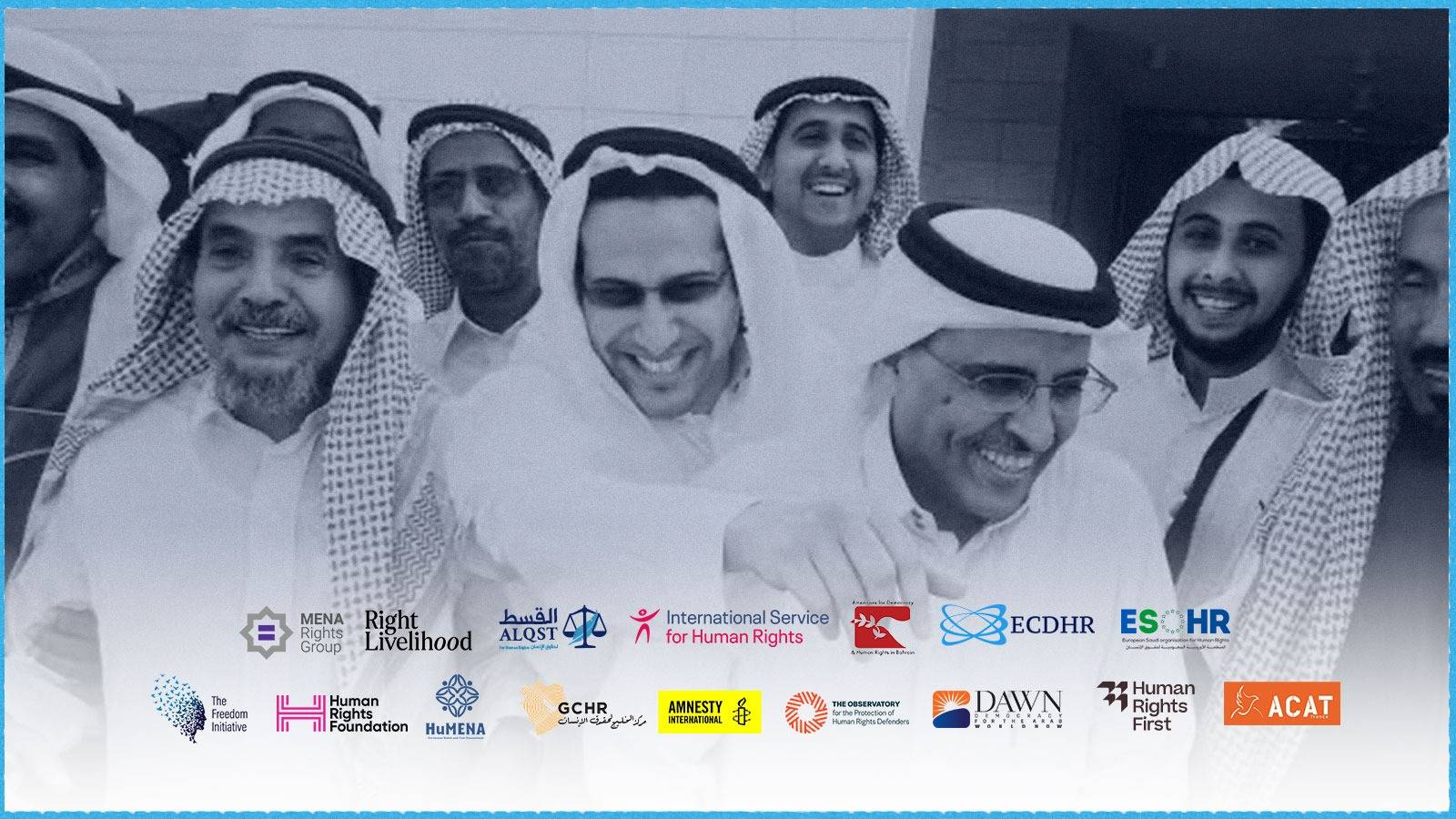
We, the undersigned human rights organisations, call on Saudi authorities to reveal the health condition  of and immediately and unconditionally release prominent Saudi human rights defender and co-founder of the now dissolved Saudi Civil and Political Rights Association (ACPRA)*, Dr. Mohammed al-Qahtani, who has been detained incommunicado for six months. We also call for the immediate and unconditional release of four ACPRA members who remain in arbitrary detention.

Today, 24 April 2023, marks six months since prominent Saudi human rights defender and co-founder of the Saudi Civil and Political Rights Association (ACPRA)* Mohammed al-Qahtani last contacted his family. Since then, the authorities have subjected him to incommunicado detention. Al-Qahtani served his full sentence in November 2022. Five ACPRA members remain imprisoned in reprisal for their peaceful human rights activism: Mohammed al-Qahtani, Essa al-Hamid, Mohammed al-Bajadi, Fawzan al-Harbi, and Abdulaziz al-Shubaili.

Mohammed al-Qahtani was arbitrarily arrested in March 2012 and interrogated regarding his work with ACPRA and his peaceful activism. On 9 March 2013, the Criminal Court in Riyadh sentenced him to 10 years in prison to be followed by a travel ban of equal length on charges including “breaking allegiance to the ruler”, “questioning the integrity of officials”, “seeking to disrupt security and inciting disorder by calling for demonstrations”, and “instigating international organizations against the Kingdom.” The authorities failed to release Al-Qahtani  on 22 November 2022, when he finished serving his prison sentence. However, since 24 October 2022, Saudi authorities have denied him any contact with his family and continue to keep him in incommunicado detention. 

Despite al-Qahtani’s wife making several inquiries about him to al-Ha’ir prison, where al-Qahtani was serving his sentence, prison officers continue to refuse to disclose any information about him. His family has reasons to believe that he has entered into a hunger strike and his health has considerably deteriorated, putting his life at imminent risk. This is not the first time Mohammed al-Qahtani was denied contact with his family. In April 2021, he was held incommunicado after testing positive for Covid-19, raising fears regarding his health and well-being for the duration of his illness. For the past 10 years of imprisonment, security forces  subjected al-Qahtani to inhumane and degrading conditions of detention, and they have also subjected him to torture and ill-treatment, including beatings.

We are all the more concerned about -al-Qahtani’s well-being considering the death of ACPRA co-founder Abdullah al-Hamid in detention on 23 April 2020. Abdullah al-Hamid suffered from hypertension, and his doctor told him three months before he passed away that he needed to undergo heart surgery. He was threatened by prison authorities that if he told his family about his health condition, they would cut his communication with his family. Dr Abdullah al-Hamid had suffered a stroke on 9 April 2020 and remained in detention, despite being in a coma in the intensive care unit at al-Shumaisi Hospital in Riyadh.

Following al-Hamid’s death, the Saudi authorities carried out a wave of arrests against several individuals who expressed sympathy over his passing.

Created in 2009 by 11 human rights defenders and academics, ACPRA was established to promote and protect fundamental rights and freedoms in Saudi Arabia, including through promoting constitutional reforms. While ACPRA was never officially registered by the government, it was formally banned as an organization and dissolved by court order in 2013. As of May 2016, all of its 11 members had been sentenced by the Specialized Criminal Court (SCC) to lengthy prison sentences ranging between seven and 15 years for their human rights activism and cooperation with the United Nations human rights mechanisms.

In light of the above, we, the undersigned organisations, reiterate our call on the Saudi authorities to immediately and unconditionally release Mohammed al-Qahtani and other imprisoned members of ACPRA who are arbitrarily detained solely for their peaceful activism. In the interim, we call on the authorities to disclose the fate and whereabouts of Mohammed al-Qahtani, ensure immediate contact with his family, and provide him with any medical care he may need. Saudi Arabia should ensure a free and enabling environment for all human rights defenders, in order for them to carry out their activities without fear of reprisals and without undue restrictions.See also: https://www.trueheroesfilms.org/thedigest/laureates/78383825-0b3f-4bca-883a-b81e1baecd09

Among the co-founding members of ACPRA, five remain imprisoned today: Dr Mohammed al-Qahtani (sentenced to 10 years in prison followed by a 10-year travel ban. He completed his sentence in November 2022, yet remains in detention incommunicado); Mohammed al-Bajadi (sentenced to four years in prison, four years of suspension followed by a 10-year travel ban, and currently detained since May 2018); Abdulaziz al-Shubaili (sentenced to eight years in prison followed by an eight-year travel ban); Fowzan al-Harbi (sentenced to 10 years in prison followed by a 10-year travel ban); Essa al-Hamid (sentenced to 11 years in prison, followed by an 11-year travel ban). Sheikh Sulaiman al-Rashudi (sentenced to 15 years in prison and a 15-year travel ban. He was released in April 2018 for medical reasons; Abdulkarim al-Khodr (sentenced to 10 years in prison, followed by a 10-year travel ban. He was released in January 2023 upon the completion of his sentence but remains subject to the travel ban);  Abdulrahman al-Hamid sentenced to 9 years in prison, followed by a 9-year travel ban. He was released in January 2023 upon the completion of his sentence but remains subject to a travel ban); Dr Abdullah al-Hamid (sentenced to 11 years in prison followed by an 11-year travel ban), passed away on 23 April 2020 in custody. Abdullah al-Hamid and Mohammed al-Qahtani, alongside Waleed Abu al-Khair, have received the Right Livelihood Award in November 2018.

Signatories:

  • MENA Rights Group
  • Right Livelihood
  • ALQST
  • International Service for Human Rights (ISHR)
  • Americans for Democracy & Human Rights in Bahrain (ADHRB)
  • European Center for Democracy and Human Rights (ECDHR)
  • European Saudi Organization for Human Rights (ESOHR)
  • Freedom Initiative
  • Human Rights Foundation (HRF)
  • HuMENA for Human Rights and Civic Engagement
  • Gulf Centre for Human Rights (GCHR)
  • Amnesty International
  • International Federation for Human Rights (FIDH), in the framework of the Observatory for the Protection of Human Rights Defenders
  • World Organisation Against Torture (OMCT), in the framework of the Observatory for the Protection of Human Rights Defenders
  • Democracy for the Arab World Now (DAWN)
  • Human Rights First
  • Action des Chrétiens pour l’abolition de la torture (ACAT France)

See the full Joint Statement here.

NGOs demand adequate medical treatment and access to Abdulhadi Al-Khawaja in Bahrain

May 25, 2023

14 NGOs call on Bahrain to ensure that human rights defender Abdulhadi Al-Khawaja is allowed adequate medical treatment, as well as the right to access and respond to allegations made by the Government of Bahrain in a response to a UN communication.

In a joint communication made public on 4 May 2023, six UN experts – including the Special Rapporteur on the situation of human rights defenders, Mary Lawlor, and the Vice-Chair of the Working Group on Arbitrary Detention, Mumba Malila – expressed their utmost concern at the continued arbitrary detention of human rights defender Mr. Al-Khawaja. He is a widely recognised HRD, see: https://www.trueheroesfilms.org/thedigest/laureates/4d45e316-c636-4d02-852d-7bfc2b08b78d

The UN communication addresses troubling allegations of torture, ill treatment and poor prison conditions of Mr. Al-Khawaja, including intimidation, restriction of communication with family, deprivation of basic rights, including his inability to give power of attorney to his lawyer in court, as required, shackling of hands, despite doctors’ orders to the contrary, as well as fabrication of cases against him and other political prisoners in Bahrain.

The UN communication was sent to the Government of Bahrain on 17 February 2023 and remained confidential for 60 days, as is UN protocol. The Government of Bahrain replied to the six UN experts on 17 April 2023, which was recently translated and made publicly available.

The Government of Bahrain’s response denies that Mr. Al-Khawaja has been subject to torture. This is contradicted by findings from the Bahrain Independent Commission of Inquiry (BICI), which was established by the King of Bahrain and medically documented that Al-Khawaja was subjected to torture and sexually assaulted by security forces in 2011. Furthermore, the Government of Bahrain’s response fails to adequately recognize Mr. Al-Khawaja as a human rights defender or acknowledge the arbitrary nature of his detention.

On more than one occasion, Mr. Al-Khawaja attempted to receive information over the phone about the nature of the UN communication, including the Government of Bahrain’s response, but the calls were systematically cut by the authorities. Therefore, Mr. Al-Khawaja officially requested through his lawyer that he be allowed a hard copy of the mentioned documents. The signatories call on Bahrain to ensure that the request is honored.

In addition, Mr. Al-Khawaja has continued to be repeatedly denied access to a cardiologist, as well as other appointments with relevant doctors, despite being at risk of a heart attack or stroke at any time. As recently as the past two weeks, Mr. Al-Khawaja was denied two medical appointments, the most recent being on Thursday 11 May 2023.

Since 9 May 2023, Mr. Al-Khawaja has protested in the yard of Jaw Prison on a daily basis holding up two signs in front of the CCTV cameras stating “Treatment prevention is slow systematic killing” and “You commit torture and prevent treatment” in order for him and his fellow prisoners of conscience to be allowed his necessary medical appointments. He informed his family on 14 May 2023 that he has suspended his protest temporarily due to promises made by the prison administration to improve conditions and allow access to adequate treatment.

The signatories call on the Government of Bahrain to:

  1. Immediately and unconditionally release human rights defender Abdulhadi Al-Khawaja, as well as all other prisoners of conscience.
  2. Ensure that Abdulhadi Al-Khawaja is taken to the necessary medical appointments for diagnostics and treatment.
  3. Ensure that Abdulhadi Al-Khawaja obtains the requested documents related to the UN communication and that he is allowed a written response.

Signatories:

  • The #FreeAlKhawaja Campaign
  • Gulf Centre for Human Rights (GCHR)
  • Americans for Democracy & Human Rights in Bahrain (ADHRB)
  • European Center for Democracy and Human Rights (ECDHR)
  • CIVICUS
  • Global Citizen
  • Rafto Foundation for Human Rights
  • Danish PEN
  • The Martin Ennals Foundation
  • IFEX
  • Bahrain Institute for Rights and Democracy (BIRD)
  • Front Line Defenders
  • DIGNITY – Danish Institute Against Torture
  • Freedom House

HRC52: CIVIL SOCIETY PRESENTS KEY TAKEAWAYS FROM HUMAN RIGHTS COUNCIL

May 9, 2023

With quite a bit of delay I reproduce here the rsults of the 52nd session of the UN Human Rights Council. [see: https://humanrightsdefenders.blog/2023/03/02/human-rights-defenders-at-the-52nd-session-of-the-un-human-rights-council/].

  • The 52nd regular session of the Human Rights Council (HRC52) was held from Monday 27th February to Tuesday 4th April 2023.
  • On 7 March, the UN High Commissioner for Human Rights, Mr. Volker Türk presented an oral update on the human rights situation around the world. In his intervention, the High Commissioner referred to several situations around the world that raise human rights concerns and highlighted several developments. During the session, the High Commissioner also provided oral updates on Nicaragua and on Sudan on March 3,  on the Bolivarian Republic of Venezuela on March 21, on the Democratic Republic of the Congo on March 30, and on Ukraine on March 31. These oral updates given by the High Commissioner provided the basis for the general debate under Item 2 on 7th and 8th March.
  • Ten new Special Procedures mandate-holders were appointed to the following mandates: the Special Rapporteur on the situation of human rights in the Russian Federation, the Special Rapporteur on the right to development, one member to the Working Group of Experts on People of African Descent (from Asia-Pacific States), four members to the Expert Mechanism on the Right to Development (one member from African States, one from Asia-Pacific States, one from Eastern European States and one from Western European and other States), two members to the Expert Mechanism on the Rights of Indigenous Peoples (one from Asia and one from the Arctic), and one member to the Working Group on Enforced or Involuntary Disappearances (one member from Latin American and Caribbean States).
  • 43 texts (all resolutions) were considered by the Council. This represents a 23% increase in the number of adopted texts compared to one-year prior (HRC49). Of the 43 adopted texts, 28 were adopted by consensus (65%) and 15 by a recorded vote (35%).
  • After adopting 43 resolutions, the Council extended the mandates of nine thematic mandate-holders (i.e., adequate housing, foreign debt, freedom of opinion and expression, human rights defenders, migrants, minority issues, racism, sale and sexual exploitation of children, and torture), and nine country mandate-holders (i.e., Belarus, Democratic People’s Republic of Korea, the Islamic Republic of Iran, Mali, Myanmar, Nicaragua, South Sudan, Syrian Arab Republic, and Ukraine).

16 NGOs made a joint analysis:

That this Council has chosen to blatantly ignore the findings of the Fact Finding Mission (FFM) on Libya and end its mandate at a time when crimes against humanity are being perpetrated, with no sign of abating, is shocking. That it is set to replace it with a capacity-building resolution, with no ongoing monitoring and investigative component, is shameful. It sends a to message to abusive militias and armed groups that they can continue to perpetrate crimes under international law without fear of consequences. These crimes include arbitrary detention, murder, rape, enslavement, sexual enslavement, extrajudicial killing and enforced disappearance in detentions, and increasingly, repressive measures against civic groups.  David Yambio, a co-founder and speaker of the self-organized protest movement Refugees in Libya and a refugee in Libya who was forcibly conscripted by the RADA militias, and sent to war fronts, asked UN Member States in his statement before the Council, if the mandate of the FFM on Libya is discontinued who will document the violations in Libya, including against migrants, and how will the victims find justice and accountability.  Instead of appeasing unaccountable warlords and officials, the Council should let victims of violations in Libya and their loved ones know that they matter, and that committing a crime comes at a cost because no one is above the law. As a matter of priority, as per the FFM’s recommendations, the Council should establish an independent international investigative mechanism and an OHCHR established autonomous mechanism to monitor and report on gross human rights violations. See also: https://www.hrw.org/news/2023/04/07/weak-un-resolution-libya-exposes-eu-bias

We are deeply concerned by the push to undermine language on gender based discrimination and violence evidenced by the amendments tabled to replace gender with sex, or gender responsive with gender sensitive, across resolutions. This is a continuation of the trend at HRC sessions to deliberately use disinformation to attack gender equality and measures to address gender based discrimination. We remind States of their obligation to prevent and eliminate gender based discrimination and violence, it is not optional and should not be reduced in its scope. We are also deeply concerned by the attempts by some States to question the fact that a clean, healthy and sustainable environment is a universal human right, despite the recognition of this right by both the HRC and the UNGA, and in the context of the triple planetary crisis and the strong demands for environmental justice across the world. We are equally concerned about growing and coordinated efforts to undermine or outright delete standard language on the need for a ‘human rights based approach’ to development and other rights agendas, offering as a subpar substitute undefined and duplicative concepts such as a ‘people-centered approach.’ 

We welcome the adoption of the resolution on the human right to a clean, healthy and sustainable environment. The fact that all tabled amendments were massively rejected and that no State eventually called for a vote shows how much this right is important for the work of the HRC and for the international community as a whole.

We welcome the resolution on the contribution of the Human Rights Council with regard to the human rights implications of drug policy, which comes at a critical time, as States prepare for next year’s mid-term review of the 2019 political declaration. It underlines the role of the Human Rights Council, as the UN’s premier human rights body, in contributing to human rights strengthening throughout the UN system.  We welcome that the resolution promotes an approach centered on human rights and public health, including harm reduction, and that some of the amendments tabled to weaken this approach were rejected, but we regret that other amendments aimed at continuing a harmful and punitive approach to drugs were adopted. We now call on States to ensure that they comply with their human rights obligations in the design and implementation of drug policies.

Civil society participation is a cornerstone of the HRC. It brings voices from local communities and organisations who can effectively inform the HRC of human rights priorities and needs on the ground. Yet the special emergency measures and ongoing budget constraints adopted by the HRC in 2019, 2020, 2021 and 2022, coupled with measures adopted to respond to the Covid-19 crisis, and the ongoing Strategic Heritage Plan, have heavily restricted civil society participation at the HRC. We appreciate the reinstatement of side events and request that the Council continues to work with UNOG and New York to ensure that side events are kept in place amidst the implementation of the Strategic Heritage Plan. We reiterate our calls on the HRC to maintain hybrid modalities (remote participation in all debates and informal consultations) for all Observers of the HRC (States and civil society organisations with ECOSOC status), as complementary to in-person participation; to reinstate General Debates in June sessions and maintain them unrestricted; and to ensure that efficiency is not prioritised over effectiveness, expertise and inclusiveness, including by addressing the chronic underfunding of the UN’s human rights pillar. Furthermore, civil society must be able to access and communicate with the HRC freely and safely. They should not be intimidated nor suffer reprisals related to that engagement.

We welcome the renewal of the mandate of the Special Rapporteur on Human Rights Defenders. Coinciding with the 25th anniversary of the Declaration on HRDs and the 75th anniversary of the Universal Declaration of Human Rights, this reflects that the unhindered work of defenders is integral to the realisation of all human rights for all people, particularly those who have suffered discrimination or repression.

We welcome the renewal of the Special Rapporteur on the promotion and protection of the right to freedom of opinion and expression, on the thirty-year anniversary of the creation of the mandate. Over 30 years, the mandate has played an essential role in creating a robust set of international standards and shaping how we understand the right to freedom of expression in the digital age, as well as responding to violations and helping ensure accountability and justice.

We welcome the renewal of the mandate of the Special Rapporteur on the sale, sexual exploitation and sexual abuse of children. We welcome the change in the title of the mandate in line with the Luxembourg Guidelines and the inclusion of children among the stakeholders the mandate should consult with.

We welcome the resolution on the situation of human rights in Belarus in the run-up to the 2020 presidential election and in its aftermath, given the strong report of the High Commissioner following the OHCHR examination of the human rights situation in Belarus, and the need to renew the mandate of the mechanism. However, we express disappointment that the call of Belarusian and international organisations to establish an independent investigative mechanism went unheeded.

We welcome the adoption by consensus of the resolution on the situation of human rights in the Democratic People’s Republic of Korea (DPRK) which renews the mandates of the Special Rapporteur and the OHCHR Seoul office, which are key avenues for accountability for victims and survivors. The consensus adoption demonstrates the isolation of the North Korean government and the universal condemnation of its grave violations of the human rights of its people. States should support efforts to document and preserve evidence of crimes for future prosecutions, and explore other pathways to bring to account those responsible for serious international crimes committed in North Korea.

We welcome the resolution on cooperation with Georgia, however we strongly urge Georgia to remain focused on addressing the human rights challenges in the territory within its control, not just in the Georgian territories of Abkhazia and the Tskhinvali region/South Ossetia.

While we welcome the resolution on technical assistance in Haiti, we regret that the Human Rights Council took years before putting Haiti back on its agenda.  Since the discontinuation of the independent expert in March 2017, the human rights situation in Haiti has deteriorated rapidly. The security crisis has exacerbated inequalities and has pushed thousands of Haitians to be forcibly displaced. This situation has been noted by the report of the OHCHR of February 2023 and by the High Commissioner himself after his official visit earlier this year. We also welcome that the resolution envisages the creation of an Office of the High Commissioner in the future.

We welcome the adoption of the resolution on the situation of human rights in the Islamic Republic of Iran, and the change of approach from a purely procedural resolution merely renewing the mandate of the UN Special Rapporteur on human rights in Iran to a more substantial resolution addressing some of the key issues of concern, including violations committed in the context of the repression of recent protests, violations of the rights of women and girls and of minorities, illegal use of the death penalty and persistent impunity for violations of human rights. For the first time ever, the HRC has adopted a resolution, through which it collectively expresses alarm at these “widespread, repeated and persistent” violations and urges Iranian authorities to take action on them. We also welcome the increased support from States from all regions to this resolution, and we note with appreciation that opposition to the renewal of the mandate has significantly decreased at this session, reflecting growing concerns with the situation of human rights in Iran since the repression of the protests started in September 2022 following the custodial death of Jina Mahsa Amini.  

We welcome the resolution on the situation of human rights in Myanmar maintaining the situation high on the agenda of the HRC and reaffirming the Council’s collective condemnation of the grave violations and abuses of international human rights and humanitarian law in the country. However, we regret that despite clear, repeated calls by the Special Rapporteur and civil society, the Council once again failed to call for a comprehensive arms embargo on Myanmar to prevent the ongoing violations, especially indiscriminate airstrikes on civilians and civilian infrastructure.

We welcome the resolution on the promotion and protection of human rights in Nicaragua that consolidates and extends for two years the mandates of the Group of Human Rights Experts and the OHCHR, with a new emphasis on violence against Indigenous Peoples and Afrodescendants, those forcibly displaced and striped of nationality, and reprisals, including against EMRIP member Anexa Cuningham. The exceptional two-year extension is a sheer reflection of the sustained worsening and gravity of the country’s human rights crisis – where the Group of Experts found crimes against humanity -, fueled by the government’s unprecedented lack of engagement with the UN system. The Group of Experts will be able to deepen its investigation, further identify perpetrators, and preserve evidence for justice processes.

We welcome the resolution on the situation of human rights in Ukraine stemming from the Russian aggression. The report of the Independent International Commission of Inquiry (COI) was clear: war crimes are being committed in Ukraine and the patterns of serious violations suggest other crimes are likely being committed as well, including crimes against humanity. Given the need for further investigation, the HRC is right to mandate the COI for a further year.

We welcome the renewal of the mandate of the Commission of Inquiry on Syria and call on the Council to continue to support scrutiny and accountability for gross human rights violations committed in Syria. We welcome the language in the resolution in support of the establishment of an international mechanism for the missing in Syria, and we call on UN Member States to support the creation of such an institution at the General Assembly.

We welcome the adoption of a resolution that further extends the mandate of the Commission on Human Rights in South Sudan. Such a mechanism remains vital as the conditions that prompted the Council to establish the Commission, in 2016, have not significantly changed to warrant less scru­tiny. Regarding this and other country situations, the Council should stand steadfast in support of accountability for grave violations. We stress that a purely technical assistance and capacity-building focus would be unsui­table to tackle South Sudan’s serious human rights challenges and would risk further emboldening those who perpetrate the most serious crimes.

We regret that the Council failed to respond adequately to several human rights situations including Algeria, China, Egypt, India, and Saudi Arabia.

We regret that the Council failed to respond to the situation in Algeria. Since the beginning of the Hirak pro-democracy movement in Algeria, more than 5500 Algerians have been prosecuted for exercising their fundamental rights and freedoms. According to the documentation of activists in the country, more than 70% of the people detained are in pre-trial detention. In the context of heightening repression against activists and closure of civic space, more than 500 individuals are prosecuted on the basis of so-called terrorism charges pursuant to the 2021 amended article 87 bis of the penal code. Between 2022 and 2023, four Algerians were condemned to lengthy prison sentences ranging between 10 and 15 years on the basis of this article. UN Special Procedures have continued to address the situation in Algeria, regarding the increased use by the authorities of ‘national security laws to prosecute people who exercise their rights to freedoms of opinion and expression, and peaceful assembly and association’ and raise ‘alarm at the extent of crackdown on dissent in Algeria’. In her statement on 22 February 2023, Special Rapporteur on human rights defenders addressed the dissolution of two leading human rights associations, and said “acts of intimidation, silencing and repression against the human rights movement must end”. Algeria, a member of the Council, is failing to cooperate with the Council and its mechanisms, including in the context of the UPR review where Algeria did not accept several important recommendations, especially with regards to amending the counter-terrorism law to meet international law requirements, to guarantee the protection of human rights defenders, and fundamental freedoms, including freedom of assembly and expression.

We regret the ongoing failure of the Council to respond meaningfully to the OHCHR Xinjiang report through a resolution on China. The Council’s ‘China exceptionalism’, facilitated by but by no means solely attributable to the OIC’s shameful double-standards, not only weakens its credibility but also undermines the confidence of victims and human rights defenders everywhere in its ability to respond to international crimes orchestrated by the most powerful governments. With a historic Urgent Action ruling by the CERD in November, countless Treaty Bodies recommendations, an OHCHR report, and three joint statements by over 40 Special Procedures experts, the UN system cannot be clearer: the crisis is severe, and so should be the Council’s response to it.

We regret that the Council failed to respond to the situation in Egypt. Egyptian and international civil society organisations have been calling on the  Council to adopt a resolution on the human rights situation in Egypt. The human rights situation in Egypt merits the Council’s attention according to the objective criteria which States from all regions have committed to apply on whether a situation merits the HRC’s attention. Yet, civil society’s request for HRC action at the 52nd session was declined. WHRD Sanaa Seif, sister of arbitrarily detained British-Egyptian human rights defender Alaa Abdel Fattah, came to the HRC to advocate for her brother’s release and the thousands others arbitrarily detained in Egypt. She told the Council “you can’t keep turning a blind eye on Egypt”, and urged the Council to address the human rights crisis in Egypt.

We regret that the Council once again failed to respond to the situation in India, despite the systematic rollback of fundamental freedoms, the rule of law and independent institutions as well as the ongoing harassment, intimidation and criminalisation of human rights defenders, journalists, and dissidents, and targeting of civil society organisations using national security and counter-terrorism infrastructure. The Council also has responsibility to take appropriate action to prevent potential atrocity crimes against minorities, especially Muslims, as a result of the increasing discrimination and incitement to violence often by Hindu nationalist leaders.

We regret that the Council failed to respond to the situation in Saudi Arabia, where the situation meets the objective criteria. According to ALQST’s 2022 annual report, the Saudi authorities continue patterns of abuse, including arbitrary arrests, severe jail sentences for peaceful, legitimate activity on social media, enforced disappearances, systemic gender discrimination, and harsh restrictions on prisoners of conscience released from prison, including travel bans, thus further deepening the climate of fear. We reiterate our call on the HRC to create a monitoring and reporting mechanism on the ever-deteriorating human rights situation in Saudi Arabia.

Signatories:

  1. ARTICLE 19
  2. Asian Forum for Human Rights and Development (FORUM-ASIA)
  3. Association for Progressive Communications (APC)
  4. Cairo Institute for Human Rights Studies (CIHRS)
  5. Child Rights Connect
  6. CIVICUS: World Alliance for Citizen Participation
  7. Commonwealth Human Rights Initiative (CHRI)
  8. DefendDefenders (East and Horn of Africa Human Rights Defenders Project)
  9. Franciscans International
  10. Gulf Centre for Human Rights
  11. Impact Iran
  12. International Bar Association’s Human Rights Institute (IBAHRI)
  13. International Federation for Human Rights (FIDH)
  14. International Service for Human Rights
  15. Southern Africa Human Rights Defenders
  16. World Uyghur Congress

https://www.universal-rights.org/uncategorized/report-on-the-52nd-session-of-the-human-rights-council/

https://mailchi.mp/ishr/ishrs-human-rights-council-monitor-april2023?e=d1945ebb90

ISHR launches its 2023 Annual Report, highlighting ‘wins’

April 25, 2023

Human rights defenders around the world are coming together in powerful coalitions and turning to international human rights laws and systems to achieve justice and accountability. And while the threats and challenges remain enormous, we’re starting to win! says ISHR in its latest annual report, outlining key impacts during the last year and its vision for 2023 and the years ahead.

Here are just a few examples:  In July 2022, a coalition of more than 1200 NGOs from almost 150 countries secured a win for equality with the renewal of a vital international mechanism to combat violence and discrimination on the grounds of sexual orientation or gender identity. Just a few weeks later, land, environment and indigenous rights defenders secured a win for climate justice with the landmark recognition of the right to a clean, healthy and sustainable environment at the UN General Assembly. Wins for accountability were achieved in April and October when international, regional and national civil society organisations coordinated successful campaigns to suspend Russia from the UN Human Rights Council and establish an independent international expert monitoring mechanism on the human rights situation in the country. International human rights organisations and Uyghur communities came together to score a win against impunity in August by securing the release of a landmark UN Rights Office report on the human rights crisis in Xinjiang, as well as the first ever formal initiative on China at the Human Rights Council just weeks later in September.

See more achievements by visiting the website!
In a recent conversation with Björk, environmental activist Greta Thunberg reflected that hope is not something you feel, but something you do. ‘When people act,’ she said, ‘they create hope’. In 2023, fuelled by indignation and sustained by hope, ISHR’s commitment is to provide solidarity to defenders, contribute to positive momentum and, with your support, achieve even more significant human rights wins!

https://mailchi.mp/ishr/ishrs-human-rights-council-monitor-june-33837?e=d1945ebb90

10 Organisations Demand The Dropping Of Charges Against Journalist Nguyen Lan Thang in Viet Nam

April 13, 2023

On 11 April 2023 10 NGOs demanded the dropping of charges against journalist Nguyen Lan Thang and a fair trial by admitting observation.

Dear President Võ Văn Thưởng,

We are writing to express our concern about the ongoing persecution of Mr Nguyen Lan Thang, a journalist, and we demand that he be released immediately, and all charges dropped against him. Mr Nguyen Lan Thang is a victim of persecution by the Vietnamese government and has been criminally charged due to his work as a journalist. Mr Nguyen Lan Thang is one of many journalists and activists throughout the country who is facing ongoing persecution for reporting of the government of Viet Nam in a critical manner.

On 5 July 2022, Mr. Thang was arrested for “making, storing, distributing, or disseminating information, documents, and items against the State” under article 117 of the 2015 Criminal Code. He has been held in incommunicado detention in Hanoi’s Detention Centre No. 1 for more than seven months, during which time he was prohibited from meeting with his family members and legal counsel. After being arrested in July 2022, he did not meet his lawyer for the first time until 16 February 2023.

According to his lawyers, Mr. Thang will be tried on 12 April 2023 at a closed hearing at Hanoi’s People’s Court. Failing the dropping of charges and release of Mr Nguyen Lan Thang before the trial commences, we demand that his right to a fair trial be upheld, at least in part, by ensuring that media and the public may observe it, as is the obligation of the state of Viet Nam under the International Covenant on Civil and Political Rights (ICCPR).

The right to a public trial is guaranteed under Article 14 of the ICCPR with few exceptions. We understand that Mr Nguyen Lan Thang has been denied this human right. According to Article 14 of the ICCPR:

“the press and the public may be excluded from all or part of a trial for reasons of morals, public order (order public) or national security in a democratic society, or when the interest of the private lives of the parties so requires, or to the extent strictly necessary in the opinion of the court in special circumstances where publicity would prejudice the interests of justice; but any judgment rendered in a criminal case or in a suit at law shall be made public except where the interest of juvenile persons otherwise requires or the proceedings concern matrimonial disputes or the guardianship of children.”

Paragraph 28 of General Comment No 32 of the Human Rights Committee clarifies that the importance of public hearings “ensures the transparency of proceedings and thus provides an important safeguard for the interest of the individual and of society at large”. The Committee has made clear in paragraph 29 that the special circumstances that allow exclusion of the press and public from a trial are “exceptional circumstances”, and otherwise a trial must be open to ensure transparency and assist in guaranteeing the human right to a fair trial.

Despite efforts to obtain further information on the charges and the rationale the court has adopted in excluding the press and public from the trial of Mr Nguyen Lan Thang, there is no information that we possess that indicates any exceptional circumstances exist that would allow the closed nature of this trial under international human rights law.

Accordingly, we demand that the right to fair trial is respected and that members of the public, the press, the United Nations, and the diplomatic community be allowed to monitor the proceedings. We call on the government of Viet Nam, including its courts, to uphold their international obligations and ensure the human rights of those within the justice system.

Yours sincerely,

  • Access Now
  • Amnesty International
  • ARTICLE 19
  • Asian Forum for Human Rights and Development (FORUM-ASIA)
    CIVICUS: World Alliance for Citizen Participation
  • Front Line Defenders
  • Human Rights Watch
    People In Need
  • The Project 88
  • Vietnamese Advocates for Change

See also: https://humanrightsdefenders.blog/2023/03/29/vietnam-should-drop-charges-against-human-rights-defender-truong-van-dung/

Overview of 20 NGO Job Types: Salaries, Qualifications, Tasks

April 11, 2023

Millions of small and large NGOs (non-governmental organizations) work independently of governments around the world. You can work for NGOs dedicated to issues like healthcare, education, economic development, children’s rights, reproductive justice, and humanitarian aid, but what types of jobs are available? In this article, Human Rights Careers describes 20 types of NGO jobs, including what salaries you can expect, what qualifications you need, and what tasks you might be responsible for. The overview is slanted towards the USA, but may still serve its purpose:

CampaignerResearcher
Grant WriterEducator
Program AssistantActivism Coordinator
Communications OfficerAdvocacy Officer
Impact AdvisorPolicy Analyst
M&E OfficerInterpreter/Translator
Outreach CoordinatorFinance Officer
AccountantFundraiser
HR OfficerDigital Content Manager
Project ManagerDirector

The 2023 CIVICUS State of Civil Society Report is out

March 30, 2023

On 30 March 2023 the CIVICUS State of Civil Society Report 2023 was published. This is the world as captured by the report:

[for last year’see: https://humanrightsdefenders.blog/2022/06/29/civicus-state-of-civil-society-report-2022/]

Vast-scale human rights abuses are being committed in Ukraine, women’s rights have been trampled on in Afghanistan and LGBTQI+ people’s rights are under assault in Uganda, along with several other African countries. Military rule has been normalised in countries such as MaliMyanmar and Sudan, and democracy undermined by autocratic leaders in El SalvadorIndia and Tunisia, among others. Even supposedly democratic states such as Australia and the UK are undermining the vital right to protest.

But civil society continues to strive to make a crucial difference to people’s lives. It’s the force behind a wave of breakthroughs in respecting abortion rights in Latin America, most recently in Colombia, and in making advances in LGBTQI+ rights in countries as diverse as BarbadosMexico and Switzerland. Mass protests in response to the high cost of living have won concessions on economic policy in countries including Ecuador and Panama, while union organising has gained further momentum in holding big-brand companies such as Amazon and Starbucks to account. Progress on financing for the loss and damage caused by climate change came after extensive civil society advocacy. The events of the past year show that civil society – and the space for civil society to act – are needed more than ever.

Key findings

  • Civil society is playing a key role in responding to conflicts and humanitarian crises – and facing retaliation

Civil society is playing a vital role in conflict and crisis settings – including in conflicts in Ethiopia, Syria and Ukraine – providing essential services, helping and advocating for victims, monitoring human rights and collecting evidence of violations to hold those responsible to account. But for doing this, civil society is coming under attack.

  • Catastrophic global governance failures highlight the urgency of reform

Too often in the face of the conflicts and crises that have marked the world over the past year, platitudes are all international institutions have had to offer. Multilateral institutions have been left exposed by Russia’s invasion of Ukraine. It’s time to take civil society’s proposals to make the United Nations more democratic seriously – starting with the appointment of a civil society champion.

  • People are mobilising in great numbers in response to economic shock – and exposing deeper problems in the process.

As it drove a surge in fuel and food prices, Russia’s war on Ukraine became a key driver of a global cost of living crisis. This triggered a mass wave of protests in at least 133 countries – from Argentina to Indonesia and from Ghana to Kazakhstan – demanding economic justice. Civil society is putting forward progressive economic ideas, connecting with other struggles for rights, including for climate, gender, racial and social justice.

  • The right to protest is under attack – even in longstanding democracies

Many states, unwilling or unable to concede the deeper demands of protests have responded with violence, including in IranSierra Leone and Sri Lanka. The right to protest is under attack all over the world, including when people are mobilising to seek economic justice, democracy, human rights and environmental action. Civil society groups are striving to defend protest rights.

  • Democracy is being eroded in multiple ways – including from within by elected leaders

Economic strife and insecurity are providing fertile ground for the emergence of authoritarian leaders. In more democratic contexts, there are distinct trends of a further embrace of far-right extremism, and of the rejection of incumbency. In volatile conditions, civil society is working to resist regression and keep making the case for inclusive, pluralist and participatory democracy.

  • Disinformation is skewing public discourse, undermining democracy and fuelling hate

Disinformation is being mobilised, particularly in conflicts and during elections, to sow polarisation, normalise extremism and attack rights. Powerful authoritarian states and far-right groups are key sources, and social media companies are doing nothing to challenge a problem that’s good for their business model. Civil society needs to forge a joined-up, multifaceted global effort to counter disinformation.

  • Movements for women’s and LGBTQI+ rights are making gains against the odds

In the face of difficult odds, civil society continues to drive progress on women’s and LGBTQI+ rights. But breakthroughs have made civil society the target of a ferocious backlash. Civil society is working to resist attempts to reverse gains and build public support to ensure that legal changes are backed by shifts in attitudes.

  • Civil society is the major force behind the push for climate action

Civil society continues to be the force sounding the alarm on the triple threat of climate change, pollution and biodiversity loss. Civil society is urging action using every tactic available, from street protest and direct action to litigation and advocacy in national and global arenas. But the power of the fossil fuel lobby remains undimmed and restrictions on climate protests are burgeoning. Civil society is striving to find new ways to communicate the urgent need for action.

  • Civil society is reinventing itself to adapt to a changing world

In the context of pressures on civic space and huge global challenges, civil society is growing, diversifying and widening its repertoire of tactics. Drawing on its special strengths of diversity, adaptability and creativity, civil society continues to evolve. Much of civil society’s radical energy is coming from small, informal groups, often formed and led by women, young people and Indigenous people. There is a need to support and nurture these..

Interviews For more information or to arrange an interview, please contact: media@civicus.org 

https://www.civicus.org/index.php/media-resources/news/6339-civil-society-in-a-world-of-crisis-2023-civicus-state-of-civil-society-report

Tirana Hassan to lead Human Rights Watch

March 29, 2023
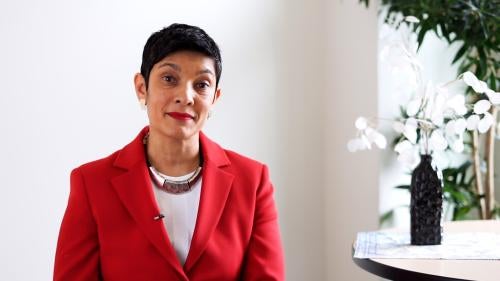
Tirana Hassan

Tirana Hassan, a lawyer and veteran human rights investigator who has documented human rights abuses throughout crises and conflicts globally, has been named the next executive director of Human Rights Watch, the organization announced. Hassan was previously the Human Rights Watch chief programs officer and had been serving as acting executive director since September 2022, following the departure of its long-time leader, Kenneth Roth.

As new executive director of Human Rights Watch, Tirana Hassan brings impeccable credentials as a human rights practitioner and an ambitious vision for human rights solutions to the challenges the world is facing,” said Zeid Ra’ad Al Hussein, CEO and president of the International Peace Institute and the former United Nations High Commissioner for Human Rights. “A hugely experienced activist, Tirana will be a formidable leader and very much a force to be reckoned with!”

With decades of experience in the human rights and humanitarian fields, Hassan, who began her career as a social worker and spent many years working with women and children in conflict and crisis situations, first joined Human Rights Watch in 2010, covering emergencies across Africa, Asia, and the Middle East. She went on to become Amnesty International’s director of crisis response before returning to Human Rights Watch as its chief programs officer in 2020, leading the organization’s research, advocacy, legal, and communications departments.

Tirana has the rare combination of wide-ranging investigative experience, strategic creativity, and a deep commitment to human rights principle that Human Rights Watch needs to tackle the complex human rights challenges the world is facing,” said Kenneth Roth, former executive director at Human Rights Watch, who stepped down in August 2022. “I am thrilled that she will lead Human Rights Watch into the future.”

When she headed Amnesty International’s crisis team, Hassan oversaw the development of innovative uses of technology to advance human rights investigations in Myanmar, Syria, and other crisis areas. She brings a proven track record of developing ambitious programs to address critical human rights issues and will lead the Human Rights Watch’s work with activists, survivors, and civil society to head off the rising threats to human rights around the world.

One of Hassan’s priorities will be to call out government selective applications of human rights obligations. The swift and bold response to the crisis in Ukraine including a UN Human Rights Council commission of inquiry and multiple condemnations by the UN General Assembly – has shown what is possible when governments work together, while the International Criminal Court’s arrest warrant for Russian President Vladimir Putin shows that no one is beyond the reach of justice. However, the same governments have often at best responded in a lukewarm fashion or at worst turned a blind eye to the plight of other victims. Hassan will focus on using all possible levers to push governments to realize their legal obligations to victims everywhere, including in Afghanistan, Israel and Palestine, Ethiopia, and Iran.

Hassan was born in Singapore to a Pakistani father whose family left India during partition and a Malaysian-born Sri Lankan and Chinese mother. Her family resettled in Australia in the 1970s after her father’s academic research on Singapore’s housing policies triggered the ire of the government, which was cracking down on dissent. She has said family stories of racism, prejudice, and repression helped shape her world view and contributed to her decision to work on behalf of rights for dispossessed people.

After receiving a bachelor’s degree in social work from the University of South Australia, Hassan worked as a social worker in Los Angeles, London, and Adelaide, counseling homeless young people before obtaining a law degree from the University of Adelaide. During her last year of law school, she co-founded the Woomera Lawyers Group, a refugee advocacy organization that provided legal services to asylum seekers detained in Australia’s notorious desert detention center. She represented refugees and asylum seekers from Afghanistan, Iraq, and Iran who were detained in the remote facility and later went on to work in the humanitarian sector. Hassan also holds a master’s degree in international human rights law from Oxford University.

She served as a specialist focusing on the need to provide protection for children and for survivors of sexual and gender-based violence in conflict areas and the natural disaster response across Asia and Africa, with Médecins Sans Frontières, United Nations International Children’s Emergency Fund, and Save the Children.

I’m honored and humbled to lead this exceptional organization at a moment when the defense of human rights feels more urgent than ever,” Hassan said. “I look forward to building on Human Rights Watch’s formidable foundation to uplift the human rights defenders we work with and the communities we serve to put pressure on those in power to realize a rights-respecting future for us all.

For more information on Tirana Hassan, please visit: https://www.hrw.org/about/people/tirana-hassan

https://www.hrw.org/news/2023/03/27/tirana-hassan-lead-human-rights-watch