Posts Tagged ‘NGOs’

Central Asia Leaders Must Deliver on Human Rights Pledges Made at Summit say NGOs

April 26, 2025
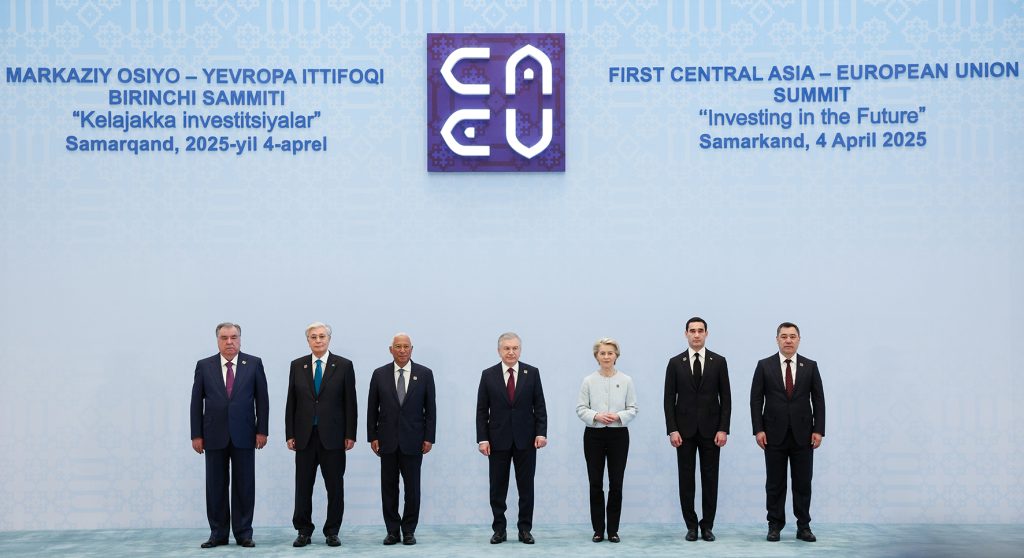
Photo and copyright: European Union.

On 10 April 2025 Civil Rights Defenders, along with seven other international human rights organizations, commend the commitments made at the EU-Central Asia Summit in Samarkand. We urge Central Asian leaders to prioritize human rights and uphold the civil and political freedoms enshrined in their national constitutions and international treaties. The commitments to peace, security, democracy, and the elevation of relations to a strategic partnership must be matched by concrete actions to protect human rights.

On Friday, April 4, the Uzbek city of Samarkand hosted the first ever EU – Central Asia Summit where high-level officials – all five regional presidents and European Council President António Costa and European Commission President Ursula von der Leyen – discussed economic cooperation and agreed to bring their existing partnership to a new strategic level. At the end of the summit, participants issued a joint declaration that, among others, stated their commitment to freedom of expression and association, creating an enabling environment for civil society and independent media, protection of human rights defenders, as well as to respecting the rights of women and children. According to an official press release, the European Commission promised to invest €12 billion in the region to strengthen transport links and deepen cooperation on critical raw materials, digital connectivity, water, and energy.

Paragraph 3 of the joint declaration says: “We are committed to cooperate for peace, security, and democracy, to fully respect international law, including the UN Charter and the fundamental principles of respect for the independence, sovereignty and territorial integrity of all States, within their internationally recognised borders. We emphasised the importance of achieving as soon as possible, a comprehensive, just, and lasting peace in Ukraine in accordance with the principles of the Charter of the United Nations. We emphasized the need to uphold the principles of the OSCE by the participating States. We reconfirmed the obligation of all States to refrain in their international relations from the threat or use of force, to respect international humanitarian law and underlined the need for peaceful resolution of conflicts.”

In paragraph 16, the “EU and Central Asian leaders reiterated that the promotion and protection of rule of law, human rights and fundamental freedoms is a common fundamental value. Ensuring freedom of expression and association, an enabling environment for civil society and independent media, protection of human rights defenders as well as the respect for the rights of women, the rights of the child, and labor rights remain at the core of EU–Central Asia relations. The EU reiterated its readiness to support efforts in this regard at regional as well as at national level.” 

Furthermore, in paragraph 15 the “Participants affirmed the need for their continued commitment to enhanced cooperation and the development of new approaches in the joint fight against organised crime, violent extremism, radicalisation, terrorism, drug trafficking, trafficking in human beings, migrant smuggling, cyber threats, including cybercrime and disinformationas well as addressing Chemical, Biological, Radiological and Nuclear risks whilst safeguarding human rights and media freedom [emphasis added].”

Civil Rights Defenders, International Partnership for Human Rights (IPHR), Araminta, Freedom Now, Norwegian Helsinki Committee, People in Need, International Federation for Human Rights (FIDH), and the World Organisation Against Torture (OMCT) welcome these declared commitments and urge the leaders of each Central Asian nation to take immediate steps to fulfill their promises. They should start by releasing from prison all journalists, bloggers, lawyers, human rights defenders, civil society activists, and political opponents who have been prosecuted and convicted on retaliatory and unsubstantiated charges. They should also repeal legislation containing provisions that directly contradict their declared commitment to human rights standards. 

The Central Asian governments should also end–and establish safeguards to prevent–the misuse of anti-extremism and anti-disinformation policies and security tools to restrict, persecute, and/or criminalize legitimate civil society activity. While enhanced cooperation in the joint fight against organized crime, violent extremism and terrorism, and disinformation are a welcome development, these types of laws and cooperation initiatives have been instrumentalized by the Central Asian governments against legitimate civil society actors, media and political opposition activists, including for imprisonment on lengthy sentences and transnational repression extending to the territory of the European Union. 

In particular:

  • In Kazakhstan, President Kassym-Jomart Tokayev should order the release from custody of activist Aigerim Tleuzhanova, political opposition party leader Marat Zhylanbayev, satirist blogger Temirlan Ensebek, and labor rights activist Erzhan Elshibayev among others prosecuted on politically motivated charges, We believe that these individuals were targeted in direct retaliation for exercising their civil and political rights, and authorities have failed to provide any credible evidence to support the allegations levelled against them. Kazakh authorities should repeal or thoroughly revise broadly worded criminal code provisions penalising the involvement in ‘’extremist’’ activities, ‘’incitement’’ to discord and the spread of ‘’false’’ information, which are frequently misused to target critics, including in some of the cases mentioned above. Kazakh authorities should also drop their declared plans to adopt a so-called “foreign agents’” law, cease the public attacks on the LGBTIQ community, and end reprisals against NGOs-recipients of foreign grants.
  • In Kyrgyzstan, it is welcome that President Sadyr Japarov pardoned Temirov Live associated journalist Azamat Ishenbekov this week, although he should not have been imprisoned in the first place. Authorities should also quash the charges against his colleagues convicted on similar charges, releasing Makhabat Tajibek Kyzy  and lifting the probational sentences imposed on Aike Beishekeyeva and Aktilek Kaparov. We believe all four journalists were targeted in retaliation for their critical opinions and independent journalism. Authorities should also release independent journalist Kanyshay Mamyrkulova and drop the criminal charges initiated against her and others in apparent retaliation for social media posts critical of the government. In addition, they should reverse the court ruling that ordered the liquidation of independent news organization Kloop Media and stop pressuring other independent media. They should repeal the law on so-called “foreign representatives” and revoke vaguely worded provisions that prohibit the dissemination of “false’’, defamatory or insulting information, as well as content that ‘’promotes non-traditional sexual relations’’. This legislation severely violates the fundamental freedoms of expression, association, and assembly.
  • In Tajikistan, President Emomali Rakhmon should take immediate steps to release from prison the eight independent journalists Rukhshona Hakimova, Abdusattor Pirmuhammadzoda, Ahmad Ibrohim, Abdullo Ghurbati, Daler Imomali, Khurshed Fozilov, Khushom Gulyam, and Zavqibek Saidamini. Human rights activists and lawyers Ulfatkhonim Mamadshoeva, Buzurgmehr Yorov, Manuchehr Kholiknazarov, and Faromuz Irgashov should also be freed without delay. By imprisoning these individuals the Tajik authorities have cemented a climate of fear among civil society actors – a record that must be reversed. Tajik authorities should also cease its continued crackdown in the Gorno-Badakshan Autonomous Region and its systematic use of transnational repression to target government opponents abroad, including in EU countries. Several individuals who were forcibly returned to Tajikistan in  2024 were tortured, arrested and handed lengthy prison sentences after closed trials. 
  • In Turkmenistan, President Serdar Berdimuhamedov should take concrete steps to rectify his government’s extremely poor human rights record, free political prisoners, and allow space for an independent civil society to develop. The government should publicly declare tolerance towards criticism in the media and end wide ranging internet censorship. Authorities should immediately end attacks and harassment of critics of the regime both inside the country and abroad, including veteran human rights defender and journalist Soltan Achilova, who has repeatedly been barred from leaving the country. They should also decriminalize homosexuality while adopting legislation to criminalize domestic violence.  
  • In Uzbekistan, President Shavkat Mirziyoyev should order to quash wrongful convictions and free from prison and retaliatory psychiatric ward lawyer Dauletmurat Tadzhimuratov, activists Nargiz Keldiyorova and Dildora Khakimova and blogger Valijon Kalonov. All these human rights defenders have been targeted with retaliatory prosecution and convicted on unsubstantiated charges for publicly expressing their opinions about the state of affairs in the country. The Uzbek government should also repeal the law on so-called “undesirable foreign persons,” decriminalize male homosexuality, and remove all legal provisions and bureaucratic obstructions that prevent independent civil society groups from engaging in legitimate human rights work.

We urge the leaders of each Central Asian nation to demonstrate that they have the political will to deliver on their declared commitments made at the Samarkand summit and to respect human rights and civil and political freedoms protected by their national constitutions and international treaties ratified by them. We call on the EU to ensure that the commitments expressed in the joint declaration are followed through and that Central Asian governments are held accountable for violations of their human rights obligations under EU cooperation instruments, including bilateral partnership and cooperation agreements and preferential trade schemes. In line with the EU’s value-based partnership with the Central Asian countries, advancing connectivity, trade, and investment should go hand in hand with efforts to promote concrete progress in human rights and rule of law in these countries. The steps listed above are merely a suggested choice of actions that we urge the Central Asia governments to implement without delay. Much more needs to be done for addressing past and ongoing abuses that respect and protect citizens’ rights and freedoms.

Signtures

Civil Rights Defenders

International Partnership for Human Rights (IPHR)

Araminta,

Freedom Now

Norwegian Helsinki Committee

People in Need

International Federation for Human Rights (FIDH)

World Organisation Against Torture (OMCT)
NGOs demand end to crackdown on peaceful Human Rights Defenders in Turkey

April 10, 2025

On 4 April 2025 a joint statement by 13 international, regional and national civil society organisations, strongly condemned violations of the right to protest in Turkey, including police brutality, ill-treatment that may amount to torture, mass arbitrary detentions, and the systematic persecution of human rights defenders. 

Mass protests erupted across Turkey on 19 March 2025, following the detention of more than 100 individuals —including the Mayor of Istanbul, Ekrem İmamoğlu. These arrests, made as part of investigations into allegations of “corruption” and “terrorism”, and their timing have raised widespread concerns that the charges are politically motivated – just days before İmamoğlu’s    expected presidential candidacy. 

In the immediate aftermath of the arrests, authorities imposed sweeping restrictions, including days-long blanket bans on gatherings across multiple cities, restricted access to several social media platforms curbing access and preventing the dissemination of information, and shut down major public transportation routes in İstanbul, all in a systematic effort to suppress dissent and mobilisations. 

Despite these measures, thousands have continued to gather in protest across the country since 19 March. While protests have been overwhelmingly peaceful, journalists and civil society organisations have documented grave human rights violations in several locations, and particularly in Saraçhane, Istanbul, including an indiscriminate and disproportionate display of police violence and brutality that may amount to torture and other ill-treatment, including beatings with batons, demonstrators being kicked while subdued on the ground, close-range targeting with Kinetic Impact Projectiles (KIPs), as well as the indiscriminate use of chemical irritants and water cannons. Based on widely circulated footage and public testimonies, and in line with the UN Committee Against Torture’s recommendations to Turkey following its periodic review in 2024, the Human Rights Foundation of Turkey (TİHV) has also denounced the use of restraint methods that inflict unnecessary pain, such as prolonged handcuffing behind the back and stress positions. These practices, known to cause serious health consequences, have at times been publicised by police officers themselves via personal accounts, seemingly as a tactic of intimidation.

Reports have stated that protesters who have been met with excessive police force have suffered grave and long-lasting injuries such as head trauma and eye damage due to tear gas cartridges and KIPs, burns and respiratory issues due to the indiscriminate and widespread use of tear gas and water cannons, which in some cases resulted in their hospitalisation. The full extent of the injuries, as well as the physical and psychological toll on protesters’ health, will only become clear in the following months. 

According to the report of Human Rights Association (İHD), as of 27 March 2025, a total of 1,879 people—including children, lawyers, journalists, students, union leaders and human rights defenders—have been taken into custody during protests and house raids on the grounds of inciting protests, engaging in violence, concealing their faces with masks, and using bats or other objects. Over 260 of them have been placed in pre-trial detention, while judicial control measures have been imposed on 468 individuals simply for exercising their right to peaceful protest. Istanbul Bar Association Child Rights Committee reported that among the arrested in İstanbul, 20 were under the age of 18. 

Progressive Lawyers Association (ÇHD) also highlights incidents of torture, ill-treatment and sexual violence in detention facilities.  Lawyers have denounced the treatment of seven female detainees who were subjected to beatings as well as unjustified strip searches while in custody. According to a released testimony, another female victim reported being groped by a police officer while handcuffed behind the back and forcefully pinned to the ground and that she soiled herself out of fear during the ordeal. She was reportedly placed under house arrest after her testimony. The Turkish Medical Association has recalled the importance of medical examinations upon entry in custody and detention to prevent and document torture and other ill-treatment.

Human rights defenders, including those monitoring the protests, have also become targets of State repression during the protests. Journalists and media organisations covering protests have also been persecuted, infringing on the right to freedom of expression and the right to information. As of 28 March, at least 14  journalists were detained after covering the protest. 

Lawyers representing those who were arbitrarily detained in the context of protests, were also targeted. At least 14 lawyers were detained, including the lawyer of İmamoğlu, demonstrating the State authorities’ disregard for the rule of law and the right to defence, due process and justice. In the midst of the protests as part of the general intimidation strategy against lawyers, on 21 March the Istanbul Bar Association’s executive board was dismissed by the decision of İstanbul 2nd Civil Court of First Instance- a move that raises serious concerns of further attacks on the independence of the legal profession and the detainees’ right to legal representation. Following the decision, police interfered as lawyers attempted to march from the courthouse in Çağlayan to the Istanbul Bar Association building in Taksim to protest the decision.

Signatories:

  • ARTICLE 19
  • Asociación Unidad de Defensa Jurídica, Registro y Memoria para Nicaragua (AUDJUDRNIC)
  • CIVICUS: World Alliance for Citizen Participation
  • EuroMed Rights
  • Front Line Defenders
  • Gulf Centre for Human Rights (GCHR)
  • ILGA-Europe
  • United Against Torture Consortium (UATC), through its following members:
    • The International Rehabilitation Council for Torture Victims (IRCT)
    • Omega Research Foundation
    • Redress
    • And the World Organisation Against Torture (OMCT)
  • Unidad de Protección a Defensoras y Defensores de Derechos Humanos – Guatemala (UDEFEGUA)
  • Within the framework of the Observatory for the Protection of Human Rights Defenders:
    • International Federation for Human Rights (FIDH)
    • World Organisation Against Torture (OMCT)

see also: https://humanrightsdefenders.blog/tag/turkey/

https://www.frontlinedefenders.org/en/statement-report/end-brutal-crackdown-peaceful-protest-and-human-rights-defenders

Human rights defenders globally need increased political and financial support

March 11, 2025

During the 58th regular session of the Human Rights Council, ISHR delivered a statement during the Interactive Dialogue with the Special Rapporteur on Human Rights Defenders affirming that human rights, peace and security are deeply interconnected, and the importance of the international system to human rights defenders.

The international system – to which many human rights defenders turn for justice, solidarity and accountability – is under attack. 

Already weakened by double standards by States from all regions, human rights and the rule of law are being destroyed by a cabal of authoritarian leaders and unaccountable corporations. We thank the Special Rapporteur and other experts for their 27 February statement on this issue.  

It was gratifying to see the rapid solidarity of many States with Ukraine following Friday’s White House confrontation with one such authoritarian. It is disheartening that the shortsighted response of many of those same States to the existential human rights funding crisis is to increase security spending by reducing development assistance. Human rights, peace and security are deeply interconnected. 

Of course, no single State can fill the US gap or counter its influence, but a diverse group of States with a shared interest in universal rights and the rule of law must do so. Human rights defenders globally need your increased political and financial support, now. Our common interests are not served by lawlessness and raw power. 

Madame Rapporteur, thank you for endorsing the Declaration on Human Rights Defenders +25. Read with the 1998 Declaration, it elaborates authoritative standards on the rights of defenders, and State and non-State actors’ obligations to respect and protect them.  

Finally, alongside 196 organisations, ISHR calls on States to support a strong Norway-led resolution on human rights defenders and technology at this session. 

https://ishr.ch/latest-updates/hrc58-human-rights-defenders-globally-need-increased-political-and-financial-support

Side event 7 March 2025 on Protection of defenders against technology-facilitated rights violations

February 25, 2025
  • Location: Physical
  • Date: 07 March 2025
  • Time: 1:00PM – 2:00PM CET
  • Address: Room XXV, Palais des Nations
  • Event language(s) English
  • RSVP Needed: no

New and emerging technologies have become a fundamental tool for human rights defenders to conduct their activities, boost solidarity among movements and reach different audiences. Unfortunately, these positive aspects have been overshadowed by negative impacts on the enjoyment of human rights, including increased threats and risks for human rights defenders. While we see the increased negative impacts of new technologies, we do not see that governments are addressing these impacts comprehensively.

Furthermore, States and their law enforcement agencies (often through the help of non-State actors, including business enterprises) often take down or censor the information shared by defenders on social media and other platforms. In other cases, we have seen that businesses are also complicit in attacks and violations against human right defenders.

Conversely, lack of access to the internet and the digital gaps in many countries and regions, or affecting specific groups, limits the potential of digital technologies for activism and movement building, as well as access to information. 

The Declaration on Human Rights Defenders, adopted in 1998, does not consider these challenges, which have largely arisen with the rapid evolution of technology. In this context, and, as part of activities to mark the 25th anniversary of the UN Declaration on human rights defenders, a coalition of NGOs launched a consultative initiative to identify the key issues faced by human rights defenders that are insufficiently addressed by the UN Declaration, including on the area of digital and new technologies. These issues are also reflected in the open letter to States on the draft resolution on human rights defenders that will be considered during HRC58. 

This side event will be an opportunity to continue discussing the reality and the challenges that human rights defenders face in the context of new and emerging technologies. It will also be an opportunity to hear directly from those who, on a daily basis, work with defenders in the field of digital rights while highlighting their specific protection needs. Finally, the event will also help remind States about the range of obligations in this field that can contribute to inform the consultations on the HRC58 resolution on human rights defenders. 

Panelists:

  • Opening remarks: Permanent Mission of Norway
  • Speakers:
    • Carla Vitoria – Association for Progressive Communications 
    • Human rights defender from Kenya regarding the Safaricom case (via video message)
    • Woman human rights defender from Colombia regarding use of new technologies during peaceful protests
    • Human rights defender from Myanmar regarding online incitement to violence against Rohingya people
  • Video montage of civil society priorities for the human rights defender resolution at HRC58
  • Moderator: Ulises Quero, Programme Manager, Land, Environment and Business & Human Rights (ISHR)

This event is co-sponsored by Access Now, Asian Forum for Human Rights & Development (FORUM-ASIA), Association for Progressive Communications (APC), Business and Human Rights Resource Centre (BHRRC), DefendDefenders (East and Horn of Africa HRD Project), Huridocs, Gulf Centre for Human Rights (GCHR), International Lesbian, Gay, Bisexual, Trans and Intersex Association (ILGA World), International Service for Human Rights (ISHR), Peace Brigades International, Privacy International, Protection International,  Regional Coalition of WHRDs in Southwest Asia and North Africa (WHRD MENA Coalition). 

for the report, see: https://ishr.ch/latest-updates/human-rights-defenders-and-new-emerging-forms-of-technology-a-blessing-or-a-curse/

https://ishr.ch/events/protection-of-defenders-against-new-and-emerging-forms-of-technology-facilitated-rights-violations

The Arab Interior Ministers’ Council must end its role in transnational repression

February 20, 2025

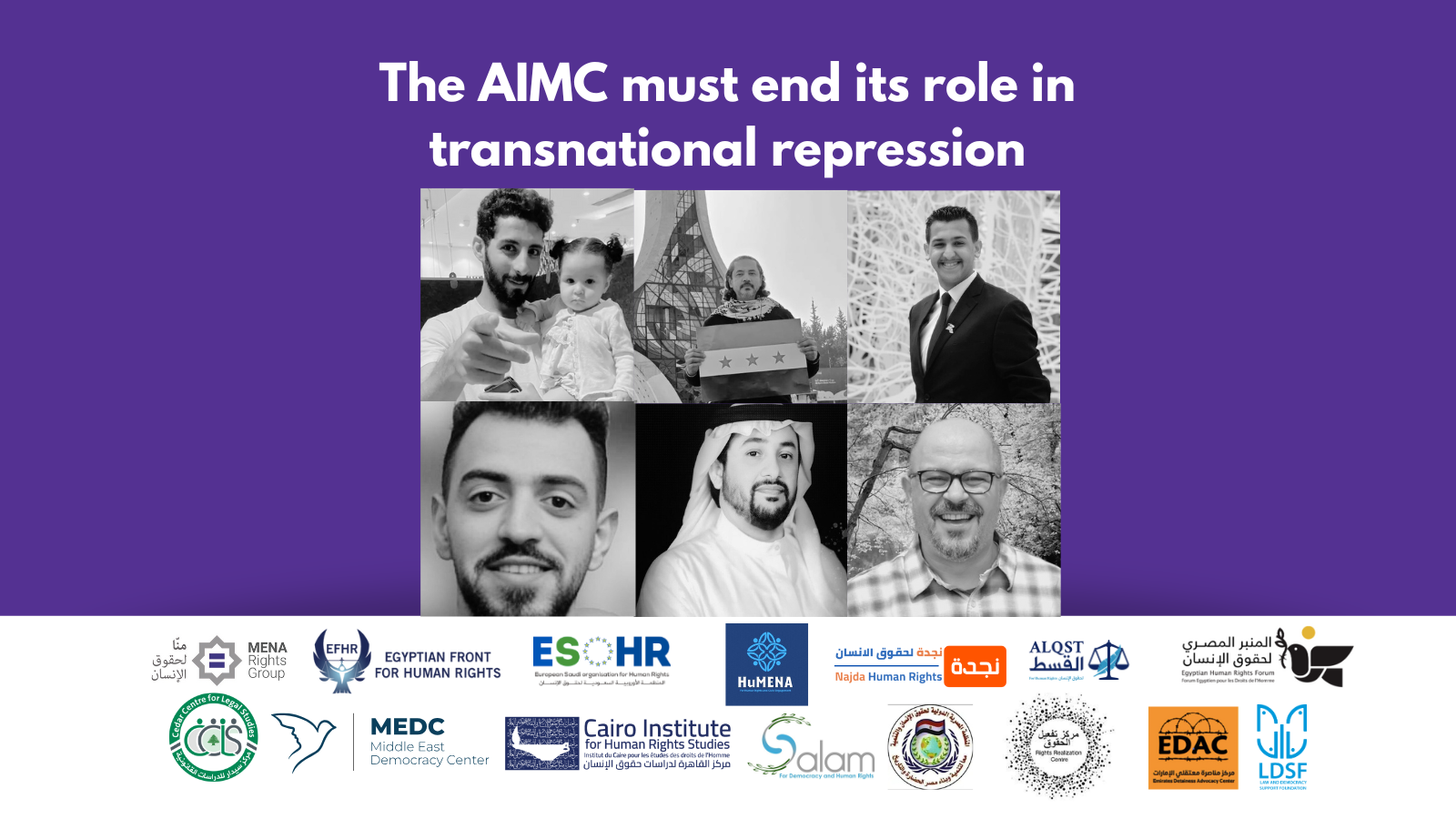
MENA Rights Group leads a coalition of 15 civil society organisations in urging the Arab Interior Ministers’ Council to cease its facilitation of arbitrary extraditions of peaceful dissidents and human rights defenders across Arab League countries and to align its legal framework and systems with international human rights law

From left to right: Ahmed Kamel, Abdelrahman al-Qaradawi, Salman al-Khaldy, Hassan al-Rabea, Khalaf al-Romaithi, Sherif Osman

February 17, 2025The undersigned organisations call on the Arab Interior Ministers’ Council (AIMC) to cease its facilitation of arbitrary extraditions of peaceful dissidents and human rights defenders across Arab League countries and to align its legal framework and systems with international human rights law.

On Sunday, February 16, 2025, the AIMC held its 42nd annual conference in its headquarters in Tunis. Often misleadingly referred to as “Arab INTERPOL”, the AIMC is an Arab League body tasked with enhancing cooperation among Arab states in the fields of internal security and crime prevention. Through its Department of Criminal Prosecution and Data, the AIMC circulates state-requested warrants to liaison divisions in Member States and facilitates wanted individuals’ extradition.

Although extraditions for “crimes of a political nature” are explicitly prohibited by the AIMC’s legal framework, specifically article 41 of the Riyadh Arab Agreement for Judicial Cooperation, they still occur in practice. Lacking an oversight body to prevent the abuse of its systems, the AIMC has become the perfect tool for Arab League states to request politically motivated extraditions.

Between 2022 and 2025, MENA Rights Group has documented the unlawful extraditions of four individuals: Khalaf al-Romaithi, Hassan al-Rabea, Salman al-Khaldy, and Abdulrahman al-Qaradawi. Currently, one individual is facing an imminent risk of extradition: Ahmed Kamel.

Ahmed Kamel is an Egyptian national currently detained in Saudi Arabia, where he had been living for a decade. In reprisal for peacefully protesting during the Arab Spring in Cairo in 2011 and 2014, Kamel faces imminent extradition to Egypt, where he may be subjected to human rights abuses including torture.

Despite their prohibition, Arab states continue to request and fulfil politically motivated extraditions, weaponising domestic laws which conflate peaceful criticism and human rights activism with terrorism or threats to state security.

Furthermore, the AIMC’s legal framework makes no reference to international human rights standards. More specifically, it fails to mention the principle of non-refoulement, enshrined in article 3 of the UN Convention against Torture, which provides that individuals must not be extradited to a country where they would face torture. 

UN Special Procedures mandate holders have raised concerns over the AIMC’s operations in a communication addressed to the Arab League, notably raising the impossibility for individuals to access their criminal file and challenge their arrest warrant. However, the UN experts have been provided with no response, and the Council has yet to undertake any reform.

As the AIMC continues to facilitate grave human rights violations across the Arab region, substantial change is required to ensure peaceful dissidents and human rights defenders are not at risk of transnational repression.

The undersigned organisations therefore urge the AIMC to immediately halt its facilitation of politically motivated extraditions, and undertake urgent reforms, in consultation with civil society, to align its legal framework and systems with international human rights law.

Signatories:

  1. MENA Rights Group
  2. Egyptian Front for Human Rights
  3. Egyptian Organization for Human Rights
  4. ESOHR
  5. Cedar Centre for Legal Studies 
  6. Law and Democracy Support Foundation – LDSF 
  7. Middle East Democracy Center (MEDC)
  8. ALQST for Human Rights
  9. Egyptian Human Rights Forum ( EHRF)
  10. Rights Realization Centre / مركز تفعيل الحقوق
  11. Salam for Democracy and Human Rights
  12. Najda for Human Rights
  13. Emirates Detainees Advocacy Center (EDAC) 
  14. HuMENA for Human Rights and Civic Engagement
  15. Cairo Institute for Human Rights Studies (CIHRS)

https://menarights.org/en/articles/aimc-must-end-its-role-transnational-repression-say-ngos

23 rights groups call for release of Istanbul Bar board member Fırat Epözdemir

February 7, 2025
Photo: Evrensel

Twenty-three human rights organizations have called for the immediate release of İstanbul Bar Association executive board member Fırat Epözdemir, who was arrested last week over alleged ties to the outlawed Kurdistan Workers’ Party (PKK), the Media and Law Studies Association reported February 3, 2025,

Advocacy groups condemned his detention as unlawful and part of a broader crackdown on human rights defenders and legal professionals in Turkey.

The Human Rights Defenders Solidarity Network (İHSDA) issued a statement denouncing Epözdemir’s arrest and urging authorities to drop the charges. The statement, signed by multiple rights organizations, emphasized that targeting lawyers and human rights advocates with judicial harassment is unacceptable.

Epözdemir was arrested Saturday by an İstanbul court on charges of “membership in an armed terrorist group” and “disseminating terrorist propaganda.”

Prosecutors in İstanbul accuse Epözdemir of joining a PKK-linked WhatsApp group in 2015, during the peak of clashes between Kurdish militants and Turkish security forces in the country’s predominantly Kurdish southeast.

The PKK has waged an armed insurgency against the Turkish state since 1984, a conflict that has left more than 40,000 people dead. 

Epözdemir’s legal team has faced severe restrictions in accessing case files due to a confidentiality order, preventing them from reviewing the evidence against him. Authorities also imposed a 24-hour ban on lawyer visits without providing a clear justification, raising concerns of due process violations.

The joint statement criticized the prosecution’s reliance on a decade-old public event and phone conversations as grounds for Epözdemir’s arrest, calling the charges baseless and politically motivated.

His detention, rights groups argue, is an attack on the legal profession and human rights advocacy in Turkey. They linked his arrest to broader efforts to suppress dissent, noting that members of the İstanbul Bar Association have faced mounting pressure after issuing a statement regarding two journalists killed in Syria.

“Lawyers and bar associations must not be criminalized for their advocacy and defense of fundamental rights,” the statement said. “We reject all attempts to silence human rights defenders and demand the immediate and unconditional release of Fırat Epözdemir.”

Among the signatories were the MLSA, the Human Rights Association (İHD), Civil Rights Defenders, the Turkish Human Rights Foundation (TİHV) and numerous other civil society organizations.

Impact of US funding freeze on human rights defenders

February 6, 2025

The suspension and, in some cases the termination, of US foreign aid is having profound and adverse human rights impacts, threatening the very existence says Phil Lynch of ISHR in his Director’s update: “Impact of US funding freeze on human rights defenders and ISHRe of many human rights defenders, organisations and institutions“.

ISHR is directly affected by the US funding freeze. The suspension of US government funds means we’ve already had to terminate, defer or reduce activities to support human rights defenders working in highly restrictive contexts.

Together with announced and anticipated reductions in support for human rights organisations from some other governments and institutional philanthropy, it has also required that we take a number of significant anticipatory cost-saving measures, reducing our capacity to support human rights defenders globally.

The US funding freeze is also very adversely affecting a number of our national NGO partners, including those supporting human rights defenders in countries such as Afghanistan, China and Venezuela, among others. If you are in any position to support these organisations we would be delighted to connect you.

As I have recently written together with incoming and outgoing ISHR Board Chairs Taaka Awori and Vrinda Grover, we simply can’t afford to give up hope in our shared work for freedom, equality and justice. But we will not win and cannot survive on starvation rations.

We need investors – governments, foundations, corporations and individuals – to join us and create the resources that enable us to be sustainable, innovative and impactful. We particularly need medium and small States to step up investment, not only because it is the right thing to do, but also because their interests are not served by the law of the jungle where might is right.

This investment needs to be made in civil society at the national, regional and international levels, as well as in the international human rights system to which frontline defenders increasingly turn when justice and accountability are denied at the national level. The realisation of human rights will provide an unmatched return on investment.

..

And we invite you to take action for a fairer future now, whether by sharing our training and information  material, amplifying our messages on social media, making a donation or in-kind contribution, or participating in our campaigns. Your every action makes a difference. 

https://ishr.ch/latest-updates/directors-update-impact-of-us-funding-freeze-on-human-rights-defenders-and-ishr

https://www.freiheit.org/sub-saharan-africa/are-trumps-policies-holding-human-rights-organisations-hostage

and later:
https://www.amnestyusa.org/reports/lives-at-risk-chaotic-and-abrupt-cuts-to-foreign-aid-put-millions-of-lives-at-risk/

McGovern Foundation awards $73.5 million for human-centered Artificial Intelligence

January 6, 2025
McGovern Foundation awards $73.5 million for human-centered AI

The Boston-based Patrick J. McGovern Foundation has announced on 23 December 2024 grants totaling $73.5 million in 2024 in support of human-centered AI.

Awarded to 144 nonprofit, academic, and governmental organizations in 11 countries, the grants will support the development and delivery of AI solutions built for long-term societal benefit and the creation of institutions designed to address the opportunities and challenges this emerging era presents. Grants will support organizations leveraging data science and AI to drive tangible change in a variety of areas with urgency, including climate change, human rights, media and journalism, crisis response, digital literacy, and health equity.

Gifts include $200,000 to MIT Solveto support the 2025 AI for Humanity Prize; $364,000 to Clear Globalto enable scalable, multilingual, voice-powered communication and information channels for crisis-affected communities; $1.25 million to the Aspen Instituteto enhance public understanding and policy discourse around AI; and $1.5 million to United Nations Educational, Scientific and Cultural Organization(UNESCO) to advance ethical AI governance through civil society networks, policy frameworks, and knowledge resources.

Amnesty Internationalto support Amnesty’s Algorithmic Accountability Lab to mobilize and empower civil society to evaluate AI systems and pursue accountability for AI-driven harms ($750,000)

HURIDOCSto use machine learning to enhance human rights data management and advocacy ($400,000)

“This is not a moment to react; it’s a moment to lead,” said McGovern Foundation president Vilas Dhar. “We believe that by investing in AI solutions grounded in human values, we can harness technology’s immense potential to benefit communities and individuals alike. AI can amplify human dignity, protect the vulnerable, drive global prosperity, and become a force for good.”

https://philanthropynewsdigest.org/news/mcgovern-foundation-awards-73.5-million-for-human-centered-ai

10 December 2024: Open Society reaffirms its commitment to human rights

December 12, 2024

On International Human Rights Day, the Open Society Foundations reaffirmed their vision for a shared humanity where everyone can thrive, continuing the philanthropy’s role as the world’s largest private funder promoting rights, equity, and justice.

Under the leadership of Chair Alex Soros, the philanthropy is streamlining its programming to support new voices and approaches that align with today’s emerging forms of organizing and leadership. The Foundations will pursue targeted time-bound efforts, provide long-term institutional support, and retain the flexibility to respond to crises through rapid response funds.

Binaifer Nowrojee, president of the Open Society Foundations, said: 

Across the world, we are seeing inspiring and powerful movements working to shape a future framed by human rights. Standing with them as allies, we will deepen, broaden, reimagine, and catalyze efforts to advance a new vision of human rights that is not bounded by historic double standards, exclusions, and inequities.

We are crafting and implementing thoughtful, future-focused strategies for change that will leverage gains made through key openings and convert them into wins. Our investments will aim to work with groups to build on and sustain these wins over time. We are committed to listening and to being informed by the needs of allies leading the fights for rights, equity, and justice.

The commitments include multiyear investments across a broad range of issues and geographies, including:

  • Rights protection: Supporting human rights advocacy as well as protection of rights defenders at risk, particularly environmental and women’s groups
  • Inclusion: Ensuring marginalized and vulnerable groups can fully exercise their rights without fear of violence or discrimination
  • Public safety: Promoting communities-centered approaches to tackling repressive or militarized responses to violence and public safety
  • Accountability: Supporting human rights–based litigation in national, regional, and international courts
  • Political participation: Supporting new champions and nonpartisan movements of inclusive and accountable democratic practice in specific countries and globally
  • Economic rights: Developing and promoting new state-led economic models for a green transformation to advance economic and social rights

In 2025, Open Society will be approving further programming to promote rights, equity, and justice.

Open Society has also approved funding across other areas, including ideas, impact investing, advocacy, and higher education.

https://www.opensocietyfoundations.org/newsroom/open-society-reaffirms-its-commitment-to-human-rights

https://www.opensocietyfoundations.org/voices/strengthening-protection-for-rights-defenders

NGOs appeal to UN Working Group on Arbitrary Detention for Egyptian Alaa Abd el-Fattah

November 28, 2024

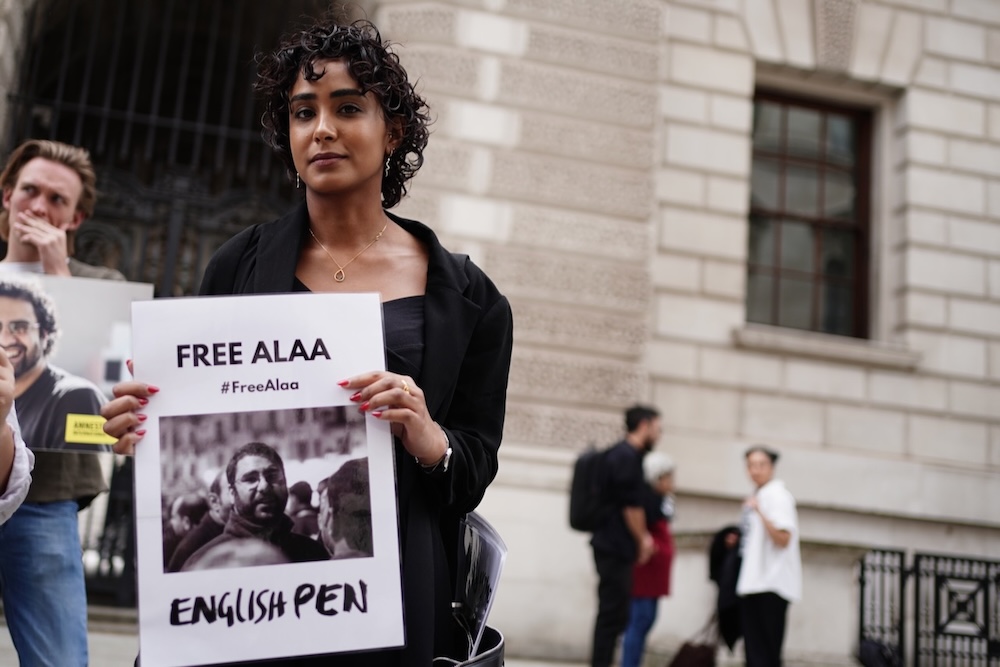
outside the Foreign, Commonwealth and Development Office in Westminster, UK, 3 July 2023. Jordan Pettitt/PA Images via Getty ImagesON

On 12 November 2024, IFEX joined 26 rights groups urging the UN to act on the case of the British-Egyptian activist, who remains detained despite completing his sentence. This statement was originally published on englishpen.org on 12 November 2024. [see also :https://humanrightsdefenders.blog/2013/12/06/mona-seif-reports-on-crackdown-in-egypt-including-her-brothers-case/]

also:https://www.theguardian.com/commentisfree/2024/nov/27/egypt-alaa-abd-el-fattah-jail-free-hunger-strike-laila-soueif

Dear Dr. Gillett, Dr. Yudkivska, Ms. Gopalan, Dr. Estrada-Castillo, and Dr. Malila,

We are writing, as a coalition of human rights organisations, regarding the urgent submission made to you, as members of the United Nations Working Group on Arbitrary Detention (UNWGAD), on behalf of Alaa Abd el-Fattah, the award-winning British-Egyptian writer and activist. Alaa Abd el-Fattah remains arbitrarily detained in Egypt and we strongly urge you to announce your opinion on his case at the earliest opportunity.

An international counsel team, led by barrister Can Yeğinsu, filed an urgent appeal with the UNWGAD on behalf of Mr. Abd el-Fattah and his family one year ago, on 14 November 2023, submitting that his continued detention is arbitrary and violates international law. Shortly afterwards, on 23 November 2023, 34 freedom of expression and human rights organisations sent a letter to the UNWGAD supporting that submission and urging the UNWGAD promptly to issue its opinion on this matter. On 17 April 2024, 27 freedom of expression and human rights organisations sent a follow up letter to the UNWGAD, enquiring whether there was any update in respect of this urgent appeal.

Alaa Abd el-Fattah’s case remains of significant concern to our organisations. He has spent much of the past decade imprisoned in Egypt due to charges related to his writing and activism. He was most recently arrested in September 2019 and was sentenced in December 2021 to five years’ imprisonment, having already spent two years in pre-trial detention. Despite completing his unjust and arbitrary five-year sentence on 29 September 2024, the Egyptian authorities have refused to release him, ignoring the time he spent in pre-trial detention. This defies international legal norms and contradicts Egyptian law. Alaa Abd el-Fattah is currently being held at Wadi al-Natrun prison near Cairo and continues to be denied consular visits, despite his British citizenship. His mother, Laila Soueif, has been on hunger strike since 29 September 2024 in protest against her son’s unjust and prolonged detention.

In November 2022, UN Experts joined the increasing number of human rights voices demanding Alaa Abd el-Fattah’s immediate release. Yet two years later, having fully served his five-year sentence, he remains in prison.

Despite his ongoing incarceration, Alaa Abd el-Fattah’s writing and activism continue to be recognised worldwide: most recently, in October 2024, he was announced as the joint winner of the 2024 PEN Pinter Prize with Arundhati Roy, and recognised as the 2024 Writer of Courage, eliciting the following encomium from Naomi Klein at the ceremony:

Alaa Abd El-Fattah embodies the relentless courage and intellectual depth that Arundhati Roy herself so powerfully represents, making her selection of him as the Writer of Courage profoundly fitting. Despite enduring a series of unjust sentences that robbed him of over a decade of freedom, his liberation continues to be denied. This prize, shared between two vital voices, reminds us of the urgent need to continue to raise our own in a call to ’Free Alaa’ at long last.

Our organisations continue to call for Alaa Abd el-Fattah’s immediate and unconditional release and we request that the UNWGAD urgently announce its opinion on his case.

Yours sincerely,

Alejandro Mayoral Baños, Executive Director, Access Now

Ahmed Samih Farag, General Director, Andalus Institute for Tolerance and Anti-Violence Studies

Quinn McKew, Executive Director, ARTICLE 19

Neil Hicks, Senior Director for Advocacy, Cairo Institute for Human Rights Studies (CIHRS)

Gypsy Guillén Kaiser, Advocacy and Communications Director, Committee to Protect Journalists (CPJ)

Chris Doyle, Director, Council for Arab-British Understanding (CAABU)

Jillian C. York, Director for International Freedom of Expression, Electronic Frontier Foundation

Ahmed Attalla, Executive Director, Egyptian Front for Human Rights

Samar Elhussieny, Programs Officer, Egyptian Human Rights Forum (EHRF)

Daniel Gorman, Director, English PEN

Rasmus Alenius Boserup, Executive Director, EuroMed Rights

James Lynch, Co-Director, FairSquare

Khalid Ibrahim, Executive Director, Gulf Centre for Human Rights

Mostafa Fouad, Head of Programs, HuMENA for Human Rights and Civic Engagement

Matt Redding, Head of Advocacy, IFEX

Baroness Helena Kennedy LT KC, Director, International Bar Association’s Human Rights Institute (IBAHRI)

Alice Mogwe, President, International Federation for Human Rights (FIDH), within the framework of the Observatory for the Protection of Human Rights Defenders

Liesl Gerntholtz, Managing Director, PEN/Barbey Freedom To Write Center, PEN America

Mark Allen Klenk, Writers at Risk Committee Chair, PEN Austria

Grace Westcott, President, PEN Canada

Romana Cacchioli, Executive Director, PEN International

Rupert Skilbeck, Director, REDRESS

Antoine Bernard, Director of Advocacy and Assistance, Reporters Sans Frontières

Ricky Monahan Brown, President, Scottish PEN

Ahmed Salem, Executive Director, Sinai Foundation for Human Rights (SFHR)

Menna Elfyn, President, Wales PEN Cymru

Gerald Staberock, Secretary General, World Organisation Against Torture (OMCT), within the framework of the Observatory for the Protection of Human Rights Defenders

seealso:https://www.middleeastmonitor.com/20241127-uk-signed-largest-single-arms-licence-to-egypt-even-as-british-egyptian-was-detained-arbitrarily/