Posts Tagged ‘NGOs’

Coalition of NGOs call for freeing of UAE human rights defender Dr Nasser Bin Ghaith

May 18, 2016

A group of 10 NGOs has called on the authorities to immediately release human rights defender and professor of economics Dr Nasser Bin Ghaith, who remains in detention in an unknown location in the United Arab Emirates (UAE) for his social media posts and human rights activities.
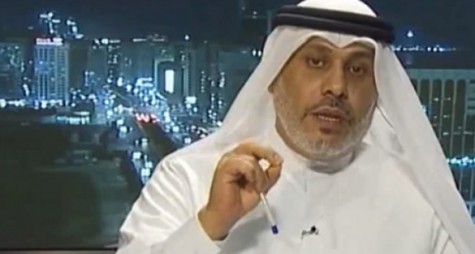
Nasser Bin Ghaith has been denied proper access to his lawyer or family since his arrest in August 2015, and reportedly subject to torture in custody. The continued detention and charges violate his human rights, including his right to free expression. On 18 August 2015, security officers in civilian clothes arrested Dr Bin Ghaith in Abu Dhabi and searched his home and confiscated personal items including electronic memory sticks. He was held incommunicado until finally being brought to the State Security Chamber of the Federal Supreme Court in Abu Dhabi on 4 April 2016, when he told the court he had been tortured and beaten in detention and deprived of sleep for up to a week. On 2 May 2016, a second hearing took place to examine charges against Dr Bin Ghaith relating to his online postings. He stated that he is still being held in secret detention, a fact he had previously brought to the judge’s attention during his hearing on 4 April. The judge refused to listen to his complaints for a second time. Neither his family nor his lawyer knows where he is being detained, and his lawyer’s request to visit him has been denied repeatedly.

Dr Bin Ghaith is one of a group of men known as the “UAE5” who were imprisoned in 2011 and tried for “publicly insulting” UAE officials. That trial also breached international human rights law and was widely criticised by human rights groups, including signatories of this letter.

A further charge brought against Dr Bin Ghaith of allegedly “posting false information about UAE leaders and their policies, offensively criticizing the construction of a Hindu temple in Abu Dhabi, and instigating the people of the UAE against their leaders and government” was related to a statement he made on Twitter intending to promote tolerance.

The court ordered the case to be adjourned until 23 May when the defence’s arguments will be heard.

Source: UAE: Free human rights defender Dr Nasser Bin Ghaith – Index on Censorship | Index on Censorship

for other posts on the UAE: https://thoolen.wordpress.com/tag/united-arab-emirates/

Resolution on protection of defenders of economic, social and cultural rights adopted by Human Rights Council !!

March 25, 2016


On 24 March 2016 the ISHR reported that the UN Human Rights Council has adopted the landmark resolution on the protection of human rights defenders working to promote economic, social and cultural rights (see my post of 23 March: https://thoolen.wordpress.com/2016/03/23/norwegian-resolution-un-human-rights-council-defenders-amendments/).

The Norwegian-led resolution was adopted by a vote of 33 Member States of the Human Rights Council to just 6 against. Eight States in the 47-seat Council abstained. Over 150 NGOs from all over the world united to call on Member States of the Council to adopt the resolution and reject a series of 30 hostile amendments proposed by Russia, China, Egypt, Cuba and Pakistan, designed to undermine the protection of defenders and to deny their legitimacy and very existence.

The 6 States that voted ‘No’ on the resolution were not surprisingly Burundi, China, Cuba, Nigeria, Russia and Venezuela. States that abstained were Bolivia, El Salvador, Kenya, Namibia, Qatar, Saudi Arabia, the United Arab Emirates, and Viet Nam. Interesting and positive to note that some of the States that had supported hostile amendments (including Ecuador, Indonesia and India) in the end voted in favour of the resolution.

[The resolution affirms the legitimate and essential role of human rights defenders in promoting, protecting and contributing to the realisation of economic, social and cultural rights – including indigenous rights and the right to development – and condemns restrictions and attacks against them by both States and business enterprises. It also underscores the fact that exercise of the rights to freedom of expression, association, assembly and public participation can be essential to the promotion, protection and realisation of ESC rights, and that restrictions or violations of these democratic rights may lead and amount to violations of the ESC rights for which defenders are advocating.

The resolution also provides invaluable guidance to States and business as to obligations and good practices in the protection of defenders. For States, such obligations and good practices include developing specific human rights defender protection laws and mechanisms, investigating and ensuring accountability for attacks and reprisals against them, and facilitating access to information and participation in policy and decision-making processes. For businesses, the resolution reinforces the obligation to respect and not interfere with the work of defenders, and to consult closely with defenders to identify, avoid, mitigate and remedy human rights risks and violations associated with business activities and development projects.]

We particularly recognise the principled leadership of Norway in leading the development of this timely resolution,’ Mr Ineichen of the ISHR said.ISHR-logo-colour-high

The systematic but ultimately unsuccessful efforts by a small group of States to undermine the human rights defender resolution paradoxically demonstrate the vital importance and potential impact of this resolution,‘ said ISHR Director Phil Lynch.


Source: Human Rights Council adopts historic resolution on protection of defenders of economic, social and cultural rights | ISHR

Norwegian Resolution on Human Rights Defenders in the UN Human Rights Council: will it survive hostile amendments?

March 23, 2016
Some readers will have doubt about the importance passing Resolutions in the UN, even on the noble topic of the protection of human rights defenders. However, that this is not seen as a sinecure is clear from the diplomatic battles fought every time [see: https://thoolen.wordpress.com/2015/12/18/un-general-assembly-adopts-resolution-on-human-rights-defenders-with-increased-majority/]. Tomorrow (Thursday 24 March) another such clash is expected. Here are the issues:

It is usually Norway that leads the negotiations on the resolution on human rights defenders as is the case this year at the 31st session of the UN Human Rights Council. The resolution this year takes account of the severe risks that human rights defenders face when defending economic, social and cultural rights, including as they relate to environmental, land and development issues, corporate responsibility, anti-corruption, transparency and accountability issues. The draft resolution calls on States to take effective and practical steps to address the continuing violations of the rights of defenders.

During the first week of this session of the Human Rights Council, Norwegian State Secretary Tore Hattrem stated that “Threats and attacks against human rights defenders who are exercising their right to freedom of speech to advocate economic, social and cultural rights, severely hamper the realisation of these rights”. Also Ambassador Steffen Kongstad raised this important topic during the interactive dialogue with the UN Special Rapporteur on Human Rights Defenders, Michel Forst, stating that “Threats and attacks against human rights defenders may hamper the realization of economic, social and cultural rights, undermining social cohesion, and ultimately stability and development”.

The resolution has been discussed in several open informal consultations in Geneva, taking into account a number of suggestions from different countries. Norway formally tabled the resolution on 16 March full text see website. There are currently around 50 countries from all regional groups that will  co-sponsor the resolution. Still, this is far from won as earlier this week a number of countries (including the serial offenders Russia, China, Egypt, Cuba and Pakistan) have put forward 31 adverse amendments to the text. These amendments include proposals which have the purpose or would have the effect of:


Exceptional response from NGO world on killing of Berta Cáceres

March 7, 2016

A group of over 50 international organizations has written to the President of Honduras to express their shock over the recent killing of Berta Cáceres [https://thoolen.wordpress.com/2016/03/03/berta-caceres-human-rights-defender-assassinated-today-in-honduras/], to demand an international investigation and the immediate protection of Gustavo Castro Soto, a Mexican activist, who witnessed her assassination. Here is the letter and signatories in full: Read the rest of this entry »

Egypt: doctors protest police brutality but no human rights defenders can come and tell about it

February 15, 2016

While human rights organizations and the media around the world were remembering Egypt‘s Tahrir Square [https://thoolen.wordpress.com/2016/01/28/five-years-after-tahrir-square-there-is-stability-in-egypt-but-do-not-ask-at-what-price/] the space for demonstrations in Egypt itself was minimal. But a huge exception was made on 13 February 2016 when some 10.000 people gathered at noon in front of the Doctors Syndicate in Cairo. Heartening to see that the doctors have the courage to take up the case against police brutality. But you are unlikely to hear about this from an Egyptian human rights defender in person as they are systematically banned from traveling. Read the rest of this entry »

Foreign agent law in Russia keeps widening its net

February 9, 2016

Only a few days ago I referred to the widening impact of the ‘foreign agent’ law in Russia [https://thoolen.wordpress.com/2016/02/04/russian-foreign-agents-law-starts-to-affect-monitoring-in-detention-centers/]. Now it seems that even organizations that do NOT accept foreign funding, may actually fall under it.

Frontline NEWlogos-1 condensed version - cropped

reports that on 28 January 2016, the Orenburg regional department of the Ministry of Justice accused the Committee for Prevention of Torture (CPT) and its chairman Mr Igor Kalyapin of violating the ‘Foreign Agents’ law. Read the rest of this entry »

Unlike his Chinese colleagues human rights defender Peter Dahlin can go home

January 26, 2016

After more than 20 days of detention and a public confession that sounded forced, Swedish human defender Peter Dahlin has been expelled from China, and is on his way home. The Chinese foreign ministry and Swedish embassy in Beijing confirmed Peter Dahlin, 35, had been released from detention and expelled from the country on Monday 15 January 2016.

[What Dahlin actually admitted to in his televised confession, and what a voice-over in Chinese said he had admitted to, were two very different things, as Quartz reported earlier. Discrepancies included his alleged “funding” of Chinese activists (Dahlin said “support” in his confession, which was in English), and an accusation that he had embezzled money from foreign NGOs, which Dahlin never admitted to.] https://thoolen.wordpress.com/2016/01/21/confessions-abound-on-chinese-television-first-gui-minhai-and-now-peter-dahlin/

Another Swedish citizen, Hong Kong-based bookseller Gui Minhairemains in custody in Beijing after his suspected abduction from Thailand by Chinese authorities. Swedish officials are “very concerned about the detained Swedish citizen Gui Minhai. Our efforts to bring clarity to his situation and be granted the opportunity to visit him continue with unabated intensity,” the Swedish embassy said in its statement.

Source: Human rights activist Peter Dahlin has been expelled from China, and is headed home to Sweden – Quartz

Uzbekistan: Murod Juraev free after two decades in jail – what about the others?

December 29, 2015
 For more than two decades, Murod Juraev languished behind bars in Uzbekistan and was subjected to torture and ill-treatment so bad that all his teeth fell out. After 21 years in detention — one of the world’s longest imprisoned political activists — Juraev was released in November 2015.  [Juraev was a member of the Erk opposition party and a former local mayor in southern Uzbekistan when he was jailed, in 1994.]  Juraev had his jail term extended four times to keep him in jail — in 2004, 2006, 2009 and 2012 — after authorities found he had broken prison rules, including “peeling carrots incorrectly”, “failure to lift a heavy object” andwearing a white shirt.”

Read the rest of this entry »

Short report by EEAS on the 17th EU-NGO Human Rights Forum, 3-4 December 2015

December 5, 2015

The 17th EU-NGO Human Rights Forum took place in Brussels on 3 and 4 December 2015, bringing together hundreds of civil society organisations from across the globe, representatives from international and regional human rights mechanisms and from the EU institutions and Member States. The Forum is a joint venture between the European External Action Service (EEAS), the European Commission, and the Human Rights & Democracy Network [http://www.hrdn.eu/index.php?menu_selected=122&language=US&sub_menu_selected=768].

The overarching theme for this year’s Forum is Protecting and Promoting Civil society Space. In her address to the Forum, High Representative of the Union for Foreign Affairs and Security Policy, Federica Mogherini, stated: I believe that the civil society has a crucial role to play in any policy and in our foreign policy. It is not only a key player, but a main driver for change in all societies, in terms of democracy, good governance, resilience, cohesion, promotion of fundamental human rights.   Freedom of expression is one of the most powerful weapons against radicalisation and terrorism. To better protect our citizens we need above all to build strong democratic institutions and a healthy democratic dialogue. I am very often asked whether security should not be the main focus, more than human rights. But there is no security without human rights”.

She also called for renewed efforts to fight attempts to control the work of civil society in many countries around the world: “During the last years, the space for civil society has shrunk in many countries”. “These trends demand a redoubling of our efforts in the human rights sphere. The European Union, the institutions and myself personally, will do all we can to protect civil society organisations fighting for human rights and protect human rights defender on an individual basis.”

The theme of this year’s NGO Forum – Protecting and Promoting Civil Society Space – reflects the EU’s strong commitment to put Freedom of Association and Freedom of Expression at the heart of the EU’s human rights policy as essential foundations for democracy, rule of law, peace, stability, sustainable inclusive development and participation in public affairs.

This year’s event saw contributions from the current UN Special Rapporteur on Freedom of Association, Maina Kiai; the UN Special Rapporteur for Human Rights Defenders, Michel Forst; Vice-Chair of the European Parliament Subcommittee on Human Rights, MEP Barbara Lochbihler; the Secretary General of the Community of Democracies, Amb. Maria Leissner; Sakharov Prize recipient Memorial, represented by Oleg Orlov; alongside many representatives from civil society, Human Rights Defenders, NGOs, the EU Institutions and many representatives from EU member states.

The forum looked at the recent EU Guidelines on Human Rights Defenders and the EU Guidelines on Freedom of Expression, as key tools enabling the EU to promote and protect freedom of opinion and expression and to counter the clear and disturbing trend over the last few years towards an increasingly restricted space for independent civil society as well as outright threats, intimidation and violence that civil society organisations and representatives, journalists, media actors and other individuals face in many countries across the world because of the exercise of their rights.

Given the scale of the problem and its constantly changing manifestations, urgent action is required not just to understand the scale and evolving nature of the threats, but particularly to identify ways to achieve effective and concerted policy responses and counter actions.

The EU is committed, as indicated in the EU strategy on human rights and democracy and its Action Plan (2015-2019), to address threats to civil society space, through actions that support laws and policies to protect human rights defenders; report on and counter threats to civil society space; and oppose unjustified restrictions to freedoms of assembly and association.

Engagement with civil society is essential for the ongoing work the EU is undertaking to help realise human rights, indivisible and universal for all people. The Forum discussions provided a significant opportunity for an interactive dialogue among representatives from the EU member states, the European Institutions (European Parliament, Council, European External Action Service, European Commission) and global civil society and human rights defenders from all over the world, working on the promotion and protection of human rights. The outcome of the Forum will be an important stepping stone for ensuring effective EU action and future policy developments in this field.

see also: https://thoolen.wordpress.com/2015/12/04/international-cooperative-consortium-protect-the-defenders-launched-on-2-december/


Source: European Union – EEAS (European External Action Service) | PRESS RELEASE: PROTECTING & PROMOTING CIVIL SOCIETY SPACE: 17th EU-NGO Human Rights Forum, 2015

International cooperative consortium ‘Protect the Defenders’ launched on 2 December

December 4, 2015


On 2 December 2015 a Consortium of organizations was launched in Brussels dedicated to coordinating support for the security and protection of human rights defenders under threat. The Consortium, called “Protect the Defenders,” is comprised of 12 organizations that work collectively to implement the EU Mechanism for Human Right Defenders.

The partners include Frontline Defenders (leader of the Consortium), FIDH, OMCT, Forum-ASIA, the East and Horn of Africa Human Rights Defenders Project (EHAHRDP), ESCR-net, Euro-Mediterranean Foundation of Support to Human Rights Defenders (EMHRF), International Lesbian, Gay, Bisexual, Trans and Intersex Association (ILGA), Peace Brigades International, Protection International, Reporters without Borders and the Urgent Action Fund for Women.

Source: Protecting the Defenders through enhanced international collaboration | ESCR-Net