Posts Tagged ‘news’

35th anniversary of Tiananmen Square: 14 still in prison

June 4, 2024

While China is systematically erasing the memory of the brutal repression of student protests on 4 June 1989, 14 prominent participants of that movement are still behind bars, rearrested for their struggle for democracy. Chinese Human Rights Defenders issued an appeal for their release.
Chinese Human Rights Defenders (CHRD), an international NGO supporting Chinese dissidents, issued an appeal last week to mark the 35th anniversary of the Tiananmen Square massacre. [see also: https://humanrightsdefenders.blog/2014/06/13/25-years-tiananmen-celebrated-with-over-100-detentions/]

For 35 years, all top Chinese leaders, from Li Peng to Xi Jinping, have been fixated on erasing memories of June 4 by persecuting those who peacefully seek accountability,” reads the CHRD statement. “Everyone who cares about justice should call on Beijing to immediately and unconditionally release these and all other prisoners of conscience in China.”

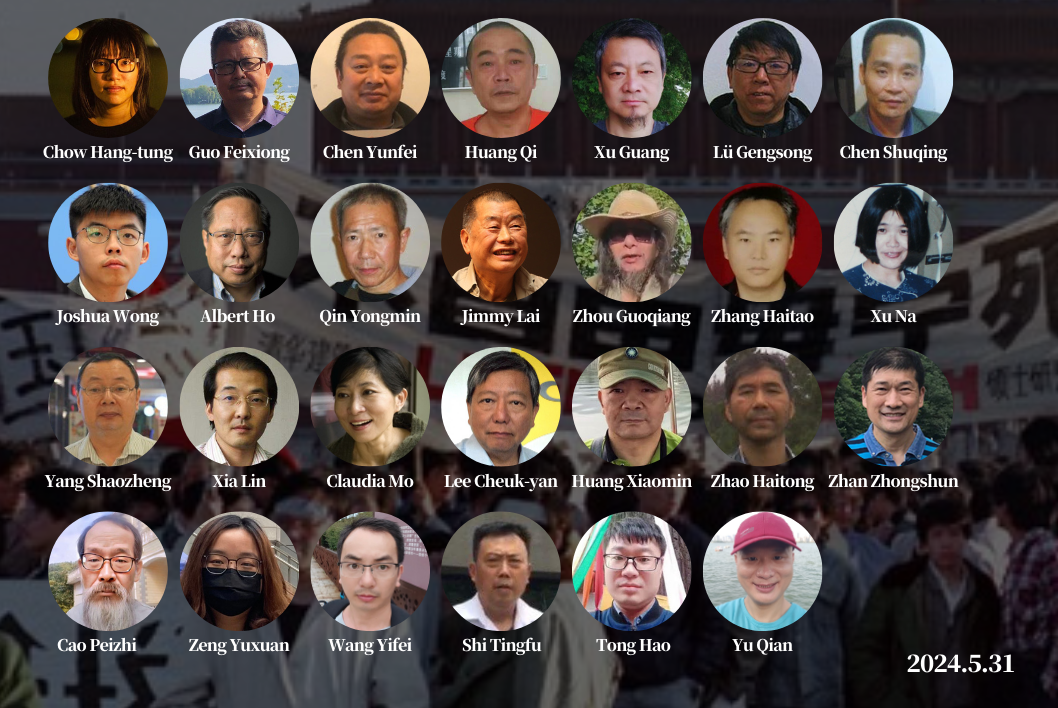
The appeal includes a list of 27 people who, for various reasons, are still in prison in relation to the Tiananmen Square movement. “[F]ar from being complete, [. . .] it is a window to the severity, scale, and persistence of reprisals by the Chinese government over the past 35 years,” the statement reads. In particular, 14 names belong to people who participated directly in the events of 35 years ago and are currently in prison after they were rearrested for promoting democracy in China.

Zhou Guoqiang (周国强) was imprisoned for organising a strike in support of student protests in Beijing in 1989, and served four years in a re-education camp. He was arrested again for online comments in October 2023. His current whereabouts and charges remain unknown.

Guangdong activist Guo Feixiong (郭飞雄), who took part in the 1989 movement as a student in Shanghai, has been serving a six-year sentence since 2015 for his human rights activism.

Another university student from that time, Chen Shuqing (陈树庆) from Hangzhou, has been serving a 10-and-a-half-year sentence since 2016 for pro-democracy activism.

Lü Gengsong (吕耿松), a teacher fired in 1993 for supporting the pro-democracy movement, has been serving an 11-year sentence since 2016 for his pro-democracy work.

Beijing-based lawyer Xia Lin (夏霖) has been serving an 11-year sentence since 2016 for his professional work as a lawyer; he participated in the 1989 movement as a student at the Southwest Institute of Political Science and Law in Chongqing.

Xinjiang activist Zhao Haitong (赵海通) has been serving a 14-year sentence since 2014 for his activities as a human rights defender. He, too, had been imprisoned in the aftermath of the 1989 massacre.

Xu Na (许那), artist, poet, and a Falun Gong follower, took part in the hunger strike in Tiananmen Square. She was arrested in 2020 and sentenced to eight years in prison for “using an evil cult to disrupt law enforcement.”

Sichuan activist Chen Yunfei (陈云飞) served a four-year sentence from 2015 to 2019, in part for organising a commemoration for the victims of 4 June. He had participated in the 1989 movement as a student at the China Agricultural University in Beijing.

Another member of the student movements at the time, Xu Guang (徐光), was arrested in 2022 and is serving a four-year sentence on charges of “picking quarrels and provoking trouble” in Hangzhou, Zhejiang province.

Huang Xiaomin (黄晓敏), who was arrested in Sichuan province in 2021, suffered th same fate, and was sentenced to four years, while Cao Peizhi (曹培植) was arrested in 2022 and sentenced to 2.2 years in Henan province.

Zhang Zhongshun (张忠顺), another student who participated in the 1989 protests, was reported to police in 2007 for talking to his students about the events of 4 June. He was jailed for three years and is now in jail for continuing to support activism and faces charges of subversion in Shandong province.

Wang Yifei (王一飞) disappeared into police custody after he was detained in 2021. Before his arrest in 2018, he had been demanding justice for the victims of 1989 for several years.

Shi Tingfu (史庭福), already convicted of organiing a public vigil in Nanjing in 2017 and giving a speech in memory of the victims of Tiananmen, was rearrested in January 2024 and is awaiting trial on several charges, including “spreading false information, and inciting terrorism and extremism in the Xinjiang Uyghur Autonomous Region.”

The other 13 names belong to people who were not directly involved in the events of 1989 in Beijing, but fought in mainland China and Hong Kong to keep alive the memory of what happened.

This second list includes Tong Hao (仝浩), a young doctor born in 1987, who was jailed for 1.5 years for publishing a post on 4 June 2020. He was arrested in August 2023 and has been in police custody in Jiangsu province ever since.

Some of the jailed are dissidents in Hong Kong, like Lee Cheuk-yan, Albert Ho, and Chow Hang-tung; the latter, a lawyer, was recently issued a new arrest warrant in prison together with seven other people (including her mother) for commemorating the Tainanmen massacre online.

As Chinese Human Rights Defenders note, three witnesses to events in Tianamen Square have died in prison in the past 35 years. The most prominent is Nobel Peace Prize laureate Liu Xiaobo (刘晓波), who died in July 2017 from liver cancer in police custody while serving an 11-year sentence since 2009 for his role as a leader in the Charter 08 campaign. A university lecturer in 1989, he was jailed for 18 months for taking part in the 1989 movement.

Jiangsu writer Yang Tongyan (杨同彦) died a few months after Liu, in November 2017, from a brain tumor. He was serving a 12-year sentence imposed in 2006 for his political activism. He had already spent 10 years in prison for taking part in the 1989 movement.

Last but not least, we must remember labour activist Li Wangyang (李旺阳), who died under suspicious circumstances on 6 June 2012 while in a hospital guarded by police in Shaoyang, Hunan province. Li, leader of the 1989 pro-democracy movement, was sentenced to a total of 23 years in prison. Chinese authorities claimed he committed suicide by hanging himself in his hospital room, a claim his family has disputed since Li was blind and deaf from torture and would not have been physically able to hang himself. Against the wishes of Li’s family, Hunan authorities conducted their own autopsy and then cremated the body.

https://www.asianews.it/news-en/Still-in-prison-35-years-after-Tiananmen-Square-60873.html
https://www.usnews.com/opinion/articles/2024-06-04/china-is-erasing-the-memory-of-the-tiananmen-massacre-we-cant-let-them

Tajikistan: Two-Year Anniversary Of Arrest Of Human Rights Defender Manuchehr Kholiqnazarov 

May 29, 2024

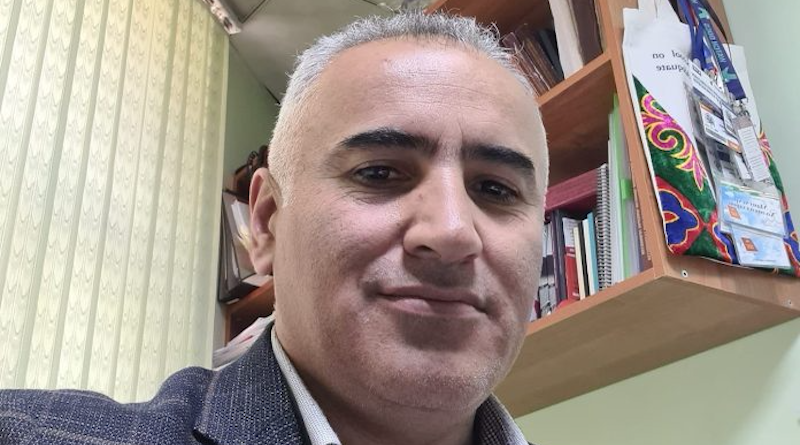
Manuchehr Kholiqnazarov. Photo from personal Facebook page

Manuchehr Kholiqnazarov. Photo from personal Facebook page

On 29 May 2024, IPHR (International Partnership for Human Rights – an independent, non-governmental organization founded in 2008 in Brussels) published an Op-ed about Human Rights Defender Manuchehr Kholiqnazarov.

Tuesday marked the sad anniversary of the arrest of lawyer and human rights defender Manuchehr Kholiqnazarov in Tajikistan. First arrested on 28 May 2022, he has now spent two years behind bars, serving a 16-year-long prison sentence in retaliation for his human rights work. 

The organisations issuing this statement – International Partnership for Human Rights (IPHR), the Tajikistan Civil Society Coalition against Torture and Impunity, Helsinki Foundation for Human Rights (HFHR, Poland), Norwegian Helsinki Committee (NHC), as well as International Federation for Human Rights (FIDH) and World Organisation against Torture (OMCT) within the framework of the Observatory for the Protection of Human Rights Defenders – are increasingly worried about Manuchehr’s state of health and call again on the Tajikistani authorities to immediately and unconditionally release him.

[for earlier statement, see: https://humanrightsdefenders.blog/2023/09/14/call-to-release-human-rights-defender-manuchehr-kholiqnazarov-and-others-in-tajikistan/]

Manuchehr was arrested and imprisoned for no other reason than his tireless work to help the most vulnerable victims of human rights violations. We will not give up fighting against his unjust sentence until he is released and allowed to return home to his family,” said Brigitte Dufour, Director of IPHR.

On 9 December 2022 Tajikistan’s Supreme Court found Manuchehr guilty under articles 187, part 2 (participation in a criminal organisation) and 307 (3), part 2 (participating in the activities of a banned organisation due to its extremist activities) of the Criminal Code, sentencing him to 16 years’ imprisonment in a strict regime penal colony. 

Manuchehr is the Director of the Lawyers Association of Pamir (LAP), one of the few civil society organisations in Tajikistan’s Gorno Badakhshan Autonomous Region (GBAO) that works to promote and protect human rights.

On 25-28 November 2021, mass protests erupted in Khorog, GBAO, over the extrajudicial killing of a young man, Gulbiddin Ziyobekov. After the protests settled, Manuchehr joined the “Commission 44”, consisting of representatives of local civil society and law enforcement agencies, to investigate the events. Given his professional experience, Manuchehr was included in the Joint Investigation Team headed by the Prosecutor General’s Office and helped secure lawyers for victims of indiscriminate violence during the November 2021 protests.

However, May 2022 saw a renewed crackdown on protests in Khorog and Rushan District of GBAO.  On 28 May 2022, Manuchehr was arrested along with a dozen members of Commission 44 for alleged “participation in a criminal association” and “publicly calling for violent change of the constitutional order”. Their trial began on 20 September 2022, and was held behind closed doors at a detention facility of the State Committee for National Security (SCNS) in Dushanbe. Following his conviction, Manuchehr was transferred to a prison facility in the capital.

Manuchehr’s health has deteriorated significantly in detention. In particular, he suffers from back problems. The authorities should ensure that he has access to adequate medical assistance for these health problems and that his treatment complies fully with international standards as long as he remains behind bars.

In addition to human rights NGOs, the United Nations Special Rapporteur on Human Rights Defenders and other international human rights experts have repeatedly raised concerns about Manuchehr’s imprisonment and called for his release. The Tajikistani authorities should heed to these calls, promptly release him and allow him to reunite with his family.

Access Now – Grants for human rights defenders in 2023

May 29, 2024

On 28 May 2024 ACCESS NOW published its overview of grants in 2023: Through our Access Now Grants program — now in its ninth year —  we provide  flexible, grantee-driven financial support to the grassroots and frontline organizations confronting these threats. We do this because we believe the people most directly impacted by attacks on human rights — from Palestine to Myanmar to Ukraine and beyond — are best placed to define solutions and implement them. Below is an overview of our grant-making in 2023, including a deep dive into the humanitarian response to the Gaza crisis, which was sparked that year. 

AN OVERVIEW

In 2023, Access Now Grants awarded a total of just under $1.7 million USD, fortifying our collective efforts to defend and extend digital rights. We provided 66 grants to 63 organizations and individuals leading digital rights efforts in about 30 countries. [for details, see: https://www.accessnow.org/digital-rights-grants/]

We strive to support those who need it most. Currently, Access Now Grants reserves nearly all of our funding for people and organizations in Global Majority countries. In 2023, we awarded the highest number of grants (20) in Eastern Europe and Central Asia, followed by Asia Pacific (15), Africa (13), the Middle East and North Africa (10), Latin America and the Caribbean (7), and one grantee that works on the global level but supports journalists and human rights organizations operating in countries experiencing armed conflict and crisis

Notably, 71% of our 2023 grants supported efforts in countries that Freedom House has classified as “not free” in its Freedom in the World reporting. We also extended funding to organizations and communities we had not previously supported, including in Libya, Iraq, Palestine, Thailand, and Senegal. In addition, 25% of our grants focused on defending gender and sexuality rights and supported people who identify as women, non-binary, or LGBTQ+

In addition to ensuring we reach people with the funding they need, we work to provide the kind of longer-term support that can help organizations build momentum. In 2023, 60% of the grantees that received core, project, and discretionary grants were receiving their third or more year of consecutive funding.

SPOTLIGHT ON GAZA : It is impossible to remark on any human rights efforts in 2023 without acknowledging the genocide now unfolding in Palestine. After the Hamas attack on Israel on October 7, 2023, we have seen digital threats play a devastating role in deepening the crisis in Gaza:  from the Israeli military’s reported use of  AI technology to bomb and kill Palestinians, often with their family; to internet shutdowns that restrict Gazans’ access to life-saving information and ability to communicate; to communication platforms’ censorship of Palestinians and pro-Palestinian voices; to the documented increase in hate speech and incitement to violence against Palestinians online….

As we continue our grant-making in the year ahead, in Palestine and around the world, we remain committed to human rights organizations and activists who are fighting for justice, security, and dignity for their communities and for all of us. Their collective work is more necessary and urgent than ever.

ACCESS NOW gives a list of the grants awarded in 2023. Some grants are not included for security reasons. Others must be listed anonymously.

HRW reports on crackdown on Human Rights Lawyers in Belarus

May 27, 2024

https://www.hrw.org/report/2024/05/27/i-swear-fulfill-duties-defense-lawyer-honestly-and-faithfully/politically#691383337

On 27 May 2024 Human Rights Watch published a major report on the politically motivated crackdown on Human Rights Lawyers in Belarus.

Summary: In August 2020, peaceful protests in Belarus began with hundreds of thousands of people gathering in the streets of Minsk and across Belarus following the contested electoral victory of Aliaksandr Lukashenka, who had already served as president for more than 26 years. Belarusian authorities responded with unprecedented brutality, using excessive force, arbitrarily detaining thousands of peaceful protesters, and subjecting them to ill-treatment and torture in detention before conveyor-belt administrative and criminal trials.

Since then, Belarusian authorities have unrolled widespread and systematic repression of any form of dissent. Government critics have been forced into exile or thrown behind bars on politically motivated charges. The number of political prisoners swelled and at time of publication exceeded 1300, according to Human Rights Center “Viasna,” the prominent Belarusian human rights organization. The term “political prisoner,” for the purpose of this report, includes anyone detained, imprisoned or otherwise deprived of their liberty by Belarusian authorities for peacefully exercising their rights and freedoms or defending human rights and fundamental freedoms.

February 2023 and March 2024 reports of the Office of the UN High Commissioner for Human Rights found that some violations committed by Belarusian authorities in the run-up to the 2020 presidential election and in its aftermath “may amount to crimes against humanity” including the “crime of persecution.” [https://humanrightsdefenders.blog/2023/07/12/state-of-human-rights-in-belarus-called-catastrophic-at-the-un/]

In the face of these grave and widespread rights violations, some lawyers stepped up to represent clients in politically motivated cases. ..This report examines the Lukashenka government’s retribution against lawyers who represent government critics and its nearly complete takeover of the legal profession in Belarus. The authorities have subjected lawyers in politically motivated cases, as well as lawyers who criticize state abuses, to harassment, arbitrary revocation of their licenses, detention and administrative charges, and politically motivated criminal prosecution. Behind bars, lawyers along with other politically-targeted detainees and convicts, experience retaliatory ill-treatment. The authorities have left no space for earnest and efficient discharge of lawyers’ duties in politically motivated cases. At the time of writing, very few lawyers, if any, were willing to take on such cases, which has severely undermined the right to a fair trial, due process, and access to remedy in Belarus.

Belarus: Crackdown on Human Rights Lawyers

The report shows that while governmental crackdown on lawyers in times of political unrest in Belarus is not new, the scale and severity of this wave of repression is unprecedented. For the first time in the history of modern Belarus, lawyers have become political prisoners themselves for their work on behalf of clients.

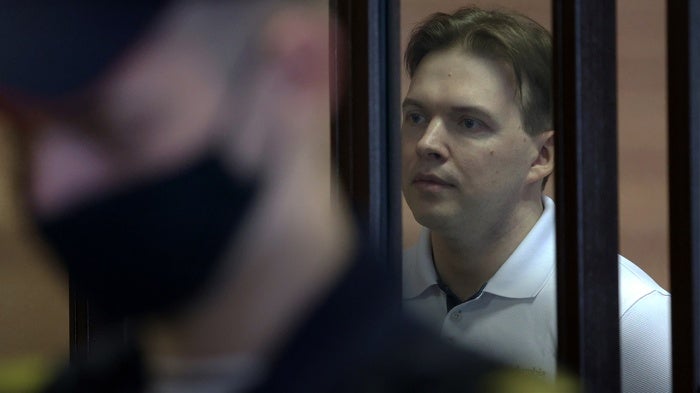
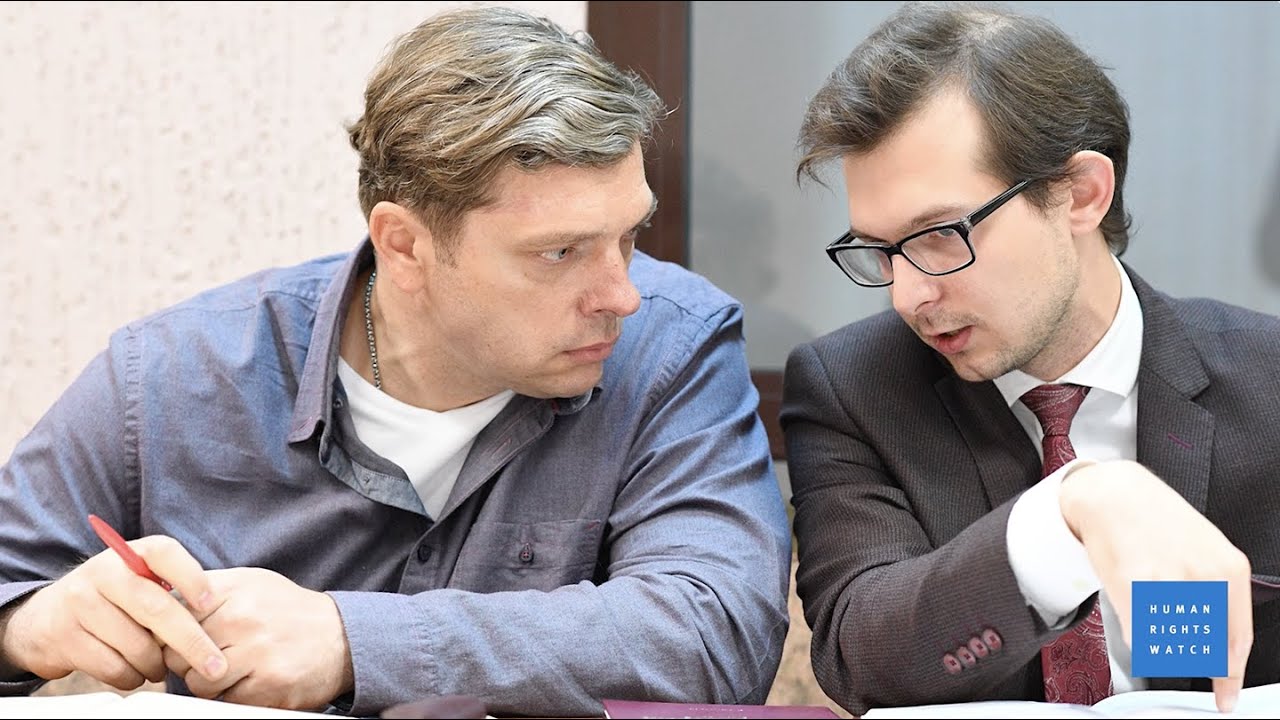
At the time of writing, six lawyers—Maksim Znak, Aliaksandr Danilevich, Vital Brahinets, Anastasiya Lazarenka, Yuliya Yurhilevich, and Aliaksei Barodka—were serving sentences on politically motivated charges ranging from six to ten years. Such charges included providing legal aid to political opposition figures and activists or giving interviews to and sharing information with independent media labelled “extremist” by the authorities. [see https://humanrightsdefenders.blog/2021/09/10/two-lawyers-from-belarus-share-lawyers-for-lawyers-award-2021/]

In addition to politically motivated prosecution, lawyers also have faced politically motivated disbarment. Since 2020, more than 140 lawyers have been disbarred by the regional bar associations or faced arbitrary license revocation by the Justice Ministry following decisions of its Qualification Commission because they supposedly breeched some regulations or were not sufficiently qualified to work as lawyers. These grounds are often easily exposed as flimsy pretexts: on average, those “unqualified” lawyers had more than 13.5 years of experience; many had successfully worked in the legal field for two to three decades, or more, and some of them were previously recognized by bar associations for their excellence…

The report also examines how the Belarusian government has established all-encompassing control over the legal profession in the country by controlling the admission of lawyers into the profession, regulating the way they discharge their duties, and exercising other broad controlling functions including but not limited to revoking lawyers’ licenses and essentially stripping lawyers’ self-governing bodies of independence.

Crackdown on Human Rights Lawyers in Belarus: Maryia Kolesava Hudzilina

In November 2021, a set of amendments into the Law on the Bar and Practice of Law in the Republic of Belarus (Law on the Bar) entered into force, which banned lawyers from working individually or opening law firms, requiring them to join legal consultation offices created and supervised by regional bar associations in coordination with the Justice Ministry. The amendments also significantly expanded the Justice Ministry’s control over the self-governing bodies of the bar and eased the conditions for obtaining a lawyer’s status for ex workers of law enforcement and judiciary….  

The Belarusian Republican Bar Association (BRBA) and regional bar associations generally have failed to represent and protect the rights of their members and withheld support from lawyers facing obstacles in discharging their duties, which in recent years have come to include harassment, arbitrary detention, and criminal prosecution. Moreover, bar association executive bodies have become vehicles for the agenda of state officials, triggering sanctions against and disbarring lawyers deemed undesirable by the authorities. In light of the control exercised by the state over the formation of the Belarusian bar’s executive bodies and their work, these associations cannot be considered genuinely independent self-governing bodies representing the interests of all lawyers in Belarus.

Some lawyers described the current state of the Belarusian justice system and bar as a “total collapse of the legal system” and many felt “disarmed” in the face of systematic and widespread violations of due process, fair trial, and rule of law. Yet, lawyers noted, that it is their duty to discharge their functions to the highest professional standard, notwithstanding the political motivation of their clients’ cases and the unprecedented pressure from the state:

Crackdown on Human Rights Lawyers in Belarus: Uladzimir Pylchanka

Recommendations

To the Belarusian Government

  • Immediately end the systematic detention and prosecution of anyone who peacefully exercises their rights and freedoms, release all political prisoners, provide effective remedies for victims and survivors of human rights abuses, and carry out prompt and impartial investigations into all alleged human rights violations;
  • Immediately end the ill-treatment of prisoners and ensure the protection of their rights and freedoms in confinement, including by ending the pervasive practice of incommunicado detention; grant lawyers and families unhindered access to detainees, and ensure all prisoners receive adequate medical assistance;
  • End all harassment of, attacks on, and interference with lawyers, particularly those representing clients in politically motivated cases and exercising their freedom of expression in line with international standards;
  • Ensure all courts adhere to fair trial standards. Allow lawyers to effectively perform their professional functions in accordance with the guarantees provided for in article 14 of the International Covenant on Civil and Political Rights (ICCPR) and the UN Basic Principles on the Role of Lawyers, including by instructing law enforcement and state agencies on the protected role and function of lawyers;
  • Repeal and amend national legislation to bring domestic law in compliance with international standards to ensure the independence and self-governance of the legal profession in Belarus; 
  • Restore the licenses of all lawyers who have been disbarred or lost their licenses as a result of discharging their professional duties in accordance with international standards or for exercising their freedom of expression (including those lawyers who lost their license over arbitrary and state-controlled procedures at the Justice Ministry’s Qualification Commission);
  • Guarantee the independence of disciplinary proceedings against lawyers, which should be carried out by lawyers’ self-governing bodies in a fair and objective manner;
  • Curtail the Justice Ministry’s authority to interfere with independence of the legal profession, including the ministry’s authority to issue regulations on the work of lawyers, admit them into the profession, revoke licenses, carry out certification procedures, initiate disciplinary proceedings, and shape the selection of executive bodies of bar associations; 
  • Void existing policies undermining the independence of legal profession and ensure separation of the bar from the state, including by abolishing the pervasive practice of forcing lawyers to express support for the government’s agenda and interests;
  • Respect the right to legal assistance, including by removing arbitrary obstacles to lawyers’ access to clients, safeguarding lawyer-client privilege, stopping the practice of making lawyers sign arbitrary and overly broad non-disclosure obligations, and ensuring fair and public trials and full equality of arms in courts of law;
  • Promptly comply with repeated requests by the UN special rapporteur on the human rights situation in Belarus to conduct a country visit.

To the Belarusian Republican Bar Association and Regional Bar Associations

  • Immediately end retaliation against members for carrying out professional duties or legitimately exercising their freedom of expression, and ensure lawyers targeted on such grounds have access to an effective remedy;
  • Repeal internal regulations that undermine the unhindered provision of legal assistance;
  • Advocate resolutely with the Belarusian government in support of the above recommendations and for Belarus’s adherence to international standards on the role of lawyers and the right to a fair trial;
  • Take measures to actively protect the interests of lawyers, defend the right of all accused to an effective defense regardless of the charges, and emphasize that lawyers cannot be identified with or punished for the alleged crimes of their clients;
  • Push back consistently and in principled fashion against the ongoing severe erosion of the bar’s professional autonomy and integrity, and the state’s overarching control of the bar;
  • Encourage regional bar associations to draw up rosters of lawyers to visit prisons to provide free legal advice and assistance to prisoners.
     

To United Nations Member States, Council of Europe, Organization for Security and Co-operation in Europe, and the European Union

  • Refrain from any cooperation with the Belarusian Republican Bar Association and regional bar associations until they become independent self-governing bodies representing the interests of Belarusian lawyers;
  • Call on the government of Belarus and the Belarusian bar to respect the rights of lawyers and to end arbitrary arrests, harassment, retaliation, and attacks against them;
  • Develop and fund programs to support lawyers who have faced retaliation for their professional activities or exercise of freedom of expression and examine ways of integrating Belarusian lawyers in exile into the legal profession in host countries;
  • Recognize Belarusian lawyers who have faced retaliation for their professional activities in defending clients in politically motivated cases as human rights defenders and afford them the requisite protection, including assistance with access to visas, funding and protection in exile and protection from transnational repression;
  • Consider imposing coordinated, targeted sanctions against the Justice Ministry officials and leaders of the Belarusian bar responsible for the systematic and widespread abuses against lawyers working on politically motivated cases and exercising their freedom of expression;
  • Recognize the Belarusian Association of Human Rights Lawyers as a key independent organization of Belarusian lawyers, and support its efforts to promote and protect the human rights of lawyers deprived of their right to exercise their profession in retaliation for discharging their duties and exercising their freedom of expression, and to improve the provision of legal aid in Belarus;
  • Express solidarity with and provide support to Belarusian human rights defenders working to deter politically motivated repression and document cases of grave rights violations for future accountability;
  • Support independent information sources providing independent coverage of events in Belarus and promoting universal human rights principles. 
     

To Bar Associations and Lawyers’ Associations in Europe, Canada, and the US

  • Advocate for the above recommendations, in particular , for Belarusian authorities, and bar, to uphold international human rights standards, ending politically motivated persecution, ensuring independence and guarantees for legal profession.
  • Privately and publicly express concern at the interference of the government in the work of lawyers in Belarus;
  • Support Belarusian lawyers who have experienced or face retaliation for their legitimate professional activities, including by monitoring politically motivated cases against lawyers and, when relevant, providing third party interventions to courts and international agencies;
  • Refrain from any cooperation with the Belarusian Republican Bar Association and regional bar associations until they become independent self-governing bodies representing the interests of Belarusian lawyers.

Human Right Watch wrote to the Belarusian Justice Ministry and the Belarusian Republican Bar Association in April 2024 seeking their response to a summary of the report findings. At the time of writing no response had been received.


https://www.hrw.org/report/2024/05/27/i-swear-fulfill-duties-defense-lawyer-honestly-and-faithfully/politically

Front Line Defenders launches Global Analysis 2023/24 on human rights defenders

May 22, 2024

On 22 May 2024 Front Line Defenders launched its Global Analysis 2023/24 on the situation of human rights defenders (HRDs) at risk around the world, an in-depth annual publication detailing the variety of risks, threats and attacks faced by HRDs around the world.

The Global Analysis gives a panorama of the threats faced by HRDs in all regions of the world. Despite an assault on human rights and the rule of law in many countries, human rights defenders (HRDs) showed remarkable courage and persistence in advocating for more democratic, just and inclusive societies in 2023. [see also: https://humanrightsdefenders.blog/2023/04/04/front-line-defenders-just-published-its-global-analysis-2022-new-record-of-over-400-killings-in-one-year/]

At least 300 HRDs killed in 28 countries

The report also reveals statistics gathered and verified by the HRD Memorial initiative – which Front Line Defenders coordinates – documenting the killings of at least 300 HRDs in 28 countries in 2023. Almost a third of those killed (31%) were Indigenous people’s rights defenders. This brings the total documented killings of HRDs in the last decade to nearly 3,000.

This appalling wave of attacks on human rights defenders is a direct result of an international human rights framework left in tatters and governments’ double standards when it comes to respecting human rights,” said Alan Glasgow, Executive Director of Front Line Defenders. “A quarter decade after the UN adopted a Declaration on human rights defenders, not enough progress has been made to ensure defenders are valued and protected. In this time, thousands of defenders have paid with their lives and many more face ongoing attacks and intimidation for their peaceful work. Urgent action is needed to change this.

Wide-ranging risks to HRDs

Globally, the violation most commonly cited by HRDs was arbitrary arrest/detention (15%), followed by legal action (13%), continuing an ongoing trend of criminalisation as the most-reported risk. This was followed by death threats (10.2%), surveillance (9.8%) and physical attacks (8.5%). Trans and non gender-conforming HRDs reported slightly higher rates of physical attacks, and a much greater risk of smear campaigns. Globally, the five most targeted areas of human rights defence were: LGBTIQ+ rights (10.2%); Women’s rights (9.7%); Human rights movements (8.5%); Indigenous peoples’ rights (7.1%); and Human rights documentation (5.2%).

The statistics in the Global Analysis are derived from Front Line Defenders’ casework and approved grant applications between 1 January and 31 December 2023. The statistics are based on 1,538 reported violations in 105 countries. Front Line Defenders documents multiple violations per case or grant, as this is the reality of the situation for human rights defenders. For more details on how these and the HRD Memorial data are gathered, please refer to the Methodology section at the end of the report.

Download the full Global Analysis 2023/24

https://www.frontlinedefenders.org/en/resource-publication/global-analysis-202324

Three human rights defenders on why they refuse to be silent in older age

May 21, 2024

This week (20 May 2024), as the United Nations moves towards an international convention on the rights of older persons, Amnesty International is launching a new campaign: Age Loud! We demand a world where human rights last a lifetime, and where older voices are no longer ignored. [https://www.amnesty.org/en/latest/campaigns/2024/05/three-activists-on-why-they-refuse-to-be-silent-in-older-age/]

AI asked three older activists to reflect on their experiences, the changes they are campaigning for, and how being an older person gives them unique perspective and motivation.

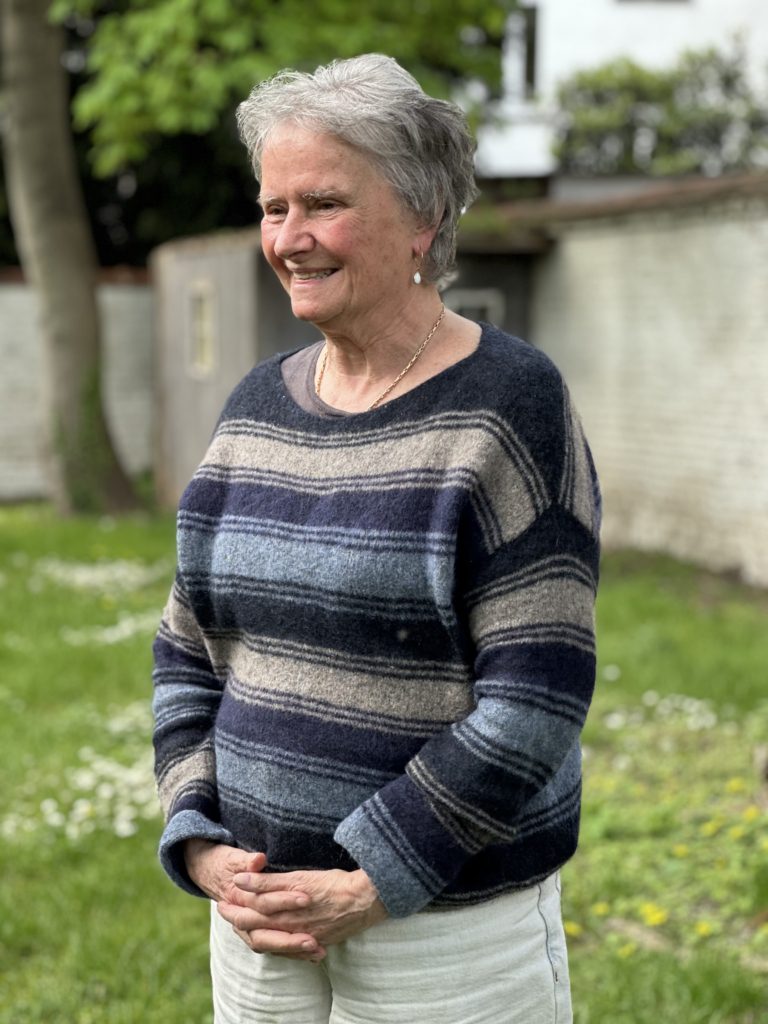
Cecile de Ryckel, 78, Belgium

Cecile is a lifelong activist working on anti-racism and climate change.

Why did you become an activist?

After a homelessness crisis amongst migrants in Belgium in 2015, my husband and I hosted two people from Ethiopia who the authorities had left to sleep in a city park. They told us that in Ethiopia they were small-scale farmers and grew food for their families. However, it was raining less frequently, and growing food was becoming more difficult. That was when I realized that climate change was one of the most important issues in the world today, and that it would have far-reaching consequences. Soon after that I participated in a citizens assembly discussing how best to address climate change and reduce carbon emissions. We learned how to mobilize people and change behaviours. I joined an advocacy collective, Grandparents for the Climate, and started working actively on the issue.

We have a responsibility to future generations to address this challenge today. It already has wide-ranging impacts on people of all ages. I remember when I was a child that we would joke that an older person was someone who “wouldn’t make it through the winter”, but today due to rising temperatures we sadly have to ask whether some older people can “make it through the summer”.

I recently saw how a group of older women won a landmark court case that the Swiss government’s weak climate change policy had violated their rights. This will help advance the cause greatly, for people of all ages.

Amina Musa, 72, Nigeria

Amina is an activist on behalf of victims of the armed conflict in north-east Nigeria and their families, including those who have been unlawfully killed or detained.

Why did you become an activist?

I became an activist nine years ago when Boko Haram forced us to leave our homes, and we found ourselves living in camps controlled by the Nigerian government. The military made baseless accusations that our sons were associated with Boko Haram. Our sons were blindfolded and arrested and held in dehumanizing conditions. I had no choice but to start campaigning for their release. As mothers, we came together and started a movement to seek justice. We are demanding that all those detained unlawfully be released immediately and that the government investigate the gross violations we have experienced. Some of our sons have been in detention for more than 10 years. We have had enough, we want justice.

I tell other older people that they should continue with their activism and bear with the challenges, and that our activism can also inspire younger people. I know it is not easy, but these causes are important. Age should not and will not deter us from making our society free from injustice.

Juan Jacobo Hernández, 82, Mexico

Juan is an activist on social issues and LGBTQ+ liberation.

Why did you become an activist?

In the 1960s, I was part of Mexican student movements. Then Stonewall happened: I had a boyfriend at the time who lived in New York, and he told me that I had to come and see it for myself. I witnessed the first LGBTQ+ rebellion: the first time gay men, trans people, lesbians were standing up and confronting the police. Coming back to Mexico, we started the Frente de Liberación Homosexual (Gay Liberation Front). I had learned a lot about how to make protests visible and how to make our voices heard. Finally, there was a space where we could be active, where we could do something. When I started my activism, we didn’t use the term “human rights” – but that’s what it has always been about. We held large demonstrations against political repression, for the abolition of the death penalty, and to fight restrictions on social protest. Persecution by the government was very real and close to us at the time – gay men and trans women were persecuted, raided by the police, extorted and beaten up.

Whenever we were out in the street, we felt that something bad could happen. We were struggling for our lives, for our security, for our right to be in the street without being beaten up, robbed or killed.

My whole life, I have never stopped being an activist. The AIDS epidemic collapsed the first phase of gay liberation. So many activists died and [as I grew older], I recognised the need to transmit my experience, knowledge and values [to the younger generation]. Since 1981 I’ve been part of Collective Sol, where we work to build and strengthen the capacity of small, grassroots organizations that are working on the most pressing LGBTQ+ issues they see today.

My life as an activist means I can look back and say I have witnessed three great moments in LGBTQ+ liberation. The first was when we formed political organizations, coming out of the shadows and breaking the silence. The second was the HIV/AIDS epidemic, the way it created a connection between LGBTQ+ liberation and people living with HIV, irrespective of whether they were LGBTQ+. This connection was powerful and drove the movement forward.

Why we need human rights now more than ever [debate in the UK)

May 15, 2024

Shami Chakrabarti

On 6 May 2024 the Guardian gave the floor to Shami Chakrabarti, a lawyer and Labour member of the House of Lords; the author of Human Rights: The Case for the Defence, who makes a cogent and strong statement in the current debate on the UK leaving the European convention on human rights. [see also: https://www.economist.com/britain/2024/04/25/why-britains-membership-of-the-echr-has-become-a-political-issue].

In the three decades since I became a lawyer, human rights – once understood as an uncomplicated good, a tool for securing dignity for the vulnerable against abuses by the powerful – have increasingly come under assault. Perhaps never more so than in the current moment: we are constantly talking about human rights, but often in a highly sceptical way. When Liz Truss loudly proclaims “We’ve got to leave the ECHR, abolish the supreme court and abolish the Human Rights Act,” she’s not the fringe voice she might have been in the 1990s. She represents a dangerous current of opinion, as prevalent on parts of the radical left as on the populist right of politics. It seems to be gaining momentum.

As an idealistic youngster, I would have been shocked to know that in 2024 it would be necessary to return to the back-to-basics case, to justify the need for fundamental rights and freedoms. But in a world where facts are made fluid, what were once thought of as core values have become hard to distil and defend. In an atmosphere of intense polarisation, human rights are trashed along all parts of the political spectrum – either as a framework to protect markets, or as a form of undercover socialism. What stands out for me is that the most trenchant critics share a profound nationalism. Nationalists believe that universal human rights – the clue’s in the name – undermine the ability of states to agitate for their narrower interests.

Given that so many of our problems can only be tackled with an international approach, a robust rights framework is more important than ever

It’s no coincidence that the governments keenest on turning inwards – Viktor Orbán’s in Hungary, that of former president Bolsonaro in Brazil – have been least keen on common standards that protect minorities in their own territories and hold them to high standards in the international arena. At a time of insecurity, these leaders leverage fear to maximise their appeal. The prospect of a second Trump administration in the US demonstrates that this trend shows no sign of abating. In that context, it’s vital to make the case for human rights anew.

It boils down to this: given that so many of our problems – in an age of climate change, global disorder and artificial intelligence – can only be tackled with an international approach, a robust rights framework is more important than ever. There are parallels with the postwar period in which human rights were most fully articulated, a time when it was obvious to everybody that cooperation and global standards were the best way to shore up our common humanity after a period of catastrophic conflict and genocide.

Of course everyone believes in some rights – normally their own and those of friends, family and people they identify with. It is “other people’s” freedoms that are more problematic. The greater the divisions between us, the greater this controversy. And yet, it is precisely these extreme disparities in health, wealth, power and opinion that make rights, rather than temporary privileges given and taken away by governments, so essential. They provide a framework for negotiating disputes and providing redress for abuses without recourse to violence.

New technologies, and AI in particular, require more not less international regulation. As people spend more time online, they become vulnerable to degrading treatment, unfairness and discrimination, breaches of privacy, censorship and other threats. The so-called “black boxes” behind the technology we use make ever more crucial decisions about our daily lives, from banking to education, employment, policing and border control. Anyone who flirts with the notion of computer infallibility should never forget the postmasters and other such abuses, perpetrated and then concealed.

Our shrinking, burning planet is the ultimate reason why nationalism does not work in the interests of humankind

Perhaps most important of all is the growing contribution of human rights litigation to the struggle against climate catastrophe. A whole generation of lawyers and environmentalists is taking notes from earlier struggles, just as suffragists once learned from slavery abolitionists. This is despite the machinations of fossil fuel corporations versed in a thousand lobbying, jurisdictional and other delaying tactics.

Our shrinking, burning planet is the ultimate reason why nationalism does not work in the interests of humankind. Today’s global empires, sailing under logos rather than flags, need to be more directly accountable under human rights treaties. Our existing mechanisms, whether local and national governments, domestic and international courts, or some of the more notoriously tortuous UN institutions, may be imperfect and in need of reform. Yet, like all structures of civilisation, they are easier to casually denigrate than to invest in and adapt to be more effective.

While I have been writing this, I have been voting in the House of Lords on amendments to the so-called safety of Rwanda bill. It is the most regressive anti-human rights measure of recent times, and intended to be that way. It will not stop the boats of desperate people fleeing persecution, but is designed to stop the courts. British judges will be prevented from ensuring refugees’ fair treatment before they are rendered human freight and transported to a place about whose “safety” our supreme court was not satisfied. Rishi Sunak will be able to use this situation as excuse for an election pledge to repudiate the European convention on human rights.

If he gets his way, rights will be removed not just from those arriving by boat, but from every man, woman and child in the UK. By contrast, the golden thread of human rights is equal treatment: protecting others as we would wish to be protected ourselves, if that unhappy day ever came. It’s a thread we must never let go of.

https://www.theguardian.com/books/2024/may/06/the-big-idea-why-we-need-human-rights-now-more-than-ever

see also: https://eachother.org.uk/dont-make-human-rights-a-dirty-word-the-national-campaign-sweeping-the-highstreet/

Geneva celebrates press freedom and women cartoonists

May 2, 2024

On 3 May, 2024 at 5.30 pm in the Maison de la Paix, Geneva Graduate Institute, and to mark World Press Freedom Day, the Freedom Cartoonists Foundation and the City of Geneva will be awarding its 2024 international editorial cartoon prize [City of Geneva’s International Press Cartoon Award]. See: https://www.trueheroesfilms.org/thedigest/awards/EBEE0ECF-565B-6614-9B67-A6938EB46155

The public event is fully booked, but a livestream will be available on this page.

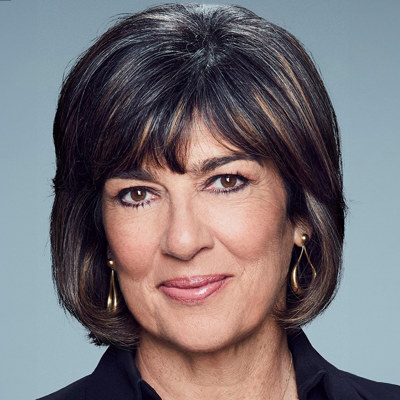
Keynote by the 2003 Nobel Peace Prize laureate Shirin Ebadi from Iran, (mentor of Narges Mohammadi, current Nobel Peace Prize winner imprisoned in Teheran), in discussion with Christiane Amanpour, CNN chief international anchor and member of the Foundation’s advisory board.

Followed by a debate on women cartoonists around the world, with Ann Telnaes (USA), Rachita Taneja (India) and Willis from Tunis (Tunisia), moderated by Christiane Amanpour. Presentation of the “Kofi Annan Courage in Cartooning Award 2024” by the City of Geneva and the Freedom Cartoonists Foundation.

Introductions by Chappatte and Marie Heuzé (Chair and Vice-Chair of the Foundation), Sami Kanaan (Administrative Councillor of the City of Geneva) and Volker Türk (UN High Commissioner for Human Rights).

Film made by True Heroes Films.

Christiane Amanpour, CNN anchorwoman, member of the foundation’s advisory board

https://freedomcartoonists.com

Engage with UN human rights bodies: a useful guide

May 2, 2024

ILGA World (https://ilga.org/) published a comprehensive index of deadlines facilitating engagement with UN human rights mechanisms. This invaluable resource is crafted to serve as a guiding beacon for human rights defenders (HRDs) dedicated to advancing the rights of individuals within the realms of sexual orientation, gender identity, gender expression, and sex characteristics (SOGIESC). The active involvement of HRDs in UN mechanisms is paramount, acting as a catalyst for transformative global change. The Guide is equally useful for non-SOGIESC submissions.

For those aspiring to witness targeted recommendations on SOGIESC issues directed at their respective countries, active participation in the Universal Periodic Review (UPR) holds utmost importance.

Similarly, collaboration with the Treaty Bodies provides a unique platform wherein a panel of experts rigorously evaluates a nation’s adherence to international human rights treaties, illuminating crucial intersections with the challenges faced by the LGBTI community.

This index serves as a vital compass, delineating pivotal deadlines and milestones, empowering HRDs to navigate the intricate UN mechanisms strategically, thus making substantial contributions to promoting and protecting human rights on a global scale.

General United Nations deadlines

Special Rapporteur on slavery

deadline for submission of Calls for inputs: 12 April 2024
Additional info and questionnaire

Independent Expert on the effects of foreign debt

deadline for submission of Calls for inputs: 20 April 2024
Additional info and questionnaire

Independent Expert on Sexual Orientation and Gender Identity

deadline for submission of Calls for inputs: 25 April 2024
Additional info and questionnaire

Special Rapporteur on Torture

deadline for submission of Calls for inputs: 24 April 2024
Additional info and questionnaire

Special Rapporteur on violence against women and girls

deadline for submission of Calls for inputs: 30 April 2024
Additional Info and questionnaire

Special Rapporteur on unilateral coercive measures

deadline for submission of Calls for inputs: 30 April 2024
Additional info and questionnaire

Special Rapporteur on extrajudicial, summary or arbitrary executions

deadline for submission of Calls for inputs: 10 May 2024
Additional info and questionnaire

Special Rapporteur on minority issues

deadline for submission of Calls for inputs: 10 May 2024
Additional info and questionnaire

The Guide then lists all countries by continent

UN Human Rights Office alarmed over repression of student protests in USA

May 2, 2024

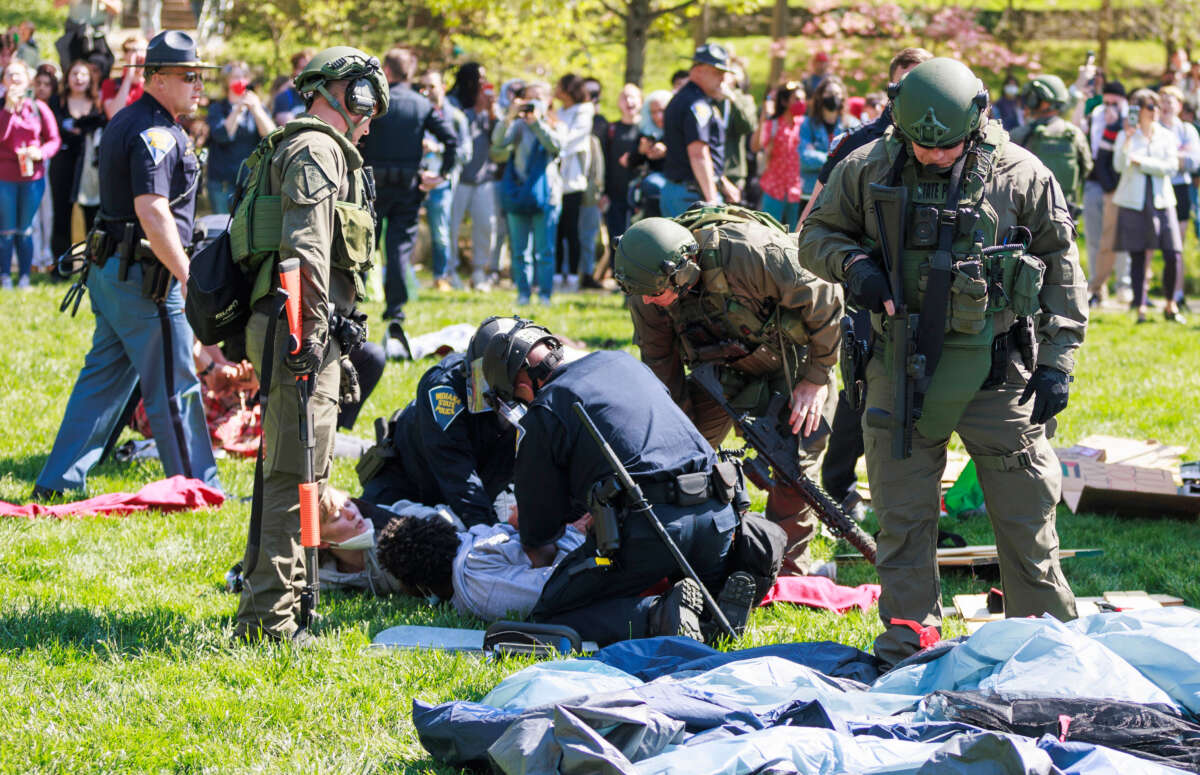
Dozens of people are arrested by the Indiana State Police riot squad during a pro-Palestinian protest on campus in Bloomington, Indiana, on April 25, 2024.

UN human rights officials are expressing alarm over the recent wave of violent repression by university administrators against the student protests for Palestinian liberation that have swept the U.S., raising concerns that protesters’ rights to free speech and assembly are being violated.

A statement on Tuesday said that UN High Commissioner for Human Rights Volker Türk, the UN’s top human rights officer, is “troubled” over a “series of heavy-handed steps taken to disperse and dismantle protests” across U.S. college campuses.

Freedom of expression and the right to peaceful assembly are fundamental to society — particularly when there is sharp disagreement on major issues, as there are in relation to the conflict in the Occupied Palestinian Territory and Israel,” said Türk. “I am concerned that some of the law enforcement actions across a series of universities appear disproportionate in their impacts.

Over the last two weeks, over 1,200 protesters have been arrested across dozens of campuses after university administrators enlisted police to crack down on encampments and other demonstrations set up by students calling for their schools to divest from Israel and supporting corporations, among other demands. At some universities, administrators even allowed law enforcement officers to aim sniper rifles at their students for their peaceful acts of protest.

UN Special Rapporteur on Human Rights Defenders Mary Lawlor said that universities’ crackdowns are an obvious violation of students’ rights.

https://www.ohchr.org/en/statements/2024/02/israelopt-enabling-human-rights-defenders-and-peaceful-protests-vital-achieving

https://www.ohchr.org/en/press-releases/2024/04/united-states-america-un-human-rights-chief-troubled-law-enforcement-actions

see also: the Economist of 30 April: Escalating protests expose three fault lines on American campuses