You don’t need experience to make a difference. You just need the belief that things can be better – and the courage to take that first step. At Amnesty, we’ll support you to get involved in a way that works for you. Whether you’ve got five minutes or a few hours a month, there’s a place for you in our movement.
….
🌈 Ready to Take Action? Sign up Today.
Once you sign up, we’ll guide you through a short online induction module that introduces you to who we are, what we do, and how you can help. From there, you’ll be connected with the right support to help you
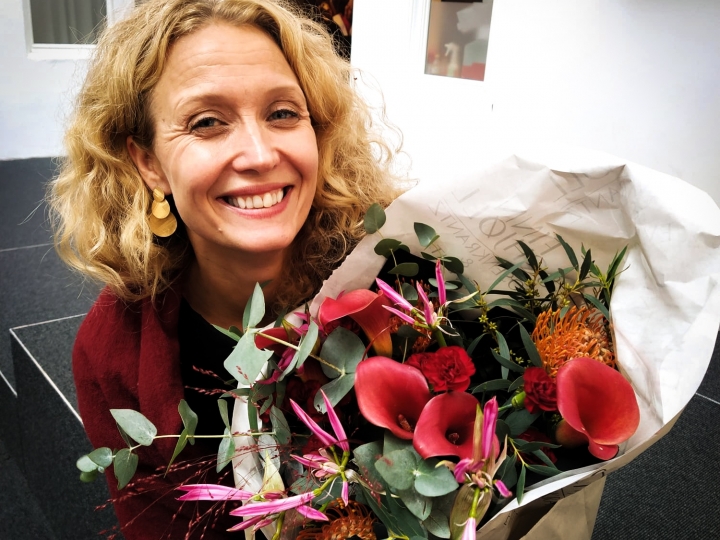
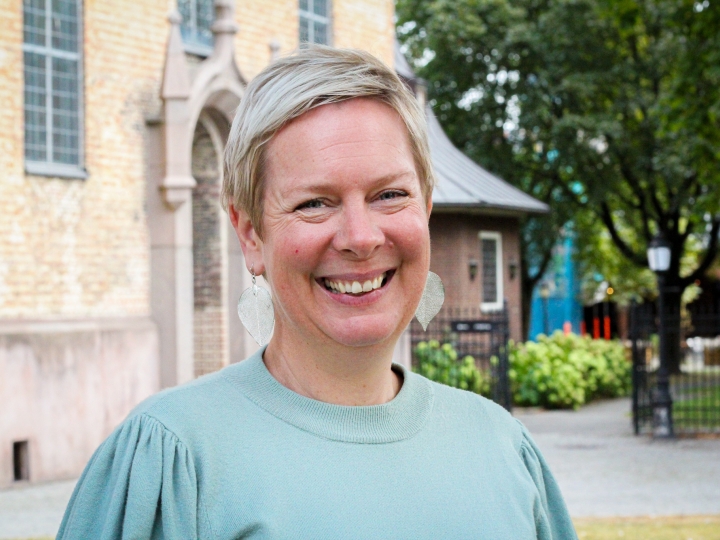
After 11 years as the NHRF’s Executive Director Sandra Petersen was succeeded by Ingeborg Moa on 15 October 2021.
sandraIngeborg
Ingeborg Moa comes to the NHRF from the position as Director of Activism and Organisational Development at Amnesty Norway, and has nearly two decades of international experience working with local organizations and human rights defenders around the world. She has ten years of working experience with the Norwegian People’s Aid (NPA), as well as having worked for Norwegian Refugee Council and the UN. Geographically, she has extensive work experience from the Middle East and Southeast Asia, having spent a number of years in Palestine and Myanmar, as well as in Cambodia, Thailand, Iraq and Turkey. She has also been working on Syria. “My own experiences after working with human rights defenders for nearly 20 years is that for situations of injustice to change, it is the affected communities and people on the ground who need to organize, mobilize and take the lead in the struggle for their own rights. At the same time, international solidarity is necessary both in order to ensure support for practical initiatives on the ground, and not least in order to ensure that local struggles are supported by policy initiatives on a multilateral level”, she says.
Sandra Petersen will during the next four years undertake a PHD research at the Norwegian Center for Human Rights, University of Oslo with a focus on International Support to Human Rights Defenders. Apart from her research, Sandra Petersen will continue to work with the NHRF as a special advisor on human rights defenders.
Sandra Petersen first started working in the NHRF in 2009 leading the work on Pakistan and India. In 2010 she moved into the role of the executive director and has for more than a decade been leading the organisation towards growth; both with strengthening NHRF’s financial muscles to support frontline grassroots human rights organisations and defenders, and by increasing the organisational capacity from a two-staffed office in Oslo in 2010 to 25 people divided between the Oslo and Colombia offices – including team members and consultants in the US, India, Pakistan, Indonesia, Thailand and Mexico. [see also: https://humanrightsdefenders.blog/2020/04/21/norwegian-human-rights-fund-annual-report-2019/]
In an interview (see link below) Sandra give her views on what was achieved and her hopes for the future. And tells a bit more about her research project: The project is partly funded by the NHRF and by the Norwegian Research Council, and will be undertaken at the Norwegian Center for Human Rights at the Law Faculty, University of Oslo. I will seek collaboration with international universities and hopefully contribute to new partnerships. The primary goal of this research is to make an important contribution to future policy outcomes by providing empirical knowledge and comparative analysis of international and in particular Norway’s role in efforts on human rights defender’s protection. This will be shared within institutional structures here in Norway as well as internationally. The Ph.D. seeks to highlight best practices, lessons learned, as well as to try pointing to areas for improvement. Importantly, it aims to understand how human rights defenders in a selection of countries perceive international efforts to support them. Central to this analysis will be to understand possible new needs including effects of COVID-19 and the rapidly evolving technology and digital developments that can affect defenders’ safety and security. I think this is immensely important for all of us that wish to support human rights work and defenders’ role in these efforts. I deeply believe in a combined practitioner and academic approach to our work. Our actions should be well founded in knowledge.
On 30 November, 2020 DC Velocity reported that with $1.2 million in funding (with support from Laudes Foundation, Stardust Fund, The Ray and Dagmar Dolby Family Fund, UBS Optimus Foundation and Lisa Wolverton, President, Wolverton Foundation), the Freedom Fund has launched “Freedom Rising“, a program to identify, equip, empower and support women and survivors of modern slavery to become leaders of anti-slavery organizations in their communities and in the global movement.
Of the groups working to liberate people and end the conditions that lead to modern slavery, very few are led by women and survivors of slavery. The Freedom Fund, the largest global funder of frontline, anti-slavery organizations, believes that women and survivors should be at the center of the work to end modern slavery. Today,
“We know from our experience supporting frontline organizations that the most effective and sustained way to end modern slavery is to incorporate the experiences and the leadership of women and survivors,” said Nick Grono, CEO of The Freedom Fund. “Gender bias and systemic discrimination are factors that make women and girls particularly vulnerable to modern slavery in the first place. We must center our work around the leadership of women and survivors in order to address these underlying causes. We believe we can transform the face of the movement one leader at a time, and we must start now.”
The program is designed to support leaders through a personal learning journey that provides the skills and space for participants to experience, analyze and apply their learning. Not only must women and survivors work through their experiences of trauma and bias, they must also learn new approaches to leadership in a culture where their voices are chronically undervalued or dismissed.
Each cohort of 50 leaders will receive a minimum of 12 months of mentorship, leadership and technical skills training, before graduating to join the Freedom Rising alumni network. Due to COVID-19, the program has been adapted to provide online learning until the in-person training can be safely delivered.
“We invested in Freedom Rising because we believe that transformational change comes only when women are in leadership positions and in influential roles sharing power and exerting influence,” said Natasha Dolby, founder of Freedom Forward and board member of the Freedom Fund. “These women are the best positioned to understand, analyze and shape what needs to happen in their organizations and communities, and with the anti-slavery movement at-large. We’re aware that changing norms takes time, but we’re behind the Freedom Fund’s vision that we must start now, when multiple pandemics that impact women worldwide have converged.”
Freedom Rising differs from many other leadership programs in its explicit focus on building a stronger, more strategic, and more representative anti-slavery movement. After completing the year-long leadership training, participants will be formally introduced to the program’s alumni network, enabling them to continue to build and strengthen connections at the local, regional and international levels. The program will be piloted in Tamil Nadu in Southern India throughout 2021. Learnings from the pilot will be used to adapt and improve the program before its rollout. The curriculum will then be tailored to the specific needs and contexts of each training location, and delivered in local languages.
“Initiatives to support women’s leadership like this one are crucial, especially at this critical moment, as the world battles a global pandemic,” said Nada Al-Nashif, UN Deputy High Commissioner for Human Rights. “We know that putting women at the center, indeed ensuring women are at the helm, will help.
The Mo Ibrahim Foundation on Thursday announced that there is no winner of the 2019 Ibrahim Prize for Achievement in African Leadership. This decision was made following deliberations by the independent Prize Committee. Announcing the decision, Prize Committee Chair Festus Mogae commented: “The Ibrahim Prize recognises truly exceptional leadership in Africa, celebrating role models for the continent. It is awarded to individuals who have, through the outstanding governance of their country, brought peace, stability and prosperity to their people. Based on these rigorous criteria, the Prize Committee could not award the Prize in 2019.”
Commenting on the decision, Mo Ibrahim, Chairman of the Mo Ibrahim Foundation said: “Africa is facing some of the toughest challenges in the world – ranging from those connected to population growth, and economic development, to environmental impact. We need leaders who can govern democratically and translate these challenges into opportunities. With two-thirds of our citizens now living in better-governed countries than ten years ago, we are making progress. I am optimistic that we will have the opportunity to award this Prize to a worthy candidate soon.”
The Ibrahim Prize aims to celebrate leaders who, during their time in office, have developed their countries, strengthened democracy and human rights for the shared benefit of their people, and advanced sustainable development.
The candidates for the Ibrahim Prize are former African executive Heads of State or Government who have left their office during the last three calendar years, having been democratically elected and served their constitutionally mandated term. For more on the Mo Ibrahim Prize, see: http://www.trueheroesfilms.org/thedigest/awards/ibrahim-prize-for-achievement-in-african-leadership
While the Ibrahim Prize claims to be the largest annually awarded prize in the world (with US$5 million over ten years), this is mostly theoretical since some 75 million USD have not been disbursed since its inception.
World leaders gathering for the United Nations General Assembly should reject the abusive policies of autocratic populists and promote greater respect for human rights worldwide, Human Rights Watch said ton 23 September 2019. Four leaders who have spearheaded aggressive attacks on human rights at home and at times abroad – Brazilian President Jair Bolsonaro, US President Donald Trump, Egyptian President Abdel Fattah al-Sisi, and Turkish President Recep Tayyip Erdogan – will open the annual General Debate at UN headquarters on September 24, 2019.
“Rising authoritarianism is one of the gravest challenges that defenders of human rights face every day,” said Kenneth Roth, executive director of Human Rights Watch. “It’s essential that world leaders push back against the lineup of anti-rights crusaders who will open this year’s UN General Assembly this year.”
Egypt’s al-Sisi, whom Trump reportedly praised as his “favorite dictator,” has been crushing free speech and other basic rights for six years. Hallmarks of his rule include the massive use of lethal force against protesters, and widespread and systematic use of torture in detention facilities.
In Turkey, three years after a violent coup attempt in 2016, Erdogan’s presidency has normalized emergency rule. More than 40,000 people are imprisoned on terrorism charges, few of the more than 130,000 public officials dismissed have been reinstated, elected Kurdish mayors have been removed, and the country is the world’s top jailer of journalists.
The Trump administration has repeatedly disparaged human rights, emboldening white supremacists and other extremists at home and abusive leaders abroad. And with respect to climate change, one of the top issues at this year’s General Assembly, Brazil’s Bolsonaro has effectively given a green light to criminal networks destroying the Amazon rainforest and intimidating and attacking forest defenders. Trump has actively undermined efforts to address climate change.
The lineup of abusive leaders speaking at the General Assembly does not end with the opening speakers. Leaders and ministers from countries with abysmal human rights records – including China, Iran, Russia, Saudi Arabia, and Venezuela – will also take the podium during the General Debate.
…“The only way for the UN’s prime-time lineup of leaders who proudly disparage rights not to set the tone for the entire General Assembly is for more principled leaders to be vocal and unflinching in their support for human rights and fundamental freedoms,” Roth said.
Now the NGO “Asian Human Rights Commission” (AHRC) published its own view in a Statement of 23 January 2019 entitled : “New imagination needed to understand global human rights situation.“.
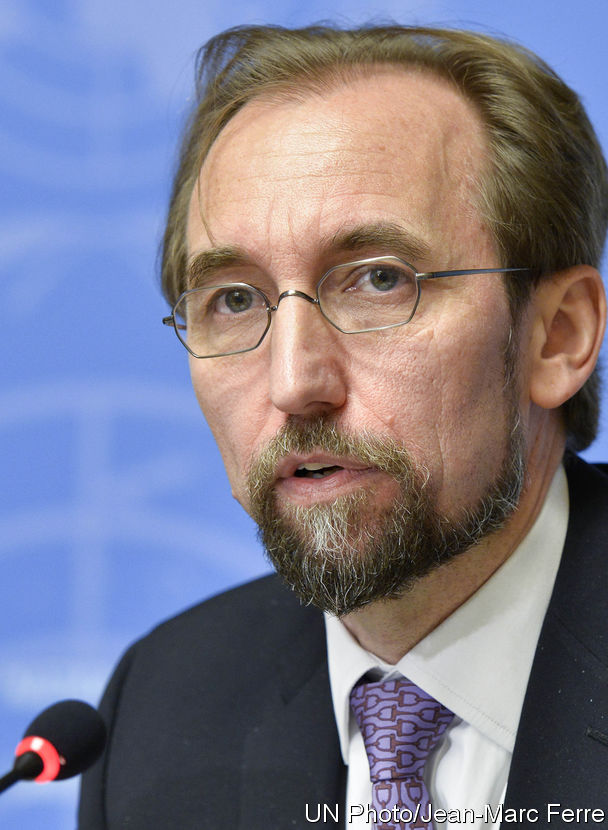
Zeid Ra’ad Al Hussein, the UN High Commissioner for Human Rights, who steps down on 1 September wrote a long and hard-hitting piece under the title “Grassroots leaders provide the best hope to a troubled world” in the Economist of 30 August 2018. Just some excerpts here, please read the whole thing:
…………….Now look at today’s politicians. First, those who occupy so much of the news media’s attention: the Trumps, the Orbans, the Salvinis. Keen to be viewed as the virile leaders of their respective countries; eager to inflate their image by harming migrants and refugees, the most vulnerable in society. If there is courage in that, I fail to see it. Authoritarian leaders, or elected leaders inclined toward it, are bullies, deceivers, selfish cowards.
If they are growing in number it is because (with exceptions) many other politicians are mediocre. They, too, are focused on their own image, the vanities associated with protocol and re-election. Too busy with themselves, or too afraid to stand up to the demagogues and for others, they seem to shelter in the safety of silence and shuffled papers. Only when they leave public office do some speak up, discovering their courage rather belatedly. Many come and go; no one really notices.
In consequence, too many summits and conferences held between states are tortured affairs that lack profundity but are full of jargon and tiresome clichés that are, in a word, meaningless. What is absent is a sincere will to work together, though all will claim—again, under the lights and on camera—that they are wholly committed to doing so. The systems for states to act collectively at higher levels in pursuit of solutions are decomposing. There are signs of it everywhere we care to look.
….
I believe it is only a matter of time, for example, before we see a Takfiri confrontation with Buddhist extremism in Asia. Where this is likely to occur, geographically, and who is likely to be involved, can already be surmised. The how and the when are, as always, indeterminate. It will depend on the outcome of regional presidential elections and how the situations in Cox’s Bazaar and Myanmar play out. The current signs are not encouraging. What is clear is that our systems for fixing this are broken.
When Myanmar inflicts enormous suffering on the Rohingya—burns them in their homes, cuts the throats of their children, rapes and terrorises, sends 700,000 people fleeing to Bangladesh in only three weeks—and the government pays no penalty for this—what are we saying to the perpetrators? Or to the victims? And to other potential perpetrators across the globe? Xi Jinping openly backs the government of Myanmar and, unusually for the US, given the extent of the horrors, President Trump did not even mention Rakhine when he addressed the UN General Assembly in September 2017. Strong evidence indicates the Burmese military and others may have committed acts of genocide. How much more cruel can humanity be, and how much chaos and pain are we fomenting?
….
And when multiple stress fractures already exist—the result of decades of mediocre leadership—all that’s required is a tripwire. To heal those fractures, whether in the Middle East or elsewhere, we must think differently, think more about human rights, and do this with some urgency.
A fracture within society is often shorthand for human suffering or the existence of burning grievances. Before conflicts begin, suffering stems from three types of human rights violations. One is the denial of fundamental freedoms, such as of opinion, expression and peaceful assembly, creating a situation where life and fear of the state become inseparable. A second is the deprivation of basic services, such as legal and social protections or rights to education and healthcare, which often only confirms the hold of political elites over others. And third, feeding the first two, discrimination, structural and deep, propped up by racism, chauvinism and bigotry.
When multiple stress fractures already exist—the result of decades of mediocre leadership—all that’s required is a tripwire
…If we do not change course quickly, we will inevitably encounter an incident where that first domino is tipped—triggering a sequence of unstoppable events that will mark the end of our time on this tiny planet. Can we swerve in time?
My hope lies in a set of people not widely known internationally, but familiar to those in the human rights community. Unlike the self-promoters—the elected xenophobes and charlatans—these people do have courage. They have no state power to hide behind: instead, they step forward. They are the leaders of communities and social movements, big and small, who are willing to forfeit everything—including their lives—in defence of human rights. Their valour is unalloyed; it is selfless. There is no discretion or weakness here. They represent the best of us, and I have had the privilege of knowing some of them personally, while others are well known to my office.
Suffering reflects a massive dereliction of the duty to serve, by those who exercise sovereignty on behalf of their people
This is what true leaders look like. Bertha Zuniga Caceres from Honduras, the young daughter of the murdered environmental activist, Bertha Caceres, who has bravely continued her mother’s struggle. Dr Sima Samar in Afghanistan, who leads the country’s independent human rights commission and is utterly fearless, even when threats to her personal safety abound. The same could be said of Senator Leila de Lima in the Philippines, who has now been arbitrarily imprisoned without trial for 18 months. Pierre Claver Mbonimpa from Burundi, a gentle yet principled soul, undeterred even after his son was murdered and he himself survived repeated attacks.
I have also been deeply impressed by the dignity and courage of Denis Mukwege from the Democratic Republic of Congo, an extraordinary human being by any measure. Likewise, I have been humbled by the determination of Angkhana Neelapaijit from Thailand, whose husband, a lawyer, disappeared in 2004 leaving her to become a most courageous activist, fighting against enforced disappearances.
There are others too, from Bahrain for example: the Khawaja family, Nabeel Rajab, Maytham Al Salman and Ebtisam Al Sayegh, who have all have shown extraordinary courage in the face of considerable adversity. Hatoon Ajwad Al Fassi and Samar Badawi in Saudi Arabia: courageous leading voices for the rights of Saudi women, both currently in detention. Amal Fathy in Egypt and Radhya Al Mutawakel in Yemen are also two brave individuals who have put their own safety at risk as they have spoken out against injustice and on behalf of victims of human-rights violations.
Likewise, Ludmila Popovici, an activist against torture in Moldova. In Poland, Barbara Nowacka has been active in organising protests against measures to pull back women’s rights. Sonia Viveros Padilla in Ecuador is fighting for the rights of people of African descent. Close by, in El Salvador, Karla Avelar, the courageous transgender activist, deserves high praise—as does the Peruvian Maxima Acuna, a well-known environmental human rights defender.
I could continue. There are grassroots leaders of movements against discrimination and inequalities in every region. These names are just a sample of the real store of moral courage and leadership that exists among us today.
While some speak from an individual vantage point, fighting specific battles on behalf of their local communities, others lead broader social movements. World-wide, they are not coordinated. But what if they were? What would happen if all the movements supported each other, openly and actively?
There are grassroots leaders of movements against discrimination and inequalities in every region…the real store of moral courage and leadership among us.
……What if this coordinated, focused, human-rights movement had the backing of business leaders? There are business leaders who are also real leaders, and who have thought seriously about human rights; people like Barbara Novick of Blackrock, Paul Polman of Unilever, Microsoft’s Brad Smith and Deepmind’s Mustafa Suleyman. This has never been done before; but if we did do it, it might just deliver a sort of shock therapy to those dangerous or useless politicians who now threaten humanity. Maybe, just maybe, it would be enough to stop the rot, so that when a fool tips that first domino or strikes the tripwire they hurt no one but themselves, and we can hope that the injury is only a slight one.
I leave you with that thought. This is my parting note: one of courage and defiance, and a longing for the leadership of the just.
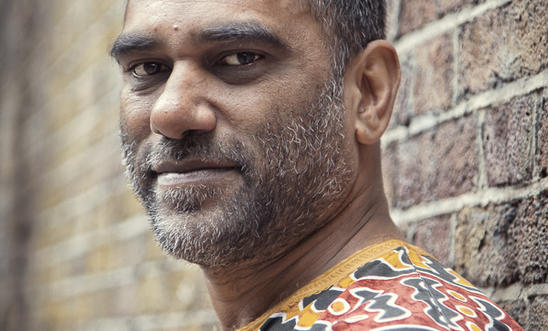
Amnesty International has appointed Kumi Naidooas its next Secretary General. As from August 2018, Kumi will succeed Salil Shetty, who served two terms as Secretary General from 2010.
Mr Naidoo is an activist and civil society leader. His previous leadership roles include Executive Director of Greenpeace International, Chair of the Global Call for Climate Action, Founding Chair of the Global Call to Action against Poverty and Secretary General and CEO of CIVICUS, the World Alliance for Citizen Participation. [see also: https://en.wikipedia.org/wiki/Kumi_Naidoo]. Mr Naidoo currently chairs three start-up organisations in his home country South Africa: Africans Rising for Justice, Peace and Dignity; the Campaign for a Just Energy Future; and the Global Climate Finance Campaign.
Mwikali Muthiani, Chair of the Board of Amnesty, said: “We are delighted to be welcoming Kumi as our new Secretary General. His vision and passion for a just and peaceful world make him an outstanding leader for our global movement, as we strengthen our resolve for a world where human rights are enjoyed by all.”
Mr Naidoo himself stated: “I have been an activist and campaigner all my life, so I am excited to be joining the world’s largest people movement for human rights at a time when we need to counter increasing attacks on basic freedoms and on civil society around the globe. This means adapting to a fluid fast-changing global environment with urgency, passion and with courage. ..Amnesty International’s campaigns for justice and equality today are more urgent than ever, and I am humbled and honoured to be leading the organisation in these challenging times.”
Amnesty has a global presence including offices in more than 70 countries, 2,600 staff and seven million members, volunteers and supporters worldwide.
Sam Zarifihas been appointed to serve as ICJ’s next Secretary General when the current Secretary-General retires next spring. Wilder Tayler will continue to work as SG until the end of March 2017 and Sam will begin in April 2017, although there will be some overlap to ensure a smooth transition in the Geneva based HQ.
Sam is a veteran of the human rights movement, with a most impressive array of experience and contacts, and has done phenomenal work as Director of the ICJ’s Asia and Pacific Regional Programme over the last four years. Prior to joining the ICJ Sam served as Amnesty International’s Director for Asia and the Pacific from 2008 to 2012. He was at Human Rights Watch from 2000, where he was Deputy Director of the Asia division. He was Senior Research Fellow at Erasmus University Rotterdam from 1997 to 2000, where he co-edited Liability of Multinational Corporations under International Law (Kluwer 2000) as well as several other publications on the subject. Sam was born and raised in Tehran, Iran and moved to the United States to complete his education. He received his Bachelor of Arts degree from Cornell University and his Juris Doctor from Cornell Law School in 1993. After practicing as a corporate litigator for several years, he obtained an LL.M in Public International Law from New York University School of Law in 1997.
High Commissioner Zeid Ra’ad Al Hussein delivers his speech at the United States Holocaust Memorial Museum. Credit: U.S. Holocaust Memorial Museum | Photo: Miriam Lomaskin
In an impressive speech on 5 February 2015 at the Holocaust Memorial Museum in Washington, D.C. – one week after the 70th anniversary of the liberation of Auschwitz – Mr. Zeid Ra’ad Al Husseinemphasized that education devoid of a strong universal human rights component can be next to worthless, especially in a crisis. “What good was it to humanity that…eight out of 15 people who planned the Holocaust at Wannsee in 1942 held PhDs?” he asked. “In the years after the Holocaust, specific treaties were negotiated to cement into law obligations to protect human rights. Countries the world over accepted them – and now alas, all too frequently, they ignore them in practice.” While it has been 70 years since the liberation of Auschwitz extermination camp, some of the processes used by the Nazis to carry out humanity’s largest organized destruction are being implemented again today by Islamic State of Iraq and the Levant (ISIL), explained Mr. Zeid.
“This logic is abundant around the world today: I torture because a war justifies it. I spy on my citizens because terrorism, repulsive as it is, requires it. I don’t want new immigrants, or I discriminate against minorities, because our communal identity or my way of life is being threatened as never before. I kill others, because others will kill me – and so it goes, on and on.”
Since the world cannot afford “sinking into a state of paralyzing shock…the task is to strengthen our ethics, clarity, openness of thought, and moral courage,” calling for new battle lines to combat extremism – based on the struggle for minds.
“Children need to learn what bigotry and chauvinism are…they need to learn that blind obedience can be exploited by authority figures for wicked ends. They should learn that they are not an exception because of where they were born, how they look, what passport they carry, or the social class, caste or creed of their parents; they should learn that no one is intrinsically superior to her or his fellow human beings,” said Mr. Zeid.
The world needs “profound and inspiring” leaders who fully observe human rights and humanitarian law and all the treaties drafted to end discrimination, poverty, war, “with no excuses.”
It is obvious, Mr. Zeid continued, that forceful reprisals against atrocities – including “the savage burning of my compatriot the pilot Mu’ath al Kassassbeh” by ISIL – have had limited impact. Leaders must adopt a “battle-line based on ideas,” to speak out against Takfiri ideology (when one believer apostasies another believer and condemns them as impure). The movement to end that dangerous ideology must be waged by Muslim leaders and Muslim countries, he said.
“Just bombing them or choking off their financing has clearly not worked…for these groups have only proliferated and grown in strength,” he said. “The space for dissent in many countries is collapsing under the weight of either poorly-thought out, or indeed, exploitative, counter-terrorism strategies.”
Few crises erupt without warning, he continued. Extremist ideas and violence manifest from years of tyranny, inequalities, fear and bad governance. They build up over years – even decades – of human rights grievances and the denial of basic economic and social rights. He insisted that atrocities can be prevented and extremism curbed through better, human rights-based global leadership and a fundamental rethink of education. “Surely we now know, from bitter experience, that human rights are the only meaningful rampart against barbarity.”




 Hans Thoolen on Human Rights Defenders and their awards
