Posts Tagged ‘Israel’

Germany’s fear of being seen as antisemitic goes over the top

December 21, 2023

On 20 December 2023 Jakob Guhl posted in Index on Censorship a piece stating that German authorities are increasingly silencing pro-Palestine activism in an effort to stamp out anything they fear could be seen as antisemitic. He makes some excellent points (which apply also outside Germany):

..The seemingly isolated incidents highlighted in this article are piling up and the curtailing of civic space is starting to be noticed internationally: Civicus, which ranks countries by freedom of expression rights, recently downgraded Germany in a review from “open” to “restricted” due to repression of pro-Palestinian voices, as well as of climate activists…

There are long-standing disagreements around where to draw the line between legitimate criticism of Israel and attacks on Israel that single it out because it is a Jewish state, are expressed in antisemitic ways or are motivated by antisemitic views. For example, the International Holocaust Remembrance Alliance (IHRA) definition of antisemitism acknowledges that “criticism of Israel similar to that levelled against any other country cannot be regarded as antisemitic” but identifies seven examples of when attacks on Israel may be antisemitic (taking into account the overall context). For example, it could be antisemitic to reference classic antisemitic tropes such as the blood libel conspiracy myth to describe Israel, deny the Jewish people’s right to self-determination or blame Jews collectively for the actions of Israel, according to IHRA.

While Germany has adopted IHRA, much looser standards seem to be applied by authorities and commentators committed to tackling Israel-related antisemitism. Calls for a binational state, advocacy for the Palestinian refugees’ right of return, support for Boycott, Divestment and Sanctions (BDS) or accusations that Israel is committing Apartheid are regularly identified as antisemitic. There is a strong sense that given its historical responsibility, it is not Germany’s place to judge, or let anyone else judge, Israel even as its offensive in Gaza has resulted in one of the highest rates of death in armed conflict since the beginning of the 21st century, and disproportionately affects civilians. [see also: https://humanrightsdefenders.blog/2021/01/18/israel-and-apartheid-israeli-human-rights-group-stirs-debate/]..

The debates since 7 October have created an atmosphere in which pro-Palestinian voices are more and more stigmatised. Pro-Palestinian protests have repeatedly been banned by local authorities. Their dystopian rationale for these bans revolves around the idea that, based on assessments of previous marches, crimes are likely to be committed by protesters. The practice is not new: in the past, German police have even banned protests commemorating the Nakba (Arabic for “catastrophe”), the collective mass expulsion and displacement of around 700,000 Palestinians from their homes during the 1947-49 wars following the adoption of the Partition Plan for Palestine by the United Nations. In reaction to pro-Palestine protests since 7 October, the antisemitism commissioner of North Rhine Westphalia and former federal justice minister even suggested the police should pay closer attention to the nationality of pro-Palestine protest organisers as protests organised by non-Germans could be banned more easily.

Furthermore, pro-Palestinian political symbols are being falsely associated with Hamas or other pro-terrorist organisations. In early November, the Federal Interior Ministry banned the chant “From the River to the Sea, Palestine will be free” as a symbol of both Hamas and Samidoun, a support network for the Marxist-Leninist Popular Front for Liberation of Palestine which has been designated as a terrorist organisation by the European Union.

While one plausible interpretation of the “From the River to the Sea” slogan is that it is a call for the destruction of Israel, it is equally plausible to understand it as a call for a binational state with full equality of all citizens. Without context, the slogan cannot automatically be identified as antisemitic, though it is of course entirely legitimate to criticise this ambivalence. As has been extensively documented, the slogan does not originate with nor is exclusively used by Hamas.

Apart from being based on misinformation, banning “From the River to the Sea” has also created the ludicrous situation that the German police force is asked to make assessments on whether holding a “From the River we do see nothing like equality” placard is an expression of support for terrorism. A former advisor to Angela Merkel even called for the German citizenship of a previously stateless Palestinian woman to be revoked who posted a similar slogan (“From the River to the Sea #FreePalestine”) on her Instagram.

In some cases, these dynamics venture into the absurd. On 14 October, the activist Iris Hefets was temporarily detained in Berlin for holding a placard that read: “As a Jew & an Israeli Stop the Genocide in Gaza.”

These illiberal and ill-conceived measures are not limited to protests. In response to the 7 October attacks, authorities in Berlin allowed schools to ban students from wearing keffiyeh scarves to not “endanger school peace”.

Curtailing civic spaces

While these trends have been accelerated since 7 October, they predate it. In 2019, the German Bundestag passed a resolution that condemned the BDS movement as antisemitic. It referenced the aforementioned IHRA definition of antisemitism (which does not comment on boycotts), compared the BDS campaign to the Nazi boycotts of Jewish business and called on authorities to no longer fund groups or individuals that support BDS.

BDS calls for the boycott of Israeli goods, divestment from companies involved in the occupation of Arab territories and sanctions to force the Israeli government to comply with international law and respect the rights of Palestinians, including the right of return for Palestinian refugees. Inspired by the boycott campaign against Apartheid South Africa, BDS has attracted many supporters, but critics have claimed that BDS singles out Israel and delegitimises its existence. Accusations of antisemitism within the movement should of course be taken seriously: BDS supporters have previously been accused of employing antisemitic rhetoric about malign Jewish influence and intimidating Jewish students on campus. However, many of BDS’ core demands are clearly not antisemitic. Since the BDS lacks a central leadership that would issue official stances, it is difficult to make blanket statements about the movement in its entirety.

The 2019 resolution is now being cited to shut down cultural events. A planned exhibition in Essen on Afrofuturism was cancelled over social media posts that, according to the museum, “do not acknowledge the terroristic attack of the Hamas and consider the Israeli military operation in Gaza a genocide” and expressed support for BDS. The Frankfurt book fair “indefinitely postponed” a literary prize for the Palestinian author Adania Shibli, after one member of the jury resigned due to supposed anti-Israel and antisemitic themes in her book. Shibli has since been accused by the left-wing Taz newspaper of being an “engaged BDS supporter” for having signed one BDS letter in 2007 and a 2019 letter that criticised the city of Dortmund for revoking another literary price for an author that supports BDS. A presentation by the award-winning Forensic Architecture research group at Goldsmiths (University of London), which has analysed human rights abuses in SyriaVenezuela and Palestine as well as Neo-Nazi murders in Germany, was likewise cancelled by the University of Aachen which cited the group’s founder Eyal Weizman’s support for BDS.

The curtailing of civic space increasingly affects voices that have stood up for human rights at great personal risk. The Syrian opposition activist Wafa Ali Mustafa was detained by Berlin police near a pro-Palestine protest, reportedly for wearing a keffiyeh scarf. Similarly, the Heinrich-Böll-Stiftung, which is associated with the centre-left Green Party, pulled out of the Hannah Arendt prize ceremony, which was due to be awarded to the renowned Russian dissident, philosopher and human rights advocate Masha Gessen. Despite acknowledging differences between the two, Gessen had compared Gaza to the Jewish ghettoes in Nazi-occupied Europe in an article about the politics of memory in Germany, the Soviet Union, Russia, Poland, Ukraine, Hungary and Israel.

Conversation stoppers

Alarm bells should ring as one of Europe’s major liberal democracies has taken an authoritarian turn in the aftermath of 7 October. Germany’s noble commitment to its historical responsibility in the face of rising antisemitism is morphing into a suppression of voices advocating for Palestinian political self-determination and human rights.

In this distorted reality, civic spaces are eroded, cultural symbols banned, political symbols falsely conflated with support for terrorism and events are shut down. So far, there has been little pushback or critical debate about these worrying developments. To the contrary: politicians, foundations, cultural institutions and media outlets seem to be closing ranks under the shadow of the 2019 BDS resolution and a skewed interpretation of the IHRA definition.

Following the appalling violence committed by Hamas on 7 October, and the scale of civilian suffering in Gaza due to the subsequent Israeli military offensive, polarisation and tension between communities have been on the rise. In this context, it is crucial to be able to have passionate, empathetic, controversial and nuanced discussions about the conflict, its history, the present impasse, potential ways forward and its impact on Jewish, Muslim and Arab communities abroad. With the voices of activists, authors and even internationally renowned human rights advocates being increasingly isolated, these vital exchanges are prevented from taking place.

https://www.indexoncensorship.org/2023/12/from-the-danube-to-the-baltic-sea-germany-takes-an-authoritarian-turn/

Human rights defenders in Palestine and Israel

December 18, 2023

While the war rages in Gaza, the media focus is understandably on the conduct of the war and the many victims. Still, it is good to focus on the role of HRDs and that is what Front Line Defenders has done on 15 December 2023.

Front Line Defenders has been receiving reports from human rights defenders in Gaza, the West Bank and Israel on an ongoing basis in recent months, updating on the dire circumstances they have been facing since 7 October 2023.

This has included serious risks to life and safety amid Israel’s relentless bombardment and siege of Gaza, as well as increased violence and harassment targeting Palestinian HRDs in the West Bank and Israel. Meanwhile, some governments have decided to suspend or review funding to Palestinian and Israeli civil society organisations, further contributing to the hardships faced by HRDs at this critical time. [see also: https://humanrightsdefenders.blog/2023/11/02/not-the-moment-for-switzerland-to-suspend-funding-for-human-rights-defenders-in-israel-and-palestine/]

Here you can find Front Line Defenders’ public responses to the challenges faced by HRDs:

https://www.frontlinedefenders.org/en/human-rights-defenders-occupied-palestinian-territory-and-israel-0

on 20 December it added a Statement:

https://www.frontlinedefenders.org/en/statement-report/israelopt-deep-concern-enforced-disappearance-detention-and-ill-treatment-human

Not the moment for Switzerland to Suspend Funding for Human Rights Defenders in Israel and Palestine

November 2, 2023

On 1 November 2023 Erin Kilbride for Human Rights Watch wrote critically about a rather weird decision by the Swiss Government namely to suspend funding to 11 respected human rights organizations in Israel and Palestine.

The Swiss government says it plans to “carry out a fresh, in-depth analysis of all financial flows” and assess the “relevance and feasibility of programmes.” Earlier this month, European governments suspended more than $150 million in development aid, as Israel cut access to food, water, electricity, fuel, and medicines to more than 2.2 million people in Gaza, an act of collective punishment, which is a war crime under international humanitarian law.

The affected groups are: Adalah; Al-Shabaka; Gisha; 7amleh; Hamoked; Jerusalem Legal Aid and Human Rights Centre; MIFTAH: The Palestinian Initiative for the Promotion of Global Dialogue and Democracy; Palestinian Center for Human Rights; the Palestinian NGO Network; Physicians for Human Rights, and Women’s Center for Legal Aid and Counselling.

The West Bank, home to several organizations whose funding has been suspended, has seen a significant spike in Palestinians killed or held in administrative detention without charge or trial.

International support for local human rights defenders is a clear way to support protecting rights, documenting atrocities, and securing justice.

Switzerland made unequivocal commitments to stand with defenders in the Swiss Guidelines on the Protection of Human Rights Defenders (2014, revised 2019), the EU Guidelines on Human Rights Defenders (2008), and the OSCE Guidelines on the Protection of Human Rights Defenders (2014). This decision is hard to reconcile with those commitments.

The Swiss guidelines instruct representatives to support defenders’ security through media work, emergency protection programs, and pushing for investigations into attacks. The EU Guidelines provide, “the EU’s objective is to influence third countries to carry out their obligations to respect the rights of human rights defenders and to protect them from attacks and threats.”

Today, the work of Israeli and Palestinian human rights defenders is more critical than ever. Instead of leaving them in limbo, the Swiss government should maintain its funding of defenders while it conducts its review.

https://www.hrw.org/news/2023/11/01/switzerland-decides-suspend-funding-rights-defenders-israel-palestine

see also: https://www.nytimes.com/2023/11/02/opinion/israel-free-speech-hamas-palestine.html

Human Rights Defenders at the 54th session of the UN Human Rights Council

September 11, 2023

On 6 September 2023 the ISHR published its formidable overview of key issues at the upcoming, 54th session of the UN Human Rights Council (from 11 September – 13 October). I have extracted from it – as ussual [for 53rd see: https://humanrightsdefenders.blog/2023/06/20/human-rights-defenders-issues-at-the-53rd-session-of-the-un-human-rights-council/], the issues most direclty affecting Human Rights defenders

To stay up-to-date: Follow @ISHRglobal and #HRC54 on Twitter/X, and look out for their Human Rights Council Monitor.

Thematic areas of interest

Reprisals

During the 54th session, Ghana, Fiji, Hungary, Ireland and Uruguay will present a draft resolution on cooperation with the UN. ISHR urges all States to support the adoption of a HRC resolution that strengthens the UN’s responses to reprisals.

On 28 September, the Assistant Secretary General for Human Rights, Ilze Brands Kehris, will present the Secretary General’s annual Reprisals Report to the Council in her capacity as UN senior official on reprisals. States raising cases is an important aspect of seeking accountability and ending impunity for acts of reprisal and intimidation against defenders engaging with the UN. It can also send a powerful message of solidarity to defenders, supporting and sustaining their work in repressive environments.

This year, ISHR launched a campaign regarding five cases. ISHR urges States to raise these cases in their statements:

  • Anexa Alfred Cunningham (Nicaragua), a Miskitu Indigenous leader, woman human rights defender, lawyer and expert on Indigenous peoples rights from Nicaragua, who has been denied entry back into her country since July 2022, when she participated in a session of a group of United Nations experts on the rights of Indigenous Peoples. States should demand that Anexa be permitted to return to her country, community and family and enabled to continue her work safely and without restriction.
  • Vanessa Mendoza (Andorra), a psychologist and the president of Associació Stop Violències, which focuses on gender-based violence, sexual and reproductive rights, and advocates for safe and legal abortion in Andorra. After engaging with CEDAW in 2019, Vanessa was charged with ‘slander with publicity’, ‘slander against the co-princes’ and ‘crimes against the prestige of the institutions’. She has been indicted for the alleged “crimes against the prestige of the institutions” involving a potentially heavy fine (up to 30,000 euros) and a criminal record if convicted. States should demand that the authorities in Andorra unconditionally drop all charges against Vanessa and amend laws which violate the rights to freedom of expression and association.
  • Kadar Abdi Ibrahim (Djibouti) is a human rights defender and journalist from Djibouti. He is also the Secretary-General of the political party Movement for Democracy and Freedom (MoDEL). Days after returning from Geneva, where Kadar carried out advocacy activities ahead of Djibouti’s Universal Periodic Review (UPR), intelligence service agents raided his house and confiscated his passport. He has thus been banned from travel for five years. States should call on the authorities in Djibouti to lift the travel ban and return Kadar’s passport immediately and unconditionally.
  • Hong Kong civil society (Hong Kong): Until 2020, civil society in Hong Kong was vibrant and had engaged consistently and constructively with the UN. This engagement came to a screeching halt after the imposition by Beijing of the National Security Law for Hong Kong (NSL), which entered into force on 1 July 2020. States should urge the Hong Kong authorities to repeal the offensive National Security Law and desist from criminalizing cooperation with the UN and other work to defend human rights.
  • Maryam al-Balushi and Amina al-Abduli (United Arab Emirates), Amina Al-Abdouli used to work as a school teacher. She was advocating for the Arab Spring and the Syrian uprising. She is a mother of five. Maryam Al Balushi was a student at the College of Technology. They were arrested for their human rights work, and held in incommunicado detention, tortured and forced into self-incriminatory confessions. After the UN Special Procedures mandate holders sent a letter to the UAE authorities raising concerns about their torture and ill treatment in detention in 2019, the UAE charged Amina and Maryam with three additional crimes. The UN Working Group on Arbitrary Detention found their detention arbitrary and a clear case of reprisals for communicating with Special Procedures. In April 2021, a court sentenced them to three additional years of prison for “publishing false information that disturbs the public order”. States should demand that authorities in the UAE immediately and unconditionally release Maryam and Amina and provide them with reparations for their arbitrary detention and ill-treatment.

Other thematic debates

At this 54th session, the Council will discuss a range of civil, political, economic, social and cultural rights and issues through dedicated debates with the:

  1. Special Rapporteur on truth, justice, reparation and guarantees of non-recurrence
  2. Special Rapporteur on contemporary forms of slavery, including its causes and consequences
  3. Working Group on Arbitrary Detention
  4. Working Group on Enforced or Involuntary Disappearances
  5. Special Rapporteur on the implications for human rights of the environmentally sound management and disposal of hazardous substances and waste
  6. ID on HC oral update on drivers, root causes and human rights impacts of religious hatred constituting incitement to discrimination, hostility or violence

In addition, the Council will hold dedicated debates on the rights of specific groups including with the:

  1. Independent Expert on the enjoyment of all human rights by older persons
  2. Special Rapporteur on the rights of Indigenous Peoples and the Expert Mechanism on the Rights of Indigenous Peoples

Country-specific developments

Afghanistan

The Council will hold an Interactive Dialogue with the Special Rapporteur on Afghanistan on 11 September, and on the OHCHR report on Afghanistan on 12 September, and will consider a resolution on the human rights situation in Afghanistan at this session.

ISHR supports the call of Afghan human rights defenders to the Council to renew the mandate of the Special Rapporteur on the situation of human rights in Afghanistan. We also support the call to establish a parallel independent investigative mechanism in the upcoming September session and to ensure meaningful follow up to the joint report of the Special Rapporteur and the Working Group on discrimination against women and girls, as well as continuation of a dedicated discussion at the Council on the situation of women and girls in Afghanistan. Accountability for widespread human rights violations, including gender apartheid and other crimes against humanity, is imperative to securing sustainable peace and development in the country.

Algeria

We urge States to demand that Algeria, a Council member, end its crackdown on human rights defenders and civil society organisations, amend laws aimed at silencing peaceful dissent and stifling civil society, and immediately and unconditionally release arbitrarily detained human rights defenders and activists, including in the interactive dialogue with the Working Group on arbitrary detention. Since the beginning of the Hirak pro-democracy movement, the Working Group has issued at least 6 decisions of arbitrary detention, highlighting Algerian legislation that is inconsistent with international law, violations of due process and the right to a fair trial, as well as violations to the right to freedom of expression, discrimination based on language, ethnicity and religion. They have also condemned Algeria’s abuse of counter-terrorism legislation. States should call on Algeria to implement the recommendations of the working group.

We also urge States to address the case of reprisals against HRDs Kaddour Chouicha and Jamila Loukil, members of the Algerian League for the Defence of Human Rights (LADDH) before its dissolution by the Algerian authorities. They were prevented from traveling to attend the pre-session organized by UPR-info, a clear case of reprisals against human rights defenders attempting to cooperate with the UPR. Chouicha, Loukil and other HRDs are charged in a criminal case, which includes ‘enrollment in a terrorist or subversive organization active abroad or in Algeria’. They are still awaiting trial as the authorities postponed their court session on 15 June 2023. If convicted of these charges, they face up to twenty years imprisonment.

Bahrain

Civil society organisations, including ISHR, have requested States to urge Bahraini authorities to unconditionally release all those sentenced for their political opinions, including human rights defenders Abdulhadi Al-Khawaja and Abduljalil Al-Singace, and in the meantime, to ensure that they are provided with life-saving medical care to prevent an imminent tragedy. [see also: https://humanrightsdefenders.blog/2023/08/20/500-bahraini-prisoners-on-hunger-strike-over-conditions/]

Burundi

The Council will hold an Interactive Dialogue with the Special Rapporteur on Burundi on 22 September. As serious human rights violations persist in Burundi and the Government has failed to hold per­petrators accountable or take the concerns raised by Burundian and international actors seriously, the Coun­cil should not relax its scrutiny. The Council should extend the Special Rapporteur’s mandate for a further year.

China

31 August marked one year since the release of the groundbreaking OHCHR report finding possible crimes against humanity committed by the Chinese government in Xinjiang. This Council session also marks one year since the failure of the Council, and most of its Council Members, to stand by principle against Beijing’s coercion and promote a dialogue on the human rights of Uyghurs. Since that time, the recommendations of the OHCHR’s report have been echoed by the CERD in its Urgent Action decision on Xinjiang, by the CESCR and CEDAW in their respective Concluding Observations, and by 15 Special Procedures mandates in their seven benchmarks on Xinjiang. Yet, in a surprise visit to the region in August, President Xi Jinping reiterated its hardline policy and called for further efforts to ensure ‘social stability’ and ‘control illegal religious activities’. States should take collective action to urge China to implement key recommendations from the OHCHR Xinjiang report, and from relevant UN Treaty Bodies and Special Procedures, with a focus on root causes of violations that commonly affect Uyghurs, Tibetans, Hong Kongers and mainland Chinese human rights defenders, including the abuse of national security laws and measures.

States should further ask for the prompt release of human rights defenders targeted by the Chinese government’s renewed crackdown on human rights lawyers, including lawyer Lu Siwei at risk of refoulement from Laos, activists Chang Weiping, Ding Jiaxi and Xu Zhiyong, recently convicted to lengthy prison sentences, as well as Yu Wensheng and Xu Yan, detained en route to meet with EU diplomats in Beijing. Ten years after the detention, and subsequent death in custody, of woman human rights defender Cao Shunli on her way to attend China’s UPR in Geneva, the Council must also pierce the veil of impunity for egregious cases of reprisals, and call on China to acknowledge its responsibility, bring perpetrators to justice and provide adequate remedy. [see also: https://humanrightsdefenders.blog/2023/09/05/human-rights-lawyer-gao-zhisheng-and-the-practice-of-enforced-disappearances-joint-letter/]

Egypt

Recent arrests and arbitrary detention of several media figures, dissidents and their family members in Egypt are indicative of the ongoing crackdown on basic freedoms and liberties in the country, and reflect a lack of genuine political will to improve the human rights situation by the Egyptian government. In the last ten years, Egyptian human rights organisations have recorded the enforced disappearance of no less than 3,000 citizens for varying periods of time, death by mistreatment and medical negligence of at least 1,200 people in detention centers, the sexual assault of at least 655 people and their family members, and the extrajudicial killing of more than 750 people. The continued silence on Egypt by States at the Council will only encourage further violations. NGOs continue to urge States to ensure appropriate action on Egypt at the Council though the establishment of a monitoring and reporting mechanisms on the human rights crises in the country. As an immediate step, States should deliver a follow-up joint statement condemning the human rights situation in the country and calling on the Egyptian government to refrain from continuing to carry out wide-spread human rights violations.

Israel/OPT

While Israel rejected all the recommendations on the right of the Palestinian people to self-determination and refugee return made by states during its UPR review, States should reiterate their commitment to putting an end to 75 years of denial of the Palestinian’s people inalienable rights to return and self-determination.

During HRC 53, civil society welcomed the resolution put forward by the OIC to ensure the full implementation of the United Nations database of businesses involved in Israeli’s settlement enterprise in the occupied Palestinian territory. States must ensure that the mandate is implemented in full as it represents a question of credibility to the Council, including by ensuring that the budget adopted in the fifth committee of the General Assembly later this year is in line with the programme budget implications (PBI). 

Russia

The Council will hold an Interactive Dialogue with the Special Rapporteur on the Russian Federation on 21 September. The Council will also be called upon to renew the mandate of the Special Rapporteur (HRC Resolution 51/25). ISHR strongly supports the renewal of the mandate and urges States to oppose Russia’s candidacy to the Human Rights Council.

The human rights situation in Russia continues to deteriorate, while Russia also continues to perpetrate atrocity crimes in Ukraine In recent months, Russia has enacted laws providing immunity against war crimes and crimes against humanity committed in the ‘State’s interests’, intensified its assault against LGBT persons, adopted further measures to repress civil society and silence independent journalists, and continued to arbitrarily imprison human rights defenders. Of further and direct relevance to the Council, Russia adopted a new law on 28 April 2023 which criminalises assistance, cooperation or confidential communications with international bodies, which may include the HRC and its mechanisms. These regressive developments, and the lack of any improvement in the human rights situation in the country, clearly warrant the extension of the mandate of the Special Rapporteur.

With respect to Russia’s candidacy for the Council, ISHR only campaigns against countries based on strict and objective criteria. Russia manifestly fulfils all of these criteria, being a country: (1) responsible for a pattern of reprisals against those who cooperate with the UN; (2) responsible for the repression of civil society (Russia is ranked as ‘closed’ (scoring 17/100 in the Civicus Monitor); and (3) directly responsible for war crimes and crimes against humanity in Ukraine according to the HRC-mandated CoI. On ISHR’s HRC candidate scorecards, Russia scores just 1/20 on objective criteria.

Saudi Arabia

In light of the ongoing diplomatic rehabilitation of crown prince and de facto ruler Mohammed bin Salman, the Saudi authorities’ brazen repression continues to intensify. Some notable recent trends as documented by ALQST include, but are not limited to: the further harsh sentencing against individuals for peaceful social media use, including a death sentence issued against a man for tweets, the prosecution of women such as Manahel al-Otaibi over her choice of clothing and support for women’s rights, the ongoing forcible disappearance of prisoners of conscience including Mohammed al-Qahtani [see: https://www.trueheroesfilms.org/thedigest/laureates/78383825-0b3f-4bca-883a-b81e1baecd09]and Essa al-Nukheifi beyond the expiry of their sentences, and; regressive developments in relation to the death penalty, including a surge in executions (95 individuals were executed in 2023 so far), and several young men at imminent risk of execution for crimes they allegedly committed as minors. Human Rights Watch has documented the brutal massacre of migrants at the Yemen border, in what may amount to further crimes against humanity. ISHR continues to call for States at the Council to adopt a resolution mandating an independent international monitoring and investigative mechanism on massive human rights violations perpetrated in and by Saudi Arabia.

Sudan

On 12 September, the Council will hold Interactive Dialogue on the High Commissioner’s oral update on Sudan.

Sudanese Women Rights Action published a report “laying an overview of the conditions of women’s rights and gender equality in Sudan as an extended crisis started on October 25th, 2021, when the military took over the power in Sudan, ending the transitional period on a bloody note…the report presents verified information about the crises scope, context, and responses from a gender perspective based on the needs on the grounds, the challenges, and the recommended interventions according to local actors and women activists.” ISHR urges the implementation of  the recommendations identified by women activists including to “Pressure both fighting parties to commit to sustainable Ceasefire; Pressure the fighting parties to open humanitarian corridors; Provide urgent funding to the humanitarian aid interventions; Ensure protection and evacuation of women and WHRDs from fighting areas”. Ahead of HRC54, ISHR joined over 110 NGOs in reiterating a call on the Council to establish an independent investigative mechanism on Sudan with a mandate to investigate human rights violations and abuses in Sudan, collect and preserve evidence, and identify those responsible.

Tunisia

We regret that the Council failed to exercise its prevention mandate and address the deteriorating human rights situation in Tunisia during HRC 53, during which the High Commissioner and UN Special Procedures raised alarm at the escalating pattern of human rights violations and the rapidly worsening situation in Tunisia following President Kais Saied’s power grab on 25 July 2021. In the last two years in Tunisia there has been a significant erosion of the rule of law, attacks on the independence of the judiciary, reprisals against independent judges and lawyers and judges associations, a crackdown on peaceful political opposition and abusive use of “counter-terrorism” law in politicised prosecutions, as well as attacks on freedom of expression and threats to freedom of association.

In an open letter against the “Memorandum of Understanding on a Strategic and Comprehensive Partnership between the European Union (EU) and Tunisia” and against the EU’s border externalisation policies, 379 researchers and members of civil society decried the use of vulnerable populations as scapegoats to mask the failures of public policy in Tunisia. While Tunisian authorities were persecuting Black African foreign nationals, including migrants, asylum seekers and refugees – deporting at least 1,200 sub-Saharan nationals to the borders with Libya and Algeria, in inaccessible and militarised desert zones, leaving them abandoned without water and food – the signing of the Memorandum effectively gave Tunisia “a blank check, following a strategy that is all the more irresponsible given its inefficacy”. Unless States tackle “the structural socio-economic causes of so-called irregular migration”, and radically rethink access to mobility, “this security approach to border management will only make crossings more deadly and strengthen smugglers”. Addressing these grave violations cannot be done without also urgently addressing the rule of law crisis in the country.

Venezuela

The UN’s fact-finding mission on Venezuela (FFM) will report to the Council on 25 and 26 September. The Mission will focus on the situation for human rights defenders in the country – an essential focus given the existing and proposed legislation adversely affecting civic space, and the threats and attacks HRDs face. The recent sentencing of 6 union leaders, denounced by UN Special Rapporteurs, is a clear example of the criminalisation of HRDs, as is the continued detention of the HRD Javier Tarazona, since July 2021, and that of many other real or perceived opposition figures. The continuing impunity in regard to the killing of defender Virgilio Trujillo Arana a year ago is an example of how little will exists to prevent attacks against HRDs.

In its first report in 2020, the FFM stated that it had reasonable grounds to believe that crimes against humanity had been carried out in Venezuela, with the principal targets of violations including social activists and political leaders at the forefront of protests. The recommendations made by the FFM at that time have not been implemented. We recall that Venezuela continues to refuse to engage with the FFM or allow it to enter the country.

States must participate in the interactive dialogue with the FFM to highlight the essential role of HRDs; express utmost concern at the ongoing, systematic threats, attacks and restrictions against civic space, and urge the Venezuelan authorities to take immediate steps to implement the recommendations issued by the UN human rights system. States must speak out forcefully in support of the FFM and its work, and encourage other states to do the same. This vital accountability mandate must be supported and its recommendations echoed, so that victims of violations in the country can believe that one day justice will be done.

Other country situations:

The High Commissioner will provide an oral update to the Council on 11 September 2023. The Council will consider updates, reports and is expected to consider resolutions addressing a range of country situations, in some instances involving the renewal of the relevant expert mandates. These include:

  • Interactive Dialogue on the report of the Independent Investigative Mechanism for Myanmar and Interactive Dialogue on the OHCHR report on Myanmar
  • Interactive Dialogue on the report of the High Commissioner on Nicaragua and oral update by the Group of Experts on Nicaragua
  • Interactive Dialogue on the report of the OHCHR on Sri Lanka
  • Interactive Dialogue with the Commission of Human Rights Experts on Ethiopia
  • Interactive Dialogue with the Commission of Inquiry on the Syrian Arab Republic
  • Interactive Dialogue on the interim oral update of the High Commissioner on the situation of human rights in Belarus
  • Interactive Dialogue with the Commission of Inquiry on Ukraine and Interactive Dialogue on the High Commissioner oral update on Ukraine
  • Enhanced Interactive Dialogue on the report of the High Commissioner and experts on the Democratic Republic of Congo
  • Interactive Dialogue on the oral update of OHCHR on technical assistance and capacity-building for South Sudan
  • Interactive Dialogue with the Special Rapporteur on Cambodia and presentation of the Secretary-General’s report
  • Interactive Dialogue with the Independent Expert on Somalia
  • Interactive Dialogue with the Independent Expert on the Central African Republic
  • Interactive Dialogue with the High Commissioner on the interim report on Haiti
  • Presentation of the High Commissioner’s report on cooperation with Georgia
  • Presentation of the High Commissioner’s report on cooperation with Yemen

Council programme, appointments and resolutions

Appointment of mandate holders

The President of the Human Rights Council has proposed candidates for the following mandates:

  1. Special Rapporteur on minority issues
  2. Special Rapporteur on the human rights of migrants
  3. Special Rapporteur on the promotion and protection of human rights and fundamental freedoms while countering terrorism
  4. Independent Expert on protection against violence and discrimination based on sexual orientation and gender identity
  5. Working Group on discrimination against women and girls, several members

Resolutions to be presented to the Council’s 54th session

At the organisational meeting on 28 August resolutions were announced (States leading the resolution in brackets):

  1. From rhetoric to reality: a global call for concrete action against racism, racial discrimination, xenophobia and related intolerance (Africa Group)
  2. Technical assistance and capacity-building in the field of human rights in the Democratic Republic of the Congo (Africa Group)
  3. Question of the death penalty (Benin, Belgium, Costa Rica, France, Mexico, Mongolia, Republic of Moldova, Switzerland)
  4. Special Rapporteur on truth, justice, reparation and guarantees of non-recurrence – mandate renewal (Argentina, Morocco, Switzerland)
  5. Human rights and Indigenous Peoples (Guatemala, Mexico)
  6. Special Rapporteur on the situation of human rights in Afghanistan – mandate renewal (EU)   
  7. Special Rapporteur on the situation of human rights in Burundi – mandate renewal (EU)
  8. Working Group on enforced or involuntary disappearances – mandate renewal (Argentina, France, Japan, Morocco)
  9. Implementation of the UN declaration on the rights of peasants and other people working in rural areas (Bolivia)
  10. Technical assistance and capacity-building for Yemen in the field of human rights (Lebanon on behalf of the Arab Group)
  11. Special Rapporteur on Russia – mandate renewal (Luxembourg on behalf of 26 EU countries)
  12. Right to privacy in the digital age (Austria, Brazil, Germany, Liechtenstein, Mexico)
  13. A world of sports free from racism, racial discrimination, xenophobia and related intolerance (Brazil and Africa Group)
  14. Cooperation with the United Nations, its representatives and mechanisms in the field of human rights (Fiji, Ghana, Hungary, Ireland, Uruguay)

The core group on Sudan (Germany, Norway, UK, US) announced that they are considering presenting a resolution on Sudan at this session. The core group on Syria (Germany, France, Italy, Jordan, Netherlands, Qatar, Turkiye, UK, USA) also announced that they are considering presenting a resolution on the human rights situation in Syria.

Read here the three year programme of work of the Council with supplementary information.

Read here ISHR’s recommendations on the key issues that are or should be on the agenda of the UN Human Rights Council in 2023.

https://ishr.ch/latest-updates/hrc54-key-issues-on-agenda-of-september-2023-session/

Human Rights Defenders issues at the 53rd Session of the UN Human Rights Council

June 20, 2023

The 53rd session of the UN Human Rights Council started 19 June (to end on 14 July 2023). Thanks to the – as usual – excellent documentation prepared by the International Service for Human Rights (ISHR) I will highlight the themes mostly affecting HRDs.

To stay up-to-date you can follow @ISHRglobal and #HRC53 on Twitter, and look out for its Human Rights Council Monitor. During the session, follow the live-updated programme of work on Sched.

See also: https://humanrightsdefenders.blog/2023/05/09/hrc52-civil-society-presents-key-takeaways-from-human-rights-council/

Here are some highlights of the session’s thematic discussions

Human rights of migrants

The Council will consider a resolution on the human rights of migrants this session, where a big problem is the criminalisation of the provision of solidarity and support, including rescues at sea, by migrant rights defenders.

Reprisals

..States raising cases is an important aspect of seeking accountability and ending impunity for acts of reprisal and intimidation against defenders engaging with the UN. It can also send a powerful message of solidarity to defenders, supporting and sustaining their work in repressive environments.

This month ISHR launched a new campaign regarding five cases. ISHR urges States to raise these cases in their statements:

  • Anexa Alfred Cunningham (Nicaragua), a Miskitu Indigenous leader, woman human rights defender, lawyer and expert on Indigenous peoples rights from Nicaragua, who has been denied entry back into her country since July 2022, when she participated in a session of a group of United Nations experts on the rights of Indigenous Peoples. States should demand that Anexa be permitted to return to her country, community and family and enabled to continue her work safely and without restriction.
  • Vanessa Mendoza (Andorra), a psychologist and the president of Associació Stop Violències, which focuses on gender-based violence, sexual and reproductive rights, and advocates for safe and legal abortion in Andorra. After engaging with CEDAW in 2019, Vanessa was charged with ‘slander with publicity’, ‘slander against the co-princes’ and ‘crimes against the prestige of the institutions’. She has been indicted for the alleged “crimes against the prestige of the institutions” involving a potentially heavy fine (up to 30,000 euros) and a criminal record if convicted. States should demand that the authorities in Andorra unconditionally drop all charges against Vanessa and amend laws which violate the rights to freedom of expression and association.
  • Kadar Abdi Ibrahim (Djibouti) is a human rights defender and journalist from Djibouti. He is also the Secretary-General of the political party Movement for Democracy and Freedom (MoDEL). Days after returning from Geneva, where Kadar carried out advocacy activities ahead of Djibouti’s Universal Periodic Review (UPR), intelligence service agents raided his house and confiscated his passport. He has thus been banned from travel for five years. States should call on the authorities in Djibouti to lift the travel ban and return Kadar’s passport immediately and unconditionally.
  • Hong Kong civil society (Hong Kong): Until 2020, civil society in Hong Kong was vibrant and had engaged consistently and constructively with the UN. This engagement came to a screeching halt after the imposition by Beijing of the National Security Law for Hong Kong (NSL), which entered into force on 1 July 2020. States should urge the Hong Kong authorities to repeal the offensive National Security Law and desist from criminalizing cooperation with the UN and other work to defend human rights.
  • Maryam al-Balushi and Amina al-Abduli (United Arab Emirates), Amina Al-Abdouli used to work as a school teacher. She was advocating for the Arab Spring and the Syrian uprising. She is a mother of five. Maryam Al Balushi was a student at the College of Technology. They were arrested for their human rights work, and held in incommunicado detention, tortured and forced into self-incriminatory confessions. After the UN Special Procedures mandate holders sent a letter to the UAE authorities raising concerns about their torture and ill treatment in detention in 2019, the UAE charged Amina and Maryam with three additional crimes. The UN Working Group on Arbitrary Detention found their detention arbitrary and a clear case of reprisals for communicating with Special Procedures. In April 2021, a court sentenced them to three additional years of prison for “publishing false information that disturbs the public order”. States should demand that authorities in the UAE immediately and unconditionally release Maryam and Amina and provide them with reparations for their arbitrary detention and ill-treatment.

Other thematic reports

At this 53rd session, the Council will discuss a range of civil, political, economic, social and cultural rights through dedicated debates with the mandate holders and the High Commissioner, including:

  • The Special Rapporteur on the rights to freedom of peaceful assembly and of association
  • The Independent Expert on protection against violence and discrimination based on sexual orientation and gender identity
  • The Special Rapporteur on the right to freedom of expression
  • The Special Rapporteur on the right to health
  • The Special Rapporteur on extrajudicial, summary of arbitrary executions
  • The Special Rapporteur on promotion and protection of human rights in the context of climate change
  • The Special Rapporteur on contemporary forms of racism, racial discrimination, xenophobia and related intolerance
  • The Working Group on the issue of human rights and transnational corporations and other business enterprises
  • The High Commissioner on the importance of casualty recording for the promotion and protection of human rights
  • The Special Adviser to the Secretary-General on the Prevention of Genocide

In addition, the Council will hold dedicated debates on the rights of specific groups including:

  • The Working Group on discrimination against women and girls
  • The Special Rapporteur on violence against women and girls, its causes and consequences
  • The Special Rapporteur on the human rights of migrants
  • The Special Rapporteur on trafficking in persons, especially women and children
  • The Special Rapporteur on independence of judges and lawyers

#HRC53 | Country-specific developments

Afghanistan

The Human Rights Council will hold its Enhanced Interactive Dialogue on Afghanistan, with the Special Rapporteur on the situation in Afghanistan and the Working Group on Discrimination against Women in Law and Practice. The joint report of the two mandates follows up from an urgent debate held last year on the situation of women and girls in the country. Their visit to the country concluded that there exist manifestations of systemic discrimination violating human rights and fundamental freedoms in both public and private lives. ISHR has joined many around the world to argue that the situation amounts to gender apartheid, and welcomes the call of the two mandate holders to develop normative standards and tools to address this as “an institutionalised system of discrimination, segregation, humiliation and exclusion of women and girls”. The gravity and severity is urgent, and requires that States act on the ongoing calls by Afghan civil society to establish an accountability mechanism for crimes against humanity.

Algeria

On 15 June, fifteen activists and peaceful protesters will face trial in Algiers on the basis of unfounded charges which include ‘enrolment in a terrorist or subversive organisation active abroad or in Algeria’ and ‘propaganda likely to harm the national interest, of foreign origin or inspiration’. The activists were arrested between 23 and 27 April 2021, and arbitrarily prosecuted within one criminal case. If convicted of these charges, they face a prison sentence of up to twenty years. This case includes HRDs Kaddour Chouicha, Jamila Loukil and Said Boudour who were members of the LADDH before its dissolution by the Administrative Court of Algiers following a complaint filed by the Interior Ministry on 29 June 2022.  We urge States to monitor the prosecution closely, including by attending the trial. We also urge States to demand that Algeria, a HRC member, end its crackdown on human rights defenders and civil society organisations, amend laws used to silence peaceful dissent and stifle civil society, and immediately and unconditionally release arbitrarily detained human rights defenders.

China

The recent findings of the Committee on Economic, Social and Cultural Rights in March, the Committee on the Elimination of Discrimination against Women in May, and the seven key benchmarks on Xinjiang by 15 Special Rapporteurs add up to wide range of UN expert voices that have collectively raised profound concern at the Chinese government’s treatment of Uyghurs, Tibetans, Hong Kongers and HRDs in mainland China. Seldom has the gap between the breadth of UN documentation on crimes against humanity and other grave violations and the lack of action by the Human Rights Council in response to such overwhelming evidence been so flagrant: the Council’s credibility is at stake. ISHR calls on the Council to promptly adopt a resolution requesting updated information on the human rights situation in Xinjiang, and a dialogue among all stakeholders on the matter. Governments from all regions should avoid selectivity, put an end to China’s exceptionalism, and provide a meaningful response to atrocity crimes on the basis of impartial UN-corroborated information.

The recent convictions of prominent rights defenders Ding Jiaxi and Xu Zhiyong to 12 and 14 years in jail respectively, and the recent detention of 2022 Martin Ennals awardee Yu Wensheng and his wife Xu Yan for ‘subversion of State power’ a year after his release, point to the need for sustained attention to the fate of HRDs in China. States should address in a joint statement the abuse of national security and other root causes of violations that commonly affect Uyghurs, Tibetans, Hong Kongers and mainland Chinese HRDs. States should also ask for the prompt release of human rights defenders, including human rights lawyers Chang Weiping, Yu Wensheng and Ding Jiaxi, legal scholar Xu Zhiyong, feminist activists Huang Xueqin and Li Qiaochu, Uyghur doctor Gulshan Abbas, Hong Kong lawyer Chow Hang-tung, and Tibetan climate activist A-nya Sengdra.

Egypt

Since the joint statement delivered by States in March 2021 at the HRC, there has been no significant improvement in the human rights situation in Egypt despite the launching of the national human rights strategy and the national dialogue. The Egyptian government has failed to address, adequately or at all, the repeated serious concerns expressed by several UN Special Procedures over the broad and expansive definition of “terrorism”, which enables the conflation of civil disobedience and peaceful criticism with “terrorism”. The Human Rights Committee raised its concerns “that these laws are used, in combination with restrictive legislation on fundamental freedoms, to silence actual or perceived critics of the Government, including peaceful protesters, lawyers, journalists, political opponents and human rights defenders”. Egyptian and international civil society organisations have been calling on the HRC to establish a monitoring and reporting mechanism on the human rights situation in Egypt, applying objective criteria and in light of the Egyptian government’s absolute lack of genuine will to acknowledge, let alone address, the country’s deep-rooted human rights crisis.

Israel and OPT

Civil society continues to call on the OHCHR to implement, in full, the mandate provided by HRC resolution 31/36 of March 2016 with regards to the UN database of businesses involved in Israel’s illegal settlement industry. The resolution mandated the release of a report containing the names of the companies involved in Israel’s settlement enterprise, to be annually updated. The initial report containing a list of 112 companies was released by the OHCHR in February 2020, three years after the mandated release date and despite undue political pressure. Since then, the UN database has not been updated. UN member states should continue to call on the OHCHR to implement the mandate in full and publish an annual update, as this represents a question of credibility of the Office of the High Commissioner and the Council.

The Commission of Inquiry on the Occupied Palestinian Territory, including East Jerusalem, and Israel will present its second report to the Council on 20 June. Member states should continue to support the work of the CoI to investigate the root causes of the situation in line with its mandate with a view to putting an end to 75 years of denial of the Palestinian’s people inalienable rights to self-determination and return. As the Palestinian people commemorate 75 years of Nakba (the destruction of Palestinian homeland and society), the CoI needs to address the root causes of the situation, including by investigating the ongoing denial of the Palestinian people’s right to self-determination and the return of refugees, as well as the ongoing forcible displacement of Palestinians on both sides of the Green Line in the context of Israel’s imposition of a system of colonial apartheid.

In addition, on 10 July, the Council will hold an interactive dialogue with the Special Rapporteur on the situation of human rights in the Palestinian territories occupied since 1967.

Saudi Arabia

In light of the ongoing diplomatic rehabilitation of crown prince and de facto ruler Mohammed bin Salman, the Saudi authorities’ brazen repression continues to intensify, as ALQST has documented. Some notable recent trends include, but are not limited to: the further harsh sentencing of activists for peaceful social media use, such as women activists Salma al-Shehab (27 years), Fatima al-Shawarbi (30 years and six months) and Sukaynah al-Aithan (40 years); the ongoing detention of prisoners of conscience beyond the expiry of their sentences, some of whom continue to be held incommunicado such as human rights defenders Mohammed al-Qahtani and Essa al-Nukheifi, and; regressive developments in relation to the death penalty, including a wave of new death sentences passed and a surge in executions (47 individuals were executed from March-May 2023), raising concerns for those currently on death row, including several young men at risk for crimes they allegedly committed as minors. We call on the HRC to respond to the calls of NGOs from around the world to create a monitoring and reporting mechanism on the ever-deteriorating human rights situation in Saudi Arabia.

Nicaragua

Continued attention should be paid by States at the HRC to the steadily worsening situation in Nicaragua. On 2 June, the spokesperson for the UN High Commissioner for Human Rights raised ‘growing concerns that the authorities in Nicaragua are actively silencing any critical or dissenting voices in the country and are using the justice system to this end’. The OHCHR reports 63 individuals arbitrarily detained in May alone, with 55 charged with ‘conspiracy to undermine national integrity’ and ‘spreading false news’ within one single night, without access to a lawyer of their choosing. States should express support for the monitoring and investigation work of the OHCHR and the Group of Human Rights Experts on Nicaragua (GHREN), and call on the Nicaraguan government to release the remaining 46 political prisoners, revoke its decision to strip deported political prisoners off their nationality, and take meaningful measures to prevent, address and investigate violence by armed settlers against Indigenous Peoples and Afro-descendants.

Russia

Russia’s war of aggression against Ukraine has also been accompanied by a domestic war of repression against human rights defenders, independent journalists and political dissent. Most recently, Russia has adopted a sweeping new law criminalising assistance to or cooperation with a range of international bodies, including the International Criminal Court, ad hoc tribunals, foreign courts and arguably even the UN Human Rights Council itself. This law is manifestly incompatible with the right to communicate and cooperate with international bodies, and a flagrant and institutionalised case of reprisal. With Russian authorities having been found by a UN-mandated Commission of Inquiry to be possibly responsible for crimes against humanity and war crimes, and having a closed and highly repressive environment for civil society (ranking 17/100 in the CIVICUS Monitor), Russia is plainly unfit to be elected to the UN Human Rights Council and should be regarded as an illegitimate candidate. States should support and cooperate with the mandate of the new Special Rapporteur on the human rights situation in Russia, as well as with the Commission of Inquiry into human rights violations and abuses associated with Russia’s illegal war of aggression against Ukraine.

Sudan

Since the beginning of the war in Sudan on 15 April 2023, increasing numbers of Sudanese WHRDs are receiving threats and subject to grave danger. WHRDs are facing challenges in evacuating from Sudan and face further protection risks in neighboring countries. Sudanese women groups and WHRDs are risking their lives to provide support, solidarity, and report on the rising numbers of sexual and gender-based violence crimes. Many survivors are trapped in fighting areas unable to access support, and the occupation of hospitals by RSF is hindering women’s access to health services. The Council must urgently establish an international investigation in Sudan with sufficient resources, including to investigate the threats and reprisals against WHRDs for their work, and to document sexual and gender-based violence. During the debate with the High Commissioner and designated expert on Sudan on 19 June, we urge States to condemn sexual and gender-based violence (SGBV). States should highlight the impacts of the war on women and girls, including sexual and reproductive health as well as lack of support services for survivors of SGBV. States should reaffirm the importance of participation of women and their demands, and amplify the critical work of WHRDs on the ground despite the imminent risks to their lives and safety. States should also condemn the increasing threats against WHRDs and demand their effective protection.

Venezuela

On 5 July, the High Commissioner will present his report on the human rights situation in Venezuela, which will include an assessment of the level of implementation of UN recommendations already made to the State. The Council focus on Venezuela remains critical at a time when some States’ efforts to normalize relations with Venezuela risk erasing human rights from key agendas. Council members and observers should actively engage in the interactive dialogue with the High Commissioner to make evident that the human rights situation in the country remains at the heart of their concerns. The human rights and humanitarian situation in the country remains grave. Human rights defenders face ongoing and potentially increasing restrictions. We urge States to:

  • Express concern about the NGO bill, sitting with the Venezuelan National Assembly, and call for it to be withdrawn. The potential implications of this bill are to drastically shrink civic space, including by criminalising the work of human rights defenders;
  • Call for the release of all those detained arbitrarily – including defender Javier Tarazona who has been held since July 2021 and whose state of health is deteriorating;
  • Call for the rights of human rights defenders and journalists to be respected including during electoral periods, with a mind to Presidential elections next year; and
  • Call on Venezuela to engage fully with all UN agencies and mechanisms, including OHCHR, and develop a clear plan for the implementation of UN human rights recommendations made to it.

Tunisia

Civil society organisations have raised alarm at the escalating pattern of human rights violations and the rapidly worsening situation in Tunisia following President Kais Saied’s power grab on 25 July 2021 leading to the erosion of the rule of law, attacks on the independence of the judiciary, a crackdown on peaceful political opposition and abusive use of “counter-terrorism” law, as well as attacks on freedom of expression. The High Commissioner has addressed the deteriorating situation in the three latest global updates to the HRC. Special Procedures issued at least 8 communications in less than one year addressing attacks against the independence of the judiciary, as well as attacks against freedom of expression and assembly. Despite the fact that in 2011 Tunisia extended a standing invitation to all UN Special Procedures, and received 16 visits by UN Special Procedures since, Tunisia’s recent postponement of the visit of the Special Rapporteur on the independence of judges and lawyers, is another sign of Tunisia disengaging from international human rights mechanisms and declining levels of cooperation. The upcoming session provides a window of opportunity for the Council to exercise its prevention mandate and address the situation before the imminent risk of closure of civic space in Tunisia and regress in Tunisia’s engagement with the HRC and its mechanisms is complete.  

Syria

On 5 July, the Council will hold an interactive dialogue with the Commission of Inquiry on Syria. In a report to the Human Rights Council in 2021, the Commission of Inquiry on Syria called for the establishment of a mechanism to reveal the fate of the missing and disappeared. On 28 March 2023, during the 77th session of the UN General Assembly, the Secretary-General and UN High Commissioner for Human Rights briefed UN Member States on the situation of the missing in Syria, and the findings of the study conducted by the Secretary-General as mandated by Resolution UNGA 76/228. The study concluded that in order to address the situation of the missing in Syria and its impact on families’ lives, it is necessary to create an institution to reveal the fate and whereabouts of the disappeared and to provide support to their families. As discussions are taking place in the UNGA to adopt a resolution establishing a humanitarian institution to reveal the fate and whereabouts of the disappeared, civil society, led by the Truth and Justice Charter, urges States to support the families of the missing to know the truth about the fate and whereabouts of their loved ones by voting in favour of the resolution at the UNGA.

Other country situations

The High Commissioner will present the annual report on 19 June. The Council will hold an interactive dialogue on the High Commissioner’s annual report on 20 June 2023. The Council will hold debates on and is expected to consider resolutions addressing a range of country situations, in some instances involving the renewal of the relevant expert mandates. These include:

  • Interactive Dialogue with the Special Rapporteur on Eritrea
  • Interactive Dialogues with the High Commissioner and the Special Rapporteur on Myanmar
  • Interactive Dialogue with the Special Rapporteur on Burundi
  • Interactive Dialogue with the High Commissioner on Ukraine
  • Interactive Dialogue with the Special Rapporteur on Belarus
  • Interactive Dialogue with the Fact-Finding Mission on Iran
  • Interactive Dialogue with the Independent Expert on Central African Republic

Appointment of mandate holders

The President of the Human Rights Council has proposed candidates for the following mandates:

  1. Special Rapporteur on minority issues (Mr Nicolas Levrat, Switzerland)
  2. Special Rapporteur on the human rights of migrants (Ms Anna Triandafyllidou, Greece)
  3. Special Rapporteur on the promotion and protection of human rights and fundamental freedoms while countering terrorism (Mr Ben Saul, Australia).

Resolutions to be presented to the Council’s 53rd session

At the organisational meeting on 5 June the following resolutions (selected) were announced (States leading the resolution in brackets):

  1. Human rights situation in Syria (Germany, France, Italy, Jordan, Netherlands, Qatar, Turkey, USA, UK)
  2. New and emerging digital technologies and human rights (Austria, Brazil, Denmark, South Korea, Morocco, Singapore)
  3. Civil society space (Chile, Ireland, Japan, Sierra Leone, Tunisia)
  4. Independence and impartiality of the judiciary, jurors and assessors, and the independence of lawyers – mandate renewal (Australia, Botswana, Hungary, Maldives, Mexico, Thailand)
  5. Human rights of migrants (Mexico)
  6. Mandate of the Special Rapporteur on the situation of human rights in Belarus mandate renewal (EU)
  7. Mandate of the Special Rapporteur on the human rights situation in Eritrea mandate renewal (EU)
  8. Business and human rights – mandate renewal (Russian Federation, Ghana, Argentina and Switzerland)
  9. Extrajudicial, summary or arbitrary executions mandate renewal (Finland, Sweden)
  10. Situation of human rights of Rohiynga muslims and other minorities in Myanmar (Pakistan on behalf of OIC)

Adoption of Universal Periodic Review (UPR) reports

During this session, the Council will adopt the UPR working group reports on Argentina, Benin, Czechia, Gabon, Ghana, Guatemala, Japan, Pakistan, Peru, Republic of Korea, Sri Lanka, Switzerland and Zambia.

Panel discussions

During each Council session, panel discussions are held to provide member States and NGOs with opportunities to hear from subject-matter experts and raise questions. 5 panel discussions are scheduled for this upcoming session:

  1. Panel discussion on the measures necessary to find durable solutions to the Rohingya crisis and to end all forms of human rights violations and abuses against Rohingya Muslims and other minorities in Myanmar
  2. Annual full-day discussion on the human rights of women [accessible panel]. Theme: Gender-based violence against women and girls in public and political life
  3. Annual full-day discussion on the human rights of women [accessible panel]. Theme: Social protection: women’s participation and leadership
  4. Annual panel discussion on the adverse impacts of climate change on human rights [accessible panel]. Theme: Adverse impact of climate change on the full realisation of the right to food
  5. Panel discussion on the role of digital, media and information literacy in the promotion and enjoyment of the right to freedom of opinion and expression [accessible panel]

https://ishr.ch/latest-updates/hrc53-key-issues-on-agenda-of-june-2023-session-of-the-human-rights-council/

https://www.reuters.com/world/asia-pacific/un-rights-chief-seeks-establish-presence-china-india-2023-06-19/

Pro-Israel lobby in USA seems to control Harvard’s human rights centre

January 10, 2023

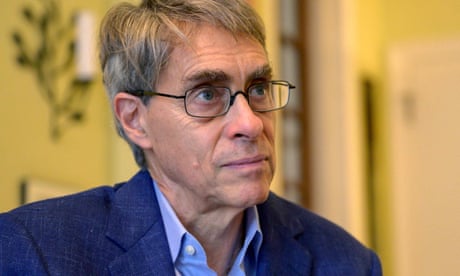
Kenneth Roth wrote in the Guardian of 10 January 2023 “I once ran Human Rights Watch. Harvard blocked my fellowship over Israel. I was told that my fellowship at the Kennedy School was vetoed over my and Human Rights Watch’s criticism of Israel”.

Kenneth Roth said Harvard’s move was a reflection of ‘how utterly afraid the Kennedy School has become of any criticism of Israel’.

. ..If any academic institution can afford to abide by principle, to refuse to compromise academic freedom under real or presumed donor pressure, it is Harvard, the world’s richest university. Yet the Kennedy School’s dean, Douglas Elmendorf, vetoed a human rights fellowship that had been offered to me because of my criticism of Israel. As best we can tell, donor reaction was his concern.

Soon after I announced my departure from Human Rights Watch [see: https://humanrightsdefenders.blog/2022/04/27/after-almost-30-years-kenneth-roth-will-leave-human-rights-watch/], the Kennedy School’s Carr Center for Human Rights Policy reached out to me to discuss offering me a fellowship. ..

.. in anticipation of my stay at the school, I reached out to the dean to introduce myself. We had a pleasant half-hour conversation. The only hint of a problem came at the end. He asked me whether I had any enemies.

It was an odd question. I explained that of course I had enemies. Many of them. That is a hazard of the trade as a human rights defender.

I explained that the Chinese and Russian governments had personally sanctioned me – a badge of honor, in my view. I mentioned that a range of governments, including Rwanda’s and Saudi Arabia’s, hate me. But I had a hunch what he was driving at, so I also noted that the Israeli government undoubtedly detests me, too.

That turned out to be the kiss of death. Two weeks later, the Carr Center called me up to say sheepishly that Elmendorf had vetoed my fellowship. He told Professor Kathryn Sikkink, a highly respected human rights scholar affiliated with the Kennedy School, that the reason was my, and Human Rights Watch’s, criticism of Israel.

That is a shocking revelation. How can an institution that purports to address foreign policy – that even hosts a human rights policy center – avoid criticism of Israel. Elmendorf has not publicly defended his decision, so we can only surmise what happened. He is not known to have taken public positions on Israel’s human rights record, so it is hard to imagine that his personal views were the problem.

But as the Nation showed in its exposé about my case, several major donors to the Kennedy School are big supporters of Israel. Did Elmendorf consult with these donors or assume that they would object to my appointment? We don’t know. But that is the only plausible explanation that I have heard for his decision. The Kennedy School spokesperson has not denied it.

Some defenders of the Israeli government have claimed that Elmendorf’s rejection of my fellowship was because Human Rights Watch, or I, devote too much attention to Israel. The accusation of “bias” is rich coming from people who themselves never criticize Israel and, typically using neutral sounding organizational names, attack anyone who criticizes Israel.

Moreover, Israel is one of 100 countries whose human rights record Human Rights Watch regularly addresses. Israel is a tiny percentage of its work. And within the Israeli-Palestinian context, Human Rights Watch addresses not only Israeli repression but also abuses by the Palestinian Authority, Hamas and Hezbollah.

In any event, it is doubtful that these critics would be satisfied if Human Rights Watch published slightly fewer reports on Israel, or if I issued less frequent tweets. They don’t want less criticism of Israel. They want no criticism of Israel.

The other argument that defenders of Israel have been advancing is that Human Rights Watch, and I, “demonize” Israel, or that we try to “evoke repulsion and disgust”. Usually this is a prelude to charging that we are “antisemitic”.

Human rights advocacy is premised on documenting and publicizing governmental misconduct to shame the government into stopping. That is what Human Rights Watch does to governments worldwide. To equate that with antisemitism is preposterous. And dangerous, because it cheapens the very serious problem of antisemitism by reducing it to criticism of Israel. See also: https://humanrightsdefenders.blog/2022/02/04/amnesty-joins-debate-on-apartheid-versus-palestinians-but-reactions-debase-struggle-against-real-antisemitism/

The issue at Harvard is far more than my own academic fellowship. I recognized that, as an established figure in the human rights movement, I am in a privileged position. Being denied this fellowship will not significantly impede my future. But I worry about younger academics who are less known. If I can be canceled because of my criticism of Israel, will they risk taking the issue on?

The ultimate question here is about donor-driven censorship. Why should any academic institution allow the perception that donor preferences, whether expressed or assumed, can restrict academic inquiry and publication? Regardless of what happened in my case, wealthy Harvard should take the lead here.

To clarify its commitment to academic freedom, Harvard should announce that it will accept no contributions from donors who try to use their financial influence to censor academic work, and that no administrator will be permitted to censor academics because of presumed donor concerns. That would transform this deeply disappointing episode into something positive.

See also the reaction by Gerald L. Neuman: https://hrp.law.harvard.edu/staff-reflections/hks-kenneth-roth-and-the-message-to-human-rights-defenders/

https://www.theguardian.com/commentisfree/2023/jan/10/kenneth-roth-human-rights-watch-harvard-israel

Human rights defenders at the 51st session of the UN Human Rights Council

September 20, 2022

The 51st session of the UN Human Rights Council has started well and good on 12 September and will last until 7 October. I am awfully delayed in extracting from the – as always excellent – guide – produced by the team of the ISHR – the issues most directly affecting human rights defenders. Apologies.

Readthe full Alert to the session online here and to stay up-to-date, follow @ISHRglobal and #HRC51 on Twitter. See also: https://humanrightsdefenders.blog/2022/09/15/new-high-commissioner-for-human-rights-volker-turk-the-man-for-an-impossible-job/

Throughout the session ISHR is calling on States to #EndReprisals against human rights defenders and civil society groups who engage with the United Nations!

Some Thematic areas

Reprisals On 29 September, Ilze Brands Kehris, the Assistant Secretary-General for Human Rights will present the Secretary-General’s annual report on Cooperation with the United Nations, its representatives and mechanisms in the field of human rights (also known as ‘the Reprisals Report’) to the Council in her capacity as UN senior official on reprisals. The presentation of the report will be followed by a dedicated interactive dialogue, as mandated by the September 2017 resolution on reprisals. ISHR remains deeply concerned about reprisals against civil society actors who engage or seek to engage with UN bodies mechanisms. The dedicated dialogue is a key opportunity for States to raise concerns about specific cases of reprisals and demand that Governments provide an update on any investigation or action taken toward accountability. An increasing number of States have raised concerns in recent sessions about individual cases of reprisals, including in Egypt, Nicaragua, Cuba, Saudi Arabia, Malaysia, Bahrain, Yemen, Burundi, China and Venezuela, Egypt, Burundi, Lao and China, Belarus, Iran, Turkmenistan, and the Philippines. During its 48th session, the Council adopted a resolution on reprisals. The text, which was adopted by consensus, invited the UN Secretary-General to submit an annual report on reprisals and intimidation to the UN General Assembly. Once again, the resolution listed key trends including that acts of intimidation and reprisals can signal patterns, increasing self-censorship, and the use of national security arguments and counter-terrorism strategies by States as justification for blocking access to the UN. The resolution also acknowledged the specific risks to individuals in vulnerable situations or belonging to marginalised groups, and called on the UN to implement gender-responsive policies to end reprisals. The Council called on States to combat impunity by conducting prompt, impartial and independent investigations and ensuring accountability for all acts of intimidation or reprisal, both online and offline, by condemning all such acts publicly, providing access to effective remedies for victims, and preventing any recurrence.

Other thematic reports At this 51st session, the Council will discuss a range of civil, political, economic, social and cultural rights and issues through dedicated debates, including

Special Rapporteur on truth, justice, reparation and guarantees of non-recurrence

Special Rapporteur on contemporary forms of slavery, including its causes and consequences 

Working Group on Arbitrary Detention Independent Expert on the promotion of a democratic and equitable international order.

Working Group on Enforced or Involuntary Disappearances

Special Rapporteur on the implications for human rights of the environmentally sound management and disposal of hazardous substances and wastes 

In addition, the Council will hold dedicated debates on the rights of specific groups including with the: Special Rapporteur on the rights of indigenous peoples and the Expert Mechanism on the Rights of Indigenous Peoples

The Council will also consider various other reports, see the full list here.  

Country-specific developments
Afghanistan The Council will hold an interactive dialogue with the Special Rapporteur on Afghanistan and enhanced interactive dialogue on the human rights situation of women and girls in Afghanistan on 12 September. While a Special Rapporteur mandate is necessary to monitor and report on the human rights situation in Afghanistan, the dire situation in the country and the atrocities affecting women and girls warrant a more robust and systematic response. ISHR together with other NGOs call on the Council to establish in parallel an ongoing accountability mechanism with the specific mandate: To investigate all alleged violations and abuses of human rights law amounting to crimes under international law in Afghanistan, in particular against women and girls, To collect, consolidate and analyse evidence of such violations and abuses, including their gender dimension, and to systematically record and preserve all information, documentation and evidence, including interviews, witness testimony and forensic material, consistent with international law standards, in view of any future legal proceedings; To document and verify relevant information and evidence, including through field engagement, and to cooperate with judicial and other entities, national and international, as appropriate; To identify, where possible, those individuals and entities responsible for all alleged violations and abuses of human rights law amounting to crimes under international law in Afghanistan, in particular against women and girls, with a view to ensuring that those responsible are held accountable.

China  Despite significant pressure, the UN human rights office (OHCHR) has published its human rights assessment on the Uyghur region (Xinjiang). The report highlights ‘serious human rights violations’, including torture and sexual and gender-based violence, stressing that existing ‘highly securitised and discriminatory’ re-education camps ‘provide fertile ground for such violations to take place on a broad scale.’ The OHCHR found that the ‘arbitrary and discriminatory detention of members of Uyghur and other predominantly Muslim group […] may constitute international crimes, in particular crimes against humanity.’ It also warns that ‘conditions remain in place for serious violations to continue and recur’, calling for ‘urgent attention’ by the international community.  The Human Rights Council, and all governments that are genuinely committed to rights protection globally, cannot turn a blind eye to the severity and scale of evidence verified by the UN.  In line with ‘objective criteria’ for Human Rights Council action, ISHR calls on:  The Council to hold a formal discussion on China’s human rights crisis, including the human rights situations in the Uyghur region (Xinjiang), the Tibetan region, Hong Kong, and on human rights defenders;  States to initiate and support efforts to establish an independent international mechanism to monitor and report on the human rights situation in China, in line with the call by 50 UN Special Procedures experts. See also: https://humanrightsdefenders.blog/2022/09/01/finally-the-long-awaited-un-report-on-china/

Burundi The Council will hold an Interactive Dialogue with the Special Rapporteur on Burundi on 22 September.  Since the Special Rapporteur’s mandate was operationalised, the human rights situation in Burundi has not changed in a substantial or sustainable way. The limited improvements since President Évariste Ndayishimiye was sworn in, in June 2020, as well as the positive signals he sent, particularly with regard to freedom of the press and promises of justice, have not materialised into long-term reforms. All the structural issues the CoI and other human rights actors identified remain in place. These include arbitrary arrests of political opponents or those perceived as such, acts of torture and other cruel, inhuman or degrading treatment or punishment, enforced disappearances, extrajudicial killings, sexual and genderbased violence, undue restrictions to freedoms of expression, peaceful assembly and association, and violations of economic, social and cultural rights that are intertwined with the economic underpinnings of the State. In the absence of structural improvements and as grave human rights violations and abuses continue to be committed with impunity, the Council should adopt a resolution that reflects realities on the ground and ensures continued monitoring, reporting, and public debates on Burundi’s human rights situation. It should grant the Special Rapporteur the time he needs to fulfill his mandate and urge Burundi to cooperate with him, including by granting him access to the country. At its 51st session, the Council should adopt a resolution that extends the mandate of the Special Rapporteur on Burundi for a further year.

Egypt The continued silence of the Council on the critical human rights situation in Egypt is of great concern. As Egypt prepares to host COP27, it continues to carry out widespread and systematic violations of human rights, including freedom of expression and freedom of assembly and association against Egyptian and foreign nationals.

Egyptian authorities have for years employed draconian laws, including laws on counterterrorism, cybercrimes, and civil society in order to subdue the civilian populations and stifle all forms of peaceful dissent and mobilization. Under the current government, Egypt has become among the worst three countries in the world in the numbers of jailed journalists and almost all independent media has been forced to shut down or threatened into silence. Hundreds of websites continue to be banned. Scores of civil society and media representatives have been and continue to be disappeared, tortured and/or arbitrarily detained under the pretense of counter-terrorism and national security.

While the release of a few select arbitrarily-detained activists is a sign that international pressure works, the number of releases pales in comparison to the vast numbers of individuals newly detained by the National Security Prosecution, or whose arbitrary detention has been renewed in 2022. Amongst those still in prison is well known Egyptian-British human rights defender Alaa Abdel Fattah – recently sentenced to an additional 5 years in prison by an exceptional court.  He is on hunger strike for over 150 days. [see also: https://humanrightsdefenders.blog/2022/07/07/mona-seifs-letter-a-cry-for-help-for-alaa/]We urge the Council and its Special Procedures to take action to protect and ensure the release of all those arbitrarily detained in Egypt.

Russia  Together with Russian and international human rights organisations, ISHR continues to call on the Human Rights Council to establish a dedicated international mechanism to monitor and report on the dire human rights situation in Russia. As recognised by UN human rights experts, this situation includes: the stigmatisation and criminalisation of independent civil society; the persecution of human rights defenders, peaceful protesters and political activists, including through arbitrary arrest, detention, ill-treatment and torture; the banning of independent media and the silencing of journalists; attacks against women and LGBTI persons and activists; the propagation of massive disinformation; and the systematic erosion of any semblance of the rule of law or accountability mechanisms.  As further recognised by independent UN experts, by undermining and attacking independent civil society, persecuting human rights defenders, activists, and opposition and dissenting voices, banning independent media, silencing journalists, and effectively outlawing any form of peaceful protest, the Russian authorities have created an environment that, at least in part, facilitates its war in Ukraine. The war has led to an enormous loss of civilian life, displacement of millions of Ukrainian civilians, and contributed to a global food security and energy crisis, among other developments. A dedicated Special Rapporteur mandate would independently collect, analyse and present information on the human rights situation in Russia and make recommendations to the Council and the authorities on how to address it. It would serve as a crucial lifeline between Russian human rights defenders and the international community at a time when other bridges have been cut. [see also: https://humanrightsdefenders.blog/2022/04/26/lev-ponomarev-human-rights-defender-leaves-russia/] Finally, a Special Rapporteur could speak up authoritatively against the deepening restrictions on human rights in Russia and on behalf of those facing intimidation, harassment and reprisal for their human rights work.

Israel and oPT ISHR joined over 150 organisations from all world regions demand that the international community condemns and takes action to protect seven Palestinian civil society organisations that have been subject to illegal threats, raids and closure by Israeli authorities.

On the morning of 18 August 2022, the Israeli occupying forces (IOF) raided and sealed the doorways into the offices of the seven Palestinian organisations: Addameer Prisoner Support and Human Rights Association, Al-Haq Law in the Service of Man (Al-Haq), Bisan Center for Research and Development, Defense for Children International-Palestine (DCI-P), Health Work Committees (HWC), the Union of Agricultural Work Committees (UAWC), and the Union of Palestinian Women’s Committees (UPWC). We urge States to unequivocally condemn Israel’s targeting of Palestinian civil society and tactics to further repress of freedom of expression, and to take all necessary action to support and protect Palestinian human rights defenders and ensure the continuation of their invaluable work.

We call upon States to demand that Israel immediately revoke its designations of Palestinian human rights and civil society organisations as ‘terrorist organisations’, reverse the military orders designating the organisations and closing their offices, and repeal its Anti-Terrorism Law (2016) as it does not meet basic human rights standards. See also: https://humanrightsdefenders.blog/2021/12/15/human-rights-defenders-targeted-by-israel-launch-new-joint-website/

Venezuela The HRC’s fact-finding mission on Venezuela will present its final report under its current mandate to the Human Rights Council on 26 September, followed by an interactive dialogue with States. All eyes are on Latin American states, in particular, to see whether or not they will present a resolution to renew the mission’s mandate.  While there have been significant human rights changes in Venezuela – including a reduction in extrajudicial executions between 2020 and 2021 – the human rights situation in the country remains grim, with clear retrogression in some cases. This is not the time for States to end the work of the Mission, a key accountability mechanism which during its work to date has produced evidence of likely crimes against humanity.  Not only is its work on past violations far from over, but it could play a key role in the prevention of further violations, particularly at times of instability such as is possible during upcoming Presidential elections.   ISHR has worked as part of a Coalition of Venezuelan, regional and international organisations calling for the continuation of the mandate of the Mission. These demands were recently made in a letter to States, signed by 125 other Venezuelan and international organisations. The continuation of the Mission should be a key part of foreign policy aims of states of the region, and ISHR hopes to see States step up on this front in the coming days and weeks.

Yemen ISHR joined NGOs in urging States to work toward the establishment of an independent international criminally focused investigative mechanism on Yemen in the coming period, including at HRC51. While a Yemen truce hangs in the balance, little to no progress has been made by parties to the conflict to  address ongoing and widespread violations and abuses of international human rights and humanitarian law or remedy the harms they have inflicted on civilians throughout the conflict. The humanitarian situation in Yemen remains desperate, and, in recent weeks, armed clashes have once again increased. Civilians continue to fall victim to shelling, drone strikes and other attacks.These factors attest to the urgent and critical need to reinvigorate international accountability efforts on Yemen through the establishment of an independent international investigation. After its mandate ended in October 2021, members of the GEE called on the international community to take specific initiatives at the international level in pursuit of accountability.  Continued impunity will only increase the likelihood that more children will starve, more rights defenders and journalists will be imprisoned or executed, more homes and schools will be bombed, and the cycle of violence and suffering will continue. In this context, an international independent criminal accountability mechanism for Yemen can play a critical role to deter violence, protect civilians and promote a genuine and lasting peace.  In December 2021, nearly 90 civil society organisations called on member states of the UN to move quickly and establish such a mechanism in order to  investigate and publicly report on the most serious violations and abuses of international law committed in Yemen.

Other country situations These include: Interactive Dialogue with the Special Rapporteur on Afghanistan and Enhanced Interactive Dialogue on the human rights situation of women and girls in Afghanistan Interactive Dialogue on the report of the High Commissioner on Nicaragua Interactive Dialogue on the report of the OHCHR on Sri Lanka Interactive Dialogue on the report of the Independent Investigative Mechanism for Myanmar, Interactive Dialogue with the SR on Myanmar, Interactive Dialogue on the OHCHR report on Myanmar, Acting High Commissioner oral update on the human rights situation in Myanmar Interactive Dialogue with the Commission of Human Rights Experts on Ethiopia Interactive Dialogue on the oral update of OHCHR on technical assistance and capacity-building for South Sudan Interactive Dialogue with the Commission of inquiry on the Syrian Arab Republic  Interactive Dialogue on the interim oral update of the Acting High Commissioner on the situation of human rights in Belarus  Interactive Dialogue with the Commission of Inquiry on Ukraine and Interactive Dialogue on the Acting High Commissioner oral update on Ukraine Enhanced Interactive Dialogue on the report of the High Commissioner and experts on the Democratic Republic of Congo Interactive Dialogue with the Special Rapporteur on Cambodia and presentation of the Secretary-General’s report  Interactive Dialogue with the Independent Expert on Somalia Interactive Dialogue with the Independent Expert on the Central African Republic  Presentation of the High Commissioner’s report on cooperation with Georgia  Enhanced Interactive Dialogue on the report of the High Commissioner on the Philippines

Council programme, appointments and resolutions

States announced at least 29 proposed resolutions. Read here the reports presented this session. Appointment of mandate holders: The President of the Human Rights Council will propose candidates for:  Special Rapporteur on the human rights of internally displaced persons; Special Rapporteur on the independence of judges and lawyers; Working Group on Arbitrary Detention, member from Eastern European States; Special Rapporteur on contemporary forms of racism, racial discrimination, xenophobia and related intolerance.

Read here the three year programme of work of the Council with supplementary information. Read here ISHR’s recommendations on the key issues that are or should be on the agenda of the UN Human Rights Council in 2022.

Concerning side events, the Secretariat informed the Bureau that it had developed a way to organise the time slots for the three meeting rooms in order to allow for side events to take place in the Palais des Nations during the 51st session of the Council. The time slots for side events will be allocated according to availability and on a first-come, first-served basis. In order to accommodate as many requests as possible, only one side event per requesting organiser will be accommodated and each side event would be limited to one hour in duration. Organisers are requested to strictly respect the allotted time and to leave the room on time in order to ensure the smooth organisation of the following side event. NGOs will find additional information on the modalities and the criteria at the OHCHR NGO participation web page. The Secretariat underscored that these measures will be implemented during the 51st session on a pilot basis.

See also: https://humanrightsdefenders.blog/2022/09/20/report-on-the-50th-session-of-the-un-hrc/

https://ishr.ch/latest-updates/hrc51-key-issues-on-agenda-of-september-2022-session/

Israeli Court backs Oded Goldreich who wants to donate Israel Prize money to human rights NGOs

April 15, 2022
Israel Prize winner in mathematics and computer science Professor Oded Goldreich will be donating his prize money to five left-wing human rights organisations [@WeizmannScience/Twitter]

Times of Isrel (TOI ) on 14 April 2022 reports on Professor Oded Goldreich, a recent recipient of the Israel Prize in mathematics, wants to donate his NIS 75,000 ($23,350) in prize money to five human rights organizations, including Breaking the Silence and B’Tselem.

Goldreich, a professor of computer science at Israel’s Weizmann Institute, received the Israel Prize at the offices of the Education Ministry Monday, despite opposition from some government ministers and following a nearly year-long political saga over his alleged support for anti-Israel boycotts.

The five groups that will receive the prize money are Breaking the Silence, Standing Together, Kav LaOved, B’Tselem, and Adalah.

Breaking the Silence collects and publicizes mostly anonymous testimony of alleged IDF mistreatment of Palestinians. The organization has riled Israelis, and drawn ire from officials, who have challenged the authenticity of its anonymous claims and decried its work in international forums.

Standing Together supports and donates supplies to soldiers; Kav LaOved is a legal aid group for disadvantaged workers; B’Tselem documents alleged human rights violations in the West Bank; and Adalah is a legal center for Palestinians.

Last month, the High Court of Justice ruled that Education Minister Yifat Shasha-Biton must hand over the prize to Goldreich, following a petition against her refusal to give him the award filed by the members of the prize committee. The committee had initially awarded the honor to Goldreich last year.

The court ruling was a majority decision, with Justices Yael Willner and Yitzhak Amit siding with the appeal and Justice Noam Sohlberg opposing it.

Shasha-Biton had claimed that an academic boycott of Israel, which she said Goldreich supports, impacts freedom of speech. Amit ruled that “the harm to academic freedom of speech by withholding the prize from professor Goldreich is much worse.”

Denying the honor to a recognized academic over comments he made is “an invitation to monitor, track, and persecute academics in Israel,” Amit said. Shasha-Biton said at the time that she regretted the justices’ decision, but would respect it. She noted that since the court had previously said the education minister should decide the matter, it should have respected her decision.

“A person who calls for a boycott of an Israeli academic institution is not worthy of a state prize, no matter what his achievements or political views are,” she said.

Likud MK and former intelligence minister Eli Cohen tweeted that “Goldreich is the symptom. The root of the problem is the High Court of Justice.”

https://www.timesofisrael.com/controversial-israel-prize-winner-to-donate-grant-money-to-human-rights-ngos/

https://www.ynetnews.com/article/skrb3h4eq

https://www.middleeastmonitor.com/20220414-israel-prize-winner-to-donate-award-money-to-groups-fighting-to-end-the-occupation/

No end to NSO’s Pegasus trouble

April 5, 2022

TechCrunch of 5 April 2022 reports that Investigators say they have found evidence that a Jordanian journalist and human rights defender’s iPhone was hacked with the Pegasus spyware just weeks after Apple sued the spyware’s maker NSO Group to stop it from targeting Apple’s customers.

Award-winning journalist Suhair Jaradat’s phone was hacked with the notorious spyware as recently as December 5, 2021, according to an analysis of her phone by Front Line Defenders and Citizen Lab that was shared with TechCrunch ahead of its publication. Jaradat was sent a WhatsApp message from someone impersonating a popular anti-government critic with links to the Pegasus spyware, compromising her phone. According to the forensic analysis, Jaradat’s iPhone was hacked several times in the preceding months and as far back as February 2021.

Apple had filed a lawsuit against Israeli spyware maker NSO Group in November 2021, seeking a court-issued injunction aimed at banning NSO from using Apple’s products and services to develop and deploy hacks against its customers. See also: https://humanrightsdefenders.blog/2021/07/21/nsos-pegasus-spyware-now-really-in-the-firing-line/…But so far the case has gotten off to a slow start after the first judge assigned to the case recused herself, with no decision on the case likely to be made any time before June.

Jaradat is one of several Jordanians, including human rights defenders, lawyers and fellow journalists whose phones were compromised likely by agencies of the Jordanian government, according to Front Line Defenders and Citizen Lab’s findings out Tuesday.

Among the others targeted include Malik Abu Orabi, a human rights lawyer whose work has included defending the teachers’ union, which in 2019 led the longest public sector strike in the country’s history. Abu Orabi’s phone was targeted as early as August 2019 until June 2021. Also, the phone of Ahmed Al-Neimat, a human rights defender and anti-corruption activist, was targeted by the ForcedEntry exploit in February 2021. The researchers said the hacking of Al-Neimat’s phone is believed to be the earliest suspected use of ForcedEntry.

Another Jordanian journalist and human rights defender’s phone was targeted, according to the researchers, but who asked for her identity not to be disclosed.

Meanwhile, on 5 April 2022, AFP reported that Palestinian lawyer Salah Hamouri, who is in Israeli detention, filed a complaint in France Tuesday against surveillance firm NSO Group for having “illegally infiltrated” his mobile phone with the spyware Pegasus.

Hamouri, who also holds French citizenship, is serving a four-month term of administrative detention ordered by an Israeli military court in March on the claim he is a “threat to security”.

He is one of several Palestinian activists whose phones were hacked using the Pegasus malware made by the Israeli company NSO, according to a report in November by human rights groups. See: https://humanrightsdefenders.blog/2021/11/10/palestinian-ngos-dubbed-terrorist-were-hacked-with-pegasus-spyware/

On Tuesday, the International Federation for Human Rights (FIDH), the Human Rights League (LDH) and Hamouri filed a complaint with the Paris prosecutor.  It accused NSO of “having illegally infiltrated the telephone of rights defender Salah Hamouri,” they said in a statement sent to the AFP bureau in Jerusalem. 

Obviously, this is an operation that is part of a largely political framework given the harassment Hamouri has been subjected to for years and the attacks on human rights defenders in Israel,” attorney Patrick Baudouin, honorary president of the FIDH, told AFP.

https://www.securityweek.com/palestinian-lawyer-sues-pegasus-spyware-maker-france

https://citizenlab.ca/2022/04/peace-through-pegasus-jordanian-human-rights-defenders-and-journalists-hacked-with-pegasus-spyware/

then

https://cybersecuritynews.com/whatsapp-wins-nso-pegasus-spyware-hacking-case/

Amnesty joins debate on Apartheid versus Palestinians but reactions debase struggle against real antisemitism

February 4, 2022

In Newsweek of 3 February 2022 Omar Baddar, Director of the Arab American Institute, published an opinion piece entitled “Amnesty Settles It: It’s Time for U.S. Accountability on Israel”.

Amnesty International, issued on 1 February 2022 an extensive report titled “Israel’s Apartheid against Palestinians: Cruel System of Domination and Crime against Humanity.” As the report documents, “Israel has imposed a system of oppression and domination over Palestinians wherever it exercises control over the enjoyment of their right.” The report further found that Israel’s policies are part of a “systematic as well as widespread attack directed against the Palestinian population, and that the inhuman or inhumane acts committed within the context of this attack have been committed with the intention to maintain this system and amount to the crime against humanity of apartheid.

In recent years, some leading Israeli human rights organizations have started using the word apartheid to describe their government’s systems of oppression. Last year, Human Rights Watch, one of the best-known American human rights organization, similarly accused Israel of apartheid. Amnesty International following suit this week has solidified the human rights community’s emerging consensus on Israeli apartheid. See: https://humanrightsdefenders.blog/2021/01/18/israel-and-apartheid-israeli-human-rights-group-stirs-debate/ and https://humanrightsdefenders.blog/2021/07/09/israel-and-the-international-crime-of-apartheid-a-response-by-human-rights-watch-worth-studying-in-full/

Omar Baddar, states: The most important consequence of this consensus is that it lays to rest the false but popular notion of an “Israeli-Palestinian conflict” between two equal sides. The new consensus instead frames the issue more accurately as a struggle between an oppressor and an oppressed people. In the same way that Apartheid in South Africa and Jim Crow segregation in the American South denied people the ability to live in freedom with their full rights simply because of who they are, Israel also denies freedom to Palestinians and many basic rights to Palestinians just because they are Palestinians.

Like the Human Rights Watch report before it, what’s remarkable about the new Amnesty report is how extensive and detailed it is. Amnesty did its due diligence and made sure that its central claims are backed by a mountain of evidence, meticulously documenting unlawful killings, forced displacement and systemic discrimination on a massive scale. Unsurprisingly, the devastating and irreproachable nature of this report triggered a meltdown among Israel’s apologists. See for this also: https://yubanet.com/world/human-rights-organizations-from-israel-condemn-vicious-attacks-on-amnesty-international/

Unable to argue with the substance of the Amnesty report, pro-Israel groups have resorted either to blindly asserting—as AIPAC did—that Amnesty was lying, or baselessly claiming—as the ADL did—that the report would spark antisemitic attacks. The latter is nothing short of a cynical weaponization of antisemitism—which, in fact, is a serious and rising scourge in America and across the world—unscrupulously exploited in order to silence criticism of Israeli government policy.

We cannot have the open debate we need in a free society if speaking honestly about Israeli policy results in smears of bigotry. By misusing the charge of antisemitism in this fashion, Israel’s apologists aren’t just harming the human rights defenders being smeared by it; they’re also harming the real effort to eliminate antisemitism—a goal that we all have a moral obligation to come together and accomplish.

What this Amnesty report should have done is serve as a wake-up call to an American political establishment that prioritizes pandering over sensible policy, and that has turned a blind eye to a grave injustice for far too long. After all, it is U.S. military funding, to the unrivaled tune of $3.8 billion per year, which enables the Israeli military to maintain its suffocating grip on the occupied Palestinian population, and it is U.S. diplomatic protection, through more than 40 vetoes at the UN Security Council and beyond, that shields Israel from accountability for its crimes.

And yet, despite repeatedly claiming to prioritize human rights in its foreign policy, the Biden administration’s reaction to this report was utterly disappointing. The administration rejected it out of hand.

The Amnesty report bemoans the fact that, “for over seven decades, the international community has stood by as Israel has been given free rein to dispossess, segregate, control, oppress and dominate Palestinians.” It criticizes countries like ours that have “actively supported Israel’s violations by supplying it with arms, equipment and other tools to perpetrate crimes under international law and by providing diplomatic cover, including at the UN Security Council, to shield it from accountability.” The report also reiterated its call for “states to immediately suspend the direct and indirect supply, sale or transfer of all weapons, munitions and other military and security equipment.”

https://www.newsweek.com/amnesty-settles-it-its-time-us-accountability-israel-opinion-1675876

https://www.juancole.com/2022/02/prolonged-occupation-palestinians.html

https://www.thecitizen.in/index.php/en/NewsDetail/index/6/21449/Why-Is-Israel-Fearful-of-Amnestys-Apartheid-Report