On 5 March 2026, Front Line Defenders expressed deep concern over the escalating hostilities across the Middle East and their devastating impact on civilians following US and Israeli air strikes on Iran and subsequent retaliatory strikes by Iran against Israel and several Gulf states. In line with our mandate, we are particularly alarmed by the heightened risks faced by human rights defenders across the region, including those arbitrarily detained for their peaceful human rights work…
Human rights defenders deprived of liberty are particularly vulnerable in such contexts. During periods of conflict, detained defenders may face increased risks of ill-treatment while access to medical care, family contact, legal representation, and independent monitoring may become further restricted. The risk of such violations increases if hostilities occur in close proximity to detention facilities.
Human rights groups are expressing concern over the deteriorating situation in Evin prison in Iran, where many human rights defenders are currently detained. Based on reports these groups have received from prisoners “the Security Ward 209 has been evacuated” and “anti-riot forces are stationed in the surrounding buildings.” Food distribution has reportedly also been disrupted. On the evening of 2 March 2026, the Israeli military forces reportedly issued an urgent evacuation order to people in the Evin neighbourhood. On 23 June 2025, during the twelve-day Israel-Iran conflict, Israeli forces attacked the Evin compound and Evin prison. Prisoners, including human rights defenders, were evacuated from the prison following the attacks. Iranian officials reported over 70 people killed from this attack on the Evin compound..
In Bahrain, there have been reports of strikes only kilometres from Jau prison where human rights defender Abdulhadi Al-Khawaja continues to serve a life sentence for his peaceful human rights work alongside fellow human rights defender Dr Abduljalil Al-Singace. Front Line Defenders is also concerned over reports of arrests of defenders linked to anti-war protests in Bahrain and calls on the authorities to respect the rights to freedom of expression and peaceful assembly.
All parties to the conflict must uphold their obligations under international human rights and humanitarian law, including the protection of civilians and those deprived of liberty. Hospitals, schools, and other sites protected under international humanitarian law, where human rights defenders and other civilians carry out essential work and provide humanitarian assistance, must not be targeted. Authorities should also immediately release detained human rights defenders and ensure they have access to adequate healthcare, contact with family members and legal counsel, and independent monitoring.
Front Line Defenders call on the international community, states, and multilateral organisations to remain attentive to the situation of human rights defenders in the region, raise protection concerns with the relevant authorities and provide concrete support and protection measures for human rights defenders at risk, if necessary through support with temporary relocation and emergency visa support.
Front Line Defenders stands in solidarity with human rights defenders across the region who continue their work under extremely difficult and dangerous circumstances.
In a statement delivered before the United Nations Human Rights Council on 2 October 2025 , Euro-Med Human Rights Monitor called to protect human rights defenders in Gaza and to grant international investigators unrestricted access to examine violations committed amid Israel’s ongoing war on the Gaza Strip.
The statement was delivered remotely from Gaza by Maha Hussaini, Head of Media at Euro-Med Monitor, during the Council’s 60th session under Item 8. Hussaini stressed that the continued silence of states and civil society representatives severely undermines international law and enables further violations.
Addressing the Council, Hussaini said: “I speak to you from my last refuge after I was forcibly expelled from my home in Gaza City under relentless Israeli bombardment, though I do not know if by the time you hear these words I will still be alive or buried beneath the rubble.”
She continued: “Gaza is under unprecedented Israeli attacks, and I have been forcibly displaced along with my colleagues at Euro-Med Human Rights Monitor several times now. I’m meant to present this statement as a human rights defender, to document and to advocate. But today I can no longer count the Israeli crimes I witness, because they surround me in every breath and every hour.”
Hussaini further noted: “It is a shame that I had to tear up my business card identifying me as a human rights worker at some point during this genocide to avoid being killed or detained by the Israeli military.”
She concluded: “We demand, not plead, we demand protection for those documenting genocide in Gaza, we demand unhindered access for international investigators, and we demand that perpetrators face justice. Every silence from you, representatives of states and civil society, is another strike of the hammer driving the coffin of international law.”
On 4 October 2025, in its response to a call for input by UN Special Rapporteur on human rights defenders, Mary Lawlor, Al-Haq drew urgent attention to the escalating and systematic efforts to silence Palestinian voices and dismantle the infrastructure of Palestinian civil society. The submission highlights how Israel’s settler-colonial apartheid regime has intensified its campaign to suppress resistance, criminalise advocacy and quash any pursuit of accountability as it pursues Palestinian erasure.
The Trump administration’s omission of key sections and manipulation of certain countries’ rights abuses degrade and politicize the 2025 US State Department human rights report, Human Rights Watch, Amnesty International, Human Rights First and many other NGOs concluded .
On August 12, 2025, the State Department released its “Country Reports on Human Rights Practices” covering the year 2024. The report omits several categories of rights violations that were standard in past editions, including women, LGBT people, persons with disabilities, corruption in government, and freedom of peaceful assembly. The administration has also grossly mischaracterized the human rights records of abusive governments with which it has or is currently seeking friendly relations.
By undermining the credibility of the report, the administration puts human rights defenders at risk, weakens protections for asylum seekers, and undercuts the global fight against authoritarianism.
This year’s human rights report may strictly keep with the minimum statutory requirements but does not acknowledge the reality of widespread human rights violations against whole groups of people in many locations. As a result, Congress now lacks a widely trusted, comprehensive tool from its own government to appropriately oversee US foreign policy and commit resources. Many of the sections and rights abuses that the report omits are extremely important to understanding the trends and developments of human rights globally, Human Rights Watch said.
On Israel, the State Department disregards the Israeli authorities’ mass forced displacement of Palestinians in Gaza, their use of starvation as a weapon of war, and their deliberate deprivation of water, electricity, medical aid, and other goods necessary for civilians’ survival, actions that amount to war crimes, crimes against humanity, and acts of genocide. The State Department also fails to mention vast damage and destruction to Gaza’s essential infrastructure and the majority of homes, schools, universities, and hospitals.
The report is dishonest about abuses in some third countries to which the US is deporting people, stating that the US found “no credible reports of significant human rights abuses” in El Salvador, although they cite “reports” of extrajudicial executions, enforced disappearance, and mistreatment by police. The administration has transferred to El Salvador’s prisons, despite evidence of torture and other abuses.
The State Department glosses over the Hungarian government’s escalating efforts to undermine democratic institutions and the rule of law, including severe curbs on civil society and independent media, and abuses against LGBT people and migrants. It also fails to acknowledge that Russian authorities have widely used politically motivated imprisonment as a tool in their crackdown on dissent, and its prosecutions of individuals for “extremism” for their alleged affiliation with the LGBT movement.
At the 59th Human Rights Council session, civil society organisations share reflections on key outcomes and highlight gaps in addressing crucial issues and situations. Full written version below.
We join others who have expressed grave concern about the UN’s financial situation throughout the session. We deplore that we are in this position primarily due to the failure of some States to pay their assessed contributions in full and on time. We regret that this crisis is currently affecting the Council’s ability to deliver its mandate. Today, UN Member States are sending a clear message that human rights and their implementation are optional and not inalienable. We call on all States to pay their dues to the UN in full and without delay, both now and in future years, and strengthen the human rights pillar of the UN by substantially increasing its regular budget. [see: https://humanrightsdefenders.blog/tag/united-nations/]
We welcome the Council’s decision to renew, once more, the Mandateof theIndependent Expert on protection against violence and discrimination based on sexual orientation and gender identity, following a call from more than 1,259 organisations from 157 countries and territories. While the mandate was supported by the overwhelming majority of Council members, we regret that a mandate focusing on core human rights issues such as freedom from violence and discrimination was once again put for a vote.
We welcome the adoption of the resolution on civil society space. The resolution acknowledges important civil society initiatives such as Declaration +25 and addresses key and emerging trends such as strategic lawsuits against public participation (SLAPPs), the phenomenon of transnational repression, and foreign funding legislation, as well as other restrictive legislation including counter-terrorism legislation. We regret, however, that language on transnational repression has been weakened throughout the negotiations and does not take a step forward in terms of defining the phenomenon and its patterns. ..
We welcome the adoption of the resolution on human rights and climate change in relation to climate finance. As acknowledged by the resolution, climate finance is a tool for addressing climate change and it is also important for the enjoyment of human rights when finance prioritises equity, climate justice, social justice, inclusion and just transition processes. … We also regret that, notwithstanding the support expressed by numerous delegations, this resolution is blatantly silent in recognising the positive, important, legitimate and vital role that environmental human rights defenders (EHRDs) play in the promotion and protection of human rights and the environment, particularly in the context of climate change. As recognised by the HRC resolution 40/11, EHRDs are one of the most exposed and at risk around the world. The Inter-American Court on Human Rights has recently ruled in its Advisory Opinion on “Climate Emergency and Human Rights” that EHRDs play a fundamental role due to the urgency, gravity and complexity to address the climate emergency. We will not have climate justice without consulting, listening and including EHRDs in climate actions and initiatives, including this annual resolution.
We express our support for a new strong resolution on the safety of journalists, adopted by consensus and co-sponsored by over 70 countries from all world regions, signalling a renewed international commitment to prevent, protect and remedy all human rights violations against journalists. The resolution becomes the first across the UN to recommend a range of concrete, specific measures to
It is concerning that the Council could not find consensus on the resolution on access to medicines, vaccines and other health products. States should acknowledge that intellectual property rights can be a barrier for access to health products, especially in public health emergencies and should act with a view to finding human-rights compliant solutions. States should further ensure that the benefits of scientific progress is available, accessible, acceptable and of good quality to all people, without discrimination.
We welcome the resolution on new and emerging digital technologies and human rights. The resolution reaffirms the need for human rights due diligence and impact assessments throughout the life cycle of new and emerging digital technologies, and crucially calls upon States to refrain from or cease the use of artificial intelligence applications that are impossible to operate in compliance with international human rights law. The resolution importantly mandates OHCHR to expand its work on UN system-wide promotion, coordination, and coherence on matters related to human rights in new and emerging digital technologies.
We welcome the rejection by the Council of an unprecedented, harmful draft resolution (L.1/Rev.1) presented in bad faith by Eritrea to discontinue the mandate of the Special Rapporteur. The voting result (25 against, 4 in favour) is clear and will deter similar initiatives to terminate mandates. The Pandora’s Box remains closed for now. We welcome the adoption of resolution L.7, which extends the mandate of the Special Rapporteur and enables continued scrutiny of Eritrea‘s dire human rights situation.
We welcome the adoption by consensus of the resolution on the situation of human rights of Rohingya Muslims and other minorities in Myanmar—a strong signal of the Council’s continued prioritization of their plight. As violence between the Myanmar military and Arakan Army escalates, Rohingya face renewed existential threats. We recognize the efforts made to align the resolution closer to the evolving situation on the ground, including its recognition of the role of Arakan Army along with the Myanmar military in perpetuating violence and targeting Rohingya. We also welcome the resolution’s acknowledgment of the worsening humanitarian crisis due to dwindling aid that is driving more Rohingya to risk dangerous journeys by sea. The call for protection of Rohingya across borders and respect for non-refoulement is vital. We support the resolution’s emphasis on accountability and reparations as prerequisites for safe, voluntary, and dignified return of Rohingya refugees. However, we regret its failure to call for an end to arms and jet fuel sale and transfers that continue to fuel ongoing violence.
We emphasize the vital role of investigative mechanisms and, in the context of the UN’s liquidity crisis, we urge all those involved, including the Secretary-General and the High Commissioner, to allocate sufficient resources for these mechanisms to operate. All UN Member States must pay their dues in full and on time. As the conflict in Sudan, now in its third year, shows no sign of abating, resulting in the world’s largest displacement crisis and egregious atrocities against civilians, the work of the Fact-Finding Mission (FFM) should continue. At HRC60, extending its mandate will be a priority.
We continue to deplore this Council’s exceptionalism towards serious human rights violations in China, including crimes against humanity. In his global update to this Council session, High Commissioner Türk indicated he remains ‘concerned about lack of progress on much-needed legal reform to ensure compliance with international human rights law’ and ‘regret[s] that there has not yet been a resolution to the individual cases [the OHCHR has] raised]’. It is imperative that the Council take action commensurate with the gravity of UN findings, by establishing a monitoring and reporting mechanism on China as repeatedly urged by over 40 UN experts since 2020. We urge China to genuinely engage with the UN human rights system to enact meaningful reform, and ensure all individuals and peoples enjoy their human rights, on the basis of recommendations from the OHCHR Xinjiang report, UN Treaty Bodies, and UN Special Procedures.
This Council’s continued silence on the human rights crisis in Egypt remains of major concern. The human rights situation in Egypt is worse than at any point in its modern history and continues to deteriorate. During its UPR process, Egypt rejected or dismissed as “already implemented” recommendations related to serious human rights violations 134 times. In particular, Egypt either rejected or dismissed recommendations to release political prisoners and end arbitrary arrests 12 times, to stop attacks against independent civil society and journalists 19 times, and to end torture and ill-treatment 6 times. The goverment also refused to ensure accountability for those who have committed torture and other human rights violations 7 times, and rejected or dismissed recommendations to halt violance and discrimination against women, minorities and members of the LGBT+ community 25 times, including repeatedly rejecting calls to criminalize marital rape, as well as forced virginity and anal exams. In this context, action by the HRC to address these violations is as important as ever.
Watch the video of the statement below:
Signatories:
African Centre for Democracy and Human Rights Studies (ACDHRS)
Asian Forum for Human Rights and Development (FORUM-ASIA)
“Despite it all, I hold onto a small hope—that the future might bring justice, that our voices will eventually be heard, and that one day I can celebrate my birthday again, in peace, with the people I love, free from fear and loss.” – Awdah Hathaleen, April 2025 Photo by: Emily Glick
An Israeli settler shot dead a Palestinian teacher who helped film Oscar-winning documentary No Other Land, according to the Palestinian education ministry and an Israeli-American activist who was at the scene of the shooting.
No Other Land co-director Yuval Abraham said on X that a settler shot Odeh (also Awdah) Hathaleen in the lungs in Umm Al-Khair village in the occupied West Bank. Residents allege the shooter was Yinon Levy, who is sanctioned by the UK.
Attorney Avichai Hajbi said he was representing a resident “who felt his life was in danger, was forced to fire his weapon into the air” after residents were “attacked by an Arab mob, along with foreign activists, with stones and violence”. Mattan Berner-Kadish, an Israeli-American activist at the scene, told the BBC that at about 17:20 local time (15:20 BST) on Monday, a bulldozer from a nearby Israeli settlement was driven through private Palestinian land, crushing a sewage pipe, multiple olive trees and two fences.
Berner-Kadish and other activists, including Hathaleen’s cousin Ahmad, ran to block the bulldozer. The activist said the driver hit Ahmad in the neck and shoulder with a drill that extended from the bulldozer, with his footage capturing Ahmad falling to the ground. Berner-Kadish did not believe Levy was driving.
While attending to Ahmad’s injuries, Berner-Kadish heard a pop. Running back to the village to get water, he saw Hathaleen lying bleeding from a gunshot wound and Levy, the only settler he saw, holding a gun.
In a video believed to be filmed by a relative of Hathaleen and posted on social media, a man identified as Levy is seen holding a pistol with a bulldozer behind him, as men yell at him. Levy pushes at one man, who pushes back. Levy then raises his pistol and shoots ahead of him, then again into the air.
The clip cuts off when the person filming turns around to run away as women are heard screaming. The footage does not show what or who the shots hit, if anything, and whether anyone else was shooting. There are no other settlers visible. Israeli police said it was investigating the incident in the area of Carmel, an Israeli settlement near Umm Al-Khair.
“As a result of the incident, a Palestinian man was pronounced deceased. His exact involvement is under investigation,” police told the BBC. Police said on Tuesday morning they had detained an Israeli citizen for questioning. Israeli media later reported Levy was released on house arrest.
The Israel Defense Forces (IDF) also detained five Palestinians on suspicion of involvement in the incident, along with two foreign tourists who were present. Berner-Kadish said on Tuesday evening they were still detained. The activist, who began visiting the village in 2021, said Hathaleen was “one of my best friends in the world” and the two were days away from constructing a football field in the village. He added that Hathaleen was a “warm and loving” father of three young children.
The Palestinian education ministry said Hathaleen was a teacher at a local secondary school. US congresswoman Lateefah Simon, a Democrat from California, said she was “heartbroken” over the killing of Hathaleen. He and his cousin, “both holding valid visas”, were detained and deported from San Francisco airport last month while travelling for a multicultural faith dialogue, she said.
Abraham said Hathaleen had helped film No Other Land, the 2025 Oscar winner for best documentary feature that follows the legal fight between the Israeli government and Palestinians over Masafer Yatta, a West Bank community of about 20 villages.
..Levy, a leader of an outpost farm, was sanctioned by the UK in 2024, along with others, because he “used physical aggression, threatened families at gunpoint, and destroyed property as part of a targeted and calculated effort to displace Palestinian communities”.
He was also sanctioned by the US under the Biden administration, along with others, last year, but President Donald Trump lifted those sanctions.
Gilad Kariv, a member of Israel’s Knesset from the Democrats party, said on X in response to the video that “in the territories, armed Jewish militias operate unchecked”.
Settler violence, which has also been on the rise for years, has surged since the outbreak of the war in Gaza. The UN documented at least 27 attacks by settlers against Palestinians that resulted in property damage, casualties or both, between 15 and 21 July, in the West Bank.
No-one will have missed the recent media hype surrounding the opposite candidacies of US President Trump and UN rapporteur Francesca Albanese for this year’s Nobel Peace Prize. This blog with its focus on human rights defenders and their awards would be amiss in not taking note, even if the Nobel Prize is foremost a peace prize not necessarly a human rights award. [see also my piece of 2012 https://global.comminit.com/content/nobel-prize-peace-not-necessarily-human-rights]
So, it is not excluded that the ‘making peace at any cost’ considerations will prevail, but my bet is that the Peace Prize Committee will be careful in ignoring the massive support from the world’s human rights community who have massively come out against the Trump administration’s sanctions against Albanese. Human rights should trump ‘peace’ on this occasion.
Nominations for a Nobel Peace Prize for Francesca Albanese are gathering steam. See the links below:
The 58th regular session of the UN Human Rights Council ran from February 24 to April 4, 2025, resulting in 32 Resolutions and 14 Universal Period Review adoptions.
The session included a high-level segment attended by over 100 dignitaries, thematic panels addressing the rights of specific vulnerable groups, interactive dialogues, and debates on country-specific reports. This session also marked key anniversaries of the Beijing Declaration and the Convention on the Elimination of All Forms of Racial Discrimination. The Human Rights Council plays a crucial role in addressing global violations and continues to serve as a platform for activists and victims of violations. In the face of multiple intersecting crises and conflicts, democracy erosion, and authoritarianism on the rise, Council decisions continue to wield considerable power to improve civil society conditions, particularly in fragile contexts where civic actors are particularly affected by widespread human rights violations and abuses, while offering unique opportunities for the negotiation of higher human rights standards.
I have on the past used other such reports by the ISHR and the UHRG (see below) but thought that this time I should highlight other NGOs:
CIVICUS contributed to the outcomes of the Council session through engagement on key Resolutions, delivery of statements, and organisation of events. We sounded the alarm on the global erosion of civic space and the growing repression of civil society across multiple regions.
Regional Developments: Africa
A strong Resolution on South Sudan was adopted, extending the mandate of the Commission on Human Rights in South Sudan (CHRSS).
Regional Developments: Asia Pacific
A Resolution on Myanmar’s human rights situation was adopted by consensus amid escalating violence and widespread impunity.
Regional Developments: Americas
The Resolution on Nicaragua renewed the mandate of the Group of Human Rights Experts (GHREN) on Nicaragua.
Regional Developments: Europe
Key resolutions were adopted on Ukraine and Belarus, continuing international monitoring mechanisms.
Regional Developments: Middle East
Resolutions on Iran and Syria were adopted, with mixed results on addressing severe human rights concerns.
Several important thematic resolutions were adopted during the session.
Civil Society Challenges
Ahead of the 58th session, CIVICUS raised attention on the increasing restrictions imposed on civil society. CIVICUS engaged in key side events during HRC58, spotlighting democracy, child human rights defenders, and intersectional approaches to civic space.
A detailed post-session report is available via this link.
The International Commission of Jurists (ICJ):
The International Commission of Jurists (ICJ), together with partner organizations, participated actively in the 58th session. Civil society’s critical engagement is essential in calling on the Council and its member States to respond to the plight of victims of human rights violations. In this regard, the ICJ was pleased to ensure that our partner from the African Albinism Network delivered our joint statement on the tenth anniversary of the mandate of the Independent Expert on the enjoyment of human rights by persons with Albinism. Maintaining effective access to the UN in Geneva for civil society is key to ensure that people can themselves participate or be represented in the discussions at the Council that concern them directly. With regard to this, the ICJ denounces all attempts to undermine civil society participation, including the intimidation of human rights defenders during side events, observed again at this HRC session.
At the outset, the ICJ welcomes the adoption of a number of important resolutions renewing, extending or creating mandates under the HRC purview, among which the following were adopted without a vote:
a resolution extending the mandate of the Independent International Commission of Inquiry on the Syrian Arab Republic for a period of one year;
a resolution establishing an open-ended intergovernmental working group for the elaboration of a legally-binding instrument on the promotion and protection of the human rights of older persons;
a resolution renewing the mandate of the Special Rapporteur on the promotion and protection of human rights and fundamental freedoms while countering terrorism for a period of three years;
a resolution renewing the mandate of the Special Rapporteur on the right to food for a period of three years;
a resolution extending the mandate of the Special Rapporteur on the situation of human rights in Myanmar for a period of one year;
a resolution renewing the presence of the Office of the High Commissioner in Seoul, for a period of two years with the same resources and extending the mandate of the Special Rapporteur on the situation of human rights in the Democratic People’s Republic of Korea(DPRK) for a period of one year.
While regretting the failure to adopt them by consensus, the ICJ also welcomes the adoption of other important resolutions by a majority of the votes:
a resolution extending the mandate of the Commission of Inquiry on Ukraine for a period of one year;
a resolution renewing the mandate of the Special Rapporteur on the situation of human rights in Belarus for a period of one year and extending the mandate of the Group of Independent Experts on the Situation of Human Rights in Belarus for a period of one year;
a resolution renewing the mandate of the Group of Human Rights Experts on Nicaragua for a period of two years;
a resolution extending the mandate of the Special Rapporteur on the situation of human rights in the Islamic Republic of Iran for a period of one year and deciding that the Independent International Fact-Finding Mission on the Islamic Republic of Iran should continue for one year with an updated mandate to address the recent and ongoing violations of human rights; and
a resolution extending the mandate of the independent human rights expert tasked with undertaking the monitoring of the human rights situation in Haiti, for a renewable period of one year.
This session discussed armed conflicts whose intensity had continued to increase, including in Gaza, Ukraine, the DRC and Myanmar.
……Unsurprisingly, the situation in the Occupied Palestinian Territory was one of the most-discussed throughout the 58th session. Many countries voiced strong support for the Palestinian people and their human rights, with many calling for a two-State solution based on Israel’s withdrawal to its pre-1967 borders and with East Jerusalem as Palestine’s capital. The ICJ commends the many States who intervened during the negotiations and adoption of the resolutions on the situation in the OPT to emphasize the need for accountability, and who voiced their support for the International Criminal Court and the International Court of Justice and their respective recent decisions on Israel/Palestine. The resolution adopted at this session titled “the human rights situation in the Occupied Palestinian Territory, including East Jerusalem, and the obligation to ensure accountability and justice” invited the General Assembly to consider establishing an ongoing international, impartial and independent mechanism to assist in the investigation and prosecution of persons responsible for the most serious crimes under international law committed by all parties in the Occupied Palestinian Territory, including East Jerusalem, and Israel since 2014.
Earlier in the year, on 7 February 2025, the Council had already held a special session to discuss the human rights situation in the east of the Democratic Republic of the Congo, where armed clashes between Congolese forces and the Rwanda-backed M23 movement had been ongoing, and had escalated since January 2025. The special session had resulted in the adoption of a resolution requesting the High Commissioner to urgently establish a fact-finding mission to report on events since January 2022. The resolution had also established an independent COI composed of three experts appointed by the HRC President to continue the work of the fact-finding mission. At the 58th session, the ICJ and many countries expressed grave concern about the human rights situation in the DRC, and during the Enhanced Interactive Dialogue with the High Commissioner and the Team of Experts at the end of the session many of the same themes and concerns heard during the special session were raised again.
Threats to Multilateralism
This 58th session took place in the context of increasing threats against multilateralism. In particular, this session started in the aftermath of the United States and Israel announcing that they would boycott the Council by not engaging with it. In addition, on 27 February – the day before the interactive dialogue with the Group of Human Rights Experts on Nicaragua, when the HRC was scheduled to discuss the serious human rights violations committed by the State apparatus, including executions, torture and arbitrary detentions – Nicaraguaannounced its decision to withdraw from the Council.
Accountability
The ICJ regrets the attempts by some countries at this session to undermine accountability mechanisms by presenting them as political tools purportedly interfering in the internal affairs of the States concerned and encroaching upon their sovereignty. The human rights organization recalls that such spurious arguments contradict the international human rights law obligations freely agreed upon and undertaken by States and disregard the fact that, as the 1993 Vienna Declaration states, “the promotion and protection of all human rights is a legitimate concern of the international community”.
With regards to the situation in Syria following the fall of the Assad regime, the need for accountability was high on the HRC’s agenda throughout the 58th session. ….In this regard, the ICJ particularly welcomes the adoption of the resolution on the situation in Syria, which encouraged the interim authorities to grant the COI necessary access throughout the country and to cooperate closely with the Commission. The ICJ also notes the authorities’ declared commitment to investigating the recent spate of violations and abuses, including through the newly established fact-finding committee to investigate the events in the west of the Syrian Arab Republic in March 2025. In this connection, the human rights organization called for investigations to be demonstrably independent, prompt, transparent and impartial…
As usual, a number of country situations were not on the agenda of the Council but would actually require much greater scrutiny. At the 58th session, the ICJ expressed particular concern on the situation in Tunisiaand Eswatiniamong others, where attacks on independent judges and lawyers are a key manifestation of deepening authoritarianism in these countries…
The impact of the liquidity crisis and the withdrawal of critical support was also discussed during informal negotiations on the resolution renewing the mandate of the Special Rapporteur on the promotion and protection of human rights and fundamental freedoms while countering terrorism. While in the end the resolution is short, there was much debate about specific phrasing concerning the resources provided to the mandate. The ICJ participated in the interactive dialogue with the Special Rapporteur, stressing the need for coordination and cooperation between civil society and regional systems to address counterterrorism laws that violate human rights and fundamental freedoms of civil society actors, highlighting in particular the situations in Venezuela and Eswatini. The ICJ reiterated the importance of the Special Rapporteur being adequately resourced in order to fully address these challenges.
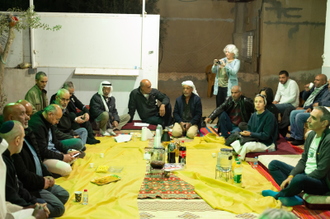
On 29 March 2025 Rabbis for Human Rights wrote: “This week, we took part in a moving Iftar meal-the traditional dinner that breaks the daily fast during the month of Ramadan-together with residents and activists from the Negev. The event was held in collaboration with the Regional Council for the Unrecognized Villages.
We sat together around one table, broke bread, listened to stories, and felt both the pain-and the hope. It was a moment of deep human connection between communities fighting for justice, equality, and a safer future.
But alongside the warmth and solidarity, we cannot ignore the harsh reality: In just the first half of 2025, more than 2,000 structures in unrecognized villages in the Negev have been demolished-a dramatic increase from previous years. The destruction of Umm al-Hiran last November still echoes-a whole community erased to make way for a new Jewish settlement.
True solidarity is not just a slogan-it is presence, listening, and action. We will continue to stand with these communities, amplify their voices, and work toward a future in which every person can live with dignity and security.
As Jews and as Rabbis, our commitment to justice is unconditional-it is at the heart of our identity.
As Ramadan draws to a close next week, we wish all our Muslim friends and partners a joyous Eid al-Fitr (Eid Mubarak).
May this holiday bring you and your families happiness, abundance, and blessings. We hope these festive days offer moments of comfort, renewal, and peace to all!”
This is not our Judaism.
Every day Rabbis from our organization are taking to the streets to protest against the government and for the protection of democracy. Rabbis for Human Rights’ staff and board members are on the streets every day, raising their voices to end the horrific bloodshed in Gaza, to bring the hostages home, and to call for an immediate ceasefire.
As rabbis and human rights defenders, we believe in the sanctity of every human life. This war must end now!
Comedian Noam Shuster-Eliassi speaks at the Thessaloniki International Documentary Festival awards. Looking on (in striped sweater) is ‘Coexistence, My Ass!’ director Amber Fares. Matthew Carey
Shuster-Eliassi attended the awards ceremony in the Greek port city, along with director Amber Fares and fellow members of the production. The comedian, whose one-woman show became the basis for the documentary, acknowledged her parents who were on hand for the event.
“My first political teacher, my father, is up there [in the balcony]. The first memory I have of my father is him going in and out of Israeli military prison for refusing to serve in the occupied Palestinian Territories,” Shuster-Eliassi noted. “Our activism and how we demonstrate equality, and freedom, and liberation is not just in one protest or one activity or one thing or one joke. It’s demonstrating what we envision the alternative is with your body, with your languages… using our privilege to make sure that my Palestinian friends will be free.”
“Two weeks ago, a Palestinian comedian, a colleague of mine, made jokes in Israel and the police showed up in at his home and took him and arrested him for telling jokes,” Shuster-Eliassi said. “And I’m here because there is still a little crack of freedom of speech that I get because of my privilege as an Israeli Jew.”
On a more humorous note, Shuster-Eliassi also brought up the president of Ukraine, Volodymyr Zelenskyy. “When I changed from political activism into comedy, it was because I heard that in The Ukraine, a Jewish comedian wrote a sitcom about becoming the president and he became the president!” she said. “So, I thought if I want to take my political career seriously, I need to start writing jokes because I know that when you’re laughing, you’re listening.”
Winning the Golden Alexander automatically qualifies Coexistence, My Ass! for consideration as Best Documentary Feature at the Academy Awards. In addition to the Golden Alexander, Fares’s film also won the Human Rights in Motion Award, presented by the Council of Europe.
While in Geneva the 23rd FIFDH announced its winners:
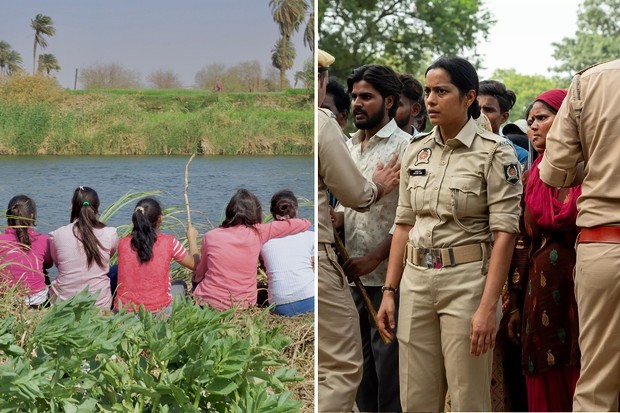
The documentary The Brink of Dreams by Nada Riyadh and Ayman El Amir and the crime-drama Santosh by Sandhya Suri have received the Grand Prizes at the Geneva-based human rights gathering
The Brink of Dreams by Nada Riyadh and Ayman El Amir (left) and Santosh by Sandhya Suri
The 23rd Geneva International Film Festival and Forum on Human Rights (FIFDH) has concluded its 7-16 March run, drawing in over 31,000 attendees and hosting experts to dissect current affairs, move beyond shock and inspire collective action. Showcasing global films that highlight human rights, the festival reaffirmed its status as a key event for audiences and professionals alike, fostering dialogue on pressing geopolitical and social challenges.
At the closing ceremony, Laila Alonso Huarte and Laura Longobardi, the festival’s co-editorial directors, mentioned: “We’re proud to see that the winning films are not only powerful and innovative in cinematic terms, but also warrant international support given the filmmakers’ commitment to and courage in confronting the many social, political and economic challenges in their countries.”
In the International Documentary Competition, the jury awarded the Geneva Grand Prix, valued at CHF 10,000 (€10,300) and sponsored by the city of Geneva, to The Brink of Dreams [+] by Nada Riyadh and Ayman El Amir. Highlighting their decision, the jury stated, “This poignant film follows the aspirations of five young Egyptian women seeking freedom – a freedom threatened by traditions and restrictions imposed in their village. Rich in cinematic creativity, it tackles sensitive issues such as forced marriage and sexual harassment, exposing how women’s rights remain precarious in the region.”
Here is the full list of award winners at the 23rd FIFDH:
International Documentary Competition
Geneva Grand Prix The Brink of Dreams [+] – Nada Riyadh, Ayman El Amir (Egypt/France/Denmark/Qatar/Saudi Arabia)
FIFDH Gilda Vieira de Mello Prize Khartoum [+] – Anas Saeed, Rawia Alhag, Ibrahim Snoopy Ahmad, Timeea Mohamed Ahmed, Phil Cox (Sudan/UK/Germany/Qatar)
Fiction Grand Award Santosh [+] – Sandhya Suri (UK/Germany/France/India) Special Mentions Cosmos – Germinal Roaux (Switzerland/France/Mexico) Sugar Island [+] – Johanné Gómez Terrero (Dominican Republic/Spain)
Youth Jury Prize – Fiction In the Land of Brothers [+] – Raha Amirfazli, Alireza Ghasemi (Iran/France/Netherlands)
Focus Competition
Vision for Human Rights Award There Is Another Way – Stephen Apkon (USA/Palestine/Israel)
Special Jury – In Hospitals/Convergences Award Flying Hands [+] – Paula Iglesias, Marta Gómez (Spain)
Special Jury – In Correctional Facilities/La Brenaz Jury Award Life Is Beautiful [+] – Mohamed Jabaly (Norway/Palestine)
Champ-Dollon Jury Award Riverboom – Claude Baechtold (Switzerland)
At the 57th Human Rights Council session, civil society organisations share reflections on key outcomes and highlight gaps in addressing crucial issues and situations. Full written version below:
States continue to fail to meet their obligations under international law to put an end to decades of Israeli crimes committed against the Palestinian people, including the genocide in Gaza, and most recently Israel’s war on Lebanon. States that continue to provide military, economic and political support to Israel, while suppressing fundamental freedoms such as expression and assembly, as well as attacking independent courts and experts, and defunding humanitarian aid (UNRWA), are complicit in the commission of crimes. We urge the Council to address the root causes of the situation as identified by experts and the ICJ, including settler-colonialism and apartheid, and to address the obligations of third States in the context of the ICJ’s provisional measures stressing the plausible risk of genocide in Gaza and the ICJ advisory opinion recognising that ‘Israel’s legislation and measures constitute a breach of Article 3 of CERD’ pertaining to racial segregation and apartheid. The General Assembly adopted the resolution titled “The Crime of Genocide” in December 1946, which articulates that the denial of existence of entire human groups shocks the conscience of mankind. We remind you of our collective duty and moral responsibility to stop genocide.
States have an obligation to pay UN membership dues in full and in time. The failure of many States to do so, often for politically motivated reasons, is causing a financial liquidity crisis, meaning that resolutions and mandates of the Human Rights Council cannot be implemented. Pay your dues! The visa denials to civil society by host countries is a recurring obstacle to accessing the UN; and acts of intimidation and reprisals are fundamental attacks against the UN system itself. The right to access and communicate with international bodies is firmly grounded in international law and pivotal to the advancement of human rights. In this regard, we welcome the action taken by 11 States to call for investigation and accountability for reprisals against individually named human rights defenders. This sends an important message of solidarity to defenders, many of whom are arbitrarily detained for contributing to the work of the UN, as well as increasing the political costs for perpetrators of such acts. We welcome progress in Indigenous Peoples’ participation in the work of this Council as it is the first time that they could register on their own for specific dialogues.
We welcome the adoption of the resolution that renews the mandate of the Special Rapporteur on the promotion and protection of human rights in the context of climate change by consensus.
We also welcome the adoption of the resolution on biodiversity sending a clear call to take more ambitious commitments at the sixteenth meeting of the Conference of the Parties to the Convention on Biological Diversity and acknowledging the negative impact that the loss of biodiversity can have on the enjoyment of all human rights, including the right to a clean, healthy and sustainable environment. We welcome that these two resolutions recognize the critical and positive role that Environmental Human Right Defenders play. We also welcome the adoption by consensus of the resolutions on the rights on safe drinking water and sanitation; and the resolution on human rights and Indigenous Peoples.
We welcome the adoption of the resolution on equal participation in political and public affairs which for the first time includes language on children and recognises their right to participation as well as the transformative role of civic education in supporting their participation. We also welcome the recognition that hate speech has a restrictive effect on children’s full, meaningful, inclusive and safe participation in political and public affairs.
We welcome the adoption of the resolution from rhetoric to reality: a global call for concrete action against racism, racial discrimination, xenophobia and related intolerance. The resolution contains important language on the implementation of the Durban Declaration and Programme of Action as well as the proclamation by the General Assembly of a second International Decade for People of African Descent commencing in 2025. We welcome the inclusion of a call to States to dispense reparatory justice, including finding ways to remedy historical racial injustices. This involves ensuring that the structures in society that perpetuate past injustices are transformed, including law enforcement and the administration of justice.
We welcome the adoption of a new resolution on human rights on the internet, which recognises that universal and meaningful connectivity is essential for the enjoyment of human rights. The resolution takes a progressive step forward in specifically recommending diverse and human right-based technological solutions to advance connectivity, including through governments creating an enabling and inclusive regulatory environment for small, non-profit and community internet operators. These solutions are particularly essential in ensuring connectivity for remote or rural communities. The resolution also unequivocally condemns internet shutdowns, online censorship, surveillance, and other measures that impede universal and meaningful connectivity. We now call on all Sates to fully implement the commitments in the resolution and ensure the same rights that people have offline are also protected online.
Whilst we welcome the attention in the resolution on the human rights of migrants to dehumanising, harmful and racist narratives about migration, we are disappointed that the resolution falls short of the calls from civil society, supported by the Special Rapporteur on Human Rights of Migrants, for the Human Rights Council to set up an independent and international monitoring mechanism to address deaths, torture and other grave human rights violations at borders. Such a mechanism would not only support prevention and accountability – it would provide a platform for the people at the heart of these human rights violations and abuses to be heard. The study and intersessional mandated in this resolution must be used to enhance independent monitoring and increase access to justice.
We welcome the adoption of the resolution on Afghanistan renewing and strengthening the mandate of the Special Rapporteur. Crucially, the resolution recognises the need to ensure accountability in Afghanistan through “comprehensive, multidimensional, gender-responsive and victim-centred” processes applying a “comprehensive approach to transitional justice.” However, we are disappointed that the resolution once again failed to establish an independent accountability mechanism that can undertake comprehensive investigations and collect and preserve evidence and information of violations and abuses in line with these principles to assist future and ongoing accountability processes. This not only represents a failure by the Council to respond to the demands of many Afghan and international civil society organisations, but also a failure to fulfil its own mandate to ensure prompt, independent and impartial investigations which this and all previous resolutions have recognised as urgent.
We welcome the renewal of the Special Rapporteur on Burundi.
We welcome the renewal of the Special Rapporteur’s mandate on the human rights situation in the Russian Federation. The human rights situation in Russia continues to deteriorate, with the alarming expansion of anti-extremism legislation now also targeting LGBT+ and Indigenous organisations being just the latest example of this trend. The Special Rapporteur has highlighted how such repression against civil society within Russia over many years has facilitated its external aggression. The mandate itself remains a vital lifeline for Russian civil society, connecting it with the Human Rights Council and the broader international community, despite the Russian authorities’ efforts to isolate their people.
We welcome the resolution on promoting reconciliation, accountability and human rights in Sri Lanka renewing for one year the mandate of the OHCHR Sri Lanka Accountability Project and of the High Commissioner to monitor and report on the situation. Its consensual adoption represents the broad recognition by the Council of the crucial need for continued international action to promote accountability and reconciliation in Sri Lanka and keeps the hopes of tens of thousands of victims, their families and survivors who, more than 15 years after the end of the war, continue to wait for justice and accountability. However, the resolution falls short in adequately responding to the calls by civil society. It fails to extend these mandates for two years which would have ensured that the Sri Lanka Accountability Project has the resources, capacity and stability to fulfill its mandate.
We welcome the renewal of the Fact Finding Mission on Sudan with broader support (23 votes in favor in comparison to 19 votes last year, and 12 votes against in comparison to 16 votes last year). This responds to the calls by 80 Sudanese, African, and other international NGOs for an extension of the mandate of the FFM for Sudan. We further reiterate our urgent calls for an immediate ceasefire and the prompt creation of safe corridors for humanitarian aid organisations and groups, and to guarantee the safety of their operations, as well as our call on the UN Security Council to extend the arms embargo on Darfur to all of Sudan and create effective monitoring and reporting mechanisms to ensure the implementation of the embargo.
We welcome the renewal of the mandates of the Fact-Finding Mission on Venezuela (FFM) and of OHCHR for two more years. The deepening repression at the hands of government forces following the fraudulent Presidential elections in July has made evident the vital importance of continued independent documenting, monitoring and reporting by the FFM and its role in early warning of further human rights deterioration. We are pleased that OHCHR is mandated to provide an oral update (with an ID) at the end of this year. This will be key ahead of the end of the term of the current presidency on 10 January 2025. This resolution is an important recognition of and contribution to the demands of victims and civil society for accountability.
We regret that the Council failed to take action on Bangladesh. We welcome Bangladesh’s cooperation with the Office of the High Commissioner for Human Rights including by inviting the Office to undertake investigations into allegations of serious violations and abuses in the context of youth-led protests in July and August, as well as positive steps by the interim government. However, we believe that a Council mandate would provide much needed support, stability and legitimacy to these positive initiatives at a time of serious political uncertainty in the country.
The Council’s persistent inaction and indifference in the face of Yemen’s escalating human rights crisis is deeply troubling. Since the dissolution of the Group of Eminent Experts, and despite years of mounting atrocities, we have yet to see the type of robust, independent international investigation that is desperately needed. Instead, the Council’s approach has been marked by half-measures and complacency, allowing widespread violations to continue unchecked. Despite the precarious humanitarian situation, the recent campaign of enforced disappearances and arbitrary detention by the de facto Houthi authorities and recent Israeli bombardments, Yemen has increasingly become a forgotten crisis. The current resolution on Yemen represents this failure. Technical assistance without reporting or discussion is an insufficient response. The decision to forgo an interactive dialogue on implementing this assistance is an oversight, undermining the principles of accountability and transparency. We welcome the inclusion of language in the resolution recognizing the vital role of NGO workers and humanitarian staff who the Houthis have arbitrarily detained. We call for the immediate and unconditional release of those who continue to be detained for nothing more than attempting to ensure the rule of law is respected and victims are protected. We urge this Council to act decisively, prioritize the creation of an independent international accountability mechanism, and place civilian protection at the forefront of its deliberations on Yemen.
We continue to deplore this Council’s exceptionalism towards serious human rights violations in China committed by the government. On 17 August, the OHCHR stressed that ‘many problematic laws and policies’ documented in its Xinjiang report remain in place, that abuses remain to be investigated, and that reprisals and lack of information hinder human rights monitoring. We welcome the statement by the Xinjiang Core Group on the second anniversary of the OHCHR’s Xinjiang report, regretting the government’s lack of meaningful cooperation with UN bodies, the rejection of UPR recommendations, and urging China to engage meaningfully to implement the OHCHR’s recommendations, including releasing all those arbitrarily detained, clarifying the whereabouts of those disappeared, and facilitating family reunion. It is imperative that the Human Rights Council take action commensurate to the gravity of UN findings, such as by establishing a monitoring and reporting mechanism on China as repeatedly urged by over 40 UN experts since 2020. We urge China to genuinely engage with the UN human rights system to enact meaningful reform, and ensure all individuals and peoples enjoy their human rights. Recommendations from the OHCHR Xinjiang report, UN Treaty Bodies, and UN Special Procedures chart the way for this desperately needed change.
Finally, we welcome the outcome of elections to the Human Rights Council at the General Assembly. States that are responsible for atrocity crimes, the widespread repression of civil society, and patterns of reprisals are not qualified to be elected to this Council. The outcomes of the election demonstrate the importance of all regions fielding competitive slates that are comprised of appropriately qualified candidates.
Signatories:
International Service for Human Rights (ISHR)
Asian Forum for Human Rights and Development (FORUM-ASIA)
Following a concerted campaign led by ISHR together with other civil society partners, Saudi Arabia was just defeated in its bid to be elected to the UN Human Rights Council!




 Hans Thoolen on Human Rights Defenders and their awards