Posts Tagged ‘Hungary’

NGOs alarmed by draft law “TRANSPARENCY OF PUBLIC LIFE” in Hungary

May 27, 2025

Human Rights Watch, Civil Rights Defenders and many, many other NGOs are deeply alarmed by a new legislative proposal in Hungary that, if passed, would institutionalise sweeping, opaque, and politically motivated repression of independent civil society, the press, and private organisations that receive foreign support or have any kind of income that the Hungarian government feels would threaten the country’s sovereignty. 

The draft law, which is deceptively titled ‘On the Transparency of Public Life’, would give the authorities unchecked powers, allowing it to recommend the registration of organisations deemed to be ‘influencing public life’ with foreign funding in ways that ‘threaten Hungary’s sovereignty’. Because this phrasing is vague and ideologically loaded, it risks including any kind of criticism of government policy, including the promotion of human rights, press freedom, gender equality, and the rule of law. 

Potential disastrous consequences

  • No legal remedy: If the government demands an organisation register itself, the organisation in question would not be able to appeal this decision. Once listed, organisations would have no access to effective legal redress; 
  • Broad definitions: ‘Foreign support’ is defined as any financial input, no matter how small, from practically any international source (including EU institutions and dual citizens) as well as commercial revenue; 
  • Sweeping prohibitions and sanctions: Listed organisations would have to seek permission from the tax authorities to receive foreign support. Financial institutions would be required to report and block transfers, meaning NGOs would effectively be permanently monitored; 
  • Loss of domestic support: Listed organisations would lose access to Hungary’s 1% income tax donation scheme, which would prevent them from receiving support from regular Hungarian citizens; 
  • Political targeting: Leaders of registered organisations would be labelled ‘politically exposed persons’, which would expose their private financial transactions to invasive scrutiny; 
  • Severe penalties: Any violations could lead to fines of up to 25 times the amount received, suspension of the organisation’s advocacy activities, and even forced closure.

EU must speak out against proposed law

Hungary’s draft law is not about transparency: it is a calculated attempt to criminalise dissent, silence watchdogs, and entrench one-party control over the democratic public sphere and civic space. If passed, the law would violate multiple provisions of the EU Charter of Fundamental Rights and the European Convention on Human Rights, including freedom of expression and association and the right to an effective remedy. 

In an open letter to President Ursula von der Leyen and Commissioner Michael McGrath of 22 May 2025, the NGOs urge to take the following immediate steps:

  • Immediately request the Court of Justice of the European Union (CJEU) to grant interim measures in the ongoing infringement procedure on the Law on the Defence of National Sovereignty (Case C-829/24). The Sovereignty Protection Office is crucial to the new bill and therefore this is an imminent and effective way to halt the progress and impact of the bill. Cognizant of the impending danger, the European Parliament and civil society have been calling for this step since 2024. Interim measures are designed to prevent irreparable harm — in this case, the effective paralysis of civil society organisations, independent media and dissenting voices – and with this new development comprehensive interim measures should be requested immediately.
  • At the same time, call on the Hungarian government to withdraw the bill and if unsuccessful, open a new infringement procedure on new violations that are not linked to the ongoing case on the Defence of National Sovereignty.
  • With the forthcoming Article 7 hearing on Hungary on 27 May 2025 and recognising the escalation of a systematic breakdown of the rule of law, support the Council of the EU to move to a vote on Article 7(1).

This new bill represents a severe and existential threat to democratic principles, human rights and the rule of law in Hungary and in the EU as a whole. If the existing tools are not effectively deployed, we risk an unravelling of the rules on which the EU was founded and a clear step towards authoritarian practices. We call on you to stand in solidarity with Hungarian civil society and their counterparts across the region and remain available to provide additional information and support.

https://www.hrw.org/news/2025/05/23/open-letter-hungarian-bill-entitled-transparency-public-life

https://www.coe.int/nb/web/commissioner/-/commissioner-asks-hungary-s-parliament-not-to-adopt-law-that-stifles-civil-society

Some governments are ‘weaponising’ Trump language to attack NGOs

April 3, 2025

On 2 April 2025 AFP reported that language used by President Donald Trump and his government to slash US-funded foreign aid is being adopted by other governments to attack NGOs and independent media.

Civil society groups in parts of Eastern Europe and beyond — long targeted by discredit-and-defund campaigns because of the light they shone on corruption and lack of transparency — are now also dealing with Trumpian rhetoric, human rights groups said.

Trump administration statements “are being weaponised in real-time by autocrats and dictators across Eastern and Southeastern Europe to justify and deepen their crackdown on independent media, NGOs, and human rights defenders,” Dave Elseroad, of the Human Rights House Foundation, told AFP.

From Hungary to Serbia, to Georgia and Bosnia, non-governmental organisations and independent media outlets working to bolster democratic norms are hearing officials borrow White House phrases to justify officials’ stances against them.

© Kayla Bartkowski / GETTY IMAGES NORTH AMERICA/AFP/File

It includes Trump’s claim that the US Agency for International Development (USAID) was “run by radical lunatics”, and his billionaire advisor Elon Musk’s calling the agency a “criminal organisation” that needed to be put “through the woodchipper”.

Such terms are “seriously encouraging language used in Budapest or in Belgrade or in Bratislava or Banja Luka,” said Miklos Ligeti, head of legal affairs at Transparency International’s Hungary chapter.

In some countries, the verbal ammunition comes on top of a sudden funding gap wrought by the dismantling of USAID, which is hitting the NGO sector hard. USAID had been providing funding to a vast array of independent organisations in countries like Hungary where such groups have been “financially suffocated domestically,” Ligeti told AFP.

Hungarian Prime Minister Viktor Orban has hailed the crackdown on USAID by his ally Trump as a “cleansing wind”. Orban has vowed to “eliminate the entire shadow army” he says is made up of his political enemies, judges, the media and NGOs.

The UN rights office in Geneva slammed “escalating attempts worldwide to weaken and harm domestic and international human rights systems, including defunding and delegitimising civil society”. It said that “it is all the more worrying to see these trends also emerging in established democracies”.

In some countries there is a direct line between utterances in Washington and action to undermine civil society. In Georgia, for example, the ruling Georgian Dream party last month called for the country to adopt its own version of the US Foreign Agents Registration Act (FARA) — which observers warn could be turned against NGOs receiving foreign funding.

And in Serbia, which has been rocked by months of protests over government corruption, authorities referred to statements made by Trump and other top US officials to justify raiding a number of NGOs. The Serbian government saw the Trump administration’s labelling of USAID as a “criminal organisation” as “a fantastic opportunity to basically punish civil society”, said Rasa Nedeljkov, programme director at the Center for Research, Transparency and Accountability (CRTA).

CRTA’s offices were raided in February by heavily armed police. The operation took 28 hours because prosecutors had CRTA staff manually copy documents related to USAID-funded projects to hand to them, rather than accepting digital versions.

Serbian authorities have explicitly referred to statements by Trump and other US officials to justify raids on a number of NGOs.

Pavol Szalai, head of the EU-Balkans desk at Reporters Without Borders (RSF), said leaders in a string of countries were using “the suspension of USAID by Trump to attack media which had received USAID funds”. He said such groups were being doubly punished: they “lost their funding from one day to the next” while also increasingly being “targeted by intimidation”…

He warned that, “as these media retreat.. they will be replaced by propaganda”.

https://www.france24.com/en/live-news/20250402-other-governments-weaponising-trump-language-to-attack-ngos-rights-groups

Spread of ‘foreign agent’ laws in Eastern Europe

February 27, 2025

Natika Kantaria is a human rights advocate with nearly a decade of experience planning and implementing advocacy campaigns in human rights. She has worked with international organizations and watchdog NGOs and collaborated with the public and private sectors. For the ISHR she wrote a piece on 26 February 2025 about a worrying trend: ‘Foreign agent’ laws have been introduced in various countries, violating international human rights law and threatening to silence human rights defenders. This pattern is particularly evident in Eastern Europe, where NGOs courageously resist and need the support of the international community. See e.g. my earlier posts:

Societies thrive when everyone can work, speak out, and organise freely and safely to ensure justice and equality for all. Legislation requiring NGOs to register as ‘foreign agents’ is a barrier to this virtuous cycle. Despite the European Court of Human Rights’ 2022 ruling that Russia’s 2012 foreign agent law violated freedom of expression and association, the governments of HungaryGeorgiaSlovakiaSerbia, and Bosnia and Herzegovina have proceeded undeterred to introduce similar laws. 

These laws specifically target NGOs and not-for-profits that receive foreign funds and require them to register as foreign agents, organisations serving the interests of a foreign power, or agents of foreign influence. By doing so, they restrict the capacity of  human rights defenders to organise, participate and exercise their right to defend rights by:

  • imposing disproportionately high fines and heavy sanctions to NGOs refusing to comply, which may ultimately lead to the termination of their operations 
  • using vague wording, that ultimately gives too much room and power for government interpretation. For instance, the requirement for NGOs to register in official records or identify themselves as ‘agents of foreign influence’ lacks clarity and specificity.  
  • increasing the burden of NGOs by introducing heavy reporting and auditing requirements. The State’s alleged need for transparency as their primary purpose can, therefore, be effectively addressed through existing legislation regulating NGOs.
  • employing a negative narrative that stigmatises and delegitimises the work of the civil society organisations and human rights defenders. This rhetoric promotes hostility and distrust toward civil society and encourages attacks against defenders.

Furthermore, such laws contradict the commitments of these countries under international human rights law. Article 13 of the 1998 UN Declaration on human rights defenders recognises the right of defenders to solicit, receive and utilise resources.

Article 10 of the Declaration +25, a supplement to the UN Declaration put forward in 2024 by civil society, human rights defenders and legal experts, addresses States’ attempts to prohibit foreign contributions or impose unjustified national security limitations. It stipulates that States should not hinder financial resources for human rights defenders and outlines measures to prevent retaliation based on the source of their funding. These laws violate rights related to freedom of expression, association, and privacy, as outlined in the European Convention on Human Rights (ECHR) and International Covenant on Civil and Political Rights. Foreign agent laws also run counter to commitments made by countries at the regional level as members of the Council of Europe (CoE) and the Organization for Security and Co-operation in Europe (OSCE), including recommendation CM/Rec(2018)11, which emphasizes the protection and promotion of civil society space and OSCE guidelines for protecting human rights defenders. 

NGOs are increasingly becoming a primary target for repressive governments. According to the CIVICUS Monitor 2024 report, the countries mentioned above that have introduced ‘foreign agent’ laws have either ‘closed’ or ‘obstructed’ civil society space. In addition, the Trump administration’s rhetoric and its decision to freeze foreign aid have contributed to strengthening hostile narratives already present in ‘foreign agent laws’ in Eastern Europe and have emboldened governments in their efforts to publicly undermine these organisations.  

While the silencing of NGOs has become part of the agenda for many governments, and the rise of ‘foreign agent’ laws serves as a step towards establishing authoritarian regimes, civil society actors continue to mobilise in response. Strengthening engagement with international human rights mechanisms, fostering joint global advocacy, and providing support to targeted organisations and groups are essential steps that international NGOs and the international community should take to build resistance, reinforce coalition efforts, and protect the work of human rights defenders.

International and regional human rights mechanisms have called for governments to either repeal these laws, or not to adopt them in their current forms. On 7 February 2025, three UN independent experts issued a statement in relation to Bosnia and Herzegovina, where the government reintroduced the ‘Law on the Special Registry and Publicity of the Work of Non-Profit Organisations’ after its initial withdrawal in May 2024. The statement stressed that creating a register of non-profit organisations receiving foreign funding in one of the entities of Bosnia and Herzegovina will impose severe restrictions on NGOs and would grant government control over their operation, including the introduction of an annual inspection, with further reviews of legality of CSOs receiving foreign funding possible upon requests from citizens or relevant authorities.

In this unsupportive environment, donors have a fundamental role to play. ‘As civil society actors devise strategies to push back against these repressive tactics, private philanthropy and bilateral and multilateral donors have vital support roles to play,’ writes James Savage, who leads the Fund for Global Human Rights’ (FGHR) programme on the Enabling Environment for Human Rights Defenders. ‘They can help civil society prepare for future challenges, so that it is organised not only to respond to evolving forms of repression but also to get ahead of them by tackling their root causes,’ Savage concludes.

https://ishr.ch/latest-updates/spread-of-foreign-agent-laws-in-eastern-europe-pose-increasing-threats-to-civil-society

Liberties’ Rule of Law in the EU Report 2024: weakening

March 20, 2024

On 18 March 2024, the Liberties Rule of Law Report 2024 was published on the rule of law across Europe

Democracy and rule of law continued to weaken across Europe in 2023, and restrictions on the right to peaceful protest have increased significantly. That is what is shown by a new report on rule and law and human rights produced by 37 European human rights organisations. Older democracies, for example Sweden and Italy, also show signs of the gradual erosion of rule of law. 

The Liberties Rule of Law Report 2024 is the most extensive independent report submitted to the EU. A group of civil liberties groups dedicated to strengthening freedoms and rights reviewed 19 EU countries and their adherence to rule of law and human rights in 2023. The report provides this information to the EU Commission, which annually assesses how EU member states uphold their commitments to rule of law.   

According to this year’s report, the rule of law in the EU continued to deteriorate in 2023, as governments further weakened legal and democratic checks and balances. Balazs Denes, Executive Director of the Civil Liberties Union for Europe (Liberties), comments:  

Liberties Rule of Law Report 2024 shows that intentional harm or neglect to fix breaches to the rule of law by governments, if left unaddressed, can evolve into systemic issues over time. The growing far right, building on these abuses, will very quickly dismantle European democracy if the European Commission does not use the tools at its disposal, including infringement proceedings or conditional freezing of EU funds, in a much more assertive way. There is no need to wait until a captive state like Hungary’s emerges with an irremovable anti-democratic regime”.   

In 2023, many of us worry that society is becoming more divided and less equal, and we have strong opinions about the choices government makes on our behalf, such as how to treat migrants and refugees, tackle climate crisis, or respond to global conflicts. As elected representatives, we rely on politicians to use the power and resources of their office to address our concerns.

The strength of democracy is determined not by the outcome of governments’ decisions, but the democratic environment in which decisions are made. Liberties’ fifth annual rule of law report evaluates whether governments respect the rule of law structures, such as independent media, free courts, and citizen rights groups, that hold them accountable. The most in-depth ‘shadow reporting’ exercise by an independent civil liberties network covering 19 Member States, our report identifies Europe-wide trends and provides the EU with recommendations to reverse democracy’s downward trajectory.

There was a strong uptick in restrictions on peaceful protest increased in 2023 (Bulgaria, the Czech Republic, Estonia, Germany, Hungary and Sweden), often selectively applied to pro-Palestine and climate protests. The use of surveillance technology at protests persisted (Belgium, France, and the Netherlands) and civil society organisations and human rights defenders were still subject to attacks in almost all countries observed.

Governments continued to pass laws in an accelerated fashion (Bulgaria, Greece and Sweden, Slovakia), largely bypassing input put from citizens groups and resulting in poorer quality legislation. When public consultations with civil society did take place, our members reported that they were symbolic in nature (Bulgaria, Hungary, Ireland or Croatia) or faced deadlines too short to be meaningful (Germany, Slovakia and Slovenia).

Recommendations to the EU

Once authoritarian tendencies become entrenched, they are extremely difficult to reverse. The EU has a range of tools at its disposal and should use them more readily before rule of law violations take root. If violations are blatant and deliberate, infringement proceedings should be initiated without discussion, interim measures requested, and systemic infringement proceedings should follow multiple rule of law violations. Civil society should be given more support in its role fostering rule of law dialogue. The Commission’s annual report should include targeted and specific recommendations for Member States to address rule of law shortcomings, linked to enforcement measures, and we recommend evaluating civic space as a standalone topic and broadening the scope of human rights violations.

This is the fifth annual report on the state of the rule of law, democracy and fundamental rights across the EU.

See previous rule of law reports 2023 2022 2021 2020

https://www.liberties.eu/en/stories/rolreport2024-main/45014

Human Rights Defenders in Europe fear George Soros retreat

September 1, 2023

Philip Oltermann on 19 August 2023 reports that ΗRDs fear the billionaire’s legacy will be lost as his Open Society Foundations curbs its activities across the EU

Soros survived the Nazi occupation of his native Hungary, made a fortune on Wall Street and became one of the most steadfast backers of democracy and human rights in the eastern bloc. But human rights activists and independent media fear the legacy of billionaire philanthropist George Soros, 93, could be about to be undone in his homelands, as his donor network announced it will curb its activities across the EU from 2024.

Several beneficiaries of Soros’s Open Society Foundations (OSF), chaired since the start of this year by his son Alex, told the Observer they would struggle without its support amid an authoritarian rollback.

When the Open Society Foundations left Budapest under severe political pressure in 2018, they said they would lose their physical presence but not their focus on the region,” said Márta Pardavi, co-chair of the Hungarian Helsinki Committee, a Budapest human rights NGO supported by the foundations. But she added: “Has there really been such a positive shift in Europe over the last five years that that promise has become less relevant?”

In a July email to staff, the OSF management announced a “radical redesign to help us deliver more effectively on our mission”. “Ultimately, the new approved strategic direction provides for withdrawal and termination of large parts of our current work within the European Union, shifting our focus and allocation of resources to other parts of the world,” it said.

While 40% of the charity’s global staff will be laid off, cuts will be severest in Europe, with the 180 headcount at its Berlin headquarters cut by 80%. Staff remaining in the German capital will mainly administer the foundation’s funds in Switzerland.

Its Brussels offices will be downsized, while a branch in Barcelona will be closed by the end of the year. Of an erstwhile seven branches in the post-Soviet area only three remain in Kyrgyzstan, Ukraine and Moldova.

Many European NGOs, think tanks and research groups working on issues ranging from media freedom and migrants’ rights to state surveillance and digital regulation rely on the foundations, which spent $1.5bn on philanthropic causes in 2021.

As traditional European media outlets have struggled to live up to their role amid a drop in advertising revenue, OSF has stepped in to support independent news projects including the Organized Crime and Corruption Reporting Project (OCCRP), London-based Bureau of Investigative Journalism and Forbidden Stories, an encrypted online platform that allows threatened journalists to securely upload their work and be continued by others.

Alex Soros, who grew up and was educated in the US, said: “The Open Society Foundations is changing the way we work, but my family and OSF have long supported, and remain steadfastly committed to the European project.”

The foundations say they will continue support for European Roma communities. Even critical employees expressed confidence the foundations could commit more to longer-term projects, just fewer of them.

Yet while a profound change to the structure of the organisation has long been signalled by Soros senior, the decision to achieve this via drastically reducing its headcount seems to have only emerged has been a priority under its new board of directors. Once jokingly referred to by employees as Soros’s “reading group”, the board has been slimmed down to a tighter unit dominated by family members since the baton was passed to Soros junior.

“The OSF is one of the few bodies that hand out unrestricted core funding,” said one grantee, who asked to remain anonymous amid uncertainty over the foundation’s future strategy. “It’s what keeps the light on for human rights defenders in Europe.”

Berlin has been the hub of the foundations’ European operations after the 2018 closure of the Budapest branch under pressure from the government of strongman Viktor Orbán, once a recipient of Soros’s support.

Last week the Hungarian prime minister’s political director Balázs Orbán (no relation) posted a message on social network X, formerly known as Twitter, in which he called the Open Society Foundation “the Soros empire”. “We only truly believe that the occupying troops are leaving the continent when the last Soros soldier has left Europe and Hungary,” he said.

“If you invest in democracy, you can never expect it to yield quick returns,” Márta Pardavi said. “The need for democracy-building never really goes away. And I think George Soros knew that.”

https://www.theguardian.com/business/2023/aug/19/george-soross-retreat-from-europe-could-turn-off-the-lights-for-human-rights

Human Rights Watch addresses Spain’s Presidency of the EU

June 27, 2023

On 26 June 2023 HRW called on Spain use its six-month tenure as EU Presidency to translate into concrete and bold actions commitment to protect fundamental rights and the rule of law.

Spain holds the presidency as the world marks the 75th anniversary of the Universal Declaration of Human Rights (UDHR) on 10 December 2023. In anticipation of this pivotal moment Spain should make every effort to uphold the rights and values enshrined in this historic document.

HRW calls upon the Spanish government to consider the following priority issues and recommendations:

  1. Fundamental Rights and Rule of Law in EU member states

Two EU member states – Hungary and Poland – currently face scrutiny under Article 7 of the Treaty on European Union (TEU)…

The freezing of EU recovery and cohesion funds under the conditionality mechanism represents a welcome step but it is insufficient to address the gravity of the erosion of rule of law and human rights. While Hungary and Poland have adopted some limited measures in response to requirements under the mechanism, these have failed to address fundamental and long-standing concerns. ….We urge the Council to hold the Polish and Hungarian governments to account by using the powers conferred to it under the Treaties and to fulfil the strong mandate to act given to it by the European Commission and Parliament. The urgency of Spain’s leadership and responsibility cannot be overstated as it is one of only two remaining presidencies before Hungary and Poland in turn assume leadership of the Council. It is highly likely that during that time progress on rule of law will at best stall, and at worst Article 7 scrutiny will come to an end altogether…

  1. Rights-Respecting and Principled EU Migration Policy

Spain’s EU Council presidency comes at a critical time for the EU’s migration policy after the Council agreed on 8 June on a negotiating position on an EU-wide reform of its asylum and migration system. Given its mandate to lead on behalf of member states the negotiations with the European Parliament on a final agreement, Spain has an opportunity to broaden the scope for a rights-respecting approach.

We call on your government to:

  • Support the establishment of proactive, state-led SAR operations in the Mediterranean Sea that could involve expanding the mandates and capacity of existing initiatives like EUNAVFOR MED and Frontex, funding professional rescue NGOs and ensuring predictable disembarkation.
  • Promote a discussion on the critical role of NGOs to ensure that they are fully able to carry out their lifesaving SAR activities, instead of facing obstruction and criminal and administrative penalties; and provide platforms for discussion of cooperation between member state rescue coordination centers and NGOs.
  • Advocate for independent and effective border monitoring mechanisms to document human rights violations at EU external borders, such as unlawful pushbacks, to ensure accountability for those responsible for human rights abuses and access to justice for victims.
  • Ensure that migration cooperation with third countries, and all provision of financial, technical, and material assistance, are contingent on clear and verifiable human rights commitments. 
  • Enable a constructive trialogue on the asylum procedures regulation and the asylum and migration management regulation with a view to limiting the use of accelerated border procedures, the detention of asylum seekers including families with children, and discretionary use of the “safe third country” concept.
  • Promote a discussion on establishing more safe and legal pathways for migration as called for by EU Justice and Home Affairs Commissioner Johansson.[8]
  1. Human Rights as a Pillar of EU’s Foreign Policy

The EU is equipped with solid instruments to ensure that human rights protection remains at the centre of its external action. The EU has shown resolve in its response to Russia’s invasion of Ukraine and has led at the United Nations to address key human rights crises.

..

During its Presidency, we call on your government to:

  • Continue to combat impunity for crimes committed in Ukraine, including by providing adequate resources to the International Criminal Court’s (ICC) regular budget, advocating and supporting the implementation of ICC arrest warrants, pressing Ukraine to ratify the Rome Statute and supporting independent investigations and prosecutions under universal jurisdiction.
  • Continue to support Human Rights Defenders (HRDs) at risk and share your experience with other EU member states. Encourage other EU member states to learn from and replicate Spain’s forward-leaning approach with the Program for Support and Protection of Human Rights Defenders at Risk that provides dedicated one-year residential visas for HRDs. Advocate with EU member states to use their discretion and facilitate access by HRDs to multi-year multi-entry Schengen visas in line with EU guidelines.
  • Recalibrate EU’s engagement with China to address the government of China’s human rights record through measurable deliverables; counter the government of China’s flawed narratives on its own human rights record; reject efforts to undermine international human rights institutions; lead the creation of a UN investigative and monitoring mechanism for crimes against humanity committed in Xinjiang; sanction or hold accountable those responsible for such crimes; and make plans to reduce dependency on a government that assaults human rights both domestically and in its foreign policy.

see also: https://freedomhouse.org/article/media-freedom-and-journalists-groups-call-eu-prioritise-media-freedom-reforms-and-human

HRW Letter – Spain Presidency June 2023

Three shortlisted for the 2022 Václav Havel Prize of the Council of Europe

September 27, 2022

On 6 September 2022 the selection panel of the Václav Havel Human Rights Prize [for more on this award and its laureates, see: https://www.trueheroesfilms.org/thedigest/awards/7A8B4A4A-0521-AA58-2BF0-DD1B71A25C8D] announced the shortlist for the 2022 Award.

Meeting in Prague the panel – made up of independent figures from the world of human rights and chaired by Tiny Kox, the President of the Parliamentary Assembly of the Council of Europe (PACE) – decided to shortlist the following three nominees, in alphabetical order:

Vladimir Kara-Murza, Russian Federation

The nominee is a Russian politician, author and historian. He is one of the opposition leaders in the Russian Federation, and co-founder of the Russian Anti-War Committee established to oppose Vladimir Putin’s invasion of Ukraine. Mr Kara-Murza was arrested in April 2022 and faces up to 10 years imprisonment. [he received earlier awards: https://www.trueheroesfilms.org/thedigest/laureates/34e43b60-3236-11ea-b4d5-37ffeeddd006, see also https://humanrightsdefenders.blog/2022/04/14/human-rights-defender-vladimir-kara-murza-arrested-in-russia/]

Rainbow Coalition/Invalid Campaign for LGBTQIA+ rights, Hungary

The nominee is a coalition of human rights organisations, LGBTQIA+ rights groups and other civic movements. The Rainbow Coalition has been campaigning and mobilising support for the defence of LGBTQIA+ rights in Hungary.

Ukraine 5 AM Coalition

The nominee is a coalition of Ukrainian human rights organisations whose aim is to uncover, document, collect and preserve evidence, while raising awareness of alleged war crimes and crimes against humanity committed in Ukraine during the ongoing war of aggression by the Russian Federation.

Announcing the panel’s choice, the PACE President said that the Council of Europe has worked since its creation to safeguard freedom, the rule of law and social justice on the continent. “Every year, the Václav Havel Human Rights Prize celebrates concrete, courageous and determined action by women, men and organisations who defend human rights. Their courage and determination in standing up for basic principles of justice and fairness deserve our profound respect and gratitude,” he added.

https://pace.coe.int/en/news/8797/three-candidates-shortlisted-for-the-2022-vaclav-havel-prize

New “Kofi Annan Courage in Cartooning Award” to Ukrainian and Hungarian press cartoonists

May 10, 2022

Geneva Solutions of 3 May 2022 reported on the first issue of the Kofi Annan Courage in Cartooning Award. This is in fact a merger of two pre-existing awards for cartoonists [for more info, see: https://www.trueheroesfilms.org/thedigest/awards/f60cb3d4-c79a-43aa-9b5c-351c56c02ae1]

The conflict in Ukraine with all these absurd symbols (Vladimir Kazanevsky for Nebelspalter)

Ukrainian Vladimir Kazanevsky and Hungarian Gabor Papai were announced as the winners of the Kofi Annan Courage in Cartooning Award at a ceremony at the Maison de la Paix in Geneva and presented by the Freedom Cartoonists Foundation. Jury : Kenneth Roth, Human Rights Watch (president), Sami Kanaan, City of Geneva and cartoonists Ann Telnaes (USA), Kak (France) and Chappatte (Switzerland). The portraits below were done by True Heroes Films (THF)

Vladimir Kazanevsky

Vladimir Kazanevsky, Ukraine’s leading cartoonist, was working in his studio early in the morning of 24 February when he heard loud explosions near the airport in Kyiv. He and his wife fled to western Ukraine, along with a huge wave of families fleeing the bombings. From there they went to Presov, a town in Slovakia with a community of artists.

Deprived of his drawing materials, catalogues and books, which he had to leave behind in Kyiv, Kazanevsky continues to draw relentlessly: Putin in action, on a tank or on the bow of the Titanic. “Autocrats and dictators are afraid of our cartoons, and they are right, because our drawings are powerful weapons,” he says.

Fiercely determined to continue the fight against Russian aggression, the 71-year-old sees his work as an act of resistance. An act of defence of freedom of expression against war propaganda.

Gábor Pápai

For several years, Hungarian cartoonist Gàbor Pàpai and his newspaper Népszava – the only opposition daily still alive in Budapest – have been the subject of attacks and legal proceedings by the authorities – even though Hungary is part of the European Union.

This cartoon, “The Chronicle” by Gábor Pápai, published in Hungary’s daily newspaper Népszava on 28 April shows the Hungarian National Public Health Centre’s chief doctor looking at Jesus on the cross and suggesting that many people who had deceased from the coronavirus had already been likely to die because they had suffered from pre-existing conditions.

It was intended to ridicule Hungary’s chief health figure for having tried to minimise the number of deaths solely attributable to the coronavirus in Hungary and, by extension, to mock the government’s handling of the crisis.

“Its depiction and use of Jesus on a cross sparked an outcry from the representatives of the Christian Democrat Party, an ally of the ruling Fidesz, to the point that the Secretary of State for persecuted Christian communities, Tristan Azbej, accused Gábor Pápai of blasphemy and threatened to sue him or Népszava,” as Reporters Without Borders, who came to the defense of Papai, explains.

The Catholic religion, the fight against Covid or simply Hungarian history are all pretexts for prosecution in a country ranked 92nd in the world press freedom index by Reporters Without Borders (RSF). This shameful ranking has been deteriorating ever since Viktor Orbán became Prime Minister, putting all independent media in great difficulty. Some, like Népszava, are directly threatened with extinction. Gàbor Pàpai, far from being intimidated, continues to critically observe and draw all political actors in Hungary.

Read more about the 2022 laureates

https://genevasolutions.news/global-news/ukrainian-and-hungarian-press-cartoonists-collect-award-in-geneva-view-a-gallery-of-their-wo

https://www.kofiannanfoundation.org/articles/world-press-freedom-day-2022/

EU Rule of law enforcement: road is now free

February 17, 2022
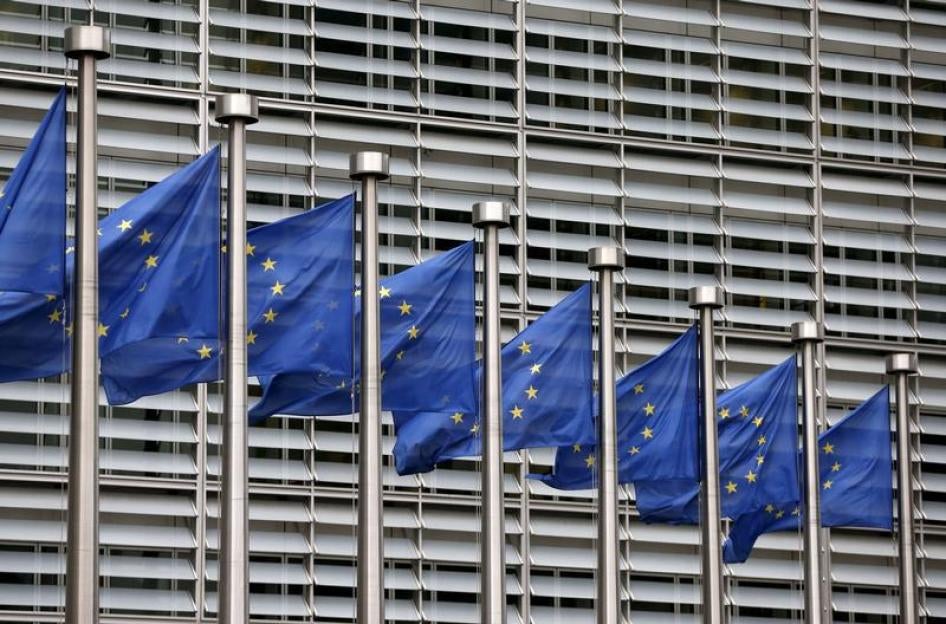
European Union flags flutter outside the EU Commission headquarters in Brussels, Belgium, October 28, 2015.
European Union flags flutter outside the EU Commission headquarters in Brussels, Belgium, October 28, 2015. © 2015 Reuters

The decision on February 16, 2022 by the Court of Justice of the European Union to allow EU institutions to tie funding to EU states to respect for the rule of law clears the way for strong action by the European Commission, Human Rights Watch said. The EU Court’s ruling dismissed the actions brought by Hungary and Poland against the new conditionality mechanism.

The EU Court has sent a clear signal that EU funds should be used in ways that uphold rather than undermine Europe’s democratic values,” said Philippe Dam, Europe and Central Asia Advocacy Director at Human Rights Watch. “The EU Commission should now act swiftly and demonstrate that defending the rule of law is at the top of its agenda.”

In December 2020 the EU adopted a regulation creating a new conditionality mechanism to protect the EU budget from rule of law breaches by an EU member state. A last-minute deal among EU member states obliged the Commission to wait for a ruling by the EU Court of Justice before finalizing the guidelines for applying the conditionality mechanism. Hungary and Poland brought legal action before the EU Court seeking to annul the rule of law conditionality mechanism in March 2021, initiating that process…

The court’s ruling confirms that “compliance by the Member States with the common values on which the European Union is founded (…) such as the rule of law and solidarity, justifies the mutual trust between those States.” The Court added that the EU “must be able to defend those values.”

The European Commission should demonstrate its stated commitment to protect the rule of law and democratic values in the EU by swiftly initiating procedures provided by the regulation, Human Rights Watch said. It should seek to suspend, reduce, or prevent new agreements to provide EU funds to a member state if it finds that the state has failed to respect the rule of law.

In applying the conditionality mechanism, the European Commission should ensure that a broad range of breaches to EU’s democratic values could lead it to recommend cutting funds to EU member states. These should include attacks on the independence of the judiciary, as well as state interference with media and civil society. The Commission should also seek to ensure that EU funding cannot be used to promote intolerance or discriminatory policies, including against women and lesbian, gay, bisexual, and transgender (LGBT) people and other minorities.

The Commission should also ensure that carrying out this procedure does not punish EU citizens for the actions of their governments, including by negatively affecting their economic and social rights. The Commission should conduct human rights impact assessments to determine the risk that people’s rights would be harmed by any decision and should divert rather than cut funding as required, to ensure that beneficiaries’ rights are not affected.

Hungary and Poland, the two EU countries that initiated legal action against the regulation, are already facing scrutiny for their poor rule of law records under the Article 7 procedure – the EU treaty provision dealing with governments that flout EU values, which can ultimately lead to the suspension of their voting rights in the Council. Hungary is among the largest recipients of EU funding per capita, and Poland is the largest overall net recipient.

Poland’s government has eroded judicial independence and ignored recent EU Court of Justice decisions. It also used its politically compromised constitutional tribunal to undermine women’s rights and the binding nature of EU law. LGBT and women’s rights activists face threats and harassment. In Hungary, restrictive laws target civil society groups, and the government or its supporters control most media outlets. A June 2021 law banned discussion on gender identity and sexual orientation, putting health providers, educators, artists, and broadcasters at risk of sanctions.

EU member states also have a serious responsibility to ensure that all member states respect EU’s democratic values and the rule of law. On February 22 they will hold a hearing on the situation of the rule of law in Poland under the Article 7 procedure. But since Article 7 was triggered in 2017 on Poland and in 2018 on Hungary, other EU member states have failed to take further action to hold those two governments to account.

..Proceedings under Article 7 should remain the cornerstone of the action against the erosion of EU values in countries like Hungary and Poland. The EU is equipped with the tools needed to stand up against member states that disregard the EU’s own democratic values, Human Rights Watch said. What has been missing is political will by the EU Commission and by leading EU member states to take decisive action and to hold states responsible for abuses to account.

The EU Court ruling underscores that EU institutions can fight back against the erosion of the rule of law within the bloc, but much depends on the European Commission quickly building on this momentum,” Dam said. “Tying EU money to EU values and strengthening scrutiny of rule of law abuses should go hand in hand to demonstrate that EU membership and respect for the rule of law are inseparable.

See also: https://humanrightsdefenders.blog/2020/01/13/european-judges-demonstrate-in-poland-against-the-muzzle-law/

https://www.hrw.org/news/2022/02/16/eu-top-court-approves-linking-eu-funds-rule-law

https://www.aljazeera.com/news/2022/2/16/poland-hungary-lose-legal-challenge-against-eu-rule-of-law-tool

NGOs demand EU to impose sanctions on NSO Group

December 7, 2021

Dozens of rights groups are urging the European Union to impose sanctions on the Israeli NSO Group to ban the company’s Pegasus surveillance technology. The letter sent to the EU was signed by 86 rights groups and independent experts, including Reporters Without Borders, Amnesty International, Human Rights Watch, the Electronic Frontier Foundation and Privacy International, among others. A consortium of media revealed that this powerful spyware was used extensively by several governments to spy on lawyers, journalists, political opponents and human rights activists.

Several victims of illegal surveillance have been identified in Hungary, where the government initially denied being a client of NSO Group, before admitting to having purchased the software. See also: https://humanrightsdefenders.blog/2021/11/10/palestinian-ngos-dubbed-terrorist-were-hacked-with-pegasus-spyware/

A good resource is here: https://www.haaretz.com/israel-news/MAGAZINE-nso-pegasus-spyware-file-complete-list-of-individuals-targeted-1.10549510

Several victims of illegal surveillance have been identified in Hungary, where the government initially denied being a client of NSO Group, before admitting to having purchased the software. See also:

There is overwhelming evidence that Pegasus spyware has been repeatedly used by abusive governments to clamp down on peaceful human rights defenders, activists and perceived critics,” Deborah Brown, senior digital rights researcher and advocate at Human Rights Watch, said in a statement. “The EU should immediately sanction NSO Group and ban any use of its technologies.”

The EU’s global human rights sanctions would allow the EU to adopt “ “targeted sanctions against entities deemed responsible for violations or abuses that are “of serious concern as regards the objectives of the common foreign and security policy”, including violations or abuses of freedom of peaceful assembly and of association, or of freedom of opinion and expression,” the letter read.

According to Human Rights Watch, these rights have been “repeatedly violated using NSO technology,” and, as highlighted by the UN Special Rapporteur on freedom of opinion and expression, “the use of spyware by abusive governments can also facilitate extrajudicial, summary or arbitrary executions and killings, or enforced disappearance of persons.” See also: https://humanrightsdefenders.blog/2021/10/04/big-coalition-urges-un-to-denounce-abuses-facilitated-by-spyware-technologies/

NSO Group was blacklisted by the US State Department at the beginning of November, and slapped with a sanction that drastically limited the business relationships the US company had with US customers or suppliers, according to the French newspaper Le Monde. “The EU should unequivocally close its doors to business with NSO Group,” Brown said.

“Targeted sanctions are necessary to that end, and to add to growing international pressure against the company and the out-of-control spyware industry.”

In Europe, several investigations are ongoing, but no sanctions have been formally imposed on the company. In addition to Hungary, several other countries are, or have been, customers of NSO Group – although this does not mean that all these countries have made illegal use of Pegasus.

In addition to Germany, several EU countries have purchased access to the software, according to Le Monde.

See also: https://www.haaretz.com/israel-news/tech-news/.premium.HIGHLIGHT.MAGAZINE-citizen-lab-vs-nso-the-institute-taking-down-israel-s-mercenary-spyware-firms-1.10536773

https://slate.com/technology/2021/12/apple-lawsuit-nso-group-q-cyber-pegasus.html

https://www.euronews.com/next/2021/12/03/pegasus-spyware-ngos-urge-the-eu-to-sanction-israeli-group-nso

And the latest: https://marketresearchtelecast.com/spyware-sale-at-nso-group-the-end-of-pegasus/226205/

as well as

https://www.irishtimes.com/news/ireland/irish-news/concern-activist-s-phone-infected-with-spyware-during-dublin-conference-1.4778962

in 2022 the following items can be added:

https://www.hrw.org/news/2022/01/26/human-rights-watch-among-pegasus-spyware-targets

https://thewire.in/tech/nso-chairman-quits-says-departure-unrelated-to-recent-scandals