Posts Tagged ‘human rights documentation’

Deluge of NGO criticism greets 2024 US State Department Report on human rights

August 20, 2025

The Trump administration’s omission of key sections and manipulation of certain countries’ rights abuses degrade and politicize the 2025 US State Department human rights report, Human Rights Watch, Amnesty International, Human Rights First and many other NGOs concluded .

On August 12, 2025, the State Department released its “Country Reports on Human Rights Practices” covering the year 2024. The report omits several categories of rights violations that were standard in past editions, including women, LGBT people, persons with disabilities, corruption in government, and freedom of peaceful assembly. The administration has also grossly mischaracterized the human rights records of abusive governments with which it has or is currently seeking friendly relations.

By undermining the credibility of the report, the administration puts human rights defenders at risk, weakens protections for asylum seekers, and undercuts the global fight against authoritarianism. 

This year’s human rights report may strictly keep with the minimum statutory requirements but does not acknowledge the reality of widespread human rights violations against whole groups of people in many locations.  As a result, Congress now lacks a widely trusted, comprehensive tool from its own government to appropriately oversee US foreign policy and commit resources. Many of the sections and rights abuses that the report omits are extremely important to understanding the trends and developments of human rights globally, Human Rights Watch said.

On Israel, the State Department disregards the Israeli authorities’ mass forced displacement of Palestinians in Gaza, their use of starvation as a weapon of war, and their deliberate deprivation of water, electricity, medical aid, and other goods necessary for civilians’ survival, actions that amount to war crimes, crimes against humanity, and acts of genocide. The State Department also fails to mention vast damage and destruction to Gaza’s essential infrastructure and the majority of homes, schools, universities, and hospitals.

The report is dishonest about abuses in some third countries to which the US is deporting people, stating that the US found “no credible reports of significant human rights abuses” in El Salvador, although they cite “reports” of extrajudicial executions, enforced disappearance, and mistreatment by police. The administration has transferred to El Salvador’s prisons, despite evidence of torture and other abuses. 

The State Department glosses over the Hungarian government’s escalating efforts to undermine democratic institutions and the rule of law, including severe curbs on civil society and independent media, and abuses against LGBT people and migrants. It also fails to acknowledge that Russian authorities have widely used politically motivated imprisonment as a tool in their crackdown on dissent, and its prosecutions of individuals for “extremism” for their alleged affiliation with the LGBT movement. 

Compare: https://humanrightsdefenders.blog/2024/05/04/us-state-department-2023-country-reports/

https://www.hrw.org/news/2025/08/12/us-rights-report-mixes-facts-deception-political-spin

https://www.amnestyusa.org/press-releases/u-s-state-departments-human-rights-report-puts-politics-above-human-rights/

https://www.state.gov/reports/2024-country-reports-on-human-rights-practices/

https://theweek.com/politics/state-department-stance-human-rights

https://www.bushcenter.org/publications/what-to-know-about-the-state-departments-new-human-rights-reports

Front Line Defenders launches Global Analysis 2023/24 on human rights defenders

May 22, 2024

On 22 May 2024 Front Line Defenders launched its Global Analysis 2023/24 on the situation of human rights defenders (HRDs) at risk around the world, an in-depth annual publication detailing the variety of risks, threats and attacks faced by HRDs around the world.

The Global Analysis gives a panorama of the threats faced by HRDs in all regions of the world. Despite an assault on human rights and the rule of law in many countries, human rights defenders (HRDs) showed remarkable courage and persistence in advocating for more democratic, just and inclusive societies in 2023. [see also: https://humanrightsdefenders.blog/2023/04/04/front-line-defenders-just-published-its-global-analysis-2022-new-record-of-over-400-killings-in-one-year/]

At least 300 HRDs killed in 28 countries

The report also reveals statistics gathered and verified by the HRD Memorial initiative – which Front Line Defenders coordinates – documenting the killings of at least 300 HRDs in 28 countries in 2023. Almost a third of those killed (31%) were Indigenous people’s rights defenders. This brings the total documented killings of HRDs in the last decade to nearly 3,000.

This appalling wave of attacks on human rights defenders is a direct result of an international human rights framework left in tatters and governments’ double standards when it comes to respecting human rights,” said Alan Glasgow, Executive Director of Front Line Defenders. “A quarter decade after the UN adopted a Declaration on human rights defenders, not enough progress has been made to ensure defenders are valued and protected. In this time, thousands of defenders have paid with their lives and many more face ongoing attacks and intimidation for their peaceful work. Urgent action is needed to change this.

Wide-ranging risks to HRDs

Globally, the violation most commonly cited by HRDs was arbitrary arrest/detention (15%), followed by legal action (13%), continuing an ongoing trend of criminalisation as the most-reported risk. This was followed by death threats (10.2%), surveillance (9.8%) and physical attacks (8.5%). Trans and non gender-conforming HRDs reported slightly higher rates of physical attacks, and a much greater risk of smear campaigns. Globally, the five most targeted areas of human rights defence were: LGBTIQ+ rights (10.2%); Women’s rights (9.7%); Human rights movements (8.5%); Indigenous peoples’ rights (7.1%); and Human rights documentation (5.2%).

The statistics in the Global Analysis are derived from Front Line Defenders’ casework and approved grant applications between 1 January and 31 December 2023. The statistics are based on 1,538 reported violations in 105 countries. Front Line Defenders documents multiple violations per case or grant, as this is the reality of the situation for human rights defenders. For more details on how these and the HRD Memorial data are gathered, please refer to the Methodology section at the end of the report.

Download the full Global Analysis 2023/24

https://www.frontlinedefenders.org/en/resource-publication/global-analysis-202324

Large Public Human Rights Archive at University of Minnesota

March 11, 2024

On 3 March 2024 Gary Price from the University of Minnesota Libraries reports that the University of Minnesota now has one of the largest human rights archives at a public university, and it’s already helping researchers, educators, and human rights advocates across the globe.

“With everything that’s happening in the world, if we can highlight aspects of the history of human rights, maybe that provides us an opportunity to learn what not to do in the future,” said Kris Kiesling, director of  the U of M’s Archives and Special Collections (ASC).

Unlike other collections in ASC, the Minnesota Human Rights Archive (MHRA) is an umbrella archive composed of new human rights materials donated to the Libraries, as well as existing materials housed in other collections.

From the Givens Collection of African American Literature to the Immigration History Research Center Archives, there’s a trove of materials about civil rights, LGBTQ rights, child labor, domestic violence, public health, and more. ASC archivists and curators are already investigating how their materials relate to human rights, and how their collections are positioned under the MHRA umbrella.

Planning for MHRA began around eight years ago when Barbara Frey — the former director of the U of M Human Rights Program and a founder and previous director of the advocates for human rights — began contacting The Advocates, CVT, and other organizations across the state.

Kiesling — alongside University Archivist Erik Moore and Social Welfare History Archivist Linnea Anderson — met with Frey, Weissbrodt, and Meyer Weinshel, former collections and outreach lead for UMN’s Center for Holocaust and Genocide Studies, to build the MHRA.

The team transferred some materials from HRC in 2016, and later on, Patrick Finnegan, former assistant director of HRC and administrative associate for The Advocates, surveyed and listed Weissbrodt’s personal papers and research materials.

Pooling new and existing materials under the human rights umbrella not only helps researchers by condensing the initial hunt-and-gather phase of their projects, but it also helps potential donors. It’s easier for them to articulate their goals for their material, Moore explained, and it’s easier to connect their work to the broad framework of human rights, than a more granular collection like the University Archives.

Learn More, Read the Complete Article,  View Videos

Tribute to James Lawson of the Council of Europe

February 17, 2024

Bert Verstappen – retired from HURIDOCS – wrote the following tribute to a person who – from an intergovernmental position – contributed greatly to the development of the NGO network:

It is with deep sadness that HURIDOCS has to announce the unexpected passing away on 11 February of James Lawson. James had a leading function in the field of information management in the Council of Europe. In addition, he devoted a huge amount of time and energy to HURIDOCS.

James was a visionary who introduced new tools and techniques for human rights information handling to the HURIDOCS network. He was keen to share his enthusiasm for developments in the field of information management that could and should benefit human rights organisations. He was convinced that, in the age of the Internet, librarians continue to play an important role as information sharers.

A major initiative taken by James was the multilingual human rights search engine HuriSearch. He planned HuriSearch as from 1998. HuriSearch provided a singular point of access to information published on over 5’000 websites of human rights organisations worldwide. HuriSearch indexed and crawled about 8 to 10 million web pages. It was publicly available from 2003 until 2016.

James was an active and committed member of the HURIDOCS Continuation Committee – as its Board was called for many years. He served on the CC from 1992 to 2009. He was HURIDOCS Treasurer and as leader of the Task Force on Software Development oversaw the development of HURIDOCS’ tools and techniques.

James was also Coordinator and Chairperson of a large number of meetings of the European Co-ordination Committee on Human Rights Documentation https://www.ecchrd.org/. During these meetings, he introduced advances in technology such as the use of metadata and the eXtended Markup Language XML.

James also provided various trainings on human rights documentation on behalf of HURIDOCS. Among other activities, he trained NGOs preparing evidence for Truth Commission in South Africa and was the main resource person in a training for French-speaking African trainers in Senegal. He also held HURIDOCS trainings with local human rights organisations in Burkina Faso, the DR Congo, Georgia, Ghana, Haiti, Indonesia and other countries.

HURIDOCS thanks James for his engagement and expertise. We wish strength to Hanne and his daughters.

Laurie Wiseberg, pioneer human rights defender, is no more

October 16, 2023

On 12 October 2023, Laurie Wiseberg’s son, Jesse Scoble, informed the world on her passing on 11 October 2023 in Montréal. 

It is with great sadness that I announce the passing of Dr. Laurie Sheila Wiseberg, Laurie to most, Dr. Wiseberg to a few, Libby to her family, Nama to my kids, and mom to me. How does one sum up a life, let alone one as impressive and eventful as hers?

It would take another lifetime to try to capture it. She described herself in simple terms as:

Dr. Laurie S. Wiseberg (project advisor and contributor) was a human rights scholar/advocate who taught and wrote extensively about the work of human rights for non-governmental organizations. She served as Executive Director of a human rights NGO (Human Rights Internet) for 20 years. Dr. Wiseberg spent the following 20 years doing humanitarian work “in the field”, assisting United Nations agencies in providing better protection for persons displaced as a result of conflict or environmental disasters in countries across the globe.

Jesse will write a proper obit for her in the coming days, but wanted us to know that after a year long struggle she left this world on her own terms. “A glass of red wine in her hand“.

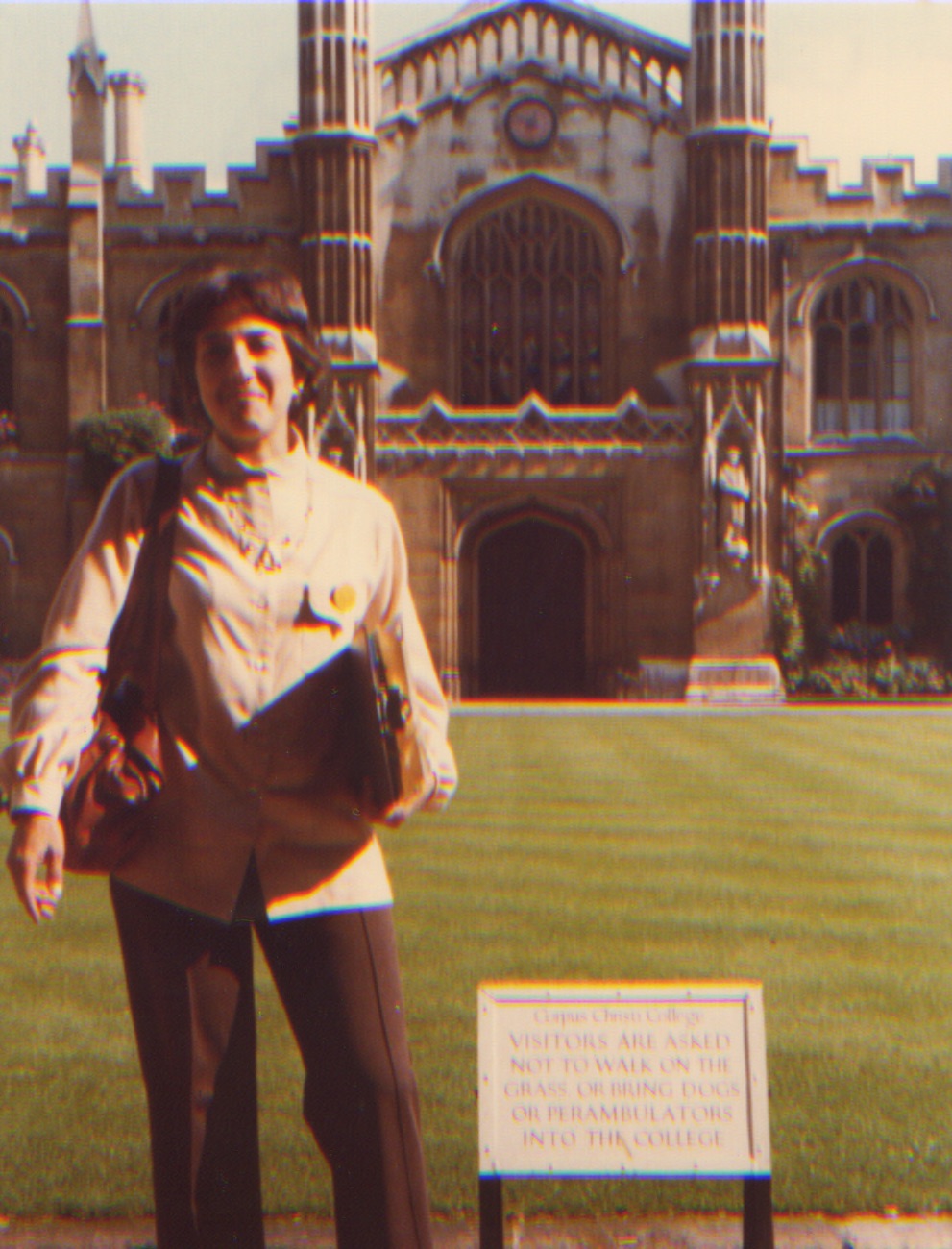
I personally have known Laurie almost all of my ‘human rights life’, starting with the creation of HURIDOCS some 40 years ago. Here the first picture i have of her, September 1978 in Cambridge at an Amnesty meeting.

Defense for Children – Palestine, winner of the 2023 Rafto Prize

September 21, 2023

Defense for Children International – Palestine is the 2023 recipient of the Rafto Prize, the Rafto Foundation for Human Rights announced today. 

For more on the Rafto Prize and its laureates, see: https://www.trueheroesfilms.org/thedigest/awards/A5043D5E-68F5-43DF-B84D-C9EF21976B18

The Rafto Prize 2023 is awarded to Defence for Children International-Palestine (DCIP) for their persistent work to defend and promote the rights of children living in the Occupied Palestinian Territory (OPT). For over 30 years, DCIP has investigated, documented and pursued accountability for grave human rights violations against children; held Israeli and Palestinian authorities accountable to universal human rights principles; and advocated at the international and national levels to advance access to justice and protection for children.

By awarding the Rafto Prize to DCIP, the Rafto Foundation wants to shine a spotlight on their work to promote and defend children’s rights,” said Jostein Hole Kobbeltvedt, executive director of Rafto Foundation. “With this award, we want to support DCIP by putting pressure on international organizations, including the UN, to investigate violations of children’s rights in the OPT and other armed conflicts around the world and demand that these be stopped.”

Our human rights documentation and evidence-based advocacy exposing Israeli forces’ grave violations against Palestinian children have made us a target of the Israeli government for years,” said Khaled Quzmar, General Director at DCIP. “But we will not back down. We are grateful for the Rafto Foundation’s recognition of the necessary human rights work my colleagues and I carry out to defend and protect Palestinian children.

DCIP is an independent, local Palestinian child rights organization dedicated to defending and promoting the rights of children living in the West Bank, including East Jerusalem, and the Gaza Strip. Since 1991, DCIP has investigated, documented, and exposed grave human rights violations against children; provided legal services to Palestinian children in urgent need; held Israeli and Palestinian authorities accountable to universal human rights principles; and advocated at the international and national levels to advance access to justice and protection for children.

Israeli Minister of Defense, Benny Gantz, designated DCIP and five other Palestinian human rights and civil society groups as “terrorist organizations” on October 19, 2021, pursuant to a 2016 Israeli law. The designation effectively criminalized the activities of these organizations and authorized Israeli authorities to close their offices, seize their assets, and arrest and jail their staff members.[see also: https://humanrightsdefenders.blog/2021/10/23/assault-by-israel-on-palestinian-human-rights-ngos/]

https://www.rafto.no/en/news/the-rafto-prize-2023-to

https://www.dci-palestine.org/dcip_awarded_international_prize_for_its_impact_on_palestinian_children_s_lives

A new gateway to human rights information being launched: awards and their laureates

January 25, 2021
THF

As this blog has abundantly shown, Human Rights Awards have become an increasingly important tool in the protection of Human Rights Defenders. They give HRDs visibility and provide support and protection for those at risk. [see e.g. https://humanrightsdefenders.blog/tag/human-rights-awards/].

On February 2nd 2021 a new one-stop resource will allow to find and search human rights awards and their laureates.

The Digest of International Human Rights Awards and their Laureates, a unique centralised resource for the human rights community, gives visibility, strengthens legitimacy of human rights defenders’ work, and could influence authorities to better apply human rights. There are now 200 awards and over 2400 HRDs/laureates in the digests.

It will give researchers, students, activists, the media and the public a searchable overview on who has won which awards and their short profiles. The digest will allow people to filter (re)searches on laureates by, e.g. theme, prize, profession, country or region, gender, etc.         

On February 2nd, 2021 True Heroes Films will be launching the new platform to the public.  See the clip below:

Please forward this post to whom you think might be interested. Twitter: https://twitter.com/TrueHeroesFilms

https://mailchi.mp/7176a72bfc91/digest-of-international-human-rights-awards-and-their-laureates

Algorithms designed to suppress ISIS content, may also suppress evidence of human rights violations

April 11, 2020
Facebook and YouTube designed algorithms to suppress ISIS content. They're having unexpected side effects.

Illustration by Leo Acadia for TIME
TIME of 11 April 2020 carries a long article by Billy Perrigo entitled “These Tech Companies Managed to Eradicate ISIS Content. But They’re Also Erasing Crucial Evidence of War Crimes” It is a very interseting piece that clearly spells out the dilemma of supressing too much or too little on Facebook, YouTube, etc.  Algorithms designed to suppress ISIS content, are having unexpected side effects such as suppressing evidence of human rights violations.
…..Images by citizen journalist Abo Liath Aljazarawy to his Facebook page (Eye on Alhasakah’s) showed the ground reality of the Syrian civil war. His page was banned. Facebook confirmed to TIME that Eye on Alhasakah was flagged in late 2019 by its algorithms, as well as users, for sharing “extremist content.” It was then funneled to a human moderator, who decided to remove it. After being notified by TIME, Facebook restored the page in early February, some 12 weeks later, saying the moderator had made a mistake. (Facebook declined to say which specific videos were wrongly flagged, except that there were several.)The algorithms were developed largely in reaction to ISIS, who shocked the world in 2014 when they began to share slickly-produced online videos of executions and battles as propaganda. Because of the very real way these videos radicalized viewers, the U.S.-led coalition in Iraq and Syria worked overtime to suppress them, and enlisted social networks to help. Quickly, the companies discovered that there was too much content for even a huge team of humans to deal with. (More than 500 hours of video are uploaded to YouTube every minute.) So, since 2017, beg have been using algorithms to automatically detect extremist content. Early on, those algorithms were crude, and only supplemented the human moderators’ work. But now, following three years of training, they are responsible for an overwhelming proportion of detections. Facebook now says more than 98% of content removed for violating its rules on extremism is flagged automatically. On YouTube, across the board, more than 20 million videos were taken down before receiving a single view in 2019. And as the coronavirus spread across the globe in early 2020, Facebook, YouTube and Twitter announced their algorithms would take on an even larger share of content moderation, with human moderators barred from taking sensitive material home with them.

But algorithms are notoriously worse than humans at understanding one crucial thing: context. Now, as Facebook and YouTube have come to rely on them more and more, even innocent photos and videos, especially from war zones, are being swept up and removed. Such content can serve a vital purpose for both civilians on the ground — for whom it provides vital real-time information — and human rights monitors far away. In 2017, for the first time ever, the International Criminal Court in the Netherlands issued a war-crimes indictment based on videos from Libya posted on social media. And as violence-detection algorithms have developed, conflict monitors are noticing an unexpected side effect, too: these algorithms could be removing evidence of war crimes from the Internet before anyone even knows it exists.

…..
It was an example of how even one mistaken takedown can make the work of human rights defenders more difficult. Yet this is happening on a wider scale: of the 1.7 million YouTube videos preserved by Syrian Archive, a Berlin-based non-profit that downloads evidence of human rights violations, 16% have been removed. A huge chunk were taken down in 2017, just as YouTube began using algorithms to flag violent and extremist content. And useful content is still being removed on a regular basis. “We’re still seeing that this is a problem,” says Jeff Deutsch, the lead researcher at Syrian Archive. “We’re not saying that all this content has to remain public forever. But it’s important that this content is archived, so it’s accessible to researchers, to human rights groups, to academics, to lawyers, for use in some kind of legal accountability.” (YouTube says it is working with Syrian Archive to improve how they identify and preserve footage that could be useful for human rights groups.)

…..

Facebook and YouTube’s detection systems work by using a technology called machine learning, by which colossal amounts of data (in this case, extremist images, videos, and their metadata) are fed to an artificial intelligence adept at spotting patterns. Early types of machine learning could be trained to identify images containing a house, or a car, or a human face. But since 2017, Facebook and YouTube have been feeding these algorithms content that moderators have flagged as extremist — training them to automatically identify beheadings, propaganda videos and other unsavory content.

Both Facebook and YouTube are notoriously secretive about what kind of content they’re using to train the algorithms responsible for much of this deletion. That means there’s no way for outside observers to know whether innocent content — like Eye on Alhasakah’s — has already been fed in as training data, which would compromise the algorithm’s decision-making. In the case of Eye on Alhasakah’s takedown, “Facebook said, ‘oops, we made a mistake,’” says Dia Kayyali, the Tech and Advocacy coordinator at Witness, a human rights group focused on helping people record digital evidence of abuses. “But what if they had used the page as training data? Then that mistake has been exponentially spread throughout their system, because it’s going to train the algorithm more, and then more of that similar content that was mistakenly taken down is going to get taken down. I think that is exactly what’s happening now.” Facebook and YouTube, however, both deny this is possible. Facebook says it regularly retrains its algorithms to avoid this happening. In a statement, YouTube said: “decisions made by human reviewers help to improve the accuracy of our automated flagging systems.”

…….
That’s because Facebook’s policies allow some types of violence and extremism but not others — meaning decisions on whether to take content down is often based on cultural context. Has a video of an execution been shared by its perpetrators to spread fear? Or by a citizen journalist to ensure the wider world sees a grave human rights violation? A moderator’s answer to those questions could mean that of two identical videos, one remains online and the other is taken down. “This technology can’t yet effectively handle everything that is against our rules,” Saltman said. “Many of the decisions we have to make are complex and involve decisions around intent and cultural nuance which still require human eye and judgement.”

In this balancing act, it’s Facebook’s army of human moderators — many of them outsourced contractors — who carry the pole. And sometimes, they lose their footing. After several of Eye on Alhasakah’s posts were flagged by algorithms and humans alike, a Facebook moderator wrongly decided the page should be banned entirely for sharing violent videos in order to praise them — a violation of Facebook’s rules on violence and extremism, which state that some content can remain online if it is newsworthy, but not if it encourages violence or valorizes terrorism. The nuance, Facebook representatives told TIME, is important for balancing freedom of speech with a safe environment for its users — and keeping Facebook on the right side of government regulations.

Facebook’s set of rules on the topic reads like a gory textbook on ethics: beheadings, decomposed bodies, throat-slitting and cannibalism are all classed as too graphic, and thus never allowed; neither is dismemberment — unless it’s being performed in a medical setting; nor burning people, unless they are practicing self-immolation as an act of political speech, which is protected. Moderators are given discretion, however, if violent content is clearly being shared to spread awareness of human rights abuses. “In these cases, depending on how graphic the content is, we may allow it, but we place a warning screen in front of the content and limit the visibility to people aged 18 or over,” said Saltman. “We know not everyone will agree with these policies and we respect that.”

But civilian journalists operating in the heat of a civil war don’t always have time to read the fine print. And conflict monitors say it’s not enough for Facebook and YouTube to make all the decisions themselves. “Like it or not, people are using these social media platforms as a place of permanent record,” says Woods. “The social media sites don’t get to choose what’s of value and importance.”

See also: https://humanrightsdefenders.blog/2019/06/17/social-media-councils-an-answer-to-problems-of-content-moderation-and-distribution/

https://time.com/5798001/facebook-youtube-algorithms-extremism/

New academic study of UN human rights treaty system calls for online databases on impact

February 16, 2020

Christof Heyns (University of Pretoria; Member of the UN Human Rights Committee.) and Frans Viljoen (Director, Centre for Human Rights, University of Pretoria) reported on 11 February 2020 in Global Rights on the progress being made in a new, global academic study to answer the question “What difference does the UN human rights treaty system make, and why?”.

An comprehensive research project on the impact of the treaty system, which started some years ago, is now being expanded into a global study….The first steps of the study were taken two decades ago by a team of researchers coordinated from the University of Pretoria, in collaboration with the UN Human Rights Office (OHCHR). …..The researchers documented numerous instances of impact, and we were in a position to draw general conclusions, published as a book and an article. This included that the evidence showed that the treaty system has had an enormous impact on the protection of human rights on the ground, in particular through the—recognized or unrecognized—incorporation of treaty norms into domestic law.

The following factors were found to be among those that have enhanced its impact: a strong domestic constituency for specific treaties; national action plans; and the windows of opportunity that comes with a change to democracy. We also laid strong emphasis on a greater emphasis on the role of national human rights institutions in mediating impact, and for them to do follow-up.

Factors found to have limited the impact of the system included the following: concerns for State sovereignty; a lack of knowledge of the system; the absence of a robust domestic human right culture; ineffective coordination between governmental departments; an ad-hoc approach to reporting; federalism; reprisals against human rights defenders; a preference for regional systems; and weak follow-up by treaty bodies.

We reported a rallying cry from many far-flung countries that ‘Geneva is very far’—not only in terms of geography but also in terms of accessibility and psychological ownership. And we proposed that the treaty bodies should consider holding some of their meetings away from  UN headquarters in Geneva.

Now, twenty years later, we are reviewing the same 20 countries, again with the help of researchers based in the respective countries, and again in collaboration with the OHCHR. We are asking the same questions. This study is now nearing completion, and we plan to publish it in the middle of next year, this time, with Professor Rachel Murray from Bristol University as co-editor. The data from the more recent study is still coming in. So far, the results provide further evidence of the strong impact of the system in most countries. However, a systematic analysis will only be possible once all the data has been gathered.

In the meantime, some of the issues identified up in the earlier study have been taken up within the system. There is for example a much stronger recognition of the role of national implementation and monitoring mechanisms. The Disability Rights Convention adopted in 2007, explicitly calls for creation of national ‘focal points’ and the designation of national human rights institutions to promote, protect and monitor implementation of the Convention….

The need to ‘bring the system closer to the ground’  is now recognized by a range of NGOs in preparation for the 2020 review of treaty bodies. The idea of treaty body meetings outside Geneva was advanced again by Heyns and Gravett in a blog two years ago, also on the basis of the regional experience, and the first such meeting for a UN treaty body is now being planned for 2020.

During the course of these two studies, we became very aware of the importance of getting a clear picture of the impact of the system, but also of the limitations of what we were doing. With only 20 countries covered, the sample size is quite limited; and, providing a snapshot at a particular moment in those countries means they are quickly overtaken by events. Following wide consultation, we are currently in the process of setting up an online database, where information on the impact of the system in all UN member states will be posted. The 20 country studies mentioned above, as well as the supporting documentation, will for a start be posted on a website. In the meantime, clinical groups are being formed at universities around the world, where international students are gathering the relevant information on their home countries, to be posted on the website. We anticipate that up to 50 new countries will be covered per year and ones covered earlier will be updated. In an era of crowd-sourcing, contributions from all interested parties—NGOs, individual researchers etc.—will be solicited.

This will be a large-scale and long-term research project, but hopefully it will help to allow the collective wisdom of people anywhere in the world to ensure that the treaty system remains as effective and as responsive to the needs of our time as is possible. It is also intended, in some way, to be a response to the lament that ‘Geneva is very far’ and to ensure that the treaty system is brought closer to the actual rights-holders, even if only virtually.

The treaty system has played a pivotal role in developing the substantive norms of the global human rights project over the last six decades. The future of the treaty system depends on whether it will continue to lead the way on substance, but more is required: it will have to enhance its visibility and broaden its ownership to a global audience, and treaty norms will have to find their way into domestic law and practices. This is the gap that the new study aims to help fill.

See also: https://humanrightsdefenders.blog/2015/02/17/treaty-bodies-case-law-database-saved-and-resurrected-by-un/

https://www.openglobalrights.org/what-difference-does-un-human-rights-treaty-system-make/

Magnitsky law spawns cottage industry of sanctions lobbying

February 13, 2020
Congress passed the Magnitsky Act in 2012 to punish Russian officials accused of beating to death a whistleblower who publicized government corruption. [see also: https://humanrightsdefenders.blog/2019/08/29/european-court-rules-on-sergei-magnitskys-death/]

A decade later, the law has unwittingly spawned a multimillion-dollar lobbying cottage industry. Predictably, a number of lobbyists are gunning to remove Magnitsky penalties on their questionable clients, just as with other such sanctions laws. President Donald Trump’s impeachment lawyer, Alan Dershowitz, for example, is defending an Israeli billionaire accused of pillaging Africa, while Trump’s 2016 Tennessee state director, Darren Morris, has joined with New York law firm Pillsbury Winthrop Shaw Pittman in representing an Iraqi businessman sanctioned for allegedly bribing politicians.

But a unique facet of the Magnitsky law and subsequent amendments has created a whole new opening for more creative lobbying. Unlike similar laws blocking sanctioned parties’ US assets and banning travel to the United States, Magnitsky requires that US officials consider information from credible human rights organizations when weighing whether to apply sanctions. “That’s a pretty revolutionary provision,” said Rob Berschinski, the senior vice president for policy at Human Rights First. “Effectively, the US government has created an open inbox in which literally anyone can petition for sanctions — no matter what their motive is, no matter what the credibility of their information is.

Berschinski’s organization is among those taking advantage of the provision, lobbying for additional Magnitsky sanctions on Saudi officials responsible for the murder of Jamal Khashoggi. The Trump administration designated 17 Saudi officials in November 2018, but not Crown Prince Mohammed bin Salman, who is believed by the CIA and UN investigators to have ordered the crime.

Global Magnitsky Human Rights Accountability Act (click above to read the law)

“The point here is, yes, 17 people were designated under Global Magnitsky,” said Berschinski, who served as deputy assistant secretary of state for democracy, human rights, and labor under President Barack Obama. “No, they are not the people who were ultimately responsible for directing the crime, and the people who were ultimately responsible need to be held accountable.”

Saudi Arabia isn’t the only Gulf target of sanctions lobbying. In recent months, lawyers for Kuwaiti private equity firm KGL Investment and its former CEO, Marsha Lazareva, have launched a multimillion-dollar campaign to threaten Kuwait with Magnitsky sanctions if it does not drop embezzlement charges against her. Working on the account are big names, including President George H.W. Bush’s son, Neil Bush; former House Foreign Affairs Committee Chairman Ed Royce, R-Calif.; former FBI Director Louis Freeh; and ex-Florida Attorney General Pam Bondi, until she joined Trump’s impeachment team. But the Lazareva camp has also consistently sought to portray her defenders as “human rights activists,” notably working with Washington nonprofit In Defense of Christians and former human rights lawyer Cherie Blair, the wife of ex-British Prime Minister Tony Blair, in its efforts.

Recent Magnitsky Act lobbying
Lobbying to remove sanctions Lobbying to add sanctions
Freeh Sporkin & Sullivan for Israeli businessman Dan Gertler Crowell & Moring and others on behalf of KGL Investment (sanctions on Kuwait)
Pillsbury Winthrop Shaw Pittman / Morris Global Strategies for Iraqi businessman Khamis Khanjar Human Rights First (sanctions for killers of Jamal Khashoggi)
Venable / Sonoran Policy Group for Serbian arms dealer Slobodan Tesic (Sonoran terminated December 2018) Schmitz Global Partners / Jefferson Waterman International (JWI) on behalf of fugitive Bulgarian businessman Tzvetan Vassilev (JWI terminated August 2019)
Source: Department of Justice / Congress

Lazareva’s champions insist she was railroaded by a corrupt judicial system and that lobbying for human rights sanctions — even if it’s spearheaded by corporate interests with deep pockets — is perfectly legitimate. To date, at least five US lawmakers have also joined the call for an investigation into Kuwait under the Magnitsky law.

“The global Magnitsky sanctions are a critical tool available to human rights NGOs to hold foreign governments accountable in cases of corruption and injustice,” said Peter Burns, government relations director for In Defense of Christians, or IDC. “IDC has advocated for their implementation in a variety of human rights and religious freedom contexts. One such case is that of Orthodox Christian businesswoman Marsha Lazareva, who is imprisoned in Kuwait on bogus corruption charges. The United States must become more effective at holding our friends, like Saudi Arabia, Egypt and Kuwait, accountable for religious freedom violations.”

“Are there actors out there that I’m aware of that may not have kind of the purest motives in bringing case files? Sure. But I have confidence in the integrity of the underlying decision-making system within the US government.”

IDC said it’s not getting paid for its Lazareva advocacy. But the army of lobbyists urging sanctions on Kuwaiti officials has, however, raised concerns about the integrity of the Magnitsky process.

“Are there actors out there that I’m aware of that may not have kind of the purest motives in bringing case files? Sure,” Berschinski told Al-Monitor. “But I have confidence in the integrity of the underlying decision-making system within the US government.”

This isn’t the first time lobbyists have sought to use Magnitsky in such a fashion. Back in 2017, lobbyists for fugitive Bulgarian businessman Tzvetan Vassilev sought sanctions on Bulgaria after being charged with money laundering and embezzlement. At the time, Lloyd Green, a Justice Department official under President George H. W. Bush, warned against potential abuses of the law. The Magnitsky Act … was not designed to become a sword and shield for those alleged to have committed crimes in systems that afford due process,” he wrote in an op-ed for The Hill at the time. It “should not be allowed to become a cudgel wielded by non-citizens as they seek to beat our allies into submission.

Berschinski said Human Rights First was aware of both the Vassilev and Lazareva campaigns and had declined to get involved. He declined to speculate, however, on whether such lobbying campaigns undermine the voices of traditional human rights organizations. “My sense is that at the end of the day, the US government officials who are actually making the call are making the decision on whether to designate or not on the basis of a solid evidentiary basis,” he said.

Read more: https://www.al-monitor.com/pulse/originals/2020/01/magnitsky-sanctioned-lobbying-hire-cottage-industry.html#ixzz6Cc6LK5Tp