At the end of 2025 the International Federation for Human Rights (FIDH), one of the world’s oldest human rights movements and Human Rights Watch were declared “undesirable” by the Russian Federation. For FIDH the designation was made by the Prosecutor General of Russia on 13 November, and on 1 December, Russia’s Ministry of Justice included FIDH in its register of “undesirable organizations“, which currently contains 281 entities, including several FIDH members, such as the Center for Civil Liberties (CCL), the Norwegian Helsinki Committee (NHC), the Helsinki Foundation for Human Rights (HFHR), and Truth Hounds.
“This ignoble move not only further threatens and endangers our Russian members, partners, their staff, and ordinary Russian citizens supporting our human rights work. It also sends a clear message that Russia is no friend of the global human rights movement“, said Alexis Deswaef, FIDH President. “This designation of FIDH as an ‘undesirable organisation’ demonstrates the importance of our commitment to supporting those who defend human rights, whether in Russia or in exile. FIDH will continue to pursue this commitment more than ever.”
Under the “undesirable organisations” law, adopted in 2015 and further tightened in 2021 and 2024, the Prosecutor General’s Office has the power to declare as “undesirable” any foreign or international organisation that is deemed “a threat to the foundations of the constitutional order of the Russian Federation, the defense capability of the country or the security of the state“.
Concretely, “undesirable organisations” are banned from engaging in any activities inside Russia, including the publication or dissemination of any information, carrying out financial transactions, and providing financial or other assistance to local organisations and individuals. The “participation in the activities” of an “undesirable organisation” is subject to administrative and criminal liability, including up to four years of imprisonment. Any Russian citizen or organisation cooperating with an “undesirable organisation“, even if residing outside Russia, faces administrative penalties and, in the case of individuals, criminal liability. In practice, the vague wording of the law has led to the punishment of individuals simply for reposting information disseminated by an “undesirable organisation” on social media platforms, even if the original posts predated the organisation’s designation as “undesirable“.
“For over three decades, Human Rights Watch’s work on post-Soviet Russia has pressed the government to uphold human rights and freedoms,” said Philippe Bolopion, executive director at Human Rights Watch. “Our work hasn’t changed, but what’s changed, dramatically, is the government’s full-throttled embrace of dictatorial policies, its staggering rise in repression, and the scope of the war crimes its forces are committing in Ukraine.”
The Prosecutor General’s Office made the decision to ban Human Rights Watch on November 10, as follows from the Ministry of Justice’s register of “undesirable” organizations updated today. The official reasons for the designation are not known.
Independent human rights experts on 14 January 2026 expressed concern over restrictions faced by human rights defenders in Egypt following their release from detention.
“We recently raised concerns about the continued detention of human rights defenders on renewed and similar charges,” the experts said. “Even those who have been released continue to face restrictions that severely limit their ability to return to normal life.”
Many human rights defenders charged under Egypt’s counterterrorism law have faced a travel ban, had their assets frozen, or ended up back on the country’s terrorism watchlist after being released.
“Such restrictions have severe consequences for the affected individuals and their families and their ability to enjoy economic and social rights,” the experts said.
“This is deeply concerning, particularly given that Egyptian law guarantees the right to appeal asset freeze decisions, which the three individuals have done, but to no avail,” the experts said.
Human rights lawyer Mohamed El-Baqer was detained in connection with several cases involving similar charges. During his incarceration in late 2020, his name was added to Egypt’s terrorism watchlist for a period of five years, leading to a travel ban, withdrawal of his passport, and freezing of his bank account and other assets. El-Baqer received a presidential pardon in 2023, but he has remained on the terrorism watchlist.
“What makes it all the more shocking is that, just one day before the end of the five-year period, El-Baqer was added to the terrorist list for another five years, despite no evidence being provided,” the experts said.
Human rights defender Ahmed Samir Abdel-Hai’ was arrested in early 2021 after returning from university in Vienna where his studies focused on Egypt’s anti-abortion laws. He was sentenced to three years in prison but was freed by a presidential pardon in summer 2022.
Since then, Abdel-Hai has been banned from travelling, with the official reason given being that he was a “threat to national security.”
The experts asked how Abdel-Hai could still be regarded as a threat to the country after he received a presidential pardon.
“These human rights defenders were criminalised under vague counterterrorism laws. They have either served their sentences or been granted presidential pardons. They should not continue to face restrictions,” they said.
The experts urged authorities in Egypt to put an end to these restrictions in line with international human rights standards.
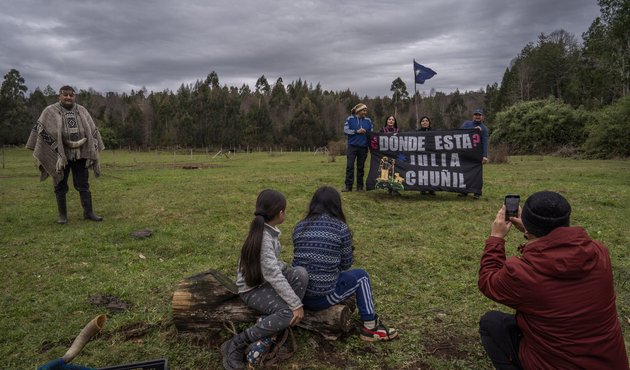
Family members and friends of Julia Chuñil display a banner that reads: “Where is Julia Chuñil?” on the land where she was last seen. Tamara Merino / Global Witness
Global Witness joins organisations around the world in condemning the arrest of Pablo San MartínChuñil, Javier Troncoso Chuñil, Jeannette Troncoso Chuñil, and BermarFlavio Bastías Bastidas, which occurred on 14 January 2026, in the Los Ríos Region, Chile.
Pablo, Javier, and Jeannette are children of Mapuche Indigenous leader and environmental defender JuliaChuñilCatricura, president of the Putreguel Indigenous Community, who has been missing since November 8, 2024, while defending 900 hectares of native forest in the commune of Máfil.
Julia’s disappearance has been internationally denounced as a forced disappearance linked to her struggle for territorial and environmental protection against the advance of large landowners and the forestry sector.
The arrest of Pablo, Javier, Jeannette, and Bermar occurs six months after the Inter-American Commission on Human Rights (IACHR) granted precautionary measures in favour of Julia Chuñil, urging the Chilean government to increase efforts to search for her and to share information about such efforts with her family. The arrest also occurred just hours before the family was scheduled to attend the admissibility hearing before the Escazú Committee to present evidence of the State’s non-compliance.
Global Witness Senior US Policy Advisor Javier Garate said: “The arrest of JuliaChuñil’schildren and relativesis to be condemned. Rather than further victimising the family, authorities shouldinsteadfocus onthe main suspectidentifiedby the family and by human rights organisations.…
“This casemust be viewed in the wider Latin Americancontext of systematic violence against environmental defenders,whereat least2,253activists have been killed andorforcibly disappeared between 2012 and 2024.
“We offer solidarity with theChuñilfamilyat this time.The arrestedfamily members should beimmediatelyreleased anda proper independent investigation carried out.”
Global Witnesshas joined organisationscalling for:
The immediate release of Pablo San Martín Chuñil, Javier Troncoso Chuñil, Jeannette Troncoso Chuñil, and Bermar Flavio Bastías Bastidas;
That the Chilean State comply with the IACHR’s and the Escazú Committee’s determinations and protect, rather than criminalise, Julia Chuñil’s relatives;
An impartial, transparent, and effective investigation into Julia Chuñil’s disappearance, focusing on the identified main suspect;
An end to the criminalisation of environmental defenders and Indigenous peoples in Chile and throughout Latin America;
That international human rights bodies monitor this case and ensure due legal process.
The criminalisation of those who defend the land and territories is a crime against humanity and against the planet.
As mass repression of protests and dissent dramatically intensifies in Iran amidst an almost complete communications shutdown, the Free Narges Coalition and more than 30 undersigned organisations (including FIDH and OMCT in the framework of the Observatory for the Protection of Humans Rights Defenders) called on 15 January 2026 for urgent and concrete actions to circumvent internet censorship, as well as raising alarm regarding the grave threats to existing and newly-arrested detainees, particularly those jailed for their human rights work, journalism, expression, activism, or peaceful assembly.
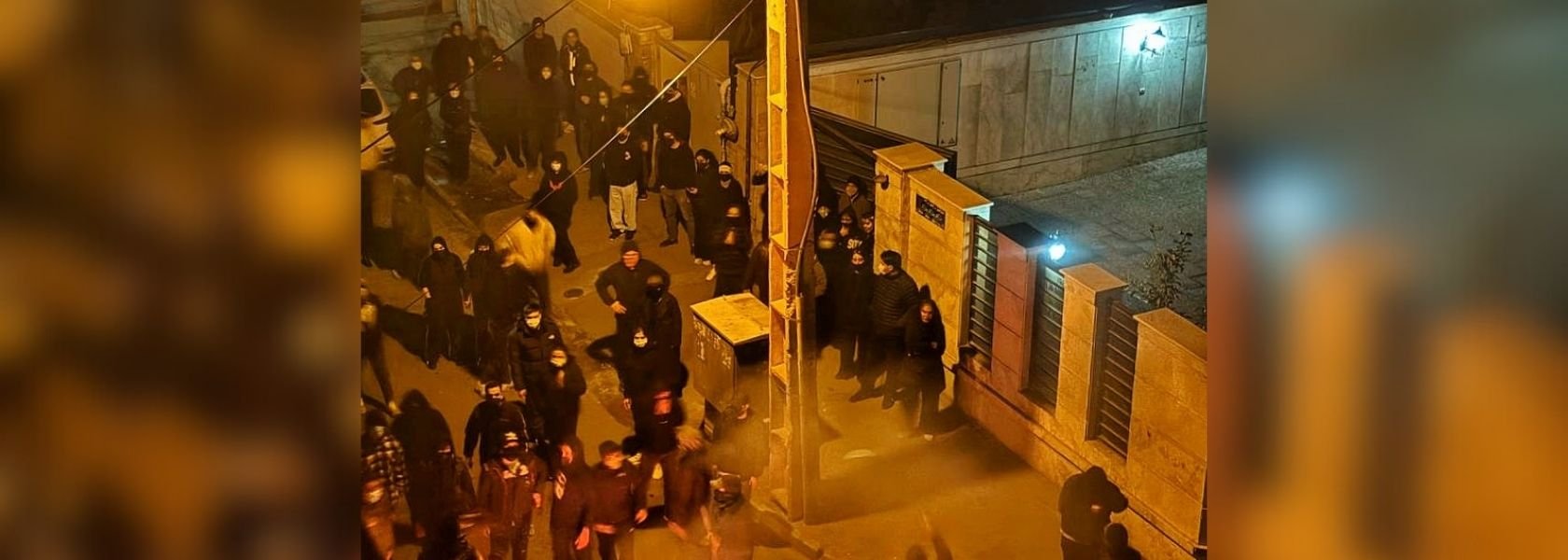
Iran is facing one of the most severe periods of repression in its recent history. Protests that began in Tehran’s Grand Bazar on December 28 against the collapse of the national currency grew in size and scope until authorities completely turned off Iran’s internet access to the outside world and began a more severe crackdown on January 8. Shocking images of dead protesters, doctors’ reports of overflowing hospitals and the lethal use of military-grade weapons and live ammunition, and the absence of access for journalists and independent media, have led to desperation of families missing loved ones, as well as grave concerns around the safety of thousands of those injured or detained. Human rights organisations and international media have been able to verify the killing of over 2,500 protesters, including children under the age of 18, and thousands injured, some severely while almost twenty thousand confirmed arrested. With the majority of the killings occurring since 8 January, amid a full-blown digital blackout that has made further verification impossible, current reports estimate the number of killings to be much higher, likely amounting to more than 6,000.
Meanwhile, in official statements, Tehran’s Prosecutor General has described protesters as vandals and threatened they will face moharebe (waging war against God), a charge that is punishable by death under Islamic Penal law. State media have also reported mass arrests of individuals they label as “rioters.”
According to NetBlocks, Iran has now experienced more than 140 hours of near-total internet shutdown since January 8. Such communications blackouts severely restrict access to independent reporting and sharing of essential and life-saving information, and create conditions in which grave human rights violations can be committed with impunity. Prior to the shutdown, human rights defenders and known dissidents both inside and outside of Iran had reported receiving threats, as authorities have attempted to suppress expressions of support for the protests online.
In this context, both recent and long-standing detainees–including human rights defenders, journalists, writers, and artists–face an acute and often overlooked risk. Past patterns in Iran demonstrate that periods of widespread unrest are accompanied by heightened abuses inside detention facilities, where these groups are particularly vulnerable to extrajudicial killing, enforced disappearance, torture, and other forms of ill-treatment. Those held in solitary confinement and denied contact with the outside world are at especially high risk.
Among those recently detained are prominent figures from Iran’s civil society, including Nobel Peace Prize Laureate Narges Mohammadi, Sepideh Gholian, Alieh Motalebzadeh, Javad Alikordi, Hasti Amiri, Pooran Nazemi, and other human rights defenders and journalists. They were violently arrested following the memorial ceremony for lawyer Khosrow Alikordi on 12 December in Mashhad, and have been held in solitary confinement, their whereabouts and condition unknown, for more than one month. Narges Mohammadi has been denied access to legal counsel and contact with her family, apart from a brief phone call on 14 December when she reported severe ill-treatment, including beatings to her head and neck with batons, as well as threats of further violence. On January 6, before the total internet shutdown, journalist and human rights defender Alieh Motalebzadeh, who has been diagnosed with cancer, was able to call her family. Her daughter reported in a video message that she did not sound well, stating that the detainees are under severe pressure. She was released on bail following deterioration of her health on 12 January. The health condition of Pouran Nazemi is reported to be dire while she remains detained. Narges Mohammadi has been hospitalized for three days after her violent arrest and arbitrary detention since 12 December. Due to the ongoing communications blackout, the families and lawyers have not been able to be in contact with them, including to inquire if their 30 day arbitrary detention order has been extended or not.
We, the undersigned organisations, express our deep concern over the escalation of the killing of protesters, as well as the serious risk of arbitrary legal charges, punishable by the death penalty, against those detained. We stress that the lives and safety of those more vulnerable under detention in Iran must not be forgotten. Human rights defenders, journalists, writers, artists, and those prosecuted due their exercise of freedom of assembly and expression are at the forefront of the peaceful struggle for fundamental human rights. They must be protected and immediately and unconditionally released, and we call for immediate actions from the international community to halt the escalating violations of human rights and humanity.
As reports of mass arrests, killings, and widespread violence continue to escalate, we stand in full solidarity with the people of Iran in their legitimate struggle for fundamental freedoms and democratic rights. We urge the international community to take urgent and concrete actions to prevent further loss of life and to ensure that Iran uphold its international human rights obligations, including through:
Immediate and unconditional release of all those jailed in Iran for their peaceful activism or expression, including Nobel Peace Prize Laureate Narges Mohammadi, as well as human rights and women’s rights defenders, civil society activists, journalists, lawyers, writers, artists, representatives of religious and ethnic minorities, environmental and labour defenders, students, and all others detained or at risk for exercising their fundamental rights.
Immediate restoration of full and unrestricted access to internet and telecommunications services, and an end to nationwide information blackouts that censor news reporting, facilitate repression, block the transmission of essential and life-saving communications including for medical personnel, and impede documentation of human rights violations.
Independent, impartial, and transparent investigations into killings, torture, lethal use of force by security agents, enforced disappearances, and other serious human rights violations committed in the context of the ongoing protests, with a view to ensuring accountability in line with international law.
As every hour of inaction increases the risk of irreversible loss of human life and gross violations of human rights. The international community must act urgently to protect the detainees, ensure their safety and rights, and prevent further violations under international law.
50 civil society organizations, urge the UN Human Rights Council to urgently convene a special session to address an unprecedented escalation in mass unlawful killings of protesters, amidst an ongoing internet shutdown imposed since 8 January to conceal grave human rights violations and crimes under international law by Iranian authorities. see:
This is a reminder that nominations for the 2026 Right Livelihood Award are open, and the deadline is January 16, 2026 . They are seeking new nominees for the Award who are leading change-makers in their field. Nominations are fully open to the public; therefore, anyone can nominate an individual or organisation creating change through their innovative and life-changing work. To nominate a candidate (preferably in English, but French and Spanish are also accepted), please submit nominations through our online nominations form. Read more about the Award https://www.trueheroesfilms.org/thedigest/awards/97238E26-A05A-4A7C-8A98-0D267FDDAD59.
The Right Livelihood Award recognizes and supports outstanding individuals and organizations driving social, environmental, and human rights change. Winners receive financial or honorary awards, lifelong access to a global network, and international recognition to amplify their impact and protect their work.
Transnational repression (TNR), the cross-border targeting, intimidation, and harassment of journalists and human rights defenders, is increasingly undermining press freedom and human rights in Europe and beyond. Journalists in exile often remain subjects of sustained threats, surveillance, cyber-attacks, psychological pressure, and harassment long after reaching presumed safety. These tactics are used by authoritarian states to silence dissent, extend their reach beyond borders, and weaken the role of independent media globally. This is demonstrrated in the 18 December 2025 Position Paper written by Katrin Schatz, Journalists-in-Exile Programme Manager,
The European Centre for Press and Media Freedom (ECPMF) stands firmly against any form of repression that endangers journalists in exile and undermines fundamental freedoms. As a Europe-focused organisation, our mandate centres on strengthening press freedom across the continent. Much of our documented experience with transnational repression comes from our support work in Germany, particularly through the Journalists in Exile (JiE) programme, which gives us direct insight into how these threats continue even after relocation. Our analysis, monitoring and advocacy consistently show that current policy frameworks are insufficiently equipped to address the reality of transnational repression.
Transnational Repression targets journalists in exile
Many Journalists in exile remain at risk. ECPMF’s research on transnational repression in Germany from 2025 finds that journalists who fled authoritarian contexts continue to experience threats, intimidation, surveillance and psychological pressure in their host countries. These tactics are part of a broader strategy by autocratising states to control dissent.
ECPMF’s Mapping Media Freedom (MapMF) platform shows exactly this – through the recently initiated category documenting threats against journalists in exile, ongoing surveillance, digital harassment and family members being targeted are reported. However, cases of transnational repression are rarely documented, not because they don’t exist, but because of the extreme sensitivity of the issue: publicity can endanger journalists’ families at home, expose those in exile to additional targeting, and many affected journalists choose or are advised to remain discreet for safety reasons.
Transnational repression threatens press freedom and democratic space
Transnational repression is not only an attack on individual journalists, it is a direct assault on press freedom and democratic spaces globally. However, acknowledging the personal strains of those affected is essential: many journalists in exile face isolation, trauma, financial precarity, and the constant fear that reprisals could reach them or their families, friends, and colleagues.
TNR tactics take place across multiple contexts: through digital harassment, spyware, coordinated smear campaigns, threats to family members, diplomatic pressure, misuse of international legal instruments, or using diaspora networks to intimidate critics abroad. Together, they form a pattern: a systematic effort by authoritarian and autocratising states to suppress independent journalism far beyond their borders. Coupled with the EU’s lack of reaction, this perpetuates cycles of violence and silencing.
By creating a climate of fear among critical voices and disrupting professional and personal safety TNR systematically undermines freedom of expression, independent journalism and the safety of journalists. Journalists in exile play an indispensable role in informing the public through international reporting, providing independent coverage from authoritarian contexts where local journalism is heavily restricted or impossible.
Gaps in policy and protection in the EU
Increasingly restrictive migration and return policies
The EU’s use of “safe country of origin/ third country” frameworks and streamlined return mechanisms risk exposing journalists to environments where they continue facing repression. Recent decisions by the European Council, endorsed by 39 MEPs , including the designation of countries with documented human rights violations, including press freedom violations as “safe” contradicts the very essence of protection that asylum and refugee policies are meant to provide.
The EU-wide list of safe countries will include: Bangladesh, Colombia, Egypt, Kosovo, India, Morocco and Tunisia. ECPMF is highly concerned about the dangerous implications of this policy for journalists and human rights defenders.
Lack of comprehensive frameworks
Current EU instruments still do not provide a systemic approach to TNR. There is no binding definition, no integrated action plan, and no framework that aligns migration policies, human rights obligations, digital safety, and cross-border policing responses to transnational repression. Existing mechanisms remain fragmented, leaving journalists without coherent pathways to protection.
Fragmented national responses
At the EU member state level, responses to TNR are inconsistent. Few governments started to formally acknowledge the threat and explore legal or policy measures, while others lack official recognition and structured responses. Even when awareness exists, protection mechanisms remain fragmented, under-resourced, or inaccessible. Journalists, just as any other person seeking refuge, also face racial discrimination within domestic systems, which can influence how their cases are treated.
Civil society has often stepped in where states have not taken responsibility. In Germany, the Coalition Against Transnational Repression has emerged as a key actor, bringing together human rights and diaspora organisations to push for stronger national policies. At the same time, many institutions and law enforcement bodies lack sufficient knowledge or training to identify transnational repression patterns, assess cross-border threats, or understand the jurisdictional complexities involved. Limited cooperation between migration authorities, police, prosecutors, and security services further weakens effective responses. As a result, national responses remain predominantly reactive rather than preventive, leaving journalists in exile exposed to ongoing risks.
ECPMF’s position and demands
Transnational repression is pervasive and increasingly dangerous. Journalists who have fled oppression continue to face coordinated pressure, digital harassment, legal threats, and physical intimidation across borders. As seen through the experiences of fellows in ECPMF’s Journalists-in-Exile programme, exile does not guarantee safety. Threats often follow them into Europe, leaving them vulnerable even in countries that are supposed to offer protection.
Current human rights and migration policies fall short of addressing the lived realities of journalists in exile and, in some cases, may even increase the risks they face. EU migration policies could force journalists back into the very environments from which they fled, thereby further jeopardizing their safety. This reflects the wider gap in the protection of journalists, where national and EU responses to transnational repression remain inconsistent, under-resourced, and fragmented.
ECPMF calls on the European Union, its member states and international bodies to take the following actions to better protect journalists in exile and combat transnational repression:
Develop and implement comprehensive legal frameworks that recognise the specific cross-border threats faced by journalists in exile, including digital harassment, surveillance, physical attacks, and threats to family members.
Ensure the protection of journalists within migration systems, with clear safeguards against forced returns to countries where they face repression, in line with the international principles of non-refoulement.
Develop and support national and EU-level mechanisms to monitor and respond to transnational repression, including dedicated hotlines, coordinated support services, and legal aid for affected journalists.
Include transnational repression in the EU’s strategic documents and policies for safeguarding democracies and combating disinformation and malicious interference, including the European Democracy Shield and similar documents, to ensure that the protection of those fighting repression is part of a comprehensive approach to preserving our democracies.
Incorporate transnational repression explicitly into EU foreign policy, ensuring that the EU’s human rights policies hold countries accountable for using repressive tactics against journalists in exile, as well as creating a system of sanctions and diplomatic pressure to address perpetrators.
Strengthen cooperation between member states, creating a coherent and coordinated EU response to transnational repression, with particular attention to the intersectional risks faced by journalists, including race, gender, and migration status.
Engage civil society and human rights organisations in the design and implementation of policies related to journalists in exile, ensuring that those who are most affected have a direct role in shaping the response.
This position paper was written by Katrin Schatz, Journalists-in-Exile Programme Manager, with contributions by Basma Mostafa, Journalists-in-Exile Fellow, Edith Bohl, Journalists-in-Exile Programme Officer, and Ena Bavčić, Senior Advocacy and Policy Advisor.
“Art was my existence, my life. Without it, maybe I wouldn’t have survived,” said Kheder Abdulkarim, a Kurdish-Syrian artist based in Germany and former political prisoner, whose work is inspired by his experience of persecution and erasure. He received an honourable mention at the 4th edition of the International Contest for Minority Artists.
The Contest is an initiative organized jointly by UN Human Rights, Freemuse, Minority Rights Group and the City of Geneva. Since 2024, the contest is also supported by the Centre des Arts of the International School of Geneva, the Loterie Romande, as well as by other donors who prefer to remain anonymous.
Each year, the Contest celebrates minority artists whose work bears witness to struggles for dignity, justice and visibility, forming a cornerstone of UN Human Rights’ efforts to uplift artists as human rights defenders.
The 2025 theme — Belonging, Place and Loss — resonated profoundly with artists around the world whose identities have been shaped by displacement, environmental devastation, structural racism, and generational trauma, generating more than 240 submissions this year.
At the award ceremony, UN Deputy High Commissioner for Human Rights, Nada Al-Nashif, reminded the audience of what minority artists reveal to societies.
“Tonight, we celebrate eight minority artists honoured in this edition, the power of art and the vital contribution that minority artists make as they shine a light on human rights struggles across the globe, stories and images that unite and anchor us in a shared humanity,” she said.
Art can be a human rights language, and a catalyst for positive change in societies which may seek to silence minority voices. Claude Cahn, human rights officer at UN Human Rights’ Indigenous Peoples and Minorities Section
For many laureates, art is the only archive that survives war, the only place where memory can remain intact.
Alia Al-Saadi is a Palestinian Syrian dancer and choreographer born a third-generation refugee in Yarmouk Camp, and one of the laureates of the contest’s 4th edition.
Her performances turn the body into an “archive of destruction,” she said, and “a state of psychological numbness, where prolonged exposure to violence renders shock ineffective.”
Abubakar Moaz, a Sudanese visual artist based in Kenya, won honourable mention and said his visual language emerged from conflict in the Blue Nile and exile in Nairobi.
Abdulkarim, imprisoned for nearly six years in the infamous Saydnaya Prison in Damascus, began sculpting there with scraps of vegetable crates. “I lost seven years of my life,” he said. “But I try to produce something from those years, to rebuild them and more.”
Emanoel Saravá, an Afro-Indigenous Brazilian visual and photo-performance artist, winner of an honourable mention, treats water as an archive of Black and peripheral suffering through their project Águas Marginais.
“The waters carry the memory of Black and peripheral communities, but they also bear the scars of environmental racism, climate change and neglect,” Saravá said.
Sead Kazanxhiu, a Roma political artist from Albania and laureate of the 4th edition, rejects narratives that reduce Roma communities to victimhood.
This opportunity allows human rights defenders to develop their projects and take part in an academic and cultural exchange in a safe space. Apply before January 21. Are you a human rights defender from a country in the Global South who must carry out your work in an emergency or high-risk context? Our fellowship program could offer you a calm and safe space to work; provide you with the opportunity to build bonds of solidarity and companionship; and exchange knowledge with our researchers on tools and strategies for action-oriented research.
We are looking for people with different profiles:
Those who come from an emergency or high-risk context. An emergency or high-risk context may include any of the following:
The country/city where the fellow works is experiencing armed conflict, civil unrest, or is under an authoritarian government with an imminent threat to the individual security of the candidate.
The fellow and/or their organization has been the target of threats, intimidation, or populist propaganda that poses a risk to their human rights defense work or to their family’s safety.
The fellow or their organization has been excluded from funding due to government or private sector influence, or has been subjected to pressure aimed at obstructing the work of the individual/organization.
Those who are at risk of burnout and are seeking a quiet place to continue working on human rights issues, but in a different context.
Those who belong to human rights organizations in the Global South and wish to engage in exchanges and joint research or advocacy work with Dejusticia.
Those who intend to build long-term relationships with other fellows and with Dejusticia. This ensures that our fellowships function as accelerating nodes for connections that will make the human rights movement more coordinated and generate greater impact.
What will fellows receive from Dejusticia?
Dejusticia will cover travel expenses (visa, airfare) and provide a monthly stipend based on the fellow’s profile and experience. While Dejusticia will provide initial support at the beginning of the process—including, during the first two weeks of work, a training space on amphibious research and on Dejusticia’s work—it is important to note that selected fellows will be responsible for managing their stipend to cover their housing, transportation, and food needs.
What will be the commitments of fellows from the Global South?
The fellow will allocate their time at Dejusticia as follows:
65% to develop and implement work associated with a broader project of the host area/line.
25% to continue supporting the work of their home organization remotely.
10% to develop at least one blog post reflecting on their experience or work, to be published on Dejusticia’s Global Blog.
How to apply to the fellowship program
The call will be open until January 21, 2026
Dejusticia will cover travel expenses (visa, airfare) and provide a monthly stipend based on the fellow’s profile and experience. While Dejusticia will provide initial support at the beginning of the process, it is important to note that selected fellows will be responsible for managing their stipend to cover housing, transportation, and food needs. The program also includes one week of in-person training at Dejusticia on action-oriented research tools, writing, among others, as well as an organizational induction.
Are you a human rights defender working on democratic backsliding and/or racial justice, keen to use the UN to push for change at home? If so, apply for the 2026 edition of ISHR’s flagship training, the Human Rights Defender Advocacy Programme (HRDAP)!
After a successful edition in 2025, ISHR is pleased to launch the new call for applications for the 2026 Human Rights Defender Advocacy Programme (HRDAP26), which will take place both remotely and in Geneva and will be focused on thematic and context area! Below are some important dates to consider before applying:
Mandatory distance learning course: 13 April – 8 June 2026 (part time)
In-person course in Geneva: 10- 20 June 2026 (full time)
Deadline to apply: 15 January 2026, midnight CET (Geneva Time)
Programme description with all related information can be downloaded here.
For the last 10 years, this flagship training has equipped human rights defenders with the knowledge and skills to integrate the UN human rights system into their existing work at the national level in a strategic manner.
Following an external review of the programme in 2024, as well as to maximise impact and enhance follow-up, for 2026 the HRDAP selection criteria are evolving: they are based on 2 themes focused on context area and thematic advocacy, according to ISHR’ strategic priorities and opportunities at the UN: democratic backsliding and racial justice. The HRDAP themes will change annually (see the criteria below and the programme description for more details).[see: https://humanrightsdefenders.blog/2024/11/27/ishrs-training-for-human-rights-defenders-2025/]
12 participants will be selected for the 2026 edition of HRDAP.
What are HRDAP objectives?
By participating in the programme, defenders will:
gain knowledge and tools, which they can use to ensure their voice is central in international human rights decision-making
explore and compare the benefits of engagement with the Human Rights Council, the Special Procedures, the OHCHR, the Universal Periodic Review and the Treaty Bodies, and examine how they can use them to bolster their work at the national level
develop networks, strategies and advocacy techniques to increase the potential of their national and regional advocacy work.
How is HRDAP organised?
HRDAP topics
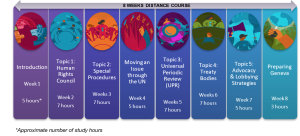
Defenders will complete a 10-week hybrid learning programme through a participatory approach, which will include:
accessing the HRDAP Platform, where they can complete e-learning courses on each key UN human rights mechanism and on advocacy strategies, and access interactive learning materials and case studies on the ISHR Academy
taking part in live Q&A sessions with human rights experts
receiving continuous advocacy support and personalised coaching in order to develop concrete advocacy objectives to make strategic use of the international human rights system
building networks around the world, and learning from peers from a range of regions working on a range of human rights issues
applying their knowledge to case-studies scenarios and enhancing their advocacy toolbox according to their specific needs
receiving support and advocacy accompaniment to conduct activities during the 62nd and 63rd Human Rights Council sessions and other relevant opportunities.
Participants will have the unique opportunity to apply their knowledge and skills while being in Geneva as well as to meet and share with their peers and experts. The blended format of the course allows defenders to continue their vital work on the ground, while diving into the inner workings of each key UN human rights mechanism and gaining first-hand experience from advocates and UN staff on how civil society can strategically engage in the international human rights space.
What are the criteria and themes for selection?
This programme is directed at experienced human rights defenders working in non-governmental organisations, with existing advocacy experience at the national level and some prior knowledge of the international human rights system. In 2026, we will select human rights defenders working on democratic backsliding and racial justice.
Defenders working in contexts of democratic backsliding
This theme is for human rights defenders working in democratic countries where authoritarian practices are gaining ground.
We particularly welcome applications from defenders who are:
pushing back against repressive laws, attacks on free expression, or restrictions on the freedom of peaceful assembly and association
documenting abuses linked to police and military violence, arbitrary arrests, surveillance, or harassment
fighting for justice, transparency, and the rule of law, and refusing to let democratic institutions be dismantled without accountability.
Defenders working on racial justice
This thematic is for defenders working to dismantle systemic racism and build societies rooted in equality and dignity. We will select applications from defenders focusing on anti-racism, exclusion and police violence, including anti-Black racism as experienced through legacies of colonialism and the Transatlantic Trade in Enslaved Africans, Indigenous (including Afro-Indigenous) communities working on historical injustice and reparations, as well as defenders of migrants and asylum seekers. We also welcome applications from mothers working for accountability for their children, victims of police violence.



 Hans Thoolen on Human Rights Defenders and their awards