On 2 May 2023 Angelica Dino in the Canadian Lawyer summarizes the latest annual Country Reports on Human Rights Practices, released by the U.S. Department of State on the 75th anniversary of the UN Universal Declaration of Human Rights (UDHR).
The Human Rights Report evaluated the status of internationally recognized individual, civil, political, and worker rights in nearly 200 countries and territories, leveraging insights from various sources, including government agencies, NGOs, and media. According to the State Department, this documentation serves as a critical tool in connecting U.S. diplomatic and foreign aid efforts to the foundational American values of human rights protection and promotion.
The release coincides with the third Summit for Democracy, led this year by the Republic of Korea. The summit emphasizes a collective international effort to strengthen democratic governance and address human rights abuses. Its goals include expanding media freedom, enhancing women’s rights, combating corruption, and ensuring that technology supports democratic processes rather than acting as a tool of repression.
This year’s report detailed significant human rights violations across several countries, with stark abuses noted in Russia’s ongoing conflict in Ukraine. Russian military actions have been characterized by violent assaults on civilians, with extensive documentation of crimes potentially amounting to crimes against humanity. The report also highlighted the forced transfer and assimilation of Ukrainian children into Russian territories, marking a severe violation of international law.
In Iran, the regime’s crackdown on dissent extended beyond its borders, posing grave risks to its citizens both domestically and internationally. Similarly, the report condemned the Taliban’s discriminatory actions against women and girls in Afghanistan, which starkly undermined their societal roles and freedoms.
Conversely, the report identified positive strides in several nations. Notably, Kenya has upheld freedom of expression for LGBTQI+ individuals, and Estonia and Slovenia have recognized marriage equality. Additionally, labour reforms in Mexico have empowered workers to improve conditions and assert their rights more effectively.
Secretary of State Anthony Blinken emphasized the report’s role and expressed hope that the findings will support and inspire human rights defenders globally. “I hope that the honest and public assessments of human rights abuses, as well as the reports of progress, reflected in these pages give strength to these brave individuals across the globe who often put their lives at risk to improve conditions in their own countries, and, ultimately, make the world a freer, safer place for us all,” Blinken said.
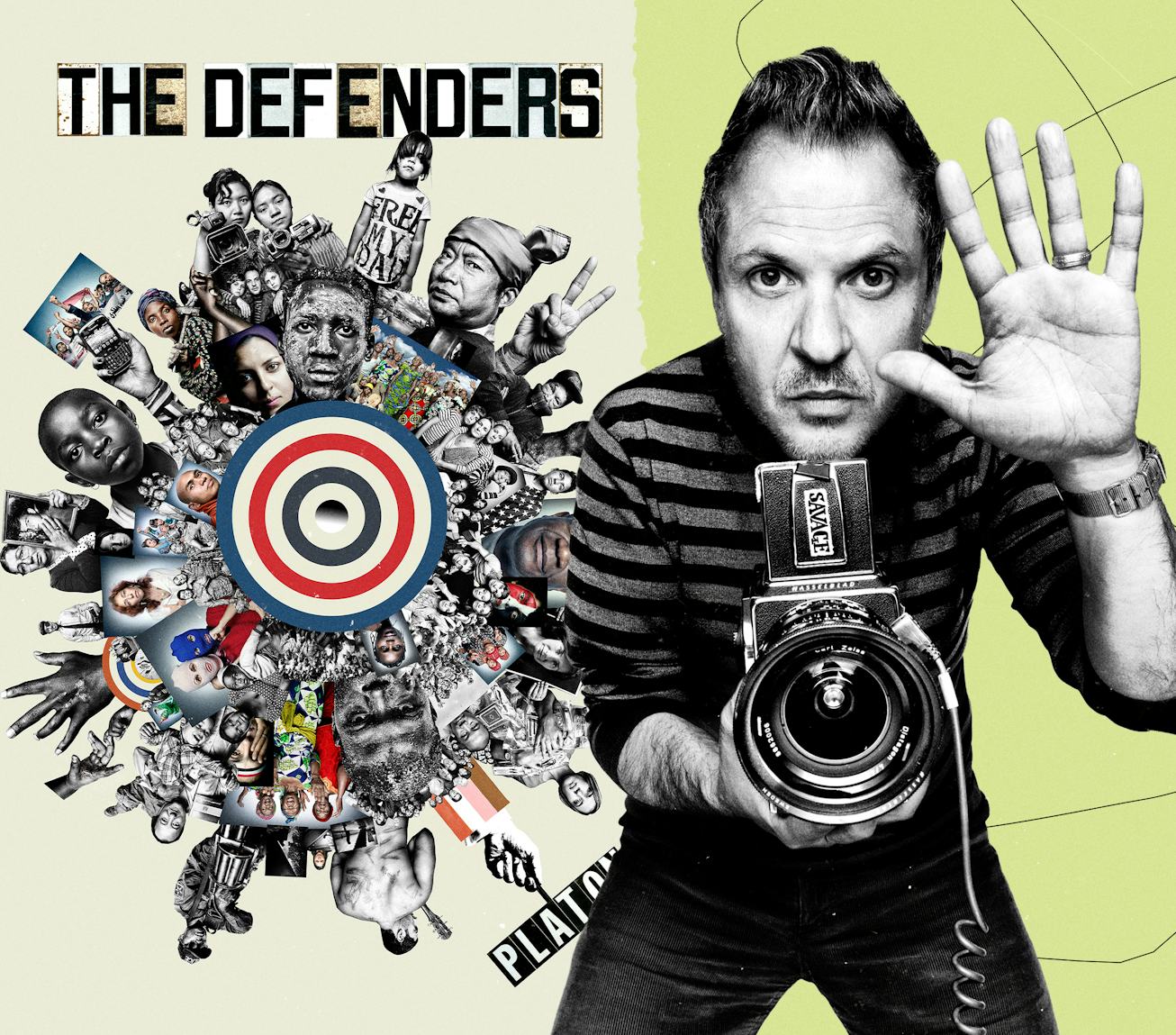
Fifteen years ago, Human Rights Watch approached celebrity portrait photographer Platon with a pitch: They wanted him to help educate the public on the human rights crisis in Myanmar by capturing imagery of the people there. The trip swerved the trajectory of Platon’s career, putting him on a years-long path of putting a face to those affected by and fighting against human rights violations. Now, Platon is releasing those photographs in an ambitious book titled The Defenders: Heroes of the Global Fight for Human Rights, which is accompanied by a major exhibition of portraits at UTA Artists Space in Los Angeles, on view from May 3 to 25.
“You photograph them the way you photograph celebrities and world leaders and models,” Platon says of his subjects in Myanmar. “I photographed them not as victims; I photographed them as powerful, resilient human beings who refuse to be broken.” When he returned from Myanmar, he went to The New Yorker and urged them to publish the photos; after those ran, the media began “seeing human rights defenders and activists as heroes,” he says. “It was a different mindset.”
In 2013, Platon formed his own human rights foundation, which gave him the resources to document the Egyptian Revolution, as well as to Russia, where he photographed dissidents under Vladimir Putin’s regime. He went to the Democratic Republic of the Congo, capturing images of people fighting against sexual violence. He spent a whole year crossing the Mexican-American border, taking photos of families torn apart by immigration policy. The Defenders is a compilation of all this work over the last 15 years.
“I’ve spent so much time in front of powerful people,” Platon says. “They say I’ve photographed more world leaders than anyone in history now. I’ve seen dandruff on world leaders. I see if they’re nervous and their eyelids flutter. I feel their pulse. People ask me a lot what I think power is. I think power is something that, if you are lucky to acquire any at all, you have to share it. You have to use it to help others.”
On 3 May, 2024 at 5.30 pm in the Maison de la Paix, Geneva Graduate Institute, and to mark World Press Freedom Day, the Freedom Cartoonists Foundation and the City of Geneva will be awarding its 2024 international editorial cartoon prize [City of Geneva’s International Press Cartoon Award]. See: https://www.trueheroesfilms.org/thedigest/awards/EBEE0ECF-565B-6614-9B67-A6938EB46155
The public event is fully booked, but a livestream will be available on this page.
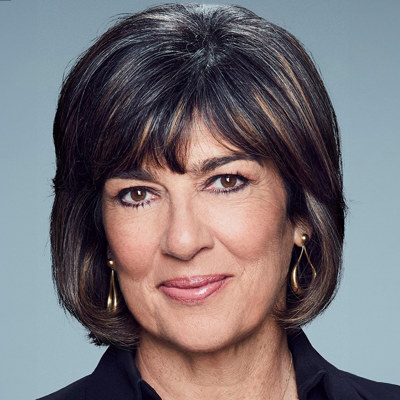
Keynote by the 2003 Nobel Peace Prize laureate Shirin Ebadi from Iran, (mentor of Narges Mohammadi, current Nobel Peace Prize winner imprisoned in Teheran), in discussion with Christiane Amanpour, CNN chief international anchor and member of the Foundation’s advisory board.
Followed by a debate on women cartoonists around the world, with Ann Telnaes (USA), Rachita Taneja (India) and Willis from Tunis (Tunisia), moderated by Christiane Amanpour. Presentation of the “Kofi Annan Courage in Cartooning Award 2024” by the City of Geneva and the Freedom Cartoonists Foundation.
Introductions by Chappatte and Marie Heuzé (Chair and Vice-Chair of the Foundation), Sami Kanaan (Administrative Councillor of the City of Geneva) and Volker Türk (UN High Commissioner for Human Rights).
Film made by True Heroes Films.
Christiane Amanpour, CNN anchorwoman, member of the foundation’s advisory board
ILGA World (https://ilga.org/) published a comprehensive index of deadlines facilitating engagement with UN human rights mechanisms. This invaluable resource is crafted to serve as a guiding beacon for human rights defenders (HRDs) dedicated to advancing the rights of individuals within the realms of sexual orientation, gender identity, gender expression, and sex characteristics (SOGIESC). The active involvement of HRDs in UN mechanisms is paramount, acting as a catalyst for transformative global change. The Guide is equally useful for non-SOGIESC submissions.
For those aspiring to witness targeted recommendations on SOGIESC issues directed at their respective countries, active participation in the Universal Periodic Review (UPR) holds utmost importance.
Similarly, collaboration with the Treaty Bodies provides a unique platform wherein a panel of experts rigorously evaluates a nation’s adherence to international human rights treaties, illuminating crucial intersections with the challenges faced by the LGBTI community.
This index serves as a vital compass, delineating pivotal deadlines and milestones, empowering HRDs to navigate the intricate UN mechanisms strategically, thus making substantial contributions to promoting and protecting human rights on a global scale.
CIVICUS is looking for a consultant to help further one of CIVICUS flagship campaigns – Stand As My Witness. The short-term consultancy will involve evaluating the current campaign, devising future strategy, and designing and delivering the short-term (3-month) campaign outcomes.
CIVICUS is a growing global alliance of more than 15,000 members in 175 countries. In July 2020, CIVICUS along with 190 civil society organisations (CSOs) launched the #StandAsMyWitness (SAMW) campaign to raise awareness about human rights defenders (HRDs) who were and still are facing judicial persecution and unlawful detention, and to advocate for their release.
Currently there are 13 cases profiled by the campaign and for the last three years, we have been part of successful global calls for the conditional and unconditional release of 9 HRDs as part of the SAMW campaign. The campaign also builds on a global map that features HRDs facing prosecutions, and highlights further systems built to crack down on critical voices.
Entering its fourth cycle, CIVICUS and campaign allies are keen to build upon the successes achieved so far and further the outreach and impact of the campaign.
Analyse the status of the campaign, its tactics, outreach, and propose plans, calendars and tactic for the short-term (3-month leading up to/following the anniversary (18 July).
Engage with CIVICUS Advocacy and Communications teams, regional leads, partners, families and lawyers of the HRDs, and relevant member networks to clarify the context, current status of the actions and propose plans, tactics, and outputs.
Deliver the short-term campaign plans during the first 3-month period.
– Managing and monitoring the campaign’s calendar – Creating or facilitating the creation of campaign materials such as social media messages, graphics, media, and other assets including a global campaign map – Updating and improving the campaign pages on the website – Convene on/offline events as appropriate to strengthen the campaign. This includes both public events and events targeted at CIVICUS members and partners. – Strongly link SAMW profiles and actions with other CIVICUS research, advocacy, and networking efforts.
Design a longer-term (next two years) campaign and content strategy with a cohesive engagement journey. The strategy is to capture:
– Key moments, approaches, and current and potential partners. – Explore how to better leverage the campaign actions promoted by Global Citizen. – Points for campaign improvement and expansion based on learnings to date and during the first three-month phase. – Best practices in advocating for HRDs in difficult contexts.
The consultant
The consultant will have proven experience (at least five years) at the international level designing and delivering campaigns. Experience in social change work with civil society, human rights, or development sectors is a pre-requisite.
They will bring in lived creative and innovative communications experience in terms of content ideation, creation, dissemination, etc. We welcome those with experience in creative direction, media production, systems and design thinking, and diverse public and multi-sector engagement.
The consultant will apply via sending us a:
Brief resume
Two-page brief of their approach to the consultancy
Links of creative communications and engagement campaigns/content created
Cost proposal.
Timeline
We anticipate the contract to be signed by 10th May 2024, and all deliverables must be complete by 10th August. They may apply according to the above guidelines and forward their CV, approach document and creative examples to <a href="mailto:communications<small> [AT] </small>civicus<small> [DOT] communications@civicus.org by 7th May 2024.
Last year, the Helpline received a total of 3,709 requests for digital security assistance.
To put this in perspective, the Helpline received 10,000 requests in total between 2014 and 2021, but more than double that number in the three years that followed.
Most (82%) of the cases we dealt with in 2023 were reactive in nature, meaning they related to unfolding incidents or emergencies that required beneficiaries to take rapid measures to strengthen their digital security. The remaining 18% were preventative, whereby beneficiaries preemptively sought out digital security advice, tools, and solutions.
In recent years, the Helpline has been investing in our ability to operate 24/7, 365 days a year, and to deliver more substantial and engaged forms of support. For instance, we’ve been conducting analysis of advanced threats and producing collaborative research in places such as Armenia, Serbia, and Jordan.
In 2023, the regional distribution of cases was as follows:
Our work supports a wide spectrum of civil society stakeholders; from individual activists, human rights defenders, and members of marginalized communities, to journalists and media workers. For it to be as impactful as possible, we work closely with the wider digital security community, through networks like CiviCERT. This allows us to deliver adequate support to each of our beneficiary groups, which were distributed as follows in 2023:
In 2024, the Helpline will continue improving and increasing how we collaborate with activist groups around the world, as well as working to meet the evolving needs of the global rapid response community. If you are a member of civil society in need of digital security assistance, you can find details about how to get in touch on our website page.
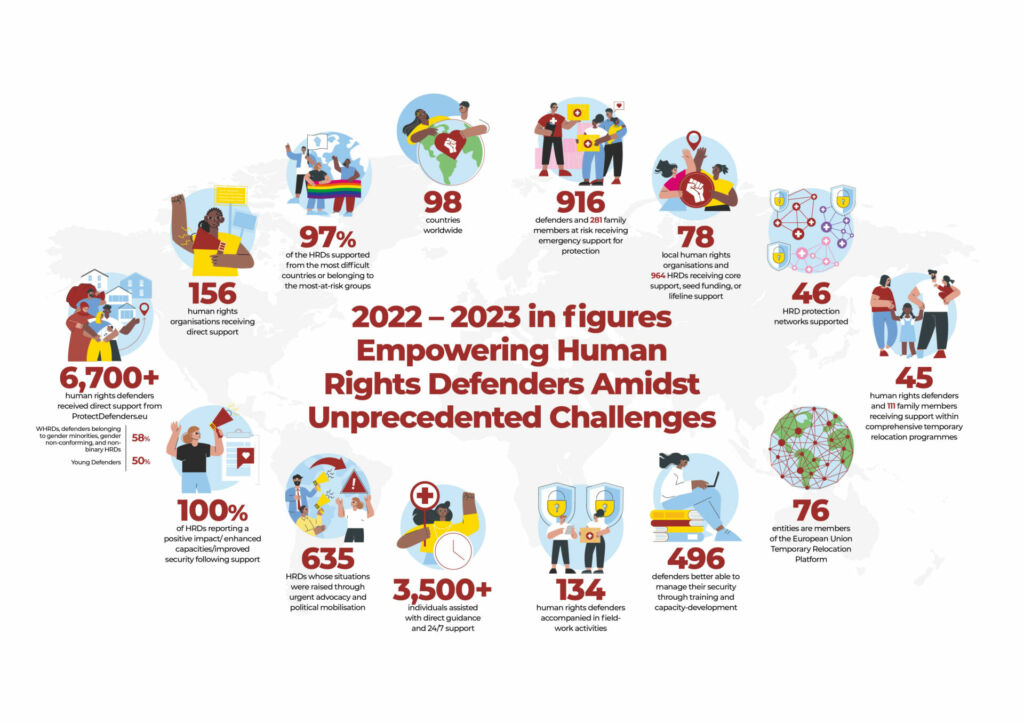
On 25 April 2024, ProtectDefenders.eu, the European Union (EU) Human Rights Defenders Mechanism, presented its comprehensive annual report entitled “REACHING FURTHER,” covering the period November 2022 – October 2023. This report illustrates the support provided and efforts made by ProtectDefenders.eu to support human rights defenders (HRDs) around the world, and especially to reach those who are the most at risk.
In November 2022, ProtectDefenders.eu entered the third phase of its implementation, marking a milestone in its commitment to safeguarding human rights defenders worldwide. Throughout the first year of this new phase, the renewed and consolidated EU HRD Mechanism has provided direct protection, support, and empowerment to over 6,700 at-risk HRDs, with a particular focus on those facing the highest risks. Notably, 50% of beneficiaries were young defenders, and 58% identified as women human rights defenders (WHRDs), trans-male, trans-female, genderqueer, or gender non-conforming individuals.
Despite facing extraordinary challenges amidst protracted crises globally, ProtectDefenders.eu has demonstrated remarkable effectiveness, efficiency, and adaptability in addressing the pressing needs of HRDs. The mechanism has extended support not only to individual defenders but also to their families, communities, and organizations. This comprehensive support, including financial aid, technical assistance, and guidance, has been delivered through collaboration among consortium partners, showcasing flexibility, creativity, and responsiveness in the face of evolving challenges.
ProtectDefenders.eu has actively responded to increased requests for protection support amid protracted crises in various regions, including Belarus, Myanmar, Afghanistan, Nicaragua, Sudan, Tanzania, and beyond. Emergency protection measures have been consistently provided, alongside investments in the capacity and resilience of human rights organisations and communities. The international temporary relocation system supported by ProtectDefenders.eu, including through the Shelter Initiatives program, further exemplifies the mechanism’s commitment to HRD safety.
Through reactive and preventative advocacy efforts, ProtectDefenders.eu has achieved multiple successes globally, pioneering a collective advocacy approach on shared concerns such as international funding for HRDs and EU visas. The enhanced coordination among consortium partners has facilitated continuous improvements and innovation, addressing challenges faced by HRDs and organizations at risk more effectively.
Moreover, significant progress has been made in enhancing outreach efforts to new groups, including young defenders and those with disabilities. Increased collaboration with local actors, context-specific support, and prioritized coordination have extended the impact of ProtectDefenders.eu widely, with 93% of supported organizations not affiliated with consortium partners.
Looking ahead, ProtectDefenders.eu will remain particularly committed to fulfilling its protection mandate by addressing comprehensively the unique vulnerabilities and barriers faced by HRDs with disabilities. The EU HRD mechanism will actively engage in finding innovative solutions to ensure their protection, inclusion, and access to resources.
On 19 April 2024 – Indigenous Peoples Day in Brazil – tribal leaders and activists used the occasion to criticize government of Brazilian President Luiz Inácio Lula da Silva for falling short on promises to safeguard native land rights.
This is revolting for us Indigenous peoples to have had so much faith in the government’s commitments to our rights and the demarcation of our territories,” Alessandra Korap Munduruku, a member of the Munduruku people and a 2023 winner of the prestigious Goldman Environmental Prize, told Amazon Watch in a statement published Friday.
“We hear all of these discussions about environmental and climate protection, but without support for Indigenous peoples on the front lines, suffering serious attacks and threats. Lula cannot speak about fighting climate change without fulfilling his duty to demarcate our lands,” she added.
On the same day United Nations Special Rapporteur on the situation of human rights defenders, Mary Lawlor said that Brazil needs to prioritise the demarcation and titling of land – the root cause of most attacks against human rights defenders in the country.
“Human rights defenders are under extreme threat in Brazil. The Federal Government knows this but has so far failed to put the structures in place to provide them with better protection and tackle the root causes of the risks they face,” said Mary Lawlor, in a statement following an official visit to the country.
Brazil’s Federal Government recognises human rights defenders and their work, and understands the risks they face, the expert noted. However, when human rights defenders challenge structures of power that impose and reinforce injustice, they are violently attacked and face an extremely high level of risks, she said. “Again and again during my visit I heard from defenders who had survived assassination attempts, who had been shot at, had their houses surrounded, had death threats delivered to their door. I heard from defenders whose work had been criminalised,” Lawlor said.
“The defenders most at risk in Brazil are indigenous and quilombola people and members of other traditional communities. In many cases, perpetrators of the attacks are known. Yet, there is rampant impunity for these crimes,” the expert said.
The UN expert said business and markets play a key role as drivers of conflicts, putting human rights defenders at risk. “The demarcation and titling of indigenous, quilombola and other traditional peoples’ land, as well as the revision of the legality of all existing concessions given to companies must be prioritised,” she said.
Lawlor said that in urban areas, human rights defenders were also being attacked, defamed and heavily criminalised, specifically black women human rights defenders, journalists, popular communicators and lawyers, and social and cultural workers.
“The conflation of human rights defenders with criminals by local authorities – in particular defenders who are part of social movements and supporting the most vulnerable in society – is a clear problem and must end,” the expert said.
A protection programme to address situations of risk for human rights defenders has been in place in Brazil for some time. However, Lawlor said it was currently unfit for purpose and needs radical reform and expansion. Lawlor applauded the Federal Government for re-opening the door to human rights defenders and civil society in the design of policy that affects them and encouraged authorities to not abandon these efforts.
“The Federal Government needs to match the courage of human rights defenders in the country – and it must do so now,” Lawlor said.
On 22 April 2024 Maria Laura Canineu HRW’s Deputy Director, Environment and Human Rights, said she wanted to use this quilombolaas an opportunity to celebrate the work of the courageous people who put themselves at risk fighting for a world in which people and the planet can thrive. “I personally would like to honor Osvalinda Marcelino Alves Pereira. Sadly, she passed away from a long-standing illness just over a week ago.”
On 19 April 2024, the OHCHR published the story of Wendy Flores -Risking it all to stand up for human rights in exile
“I had to leave Nicaragua irregularly. I left with a backpack, my computer, and the feeling that I was leaving my country for having defended other victims, for having accompanied them. I felt like I had committed a crime, when what I had been doing was defending human rights,” said Wendy Flores, a human rights defender from Nicaragua.
Flores studied law and became motivated to defend human rights after observing the injustices occurring in her country. She later joined the non-profit organization Nicaraguan Centre for Human Rights (CENIDH) as an intern in April 2002.
“I began to realise that I was a human rights defender because I was working for the victims, for their rights and supporting them as they faced a series of obstacles in the country,” Flores said.
Flores is currently living in exile, after the government began to cancel the legal status of several civil society organisations dedicated to the defence of human rights, as well as detaining their members, following the protests of April 2018.
According to an Office report, in early April 2018, demonstrations led by environmental groups, the rural peasant population and students erupted in Nicaragua to denounce the slow and insufficient response of the Government to forest fires in the Indio Maíz Biological Reserve. After this, more dissatisfaction grew from among the public from social security reform to the reduction of pension payments, which led to even more protests. The people protesting were quickly seen as Government opponents, which resulted in the repression of the protests, the criminalization of demonstrators and their arrests.
“During the last five years, in Nicaragua more than 3,600 civil society organizations have been cancelled. In December 2018, CENIDH was one of the first 10 organisations to be cancelled,” Flores said. “And even when we said we would continue to defend human rights, unfortunately we didn’t manage to do so inside the country because detentions started happening and it was obvious that that was going to prevent me from doing my job as a defender.”
Flores had to leave Nicaragua because of the risk of being criminalised for defending human rights and putting her family in jeopardy. “Feeling that I was leaving behind, even temporarily, my almost newborn son and my daughter, was one of the hardest situations I’ve faced,” Flores said.
Leaving Nicaragua forced Flores to reinvent her work as a human rights defender and with other human rights defenders who were also in exile, she established the human rights collective Nicaragua Nunca Más (Nicaragua Never Again). The collective aims to support victims, denounce human rights violations, and sends a symbolic message that, despite many obstacles and the need to live in exile, they continue to fight against impunity for human rights violations in Nicaragua.
“We were emotionally broken, apart from our families, disjointed, but we had the strength to continue denouncing human rights violations. And that was the main motivation that we had and that I identified with. In February 2019, we held a press conference to announce that we would continue our work as defenders in exile,” Flores said.
“And since then, we’ve continued to document cases of displaced people in Nicaragua. We’ve managed to identify more than 1140 cases in these five years. We’ve documented the way in which acts of torture have been perpetrated against political prisoners,” Flores said. “We’ve identified more than 40 methods of torture used against political prisoners and their families. And we’ve also identified perpetrators within these documented cases.”
Flores knows that those who remain in Nicaragua face danger, but she points out that there are also extraterritorial risks.
“Those of us who are outside have also experienced acts of siege and surveillance by State forces or forces installed outside Nicaraguan territory to persecute and intimidate defenders. In addition, the denationalisation imposed by authorities, affected more than 317 people who are mainly outside Nicaragua,” Flores said.
“For us to be able to return to Nicaragua, we would need a country that complies with international obligations, that initiates a process of dialogue with international mechanisms for the protection of human rights and that shows evidence that the country is going to undertake a democratic process and respect human rights,” Flores said.
For Flores, some of this evidence would include allowing international organisms such as UN Human Rights and the Inter-American Commission on Human Rights to return to the country.
Our work for defenders in exile
Flores said the impact of UN Human Rights work for human rights defenders in exile has been vital for her as a human rights defender and the human rights movement in her country.
“The UN Human Rights Regional Office for Central America and the Caribbean (ROCA) supports the work of defenders in exile by providing technical assistance to facilitate their access to the human rights mechanisms of the UN and accountability at the international level, such as universal jurisdiction,” said Alberto Brunori, the Representative at ROCA.
Thanks to successive resolutions adopted since 2019, the Human Rights Council addresses the situation in Nicaragua at its sessions through oral updates and written reports submitted by UN Human Rights.
This way, the Office has succeeded in bringing the human rights violations that continue to occur in Nicaragua to the attention of the international community and has supported a solution to the crisis based on human rights principles and standards.
“The Office has advocated for host countries to provide defenders fleeing Nicaragua with the protection they need, as well as the necessary support for their work,” Brunori said.
“Human rights defenders who are forced to leave the country need international protection as they require a safe legal situation that allows them to continue promoting human rights without fear of being returned to Nicaragua,” Brunori said. “They also need their claims of insecurity in exile to be considered. Their work requires financial resources and the necessary political support to ensure that their work, their analysis, and their human rights proposals are included in the decisions that are made about Nicaragua at the international level. Supporting their work means contributing to a more democratic and human rights-based future for the country.”
For Flores, it is essential that the international community continues to keep an eye on Nicaragua.
“Networking and the work that other organisations can do, supporting human rights defenders, really becomes an action for life, because to live is not only to breathe and feed oneself, but to live has to be to live fully, and this has to do with the psychological, mental and physical conditions in which we can carry out our work,” Flores said.
The UN defines environmental human rights defenders as “individuals and groups who, in their personal or professional capacity and in a peaceful manner, strive to protect and promote human rights relating to the environment, including water, air, land, flora and fauna”.
“For their tireless work in empowering communities and protecting ecosystems, environmental defenders are killed in startling numbers. Murder is not the only way environmental defenders are persecuted; for every 1 killed, there are 20 to 100 others harassed, unlawfully and lawfully arrested, and sued for defamation, amongst other intimidations” – John Knox, former UN Special Rapporteur on Human Rights and the Environment.
The United Nations has recognized the threats to environmental defenders and called for their protection. The UN Environment Programme (UNEP) builds on this work to support environmental defenders through its Defenders Policy, through which we:
Denounce the attacks, torture, intimidation and murders of environmental defenders;
Advocate with states and non-state actors, including business, for better protection of environmental rights and the people standing up for these rights;
Support the responsible management of natural resources;
Request government and companies’ accountability for the different events where environmental defenders have been affected / murdered.
Forst, in his report, puts it like this: “states must address the root causes of mobilisation” not the mobilisation itself. Indeed, tackling protesters and not oil producers is the democratic equivalent of rearranging deckchairs on the Titanic.