Posts Tagged ‘Human Rights Defenders’

Adoption of North Korean Human Rights Act (by South Korea) welcomed by Human Rights Foundation

March 3, 2016

Promoting human rights in North Korea


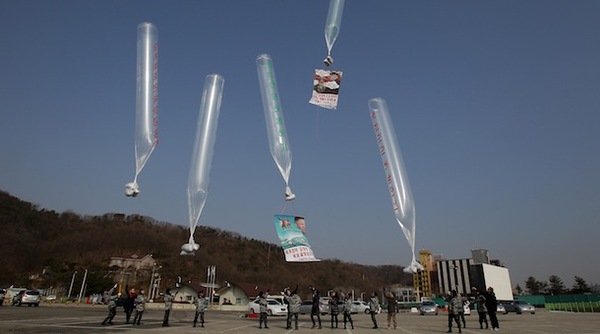
On 2 March 2016) South Korea’s legislature passed the North Korean Human Rights Act. The new law mandates the promotion of freedom in North Korea by funding North Korean defector and and refugee organizations, creating a North Korean human rights foundation, and establishing an archive of human rights violations perpetrated against the North Korean people by the Kim regime. The US-based Human Rights Foundation welcomed the Act as the NGO has advocated for such an action and in 2015 established the Global Coalition for the North Korean Human Rights Act.

This is an astonishing moment. The Republic of Korea has taken its head out of the sand and has finally confronted the cruelty and horror of the North Korean dictatorship. It is a victory for all who support human rights and human dignity,” said HRF chairman Garry Kasparov. “We in the Global Coalition are delighted that the South Korean government will—for the first time ever—finance the defector organizations that send films, e-books, radio broadcasts, and educational materials to the North Korean people.”

The North Korean Human Rights Act also establishes a public campaign to raise awareness about North Korea’s human rights violations and takes steps to ensure that South Korean humanitarian aid is not misused by the Kim regime. The goal of establishing the human rights archive, inspired by the post-war German model, is to monitor and document the crimes of the North Korean dictatorship. It is vital to note that no such archive or record has ever existed in South Korea.

The law’s passage comes at a time when the rest of the world unanimously agrees on the extent and gravity of the crimes of the North Korean dictatorship. Earlier today, the U.N. Security Council voted 15-0 to toughen sanctions on the regime.  “People inside the North will know about the law’s enactment and it will put considerable pressure on the political elite in Pyongyang,” said South Korean politician Kim Moon-soo, who first drafted the law in 2005.

For more information contact: Noemi Gonzalo-Bilbao, (212) 246-8486, noemi@hrf.org

Source: North Korea: HRF Celebrates Overdue South Korean Law Promoting Human Rights

See also: https://thoolen.wordpress.com/2015/05/29/north-korean-defector-ji-seong-ho-in-video-talk/

Human Rights Defender profile: Park Lae-goon from South Korea

March 3, 2016

On 2 March 2016 the ISHR published a profile of human rights defender Park Lae-goon who promotes freedom of assembly and association while combating against State impunity. With 28 years of experience, he has been detained multiple times for participating in demonstrations demanding justice. Mr Park has become a symbolic figure fighting for victims of State violence in South Korea. In my next post I will devote attention to the new South Korean Act on Human Rights which aims more on North Korea. Read the rest of this entry »

Side event on Protection of human rights defenders in economic, social and cultural rights

March 1, 2016

ISHR-logo-colour-highOn Monday 7 March 2016, from 13h30-15h00 in Room XVIII, Palais des Nations, Geneva, there will be a side event:Protection needs of human rights defenders working on economic, social and cultural rights: Challenges and good practice. (see my previous post: https://thoolen.wordpress.com/2016/02/29/regional-update-for-asia/)

The current and previous Special Rapporteurs on the situation of human rights defenders have emphasised the specific risks that defenders working on economic, social and cultural rights face. Whether they are activists fighting corruption or promoting transparency, working on land and environment rights, or defending their right to housing, ESC-rights defenders are among the most isolated and stigmatised defenders. This side event hopes to shed light on the risks faced by economic, social and cultural rights defenders, and draw on the report of the Special Rapporteur presented to the 31st session of the Human Rights Council to present good practices in furthering their protection.

panelists:

Michel Forst, Special Rapporteur on the situation of human rights defenders

Navi Pillay, former High Commissioner for Human Rights

Allo Awol, human rights defender from Eritrea

Arutchelvan Subramaniams, human rights defender from Malaysia

Pedro Tzicá, human rights defender from Guatemala

Moderator: Ms Catarina de Albuquerque, Executive Chair of Sanitation and Water for All (SWA) and former UN Special Rapporteur on the right to safe drinking water and sanitation.

Interpretation in English and Spanish will be provided. The event will be webcast live at www.ishr.ch/webcasts

Source: Protection needs of human rights defenders working on economic, social and cultural rights | ISHR

DiploHack 2016 Geneva: a short video report

March 1, 2016

Read the rest of this entry »

Alarming criminalisation of human rights defenders in Latin America

February 27, 2016

The criminalization of human rights defenders in the context of the extraction of natural resources and megaprojects is becoming a very worrisome phenomenon in Latin America, denounces the Observatory in a report published today in Mexico. Entitled “The criminalization of human rights defenders in the context of industrial projects: a regional phenomenon in Latin America”, this document points to the role of businesses, civil servants, public prosecutors, judges, and the State. The report issued by OMCT and FIDH (in the context of their Observatory for Human Rights Defenders) on 25 February 2016 describes the specific cases of human rights defenders criminalized in eight Latin American countries (Brazil, Colombia, Ecuador, Guatemala, Honduras, Mexico, Nicaragua and Peru).


The report especially stresses two core issues common to all the countries studied: Read the rest of this entry »

Preview of the upcoming session of the UN Human Rights Council

February 25, 2016

The UN Human Rights Council will hold its 31st regular session at Palais des Nations in Geneva from 29 February to 24 March 2016 (it also marks the 10th anniversary of the Human Rights Council). The International Service for Human Rights (see link at the bottom of the post) has published an Alert full of details, but I highlight here the elements that concern human rights defenders most directly:ISHR-logo-colour-high

Human rights defenders:  The Special Rapporteur on the situation of human rights defenders, Michel Forst, will present his annual report to the Council on 3 March. The report focuses on good practices to promote and protect the rights of human rights defenders. Presentation of the report will be followed by a dialogue. Of significance this session is a substantive resolution that will be presented by Norway on the situation of human rights defenders. The resolution at this session of the Council follows on the heels of the resolution on human rights defenders presented at the General Assembly in November 2015. The General Assembly resolution included a number of new, important and substantive provisions, including on the vital role of advocacy and the work of defenders in contributing to sustainable development and the realisation of economic, social and cultural rights, and the responsibilities of business enterprises with respect to engaging, consulting and protecting defenders. [see also: https://thoolen.wordpress.com/2015/12/18/un-general-assembly-adopts-resolution-on-human-rights-defenders-with-increased-majority/] This latest resolution provides an opportunity to recognise the critically important work of economic, social and cultural rights defenders, and the cross-cutting challenges they face, including restrictions not only on their rights to health, food, housing, social security and work, but also on their rights to freedom of expression, association, assembly and life itself. Economic, social and cultural rights activists have been identified by current and previous Special Rapporteurs on the situation of human rights defenders as among the most isolated and stigmatised defenders. It is integral that the resolution recognises the role of both State and non-State actors in the protection of human rights defenders, and enjoys broad State support for strong language demanding their protection.  (On 7 March, ISHR will facilitate a side event on this topic which will be the subject of a separate post) Read the rest of this entry »

The magical number 92 in Zimbabwe!

February 25, 2016
Zimbabwe's president Robert Mugabe turned 92 this month. Public Domain photo by the U.S. Air Force.

Zimbabwe’s President Robert Mugabe. Public domain photo by the U.S. Air Force.

Two recent items on Zimbabwe showed an interesting link with the number 92 – coincidence?:

Zimbabwe’s President Robert Mugabe, nicknamed ‘Uncle Bob’, turned 92 on 21 February 2016.

Human rights defenders have been arrested while doing their work and in 92% of the cases the arrests were unjustified and victims acquitted. We have 224 cases of human rights defenders including lawyers, members of civic society organisations, journalists and student activists arrested and charged,” said Dzimbabwe Chimbga of  Zimbabwe Lawyers for Human Rights (ZLHR) appearing before the Parliamentary Thematic Committee on Human Rights on 26 February.

Amnesty International’s and Human Rights Watch’s annual reports of 2015 contain enough information to make the 92% a good estimate

For earlier posts on Zimbabwe see: https://thoolen.wordpress.com/tag/zimbabwe/

Sources

https://globalvoices.org/2016/02/23/worlds-oldest-president-zimbabwes-robert-mugabe-turns-92/

‘Increasing cases of human rights violations worrisome’ – NewsDay Zimbabwe

Amnesty International’s Annual Report 2015 is out and makes sober reading

February 24, 2016

The Amnesty International Report 2015/16 documents the state of human rights in 160 countries and territories during 2015.

This year it expresses doubt as to the question whether the UN is still ‘fit of purpose‘.Amnesty-Internationa

The 2015/16 report also specifically refers to human rights defenders by saying that it also “celebrates those who stand up for human rights across the world, often in difficult and dangerous circumstances“. Salil Shetty , the Secretary General says: “The signs of hope that we saw in 2015 were the result of the ongoing advocacy, organizing, dissent and activism of civil society, social movements and human rights defenders. These outcomes were not borne of the benevolence of states. Governments must allow the space and freedom for human rights defenders and activists to carry out their essential work”

The report gives three examples from the past year:

  • the presence of human rights and accountability elements in the UN Sustainable Development Goals;
  • action in May to prevent forced evictions on the Regional Mombasa Port Access Road project in Kenya; and
  • the release of Filep Karma, a Papuan prisoner of conscience, as a result of 65,000 messages written on his behalf by supporters from around the world.

Amnesty International calls upon states to ensure that the resolution adopted in November by the UN General Assembly to protect the rights of human rights defenders is implemented, including the naming and shaming of states that fail to uphold these rights.

[see also my post: https://thoolen.wordpress.com/2014/03/13/zero-tolerance-for-states-that-take-reprisals-against-hrds-lets-up-the-ante/]

Source: Amnesty International Annual Report 2015/2016 | Amnesty International

Human Rights Defenders in India: democracy is not enough

February 23, 2016
India is often called the largest democracy on earth and it does merit praise for sticking to a fair degree of rule of law in spite of severe problems such as security and poverty. Still, regular and reliable reports on the fate of human rights defenders in India give us pause to think. What follows is a collection of just some recent cases, illustrating the well-argued piece by Srishti Agnihotri (a lawyer appearing in Trial Courts and the Delhi High Court, involved in research and advocacy on women and children) under the title “Who is defending the defenders in India: Human Rights” on 22 February 2016.

The article starts by mentioning the attack on Soni Sori (see more below on her). Reports suggest that oil paint mixed with chemicals was thrown on her face by unknown assailants. This attack, … and other reports of intimidation of persons such as lawyers and journalists working in the Jagdalpur area raises the question of the safety of human rights defenders and shows that there isn’t enough being done by the State machinery to defend the defenders….

Srishti Agnihotri then makes the interesting point that “it is not necessary to be correct to qualify as a human rights defender”. E.g. the criticism of Human Rights Defenders on a particular development project may not be legally correct. However, this does not and should not disentitle them to the protection of the State against violence and reprisals. The reason for this will become clear when we examine the role human rights defenders play in a society.

These Defenders face problems, in many parts of the world, and India is not an exception. Often the work being done by human rights defenders brings them in conflict with vested interests such as the land mafia, the mining lobby, or other corporations. A case in point is the story of Satyendra Dubey, an officer in the Indian Engineering Service, who lost his life due to exposing corruption in a highway construction project. At other times, the advocacy done by them requires them to be critical of the State action including in areas where there is considerable unrest….

This gives room for propaganda that human rights defenders or NGOs are ‘anti-development’ or even ‘anti-national’. It leads to them facing the wrath of more draconian security legislations, or attacks on them by vested interests. It is very easy to make the mistake of thinking ‘Why should we use state resources to protect those who are critical of the State? The obvious answer, is that the State may not always be correct. Given the great power state and corporate entities enjoy, their ability to make mistakes if unchecked is also correspondingly large. A hard reckoning of the work done by human rights defenders shows that they act as an essential check and balance on the State, and throw light on existing state-industry nexus, to protect the rights of people. The State derives its legitimacy from an implicit contract with its citizens, which necessitates a mechanism to check that the State adheres to this contract, and this is a function carried out by the human rights defenders. In this sense, human rights defenders are necessary for a healthy functioning democracy.

………

While there are general laws that can be (and are) used to protect these defenders, but those working for the enactment of a special law argue that the role of the law is also to play a certain ‘normative, expressive and educative’ function. By this, they mean that a special law to protect human rights defenders will also confer legitimacy on the work that they are doing, and create an enabling environment where they may do so peacefully.

Of course, the enactment of a special law is not adequate to ensure the protection of human rights defenders. It has to go hand in hand with better law and order, better legal services in areas where these defenders work, transparency in governance, toleration of dissent by the State machinery, and continued proactive action by the Focal Point for the protection of Human Rights Defenders, at the National Human Rights Commission.

This focal point is involved in providing assistance to such Rights defenders, and following alleged violations of their rights. Although there has been greater collaboration between the NHRC and Human Rights defenders, much needs to be done to ensure that defenders can work in a safe and enabling environment.

The Times of India of 10 February 2016 takes to task the State of Chhattisgarh – echoing Amnesty India  – that it should do more to protect a woman journalist, Malini Subramaniam, in Bastar. “This attack is another indicator of the increasingly hostile atmosphere in which journalists and human rights defenders operate in Chhattisgarh,” said Makepeace Sitlhou, Campaigner at Amnesty International India. Malini herself said: “This is not an attack on me as a person but as a journalist reporting incidents on the ground, something that they don’t want“. [The statement said, a group of over 20 people gathered outside the home of journalist Malini Subramaniam on February 7. They urged her neighbours to stone her house and chanted slogans suggesting that she was an agent for Maoist armed groups. Later that day, an anti-Maoist group released a public statement accusing her of presenting a distorted picture of Bastar and promoting Maoist ideology.]

On 21 February 2016 Saurav Datta in Catchnews poses the question “Why is Chhattisgarh govt scared of human rights defenders?“.  Isha Khandelwal, Shalini Gera and Nikita Agarwal, all in their late 20s, keep looking furtively behind their backs while packing her bags from Jagdalpur in western India’s Chhattisgarh district. They are afraid that a posse of policemen may descend upon them and subject them to custodial torture. They also fear that that they would be implicated under various provisions of the Chhattisgarh Special Security Act, a law roundly criticised by civil liberties activists as being dangerously oversweeping in its scope and ambit. The moot question here is – why should be a ragtag coalition of lawyers, operating on a shoestring budget, be subjected to state repression? The piece then goes into the background of the Indian system of legal aid and how the state administration undercuts all this in practice.

Frontline NEWlogo-2 full version - croppedhas covered a lot cases in India including in the State of Chhattisgarh such as those of Malini Subramaniam and the members of the Jagdalpur Legal Aid Group mentioned above (https://www.frontlinedefenders.org/node/29909 and https://www.frontlinedefenders.org/node/306160).


Front Line – on 22 February 2016 – also reported the attack on human rights defender Soni Sori who was assaulted on 20 February by three unidentified men as she travelled from Jagdalpur to her home. The perpetrators halted the vehicle and threw a black substance on her face, resulting in intense burning and her hospitalization. She is a human rights defender who advocates for the rights of indigenous peoples in India, with a focus on women’s rights. She works in Chhattisgarh, where the long-term conflict between Maoists and government security forces has greatly affected the indigenous people in the area.  During the attack, the perpetrators threatened to carry out a similar assault on the daughter of Soni Sori, lest the human rights defender halt the efforts she had undertaken to bring justice against a high-ranking police official from the Bastar district of Chhattisgarh. Soni Sori had recently been attempting to file a complaint against the police official in relation to their involvement in an alleged extra-judicial killing in the Mardum area of Bashar. In July 2015, the police official in question allegedly called for the “social exclusion” of the human rights defender and members of her family. [Soni Sori has previously been targeted by the authorities on several occasions https://www.frontlinedefenders.org/taxonomy/term/18892 and https://www.frontlinedefenders.org/node/29351]

On 8 January 2016, the Observatory for the Protection of Human Rights Defenders (a joint programme of the World Organisation Against Torture (OMCT) and the International Federation for Human Rights (FIDH), called on the Indian government to release on bail and stop the ongoing judicial harassment of Mr. Ajimuddin Sarkar.  Mr. Sarkar is a renowned human rights defender who has investigated cases of human rights violations perpetrated by the police and Border Security Forces (BSF), and who has been instrumental in denouncing several other human rights violations in Murshidabad district. He was arbitrarily arrested on 22 September 22 and only on 8 December, 2015 released on bail, since the de facto complainant filed an affidavit stating that she did not bring any allegation of rape against Mr. Sarkar and she had no knowledge of the related criminal case against him.  Mr. Sarkar is currently receiving medical treatment, both physical and psychological, as his mental and physical health conditions deteriorated significantly during the past months in detention.[The Observatory recalls that it is not the first time Mr. Sarkar has been intimidated, judicially harassed and ill-treated by the police – see background information].

See also my earlier: https://thoolen.wordpress.com/2016/01/17/india-human-rights-defenders-being-silenced-by-the-court/

Sources:

http://www.newsgram.com/who-is-defending-the-defenders-in-india-human-rights/ (first published at Kafila.org.)

Why is Chhattisgarh govt scared of human rights defenders?

http://timesofindia.indiatimes.com/city/raipur/Chhattisgarh-must-act-against-intimidation-of-woman-journalist-in-Bastar-Amnesty-says/articleshow/50934124.cms

http://www.omct.org/human-rights-defenders/urgent-interventions/india/2016/01/d23556/
China’s New Age of Fear? China File in Foreign Policy

February 19, 2016

In Foreign Policy’s China File of 18 February 2016 there are 3 contributions worth reading about whether the increased repression under Xi Jinping (disappearances, detention of human rights lawyers, televised confessions, and stepped-up surveillance) is the ‘new normal’?

ChinaFile-logo-89h

Source: China’s New Age of Fear | Foreign Policy