Posts Tagged ‘HRW’

Human Rights Watch and Amnesty International condemn Tunisia’s ‘assault on the rule of law’

November 15, 2025

On 14 November 2025, Al Jazeera (Mariamne Everett) and other media reported that international NGOs, such as Human Rights Watch and Amnesty International, have decried a sharp decline in civil liberties and a pervading “injustice” in Tunisia since President Kais Saied came to power in 2019, as authorities escalate their crackdown on the opposition, activists and foreign nongovernmental organisations.

Tunisian authorities have increasingly escalated their crackdown on human rights defenders and independent non-governmental organizations (NGOs) through arbitrary arrests, detention, asset freezes, bank restrictions and court-ordered suspensions, all under the pretext of fighting ‘suspicious’ foreign funding and shielding ‘national interests’,” Amnesty International said in a statement on Friday.

Tunisia’s crackdown on civil society has reached an unprecedented level, according to Amnesty, as six NGO workers and human rights defenders from the Tunisian Council for Refugees are “being criminally prosecuted on charges solely related to their legitimate work supporting refugees and asylum seekers”. The trial’s opening session, initially scheduled for October 16, has been adjourned to November 24.

Within the past four months, Tunisia has temporarily suspended the activities of at least 14 Tunisian and international NGOs, said Amnesty, including the Tunisian Association of Democratic Women and the World Organisation against Torture.

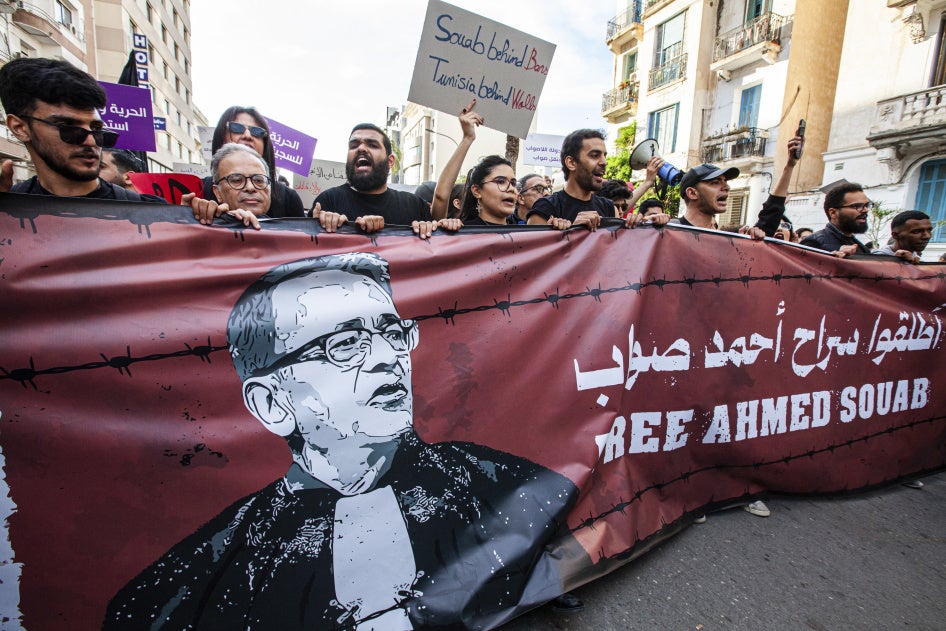
Human Rights Watch said in a statement on Friday that Tunis’s Court of Appeal will hear on November 17 the appeal of more than 30 people “unjustly sentenced to heavy prison terms in a politically motivated ‘Conspiracy Case’” mass trial in April.

Four of those detained are on hunger strike, including one who, according to his lawyers, was subjected to physical violence in prison on November 11.

The defendants were charged with plotting to destabilise the country under various articles of Tunisia’s Penal Code and the 2015 Counterterrorism Law. Human Rights Watch, which reviewed the judicial documents, said the charges are unfounded and lack credible evidence. The NGO has called on the court to immediately overturn the convictions and ensure the release of all those detained.

The 37 people detained include opponents of Saied, lawyers, activists and researchers. Their prison terms range from four to 66 years for “conspiracy against state security” and terrorism offences. Jawhar Ben Mbarek – cofounder of Tunisia’s main opposition alliance, the National Salvation Front – began a hunger strike on October 29 to protest his arbitrary detention. Ben Mbarek was sentenced to 18 years behind bars on charges of “conspiracy against state security” and “belonging to a terrorist group”.

Note that on 10 November the Martin Ennals Award announced that Saadia Mosbah, a leading Tunisian human rights activist and co-founder of Mnemty (‘My Dream’), was selected as a runner up. [see https://humanrightsdefenders.blog/2025/11/10/breaking-news-women-human-rights-defenders-recognised-with-the-2025-martin-ennals-award/]

https://www.aljazeera.com/amp/news/2025/11/14/rights-groups-decry-tunisias-injustice-crackdown-on-activists

https://www.ft.com/content/15a04a32-f975-4f5e-9748-874f8e26cbe5

https://www.rfi.fr/en/africa/20251130-prominent-tunisian-activist-chaima-issa-arrested-as-hundreds-protest-clampdown-on-dissent

https://thearabweekly.com/tunisia-calls-eu-parliament-rights-resolution-blatant-interference-releases-high-profile-lawyer

Egyptian human rights defender Alaa Abdel Fattah finally free!

September 23, 2025

Egyptian media reported on 22 September, 2025, that President Abdel Fattah al-Sisi had issued a presidential pardon for the imprisoned Egyptian-British activist Alaa Abdel Fattah. On 23 September the Guardian, HRW and others reported that the British-Egyptian human rights activist Alaa Abd el-Fattah has indeed been released from jail after serving six years for sharing a Facebook post.

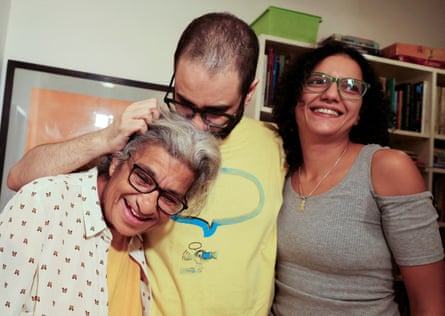
Early on Tuesday morning his campaign said in a statement that Abd el-Fattah was released from Wadi Natron prison and was now in his home in Cairo. “I can’t even describe what I feel,” his mother, Laila Soueif, said from her house in Giza as she stood next to her son surrounded by family and friends. “We’re happy, of course. But our greatest joy will come when there are no [political] prisoners in Egypt,” she added.

Peter Greste, an Australian journalist who was imprisoned alongside Abd el-Fattah, told Australian Associated Press: “It’s absolutely wonderful news, I’m absolutely overjoyed, I think it vindicates all the work and the efforts of the people who lined up behind him. See also: https://humanrightsdefenders.blog/2025/01/19/i-owe-alaa-abd-el-fattah-my-life-which-is-why-i-am-going-on-a-hunger-strike-to-help-free-him/

Alaa Abd el-Fattah stands next to his mother, Laila Soueif, and sister, Sanaa, at their home in Giza.
Alaa Abd el-Fattah stands next to his mother, Laila Soueif, and sister, Sanaa, at their home in Giza. Photograph: Mohamed Abd El Ghany/Reuters

Amnesty International’s Erika Guevara Rosas said the release was welcome but long overdue. “His pardon ends a grave injustice and is a testament to the tireless efforts of his family and lawyers, including his courageous mother Laila Soueif and activists all over the world who have been relentlessly demanding his release,” she said. The following quote can be attributed to Amr Magdi, senior Middle East and North Africa researcher at Human Rights Watch: “President Sisi’s pardon of the imprisoned Egyptian activist Alaa Abdel Fattah is long overdue good news. Though we celebrate his pardon.

The campaign for Abd el-Fattah’s release was led by his family, including his mother, who was admitted to hospital in London twice after going on hunger strikes trying to secure his release. The UK prime minister, Keir Starmer, is also known to have telephoned Sisi three times to lobby for Abd el-Fattah’s release. see: https://humanrightsdefenders.blog/2022/07/07/mona-seifs-letter-a-cry-for-help-for-alaa/

https://www.theguardian.com/world/video/2025/sep/23/egyptian-british-activist-alaa-abd-el-fattah-reunited-with-family-after-release-from-prison-video

https://www.hrw.org/news/2025/09/22/egypt-presidential-pardon-for-activist-alaa-abdel-fattah

https://www.theguardian.com/world/2025/nov/14/british-egyptian-activist-alaa-abd-el-fattah-stopped-from-flying-to-uk-says-family

Deluge of NGO criticism greets 2024 US State Department Report on human rights

August 20, 2025

The Trump administration’s omission of key sections and manipulation of certain countries’ rights abuses degrade and politicize the 2025 US State Department human rights report, Human Rights Watch, Amnesty International, Human Rights First and many other NGOs concluded .

On August 12, 2025, the State Department released its “Country Reports on Human Rights Practices” covering the year 2024. The report omits several categories of rights violations that were standard in past editions, including women, LGBT people, persons with disabilities, corruption in government, and freedom of peaceful assembly. The administration has also grossly mischaracterized the human rights records of abusive governments with which it has or is currently seeking friendly relations.

By undermining the credibility of the report, the administration puts human rights defenders at risk, weakens protections for asylum seekers, and undercuts the global fight against authoritarianism. 

This year’s human rights report may strictly keep with the minimum statutory requirements but does not acknowledge the reality of widespread human rights violations against whole groups of people in many locations.  As a result, Congress now lacks a widely trusted, comprehensive tool from its own government to appropriately oversee US foreign policy and commit resources. Many of the sections and rights abuses that the report omits are extremely important to understanding the trends and developments of human rights globally, Human Rights Watch said.

On Israel, the State Department disregards the Israeli authorities’ mass forced displacement of Palestinians in Gaza, their use of starvation as a weapon of war, and their deliberate deprivation of water, electricity, medical aid, and other goods necessary for civilians’ survival, actions that amount to war crimes, crimes against humanity, and acts of genocide. The State Department also fails to mention vast damage and destruction to Gaza’s essential infrastructure and the majority of homes, schools, universities, and hospitals.

The report is dishonest about abuses in some third countries to which the US is deporting people, stating that the US found “no credible reports of significant human rights abuses” in El Salvador, although they cite “reports” of extrajudicial executions, enforced disappearance, and mistreatment by police. The administration has transferred to El Salvador’s prisons, despite evidence of torture and other abuses. 

The State Department glosses over the Hungarian government’s escalating efforts to undermine democratic institutions and the rule of law, including severe curbs on civil society and independent media, and abuses against LGBT people and migrants. It also fails to acknowledge that Russian authorities have widely used politically motivated imprisonment as a tool in their crackdown on dissent, and its prosecutions of individuals for “extremism” for their alleged affiliation with the LGBT movement. 

Compare: https://humanrightsdefenders.blog/2024/05/04/us-state-department-2023-country-reports/

https://www.hrw.org/news/2025/08/12/us-rights-report-mixes-facts-deception-political-spin

https://www.amnestyusa.org/press-releases/u-s-state-departments-human-rights-report-puts-politics-above-human-rights/

https://www.state.gov/reports/2024-country-reports-on-human-rights-practices/

https://theweek.com/politics/state-department-stance-human-rights

https://www.bushcenter.org/publications/what-to-know-about-the-state-departments-new-human-rights-reports

Hong Kong: Targeting of Exiled Activists’ Families Escalates

May 16, 2025

Father of Anna Kwok Charged with National Security Crime

The Hong Kong police arrested the father of a prominent US-based activist, Anna Kwok, on April 30, 2025, and charged him with a national security crime, Human Rights Watch said today. The arrest of Kwok Yin-sang was the first such prosecution of a family member of an exiled activist. Hong Kong authorities should immediately drop all charges and release him.

The Hong Kong authorities have recently intensified their harassment of the families of 19 wanted Hong Kong activists living in exile. Punishments and harassment against individuals for the alleged actions of another person is a form of collective punishment, prohibited by international human rights law.

The Chinese government has increased its appalling use of collective punishment against family members of peaceful activists from Hong Kong,” said Yalkun Uluyol, China researcher at Human Rights Watch. “The Hong Kong authorities should immediately and unconditionally release Anna Kwok’s father and cease harassing families of Hong Kong activists.”

On May 2, national security police formally charged Kwok Yin-sang, 68, with “directly or indirectly” dealing with the finances of an “absconder” under section 90 of the Safeguarding National Security Ordinance, which carries a punishment of up to seven years in prison. Kwok Yin-sang remains in custody with a bail hearing scheduled for May 8. Anna Kwok’s brother was also arrested on April 30 but has been released on bail pending further investigation.

Anna Kwok, 28, is the executive director of Hong Kong Democracy Council, a nongovernmental organization based in Washington, DC. In July 2023, she was among a first group of eight people against whom the Hong Kong police issued arrests warrants and HK$1 million (US$129,000) bounties for violating Hong Kong’s National Security Law.

Since then, Hong Kong police have issued similar baseless arrest warrants and bounties against 11 other exiled Hong Kong activists.

Hong Kong authorities have sought to intimidate dozens of family members of the 19 “wanted” individuals, primarily by interrogating them. In the case of Ted Hui, a resident of Australia, they also confiscated HK$800,000 (US$103,000) from him and his family for having allegedly violated the National Security Law.

There has been a new wave of harassment against these families in recent months, Human Rights Watch said. After the Hong Kong police issued the third group of arrests and bounties against six exiled activists in December 2024, they began to harass their families. In January, police interrogated eight family members and former colleagues of the UK-based scholar Chung Kim-wah, and raided the office of the Hong Kong Public Opinion Research Institute, with which Chung was formerly associated.

In February the police questioned the aunts and an uncle of Carmen Lau, a UK-based activist and former district councilor. On March 18, police interrogated the stepfather of the activist Tony Chung, who is in the UK.

On April 10, national security police took the parents of the US-based activist Frances Hui into custody for questioning.

The 19 wanted activists have also faced various other forms of harassment. In June and December 2024, the Hong Kong government cancelled the passports of 13 wanted activists, including Anna Kwok. In March, Lau and Chung reported that anonymous individuals sent letters to residents in various London neighborhoods urging them to hand in the activists to the Chinese Embassy in London, citing the warrants and bounties against them. Similar letters were sent to Melbourne-based Kevin Yam, a democracy activist and an Australian citizen.

Many of the 19 activists, including Kwok and Frances Hui, have reported online harassment campaigns, including rape and death threats, since the government issued the warrants and bounties against them. The media reported that an online campaign, which exhibited signs of a previous Chinese government influence operation, sought to mobilize far-right people in the UK to attack activists on the bounty list.

The 19 wanted activists live in the UK, US, Canada, and Australia. The US government in March sanctioned six officials in Hong Kong for using the National Security Law “extraterritorially to intimidate, silence, and harass” the activists. The other three governments have issued statements condemning the arrest warrants, but have not taken action to hold Hong Kong officials accountable. The US government is also the only one that has arrested someone for allegedly harassing a Hong Kong activist on its soil, though the person was later acquitted.

The Chinese government has used two draconian national security laws, the National Security Law of 2020 and the Safeguarding National Security Ordinance of 2024, to dismantle the city’s pro-democracy movement and take away its fundamental freedoms, which are enshrined in Hong Kong’s de facto constitution, the Basic Law. Over 200,000 Hong Kongers have left Hong Kong, among them protesters and activists who have continued their activism abroad.

The AustralianUK, and US governments, the European Union, and the United Nations High Commissioner for Human Rights have all publicly expressed concerns about the two security laws.

“Beijing isn’t likely to stop abuses against the families of exiled activists unless affected governments send a strong message that such repression carries a cost,” Uluyol said. “They should fully investigate and sanction Chinese and Hong Kong officials involved, and pass strong laws to protect their residents and citizens from transnational abuses.”

https://www.hrw.org/news/2025/05/04/hong-kong-targeting-exiled-activists-families-escalates

UAE: Dissidents, Relatives Designated ‘Terrorists’

April 30, 2025

Emirati authorities have designated as “terrorist” 11 political dissidents and their relatives as well as 8 companies they own, reflecting the country’s indiscriminate use of overbroad counterterrorism laws and contempt for due process, Human Rights Watch said on 22 April 2025.

On January 8, 2025, Emirati authorities announced a cabinet decision unilaterally adding the 11 individuals and 8 companies to its terrorism list for their alleged links to the Muslim Brotherhood, without due process. The authorities did not inform these individuals or entities prior to the designation, nor was there any opportunity to respond to or contest the allegations. The move represents an escalation of the United Arab Emirates’ (UAE) transnational repression, targeting not only dissidents but also their family members.

“Throwing nineteen people and companies onto a list of alleged terrorists without any semblance of due process, and with serious ramifications for their livelihoods, makes a mockery of the rule of law,” said Joey Shea, United Arab Emirates researcher at Human Rights Watch…

Human Rights Watch found that all eight companies are solely registered in the United Kingdom and are owned or previously owned by exiled Emirati dissidents or their relatives. At least nine of the eleven designated individuals are political dissidents or their relatives. Only two of the eleven have been convicted or accused of a terrorist offense, though both under questionable circumstances, according to informed sources and the Emirates Detainees Advocacy Center (EDAC), a human rights organization supporting imprisoned human rights defenders in the UAE. One was convicted in absentia as part of the grossly unfair “UAE94” mass trial of political dissidents in 2013. The other was accused in a separate case related to supporting the “UAE94” detainees.

Individuals on the list found out about the designation only after the Emirates News Agency (WAM), the UAE’s official state news agency, published it on its website. It came as “a real shock, it was very difficult,” one of the people named told Human Rights Watch.

Human Rights Watch searched for the individuals and companies on global terror and financial sanctions lists, including the United Nations Global Sanctions list, the European Union Sanctions list, and the Consolidated List of Financial Sanctions Targets in the UK. None of them are included in these internationally recognized lists.

The UAE’s 2014 counterterrorism law uses an overly broad definition of terrorism and allows the executive branch to designate individuals and entities as terrorists without any corresponding legal requirement to demonstrate the objective basis of the claim. It does not set out a clear procedure for how this authority should be exercised, nor does it provide for any oversight.

Designated individuals face immediate asset freezes and property confiscation under the counterterrorism law and Cabinet Decision No. 74/2020. Those in the UAE, including relatives or friends, face a possible sentence of life in prison for communicating with anyone on the list. Human Rights Watch found that the designation has negatively affected individuals’ careers and personal finances, including through lost career opportunities and clients.

Exiled Emirati dissidents said the designations are part of the UAE’s ongoing crackdown on dissent and political opposition. “They want to hurt us as much as possible,” one individual whose name appeared on the list said.

Over the last decade, Emirati authorities have repeatedly targeted the Muslim Brotherhood and its Emirati branch, the Reform and Social Guidance Association (Al-Islah), in a widespread crackdown. Al-Islah is a nonviolent group that engaged in peaceful political debate in the UAE for many years prior to the crackdown and advocated greater adherence to Islamic precepts. Many of the detainees from the grossly unfair “UAE94” mass trial in 2013 are members of Al-Islah. The UAE designated the Muslim Brotherhood as a terrorist organization in 2014.

The 2014 counterterrorism law enables the courts to convict peaceful government critics as terrorists and sentence them to death. The law has been repeatedly used against political dissidents. In July 2024, 53 human rights defenders and political dissidents were sentenced to abusively long terms in the country’s second-largest unfair mass trial.

The UN’s first special rapporteur on counterterrorism and human rights has said that terrorism should be defined as narrowly as possible, warning that “the adoption of overly broad definitions … carries the potential for deliberate misuse of the term … as well as unintended human rights abuses.”

…The UAE appears to be escalating its persecution beyond openly outspoken dissidents to include family members who have not participated in politics nor spoken publicly about the country’s human rights record. “Many people whose names are on the list, they didn’t speak loudly against the government,” one person said.

In 2021, the UAE added 38 individuals and 15 entities to its terrorism list, including 4 prominent exiled Emirati dissidents. Human Rights Watch found that 14 of the 38 individuals and two of the entities are on other international global terror and financial sanctions lists. None of the individuals nor entities added on January 2025 were found on other internationally recognized lists…

https://www.hrw.org/news/2025/04/22/uae-dissidents-relatives-designated-terrorists

Green human rights defenders of Mother Nature jailed in Cambodia

July 3, 2024

Five Cambodian activists record a podcast.
Five Mother Nature activists, from left to right Ly Chandaravuth, Thun Ratha, Yim Leanghy, Phuon Keoraksmey, and Long Kunthea on June 11, 2024. © 2024 Private

Cambodia has jailed 10 environmental activists who had sounded the alarm on river pollution for plotting against the government – a case critics have decried as politically motivated. Members of the group Mother Nature were charged in 2021 after they documented waste run-off into Phnom Penh’s Tonle Sap river, near the royal palace. [see: https://www.trueheroesfilms.org/thedigest/laureates/d41428d8-4b96-4370-975e-f11b36778f51]

Three of them, including Spanish co-founder Alejandro Gonzalez-Davidson, who were also convicted of insulting the king, were sentenced to eight years’ jail and fined $2,500 (£1,980). The seven others were handed six-year terms. Prosecutors have never explained how the activists had violated the law against insulting the king or conspiring against the government.

Since its founding in 2013, Mother Nature has campaigned against environmentally destructive projects and raised questions on how natural resources are managed in the South East Asian country. They document their findings in playful and informative videos that they post on Facebook, where they have 457,000 followers.

Environmental groups have long accused Cambodia’s leaders of profiting from the country’s natural resources. The government denies this and says Mother Nature is encouraging social unrest. Gonzalez-Davidson, who was earlier banned from entering Cambodia, called the verdict a “disastrous decision by the Hun family regime”.

Opposition political parties were dismantled, independent media outlets were shut and dozens of activists were jailed under the decades-long rule of former prime minister Hun Sen, who stepped down last year to pave the way for his son, Hun Manet, to assume leadership.

Under Hun Manet, Mother Nature activists have continued to criticise what they describe as an unequal enforcement of laws in favour of companies and the wealthy elite.

Four of the convicted activists attended the hearings and were immediately arrested following the verdict. Representatives of local NGO the Cambodian League for the Promotion and Defence of Human Rights (Licadho) who were present outside the Phnom Penh court said the arrests were violent, with “at least two of [them] dragged by their necks”. Arrest warrants have been issued for the six others, including Gonzalez-Davidson.

Earlier in the day, dozens of Mother Nature supporters marched towards the court where the activists were due to receive the verdict. Dressed in white – the traditional colour of mourning in the country – some of the supporters held up hand-written posters that read “We need freedom” and “We need rights”. Others held white flowers.

The verdict “sends an appalling message to Cambodia’s youth that the government will side with special interests over the environment every chance it gets,” said Human Rights Watch’s deputy Asia director Bryony Lau.

“It is astounding to criminalise activities of youths who are advocating for clean water in Phnom Penh, protecting mangrove forests in Koh Kong and warning against the privatisation of land in protected areas and characterising it as an attack against the state,” said Licadho’s outreach director Naly Pilorge.

Several of those convicted today had already served jail terms in the past. One of them, Long Kunthea, told BBC in an interview last year that she is willing to take on the risks of her activism to “for positive change”.

Kunthea was previously jailed for more than a year for organising protests to protect the Mekong river from further pollution. See also: https://humanrightsdefenders.blog/2021/06/22/continued-harassment-of-mother-nature-defenders-in-cambodia/

https://www.bbc.com/news/articles/c1340lze6ppo

https://www.hrw.org/news/2024/07/02/cambodia-environmental-activists-sentenced-6-8-years

https://www.reuters.com/world/asia-pacific/cambodian-court-jails-environmental-activists-plotting-against-government-2024-07-02/

Germany Prosecutes Environmental Defenders says HRW

May 30, 2024

Nina Alizadeh Marandi of HRW on 28 May 2024 said that German environmental activists are facing increasingly harsh rhetoric and legal action from authorities as they mobilize to confront the climate crisis.

Last week, on 21 May, Germany’s efforts to curb environmental activism took a disturbing turn when authorities used an offence typically reserved for prosecutorial pursuit of serious organized crime to indict Letzte Generation (Last Generation), a climate activist group known for disruptive protests such as roadblocks and other acts of civil disobedience, as a criminal organization. A conviction under federal law would pave the way for prosecuting anyone who participates in or supports Letzte Generation, including administratively or financially.

This heavy-handed approach reflects a troubling trend in Europe of stifling civil society and climate activism. Such actions chill public participation in protests against state policies or state inaction on a range of urgent issues. [see also:https://humanrightsdefenders.blog/2024/03/04/state-repression-of-environmental-defenders-a-major-threat-to-human-rights/]

The investigation into Letzte Generation as a criminal organization has involved armed police conducting predawn raids, storming private apartments while the activists were still asleep, and granting warrants for police to surveil the group’s communications, including calls made with media.

Last year the group’s website was temporarily seized during a fundraising campaign, with a notice from the police falsely labeling Letzte Generation a criminal organization and stating any donation constitutes illegal support for crime. This move by the police, despite no judicial assessment of the charges having taken place, exposes a deeply worrying bias against the group and raises questions about whether authorities are respecting due process.

International law protects the right to public participation in environmental matters and recognizes peaceful, nonviolent civil disobedience as a legitimate form of assembly. Disruptions like traffic blockades, while inconvenient, generally do not constitute violence under international standards, although damage to or destruction of private or public property may.

While civil disobedience often involves breaking national laws, authorities are required to respond proportionately, giving due weight to the right to protest and the importance to the public interest of the issues at stake.

The government’s extreme response to Letzte Generation’s activism appears disproportionate, threatens the very right to protest, and smears climate activists when their cause has never been more urgent. Instead of intimidating environmental defenders, Germany should live up to its commitment to ambitious climate action and investigate the concerns that groups like Letzte Generation raise.

https://www.hrw.org/news/2024/05/28/germany-prosecutes-environmental-defenders

But it can also be undone: see: https://www.hrw.org/news/2024/05/29/uk-court-rules-anti-protest-measures-unlawful

Platon releases photo book ‘The Defenders: Heroes of the Global Fight for Human Rights’

May 3, 2024
Platon ‘The Defenders’ Photography Book Interview 2024

On 2 May 2024 NYLON posted about famous photographer Platon. [see also: https://humanrightsdefenders.blog/2023/03/30/a-multimedia-collaboration-between-photographer-platon-and-unhcr-launched/ and https://humanrightsdefenders.blog/2015/02/25/photographer-platon-speaks-about-human-rights-in-indiana-wells-on-february-27/]

Fifteen years ago, Human Rights Watch approached celebrity portrait photographer Platon with a pitch: They wanted him to help educate the public on the human rights crisis in Myanmar by capturing imagery of the people there. The trip swerved the trajectory of Platon’s career, putting him on a years-long path of putting a face to those affected by and fighting against human rights violations. Now, Platon is releasing those photographs in an ambitious book titled The Defenders: Heroes of the Global Fight for Human Rights, which is accompanied by a major exhibition of portraits at UTA Artists Space in Los Angeles, on view from May 3 to 25.

You photograph them the way you photograph celebrities and world leaders and models,” Platon says of his subjects in Myanmar. “I photographed them not as victims; I photographed them as powerful, resilient human beings who refuse to be broken.” When he returned from Myanmar, he went to The New Yorker and urged them to publish the photos; after those ran, the media began “seeing human rights defenders and activists as heroes,” he says. “It was a different mindset.

In 2013, Platon formed his own human rights foundation, which gave him the resources to document the Egyptian Revolution, as well as to Russia, where he photographed dissidents under Vladimir Putin’s regime. He went to the Democratic Republic of the Congo, capturing images of people fighting against sexual violence. He spent a whole year crossing the Mexican-American border, taking photos of families torn apart by immigration policy. The Defenders is a compilation of all this work over the last 15 years.

“I’ve spent so much time in front of powerful people,” Platon says. “They say I’ve photographed more world leaders than anyone in history now. I’ve seen dandruff on world leaders. I see if they’re nervous and their eyelids flutter. I feel their pulse. People ask me a lot what I think power is. I think power is something that, if you are lucky to acquire any at all, you have to share it. You have to use it to help others.

https://www.nylon.com/life/platon-the-defenders-photography-book-interview-2024

https://www.thepeoplesportfolio.org/about

Transnational repression: Human Rights Watch and other reports

March 19, 2024
Illustration of a map being used to bind someone's mouth

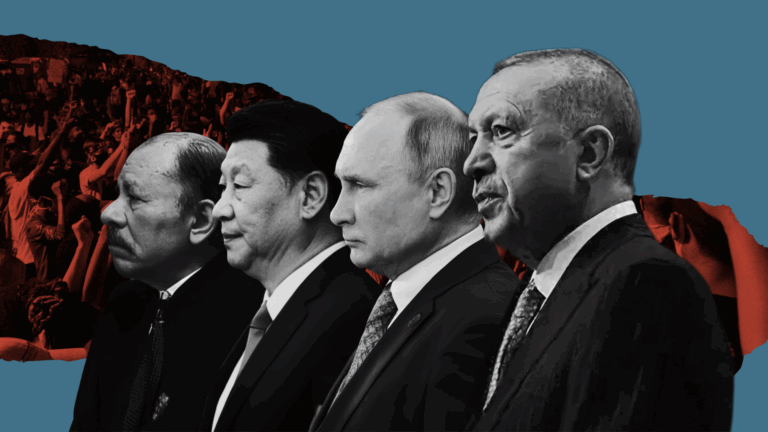
On 22 February 2024, Human Rights Watch came with a study on governments reaching outside their borders to silence or deter dissent by committing human rights abuses against their own nationals or former nationals. Governments have targeted human rights defenders, journalists, civil society activists, and political opponents, among others, deemed to be a security threat. Many are asylum seekers or recognized refugees in their place of exile. These governmental actions beyond borders leave individuals unable to find genuine safety for themselves and their families. This is transnational repression.

See earlier posts:

Transnational repression looks different depending on the context. Recent cases include a Rwandan refugee who was killed in Uganda following threats from the Rwandan government; a Cambodian refugee in Thailand only to be extradited to Cambodia and summarily detained; and a Belarusian activist who was abducted while aboard a commercial airline flight. Transnational repression may mean that a person’s family members who remain at home become targets of collective punishment, such as the Tajik activist whose family in Tajikistan, including his 10-year-old daughter, was detained, interrogated, and threatened.

Transnational repression is not new, but it is a phenomenon that has often been downplayed or ignored and warrants a call to action from a global, rights-centered perspective. Human Rights Watch’s general reporting includes over 100 cases of transnational repression. This report includes more than 75 of these cases from the past 15 years, committed by over two dozen governments across four regions. While the term “transnational repression” has at times become shorthand for naming authoritarian governments as perpetrators of rights violations, democratic administrations have assisted in cases of transnational repression.

Methods of transnational repression include killings, unlawful removals (expulsions, extraditions, and deportations), abductions and enforced disappearances, targeting of relatives, abuse of consular services, and so-called digital transnational repression, which includes the use of technology to surveil or harass people. These tactics often facilitate further human rights violations, such as torture and ill-treatment.

This report also highlights cases of governments misusing the International Criminal Police Organization (Interpol)—an intergovernmental organization with 195 member countries—to target critics abroad.

Victims of transnational repression have included government critics, actual or perceived dissidents, human rights defenders, civil society activists, journalists, and opposition party members and others. Governments have targeted individuals because of their identity, such as ethnicity, religion, or gender. Back home, families and friends of targeted people may also become victims, as governments detain, harass, or harm them as retribution or collective punishment. Transnational repression can have far-reaching consequences, including a chilling effect on the rights to freedom of expression, association, and assembly among those who have been targeted or fear they could be next.

This report is not an exhaustive examination of cases of transnational repression. Instead, it outlines cases that Human Rights Watch has documented in the course of researching global human rights issues that point to key methods and trends of transnational repression.

Human Rights Watch hopes that by drawing attention to cases of transnational repression, international organizations and concerned governments will pursue actions to provide greater safety and security for those at risk. Governments responsible for transnational repression should be on notice that their efforts to silence critics, threaten human rights defenders, and target people based on their identity are no less problematic abroad than they are at home. This report provides governments seeking to tackle transnational repression with concrete recommendations, while raising caution against laws and policies that could restrict other human rights.

Human Rights Watch calls on governments committing transnational repression to respect international human rights standards both within and beyond their territory. Governments combatting transnational repression should recognize such abuses as a threat to human rights generally and act to protect those at risk within their jurisdiction or control.

See also: 22 March 2024: https://ishr.ch/latest-updates/addressing-transnational-repression-a-global-mandate-for-justice-and-human-rights/

https://www.hrw.org/report/2024/02/22/we-will-find-you/global-look-how-governments-repress-nationals-abroad

https://www.commondreams.org/news/human-rights-watch-dissidents

After 36 years HRW Human Rights Film Festival stops

March 14, 2024

Sad news for those of us – like me – who believe in the power of images [see e.g. https://humanrightsdefenders.blog/tag/images/ and https://humanrightsdefenders.blog/tag/images/page/2/ and https://humanrightsdefenders.blog/tag/images/page/3/ and https://humanrightsdefenders.blog/tag/images/page/4/ and https://humanrightsdefenders.blog/tag/images/page/5/ and https://humanrightsdefenders.blog/tag/images/page/7/ and https://humanrightsdefenders.blog/tag/images/page/8/]:

On 13 March 2024 Human Rights Watch announced that it would be closing its long-running film festival. Founded in 1988, the Human Rights Watch Film Festival showcased nearly 1,000 independent films, was presented in over 30 cities across the globe, and is the world’s longest running human rights film festival.

“It’s with sadness and deep regret that we have made the difficult decision to close the Human Rights Watch Film Festival,” said Tirana Hassan, executive director of Human Rights Watch. “The film festival is a celebrated cultural institution that educated and inspired hundreds of thousands of filmgoers and filmmakers around the world over three decades, providing a critical space for connection, conversation, and action on human rights issues.”

The decision to close the festival was part of a wider restructuring due to financial constraints, Human Rights Watch said. Human Rights Watch Film Festivals will take place as planned across the United Kingdom and Ireland, opening on March 14, 2024, and across Canada starting on March 21.

Human Rights Watch is immensely proud of the talented film festival leadership and staff, who built partnerships across the human rights community and film industry. The festival established a mainstream platform for impactful films and in-depth conversations about human rights issues, with a priority focus on underrepresented perspectives from around the world.

The festival staff have been instrumental in pushing for increased accessibility standards in the film industry, resulting in three fully inclusive film festivals in the last two years. During the Covid-19 pandemic and the lockdowns that shuttered cinemas, the film festival team created a digital streaming site that tripled attendance figures, encouraged festival members to tune in for live conversations, and ensured that the public would not be isolated at home. The innovative site continued the festival’s work of creating spaces for dialogue, connection, and action on human rights issues.

“We owe the Human Rights Watch Film Festival’s success and impact to the longstanding commitment of our festival staff and consultants, volunteers, partners, the filmmakers, and of course our audiences,” Hassan said. “They helped to nurture the human rights storytelling movement that we see thriving today.”

https://ff.hrw.org/news/human-rights-watch-end-its-celebrated-film-festival