This side event is announced too late, but still good to know and find out more from the organizing NGOs:

share information on human rights defenders, with special focus on human rights awards and laureates
This side event is announced too late, but still good to know and find out more from the organizing NGOs:

Today, 27 September 2017, Geneva-based True Heroes Films (THF) unveils it new Digest of Human Rights Awards.
In order to assist in accessing the growing number of human rights awards THF launched its unique Digest of international and regional human rights awards. The Digest of Human Rights Awards is an online searchable database hosted on True Heroes Films’ website (www.trueheroesfilms.org/thedigest). It not only allows anyone to find out information about the almost confusing number of awards, but also permits human rights defenders and their supporters to quickly find the right award for them. Users can search the awards by theme, geographical focus, whether they accept public nominations as well as other information such as the deadline for submissions. Links to the awards’ external websites are also provided.
The Awards Digest is the first phase of a larger project that foresees a Digest of Laureates (over 1900 award winners included in the Awards Digest). This second phase is still under preparation and its completion is planned for 2018, subject to funding.
The Digest is also accessible on any device including mobiles and tablets.
The Digest has been made possible with the support of Brot für die Welt and the Permanent Mission of the Kingdom of the Netherlands in Geneva and other international organizations in Geneva.
For further information contact me at thedigest[at]trueheroesfilms.org or Jo Maxwell-Scott[at]trueheroesfilms.org (mobile +41 78 842 3403).
to see a short video teaser: https://humanrightsdefenders.blog/2017/06/16/teaser-on-the-digest-of-human-rights-awards/
 organizes on 21 September 2017 an important side event: “Ending Reprisals: Discussion with Human Rights Defenders and Experts”. The purpose of this discussion is to contribute to the critical debate on developing and strengthening procedures to prevent and address reprisals at the UN, ensuring that the voices of defenders are at the front and centre of the discussion.
This panel coincides with the presentation of the Secretary-General’s annual report on Cooperation with the United Nations, its representatives and mechanisms in the field of human rights (‘the reprisals report’) at the Council’s current session. [for some of my earlier posts on this crucial topic see: https://humanrightsdefenders.blog/tag/reprisals/]
Panelists:
Moderator: Tess McEvoy, Legal Counsel, ISHR
(Attendance with UNOG pass only.)

In advance of the Human Rights Council elections that will take place this October for the membership term 2018-2020, Amnesty International and the International Service for Human Rights will hold pledging events for candidate States in Geneva and New York on 11 September 2017. The events, which will be co-sponsored by a cross-regional group of Permanent Missions, are intended to give candidates an opportunity to present their vision for Council membership and to respond to questions from a range of stakeholders on how they would realise the pledges and commitments they may have made in seeking election.
If you can’t make it, you can follow the event live on ISHR YouTube channel: https://www.youtube.com/user/ISHRGlobal and submit questions to the candidates via Twitter using #HRCPledging.

Make sure to also check out the scorecards, for an ‘at-a-glance’ comparison of the candidates, focusing on their coöperation with the Council, their support for civil society, their engagement with UN treaty bodies and special procedures, whether they have spoken out in concern about reprisals, and whether they have established a national human rights institution:

please RSVP by 4 September using the following links:
Source: HRC elections | How do the candidates for 2018 rate? | ISHR
ISHR will also launch a brand new handbook, the ‘Third Committee of the United Nations General Assembly: A Practical Guide for NGOs’. Copies of the updated version of the ‘Practical Guide to the UN Committee on NGOs’ will also be available at the event.
• Tanya Bennett, Deputy Permanent Representative of the Australian Mission to the UN in Geneva
[Attendance with UNOG pass only. If you are a member of civil society interested in attending but don’t have a UNOG pass, please contact information@ishr.ch.]

The City of Geneva and the Martin Ennals Foundation have started the registration for 2017 Martin Ennals Award Ceremony on 10 October 2017, 6.00 pm, at Uni Dufour, Geneva. The MEA ceremony is held as the opening of the Human Rights Week hosted by the University of Geneva from October 11 to 12 and with the support of the Republic and canton of Geneva.
The 2017 finalists (to the extent that they are allowed to travel) will be present and documentaries on the life of these finalists will be screened for the first time, illustrating the difficult conditions in which they have to work. The evening will conclude with a reception hosted by the City of Geneva, allowing the 2017 finalists, the Geneva community of human rights and the public to exchange in an informal setting.
The finalists are:
Karla Avelar (El Salvador) is a transgender woman who defends the rights of LGBTI persons. She suffered discrimination, exploitation, and rape.
FreeThe5KH (Cambodia) are five senior staff members from the Cambodian Human Rights and Development Association (ADHOC) who have been in pre-trial detention for over one year.
Mohamed Zaree (Egypt), from the Cairo Institute for Human Rights Studies, is a legal scholar coordinating research to challenge laws designed to limit NGOs activities working on human rights.
The finalists and laureate are selected by the Jury of the Martin Ennals Award, made up of ten of the world’s leading human rights organizations: Amnesty International, Human Rights Watch, Human Rights First, FIDH, World Organisation Against Torture (OMCT), Frontline Defenders, the International Commission of Jurists, EWDE-Germany, the International Service for Human Rights, and HURIDOCS.
Last year’s ceremony: https://humanrightsdefenders.blog/2016/10/15/martin-ennals-award-2016-relive-the-ceremony-in-13-minutes-or-in-full/
Register now on the Martin Ennals Award’s website.
“Hi, my name is Maria Torres. I come from Peru and I work as a lawyer for the International Institute on Law and Society. I became a lawyer because I wanted to fight against injustice. As a student, I travelled to the Amazon and I saw how indigenous people were suffering violations of their most basic human rights; and there was a lot of indifference from civil society. At that moment, I decided that I wanted to dedicate my life to this cause. It was really important that one of us in my organisation learns about UN mechanisms and that’s why I came to Geneva to attend ISHR’s training.”
An interesting and timely document that deserves more attention than it is getting:
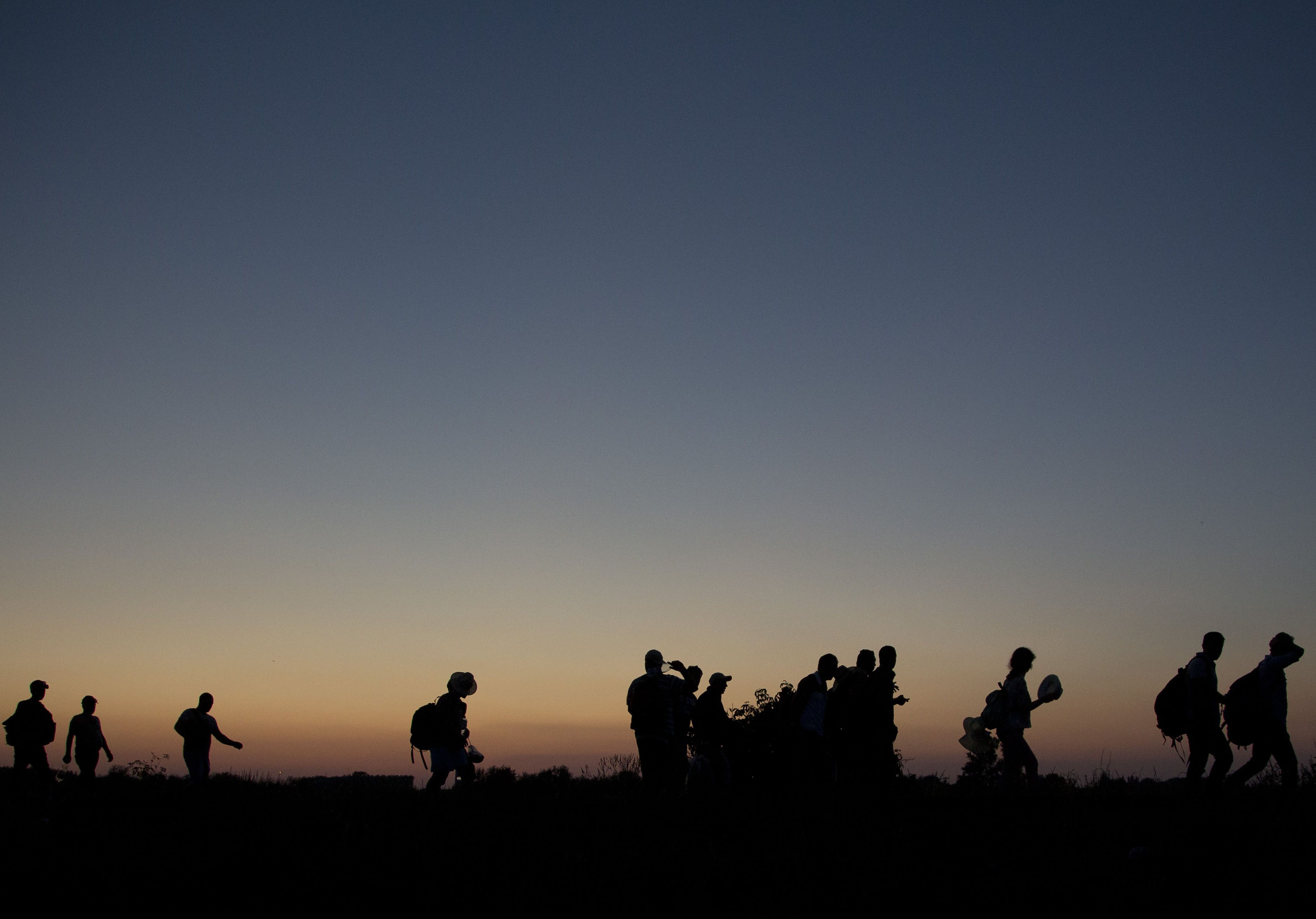
The International Commission of Jurists (ICJ) has published a set of Principles on the Role of Judges and Lawyers in relation to Refugees and Migrants.
The Principles were developed by the ICJ on the basis of consultations with senior judges, lawyers, and legal scholars working in the field of international refugee and migration law (including at the 2016 Geneva Forum of Judges & Lawyers), as well consultations with States and other stakeholders on a draft version during the March 2017 Human Rights Council session, and other feedback.
The Principles seek to help judges and lawyers, as well as legislators and other government officials, better secure human rights and the rule of law in the context of large movements of refugees and migrants. They are intended to complement existing relevant legal and other international instruments, including the New York Declaration, as well as the Principles and practical guidance on the protection of the human rights of migrants in vulnerable situations within large and/or mixed movements being developed by the OHCHR.
The Principles address the role of judges and lawyers in relation to, among other aspects:
The Principles, together with commentary, can be downloaded in PDF format by clicking here: ICJ Refugee Migrant Principles 2017.
The ICJ formally launched the published version of the Principles at a side event to the June 2017 session of the Human Rights Council (click here for details), where their importance and utility were recognised by the UN Special Rapporteur on the human rights of migrants, as well as representatives of UNHCR and the OHCHR. The ICJ had earlier released the final text in connection with the Thematic Session on “Human rights of all migrants” for the UN General Assembly Preparatory Process for the Global Compact for Safe, Orderly and Regular Migration to be held in Geneva 8-9 May 2017, where in an oral statementthe ICJ was able to highlight the potential utility of the Principles in the development of the Compact.
More information about the process of development of the Principles, including the list of participants to the 2016 Geneva Forum, is available here. The consultations, preparation and publication of the Principles was made possible with the financial support of the Genève Internationale office of the Republic and Canton of Geneva. For further information, please contact ICJ Senior Legal Adviser Matt Pollard, matt.pollard(a)icj.org
Source: Principles on the Role of Judges and Lawyers in relation to Refugees and Migrants | ICJ

The International Service for Human Rights (ISHR) in Geneva has published again its timely alert to the next Session of the UN Human Rights Council, from 6 to 23 June 2017.
It is a rich document [https://www.ishr.ch/news/human-rights-council-key-issues-agenda-35th-session-june] and I list here only the items most directly related to Human Rights Defenders:
Sexual orientation and gender identity
The first annual report of the Independent Expert on protection against violence and discrimination based on sexual orientation and gender identity will be presented between 9:00 and 12:00am on Tuesday 6 June. Argentina, Brazil, Chile, Colombia, Costa Rica, Mexico and Uruguay will organise an event on Advancing human rights protection and ending violence and discrimination based on sexual orientation and gender identity on 9 June from 11:30-13:00 in Room IX.
Reprisals
In a recent letter to the President of the Human Rights Council, ISHR called for urgent attention to be given to cases of reprisals which have not been followed up by the Human Rights Council. One of the most serious instances of reprisal is against Chinese human rights defender Cao Shunli, who died in detention on 14 March 2014 after being detained for her engagement in UN human rights mechanisms. Despite her case being communicated with the Bureau during the three years following her death, there has been no independent investigation or adequate response. ISHR looks forward to consolidating the advances made by the recent appointment of Assistant Secretary General Andrew Gilmour to receive, consider and respond to allegations of reprisals. Acts of intimidation and reprisal against human rights defenders seeking to cooperate with the UN constitute violations of international human rights law and undermine the human rights system. The Human Rights Council should respond with appropriate gravity to reprisals and follow-up past cases during its 35th session. [for my many posts on reprisals see: https://humanrightsdefenders.blog/tag/reprisals/]
Business and human rights
The mandate of the Working Group on human rights and transnational corporations and other business enterprises will be up for renewal during the session. The report of the Working Group will be considered by the Council, in addition to reports of country missions to Mexico and the Republic of Korea.
The Working Group will also present a study on best practices and how to improve the effectiveness of cross-border cooperation between States with respect to law enforcement on the issue of business and human rights, and a report on public procurement (not yet available at time of writing). Over the past three years, the Working Group has increasingly recognised the role of human rights defenders in ensuring business respect for human rights, and the specific challenges faced by defenders working on business and human rights issues, as exemplified by a dedicated workshop on this topic during its last session in May 2017. Since the last renewal of the mandate in 2014, the Working Group has also made increasing use of its ability to confront States and companies with allegations of human rights violations. From just 16 such communications in 2014 the Working Group has increased to 21 in 2015 and 42 in 2016. Both of these trends should be recognised and encouraged by the resolution renewing the mandate of the Working Group.
Women human rights defenders and women’s rights
The annual full day discussion on the human rights of women will take place on Tuesday 13 June from 9:00 to 12:00 and from 15:00 to 18:00. It will focus on engaging men and boys in responding to and preventing violence against women and girls. Engaging with men and boys to combat violence and discrimination against women and girls is essential to efforts to prevent and eliminate all forms of discrimination and violence against them. This should include challenging the harmful gender stereotypes and negative social norms, attitudes and behaviours that underlie and perpetuate such violence. Equally, it is important that the Council’s discussions and resolutions in this area recognise the critical role of women human rights defenders (WHRDs) and organisations led by women and girls as rights holders and agents of change. They should be involved and consulted in the planning, design, implementation and monitoring of legislation, policies and programmes, including programs aimed at engaging men and boys.
ISHR will support joint advocacy on the resolutions on violence against women and discrimination against women, and on the ‘protection of the family’. The latter resolution will focus on ‘the rights of older persons in the context of family.’ States must ensure that this resolution upholds universal principles of human rights based on equality and non-discrimination. Many household structures and family forms exist across the world, facing particular situations and challenges that require tailored policy responses…
Cooperation of States with Special Procedures
There remains a consistent lack of State cooperation with Special Procedures, as demonstrated by the number of communications sent by the experts that have not received a State response, recorded in the Joint Communications Report published at every session of the Human Rights Council. ISHR welcomes recent developments in making communications more accessible, including the searchable database of communications, but continues to express concern that access to information regarding specific cases and State replies is still hard to find for victims and authors. [see my post from many years ago: https://www.linkedin.com/pulse/20140603192912-22083774–crime-should-not-pay-in-the-area-of-international-human-rights]
China: The Special Rapporteur on extreme poverty and human rights, Prof Philip Alston, will present the report from his country visit to China. Prof Alston was tailed by State security and was prevented from meeting with civil society during his visit. As a result, the country report stresses the necessity of civil society in holding the Chinese Government accountable to human rights standards. The country visit was further undermined by reprisals. Following a meeting with Prof Alston, disbarred human rights lawyer Jiang Tianyong disappeared. His family was informed of his detention nearly one month later. Despite UN experts calling for an investigation into his disappearance, Jiang remains in ‘residential surveillance in a designated location’. Prof Alston’s report will be a key opportunity to discuss the ongoing crackdown on human rights defenders and concerns the Office of the High Commissioner for Human Rights for civil society in China. [see also: https://humanrightsdefenders.blog/tag/jiang-tianyong/]
Burundi The commission of inquiry on Burundi will present an oral update on 14 and 15 June. ISHR remains concerned by consistent and deliberate lack of cooperation with human rights mechanisms in Burundi. The country continues to refuse to cooperate with UN Human Rights Council’s Independent Experts and despite the international community’s efforts to mitigate a human rights crisis, the situation continues to deteriorate. ISHR calls on the Burundian authorities to cease attacks against journalists and defenders and to cooperate with the UN commission of inquiry and implement the recommendations from both UN and African Commission reports. [see inter alia: https://humanrightsdefenders.blog/2016/02/08/what-is-burundi-doing-in-the-un-human-rights-council/]
Other country situations where human rights defenders will surely come up:
Organisational meeting. The President of the Human Rights Council once again urged States to combat reprisals during the session. ‘As part of a constructive working atmosphere, it is in our common interest to have a climate of trust and security, whereby States ensure the appropriate protection against any acts of intimidation or reprisals against individuals and groups that cooperate or have cooperated with the United Nations, their representative and human rights mechanisms,’ he stated.
Appointment of mandate holders The President of the Human Rights Council has proposed candidates for the following four vacancies of mandate holders to be filled at this session:
Panel discussions
During each Council session, panel discussions are held to provide member States and NGOs opportunities to hear from subject-matter experts and raise questions. Among the 4 panel discussions scheduled for this session:
Resolutions to be presented to the Council’s 35th session
At the organisational meeting on 22 May 2017 the following resolutions were announced (States sponsoring the resolution in brackets):
For the the guide to the 34th session see: https://humanrightsdefenders.blog/2017/02/24/34th-human-rights-council-ishr-guide-to-key-issues-for-human-rights-defenders/
 Hans Thoolen on Human Rights Defenders and their awards