The FIFDH just announced the OFFICIAL AWARDS of its 16th festival (2018) in Geneva. [https://humanrightsdefenders.blog/2018/02/27/16th-international-film-festival-and-forum-on-human-rights-starts-on-9-march/]. Here a summary: Read the rest of this entry »
Posts Tagged ‘Geneva’
Save the date 20 March 2018: side event on UN Declaration on HRDs
March 15, 2018In the month of the International Women’s Day and in the year of the 20th Anniversary of the Declaration on Human Rights Defenders, this event will highlight the experience of women human rights defenders and the implementation of the Declaration.
It will also share findings and recommendations related to a recent joint researchon implementation carried out by the Colombian Commission of Jurists, the Tunisian League for Human Rights and ISHR.
Confirmed panellists include:
- Ana Maria Rodriguez – Colombian Commission of Jurists
- Djingarey Maiga – Femmes et Droits Humains Mali
Other panellists and co-sponsors will be announced soon.
20 March, 16h00 – 17h30 Room XXII, Palais des Nations, Geneva.
Attendance with UN identification pass only!
Bahrain: human rights protected but on paper only
March 12, 2018“The use of the judiciary in Bahrain to target human rights defenders and other activists” is a side event organised by CIVICUS and FIDH in co-operation with Americans for Human Rights & Democracy in Bahrain (ADHRB), the Gulf Centre for Human Rights (GCHR) and co-sponsored by ISHR.
It will take place on 13 March 2018 at 11:00 to 12:30 at Room XXIV. The event will address the politicisation of the judiciary to criminalise human rights defenders.
The context in which this event takes place should be well-known by now [see e.g. https://humanrightsdefenders.blog/tag/bahrain/], but some recent events can be added:
On 21 February human rights defender Nabeel Rajab, BCHR President and FIDH Deputy Secretary General, was sentenced to 5 years in prison under trumped-up charges in relation to tweets denouncing the torture against detainees at Jaw prison and exposing the killing of civilians in Yemen by the Saudi-led coalition. “This surrealistic verdict”, writes IFEX, “after a trial that was by itself a mockery of justice, illustrates once again the current crackdown on any dissenting voice in Bahrain, where scores of critics are currently jailed’.
Also the Observatory (FIDH-OMCT) and BCHR reiterate their call to the Bahraini authorities to immediately release him, as well as all detained human rights defenders.
Perhaps the most damning information comes from the Bahraini Government itself (8 March 2018) when it responded to the statement of the UN High Commissioner for Human Rights which had been ‘negative’ in his written review on the annual report on Bahrain. Dr. Yusuf Abdulkarim Bucheeri, Permanent Representative to the United Nations Office in Geneva, said in a statement that the review contained inaccurate information such as harassment of human rights defenders and other deleterious comments on the recent legal actions taken by Bahrain. ..They deliberately and unfairly side with malicious elements who have suspicious political agendas and sectarian tendencies and who want to inflict harm on the Kingdom of Bahrain and demean its achievements in the field of human rights, he said. “This is crystal clear from their support for the discourse of hatred and internal violence groups and for this reason, the Kingdom of Bahrain totally rejects the content of this statement with all the wrong and unacceptable descriptions it has given to the state.”
Bucheeri said that Bahrain’s constitution stipulates the right to freedom of opinion and expression in an unquestionable manner and in a way that guarantees everyone’s right to express their opinion and disseminate it by word, writing or otherwise, but within the legal framework and without inciting division or sectarianism or undermining national security.
……
He called on the Office of the High Commissioner for Human Rights to make concerted effort to understand the reality of human rights and the great challenges facing the Kingdom of Bahrain which faces terrorist acts aimed to destabilize its security and stability.
The kingdom, he explained, confronts a phenomenon of violent extremism and it is the duty of the Office of the High Commissioner to do its best to double check the credibility of the information it obtained and to seek such information only from neutral, objective and non-politicized sources…
https://www.ifex.org/bahrain/2018/02/22/nabeel-rajab-sentenced/
https://www.ifex.org/middle_east_north_africa/2018/03/05/revolutionary-anniversaries/
http://www.bna.bh/portal/en/news/829935
https://www.frontlinedefenders.org/en/case/case-history-nabeel-rajab
International Women’s Day at the ICJ: 5 out of 7 new Commissioners are women!
March 8, 2018That the celebration of International Women’s Day can be more than words is shown by the International Commission of Jurists (ICJ) in today’s announcement that 5 of the 7 new members added to the Commission are women. They are: Dame Silvia Cartwright (New Zealand), Professor Sarah Cleveland (USA), Justice Martine Comte (France),, Ms Mikiko Otani (Japan), and Justice Lillian Tibatemwa-Ekirikubinza (Uganda). Also elected were former ICJ SG Mr Wilder Tayler (Uruguay) and Justice Willy Mutunga (Kenya).
[Eight Commissioners were re-elected to serve second terms: Justice Radmila Dragicevic-Dicic (Serbia), Mr Shawan Jabarin (Palestine), Justice Egbert Myjer (Netherlands), Justice Qinisile Mabuza (Swaziland), Professor Victor Rodriguez Rescia (Costa Rica), Professor Marco Sassoli (Switzerland), Justice Stefan Trechsel (Switzerland) and Professor Rodrigo Uprimny Yepes (Colombia)]
Further information on the new Commissioners
Dame Silvia Cartwright (New Zealand) was Governor-General of New Zealand from 2001-2006 and the first woman appointed to the High Court in New Zealand. She was also a judge on the Extraordinary Chambers in the Courts of Cambodia. Amongst others, she has the following honours: Dame Commander of the British Empire (DBE) and Principal Companion of the New Zealand Order of Merit (PCNZM). Dame Cartwright has served on the Committee on the Elimination of Discrimination against Women and played a role in drafting the optional protocol to the Convention on the Elimination of Discrimination against Women (CEDAW).
Professor Sarah Cleveland (USA) is the Louis Henkin Professor of Human and Constitutional Rights and faculty director of the Human Rights Institute at Columbia Law School. She is currently a member of the UN Human Rights Committee, the US member of the Venice Commission, and former counsel to the US State Department legal adviser. She also serves as coordinating reporter of the American Law Institute’s project on the Restatement (Fourth) of the Foreign Relations Law of the United States.
Justice Martine Comte (France) has been a judge in France for more than 30 years, including having served as President of the Orléans Court of Appeal from 2011-2014. Prior to this her judicial career has been extensive and amongst other roles she has served as President of the Pontoise Tribunal of First Instance, President of the Bourgoin-Jallieu Court of First Instance and as Head of the Regional Administrative Department of Paris. She has also served as an Inspector of Judicial Services. Justice Comte is an Officer of the National Order of Merit and Knight of the Légion d’Honneur.
Justice Willly Mutunga (Kenya) served as Chief Justice & President of the Supreme Court, Republic of Kenya, 2011- 2016. He was the Commonwealth Secretary-General’s Special Envoy to the Maldives, 2016-17. He is an active member of the Justice Leadership Group. He has a previous career as an academic and in human rights movements in East Africa and Canada, and served as Executive Director of the Eastern Office of the Ford Foundation, 2004-2011.
Ms Mikiko Otani (Japan) Mikiko Otani is a member of the United Nations Committee on the Rights of the Child (CRC) (2017-) and a former Chair of the Committee on International Human Rights of the Japan Federation of Bar Associations. Prior to being elected as a member of the CRC, she was actively involved in the reporting process for Japan under the CRC and the CEDAW, representing NGOs.
Justice Lillian Tibatemwa-Ekirikubinza (Uganda) is a Justice of the Supreme Court of Uganda. Prior to joining the Court, she served on Uganda’s Constitutional Court for two years. Before joining the Judiciary, Tibatemwa-Ekirikubinza served as Deputy Vice-Chancellor in charge of Academic Affairs at Makerere University, Uganda, where she was also a Professor of Law. She is an author of law textbooks currently in use as reference texts in East African Law Schools.
Mr Wilder Tayler (Uruguay) is a Director of the National Institution of Human Rights and Ombudsman’s Office in Uruguay. He was Secretary-General of the International Commission of Jurists from 2008-2017. Between 2007 and 2014 he was a member and Vice-Chairperson of the UN Sub-Committee on the Prevention of Torture. Mr Tayler was Legal Director of Human Rights Watch from 1997 to March 2007 and before that he worked with Amnesty International as Director of the Americas Programme and a Legal Advisor.
Sergio Vieira de Mello Lecture 2018 by Staffan de Mistura
March 8, 2018Monday 19 March, 18:30 – 21:00, Staffan de Mistura, United Nations special envoy for the Syria crisis, will give the 2018 Sergio Vieira de Mello Lecture.
Staffan de Mistura is the United Nations special envoy for the Syria crisis. Having previously served as the head of the UN missions in Iraq and Afghanistan, he has over thirty years’ experience of working in conflict-affected areas and within humanitarian agencies. The event is moderated by the journalist Sophie Shevardnadze and will take place at Auditorium Ivan Pictet at the Maison de la Paix in Geneva. Registration is required for this event. Register here
The annual lecture is organised by the Sergio Vieira de Mello Foundation and the Graduate Institute.
Egypt ‘blessed’ with two side event at Human Rights Council in March 2018
March 6, 2018On 13 February 2018 fourteen international and regional rights organizations stated that the Egyptian government has trampled over even the minimum requirements for free and fair presidential elections (planned 26-28 March). The government of President Abdel Fattah al-Sisi has relentlessly stifled basic freedoms and arrested potential candidates and rounded up their supporters. “Egypt’s allies should speak out publicly now to denounce these farcical elections, rather than continue with largely unquestioning support for a government presiding over the country’s worst human rights crisis in decades,” the groups said.
The authorities have successively eliminated key challengers who announced their intention to run for president….The current atmosphere of retaliation against dissenting voices and the increasing crackdown against human rights defenders and independent rights organizations have made effective monitoring of the elections extremely difficult for domestic and foreign organizations. Media reports have said that the number of organizations that were granted permission to monitor the elections was 44 percent fewer than in the last presidential election in 2014 and that the number of requests, in general, has gone down. Several opposition parties called for boycotting the elections. A day later al-Sisi threatened to use force, including the army, against those who undermine “Egypt’s stability and security.” On February 6, the Prosecutor-General’s Office ordered an investigation against 13 of the leading opposition figures who called for a boycott, accusing them of calling for “overthrowing the ruling regime.” “Seven years after Egypt’s 2011 uprising, the government has made a mockery of the basic rights for which protesters fought,” the groups said. “Egypt’s government claims to be in a ‘democratic transition’ but move further away with every election.”
So, the two side events that are coming up are extremely valuable as the national space for dissent is nihil:
- The Situation of Human Rights and Upcoming Elections in Egypt: Facilitating Radicalisation is an event organised by the Cairo Institute for Human Rights Studies (CIHRS) and co-sponsored by ISHR, that will take place on 9 March at 13:30 to 15:00 in Room XXIII. The event will address the deterioration of the human rights situation in Egypt and the dangers of the international community’s failure to respond.
- Human rights violations in Egypt and in the Gulf States is an event organised by FIDH, CIVICUS, the Gulf Center for Human Rights. It will take place on 15 March 2018 at 15:00 till 16:00 in Room XXIII. The event will focus on the interlinked plight of human rights defenders in Egypt and the Gulf States as both are facing ongoing targeting by their own governments as well as explore measures for coordination and advocacy at the international level.
In the same context there is the press release of Friday 2 February 2018 in which a number of organisations, under the umbrella Committee for Justice (CFJ), condemned Tuesday’s execution of Egyptian Tayseer Odeh Suleiman after he was convicted in Ismalia’s military court in what they said was a flawed trial inconsistent with international legal and human rights standards. Suleiman, 25, was hanged after the Supreme Military Court of Appeals rejected the defence put foward by his lawyer without explaining the reasons behind the rejection….CFJ confirmed that there had been an unprecedented increase in the implementation of death sentences in Egypt, based on illegal proceedings, with 26 people executed between the end of December last year and the present. CFJ further asserted that the reason for the death penalties “under the guise of combating terrorism” were misleading and in violation of basic standards of a fair trial indicating significant flaws in Egypt’s judicial process.
On only a few days ago (2 March 2018), responding to reports from his family and colleagues that Ezzat Ghonim – a prominent Egyptian human rights lawyer and director of the NGO, Egyptian Coordination for Rights and Freedoms – failed to return home from work yesterday, Najia Bounaim, Amnesty International’s North Africa Campaigns Director, said: “Given the highly-charged political climate in Egypt and the clampdown on dissent in the lead-up to the presidential elections, we are deeply concerned that Ezzat Ghonim may have been forcibly disappeared. ”
For some of my earlier posts on Egypt, see: https://humanrightsdefenders.blog/tag/egypt/
https://www.hrw.org/news/2018/02/13/egypt-planned-presidential-vote-neither-free-nor-fair
16th International Film Festival and Forum on Human Rights starts on 9 March
February 27, 2018
The full program in the link below with many interesting films and debates. Special attention should go to:
Defending the Defenders
Everywhere defenders of our fundamental freedoms are harassed, imprisoned, tortured, even in countries with a strong tradition of defense of human rights.
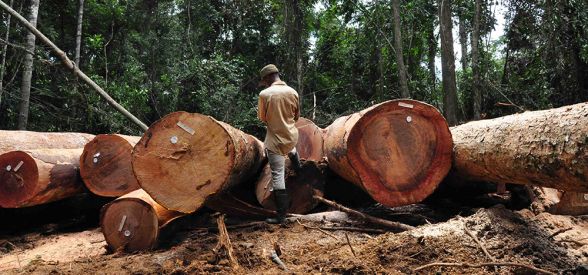
In 2017, 197 environmental activists were murdered in the world. Human rights organizations are themselves prevented from carrying out their work, and are sometimes directly banned or expelled from certain countries. An increasing number of governments are making concerted efforts to prevent the International Criminal Court and the Human Rights Council from fulfilling their mission. A disturbing reality as the Declaration on Human Rights Defenders is about to celebrate its 20th anniversary this year. The film Silas by Hawa Essuman and Anjali Nayar, chronicles the life of its eponymous main character in his fight over the years against convicted war-criminal Charles Taylor and the illegal deforestation and corruption in his native Liberia.
SCHEDULE
Co-presented with the Swiss Federal Department of Foreign Affairs (DFAE), the European Union’s mission to the United Nations and other international organizations in Geneva, International Service Human Rights (ISHR), the World Organization Against Torture (OMCT) and Lawyers Without Borders Switzerland
Introduction
Peter Sørensen | Head of the Delegation of the European Union to the UN and other International Organizations in Geneva
Sandra Lendenmann Winterberg | Head of the section for Human Rights Policy, Human Security Division, DFAE
Asli Erdoğan | Author, Journalist and Defender of Human and Minority Rights
Gerald Staberock | Secretary General of the World Organization Against Torture (OMCT)
Panelists
Maryam Al-Khawaja | Human rights activist, Head of External Relations and Vice-President of the Bahraini Center for Human Rights
Michel Forst | UN Special Rapporteur on the situation of human rights defenders
Kate Gilmore | United Nations Deputy High Commissioner for Human Rights
Claudia Samayoa | Co-founder and coordinator of Unidad de Protección de Defensoras y Defensores de Derechos Humanos Guatemala – UDEFEGUA, and member of executive council of the OMCT
Moderated by
Gunilla Von Hall | UN correspondent in Geneva of the Swedish Newspaper Svenska Dagbladet
https://www.fifdh.org/site/en/programme
For last year’s program: https://humanrightsdefenders.blog/2017/02/14/international-film-festival-and-forum-on-human-rights-10-19-march-2017-in-geneva/
NGOs in Geneva preparing for the 2018 Human Rights Council sessions
January 19, 2018 – in collaboration with the members of HRCnet – is hosting a welcome reception for Vojislav Šuc, the new President of the Human Rights Council on Wednesday 31 January 2018. This is a regular opportunity for civil society staff, human rights experts and diplomats to meet and greet the new President and Vice-Presidents of the Council in a relaxed atmosphere. Those who won’t be in Geneva that evening, can give their thoughts about what the Human Rights Council’s priorities for 2018 should be. Share them on Twitter using #HRC2018 and Michael Ineichen, Human Rights Council Advocacy Director of the ISHR, will share a selection with the HRC President.
Mark Thompson – old hand in APT – leaves in 2018
December 15, 2017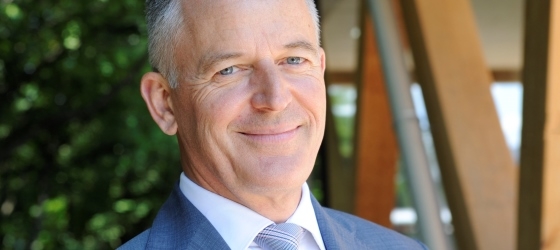 Thursday, 14 December 2017, the Association for the Prevention of Torture (APT, founded in 1977 by the Swiss banker and lawyer Jean-Jacques Gautier) announced that its Secretary-General, Mark Thomson, will retire on the 31st of July 2018. Mark, who has served as Secretary General since 2001, says that this is the right time for him to hand over the reins to someone else and that, whilst he intends to remain active in torture prevention and access to justice issues, this will be on a voluntary and ad hoc basis and that his main goal is to seize the opportunity to focus his time and energy on his young family. The President of the APT, Martine Brunschwig Graf expressed her own and the Board’s sincere appreciation for the work Mark has done over the past seventeen years, stating that: “Mark has provided first-class leadership to the APT and during that time he has played a guiding role in some immensely important developments in torture prevention across the globe. He is held in high esteem by public oversight bodies and governmental and non-governmental partners in many countries who will be as sorry as we are to see him move on.” Before 2001 Mark Thompson worked at the International al Service for Human Rights (ISHR)
The APT’s Board, taking into account the quality of the existing team, has chosen not to make a public call and will instead appoint his successor at the next board meeting, on the 13th of April 2018.
https://www.apt.ch/en/news_on_prevention/upcoming-change-in-apt-management/
Side event on human rights defenders working on Business and Human Rights issues
November 23, 2017
This side event will take place during the UN Forum on Business and Human Rights. The event will bring together multiple stakeholders to discuss how to remedy, redress and prevent attacks against human rights defenders working on business and human rights.

