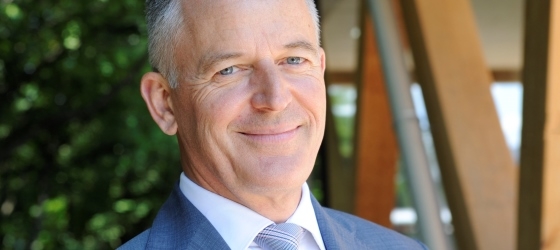
– in collaboration with the members of HRCnet – is hosting a welcome reception for Vojislav Šuc, the new President of the Human Rights Council on Wednesday 31 January 2018. This is a regular opportunity for civil society staff, human rights experts and diplomats to meet and greet the new President and Vice-Presidents of the Council in a relaxed atmosphere. Those who won’t be in Geneva that evening, can give their thoughts about what the Human Rights Council’s priorities for 2018 should be. Share them on Twitter using #HRC2018 and Michael Ineichen, Human Rights Council Advocacy Director of the ISHR, will share a selection with the HRC President.
Posts Tagged ‘Geneva’
NGOs in Geneva preparing for the 2018 Human Rights Council sessions
January 19, 2018Mark Thompson – old hand in APT – leaves in 2018
December 15, 2017
Thursday, 14 December 2017, the Association for the Prevention of Torture (APT, founded in 1977 by the Swiss banker and lawyer Jean-Jacques Gautier) announced that its Secretary-General, Mark Thomson, will retire on the 31st of July 2018. Mark, who has served as Secretary General since 2001, says that this is the right time for him to hand over the reins to someone else and that, whilst he intends to remain active in torture prevention and access to justice issues, this will be on a voluntary and ad hoc basis and that his main goal is to seize the opportunity to focus his time and energy on his young family. The President of the APT, Martine Brunschwig Graf expressed her own and the Board’s sincere appreciation for the work Mark has done over the past seventeen years, stating that: “Mark has provided first-class leadership to the APT and during that time he has played a guiding role in some immensely important developments in torture prevention across the globe. He is held in high esteem by public oversight bodies and governmental and non-governmental partners in many countries who will be as sorry as we are to see him move on.” Before 2001 Mark Thompson worked at the International al Service for Human Rights (ISHR)The APT’s Board, taking into account the quality of the existing team, has chosen not to make a public call and will instead appoint his successor at the next board meeting, on the 13th of April 2018.
https://www.apt.ch/en/news_on_prevention/upcoming-change-in-apt-management/
Side event on human rights defenders working on Business and Human Rights issues
November 23, 2017
This side event will take place during the UN Forum on Business and Human Rights. The event will bring together multiple stakeholders to discuss how to remedy, redress and prevent attacks against human rights defenders working on business and human rights.
Can the media help promote human rights and fight torture in Russia and elsewhere?
November 5, 2017
The World Organisation Against Torture <http://www.omct.org> (OMCT) and the Committee Against Torture from Nizhny Novgorod <http://pytkam.net/eng> organize a panel discussion on 9 November 2017 from 6:30–8:30 p.m.
The topic is “Can the media help promote human rights and fight torture in Russia and elsewhere?”
Panellists:
Ms. Olga Sadovskaya, Committee Against Torture from Nizhny Novgorod, Deputy Director
Ms. Therese Obrecht Hodler, journalist and former President of Reporters sans frontières <https://rsf.org>
Mr. MaksimKurnikov, Editor-in-Chief of radio EkhoMoskvy
Mr. Protsenko Nikita, Editor at Mediazone <zona.media>
Moderator: Mr. Gerald Staberock, OMCT Secretary General
—————
The panel discussion will be followed by a cocktail
Free entrance. Maison international des associations, Salle Gandhi, Rue des Savoises, 15. Geneva
Contact: +41 78 733 9595
Geneva: the right place for the world’s human rights award
October 5, 2017Global Geneva published today, 4 October 2017, an article by me called “[Geneva] The right place for the world’s human rights award“. Rather than summarizing it, here is the full article. There are lots of other interesting pieces in the issue, see: http://www.global-geneva.com.
——————
The 2017 Martin Ennals Award for Human Rights Defenders will be announced on Tuesday, 10 October, 2017 at the University of Geneva (UniDufour) in Geneva, Switzerland. For further information, go to MEA: This article also appears in the Oct-Nov 2017 edition of Global Geneva magazine.
WITHOUT INDIVIDUAL HUMAN RIGHTS DEFENDERS (HRDs), the Universal Declaration of Human Rights and other human rights law risk being a dead letter. Almost all human rights organisations have a mandate to come to the succour of threatened colleagues via urgent appeals and other campaigns. Some 150 now run an award and the number keeps growing – half were created since the beginning of the 21st century.
Curiously, however, the best known of these awards, the Nobel Peace Prize, is given out annually in Oslo and not in Geneva, the international hub for human rights. Alfred Nobel died on 10 December. Decades later, the United Nations declared 10 December as International Human Rights Day and designated 21 September as the International Day of Peace. The strange result is that the Nobel Peace Prize – intended for contributions to ‘peace’, not necessarily ‘human rights’ – is awarded every year in Oslo on 10 December, which is ‘Nobel Day’ in Sweden and Norway, and International Human Rights Day for the rest of the world.
In 1992, I became involved in the creation of the Martin Ennals Award for Human Rights Defenders (MEA). Originally, this was meant to keep alive the memory of the first Secretary General of Amnesty International and a key figure behind the creation of the modern human rights movement. In recognition of his work, 10 global human rights organisations, (Human Rights Watch, Amnesty International, World Organization Against Torture (OMCT), Front Line Defenders, Evangelisches Werk für Diakonie und Entwicklung, HURIDOCS, Human Rights First, the International Commission of Jurists, the International Service for Human Rights, and the International Federation for Human Rights (FIDH), all agreed to form the Jury. Later, a panel of regional NGOs joined the common effort.
The small volunteer secretariat operated out of Geneva, but many of the first award ceremonies were held abroad in places where the laureates are active. In 2001, it was decided to make Geneva the permanent location for the annual ceremony. By 2008, the lakeside city started offering serious support by making the award part of its “International Geneva” plan, an effort to galvanize the private and public sectors, including the rest of Switzerland, with regard to the region’s crucial importance as a hub for critical global issues. Since then, cooperation has grown into an admirable win-win partnership with the award run on a fully independent basis, while Geneva provides the infrastructure for the ceremony.
This suits all parties. The actual decisions are made by an autonomous jury of experts enabling the city to avoid having to deal with controversial aspects.
Mohamed Zaree of the Cairo Institute of Human Rights Studies (CIHRS) is one of the three finalists, and is subject to a travel ban to Geneva where he is supposed to attend the 10 October 2017 Martin Ennals Award Ceremony. Despite requests directly to Egyptian President Al-Sisi, the ban – at this time of writing – has yet to be lifted.
Presenting the awards: a matter of protection – and courage
The wisdom of this separation was reiterated in 2016 when the MEA went to an imprisoned scholar belonging to the Uyghur minority. China reacted furiously, but its target ended up being the UN High Commissioner for Human Rights, who courageously persisted in presenting the award at the ceremony as his predecessors have done over the years.
How effective are human rights awards? To answer this, one needs to know in which way they are intended to help human rights defenders. In the first place, all awards seek to offer recognition and encouragement at the psychological level. This goal should not be trivialized as activists often have to work in difficult environments. Furthermore, they may prove unpopular even within their own social circles.
Secondly, many awards come with some financial support. Even relatively small amounts go far in cash-strapped organizations, many based in developing countries.
Finally, the most important but also elusive goal is protection. The latter is not really possible without a fair degree of publicity. An example: On 13 May 2008, Mutabar Tajibaeva, a detained human rights activist in Uzbekistan, was announced as that year’s MEA Laureate. A few weeks later, on 2 June, she was released from prison on medical grounds, and a few months later, was allowed to travel abroad. She came to Geneva to receive the MEA in person, declaring publicly that the award saved her life. However, one cannot state categorically that her release was a direct result of the award; many other actors contributed to the pressure that resulted in her release from prison.
Karla Avelar 2017 FINALIST – EL SALVADOR: Karla Avelar has dedicated her life to defending, nationally and internationally, the Human Rights of LGBTI persons, HIV affected persons, migrants, persons deprived of liberty in situations of vulnerability as well as victims of discrimination due to their sexual orientation or gender identity.
For human rights abusers: embarrassment fueled by global press coverage
That such impact cannot be taken for granted is shown by the case of Ahmed Mansoor from the United Arab Emirates, the 2015 Laureate. The government did not lift his travel ban and he had to address the audience via a video link.
His case received further global coverage in August 2016. Flaws in Apple’s iOS operating system were discovered by Mansoor who alerted security researchers to unsolicited text messages he had received. Apple has since released a software update that addresses the problem. Then, on 20 March, 2017, around midnight, Ahmed Mansoor was arrested at his home in a raid by a large team of the Emirates’ security forces.
His importance as a human rights defender was demonstrated by the international response to this sudden arrest. In addition to many newspapers and social media, the UN Special Procedures and the EU Parliament quickly called for his release. But today, six months later, he continues to linger in jail.
FreeThe5KH 2017 FINALIST = CAMBODIA: Mr Ny Sokha, Mr Yi Soksan, Mr Nay Vanda, Ms Lim Mony and Mr Ny Chakrya, the “Khmer 5” are Cambodian human rights defenders who face judicial harassment and had spent 427 days in pre-trial detention, as a result of their legitimate human rights work.
Some believe that human rights awards can endanger the lives of laureates. Clearly, this is a danger, but the best judge of the balance between increased risk and greater protection remains the human rights defender in question. And generally, they seem to regard public exposure foremost as a form of protection, reflecting the increased importance of the media even in tense situations. The biggest problem with seeking increased protection through publicity is perhaps that the media are not automatically interested in all human rights awards.
That the media are increasingly referring to the MEA as the “Nobel prize for human rights” is perhaps the best sign that after almost 25 years, the award has found its status and place in Geneva. With the delivery of the 2017 prize on 10 October in Geneva, it will again be in the hope to go ‘from the front line to the front page’.
Hans Thoolen is a Dutch national who has worked for various NGOs and inter-governmental organizations, including 12 years in Geneva. He is now retired but not tired. Read his blog: https://humanrightsdefenders.blog/
Source: The right place for the world’s human rights award | Global Geneva
Job opportunities at the International Service for Human Rights
October 4, 2017Ceremony of the 2017 Nansen Medal for Nigerian Zannah Mustapha on-line 2 October
October 1, 2017The ceremony includes performances by the renowned Afrobeat musician Tony Allen, an acoustic set by Japanese artist Miyavi, a classical violin piece from renowned artist Mariela Shaker and speeches from keynote speaker, Syrian refugee Nujeen Mustafa, as well as from the winner.
The ceremony is organized by UNHCR in cooperation with the Government of Norway and the Norwegian Refugee Council, the State Council of the Republic and Canton of Geneva, the Administrative Council of the City of Geneva and the IKEA Foundation, to celebrate the outstanding achievements of individuals, groups and organizations who support those forced to flee.
The event is not open to the general public, but the will be streamed via Facebook Live – giving the on-line audience a unique insight into the back-stage preparations, as well as some of the performances.
For more on the Nansen and other awards: https://humanrightsdefenders.blog/2017/09/27/new-how-to-digest-over-175-human-rights-awards-in-a-few-minutes/
Source: UNHCR – The Ceremony
Documenting human rights: standards and practice – side event
September 27, 2017This side event is announced too late, but still good to know and find out more from the organizing NGOs:

NEW: how to digest over 175 human rights awards in a few minutes
September 27, 2017Today, 27 September 2017, Geneva-based True Heroes Films (THF) unveils it new Digest of Human Rights Awards.
In order to assist in accessing the growing number of human rights awards THF launched its unique Digest of international and regional human rights awards. The Digest of Human Rights Awards is an online searchable database hosted on True Heroes Films’ website (www.trueheroesfilms.org/thedigest). It not only allows anyone to find out information about the almost confusing number of awards, but also permits human rights defenders and their supporters to quickly find the right award for them. Users can search the awards by theme, geographical focus, whether they accept public nominations as well as other information such as the deadline for submissions. Links to the awards’ external websites are also provided.
The Awards Digest is the first phase of a larger project that foresees a Digest of Laureates (over 1900 award winners included in the Awards Digest). This second phase is still under preparation and its completion is planned for 2018, subject to funding.
The Digest is also accessible on any device including mobiles and tablets.
The Digest has been made possible with the support of Brot für die Welt and the Permanent Mission of the Kingdom of the Netherlands in Geneva and other international organizations in Geneva.
For further information contact me at thedigest[at]trueheroesfilms.org or Jo Maxwell-Scott[at]trueheroesfilms.org (mobile +41 78 842 3403).
to see a short video teaser: https://humanrightsdefenders.blog/2017/06/16/teaser-on-the-digest-of-human-rights-awards/