This is a reminder that nominations for the 2026 Right Livelihood Award are open, and the deadline is January 16, 2026 . They are seeking new nominees for the Award who are leading change-makers in their field. Nominations are fully open to the public; therefore, anyone can nominate an individual or organisation creating change through their innovative and life-changing work. To nominate a candidate (preferably in English, but French and Spanish are also accepted), please submit nominations through our online nominations form. Read more about the Award https://www.trueheroesfilms.org/thedigest/awards/97238E26-A05A-4A7C-8A98-0D267FDDAD59.
The Right Livelihood Award recognizes and supports outstanding individuals and organizations driving social, environmental, and human rights change. Winners receive financial or honorary awards, lifelong access to a global network, and international recognition to amplify their impact and protect their work.
This opportunity allows human rights defenders to develop their projects and take part in an academic and cultural exchange in a safe space. Apply before January 21. Are you a human rights defender from a country in the Global South who must carry out your work in an emergency or high-risk context? Our fellowship program could offer you a calm and safe space to work; provide you with the opportunity to build bonds of solidarity and companionship; and exchange knowledge with our researchers on tools and strategies for action-oriented research.
We are looking for people with different profiles:
Those who come from an emergency or high-risk context. An emergency or high-risk context may include any of the following:
The country/city where the fellow works is experiencing armed conflict, civil unrest, or is under an authoritarian government with an imminent threat to the individual security of the candidate.
The fellow and/or their organization has been the target of threats, intimidation, or populist propaganda that poses a risk to their human rights defense work or to their family’s safety.
The fellow or their organization has been excluded from funding due to government or private sector influence, or has been subjected to pressure aimed at obstructing the work of the individual/organization.
Those who are at risk of burnout and are seeking a quiet place to continue working on human rights issues, but in a different context.
Those who belong to human rights organizations in the Global South and wish to engage in exchanges and joint research or advocacy work with Dejusticia.
Those who intend to build long-term relationships with other fellows and with Dejusticia. This ensures that our fellowships function as accelerating nodes for connections that will make the human rights movement more coordinated and generate greater impact.
What will fellows receive from Dejusticia?
Dejusticia will cover travel expenses (visa, airfare) and provide a monthly stipend based on the fellow’s profile and experience. While Dejusticia will provide initial support at the beginning of the process—including, during the first two weeks of work, a training space on amphibious research and on Dejusticia’s work—it is important to note that selected fellows will be responsible for managing their stipend to cover their housing, transportation, and food needs.
What will be the commitments of fellows from the Global South?
The fellow will allocate their time at Dejusticia as follows:
65% to develop and implement work associated with a broader project of the host area/line.
25% to continue supporting the work of their home organization remotely.
10% to develop at least one blog post reflecting on their experience or work, to be published on Dejusticia’s Global Blog.
How to apply to the fellowship program
The call will be open until January 21, 2026
Dejusticia will cover travel expenses (visa, airfare) and provide a monthly stipend based on the fellow’s profile and experience. While Dejusticia will provide initial support at the beginning of the process, it is important to note that selected fellows will be responsible for managing their stipend to cover housing, transportation, and food needs. The program also includes one week of in-person training at Dejusticia on action-oriented research tools, writing, among others, as well as an organizational induction.
Are you a human rights defender working on democratic backsliding and/or racial justice, keen to use the UN to push for change at home? If so, apply for the 2026 edition of ISHR’s flagship training, the Human Rights Defender Advocacy Programme (HRDAP)!
After a successful edition in 2025, ISHR is pleased to launch the new call for applications for the 2026 Human Rights Defender Advocacy Programme (HRDAP26), which will take place both remotely and in Geneva and will be focused on thematic and context area! Below are some important dates to consider before applying:
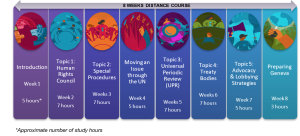
Mandatory distance learning course: 13 April – 8 June 2026 (part time)
In-person course in Geneva: 10- 20 June 2026 (full time)
Deadline to apply: 15 January 2026, midnight CET (Geneva Time)
Programme description with all related information can be downloaded here.
For the last 10 years, this flagship training has equipped human rights defenders with the knowledge and skills to integrate the UN human rights system into their existing work at the national level in a strategic manner.
Following an external review of the programme in 2024, as well as to maximise impact and enhance follow-up, for 2026 the HRDAP selection criteria are evolving: they are based on 2 themes focused on context area and thematic advocacy, according to ISHR’ strategic priorities and opportunities at the UN: democratic backsliding and racial justice. The HRDAP themes will change annually (see the criteria below and the programme description for more details).[see: https://humanrightsdefenders.blog/2024/11/27/ishrs-training-for-human-rights-defenders-2025/]
12 participants will be selected for the 2026 edition of HRDAP.
What are HRDAP objectives?
By participating in the programme, defenders will:
gain knowledge and tools, which they can use to ensure their voice is central in international human rights decision-making
explore and compare the benefits of engagement with the Human Rights Council, the Special Procedures, the OHCHR, the Universal Periodic Review and the Treaty Bodies, and examine how they can use them to bolster their work at the national level
develop networks, strategies and advocacy techniques to increase the potential of their national and regional advocacy work.
How is HRDAP organised?
HRDAP topics
Defenders will complete a 10-week hybrid learning programme through a participatory approach, which will include:
accessing the HRDAP Platform, where they can complete e-learning courses on each key UN human rights mechanism and on advocacy strategies, and access interactive learning materials and case studies on the ISHR Academy
taking part in live Q&A sessions with human rights experts
receiving continuous advocacy support and personalised coaching in order to develop concrete advocacy objectives to make strategic use of the international human rights system
building networks around the world, and learning from peers from a range of regions working on a range of human rights issues
applying their knowledge to case-studies scenarios and enhancing their advocacy toolbox according to their specific needs
receiving support and advocacy accompaniment to conduct activities during the 62nd and 63rd Human Rights Council sessions and other relevant opportunities.
Participants will have the unique opportunity to apply their knowledge and skills while being in Geneva as well as to meet and share with their peers and experts. The blended format of the course allows defenders to continue their vital work on the ground, while diving into the inner workings of each key UN human rights mechanism and gaining first-hand experience from advocates and UN staff on how civil society can strategically engage in the international human rights space.
What are the criteria and themes for selection?
This programme is directed at experienced human rights defenders working in non-governmental organisations, with existing advocacy experience at the national level and some prior knowledge of the international human rights system. In 2026, we will select human rights defenders working on democratic backsliding and racial justice.
Defenders working in contexts of democratic backsliding
This theme is for human rights defenders working in democratic countries where authoritarian practices are gaining ground.
We particularly welcome applications from defenders who are:
pushing back against repressive laws, attacks on free expression, or restrictions on the freedom of peaceful assembly and association
documenting abuses linked to police and military violence, arbitrary arrests, surveillance, or harassment
fighting for justice, transparency, and the rule of law, and refusing to let democratic institutions be dismantled without accountability.
Defenders working on racial justice
This thematic is for defenders working to dismantle systemic racism and build societies rooted in equality and dignity. We will select applications from defenders focusing on anti-racism, exclusion and police violence, including anti-Black racism as experienced through legacies of colonialism and the Transatlantic Trade in Enslaved Africans, Indigenous (including Afro-Indigenous) communities working on historical injustice and reparations, as well as defenders of migrants and asylum seekers. We also welcome applications from mothers working for accountability for their children, victims of police violence.
Salvino Oliveira was honored as a 2025 Young Activist Summit Laureate. | Courtesy of Jefferson Teófilo
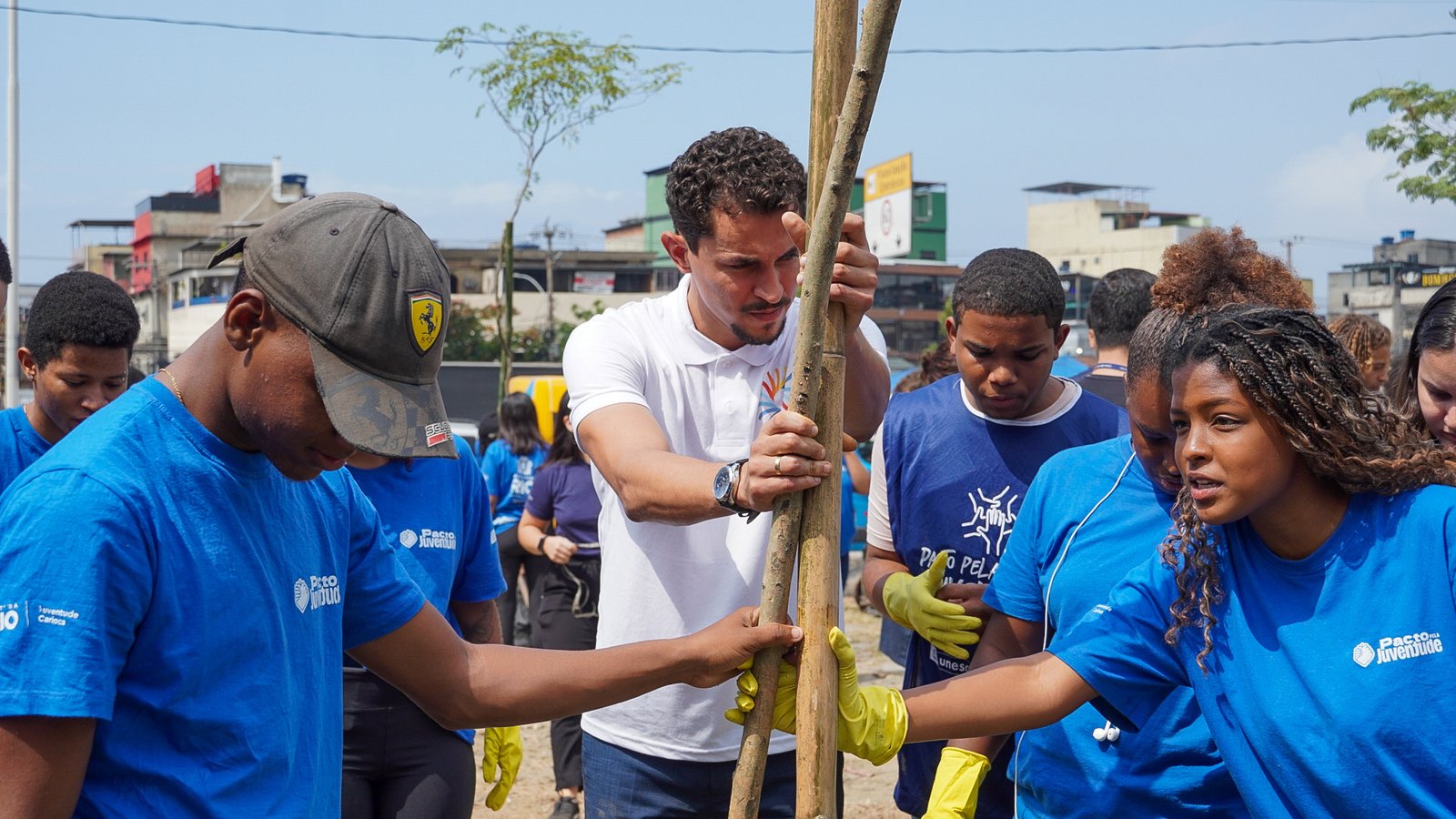
On 22 December 2025, Global Citizen published the story of how at 27, Salvino Oliveira went from being a street vendor in Rio’s Cidade de Deus to a city councilor leading education reform. This was followed by him starting his first social project: making tuition free for poor children at 15 years old. In recognition of his efforts towards making education more accessible, Oliveira has been honored as a 2025 Young Activist Summit Laureate. Here, Oliveira shares how education transformed his life, and why he’s committed to making that transformation accessible to every young person in Brazil’s favelas.
My name is Salvino Oliveira, and I am everything I’ve been.
I say this because my story begins in a tiny house in Cidade de Deus, meaning City of God, a favela in Rio de Janeiro. At 13, I started working to help my family survive: selling water bottles at traffic lights, candy on buses, working as a street vendor, upholsterer, construction helper — anything honest that could put food on the table.
But Cidade de Deus is more than poverty. It’s the Rio neighborhood with the most public squares, making it a natural place for culture, leisure, and community gathering. It’s the birthplace of funk carioca — the soundtrack of favela resistance and joy. It’s also home to Olympic athletes and artists. These public spaces and that cultural richness shaped who I became, the friends I made, my first loves, the things I believe in.
Then I got lucky. I was selected by lottery to study at Colégio Pedro II, one of Brazil’s most prestigious tuition-free public schools. In Brazil, elite families typically send their children to private schools, while public schools serve the poor; a few exceptional public institutions, like Pedro II, offer quality education through competitive lottery systems. That education changed everything. It opened a door that seemed permanently locked for someone from my background. At 15, even while working and living with gun violence all around me, I understood that if this access had reached me, I had a responsibility to give it back.
At 15, I created my first social project: free tutoring for children in Cidade de Deus.
When I entered Brazil’s federal university system to study Public Administration at Universidade Federal do Rio de Janeiro (UFRJ), a tuition-free institution, like all public universities in Brazil, that social project grew into AfroEducando (later renamed Mais Nós), a community prep course for university entrance exams. Within one year, we had 22 units across Rio’s metropolitan region, all volunteer-run, helping first-generation Black students from favelas access higher education.
When the “social bug” bites you, there’s no going back — and so the projects continued. I co-founded Projeto Manivela to train community leaders to engage with the government and turn demands into policies. Then came PerifaConnection, a media platform where young people from favelas across Brazil write columns in major national newspapers about politics, economics, culture, climate, and human rights. The idea was simple and radical: we refuse to let other people tell our story for us. Mainstream Brazilian media have historically portrayed favelas primarily through the lens of crime and poverty. Today, favela youth occupy editorial space in national media, changing how Brazil sees its peripheries.
I became an activist in 2018 during the federal military intervention in Rio’s security forces. Working at the Public Security Observatory, I saw firsthand how policies treated favelas like war zones, with heavily armed police operations causing civilian casualties. As I became more visible in my community, friends warned me: “Be careful, you’re an activist now. This can put you at risk.” That’s when I understood that fighting for education and rights in Rio means challenging power structures involving politics, money, and organized crime that often operate in contested urban territories.
On 17 October, 2025, Minnesota-based NGO Advocates for Human Rights appointed Michele Garnett McKenzie as the new Executive Director.
In accepting her new role, McKenzie said, “I am honored to lead our smart, experienced, and dedicated team at a moment when our work could not be more urgent. My vision is clear: strengthen our capacity to protect human rights, forge strategic partnerships that amplify our collective power, and ensure The Advocates’ independence and resilience.“
The Finnish Ministry for Foreign Affairs published on 25 July 2025:
The Finnish OSCE Chairpersonship will organise a conference on 31 July 2025 to mark the 50th anniversary of the Helsinki Final Act. The conference will pay tribute to the legacy of the Conference on Security and Co-operation in Europe (CSCE) in Helsinki in 1975 and highlight the role of civil society in advancing OSCE’s principles and commitments. Helsinki+50 Fund will be launched as part of the Conference to support the OSCE’s operational capacity.
This year marks the 50th anniversary of the Helsinki Final Act signed in 1975, and its content is now more topical than ever before. The Final Act was a turning point for Europe’s security. As a result, 35 states – including those on the opposing sides of the Cold War – committed to following common principles that laid the foundation for the European security architecture…
The event at Finlandia Hall will be opened by Minister Valtonen, and High-Level Keynotes will be delivered by President of the Republic of Finland Alexander Stubb, OSCE Secretary-General Feridun H. Sinirlioğlu and UN High Commissioner for Human Rights Volker Türk.President of Ukraine Volodymyr Zelenskyy will speak at the conference via remote connection. UN Secretary-General António Guterres will send a video message.
“The Helsinki Principles are a reminder of what we can achieve through cooperation and trust – and what is at stake if we fail to defend them. Now, more than ever, these principles need their defenders,” Minister for Foreign Affairs Valtonen says.
The Helsinki+50 Fund will be launched as part of the Conference. The fund aims to enhance the channelling of voluntary funding to support work in line with the OSCE’s principles and commitments, and to strengthen the link between donors andthe OSCE.The fund will supplement OSCE’s budget, not replace it.
Sam Gregory delivered the Spring 2025 Gruber Distinguished Lecture on Global Justice on March 24, 2025, at 4:30 pm at Yale Law School. The lecture was co-moderated by his faculty hosts, Binger Clinical Professor Emeritus of Human Rights Jim Silk ’89 and David Simon, assistant dean for Graduate Education, senior lecturer in Global Affairs and director of the Genocide Studies Program at Yale University. Gregory is the executive director of WITNESS, a human rights nonprofit organization that empowers individuals and communities to use technology to document human rights abuses and advocate for justice. He is an internationally recognized expert on using digital media and smartphone witnessing to defend and protect human rights. With over two decades of experience in the intersection of technology, media, and human rights, Gregory has become a leading figure in the field of digital advocacy. He previously launched the “Prepare, Don’t Panic” initiative in 2018 to prompt concerted, effective, and context-sensitive policy responses to deepfakes and deceptive AI issues worldwide. He focuses on leveraging emerging solutions like authenticity infrastructure, trustworthy audiovisual witnessing, and livestreamed/co-present storytelling to address misinformation, media manipulation, and rising authoritarianism.
Gregory’s lecture, entitled “Fortifying Truth, Trust and Evidence in the Face of Artificial Intelligence and Emerging Technology,” focused on the challenges that artificial intelligence poses to truth, trust, and human rights advocacy. Generative AI’s rapid development and impact on how media is made, edited, and distributed affects how digital technology can be used to expose human rights violations and defend human rights. Gregory considered how photos and videos – essential tools for human rights documentation, evidence, and storytelling – are increasingly distrusted in an era of widespread skepticism and technological advancements that enable deepfakes and AI-generated content. AI can not only create false memories, but also “acts as a powerful conduit for plausible deniability.” Gregory discussed AI’s impact on the ability to believe and trust human rights voices and its role in restructuring the information ecosystem. The escalating burden of proof for human rights activists and the overwhelming volume of digital content underscore how AI can both aid and hinder accountability efforts.
In the face of these concerns, Gregory emphasized the need for human rights defenders to work shape AI systems proactively. He stressed that AI requires a foundational, systemic architecture that ensures information systems serve, rather than undermine, human rights work. Gregory reflected that “at the fundamental (level), this is work enabled by technology, but it’s not about technology.” Digital technologies provide new mechanisms for exposing violence and human rights abuse; the abuse itself has not changed. He also pointed to the need to invest in robust community archives to protect the integrity of human rights evidence against false memories. Stressing the importance of epistemic justice, digital media literacy, and equitable access to technology and technological knowledge, Gregory discussed WITNESS’ work in organizing for digital media literacy and access in human rights digital witnessing, particularly in response to generative AI. One example he highlighted was training individuals how to film audiovisual witnessing videos in ways that are difficult for AI to replicate.
As the floor opened to questions, Gregory pointed to “authenticity infrastructure” as one building block to verify content and maintain truth. Instead of treating information as a binary between AI and not AI, it is necessary to understand the entire “recipe” of how information is created, locating it along the continuum of how AI permeates modern communication. AI must be understood, not disregarded. This new digital territory will only become more relevant in human rights work, Gregory maintained. The discussion also covered regulatory challenges, courts’ struggles with AI generated and audiovisual evidence at large, the importance of AI-infused media literacy, and the necessity of strong civil society institutions in the face of corporate media control.A recording of the lecture is available here.
The Venice School is devoted to developing human rights defenders’ advocacy skills and expertise and exploring today’s challenges in the field of human rights or other topical issues, allowing participants to examine their causes and possible solutions.
The programme hosts the 2025 selected Sakharov Fellows and will include lectures by Sakharov laureates and Right Livelihood laureates, internationally renowned academics, experts and activists coming from academia, international organisations, civil society and NGOs.
During the training programme, participants will be able to:
Share knowledge and expertise which human rights defenders can use to ensure their voice is central in international human rights decision-making processes
Develop strategies and techniques to increase the potential of human rights defenders’ national and regional advocacy work
Discuss best practices and ways forward through the mutual exchange of experiences
Develop networks among Sakharov fellows and other human rights defenders.
Fee information
€ 1,400 (VAT included) that includes: Tuition fee Welcome aperitif Lunches and coffee breaks on class days Reading material and access to the School’s online learning platform Certificate of attendance upon completion of the programme All expenses related to transportation, accommodation and subsistence and any additional cost not listed above must be arranged and covered by the participant.
Target audience: The training programme is addressed to human rights practitioners from all over the world as well as to graduate students from all academic backgrounds willing to deepen and improve their knowledge in human rights topics.
CAHR announces details of the Sam Pegram Scholarship for the 2025/26 academic year
The Sam Pegram Scholarship provides one international student with full funding to pursue an LLM in International Human Rights Law and Practice offered by the York Law School and the Centre for Applied Human Rights.
Funding: Full tuition fee waiver, travel and visa costs, accommodation and living costs, and overseas placement.
Academic year: 2025/26
Open to: International (including EU) students
Qualification level: Postgraduate taught
Number available: 1
This is a full scholarship that covers tuition fees, accommodation, travel and visa costs, including an overseas placement to South Africa, and a monthly living stipend for one individual student.
The scholarship is generously provided by The Sam Pegram Humanitarian Foundation in memory of Sam Pegram, a caring, kind and talented young man who tragically died in the Ethiopian Airlines’ Boeing 737 Max crash, in 2019, en route to Nairobi.
After spending two years volunteering and working for humanitarian NGOs in Jordan, Sam came to the University of York to study the LLM in International Human Rights Law and Practice. After graduating, he secured a role as a research policy assistant for the Norwegian Refugee Council in Geneva, where he was working when he died.
Sam was a wonderful presence in the classroom. He was committed, thoughtful and reflexive in his fieldwork. He was deeply committed to humanitarianism, the rights of people on the move, and social justice in a broad sense. He remains deeply missed by his friends and family here at York, in Lancashire where he was from, and around the world.
Through this scholarship, others will have the opportunity to study on this course and make a positive difference for the rights of people on the move and human rights more generally.
Eligibility
Open to International (including EU) students only.
have applied to study on the LLM in International Human Rights Law and Practice at the University of York on a full-time basis
demonstrate that you have limited financial resources and that you need the scholarship to pursue your postgraduate studies
demonstrate a passion for human rights, either through your previous academic studies, professional work, or volunteer activities
have a demonstrable specific interest in migration issues, and that you wish to pursue or consolidate a career working on issues affecting people on the move, including generally and in relation to their social exclusion
have some lived experience of human rights challenges or migration issues.
How to apply
Apply online before the deadline on Saturday, 31st May 2025, 11.59pm BST
One in four countries report backlash on women’s rights in 2024
Women’s and girls’ rights are facing unprecedented growing threats worldwide, from higher levels of discrimination to weaker legal protections, and less funding for programmes and institutions that support and protect women.
Despite important progress, only 87 countries have ever been led by a woman, and a woman or girl is killed every 10 minutes by a partner or member of her own family. Digital technology and artificial intelligence spread harmful stereotypes, while the digital gender gap limits women’s opportunities.
In the past decade, the world registered a disturbing 50 percent increase in the number of women and girls living in conflict, and women’s rights defenders confront daily harassment, personal attacks and even death. Recent global crises—like COVID-19, the climate emergency, soaring food and fuel prices—are only increasing the urgency to respond.
“UN Women is committed to ensuring that ALL Women and Girls, everywhere, can fully enjoy their rights and freedoms,” affirmed UN Women Executive Director Sima Bahous. “Complex challenges stand in the way of gender equality and women’s empowerment, but we remain steadfast, pushing forward with ambition and resolve. Women and girls are demanding change—and they deserve nothing less.”…
Today’s report also features the new Beijing+30 Action Agenda, a courageous roadmap to complete our unfinished business by focusing on:
A digital revolution for all women and girls: We must ensure equal access to technology, equip women and girls to lead in AI and digital innovation, and guarantee their online safety and privacy.
Freedom from poverty: Investments in comprehensive social protection, universal health coverage, education, and robust care services are needed for women and girls to thrive and can create millions of green and decent jobs.
Zero violence: Countries must adopt and implement legislation to end violence against women and girls, in all its forms, with well-resourced plans that include support for community-based organizations on the front lines of response and prevention.
Full and equal decision-making power: Temporary special measures like gender quotas have proven their effectiveness in rapidly increasing women’s participation.
Peace and security: Fully finance national plans on women, peace and security and gender-responsive humanitarian aid are essential. Frontline women’s organizations, so often the first responders to crisis, must receive dedicated, sustained funding to build lasting peace.
Climate justice: We must prioritize women’s and girls’ rights in climate adaptation, center their leadership and knowledge, and ensure they benefit from new green jobs.
Across these six Actions, putting young women and girls at the heart of our efforts is the best way to guarantee success, both today and tomorrow. These six plus one actions have the potential to unleash progress on women’s rights and put us back on track for 2030.
The Beijing+30 commemoration and the forthcoming UN Commission on the Status of Women (CSW69) are clear opportunities to enshrine this Action Agenda into national policies, regional strategies, and global agreements.
In a pivotal year for women and girls, that is also a year of pushback and crises like no other, let us push women’s rights forward to create a world where all women and girls enjoy equal rights and equal opportunities. We can be the first generation that can live in an equal world.
Ahead of International Women’s Day, Amnesty International’s Secretary General, Agnès Callamard, said:
“The significance of International Women’s Day 2025 cannot be overstated. It is no longer a case of addressing unfinished business on the gender justice front, but one of bracing ourselves to resist active regression and a mounting assault on our rights.
“Thirty years ago, 189 governments came together at the Fourth World Conference on Women to adopt the Beijing Declaration and Platform for Action, a groundbreaking blueprint for strengthening women’s rights endorsed by thousands of activists. Despite significant progress since then, the world has failed to fully deliver on all the promises. From rape and femicide to coercion, control and assaults on our reproductive rights, violence against women and girls still threatens their safety, happiness and very existence in a multitude of ways.
“And crucially, we are now going backwards. The aggressive patriarchal crusade led by President Trump and other powerful leaders against the rights and bodily autonomy of women and gender-diverse people has already had devasting consequences not just in the United States but all over the world. By dismantling domestic efforts to tackle gender-based, racial and other forms of discrimination, erasing recognition of transgender identity, and ending international funding for abortion counselling or referrals, the US administration is shamefully erasing years of hard-fought gains.
“Let us be clear, this trend has deeper roots than President Trump’s recent election. For several years now, brazen anti-rights movements have conspired to turn back the clock to an age when patriarchal oppression was the norm. We cannot afford to be complacent in the face of this gathering storm, for women, girls and LGBTQI+ people are under attack the world over.
“Amnesty International calls on states and non-state actors who believe in universal values and a rule-based international order to resist this accelerated and well-resourced attack against women’s rights. We call on them to strengthen protections of women, girls, LGBTQI+ people and other marginalized groups against gender-based violence. We urge them to recognize and support the vital work of all women human rights defenders and all those on the frontlines of the fight for sexual and reproductive rights, and to implement concrete measures to protect and empower them.
“We appeal to all to respect sexual and reproductive rights and prevent rollbacks, including by revoking any laws that criminalize or punish people for exercising these rights, as well as fully decriminalizing, providing and funding universal access to abortion.
“Finally, this International Women’s Day, Amnesty International reiterates its call on states to recognize gender apartheid under international law as a crime against humanity. Doing so would fill a major gap in the global legal framework and help to combat institutionalized and systematic domination and oppression on the basis of gender, no matter where it occurs.
“Despite suffering setbacks and facing countless attempts to block, divide and undermine us throughout history, feminist, LGBTI+ and grassroots movements keep marching forward. We may be walking a rocky path, but we will never stop fighting for a world where women, girls and gender-diverse people are free to enjoy the full range of human rights without discrimination or fear of reprisal.”
On 7 March 2025 SaferWorld carried a post “Still standing: The resilience of women peacebuilders in a time of crisis”
As we mark International Women’s Day 2025, women’s rights organisations (WROs) and frontline activists in crisis and conflict settings are standing strong despite immense challenges. ..Yet, while their work is more critical than ever, the harsh reality is that many are being forced to operate with dwindling resources, due to global funding cuts and shifting donor priorities towards militarisation, over a genuine investment in long-term peace, security and gender justice.
At a time when conflict, displacement and violence against women are escalating, and misogyny is a core pillar of the far-right agenda, these cuts will only deepen existing inequalities and undermine efforts to build sustainable peace and security globally. The reduction in funding for gender equality and Women, Peace and Security (WPS) initiatives threatens to reverse decades of progress and compounds the global rollback on women’s equality, safety and security. For example, cuts to the UK official development assistance (ODA) budget in 2021 led to a 30 per cent reduction in funding to programming with a focus on gender equality and to a 66% reduction in funding to WROs compared to 2017. WROs and women-led organisations – many of which are small community groups – often struggle to access direct, flexible and long-term funding, despite being the first responders in humanitarian crises and leading conflict prevention and peace efforts. When funding disappears, so do vital services, safe spaces for survivors of gender-based violence and conflict-related sexual violence, safe spaces for women peacebuilders to re-mobilise, legal aid for women and girls who have been displaced, and advocacy that ensures women’s voices are central in peace processes. But despite these constraints, WROs and women peacebuilders are still standing. Their resilience is evident in their ability to adapt, mobilise local resources and continue working in the most difficult circumstances. But resilience alone is not enough – they need meaningful and sustained support.
As the world commemorates International Women’s Day and gathers at the United Nations Commission on the Status of Women (CSW) to discuss gender equality and sustainable development, we reaffirm our commitment to ensuring that women and girls play a central role in peacebuilding and conflict prevention efforts around the world.
The international community, donors, funders and philanthropists will need to act urgently to ensure that WROs are not just surviving but thriving. This means:
Increasing direct, flexible and long-term funding and shifting power to local women-led organisations, women activists and women’s groups – we have seen the value in our work of providing sustained core funding to WROs, moving beyond short-term, project-based grants to ensure continuity of their critical efforts in conflict prevention, peacebuilding and humanitarian response. To make this shift meaningful, international organisations and donors should prioritise direct and flexible funding to frontline WROs rather than channelling resources through large intermediaries. This will ensure that funding reaches those who are best placed to drive lasting change within their communities.
Ensuring women’s leadership in conflict prevention, peace and humanitarian processes – women from all backgrounds and marginalised communities must have a seat at decision-making tables, not just as implementers but as equal partners in shaping policies and solutions that affect their lives.
Standing up for gender equality and women’s rights – urgently pushing back against reversals in women’s rights and gender equality, especially in fragile and conflict-affected contexts, where regressive policies and shrinking civic space are eroding hard-won gains. Women peacebuilders, human rights defenders and frontline activists are already standing up to these challenges, demanding that women’s voices remain central. Their leadership must be protected, amplified and meaningfully supported to sustain progress and counteract the global rollback on gender equality.
Protecting and supporting women human rights defenders and peacebuilding organisations – governments and international actors must recognise and safeguard the work of women human rights defenders and peacebuilding organisations in conflict zones, ensuring they can operate without fear of reprisals.
Strengthening accountability mechanisms – governments and multilateral bodies must hold themselves accountable to their commitments to the WPS agenda and support localisation of the UN Security Council Resolution 1325 on WPS.
Women’s rights organisations are the backbone of peace and resilience in crisis and conflict settings. This International Women’s Day, we celebrate their unwavering commitment – but celebration is not enough. The global community must act with urgency to fund, support and protect these organisations so they can continue to drive meaningful change.




 Hans Thoolen on Human Rights Defenders and their awards