The Finnish Ministry for Foreign Affairs published on 25 July 2025:
The Finnish OSCE Chairpersonship will organise a conference on 31 July 2025 to mark the 50th anniversary of the Helsinki Final Act. The conference will pay tribute to the legacy of the Conference on Security and Co-operation in Europe (CSCE) in Helsinki in 1975 and highlight the role of civil society in advancing OSCE’s principles and commitments. Helsinki+50 Fund will be launched as part of the Conference to support the OSCE’s operational capacity.
This year marks the 50th anniversary of the Helsinki Final Act signed in 1975, and its content is now more topical than ever before. The Final Act was a turning point for Europe’s security. As a result, 35 states – including those on the opposing sides of the Cold War – committed to following common principles that laid the foundation for the European security architecture…
The event at Finlandia Hall will be opened by Minister Valtonen, and High-Level Keynotes will be delivered by President of the Republic of Finland Alexander Stubb, OSCE Secretary-General Feridun H. Sinirlioğlu and UN High Commissioner for Human Rights Volker Türk.President of Ukraine Volodymyr Zelenskyy will speak at the conference via remote connection. UN Secretary-General António Guterres will send a video message.
“The Helsinki Principles are a reminder of what we can achieve through cooperation and trust – and what is at stake if we fail to defend them. Now, more than ever, these principles need their defenders,” Minister for Foreign Affairs Valtonen says.
The Helsinki+50 Fund will be launched as part of the Conference. The fund aims to enhance the channelling of voluntary funding to support work in line with the OSCE’s principles and commitments, and to strengthen the link between donors andthe OSCE.The fund will supplement OSCE’s budget, not replace it.
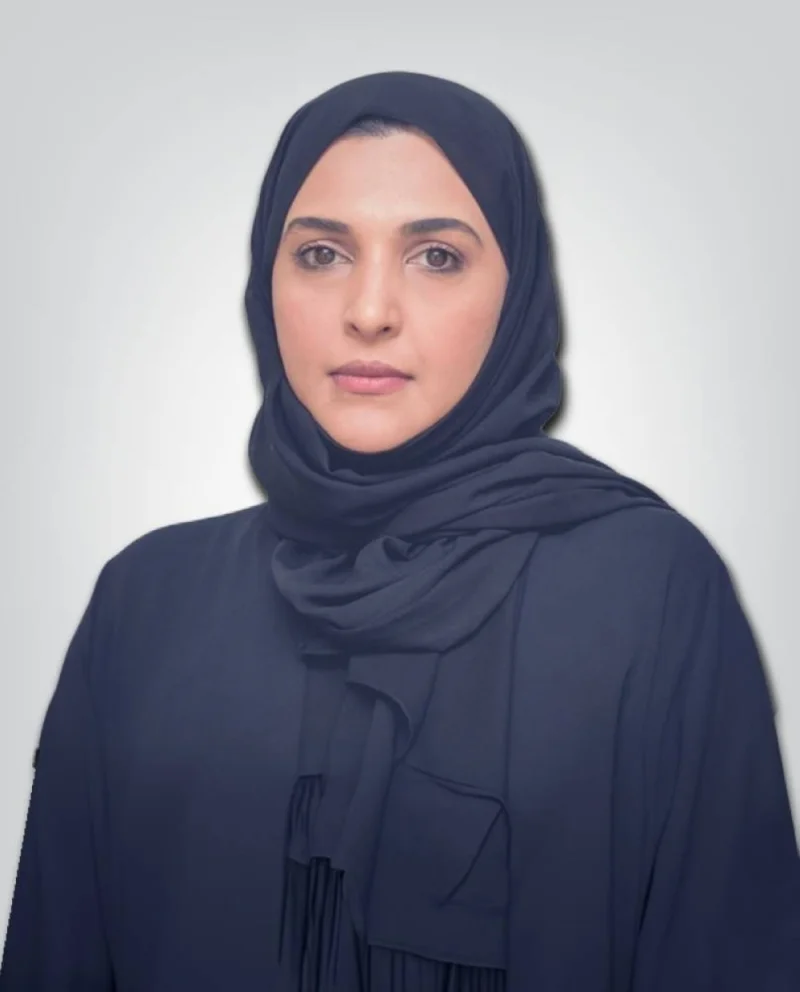
Chairperson of the NHRC Maryam bint Abdullah Al Attiyah
The international conference ‘Artificial Intelligence and Human Rights: Opportunities, Risks, and Visions for a Better Future,’ gets under way in Doha today. Organised by the National Human Rights Committee (NHRC), the two-day event is being held in collaboration with the UN Development Programme (UNDP), the Office of the High Commissioner for Human Rights (OHCHR), the Global Alliance of National Human Rights Institutions (GANHRI), and Qatar’s Ministry of Communications and Information Technology (MCIT) and National Cyber Security Agency, along with other international entities active in the fields of digital tools and technology.
Chairperson of the NHRC Maryam bint Abdullah Al Attiyah, said in a statement Monday that the conference discusses one of the most prominent human rights issues of our time, one that is becoming increasingly important, especially with the tremendous and growing progress in the field of artificial intelligence, which many human rights activists around the world fear will impact the rights of many individuals worldwide.
She added, that the developments in AI that is observed every day requires the establishment of a legal framework that governs the rights of every individual, whether related to privacy or other rights. The framework must also regulate and control the technologies developed by companies, ensuring that rights are not infringed upon, and that the development of AI technologies is not synonymous with the pursuit of financial gain, neglecting the potential infringements on the rights of individuals and communities.
She emphasised that the conference aims to discuss the impact of AI on human rights, not only limiting itself to the challenges it poses to the lives of individuals, but also extending to identifying the opportunities it presents to human rights specialists around the world. She noted that the coming period must witness a deep focus on this area, which is evolving by the hour.
The conference is expected to bring together around 800 partners from around the world to discuss the future of globalisation. Target attendees include government officials, policymakers, AI and technology experts, human rights defenders and activists, legal professionals, AI ethics specialists, civil society representatives, academics and researchers, international organisations, private sector companies, and technology developers.
..The conference is built around 12 core themes and key topics. It focuses on the foundations of artificial intelligence, including fundamental concepts such as machine learning and natural language processing. It also addresses AI and privacy-its impact on personal data, surveillance, and privacy rights. Other themes include bias and discrimination, with an emphasis on addressing algorithmic bias and ensuring fairness, as well as freedom of expression and the role of AI in content moderation, censorship, and the protection of free speech.
The International conference aims to explore the impact of AI on human rights and fundamental freedoms, analyse the opportunities and risks associated with AI from a human rights perspective, present best practices and standards for the ethical use of AI, and engage with policymakers, technology experts, civil society, and the private sector to foster multi-stakeholder dialogue. It also seeks to propose actionable policy and legal framework recommendations to ensure that AI development aligns with human rights principles.
Participating experts will address the legal and ethical frameworks, laws, policies, and ethical standards for the responsible use of artificial intelligence. They will also explore the theme of “AI and Security,” including issues related to militarisation, armed conflicts, and the protection of human rights. Additionally, the conference will examine AI and democracy, focusing on the role of AI in shaping democratic institutions and promoting inclusive participation.
Conference participants will also discuss artificial intelligence and the future of media from a human rights-based perspective, with a focus on both risks and innovation. The conference will further examine the transformations brought about by AI in employment and job opportunities, its impact on labor rights and economic inequality, as well as the associated challenges and prospects.
As part of its ongoing commitment to employing technology in service of humanity and supporting the ethical use of emerging technologies, the Ministry of Communications and Information Technology (MCIT) is also partnering in organising the conference.
The Conference of International NGOs (CINGO) held its General Assembly on 7-9 April and adopted a series of texts. Among these, a Recommendation on the shrinking civic space and actual political developments calls on the Council of Europe and its member states to take determined measures to counter the effects of the democracy backsliding on civil society, including:
to ensure that the New Democratic Pact is about people’s participation and the expansion of civic space
to mainstream the protection of civic space in all the CoE processes and to ensure an easy access for civil society actors to bringing complaints and seeking support
to prepare a legal instrument on national measures to create incentives for financial and other support to civil society organisations and human rights defenders
to set up a mechanism to receive and follow-up on complaints regarding civil society and human rights defenders received from the Conference of INGOs, including a process to deal with urgent requests for action to ensure protection of persons and organisations concerned, and to halt worrisome national legal developments
to react vigorously to civic space infringements in member states.
The Conference further issued the following statements:
for the immediate liberation of the Mayor of Istanbul, and a return to the prevalence of human rights and rule of law in Türkiye (proposed by the European Young Bar Association)
on the announced EU anti-poverty strategy (proposed by the Committee for the European Social Charter and its monitoring mechanisms);
a statement under the title “Internal security and border management in the context of migration: Respect for human rights is essential”.
CINGO also decided to establish a new Committee for the International Volunteer Year 2026, which will also mark the 50th anniversary of the establishment of CINGO.
The documents adopted and the abridged report of the session are all published as soon as they become available on the webpage of the Spring session.
Thomson Reuters Foundation is to host a two-day conference on 17 and 18 November focused on a post-pandemic roadmap to inclusive growth and the protection of free media and civil liberties. Nobel Peace Prize winner Maria Ressa, and an Afghan reporter who fled the Taliban, Zahra Joya, will join a distinguished line-up of speakers that also includes world-renowned Professor of Economics Jeffrey Sachs, Executive Director of Aspen Digital Vivian Schiller and founder of craigslist, philanthropist Craig Newmark.
They will join human rights defenders, innovators, media experts, policymakers and business leaders at the online forum, which brings together thousands of delegates from around the world. The event comes at a critical juncture of the COVID-19 crisis and the UN climate summit, and will address how the pandemic has deepened longstanding social and economic inequalities, has revitalised the drive for a sustainable future and has triggered an alarming spike in media freedom and human rights violations.
With 18 hours of live-streamed talks, plenaries and insight sessions, leading experts from a variety of disciplines will share new insights on shifting the post-pandemic economy onto a more inclusive and sustainable path, one built on the principles of human rights, media freedom and climate justice. They will weigh in on cutting-edge solutions to tackle the world’s most consequential challenges, including the business case for economic inclusion, the path to zero emissions, the human cost of internet shutdowns and a legal network for journalists at risk.
This year’s diverse speakers also include Dr Hilda C. Heine, Senator and former President of the Marshall Islands; Yvonne Aki-Sawyerr OBE, Mayor of Sierra Leone’s capital, Freetown; Zahra Joya, Journalist and founder of Rukhshana Media in Afghanistan; Javier Pallero, Policy Director at Access Now; Shamina Singh, Executive VP for Sustainability at Mastercard; Jorge Rubio Nava, Global Head of Social Finance at Citi; Danielle Belton, Editor-in-Chief of the Huffington Post; Lina Attalah, Co-founder of independent Egyptian news outlet Mada Masr; Alessandra Galloni, Editor-in-Chief of Reuters; Kanbar Hossein Bor, UK Coordinator Media Freedom Campaign & Deputy Director Democratic Governance, FCDO; Ma Jun, Founding Director of the Institute of Public and Environmental Affairs and Caoilfhionn Gallagher QC, Barrister at Doughty Street Chambers, specialising in human rights and civil liberties.
“The converging economic, health and climate crises are putting our democracies, people and planet under an existential threat,” said Thomson Reuters Foundation CEO Antonio Zappulla. “But there is also a great opportunity for a coordinated global response – the success of which depends on how well we work with and learn from each other.
In response to the ongoing, drastic deterioration of media freedoms, the Foundation will also be launching a new Legal Network for Journalists at Risk (LNJAR) at Trust Conference, an initiative in partnership with the Committee to Protect Journalists (CPJ) and Media Defence.
The LNJAR comprises 15 organisations, and strategically coordinates different types of legal support to enable journalists and independent media outlets to continue to cover public interest stories and hold power to account without fear of retribution.
Additionally, the Foundation will unveil its partnership with UNESCO, the International Women’s Media Foundation and the International News Safety Institute (INSI) through which it has developed practical and legal tools for journalists, media managers and newsrooms to counter harassment.
Now in its ninth year, Trust Conference reflects the Thomson Reuters Foundation’s work in tackling the world’s most complex societal issues, with a focus on socio-economic inclusion, sustainability, media freedom and human rights.
The programme and the speaker line-up of Trust Conference are available here. Register for your complimentary ticket here.
Trust Conference Agenda
The 2021 forum will address urgent global challenges through a series of talks, debates and high-profile exchanges. Themes include:
Climate change as a human rights risk
Making a ‘Just Transition’
The impact of financial vulnerability on editorial independence
What is the future role of international human rights law in helping to tackle challenges posed by climate change and the degradation of the natural environment? On Monday 5 October 2020, the European Court of Human Rights will host a high-level conference entitled “Human Rights for the Planet”. Both in person and online, participants will look at the rapidly-developing case-law on environmental issues of the Strasbourg court and other international tribunals. Speakers will include the President of the European Court of Human Rights, Robert Spano, the Secretary General of the Council of Europe, Marija Pejčinović Burić, and the UN High Commissioner for Human Rights, Michelle Bachelet.
Contributors will include environmental lawyers, academics and NGO representatives as well as a number of current and former ECHR judges.
Pakistan is the focus of this year’s Day of the Endangered Lawyer (January 24) and the American Bar Association is organising a teleconference, in which panelists will provide a report of the current state of attacks on the judiciary, bar and other human rights defenders in Pakistan, as well as offering suggestions for how the ABA and other outside organizations can lend support. [see also: https://humanrightsdefenders.blog/2018/01/22/24-january-2018-day-of-the-endangered-lawyer-focus-on-egypt/]
Moderator:
Sara Sandford, Immediate Past Co-Chair, International Human Rights Committee
Speakers:
Jalila Haider, Founder of We the Humans
Farahnaz Ispahani, Senior Fellow, Religious Freedom Institute; Global Fellow, Woodrow Wilson International Center for Scholars
Hussain Haqqani, Former Ambassador to US
Raza Rumi, Director of the Park Center for Independent Media, Ithaca College; Visiting Faculty at Cornell Institute for Public Affairs; and Editor of Daily Times
Civil Rights Defenders, in partnership with Innovation Centre Kosovo (ICK) is hosting the first ever regional hackathon to tackle human rights issues – ‘EqualiTECH 2019’ – on 27-29 September 2019.
..there is a clear shortage in the interplay of technological investments around human rights issues, frequently materialising as a roadblock for its advocates. In an effort to reduce this gap, the organisers invite participants with various backgrounds, skill sets, and creative abilities to form multidisciplinary teams and invent unique digital products to hack Human Rights challenges pertaining to 3 thematic areas:
1). Justice and Equality; 2). Freedom of Expression; 3). Access to Information.
This signature event challenges participants to place humanity at the forefront of design thinking and innovation. It aims to fuse the power of technological innovation with the generative capacities of human rights defenders and activists, in building ICT solutions as part of diverse teams, to support human rights work in the Western Balkan countries. Under expert mentoring, the competitors of different backgrounds will have 40 hours to design innovative products that will elevate the work for human rights protection and advocacy. ‘EqualiTech 2019’ kicks off on the 27- 29 September, taking place at ICK’s event hub. All interested candidates can apply here. The deadline for application is 17 September, 11:59 pm.
The challenges
Justice and equality
Design a solution that helps increase justice and equality. Conceptualize and develop a digital product that will help increase justice and equality as well as promote inclusiveness for all. For example, think of tools (i.e. platform) that can connect state bodies responsible for providing free legal aid, private pro-bono lawyers/law firms, legal aid organizations and citizens in need of legal aid and advice; or tools that can help identify public and private places of interest and service providers (bars, restaurants, hotels, parks, etc) that are friendly, inclusive and non-discriminatory, particularly to vulnerable and marginalized communities in the Western Balkans.
Freedom of expression To complete this challenge, you should design a tool that will help facilitate and/or increase freedom of expression and reduce various forms of online harassment. The objective is to invent digital products (i.e. platforms) that can enable citizens, activists and journalists from the Western Balkans to connect with each other; identify and report violations of human rights; enable user-friendly reporting mechanisms that help increase their safety and security, etc.
Access to information is increasingly limited in the Western Balkans. Proliferation of unprofessional media, increasing number of fake and manipulative information, limits citizens abilities to make informed decisions. Conceptualize and design a digital product that will help increase access to reliable and useful information sources. This product (i.e. platform) should support citizens, progressive media outlets and independent journalists, fact-checking and other issues relating to ‘fake news’.
(Please note that this is not an exhaustive list.
Competition eligibility criteria?
To participate, you must meet the following eligibility criteria:
All individuals must be between 18-35 years of age.
Must work (HR activists or advocates) or have an interest (tech candidates) in combating discrimination, upholding human rights for minorities and underrepresented groups, and ensuring freedom of expression.
Tech candidates must be skilled in using programming language or tools and/or graphic design software.
All candidates must be able to collaborate within a team.
Must have a passion for problem-solving and analytical thinking.
Preference will be given to individuals with proven experience or passion in combating human rights violations.
Awards for the winning products
We will award three cash prizes, each in the amount of 1000 euros for the winning product prototypes in the respective challenge category.
Speaking to Al Jazeera on Tuesday 20 August 2019, OHCHR spokesman Rupert Colville confirmed the body’s decision to postpone the Conference on Defining and Criminalising Torture in Legislation in the Arab Region. “We still plan to hold it in the Middle East/North Africa region, as for obvious reasons it is likely to have more impact within the region itself than if it is held in some more distant venue in Europe or elsewhere,” Colville said. He added that the UN “will consult widely with NGOs and national human rights institutions before deciding where and when it will now be held“.
In an environment where short-term and national interests are taking over, UN institutions are under attack….Michelle Bachelet, United Nations High Commissioner for Human Rights, and Coly Seck , President of the Human Rights Council, will discuss the importance and contribution of UN institutions to ensure that each country upholds and promotes human rights. WEDNESDAY 4 SEPTEMBER, 18h00 – 19h30 in Auditorium Ican Pictet, Maison de la Paix, Geneva, organised by the Graduate Institute of International and Development Studie.
Michelle Bachelet has been the United Nations High Commissioner for Human Rights since September 2018. She was the first female President of Chile and elected for two terms (2006–2010 and 2014–2018). She also served as the first Director of UN Women, Health Minister of Chile, and was Chile’s and Latin America’s first woman Defense Minister.
Coly Seck is President of the 13th Cycle of the Human Rights Council, serving a one-year term beginning 1 January 2019. He is the Permanent Representative of Senegal to the United Nations Office in Geneva since October 2016.
This discussion will be moderated by Vincent Chetail, Professor of International Law, Head of the International Law Department and Director of the Global Migration Centre at the Graduate Institute, and will then be followed by a Q&A with the public. This conference is organised in partnership with the Club Diplomatique de Genève.
Nishita, JhaBuzzFeed, reports on 20 March 2019 that many women who were slated to participate in the UN Commission on the Status of Women have been denied visas, especially lawyers, activists, and women who deliver reproductive health care services from African and Middle Eastern countries that fell under Donald Trump’s travel ban.
The International Service for Human Rights said it was aware of at least 41 women who have been denied visas to attend the conference this year — but this figure is said to be only “the tip of the iceberg” and likely to increase.
Women who wanted to attend CSW this year from countries like Iran, Sudan, Zimbabwe, and Syria were asked to provide supporting documents like marriage certificates, proof of property ownership, letters stating employment status, proof of finances, and even proof of birth certificates or proof showing that they have children, according to the petition.
Lyndal Rowlands, advocacy officer with the UN-accredited organization CIVICUS, told BuzzFeed News that among all the people that were denied visas, women from countries that fell under the Trump administration’s travel ban were disproportionately affected. “Last year and this year we have also heard of women from Pakistan and Nepal who were denied visas,” she said. …Most of the women applying for visas, Rowlands said, had not traveled to the US before — a deliberate decision by organizers who wanted a diverse range of women present at the United Nations, not just pundits and experts who travel all the time but women who work at the grassroots.
“It’s essential that women who are at the front lines working on women’s rights are present when their rights and the rights of the women they serve are being discussed,” she said. “Governments and UN officials that attend the conference can make better policies when they are informed by the experiences of women who face some of the biggest uphill battles when it comes to fighting for gender equality — for example, delegates who were unable to attend include lawyers and advocates who represent women who have been imprisoned for their activism, [and] women who deliver reproductive health care services.”



 Thomson Reuters Foundation is to host a two-day conference on 17 and 18 November focused on a post-pandemic roadmap to inclusive growth and the protection of free media and civil liberties. Nobel Peace Prize winner Maria Ressa, and an Afghan reporter who fled the Taliban, Zahra Joya, will join a distinguished line-up of speakers that also includes world-renowned Professor of Economics Jeffrey Sachs, Executive Director of Aspen Digital Vivian Schiller and founder of craigslist, philanthropist Craig Newmark.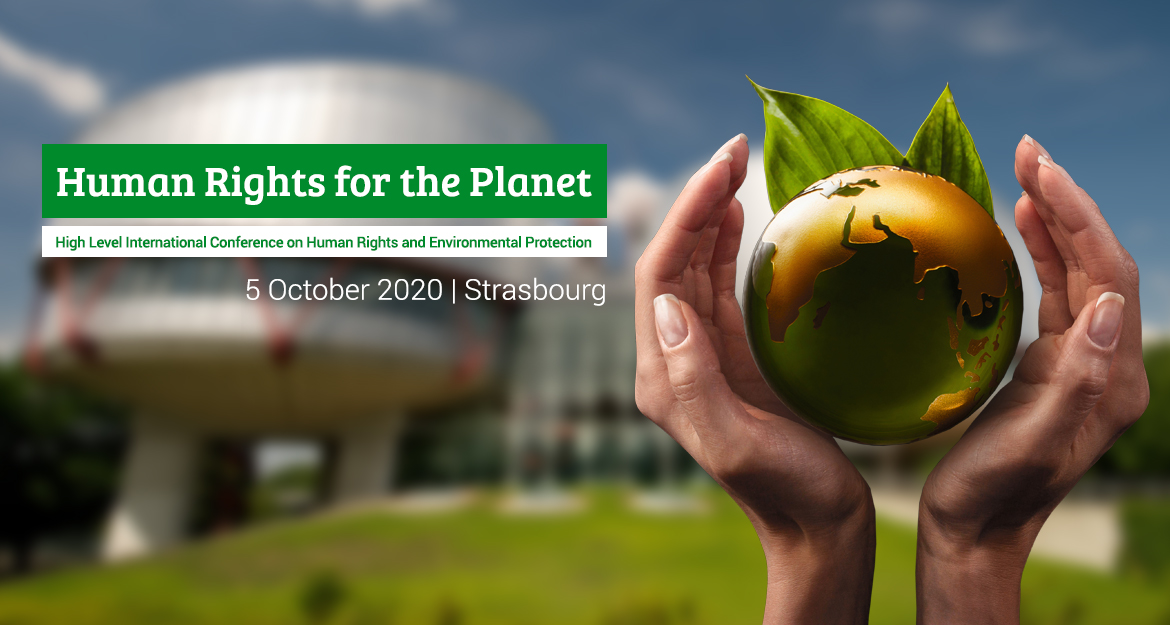

 Hans Thoolen on Human Rights Defenders and their awards