Posts Tagged ‘civil society organisations’

Jasmin Lorch, Senior Researcher at the German Institute of Development and Sustainability, argues for more support to human rights defenders

July 3, 2025

Jasmin Lorch in an article of 25 June 2025 argues that European support to human rights NGOs, critical civil society and free media is not merely a “nice-to-have“. Instead, it directly serves European interests due to the important information function that these civil society actors perform. 

USAID funding cuts have dealt a heavy blow to human rights defenders, critical Non-Governmental Organizations (NGOs) and independent media outlets around the globe. While the damage is hard to quantify exactly, it is clearly huge. For instance, the Centre for Human Rights and Democracy at People in Need estimates that the human rights and media organizations it supports have seen their budgets shrink by 40 to 100% because of the cuts. Based on a USAID fact sheet, meanwhile taken offline, Reporters without Borders (RSF) informed that the dismantling of USAID had affected support to 6,200 journalists, 707 non-state media outlets and 279 civil society organizations (CSOs) working to support free media. The impacts on local civil society are especially pronounced in closed authoritarian contexts where CSOs are both restricted and donor-dependent. In Cambodia, ADHOC, one of the few remaining local human rights organizations, lost 74 percent of its budget and had to close 16 out of its 22 provincial offices

As critical CSOs and independent media outlets struggle to find alternative sources of funding, they face another threat to their survival: Major European donors, including Sweden, have cut down on foreign funding as well, citing their own national needs, including the necessity to invest more in defence. Germany, the biggest bilateral donor since the dismantling of USAID, has recently pledged to better integrate its foreign, defence, and development policy and to more closely align development cooperation with its security and economic interests. Accordingly, there is a significant risk that European donors will (further) cut down on funding for critical CSOs and free media as well.

However, European donors should consider that continuing to support human rights defenders, critical NGOs and independent media outlets is in their own interest. 

Notably, these civil society actors serve an important information function. By furnishing insights into human rights abuses, governance deficits and patterns of corruption, they provide European (as well as other) governments with a better understanding of political developments, power relations and regime dynamics in their partner countries, thereby enhancing the predictability of security and economic partnerships. Authoritarian governments. in particular, restrict the free flow of information, while, concurrently, engaging in propaganda and, at times, strategic disinformation. Consequently, European foreign, economic and security policy towards these governments routinely suffers from severe information deficits, including the existence of numerous “unknown unknowns”. To compensate for this weakness, country assessments and expert opinions used by foreign, development, and defence ministries in Europe to devise policy approaches towards non-democratic partner countries often include information provided by independent media outlets, human rights or anti-corruption NGOs. Similarly, European embassies in authoritarian countries frequently draw on the reports and documentations accomplished by local human rights NGOs. 

In some cases, the information provided by critical NGOs, human rights defenders and independent media outlets – both local and transnational – is highly economically and security relevant, for instance when it serves to unearth patterns of transnational crime. The Organized Crime and Corruption Reporting Project (OCCRP), an investigative journalist network, which also has a media development branch and was heavily affected by the USAID funding cuts, for instance, contributed to the Panama Papers that disclosed the secretive use of offshore tax havens. A recent report named Policies and Patterns. State-Abetted Transnational Crime in Cambodia as a Global Security Threat draws on interviews with journalists and civil society representatives. While expressing disappointment with the ineffectiveness of large parts of the aid community and big counter-trafficking NGOs in addressing the problem, it emphasizes that 

“the ‘local civil society’ community — grassroots volunteer response networks, human rights defenders, and independent media —have been and remain the lynchpin of an embattled response. These heavily repressed and poorly funded groups have been and remain the primary source of available evidence on the lead perpetrators, their networks, and their modes of operation” (quote on p.3). 

…The Office of the High Commissioner for Human Rights (OHCHR) emphasizes that “human rights violations, particularly when widespread and systematic, can serve as indicators of an increased risk of conflict, violence or instability“. Accordingly, it emphasizes the potential of United Nations (UN) human rights mechanisms to contribute to crisis prevention. Human rights NGOs and other CSOs provide important inputs into the Universal Periodic Review (UPR) of the UN Human Rights Council and other UN human rights mechanisms. ..

Last but not least, establishing partnerships with human rights defenders and critical NGOs also allows European countries to expand their social and political alliances in their partner countries, a diversification that can be highly useful in times of political uncertainty and change. ..

Support to human rights NGOs, other critical CSOs and free media constitutes an important contribution to democracy and pluralism. However, it also benefits European economic and security interests by enhancing the knowledge base on which European governments can draw when constructing their international alliances. European governments already use the information provided by these civil society actors in various ways, so they should continue providing diplomatic support, solidarity, and resources to them. Moreover, partnerships with human rights, media, and other civil society representatives provide European governments with an important possibility to diversify their international partnerships. 

Against this backdrop, European support to these civil society actors is not a “nice-to-have” that can easily be dispensed with when funding gets more scarce. It is an important element in ensuring the predictability and reliability of European foreign relations. 
https://www.globalpolicyjournal.com/blog/25/06/2025/no-nice-have-european-support-critical-civil-society-and-free-media

China’s tactics to block voices of human rights defenders at the UN – major report

April 28, 2025

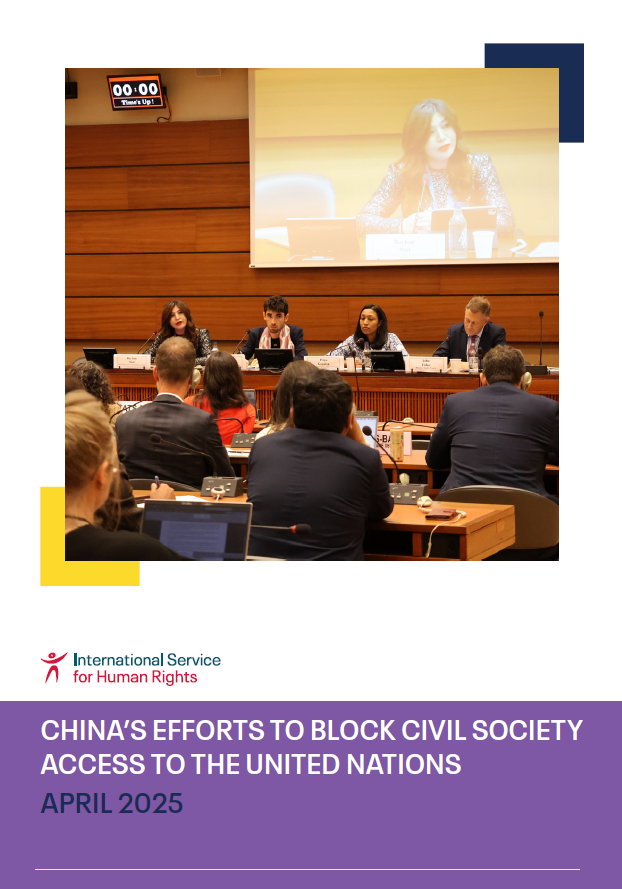
In a new report, ISHR analyses China’s tactics to restrict access for independent civil society actors in UN human rights bodies. The report provides an analysis of China’s membership of the UN Committee on NGOs, the growing presence of Chinese Government-Organised NGOs (GONGOs), and patterns of intimidation and reprisals by the Chinese government.

In the report, published on 28 April 2025 the International Service for Human Rights (ISHR) uncovers the tactics deployed by the Chinese government to restrict access to UN human rights bodies to independent civil society actors and human rights defenders, and intimidate and retaliate against those who do so.  

These tactics include using its membership of the UN Committee on NGOs to systematically defer NGO applications, increasing the presence of GONGOs to limit space for independent NGOs and advance pro-government narratives, systematically committing acts of intimidation and reprisals against those seeking to cooperate with the UN, weaponising procedural tactics to silence NGO speakers and threatening diplomats not to meet with them, and opposing reform initiatives and efforts at norm-setting on safe and unhindered civil society participation at the Human Rights Council. 

These tactics strongly contrast China’s stated commitment to being a reliable multilateral leader. They stem from the Chinese Party-State’s primary foreign policy objective of shielding itself from human rights criticism and enhancing its international image by restricting and deterring critical civil society voices, crowding out civil society space with GONGOs, and stalling and diverting reform initiatives. 

While China is the focus of this report, the issues addressed are systemic. Based on this report’s findings, ISHR puts forward a set of targeted recommendations to UN bodies and Member States, aimed at protecting civil society space from interference and restrictions. The recommendations are designed to strengthen UN processes and prevent any State from manipulating international mechanisms to suppress independent voices. These include: 

  • Reforming the Committee on NGOs to increase transparency, limit abuse of deferrals, and ensure fair access to UN bodies for independent NGOs;
  • Strengthening protection mechanisms against reprisals, including rapid response to incidents inside UN premises, public accountability for perpetrators, and consistent long-term follow-up on unresolved cases; 
  • Curbing the influence of GONGOs by distinguishing clearly between independent and State-organised NGOs, and better documenting their presence and impact; and, 
  • Strengthening measures at the Human Rights Council and other UN bodies to make civil society participation safer, more inclusive, and less vulnerable to obstruction

The report has been featured prominently in a global investigation by the International Consortium of Investigative Journalists (ICIJ) launched on 28 April 2025.

See also the earlier report in February 2023: https://humanrightsdefenders.blog/2023/02/08/ngo-report-on-chinas-influencing-of-un-human-rights-bodies/

https://ishr.ch/defenders-toolbox/resources/un-access-china-report

https://www.france24.com/en/live-news/20250428-china-deploys-army-of-fake-ngos-at-un-to-intimidate-critics-media-probe

Spread of ‘foreign agent’ laws in Eastern Europe

February 27, 2025

Natika Kantaria is a human rights advocate with nearly a decade of experience planning and implementing advocacy campaigns in human rights. She has worked with international organizations and watchdog NGOs and collaborated with the public and private sectors. For the ISHR she wrote a piece on 26 February 2025 about a worrying trend: ‘Foreign agent’ laws have been introduced in various countries, violating international human rights law and threatening to silence human rights defenders. This pattern is particularly evident in Eastern Europe, where NGOs courageously resist and need the support of the international community. See e.g. my earlier posts:

Societies thrive when everyone can work, speak out, and organise freely and safely to ensure justice and equality for all. Legislation requiring NGOs to register as ‘foreign agents’ is a barrier to this virtuous cycle. Despite the European Court of Human Rights’ 2022 ruling that Russia’s 2012 foreign agent law violated freedom of expression and association, the governments of HungaryGeorgiaSlovakiaSerbia, and Bosnia and Herzegovina have proceeded undeterred to introduce similar laws. 

These laws specifically target NGOs and not-for-profits that receive foreign funds and require them to register as foreign agents, organisations serving the interests of a foreign power, or agents of foreign influence. By doing so, they restrict the capacity of  human rights defenders to organise, participate and exercise their right to defend rights by:

  • imposing disproportionately high fines and heavy sanctions to NGOs refusing to comply, which may ultimately lead to the termination of their operations 
  • using vague wording, that ultimately gives too much room and power for government interpretation. For instance, the requirement for NGOs to register in official records or identify themselves as ‘agents of foreign influence’ lacks clarity and specificity.  
  • increasing the burden of NGOs by introducing heavy reporting and auditing requirements. The State’s alleged need for transparency as their primary purpose can, therefore, be effectively addressed through existing legislation regulating NGOs.
  • employing a negative narrative that stigmatises and delegitimises the work of the civil society organisations and human rights defenders. This rhetoric promotes hostility and distrust toward civil society and encourages attacks against defenders.

Furthermore, such laws contradict the commitments of these countries under international human rights law. Article 13 of the 1998 UN Declaration on human rights defenders recognises the right of defenders to solicit, receive and utilise resources.

Article 10 of the Declaration +25, a supplement to the UN Declaration put forward in 2024 by civil society, human rights defenders and legal experts, addresses States’ attempts to prohibit foreign contributions or impose unjustified national security limitations. It stipulates that States should not hinder financial resources for human rights defenders and outlines measures to prevent retaliation based on the source of their funding. These laws violate rights related to freedom of expression, association, and privacy, as outlined in the European Convention on Human Rights (ECHR) and International Covenant on Civil and Political Rights. Foreign agent laws also run counter to commitments made by countries at the regional level as members of the Council of Europe (CoE) and the Organization for Security and Co-operation in Europe (OSCE), including recommendation CM/Rec(2018)11, which emphasizes the protection and promotion of civil society space and OSCE guidelines for protecting human rights defenders. 

NGOs are increasingly becoming a primary target for repressive governments. According to the CIVICUS Monitor 2024 report, the countries mentioned above that have introduced ‘foreign agent’ laws have either ‘closed’ or ‘obstructed’ civil society space. In addition, the Trump administration’s rhetoric and its decision to freeze foreign aid have contributed to strengthening hostile narratives already present in ‘foreign agent laws’ in Eastern Europe and have emboldened governments in their efforts to publicly undermine these organisations.  

While the silencing of NGOs has become part of the agenda for many governments, and the rise of ‘foreign agent’ laws serves as a step towards establishing authoritarian regimes, civil society actors continue to mobilise in response. Strengthening engagement with international human rights mechanisms, fostering joint global advocacy, and providing support to targeted organisations and groups are essential steps that international NGOs and the international community should take to build resistance, reinforce coalition efforts, and protect the work of human rights defenders.

International and regional human rights mechanisms have called for governments to either repeal these laws, or not to adopt them in their current forms. On 7 February 2025, three UN independent experts issued a statement in relation to Bosnia and Herzegovina, where the government reintroduced the ‘Law on the Special Registry and Publicity of the Work of Non-Profit Organisations’ after its initial withdrawal in May 2024. The statement stressed that creating a register of non-profit organisations receiving foreign funding in one of the entities of Bosnia and Herzegovina will impose severe restrictions on NGOs and would grant government control over their operation, including the introduction of an annual inspection, with further reviews of legality of CSOs receiving foreign funding possible upon requests from citizens or relevant authorities.

In this unsupportive environment, donors have a fundamental role to play. ‘As civil society actors devise strategies to push back against these repressive tactics, private philanthropy and bilateral and multilateral donors have vital support roles to play,’ writes James Savage, who leads the Fund for Global Human Rights’ (FGHR) programme on the Enabling Environment for Human Rights Defenders. ‘They can help civil society prepare for future challenges, so that it is organised not only to respond to evolving forms of repression but also to get ahead of them by tackling their root causes,’ Savage concludes.

https://ishr.ch/latest-updates/spread-of-foreign-agent-laws-in-eastern-europe-pose-increasing-threats-to-civil-society

Egyptian NGOs demand apology after closure of 13-year case over lack of evidence

April 1, 2024

Hossam Bahgat is demanding an apology and remedy after a travel ban and freeze on his assets was reversed on 20 March 2024 (AFP/Mada Masr/file photo)

On 22 March 2024 MEE reported on a very interesting development in Egypt, where dozens of rights defenders have been affected by travel bans and asset freezes for over decade in a ‘politically motivated’ case [see also: https://humanrightsdefenders.blog/tag/hossam-bahgat/].

Egypt has announced the closure of a 13-year landmark case in which human rights defenders were accused of receiving illicit foreign funding – but those affected by the allegations are demanding justice. An investigative judge on Wednesday declared the closure of case 173/2011, known in the media as the “foreign funding case”, due to what he described as “insufficient evidence”.

The case has been widely denounced as a politically-motivated attack on Egypt’s civil society.  Judge Ahmed Abdel Aziz Qatlan’s decision marks the end of a probe against 85 organisations. It also means an end to asset freezes and travel bans imposed on members of these organisations, he added.

Before the decision on Wednesday, accusations against most of the organisations implicated had already been dropped and this week’s decision only affects five organisations. 

These were the Egyptian Initiative for Personal Rights (EIPR); the Arabic Network for Human Rights Information (ANHRI); the Arab Penal Reform Organisation; the Cairo Institute For Human Rights Studies; and Al-Nadeem Center for  Rehabilitation of Victims of Violence.

Rights groups and human rights defenders have called for an apology and compensation for the defendants. Hussein Baoumi, foreign policy advocacy officer at Amnesty International, who had previously monitored the case as Amnesty’s Egypt researcher, said the closure of the case is a welcome step but is “long overdue”.

“The government must issue a public apology and compensate the human rights defenders for years of smearing and punitive measures, merely because they defended the rights of millions of people,” he told Middle East Eye.

Baoumi expressed cautious optimism about the government’s respect for the court decision. “It is too early to say if this marks a serious shift in the government’s crackdown on civil society,” he said. “Closing case 173 must be followed by lifting all travel bans and asset freezes against human rights defenders, all those arbitrarily detained must be released and the NGO law must be amended to bring it in line with Egypt’s obligations.”

Hossam Bahgat, director of the EIPR, has been under a travel ban and barred from accessing his bank account for eight years. Following the closure of the case, he said he felt “vindicated but not relieved”.

He demanded “an official and public apology and restitution for the psychological and material damage resulting from this bogus case”. Gamal Eid, the founder of the ANHRI, welcomed the decision to lift his travel ban but said he still hopes for “the return of all the innocent and oppressed people to their families and loved ones”, referring to the estimated 65,000 political prisoners still languishing in Egyptian jails.

The Cairo Institute for Human Rights (CIHRs) said on Friday: “The decision does not remedy the injustices suffered by the dozens of human rights defenders targeted by the case over the course of the previous decade. Egyptian authorities must issue a formal apology to the victims of this persecution and compensate them for the losses and hardship they have been forced to endure.

Bahey eldin Hassan, CIHRs director, has been sentenced to 18 years in jail in absentia and his sentence remains in effect, the group said.  Hassan and dozens of other human rights defenders are currently living in exile because they fear arrest if they return to Egypt.

CIHR also called on Egypt to put an end to its ongoing crackdown on civil society and human rights defenders, including Ibrahim Metwally, Ezzat Ghoneim, and Hoda Abdelmoniem, who are still behind bars in connection with their work.

CIHR is calling for a review of Egypt’s counter-terrorism legislation and penal code to safeguard the freedom of human rights defenders to carry out their jobs without fear of reprisals. 

“Only through a comprehensive review of repressive Egyptian legislation, the releasing of the tens of thousands of peaceful political prisoners, and a genuine opening of public space, can Egyptian authorities demonstrate genuine political will to reform,” it said.

https://eipr.org/en/press/2024/11/eipr-executive-director%E2%80%99s-asset-freeze-lifted-after-eight-years-without-trial

https://www.middleeasteye.net/news/egypt-ngos-demand-apology-after-closure-13-year-case-over-lack-evidence

ISHR side event: SUPPORTING THE WORK OF HUMAN RIGHTS DEFENDERS

February 24, 2024
Photo: Freedom of Speech Includes The Press by Narih Lee under CC 2.0

INVITATION to the side event: IN DEFENCE OF CIVIC SPACE AND DEMOCRACY SUPPORTING THE WORK OF HUMAN RIGHTS DEFENDERS on Monday 26 February 2024, 1pm – 2pm CET, Room XXII, Palais des Nations, Geneva

Human rights defenders promote democracy and a vibrant civic space, too often, in dangerous circumstances. This event aims to discuss the crucial work of defenders, how the international community can best support them and how crucial gender equality is for the full realisation of democracy.

Speakers: 

Sviatlana Tsikhanouskaya, Leader of democratic forces (Belarus)

Dr. Sara Abdelgalil, Paediatric Consultant NHS UK, Democracy & Governance Advocate, Active member of Sudanese Diaspora

Phil Lynch, Executive Director, International Service for Human Rights

Elina Valtonen, Minister for Foreign Affairs, Finland

Moderator: Imogen Foulkes, BBC Geneva

A light lunch will be served. The event will be recorded and published as a podcast (Inside Geneva, produced by Swiss Broadcasting).

Download flyer here

Report of a UN consultation on law enforcement’s role in peaceful protests

February 21, 2024

On 16 February, 2024 Sandra Epal Ratjen & Nicolas Agostini in Global Rights reported on a UN consultation on law enforcement’s role in peaceful protests which brought together practitioners and human rights defenders.

Over two days in Geneva, the UN special rapporteur on freedoms of peaceful assembly and association, Clément Voule, the UN Human Rights Office (OHCHR), and the UN Office on Drugs and Crime (UNODC) convened a consultation on the facilitation of peaceful protests by law enforcement. The event followed several regional workshops, organized in accordance with Human Rights Council resolution 50/21, which requested that the special rapporteur develop “technical and practical tools . . . to assist law enforcement officials in promoting and protecting human rights in the context of peaceful protests.” There was nothing unusual in this format—or in the event’s title. But despite its attractive feel (at least for human rights geeks), it ran the risk of turning into yet another academic discussion replete with theorizing but offering little in the way of practical solutions. 

It turned out to be one of the most refreshing, engaging, and action-oriented human rights dialogues we’ve attended.

It’s about the makeup

What made the event rather unusual was its makeup. In addition to civil society members (public assembly, law enforcement, torture, and rule of law specialists attended), the consultation brought together practitioners from all over the world. By “practitioners,” we mean not just police watchdogs (oversight bodies and disciplinary authorities) but police officers and commanders, all on active duty. 

While some activists would draw back with a wince, those human rights defenders and organizations who were present engaged with an open mind, as did law enforcement personnel. Participants weren’t going to talk amongst themselves or only preach to the converted. They were going to try to bring about an actionable outcome. After all, their aim was to devise how law enforcement can facilitate peaceful assemblies and protect rights in such contexts.

Peer pressure was minimal. On all sides, there was nothing to “prove”: no need to adopt an intransigent position, no need to show you’re smart, no need to cajole anyone—there were only incentives to share expertise and experience. 

Sure, there were precedents. Recent workshops brought together practitioners and outlined best practices. For instance, the “Istanbul Process” meeting on promoting religious tolerance held in Singapore was practitioner-centric. Since then, however, the Istanbul Process has collapsed as the Organization of Islamic Cooperation (OIC) revived the “defamation of religions” agenda.

Without naïveté but considering the “real-world” nature of the outputs of this process, we’re confident that the work done under the auspices of Clément Voule, OHCHR, and UNODC will, to some extent, enhance human rights compliance in police practice and benefit both peaceful protesters and law enforcement officials. Notably, the outcome documents are less technical than most human rights documents. 

It’s also about the substance

The consultation was also innovative because of its hands-on approach. In addition to the main working document, a “Model Protocol” for the law enforcement facilitation of peaceful protests, the project led by Clément Voule and his team, OHCHR, and UNODC will produce a “Handbook” and a “Checklist” for law enforcement professionals. The latter two will be practical documents guiding police practice. 

The magnitude and diversity of experiences in the room meant that discussions were light-years away from sterile sloganeering or divisive debates—the kind we see on social media. On civil society’s side, no one advocated “defunding the police.” On the police side, no one advocated for qualified immunity. All participants created a fertile ground for dialogue on how to ensure human rights-compliant, competent, and respected law enforcement that is able to facilitate, not hinder, public assemblies. 

Civil society participants recognized the need for well-funded, well-trained police. We kept in mind (and were reminded of) the realities of the job—what the average law enforcement officer faces daily. The challenges include understaffing, lack of adequate training, and, quite simply, fear (facing a crowd, even peaceful, will never feel like sitting on your sofa sipping a Whiskey Sour). Law enforcement participants, for their part, recognized the need for accountable police behavior and to confront discrimination and abuses of power. They kept in mind (and were reminded) that to be respectful is a sine qua non to be respected.

Also reviewed were “prior to protest,” “during protest,” and “after protest” issues, plus the situation of specific groups and accountability for violations. One section addressed police well-being, which is essential to human rights compliance, as strained police officers are much more likely to engage in misconduct. We didn’t shy away from addressing sensitive issues—police brutality, accountability, or budgeting. 

It wasn’t an echo chamber, but participants agreed on key points. Among others: the role of police vs. the role of prosecution; the need for effective communication between protesters and police, de-escalation, and adequate training for police officers; or the fact that a clear distinction must always be made between peaceful and non-peaceful elements of an assembly. 

It was a far cry from the way these conversations unfold online, and once again, one can see the toxicity of social media. Instead of fostering healthy discussions (differences aren’t that wide between most people), social media algorithms artificially promote simplistic views, entrench positions, and elevate the most divisive topics. This process distracts those seeking solutions from problem-solving. No one benefits from this situation—certainly not rights-holders. 

Don’t forget political will 

Assuredly, the outcomes of this consultation will go unheeded in many countries, where protests are rare or police have total impunity. Elsewhere, not much will happen without political will. 

But the beauty of this consultation is that political will to facilitate assemblies won’t need to come from the highest level. Once publicly available, the outcome documents—particularly the Handbook and Checklist, with their guidelines on communication, de-escalation, and risk assessment regarding protests—will be available for law enforcement agencies and officers at all levels to use. The ideal scenario, of course, will be governments publicly committing to using the outcome documents.

The final documents will stem from a dialogue that brought together people with hands-on experience who tried to build bridges and maximize their chances of having an impact on the ground. This model should inform future human rights dialogues.

The Protocol, Handbook, and Checklist will be presented at the next session of the UN Human Rights Council, February 26–April 5, 2024. Clément Voule will make his last appearance as special rapporteur. For his successor—and for all people of goodwill who want to see peaceful protests proceed without hindrance, as well as rights-compliant law enforcement, joint work will be needed to popularize, operationalize, and implement the documents. 

https://www.openglobalrights.org/sandra-Epal-Ratjen/Human-rights-dialogue-we-need

More on the EU Visa Framework for at-risk Human Rights Defenders

December 21, 2023

An initiative of ProtectDefenders.eu, the EU Human Rights Defenders Mechanism implemented by international civil society

Human rights defenders have the right to carry out their legitimate work safely and to access support and protection when they are at risk, especially those who operate in the most difficult contexts. Their right to defend rights has been systematically enshrined by the European Union in its political guidelines, and statements, as well as in its financial programming and external actions. In fact, the European Union is a leading actor in the promotion and protection of human rights in the world and it is regarded by the human rights defenders’ community as an invaluable source of empowerment and legitimacy. [see the call of 2022:https://humanrightsdefenders.blog/2022/09/24/call-for-an-eu-visa-framework-for-at-risk-human-rights-defenders/]

Human rights defenders often carry out their work at great personal risk, and increasingly face killings, attacks, threats, and acts of intimidation because of their peaceful activities, in addition to being subjected to repression, restrictive legislation, and judicial harassment. For these at-risk human rights defenders, the possibility of accessing a visa to a European territory emerges as an essential security and protection tool, which empowers them to carry out their activities in their countries in a more secure and protected way. Visas and multiple-entry visas are widely regarded by the international human rights defenders community as a vital element of a comprehensive security strategy, one that enables defenders to consider the possibility to move in and out of their country in a way that allows them to manage the level of risk that they face as a result of their work, and to continue to work in their communities without forcing them to resort to permanent asylum paths when facing aggravated threats. However, despite political commitments and existing guidelines, the EU and its member states’ stated support for human rights defenders is not consistent with the current EU visa policies and practices, as human rights defenders at risk around the world lack consistent procedures to effectively and predictably access visas for the EU territory.

The community in support of human rights defenders, including the Consortium of organisations implementing the European Union Human Rights Defenders mechanism ProtectDefenders.eu, have systematically noted and documented with great concern the numerous, diverse, and blatant obstacles for defenders to access EU visas. ProtectDefenders.eu – which has supported 45,000+ human rights defenders and civil society organisations to continue their work in the most difficult situations since 2015 – encounters these obstacles also in relation to its daily operations delivering EU-funded programmes of practical support for human rights defenders. Every day, human rights defenders face an array of impediments that hinder their access to this essential security and protection tool, preventing them from accessing safe haven when necessary, as well as from engaging in existing opportunities for rest and respite and temporary relocation programmes, or carrying out essential international advocacy, mobilisation, or networking activities in the EU territory.

This lack of reliable, predictable, and coherent access for human rights defenders to EU visas unnecessarily aggravates the risk, isolation, and vulnerability they face as a result of their work – which is exacerbated for those defenders belonging to particularly threatened groups – such as women human rights defenders, LGBTI rights defenders, or indigenous rights defenders; for those facing spurious criminalisation processes aimed at impeding their mobility, or for those without secure access to basic travel documents. Major crises affecting human rights defenders and massive backlash against civil society notoriously reveal the gap in the effective implementation of the EU political commitments and guidelines related to visas, as recently illustrated by the demand for support from those human rights defenders and civil society members in Afghanistan in need of urgent evacuation. A more predictable, coordinated, and consistent policy on visas for human rights defenders – allowing for flexible and reactive protocols in critical situations, would reportedly have avoided, or at least mitigated the deficiencies of the EU response, or lack thereof.

With the exception of the positive examples of current good practices and initiatives implemented by some Member States, European institutions, or political actors in the EU, the EU as a whole has yet to make a serious effort to mainstream access to at-risk human rights defenders in their visa policies. The current legislative instruments and established practices fail to comply with the consistency required for the Union’s actions enshrined in the EU Treaties and attest to a lack of harmonisation, effort-sharing, and coordination among both the Member States and the European institutions.

ProtectDefenders.eu and the international civil society organisations participating in this initiative are convinced that with political will and clear guidelines, the EU can and should return to its political mandate in favour of human rights and human rights defenders, and lead on the implementation of concrete initiatives, good practises, and policy changes to ensure that at-risk human rights defenders can access European Union visas with guarantees, security, and predictability.

ProtectDefenders.eu and the international civil society organisations participating in this initiative are calling on all European Union actors to urgently implement all appropriate measures at all levels to develop and promote an enabling framework for human rights defenders to access visas for the EU, one that guarantees predictability, consistency, and protection for those who are most at-risk HRDs.

More specifically, ProtectDefenders.eu and the international civil society organisations participating in this initiative call on the EU stakeholders to:

  • propose a specific facilitated procedure for human rights defenders within the EU Visa Code, setting common criteria and defining the elements of a facilitated procedure;
  • include instructions in the EU Visa Handbook on granting facilitations to HRDs and their family members;
  • work towards amending the legal instruments on visas, particularly the Visa Code,
  • create an EU Directive to protect Human Rights Defenders (HRDs), outlining ways to support and protect them in accessing and staying in the EU, as well as meeting their support needs to continue their work. The Directive would provide a legal tool to grant HRDs at risk access and stay in the EU for a specified time.; and
  • introduce amendments to the Temporary Protection Directive that allow temporary protection status in the EU to be granted to defenders at risk.

see also: https://bnnbreaking.com/breaking-news/human/fra-report-proposes-changes-to-eu-visa-code-handbook-for-human-rights-defenders/

Human Rights Defenders in Europe fear George Soros retreat

September 1, 2023

Philip Oltermann on 19 August 2023 reports that ΗRDs fear the billionaire’s legacy will be lost as his Open Society Foundations curbs its activities across the EU

Soros survived the Nazi occupation of his native Hungary, made a fortune on Wall Street and became one of the most steadfast backers of democracy and human rights in the eastern bloc. But human rights activists and independent media fear the legacy of billionaire philanthropist George Soros, 93, could be about to be undone in his homelands, as his donor network announced it will curb its activities across the EU from 2024.

Several beneficiaries of Soros’s Open Society Foundations (OSF), chaired since the start of this year by his son Alex, told the Observer they would struggle without its support amid an authoritarian rollback.

When the Open Society Foundations left Budapest under severe political pressure in 2018, they said they would lose their physical presence but not their focus on the region,” said Márta Pardavi, co-chair of the Hungarian Helsinki Committee, a Budapest human rights NGO supported by the foundations. But she added: “Has there really been such a positive shift in Europe over the last five years that that promise has become less relevant?”

In a July email to staff, the OSF management announced a “radical redesign to help us deliver more effectively on our mission”. “Ultimately, the new approved strategic direction provides for withdrawal and termination of large parts of our current work within the European Union, shifting our focus and allocation of resources to other parts of the world,” it said.

While 40% of the charity’s global staff will be laid off, cuts will be severest in Europe, with the 180 headcount at its Berlin headquarters cut by 80%. Staff remaining in the German capital will mainly administer the foundation’s funds in Switzerland.

Its Brussels offices will be downsized, while a branch in Barcelona will be closed by the end of the year. Of an erstwhile seven branches in the post-Soviet area only three remain in Kyrgyzstan, Ukraine and Moldova.

Many European NGOs, think tanks and research groups working on issues ranging from media freedom and migrants’ rights to state surveillance and digital regulation rely on the foundations, which spent $1.5bn on philanthropic causes in 2021.

As traditional European media outlets have struggled to live up to their role amid a drop in advertising revenue, OSF has stepped in to support independent news projects including the Organized Crime and Corruption Reporting Project (OCCRP), London-based Bureau of Investigative Journalism and Forbidden Stories, an encrypted online platform that allows threatened journalists to securely upload their work and be continued by others.

Alex Soros, who grew up and was educated in the US, said: “The Open Society Foundations is changing the way we work, but my family and OSF have long supported, and remain steadfastly committed to the European project.”

The foundations say they will continue support for European Roma communities. Even critical employees expressed confidence the foundations could commit more to longer-term projects, just fewer of them.

Yet while a profound change to the structure of the organisation has long been signalled by Soros senior, the decision to achieve this via drastically reducing its headcount seems to have only emerged has been a priority under its new board of directors. Once jokingly referred to by employees as Soros’s “reading group”, the board has been slimmed down to a tighter unit dominated by family members since the baton was passed to Soros junior.

“The OSF is one of the few bodies that hand out unrestricted core funding,” said one grantee, who asked to remain anonymous amid uncertainty over the foundation’s future strategy. “It’s what keeps the light on for human rights defenders in Europe.”

Berlin has been the hub of the foundations’ European operations after the 2018 closure of the Budapest branch under pressure from the government of strongman Viktor Orbán, once a recipient of Soros’s support.

Last week the Hungarian prime minister’s political director Balázs Orbán (no relation) posted a message on social network X, formerly known as Twitter, in which he called the Open Society Foundation “the Soros empire”. “We only truly believe that the occupying troops are leaving the continent when the last Soros soldier has left Europe and Hungary,” he said.

“If you invest in democracy, you can never expect it to yield quick returns,” Márta Pardavi said. “The need for democracy-building never really goes away. And I think George Soros knew that.”

https://www.theguardian.com/business/2023/aug/19/george-soross-retreat-from-europe-could-turn-off-the-lights-for-human-rights

Five Rights Defenders in Burundi should be released immediately

March 14, 2023
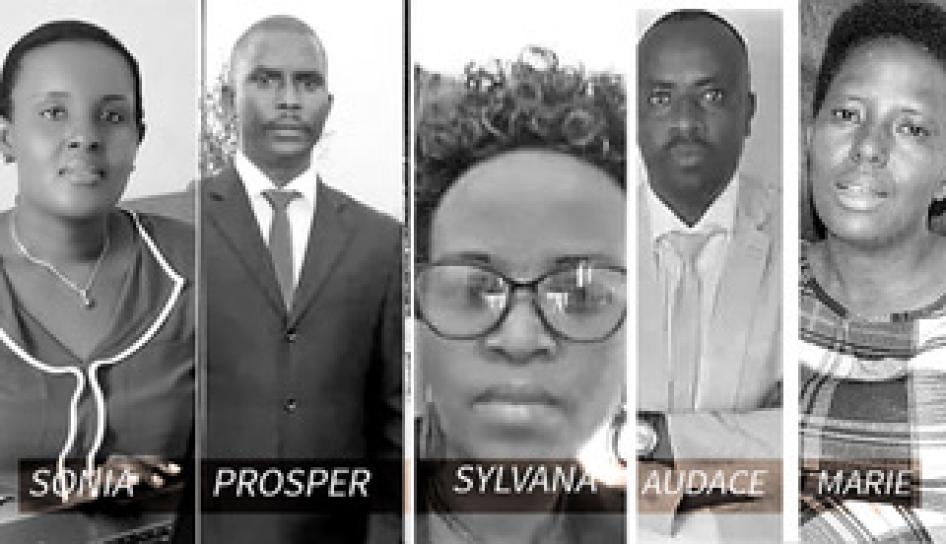
From the left to the right, Sonia Ndikumasabo, Prosper Runyange, Sylvana Inamahoro, Audace Havyarimana and Marie Emerusabe.
From the left to the right, Sonia Ndikumasabo, Prosper Runyange, Sylvana Inamahoro, Audace Havyarimana and Marie Emerusabe. © 2023 Private

Burundian authorities should immediately and unconditionally release five human rights defenders arbitrarily arrested on February 14, 2023, and drop the baseless charges against them, Amnesty International, the Burundi Human Rights Initiative, and Human Rights Watch said on 14 March 2023.

The five human rights defenders are accused of rebellion and of undermining internal state security and the functioning of public finances. The charges appear to relate only to their relationship with an international organization abroad and the funding they have received from this organization. Two of the defenders work for the Association of Women Lawyers in Burundi (Association des femmes juristes du Burundi, AFJB) and three for the Association for Peace and the Promotion of Human Rights in Burundi (Association pour la paix et la promotion des droits de l’Homme, APDH).

“The arrests of the five human rights defenders and the serious charges brought against them signal a worsening climate for independent civil society in Burundi,” said Clémentine de Montjoye, Africa researcher at Human Rights Watch. “If working in partnership with or receiving funding from international groups is treated as a criminal offense and a threat to state security, what little space was left for civil society to operate in Burundi will be closed.

On February 16, Martin Niteretse, Minister of Interior, Community Development and Public Security, accused the organizations of working with an international nongovernmental organization. Intelligence agents arrested four of the defenders – Sonia Ndikumasabo, president, and Marie Emerusabe, general coordinator, of AFJB; Audace Havyarimana, legal representative, and Sylvana Inamahoro, executive director, of APDH – on February 14 at Bujumbura’s Melchior Ndadaye Airport as they were preparing to fly to Uganda for a meeting with partners.

Prosper Runyange, the APDH land project coordinator, was arrested in Ngozi on February 14 and transferred to Bujumbura the next day. The five defenders were held at the National Intelligence Service (Service national de renseignement, SNR) headquarters in Bujumbura, then transferred to Mpimba central prison in Bujumbura, on February 17. On March 2, the high court of Ntahangwa in Bujumbura confirmed their pretrial detention.

The two organizations work on gender-based violence and land rights and are officially registered in Burundi. They help some of the most marginalized groups in Burundian society. The judicial authorities’ decision to pursue prosecution of the defenders, apparently solely on the grounds of their organizations’ partnership with and funding from an international organization, has triggered fears of another civil society crackdown in Burundi and undermines the president’s stated reform agenda, the organizations said. In October 2018, the authorities suspended the activities of most foreign organizations in Burundi and forced them to re-register, which included submitting documentation that stated the ethnicity of their Burundian employees.

The government policy, based on a law on foreign nongovernmental organizations, adopted in January 2017, caused some international organizations to close their offices in Burundi because they disagreed with government-imposed ethnic quotas and objected to the requirement to provide information on the ethnicity of their staff. Some said they feared that submitting this information could put their employees at risk of ethnic profiling and targeting.

The charges of endangering state security and rebellion against these five human rights defenders are absurd,” said Carina Tertsakian from the Burundi Human Rights Initiative. “If the authorities have questions about their sources of funding, these can be solved through normal administrative channels, as provided for by the law.”

During late President Pierre Nkurunziza’s third and final term, from 2015 to 2020, independent civil society and media were often targeted, and their members attacked, forcibly disappeared, detained, and threatened. Scores of human rights defenders and journalists fled the country and many remain in exile. There has been almost total impunity for these crimes.

Since President Évariste Ndayishimiye came to power in June 2020 and despite his promises to restore freedom of expression and association, the government’s hostility toward Burundi’s once thriving civil society and media remains. The arrests of the five rights defenders followed the conviction, on January 2, 2023, of an online journalist, Floriane Irangabiye, to 10 years in prison, on charges of “undermining the integrity of the national territory” in violation of her rights to free speech and to a fair trial.

These latest arrests and Irangabiye’s conviction reverse a brief moment of optimism after the acquittal and release, in December, of Tony Germain Nkina, a lawyer and former human rights defender who spent more than two years unjustly imprisoned on unsubstantiated charges of collaboration with a rebel group. Twelve human rights defenders and journalists in exile were convicted in June 2020 of participating in a May 2015 coup attempt. The verdict, which was only made public in February 2021, came after a deeply flawed trial during which the defendants were absent and did not have legal representation, flouting the most basic due process principles. The 12 were found guilty of “attacks on the authority of the State,” “assassinations,” and “destruction.”

The arrest of Ndikumasabo, Emerusabe, Havyarimana, Inamahoro, and Runyange appears to be designed to punish the human rights defenders and their organizations for collaborating with an international organization, obstruct their organizations’ activities, and intimidate other activists. Such behavior belies Burundian authorities’ claims that they respect human rights and further stains the image of openness and reform that they try to project internationally, the organizations said.

“Actions speak louder than words,” said Flavia Mwangovya, Deputy Regional Director at Amnesty International. “If the Burundian authorities want their human rights promises to be taken seriously, they should allow civil society to do its valuable work – including defending and assisting victims of human rights violations – without harassment.”

https://www.hrw.org/news/2023/03/14/burundi-free-five-rights-defenders

Algerian League for the Defence of Human Rights (LADDH) shut down

February 9, 2023

Eric Goldstein, Deputy Director, Middle East and North Africa Division of Human Rights Watch, wrote on 8 February 2023 about the demise of Algeria’s first independent human rights league, and do so with a personal touch.

Ali Yahia Abdennour, long-time president of the Algerian League for the Defense of Human Rights.
Ali Yahia Abdennour, long-time president of the Algerian League for the Defense of Human Rights, receiving an award from Human Rights Watch in New York in 1992. © 1992 Human Rights Watch

Shortly after I started my first human rights job in 1986, Amnesty International issued an alert about a group of Algerians sentenced to up to three years in prison for creating the country’s first independent human rights league.” The league became a fixture of the transnational Arab human rights movement in the early 1990s. Those events came to mind as I learned of an Algerian court’s decision, issued in 2022 but made public in January 2023, to dissolve the league, in response to a petition by the ministry of interior. The court found that the group had violated Algeria’s regressive law on associations by failing to “respect national constants and values” when it met with nongovernmental organizations “hostile to Algeria” and engaged in “suspicious activities” such as “addressing … the issue of illegal migration” and “accusing the authorities of repression of protests.”

The LADDH loudly denounced abuses during the bloody 1990s. After the terrorism and savage repression of that decade subsided, the League accompanied families of the disappeared in demanding answers and justice. Recently, it supported protesters of the peaceful Hirak movement that burst onto the scene in 2019, demanding political reform. Ali Yahia Abdennour, who was among those arrested in 1985 and served as president of the LADDH for decades, died at 100 in 2020.

The LADDH is the latest of several independent organizations authorities have shut on flimsy pretexts. They have jailed hundreds of Hirak protesters for peaceful expression and practically obliterated Algeria’s independent media – another product of the 1989 reforms – most recently by arresting on December 24 Ihsane Kadi and sealing the offices of his two online outlets, Radio M and Maghreb Emergent.

Fearing arrest, activists have been fleeing the country when they have not been arbitrarily blocked at the border, including three prominent League figures now in exile in Europe.

The pretexts used to shut Algeria’s flagship human rights organization are no less absurd than those used to convict its founders four decades ago. Though much has changed since the 1988 protests, Algeria is governed once again by those who brook almost no dissent.

https://www.hrw.org/news/2023/02/08/algeria-shuts-down-its-flagship-rights-group