Posts Tagged ‘Civil society’

Human Rights Defenders are too often forced to play ‘whack-a-mole’

September 22, 2015

On 18 June 2015, Rachel Ball, Director of Advocacy at the Human Rights Law Centre in Australia, reflects on a cross-regional consultation of human rights defenders facilitated by ISHR:

There’s a game that you sometimes find at amusement arcades called whack-a-mole. Toy moles rise out of their holes at random and the player uses a large mallet to whack the moles on the head and force them back into their holes. A successful player needs vigilance, composure and a quick eye. 

For human rights defenders, the protection of civil society space is a lot like a game of whack-a-mole. Threats arise without warning and valuable time, resources and energy are spent opposing them. 

Almost one year ago, the Human Rights Council passed a resolution urging States to ‘create and maintain, in law and in practice, a safe and enabling environment in which civil society can operate free from hindrance and insecurity’. In too many cases the Human Rights Council’s resolution has not translated into domestic action and last week in Geneva ISHR convened a group of expert whackers from around the world to share their experiences of threats to civil society space and strategies to counter those threats.

Participants discussed anti-protest laws, restrictions on the establishment and funding of civil society organisations, constraints on the work of journalists, and national security and counter-terrorism laws that unduly restrict freedom of association and assembly. Each of these restrictive practices constitutes a current threat to civil society space in my country, Australia, and it was both troubling to see the regularity with which these laws and policies arise around the world, and encouraging to be exposed to the skill and dedication of human rights defenders working to defeat them.

We discussed and debated strategies for protecting civil society space, including building and maintaining strong coalitions, engaging with UN human rights mechanisms and other international actors, working with Governments and legislatures, strategic litigation, monitoring and reporting and working with the media and social media. We shared stories of success as well as failure.  

What was abundantly clear during the ISHR convening was that human rights defenders should not be spending their time whacking moles. Beyond our work protecting civil society space, we are engaged in issues like persecution on the basis of sexual orientation and gender identity, militarisation, sustainable development, climate change and refugee rights, to name a few.

The contribution of civil society actors to human rights challenges like these is vital. As the UN High Commissioner for Human Rights, Zeid Ra’ad Al Hussein, told the Human Rights Council at the opening of its 30th session last week, ‘When ordinary people can share ideas to overcome common problems, the result is better, more healthy, more secure and more sustainable States. It is not treachery to identify gaps, and spotlight ugly truths that hold a country back from being more just and more inclusive. When States limit public freedoms and the independent voices of civic activity, they deny themselves the benefits of public engagement, and undermine national security, national prosperity and our collective progress. Civil society – enabled by the freedoms of expression, association and peaceful assembly – is a valuable partner, not a threat.’ 

In addition to enabling civil society through the proper protection of freedom of expression, assembly and association, States should make public commitments to support civil society and protect civil society space. Those commitments should be backed up by legal and institutional protection against intimidation and reprisals, support for the establishment and operation of non-government organisations and mechanisms to ensure transparency and accountability.

Human rights defenders will return home from ISHR’s consultation, training and advocacy program with their mallets at the ready, but really it would better if we didn’t have to use them at all.

You can follow Rachel on Twitter at @RachelHRLC.

Source: Civil society space and whacking moles | ISHR

see also: https://thoolen.wordpress.com/tag/civil-society-organisations/

Donors should work jointly against the wave of civil society repression

July 10, 2015

The Newsletter of the International Service for Human Rights of 5 June 2015 carried an interesting piece written by two representatives of donors that are very active in the area of protection human rights defenders.  Julie Broome, Director of Programmes with the Sigrid Rausing Trust, and Iva Dobichina, Programme Manager with the Open Society Foundation‘s Human Rights Initiative, wrote jointly about much-needed efforts to “turn the tide against the wave of civil society repression”.  The piece follows in toto below, but some of the key points are: Read the rest of this entry »

8 Must-Read Stories from the US Human Rights Reports selected by Catherine Russell

July 2, 2015
Catherine Russell, the U.S. Ambassador-at-Large for Global Women’s Issues, wrote in the Huffington Post of 1 July 2015 a piece which highlights 8 stories about women taken from the State Department’s annual human rights reports, that she says would not reach the evening news but are a must. Here is her selection:

2015-07-01-1435772655-6505904-HRRblog.jpg

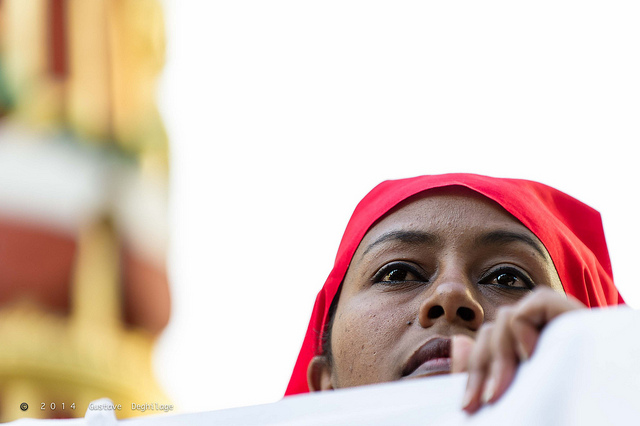
[Photo: Gustave Deghilage ]

In Nepal, a mother may be denied the ability to confer her Nepali citizenship to her children if the father’s identity is unknown or he is not Nepali. This is not uncommon: 27 countries discriminate against women in their ability to pass citizenship on to their children. Too often this results in a child who is stateless, meaning he or she may not be able to access basic services like health care and education.

In Afghanistan, a survey found that 39 percent of Afghan women between the ages of 20 and 24 were married before the age of 18 — making them part of a global trend where one in three girls in the developing world is married as a child — and Afghan women who marry later in life often don’t have a choice in their marriage. These stories and statistics exist despite laws against early and forced marriage.

A story in the Nigerian report highlights the case of a college student who reported that a soldier lured her to a police station and raped her repeatedly. The soldier was reportedly “disciplined” for leaving his post, but as of December nothing else had happened.

In Burma, there is an effort underway to enact legislation that would mandate that women can’t have children more than once every three years. There are obvious questions as to how such a law would be enforced. Many are concerned that it would only be enforced in areas where many members of minority groups live.

Fortunately, the news is not all bad.

In Afghanistan, the national electoral commission’s gender unit focused on women’s political participation in the 2014 election, and increased the number of women who helped determine their country’s future.

In Brazil, the federal government operates a toll-free nationwide hotline for women to report intimate partner violence, while in India, a partnership between state government and civil society led to the launch of a crisis center for survivors of rape, dowry harassment, and domestic violence.

Another partnership — between government and civil society in Guinea — is helping to educate Guinean health workers on the dangers of female genital mutilation. The report says that more than 60 health facilities have integrated FGM/C prevention into their services thanks to this effort.


You can follow Catherine Russell on Twitter: www.twitter.com/AmbCathyRussell

8 Must-Read Stories From the Human Rights Reports | Catherine Russell.

Baku Games defended by ‘NGO Coalition‘ in Azerbaijan

June 6, 2015
typical NGO coalition?
My earlier posts on the Baku Games [https://thoolen.wordpress.com/tag/azerbaijan/] would not be complete without a reference to what is being done by Government (here called “The Civil Society Coalition Support for the Baku 2015 first European Games”) which held a round table on “Double-standard approach of international organizations toward human rights” on June 2015.
Sometimes the best reply is to say nothing and show how the poor response is by voting the piece in full. Note that not a word was uttered about the content of the disputed article. Not even the beginning of a discussion on whether the human rights defenders in question should be in detention. One can only conclude that the facts as put forward by the 3 authors and international human rights organizations are correct:

“Delivering an opening speech at the event, Rufiz Gonagov, the coordinator of the Civil Society Coalition, chairman of the International Relations Research Center, said certain circles, which have an unfriendly attitude toward the relations with Azerbaijan, have already begun to express their concerns over the country as first European Games – the grandeur event of a global scale – is approaching.

Aydin Aliyev, the coordinator of the Civil Society Coalition, editor-in-chief of “Baku-xeber” newspaper, said in his speech that the European Parliament is due to hold hearings on the upcoming European Games and human rights situation on June 10.

“The article, co-written by UN Special Rapporteur on the situation of human rights defenders Michel Forst, OSCE Representative on Freedom of the Media Dunja Mijatović and Council of Europe Commissioner for Human Rights Nils Muižnieks, claims that representatives of international organizations and foreign human rights defenders undergo pressure in Azerbaijan as well. It is a groundless article which indicates double-standard approach of certain circles toward Azerbaijan as it is doing its utmost to hold the major sports event successfully,” Aliyev added.

Rauf Zeyni, the head of National NGOs Forum, said actions of anti-Azerbaijani circles pose a threat to the country’s independence, noting that as the Azerbaijani president stated, Azerbaijan will never give up its independence.

Alimammad Nuriyev, the chairman of the Center for Constitutional Studies, said the circles directed from a single center have already begun to take insidious actions as their attempts fail.

“I don’t remember such a statement was issued when people were shot during the Armenian parliamentary elections on February 19, two were shot dead on the eve of the elections in Georgia in 2011 and even after two Azerbaijanis were taken hostage by Armenians. However, these circles, including these three authors began to issue such a statement on the eve of the European Games,” he noted.

Vugar Rahimzade, the chief editor of “Iki sahil” newspaper, said these circles continue to demonstrate double-standard approach toward the negotiations on the settlement of the Nagorno-Karabakh conflict, Azerbaijan’s most painful problem.

“Some countries try to secure their own interests in Azerbaijan by putting pressure on the country through the UN, OSCE and the Council of Europe. Behind the veil of democracy, people are being killed in the Middle East. We need to adopt a statement against such international organizations to put an end to double standards toward Azerbaijan,” he added.

Politician Elman Nasirov said these circles changed the direction of pressure when they saw that Azerbaijan is fully ready to host the first European Games.

“The article co-written by the UN, OSCE and Council of Europe representatives is aimed against Azerbaijan’s policy. This pressure will continue after European Games,” he noted.

Hikmat Babaoglu, the editor chief of “Yeni Azerbaijan” newspaper, regarded the joint statement of the representatives of the three international organizations as an attempt to unite their pressure due to the increasing power of Azerbaijan.

At the end of the event, a statement was adopted on the behalf of civil society institutions and media outlets.”

APA – Round table ‘Double-standard approach of int’l organizations toward human rights’ held in Baku – PHOTO.

Voice of Libyan Women founder on how to break the cycle of violence

June 4, 2015

Canadian-born Libyan activist Alaa Murabit speaking at 2015 Oslo Freedom Forum (26 May) shows how ongoing conflict has affected daily life in Libya. She stresses the importance of acknowledging and integrating local communities in peaceful solutions, and focuses on the key role women in particular should play in peacebuilding. Murabit shares how her organization, the Voice of Libyan Women, organized the largest grassroots campaign in the country to address security issues, the cycle of violence, and the rights of women. She emphasizes that by creating cohesive and cooperative societies, rather than ones divided into factions, Libya can achieve peace and stability.

Lessons from the Pinochet regime by Andrés Velasco

June 2, 2015

https://youtu.be/E2y26RFZgxU

At the 2015 Oslo Freedom Forum on 26 May Chilean economist, Andrés Velasco, in highly personal account describes how political, economic, and social unrest led to the collapse of Chilean democracy in the 1970s. Growing up under Augusto Pinochet’s military dictatorship, Velasco is familiar with stories of political prisoners, torture, intimidation, and exile. Velasco argues that the extreme brutality of the military dictatorship became too difficult for most Chileans to face, allowing the violence to continue unhindered. As Velasco reminds us, however, Chilean civil society eventually united behind an incredibly creative political campaign, and succeeded in voting Pinochet out of power. Velasco ends his speech on an optimistic note, arguing that the common sense of Chileans will prevent another democratic collapse.

A woman who defends human rights: Irene Petras in Zimbabwe

May 22, 2015

Irene-Petras

Irene Petras is the Executive Director of Zimbabwe Lawyers for Human Rights (ZLHR). She told Protection International (on 14 April 2015) about the context in which human rights defenders must work in Zimbabwe.

Irene joined ZLHR in 2002 and has been its Executive Director since 2008. The organisation provides legal support services to the public through its in-house lawyers and its 200 members around the country. The organisation also engages in training and capacity building. The organisation meets with its members at least once a year to review their programmes and seeks to foster a culture of human rights in Zimbabwe and the wider African region.

Protection International: What was your personal motivation to engage in the defence of human rights?

Irene Petras: When I first started working, I was employed in private practice in Harare, the capital of Zimbabwe. In my daily interactions with the justice delivery system, I found that there were a lot of barriers for human rights defenders to access this system, in terms of high legal fees and a lack of lawyers that would actually understand the work of the defenders. That motivated me to start working for Zimbabwe Lawyers for Human Rights and really focus on this type of work.

It can be difficult at times to keep motivated. Particularly around election periods the work can be dangerous. The support and solidarity of other human rights lawyers keep me going. On the other hand, setbacks can also give me the motivation to continue and fight. At the moment, we have a new constitution (which came into effect in May 2013) with a lot of developments within the protection of accused persons and an expanded Bill of Rights. This has also renewed my energy as well as that of the organisation to focus more on protecting human rights defenders and promote social and economic rights, which were not constitutionally protected before.

PI: Can you say something about the context that Zimbabwe Lawyers for Human Rights work in?

IP: Of course, our members are lawyers who often work in the public eye due to the nature of the cases that they handle and the human rights defenders they represent. For this reason, they are subjected to surveillance, and have sometimes been assaulted or at times arrested and maliciously prosecuted whilst working on cases and interacting with people in various state institutions. There is a range of different ways that the lawyers have been targeted because of their work trying to defend human rights. For example, some have been arrested, charged with contempt of court or obstructing the course of justice, under a range of repressive laws. Of course, none of these prosecutions have been successful.

Criminalisation has become a force of habit for some of the state actors. Instead of rationalising their behaviour and seeing other people as human beings who are exercising their constitutionally protected rights and freedoms, they immediately resort to violations and use of laws and measures that criminalise the work of defenders. As they are not prosecuted or punished for such behaviour, I believe that’s why they keep using these tactics.

In fact, however, such tactics don’t really work; our cases advocating for human rights defenders have been very successful and in almost every single case we have handled since the project started in 2003, our clients have been acquitted.

Even though we’ve not had many human rights defenders convicted, they keep getting arrested and criminalised in other ways. The logical explanation for this continuation is that criminalisation is a means of retaining in power and that actors use these methods to try and stop civil society from calling for transparency and accountability for the actions state actors take as public officials.

……

PI: Do you see a difference in the way that male and female defenders are criminalised in Zimbabwe?

IP: On a general level, all human rights work can be criminalised, whether a man or a woman does the work. Having said that, there have been additional burdens for women defenders.

Zimbabwe has a very patriarchal society so there is a lot of pushback on women human rights defenders. The public opinion is that these women shouldn’t be getting out on the streets to demand their social and economic rights or becoming involved in legitimate political activity. …

PI: How are Zimbabwean WHRDs and organisations responding to criminalisation? 

IP: There have been different strategies. A lot has been linked to improving rights literacy and the importance of women participating in the society, be it at local or at national level. It is also important to have the ability to access a safety and security system that will allow the women to continue their work when an emergency has passed. In case of such an emergency, you need to be prepared with a good legal, medical, psychosocial response, as well as a welfare system. So when you’re in custody for some time, someone can take care of the children while you’re away.

…….

PI: Is it possible to prevent being criminalised in a context like that of Zimbabwe?

IP: We try to make the cost of criminalisation so high, that the perpetrators (whether at state or non-state level) reform or choose not to use these strategies. You’re increasing the cost if there’s legal defence for defenders and you’re able to be successful in these cases. You do this as well by showing a pattern of selective use of repressive legislation and publicising those trends and the identities of people that perpetrate such acts. Naming and shaming makes clear that the defender is not actually a criminal, but someone whose fundamental rights are being suppressed in a very systematic manner…

“We may not be able to change the habits of adults, who are set in their ways, but there is an opportunity to change the mind-set of how young people view human rights and they can become a real force for good.”

…..

PI: Do you want to share your hopes and dreams for the future?

IP: I wouldn’t know what I’d do if I wasn’t hopeful. There’s a joke that Zimbabweans are hopelessly hopeful. There is a very dedicated, vibrant human rights community in Zimbabwe with courageous people defending human rights. I hope that we continue to grow this network. You don’t want people to become so despondent that they give up. I think it’s important for us to continue and look for new ways of doing our work and how we can engage with people that we haven’t engaged with before….
More on her and other Women Who Defend Human Rights – Irene PetrasProtection International.

Draft laws on civil society restrictions also pending in Kyrgyzstan and Cambodia

May 21, 2015

Human rights defenders find it difficult to function with a fair and functioning legal regime for the creation and administration of associations (NGOs). In my post of yesterday on Russia I drew attention to the draft law declaring some NGOs ‘undesirable”. Today Human Rights Watch (HRW) called on Kyrgyz lawmakers in the coming days not to follow Russia’s bad example of passing a Foreign Agents law [see also my earlier: https://thoolen.wordpress.com/2013/09/13/kyrgyzstan-follows-bad-example-set-by-russia-foreign-agents/].

And also today Front Line and the Observatory for the Protection of Human Rights Defenders (a joint OMCT-FIDH programme) ask the Cambodian Government to withdraw its draft law on civil society which would create many uncertainties and restrictions. The NGOs trace the lack of consultation in the process of law- making (since 2010) and conclude that the draft law as it stands will be used arbitrarily to restrict the legitimate work of human rights organisations.

The text of the Open Letter by the Observatory can be viewed at:  Open Letter – Cambodia : Draft law on civil society.

https://thoolen.wordpress.com/2015/05/21/russia-human-rights-ngos-likely-to-become-officially-undesirable/

UN consultation on space for civil society

May 19, 2015

The High Commissioner for Human Rights is putting together a report of practical recommendations on how to create and maintain the space for civil society to work freely and independently. The freedom of expression, association, peaceful assembly etc are at the heart of civic activity and good laws and rules to guarantee public freedoms, as well as ways to monitor and protect them are of course a necessary condition. But also needed are:

  • a political and public environment that values civil society’s contributions
  • free flow of information
  • long-term support and resources
  • space for dialogue and collaboration

The OHCHR is interested to hear from you about your experience.  Please share:

  1. your examples and illustrations of these and other ways to maintain space to work
  2. if there are limitations, how do you continue to carry out your activities
  3. useful links, tools, resources, guides (whatever the language)

And forward this Note to others who should know about it!!

Please send information before 30 June 2015 by email to: civilsociety@ohchr.org, with in the subject heading “Civil Society Space Report – Input”.

For the full text of the resolution of the UN Human Rights Council, see: http://ap.ohchr.org/documents/dpage_e.aspx?si=A/HRC/RES/27/31

Consultation – updated 21 April 2015.doc – Google Docs.

OHCHR’s Civil Society Section offers to keep you informed weekly

May 15, 2015

Just a quick note to alert those (few?) who do not know it that you can easily subscribe (and unsubscribe) to the “Weekly Updates” from the Civil Society Section of the Office of the UN High Commissioner for Human Rights.  Mail:  civilsociety@ohchr.org.  Telephone: +41 22 917 9656humanrightslogo_Goodies_14_LogoVorlagen