There has been a slew of accusations coming from the Government Accountability Project (GAP) – a US based whistleblower NGO – against the UN and in particular the Office of the UN High Commissioner for Human Rights. The latest piece by Bea Edwards is entitled “Trouble at UN OHCHR: Investigate the High Commissioner” (9 February 2017). While I am most supportive of the OHCHR and its successive high commissioners including the current incumbent who has been vocal and courageous in taking on powerful adversaries [see: https://humanrightsdefenders.blog/tag/zeid-raad-al-hussein/ and especially https://humanrightsdefenders.blog/2016/09/14/un-high-commissioner-for-human-rights-states-may-shut-my-office-out-but-they-will-not-shut-us-up/], I have to admit that there are some worrying aspects, especially the latest accusation that a senior official “made a habit of providing the Chinese Government with the names of Chinese human rights activists who applied for accreditation to the sessions of the Human Rights Council before they traveled to Geneva“. UN Watch – known for its anti UN bias – took this issue and even linked it to the death of Cao Shunli [https://humanrightsdefenders.blog/tag/cao-shunli/]. The High Commissioner issued on 2 February 2017 a forceful statement entitled “UN rights office categorically rejects claims it endangered NGOs” (see http://www.ohchr.org/EN/NewsEvents/Pages/DisplayNews.aspx?NewsID=21139&LangID=E). In this statement it says that “Chinese authorities, and others, regularly ask the UN Human Rights Office, several days or weeks prior to Human Rights Council meetings, whether particular NGO delegates are attending the forthcoming session. The Office never confirms this information until the accreditation process is formally under way, and until it is sure that there is no obvious security risk.” I give both document below but must say that the UN statement leaves open the possibility that Governments are given the names of those who intend to attend before they have left their country. Read the rest of this entry »
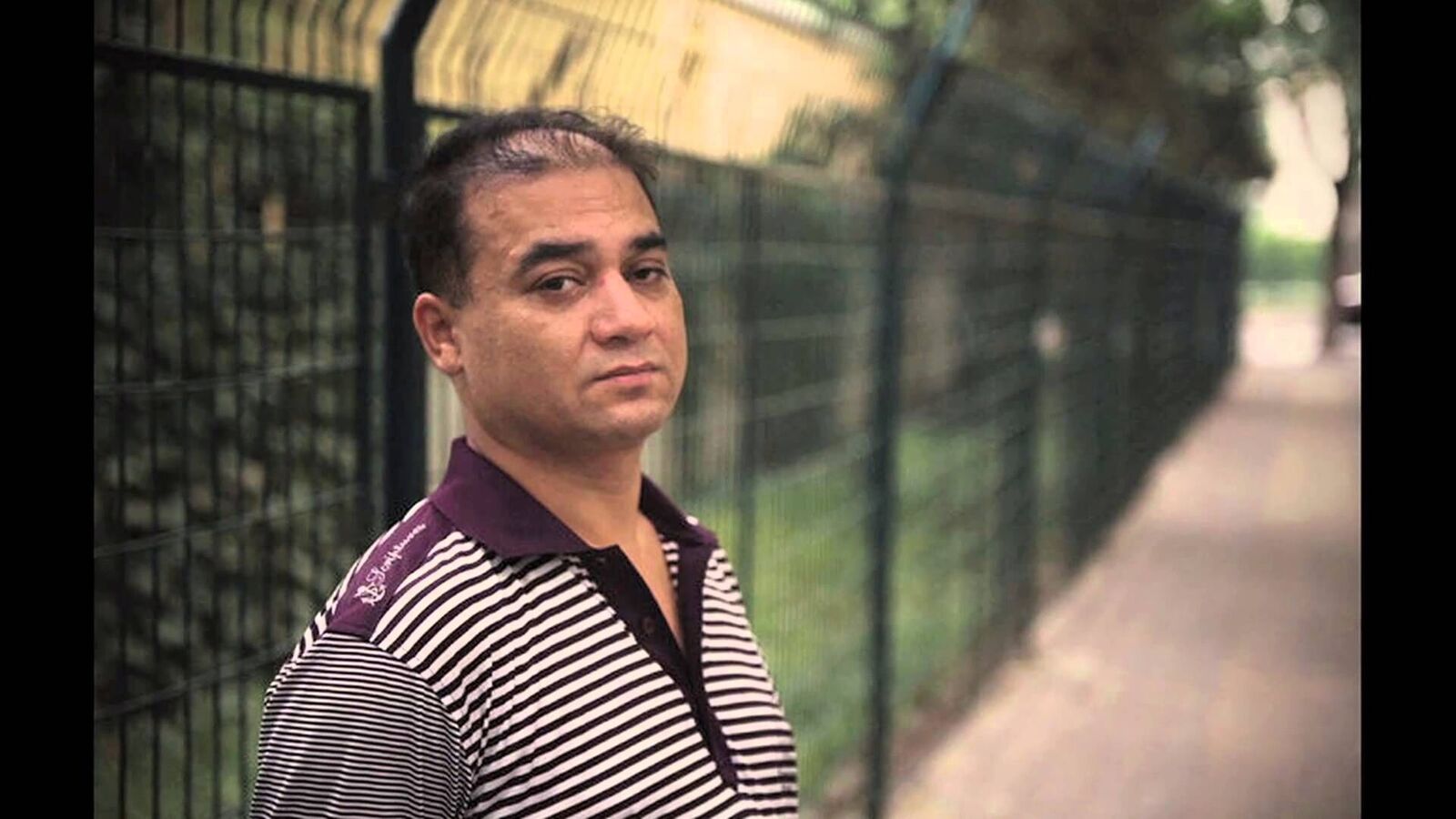

 Ilham Tohti is renowned Uyghur intellectual in China, who has worked for two decades to foster dialogue and understanding between Uyghurs and Han Chinese. He has rejected separatism and violence, and sought reconciliation based on a respect for Uyghur culture, which has been subject to religious, cultural and political repression in the Xinjiang Uyghur Autonomous Region.
In 1994 he began to write about problems and abuses in Xinjiang, which led to official surveillance. From 1999 to 2003 he was barred from teaching. Since then the authorities have also made it impossible for him to publish in normal venues. As a response, he turned to the Internet and in 2006 he established Uyghurbiz.net. Over the course of its existence, it has been shut down periodically, and people writing for it have been harassed.
In 2009, he was arrested for several weeks after posting information on Uyghurs who had been arrested, killed and “disappeared” during and after protests. In the following years he was periodically subjected to house arrest, and in 2013, while bound to take up a post as a visiting scholar at Indiana University, USA, he was detained at the airport and prevented from leaving China.
On January 15, 2014, Ilham Tohti was arrested on charges of separatism and sentenced to life imprisonment, after a two-day trial. Numerous statements were issued by Western governments and the European Union condemning his trial and sentence, and in early 2016 several hundred academics petitioned the Chinese leadership for his release.
Upon his nomination as a Finalist for the Martin Ennals Award earlier this year, his daughter stated: “My father Ilham Tohti has used only one weapon in his struggle for the basic rights of the Uyghurs of Xinjiang: Words; spoken, written, distributed, and posted. This is all he has ever had at his disposal, and all that he has ever needed. And this is what China found so threatening. A person like him doesn’t deserve to be in prison for even a day.”
But according to the Washington Post of today China’s Foreign Ministry spokesman, Geng Shuang, said his case had nothing to do with human rights. “In the classroom, Ilham Tohti openly made heroes of terrorist extremists that conducted violent terror attacks”
Martin Ennals Foundation Chair Dick Oosting stated “The real shame of this situation is that by eliminating the moderate voice of Ilham Tohti the Chinese Government is in fact laying the groundwork for the very extremism it says it wants to prevent”.
Two other finalists receive Martin Ennals Prizes”:
 Razan Zaitouneh (Syria)
Razan has dedicated her life to defending political prisoners, documenting violations, and helping others free themselves from oppression. She founded the Violations Documentation Center (VDC), which documents the death toll and ill-treatment in Syria’s prisons. She had started to cover all sides in the conflict when she was kidnapped, alongside with her husband and two colleagues, on 9 December 2013. Her whereabouts remain unknown.
 Zone 9 Bloggers (Ethiopia) Kality prison in Ethiopia, has 8 zones and holds many journalists and political prisoners. 9 young activists called themselves ‘Zone 9’ as a symbol for Ethiopia as a whole. They document human rights abuses and shed light on the situation of political prisoners in Ethiopia. Six of its members were arrested and charged with terrorism. Although they have now been released, three are in exile while four of the six remaining in in Ethiopia are still facing charges and are banned from travel.


