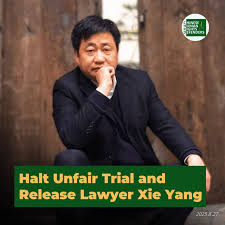
A court in China sentenced the prominent human rights lawyer Xie Yang to five years in prison on March 23, 2026, on politically motivated charges of “inciting subversion of state power,” Human Rights Watch said on 24 March 2026. The Chinese government should immediately quash the conviction, which followed serious procedural violations and years of persecution, and free Xie unconditionally
The Changsha Intermediate People’s Court cited several of Xie’s WeChat posts as the basis for the verdict, Xie’s former wife, Chen Guiqiu, posted on social media. The court also ordered the confiscation of 100,000 yuan (US$14,500).
“The Chinese authorities’ prosecution of Xie Yang and the court’s harsh sentence reflects Beijing’s utter contempt for the rule of law,” said Maya Wang, deputy Asia director at Human Rights Watch. “This case not only aimed to persecute a brave human rights lawyer like Xie, but to intimidate all lawyers seeking to protect Chinese people’s rights.”
Xie’s trial violated the right to a fair trial by an independent and impartial court as provided under international human rights law, Human Rights Watch said. In addition, the proceedings violated China’s Criminal Procedural Law, which guarantees a right to a defense (articles 33-35), public trial hearings (article 188), and time limits for a criminal investigation. With time served, Xie’s sentence is expected to go to January 2027.
The United Nations Working Group on Arbitrary Detention has recognized Xie’s detention as arbitrary and called for his immediate release.
Xie, 54, from Changsha, Hunan province, began practicing law in 2011. He has defended activists and victims of rights abuses in politically sensitive cases, including cases of religious persecution and land rights disputes.
Xie has faced repeated retaliation for his work. In July 2015, during the nationwide arrests of human rights lawyers known as the “709 crackdown,” Xie was tortured and subjected to enforced disappearance, convicted of “inciting subversion,” and imprisoned until 2017.
The authorities detained him again in January 2022 after he pressed for the release of a young teacher who had been forcibly committed to a psychiatric facility for criticizing censorship in education. Police raided Xie’s home, tortured him in custody, and held him on charges of “inciting subversion” and “picking quarrels and provoking trouble,” said the US-based Chinese Human Rights Defenders.
“Foreign governments should continue to speak out for human rights lawyers like Xie Yang because this kind of support is most important when the circumstances are so dire,” Wang said. “Vocal international support could improve Xie’s treatment, and crucially, help give him and others in China the strength to persevere.”
Repressive regimes throughout the world deploy the machinery of the state to silence criticism and dissent. It is therefore hardly surprising that artists—whose creative work can expose, ridicule, and condemn in emotive and powerful ways—are common targets of political persecution. Over the past few years, there have been crackdowns on artists and performers in Russia, Belarus, Cuba, Azerbaijan, Egypt, China, and Venezuela, among other countries. The following artists dared to use their creative expression to challenge powerful systems, and have been punished with political imprisonment. From: Political Prisoners Watch February 19, 2026
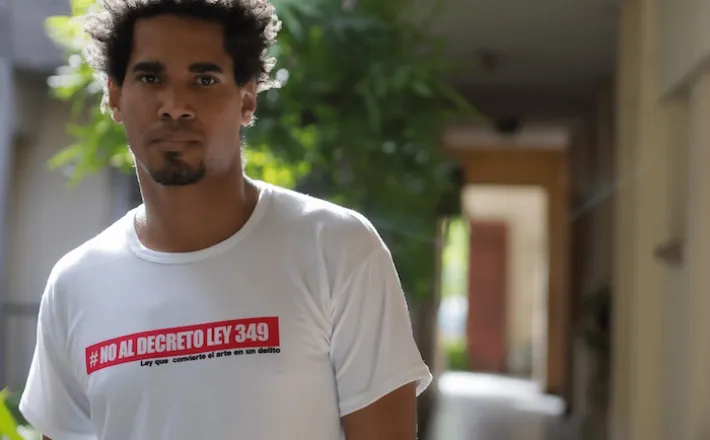
Luis Manuel Otero Alcántara is a Cuban artist and activist whose evocative performance art led to government harassment and numerous periods of detention. After the Cuban government enacted Decree 348 in 2018, which required artists to obtain advance approval for even private performances, he cofounded the San Isidro Movement to protest the increasing censorship of free expression. On July 11, 2021—the start of the historic J11 protests—he was arrested and has been detained ever since. In June 2022, he was sentenced to five years in prison for contempt, public disorder, and insulting symbols of the homeland, and remains in prison in Cuba. [https://humanrightsdefenders.blog/2024/09/19/the-rafto-prize-2024-to-cuban-artivist-luis-manuel-otero-alcantara/]
Maykel Osorbo Castillo Pérez is a Cuban musician who cofounded the San Isidro Movement with Luis Manuel Otero Alcántara. Due to his activism and vocal opposition to the Cuban regime, he was subjected to systemic harassment, including being arrested 121 times in a five-month period. He cowrote the 2021 song Patria y Vida(Homeland and Life), which inspired thousands to demonstrate against Cuba’s repressive regime and won two Latin Grammys. He was not able to accept the awards, however—in May 2021, he was arrested, forcibly disappeared for 14 days, and eventually sentenced to nine years in prison on charges of contempt, public disorder, and defamation of institutions and organizations, heroes, and martyrs.
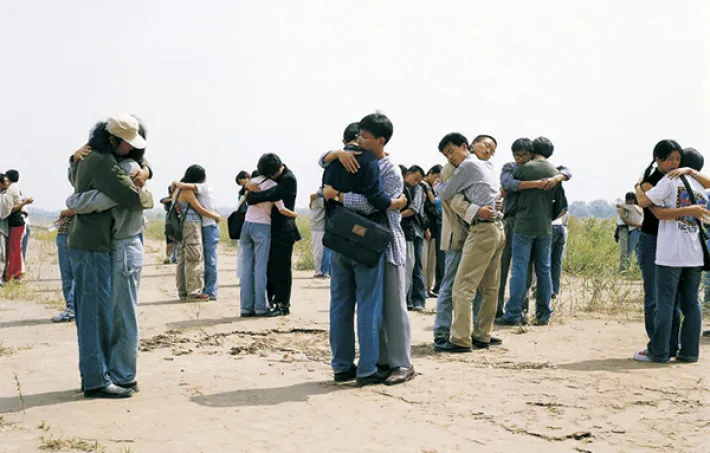
Gao Brothers, The Utopia of the 20 Minute Embrace (2000), modified image via Wikimedia Commons, used under CC BY-SA 3.0.
Gao Zhen is a Chinese artist and US permanent resident who was detained while visiting family in China in August 2024. Avant-garde works by Gao and his brother Gao Qiang—known together as the Gao Brothers—include huge, mirror-like sculptures and other works critiquing Mao Zedong and China’s Cultural Revolution. Authorities allege that Gao committed the offense of “insulting or defaming heroes and martyrs,” though the art in question had been created years before the Law on the Protection of Heroes and Martyrs was enacted. Gao’s wife Zhao Yaliang has been prohibited from leaving China, and she and their young son have remained there since his detention.
Galal El-Behairy is an Egyptian poet and singer/songwriter who has faced severe retaliation for his artistic work. He wrote the lyrics for the guitar-driven protest song Balaha, which mocked Egyptian President Abdel Fattah al-Sisi and the country’s corrupt establishment. Five days after its release in February 2018, he was arrested by the National Security Police and disappeared for a week. In July 2018, he was sentenced to three years in prison by a military court for allegedly spreading false news and rumors and insulting the Egyptian army in his poetry book The Finest Women on Earth. Although his sentence expired in 2021, he was not released, and he is now facing additional charges including disseminating fake news and joining and aiding a terrorist organization.
UN human rights experts on 5 February 2026 urged China to immediately grant full access to adequate medical treatment for woman human rights defender, Yang Li, from Jintan, Jiangsu Province, saying that her attempts to travel to Beijing for medical appointments have been intercepted on numerous occasions and allegedly resulted in her arbitrary detention.
“The arrest and indictment of Yang Li appear to represent an effort by the authorities to prevent her from peacefully exercising her rights to seek redress for legitimate grievances. This harassment is compounded by the fact that it was coupled with preventing her from accessing medical treatment,” the experts said.
Yang Li has been advocating against land requisition and crop clearance being carried out by the authorities in Jiangsu Province since 2009. Her efforts to seek redress for her family and members of her community through filing petitions have led to her being administratively detained multiple times since 2014.
Since 2023, Yang Li has consistently attempted to travel to Beijing to file petitions and receive medical treatment. During these attempts, she has been subjected to physical assaults, administrative detention and been prevented from accessing necessary medical treatment – reportedly by officials from the Jintan and Beijing police. In October 2024, Yang Li was placed in criminal detention for the charge of “picking quarrels and provoking trouble,” which was later changed to “disrupting the work order of state organs.” Yang Li was convicted in September 2025 and sentenced to 15 months imprisonment in a judicial process that indicated several fair trial inconsistencies.
“Yang Li is in urgent need of adequate medical treatment, capable of responding to the late-stage kidney disease she is suffering from,” the experts said. “Her condition appears to have worsened significantly as a result of the repeated denial of medical care, her treatment whilst in prison and the stress she has been subjected to through numerous detentions that appear to have been carried out without legal basis or justification.”
“We urge the authorities to cease the harassment and intimidation of Yang Li and her family and allow her full, immediate access to medical treatment of her choosing, to ensure her health does not further deteriorate and to prevent long-lasting impacts,” the experts said.
The experts have been in contact with the Government of China on these issues.
Today, 24 January 2026, marks the International Day of the Endangered Lawyer. In recognition of endangered lawyers around the world, the undersigned NGOs, express deep alarm at the growing repression of lawyers worldwide for the legitimate exercise of their professional duties. Attacks on lawyers strike at the very heart of the rule of law, deny victims meaningful access to justice, and enable wider assaults on human rights and democratic institutions.
In Russia, the regime of Vladimir Putin has moved to punish not only opponents but also those who defend them. One year ago this month, to cite just one example, lawyers Vadim Kobzev, Alexei Liptser, and Igor Sergunin, members of the defense team of the late opposition leader Alexei Navalny, were sentenced to an average of four and a half years in prison on fabricated extremism charges simply for carrying out their ordinary professional duties. Since then, Russia has intensified its harassment of lawyers, most recently arresting human rights attorney Maria Bontsler in May 2025.
In Afghanistan, the Taliban’s seizure of the Afghanistan Independent Bar Association and the transfer of licensing to the Ministry of Justice effectively stripped thousands of lawyers of their right to practise, with women lawyers almost entirely excluded from the profession.
In Iran, recent reports show a pattern of state capture of bar associations, politically motivated prosecutions, and gender specific persecution of women lawyers, which together erode fair trial guarantees for all.
In Tanzania, legal advocates have faced systemic oppression from the government, including oppression under the Advocates Act, which gives the executive branch power to manage the legal profession and control over disciplinary measures against lawyers.
In China, the regime systematically cracks down on human rights lawyers, using vague national security laws and administrative controls to dismantle the independent legal profession.
These examples are a part of a wider and well-documented trend. Lawyers are disbarred, disciplined, arbitrarily detained, prosecuted, forced into exile, subjected to surveillance and harassment, and in some cases killed, precisely because they seek to uphold the rights of their clients, including human rights defenders, opposition leaders, journalists, women, minorities, and other marginalized communities.
Despite this, lawyers continue to perform a crucial function. Even in countries without an independent and impartial judiciary, where judicial outcomes are largely predetermined, lawyers document abuses, create records of testimonies and verdicts, and preserve evidence that can one day support accountability. Their efforts also enable recourse to international and regional mechanisms once domestic remedies have been exhausted or shown to be ineffective. As the UN Special Rapporteur on the independence of judges and lawyers recognized in her 2024 report, “justice systems play an essential role in safeguarding democracy, and the work of those justice systems is carried out by people. To protect the rule of law and democracy, we must protect those people.”
Justice is never won easily. But it cannot be won at all if those who defend it are left defenseless.
On May 13, 2025, the Council of Europe (CoE) Convention on the Protection of the Profession of Lawyer opened for signature. This is the first international treaty specifically designed to safeguard lawyers from threats, harassment, and undue interference in their work. This is a historic breakthrough, but it will mean little if governments fail to give it real force. We call on all CoE member states to sign and ratify the Convention without delay and to implement it fully. We encourage states in other regions to develop complementary binding standards so that protection of the legal profession becomes a universal norm…
No lawyer should be punished for defending a client. We honour the courage of all endangered lawyers working under threat, and we reaffirm our collective commitment to protect them and to uphold the right of every person to an independent defense and a fair trial.
Respectfully,
Human Rights Foundation
The Anti-Corruption Foundation
The Arrested Lawyers Initiative
Free Russia Foundation
Freedom House
Freedom Now
George W. Bush Institute
Global Magnitsky Justice Campaign
Human Rights First
Lantos Foundation for Human Rights and Justice
Raoul Wallenberg Centre for Human Rights
Elisa Massimino, Human Rights Institute, Georgetown Law
On 14 November 2025, Scilla Alecci of the International Consortium of Investigative Journalists, Inc. (ICIJ) wrote about a parliamentary report which identified China and other authoritarian regimes as harassing and attacking dissidents abroad, echoing findings from ICIJ’s China Targets.
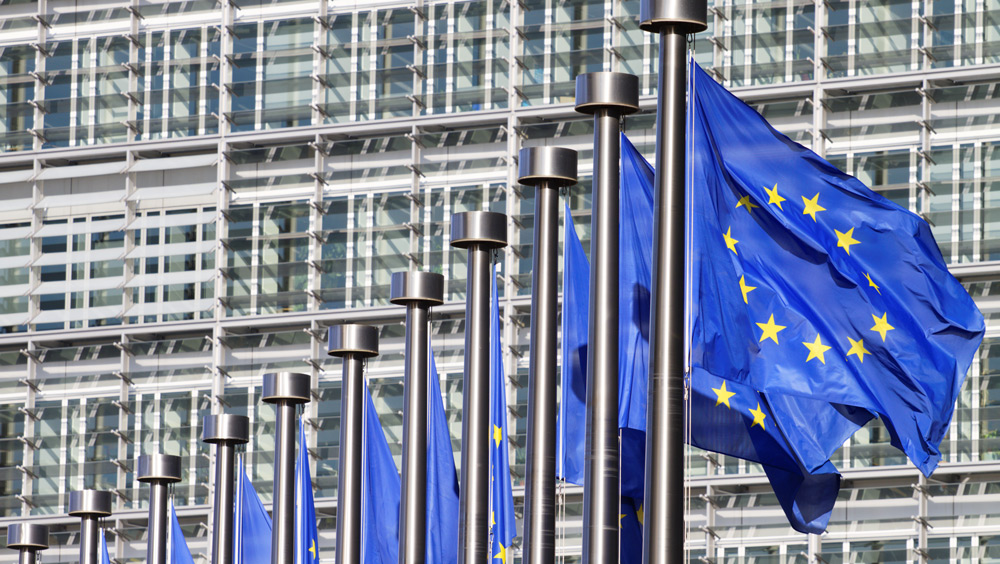
European Parliament in Brussels, Belgium.
The European Parliament has adopted a resolution urging member states to confront efforts by authoritarian regimes to coerce, control or silence political opponents and dissidents living in Europe. “Human rights defenders are a key pillar of democracy and the rule of law, and they are insufficiently protected,” a statement from the parliament said.
The resolution, adopted with a majority of 512 votes (to 76 against and 52 abstentions), called for targeted sanctions against perpetrators, market surveillance of spyware and better coordination among European authorities to counter what lawmakers labeled “transnational repression.”
The resolution is not legally binding but signals that European lawmakers want to take a clear position on the issue and draw attention to it, Elodie Laborie, a spokesperson for the Parliament’s Subcommittee on Human Rights, told the International Consortium of Investigative Journalists in an email.
It confirms findings by ICIJ’s China Targets investigation, which revealed how Beijing continues to use surveillance, hacking and threats against Chinese and Hong Kong dissidents, Uyghur and Tibetan advocates and their families to quash any criticism of the regime abroad.
Chinese authorities harassed several dozen Chinese film directors and producers, as well as their families in China, causing them to pull films from the inaugural IndieChina Film Festival in New York City. On November 6, 2025, the festival’s organizer, Zhu Riku, announced that the film festival, scheduled for November 8-15, had been “suspended.”
“The Chinese government reached around the globe to shut down a film festival in New York City,” said Yalkun Uluyol, China researcher at Human Rights Watch. “This latest act of transnational repression demonstrates the Chinese government’s aim to control what the world sees and learns about China.”
Chiang Seeta, a Chinese artist and activist, reported that nearly all participating directors in China faced intimidation. Even directors abroad, including those who are not Chinese nationals, reported that their relatives and friends in China were receiving threatening calls from police, said Chiang.
On November 1, the organizers issued an announcement on social media saying they had received messages from some film directors and producers and their families about Chinese government harassment: “We are deeply concerned about the situation. … [I]f you are under pressure not to attend the festival … we fully understand and respect it.” By November 4, more than two-thirds of participating films had cancelled their screenings.
After the festival was suspended, Zhu issued a statement that the decision was not out of fear, but rather to “stop harassment of … directors, guests, former staff, and volunteers associated with the festival, including my friends and family.”
Independent film festivals in China have faced intensifying crackdowns over the past decade, Human Rights Watch said. The Chinese authorities have shut down all three major independent film festivals in China: Yunfest, founded in 2003; the China Independent Film Festival, founded in 2003; and Beijing Independent Film Festival, founded in 2006.
When the authorities shut down the last screening of the Beijing Independent Film Festival in 2014, they cut off electricity from the venue, confiscated documents from the organizer’s office, and forced the organizers to sign a paper promising not to hold the festival. Many festival organizers have tried without success to adapt, for instance by changing their format to screenings at multiple venues.
The 14th China Independent Film Festival was shuttered in 2018, the last time such a festival took place in China.
A court in January 2025 sentenced Chen Pinlin, known as Plato, to three-and-a-half years in prison for allegedly “picking quarrels and provoking trouble” after he made a documentary about the “white paper protests” during Covid-19 lockdowns. Transnational repression can be defined as government efforts to silence or deter dissent by committing human rights abuses against their own nationals living abroad, their families at home, or members of the country’s diaspora. [see also: https://humanrightsdefenders.blog/2025/10/17/un-report-highlights-chinas-targeting-of-human-rights-defenders-abroad/]
The Chinese government’s transnational repression of the arts has not been limited to film. Chinese officials interfered with an exhibition in Bangkok and censored artwork by Uyghur, Tibetan, and Hongkonger artists in August.
In a first-of-its-kind investigation into the closed-door negotiations of the UN’s budget in New York, ISHR uncovers how a small group of States – led by China and Russia – have coordinated efforts to block and slash funding for the UN’s human rights work through political manoeuvring and influence. At a moment of sweeping UN reform and financial crisis, these efforts – compounded by the US failure to pay their UN membership fees and outstanding debts – pose an existential threat to the UN’s human rights system.
…The UN’s historically underfunded human rights work now faces an existential threat due to budget cuts under the UN80 Initiative and the UN’s liquidity crisis, fuelled by the failure of the United States, China and other countries to pay their contributions in full and on time. Drawing from dozens of interviews and combing through official documents and internal budget negotiation documents from 2019 to 2024, ISHR’s report ‘Budget Battles at the UN: How States Try to Defund Human Rights’ finds that China and Russia have led a sustained effort to build influence, disrupt proceedings, and politicise technical discussions at the UN General Assembly’s Fifth Committee (5C), where States negotiate the UN’s budget, and its little-known yet influential advisory body, the Advisory Committee on Administrative and Budgetary Questions (ACABQ). Over the past decade, Chinese influence within these bodies has expanded sharply, the report shows. Beijing has invested heavily in building its representation at the 5C, the ACABQ and other related bodies to push heavy budget cuts to human rights. Russia has frequently played the role of outspoken spoiler in negotiations, enabling China to deploy its influence more quietly but effectively behind closed doors.
Russian and Chinese diplomats have weaponised UN budget negotiations to serve their own interests and shield allies from scrutiny, at the expense of human rights. Budget negotiations should be solely guided by the goal of adequately funding the UN’s work, not serving as a political tool to weaken accountability and rights protection.‘ – Madeleine Sinclair, Director of ISHR’s New York office..
A deepening cash crisis The report finds that years of underfunding and attacks on the UN’s human rights budget are now being compounded by a severe liquidity crisis triggered by US and Chinese late or non-payment of dues, while the United Nations undergo urgent reform. Since taking office in January 2025, the Trump Administration has launched repeated assaults on UN bodies, often on grounds of an alleged ‘anti-Israel bias’, abruptly blocking the payment of overdue contributions from 2024 dues and all of the US contributions for 2025, while cutting nearly all voluntary funding to the UN. As the US, the largest contributor, withholds this vast portion of the UN budget, Beijing’s increasingly late payments risk depriving the UN of over 40% of its operational cash flow for 2025. Meanwhile, China’s paying in full but extremely late has a similar result to not paying contributions in full, as a little-known State-imposed UN rule perversely returns unspent cash – that could not be used as it came so late – to Member States in the form of credits to future dues. In 2024, China paid its contributions on 27 December, four days before the year’s end. The broader US withdrawal from multilateralism also enables China and Russia to further grow their influence in shaping a more State-centric UN, at the expense of civil society and the universality of human rights.
….
UN80 reform risks deepening the damage US cuts also forced the UN into an unprecedented race for reform through the UN80 Initiative, an internal reform drive to make the organisation more efficient and effective, yet so far focused primarily on austerity and cost-cutting. Initial cuts proposed by the Secretary-General in September slash the human rights budget by 15%, a higher percentage than cuts proposed for the UN’s development and peace and security work. Further cuts are expected once the ACABQ reviews the Secretary-General’s proposals, and States table additional reform proposals under UN80 in the coming months.
‘China and Russia have long exploited UN processes in order to spin a web of influence against human rights progress, and now the Trump administration is moving in that same direction. But this is not irreversible. The UN80 Initiative must be more than a hunt for ‘efficiency’: it should be a collective effort towards meaningful, human rights-driven reform. For this, States, and particularly Global South countries who have a clear stake in having strong, responsive UN human rights bodies, can still take back the space and ensure funding for a UN that advances human rights protection on the ground for all.’ – ISHR Executive Director Phil Lynch
Funding for the UN’s human rights work is on the brink of collapse at a time when it is most needed to address global crises…
On 15 October 2025 Sam Ellefson of ICII summarises the new report, which recounts recent reprisals from two dozen countries, underscores ICIJ’s reporting on how Beijing abuses international institutions in its campaign to silence critics abroad
The targeted repression of human rights activists across borders is becoming more frequent and sophisticated, according to the latest annual U.N. report detailing acts of intimidation and reprisals inside the international organization.
Two Hong Kong pro-democracy activists and a Uyghur linguist are among the cases compiled by the secretary-general between May 2024 and 2025, alongside updates on reprisals included in previous reports.
“Allegations of transnational repression across borders have increased, with examples from around the world,” the report said. “Targeted repression across borders appears to be growing in scale and sophistication, and the impact on the protection of human rights defenders and affected individuals in exile, as well as the chilling effect on those who continue to defend human rights in challenging contexts, is of increasing concern.”
Raphäel Viana David, the China and Latin America program manager at the International Service for Human Rights, a nonprofit that trains activists in U.N. advocacy, said the report reflected a shift within the U.N. in recognizing transnational repression as a tool states use to carry out reprisals.
In China Targets, ICIJ and 42 media partners exposed how Beijing has misused international institutions such as the U.N. and Interpol to target overseas dissidents. The investigation included interviews with 105 individuals across 23 countries who detailed how the Chinese government had reached beyond its borders to silence them.
At the 59th Human Rights Council session, civil society organisations share reflections on key outcomes and highlight gaps in addressing crucial issues and situations. Full written version below.
We join others who have expressed grave concern about the UN’s financial situation throughout the session. We deplore that we are in this position primarily due to the failure of some States to pay their assessed contributions in full and on time. We regret that this crisis is currently affecting the Council’s ability to deliver its mandate. Today, UN Member States are sending a clear message that human rights and their implementation are optional and not inalienable. We call on all States to pay their dues to the UN in full and without delay, both now and in future years, and strengthen the human rights pillar of the UN by substantially increasing its regular budget. [see: https://humanrightsdefenders.blog/tag/united-nations/]
We welcome the Council’s decision to renew, once more, the Mandateof theIndependent Expert on protection against violence and discrimination based on sexual orientation and gender identity, following a call from more than 1,259 organisations from 157 countries and territories. While the mandate was supported by the overwhelming majority of Council members, we regret that a mandate focusing on core human rights issues such as freedom from violence and discrimination was once again put for a vote.
We welcome the adoption of the resolution on civil society space. The resolution acknowledges important civil society initiatives such as Declaration +25 and addresses key and emerging trends such as strategic lawsuits against public participation (SLAPPs), the phenomenon of transnational repression, and foreign funding legislation, as well as other restrictive legislation including counter-terrorism legislation. We regret, however, that language on transnational repression has been weakened throughout the negotiations and does not take a step forward in terms of defining the phenomenon and its patterns. ..
We welcome the adoption of the resolution on human rights and climate change in relation to climate finance. As acknowledged by the resolution, climate finance is a tool for addressing climate change and it is also important for the enjoyment of human rights when finance prioritises equity, climate justice, social justice, inclusion and just transition processes. … We also regret that, notwithstanding the support expressed by numerous delegations, this resolution is blatantly silent in recognising the positive, important, legitimate and vital role that environmental human rights defenders (EHRDs) play in the promotion and protection of human rights and the environment, particularly in the context of climate change. As recognised by the HRC resolution 40/11, EHRDs are one of the most exposed and at risk around the world. The Inter-American Court on Human Rights has recently ruled in its Advisory Opinion on “Climate Emergency and Human Rights” that EHRDs play a fundamental role due to the urgency, gravity and complexity to address the climate emergency. We will not have climate justice without consulting, listening and including EHRDs in climate actions and initiatives, including this annual resolution.
We express our support for a new strong resolution on the safety of journalists, adopted by consensus and co-sponsored by over 70 countries from all world regions, signalling a renewed international commitment to prevent, protect and remedy all human rights violations against journalists. The resolution becomes the first across the UN to recommend a range of concrete, specific measures to
It is concerning that the Council could not find consensus on the resolution on access to medicines, vaccines and other health products. States should acknowledge that intellectual property rights can be a barrier for access to health products, especially in public health emergencies and should act with a view to finding human-rights compliant solutions. States should further ensure that the benefits of scientific progress is available, accessible, acceptable and of good quality to all people, without discrimination.
We welcome the resolution on new and emerging digital technologies and human rights. The resolution reaffirms the need for human rights due diligence and impact assessments throughout the life cycle of new and emerging digital technologies, and crucially calls upon States to refrain from or cease the use of artificial intelligence applications that are impossible to operate in compliance with international human rights law. The resolution importantly mandates OHCHR to expand its work on UN system-wide promotion, coordination, and coherence on matters related to human rights in new and emerging digital technologies.
We welcome the rejection by the Council of an unprecedented, harmful draft resolution (L.1/Rev.1) presented in bad faith by Eritrea to discontinue the mandate of the Special Rapporteur. The voting result (25 against, 4 in favour) is clear and will deter similar initiatives to terminate mandates. The Pandora’s Box remains closed for now. We welcome the adoption of resolution L.7, which extends the mandate of the Special Rapporteur and enables continued scrutiny of Eritrea‘s dire human rights situation.
We welcome the adoption by consensus of the resolution on the situation of human rights of Rohingya Muslims and other minorities in Myanmar—a strong signal of the Council’s continued prioritization of their plight. As violence between the Myanmar military and Arakan Army escalates, Rohingya face renewed existential threats. We recognize the efforts made to align the resolution closer to the evolving situation on the ground, including its recognition of the role of Arakan Army along with the Myanmar military in perpetuating violence and targeting Rohingya. We also welcome the resolution’s acknowledgment of the worsening humanitarian crisis due to dwindling aid that is driving more Rohingya to risk dangerous journeys by sea. The call for protection of Rohingya across borders and respect for non-refoulement is vital. We support the resolution’s emphasis on accountability and reparations as prerequisites for safe, voluntary, and dignified return of Rohingya refugees. However, we regret its failure to call for an end to arms and jet fuel sale and transfers that continue to fuel ongoing violence.
We emphasize the vital role of investigative mechanisms and, in the context of the UN’s liquidity crisis, we urge all those involved, including the Secretary-General and the High Commissioner, to allocate sufficient resources for these mechanisms to operate. All UN Member States must pay their dues in full and on time. As the conflict in Sudan, now in its third year, shows no sign of abating, resulting in the world’s largest displacement crisis and egregious atrocities against civilians, the work of the Fact-Finding Mission (FFM) should continue. At HRC60, extending its mandate will be a priority.
We continue to deplore this Council’s exceptionalism towards serious human rights violations in China, including crimes against humanity. In his global update to this Council session, High Commissioner Türk indicated he remains ‘concerned about lack of progress on much-needed legal reform to ensure compliance with international human rights law’ and ‘regret[s] that there has not yet been a resolution to the individual cases [the OHCHR has] raised]’. It is imperative that the Council take action commensurate with the gravity of UN findings, by establishing a monitoring and reporting mechanism on China as repeatedly urged by over 40 UN experts since 2020. We urge China to genuinely engage with the UN human rights system to enact meaningful reform, and ensure all individuals and peoples enjoy their human rights, on the basis of recommendations from the OHCHR Xinjiang report, UN Treaty Bodies, and UN Special Procedures.
This Council’s continued silence on the human rights crisis in Egypt remains of major concern. The human rights situation in Egypt is worse than at any point in its modern history and continues to deteriorate. During its UPR process, Egypt rejected or dismissed as “already implemented” recommendations related to serious human rights violations 134 times. In particular, Egypt either rejected or dismissed recommendations to release political prisoners and end arbitrary arrests 12 times, to stop attacks against independent civil society and journalists 19 times, and to end torture and ill-treatment 6 times. The goverment also refused to ensure accountability for those who have committed torture and other human rights violations 7 times, and rejected or dismissed recommendations to halt violance and discrimination against women, minorities and members of the LGBT+ community 25 times, including repeatedly rejecting calls to criminalize marital rape, as well as forced virginity and anal exams. In this context, action by the HRC to address these violations is as important as ever.
Watch the video of the statement below:
Signatories:
African Centre for Democracy and Human Rights Studies (ACDHRS)
Asian Forum for Human Rights and Development (FORUM-ASIA)




 Hans Thoolen on Human Rights Defenders and their awards
