Amnesty International, C&SN and HRW accuse Indian government of harassing human rights activists and NGOs; the organisations seek FATF’s intervention days before the India’s performance with respect to action taken against money laundering and terrorist funding is up for review
On 6 November 2023, The Hindu newspaper (TH) reports that NGOs are accusing the Indian government of prosecuting, intimidating, and harassing human rights defenders, activists, and non-profit organisations on the pretext of countering terrorist financing, Thus Amnesty International, Charity & Security Network (C&SN), and Human Rights Watch (HRW) have sought the intervention of the Financial Action Task Force (FATF).
FATF mutual evaluations are in-depth country reports analysing the implementation and effectiveness of measures to combat money laundering, terrorist and proliferation financing. The reports are peer reviews, where members from different countries assess another country. Mutual evaluations provide an in-depth description and analysis of a country’s anti-money laundering and counter-terrorist financing system, as well as focused recommendations to further strengthen its system. During a mutual evaluation, the assessed country must demonstrate that it has an effective framework to protect the financial system from abuse.
The FATF conducts peer reviews of each member on an ongoing basis to assess levels of implementation of the FATF Recommendations, providing an in-depth description and analysis of each country’s system for preventing criminal abuse of the financial system.
The joint statement of the 3 NGOs came on November 3, days before the start of FATF’s periodic review of India’s performance with respect to the action taken against money laundering and terrorist funding. They have accused the authorities of exploiting FATF’s recommendations “to restrict civic space and stifle the rights to freedom of expression, association, and peaceful assembly”. “Draconian laws introduced or adapted to this end include the Foreign Contribution (Regulation) Act (FCRA), the Unlawful Activities (Prevention) Act (UAPA), and the Prevention of Money Laundering Act (PMLA)…,” the groups said. See also: https://wordpress.com/post/humanrightsdefenders.blog/22074
“During its third FATF review, in 2010, the Indian government itself recognised the risk posed by the non-profit sector as ‘low’. However, since the Bharatiya Janata Party (BJP) came to power in 2014, the authorities have used overbroad provisions in domestic law to silence critics and shut down their operations, including by cancelling their foreign funding licences and prosecuting them using counterterrorism law and financial regulations,” the groups alleged.
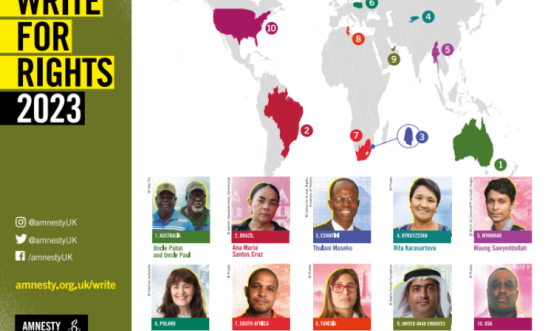
Amnesty International launched its flagship Write for Rights campaign to help people facing human rights abuses around the world. Millions of letters and emails will be sent to support these individuals and urge authorities to end injustices. ‘While sending a letter may seem like a small gesture for any single one of us, the collective action of many of us has the potential to transform lives’ said Sacha Deshmukh, Chief Executive of Amnesty International UK.
Taking place across November and December, Write for Rights will see people around the world send millions of cards, emails and social media posts of solidarity to individuals whose fundamental rights are being threatened or denied, while urging those in power to put a halt to the abuses.
This year, the global Write for Rights campaign will focus on 10 cases of individuals and communities from across the world who are facing human rights violations, including:
Rocky Myers, a Black man, has been on death row in Alabama, USA, since 1994. A nearly all-white jury convicted and sentenced him to life without the possibility of parole for the murder of his white neighbour. The trial judge overrode their decision and imposed a death sentence – a practice now outlawed in Alabama. No evidence linked Rocky to the murder, except for a VCR stolen from the victim, which he maintains he had found abandoned in the street. In 2018, Rocky and others on death row were given 30 days to choose if they wanted to die by nitrogen gas asphyxiation or by amended lethal injection protocols. Rocky chose the former, and his execution could be reset as soon as the new protocol for execution by nitrogen gas asphyxiation is finalised and ready to be implemented, which is expected by the end of this year.
Rita Karasartova, a Kyrgyzstan-based human rights defender who works for the Institute of Civic Analysis – a human rights organisation and think-tank. Rita was arrested in October 2022 for joining group of activists who objected to a border demarcation agreement with Uzbekistan. After the group called for a public assembly and formed a committee to oppose the agreement, Rita and others were charged with attempting to violently overthrow the government, which carries a maximum sentence of 15 years imprisonment. Rita is now under house arrest and a strict curfew.
Ahmed Mansoor is a human rights defender and previously won the prestigious Martin Ennals Award for Human Rights Defenders in 2015. Ahmed has documented human rights abuses in the UAE since 2006, until he was arrested in early 2011 and March 2017, he was given a 10-year prison sentence. He has been held in solitary confinement since the beginning of his detention, and continues to be denied a mattress, access to books, and to be permitted to go out in a yard. See: https://humanrightsdefenders.blog/tag/ahmed-mansoor/ and https://www.trueheroesfilms.org/thedigest/laureates/074ACCD4-A327-4A21-B056-440C4C378A1A]
Justyna Wydrzyńska is a reproductive rights defender in Poland and is one of the co-founders of the Abortion Dream Team, an activist collective campaigning against abortion stigma and offering advice on accessing safe abortion in Poland, where abortion laws are among the most restrictive in Europe. In March 2023 Justyna was convicted to 8 months’ community service for helping a pregnant woman to access abortion pills in Poland, setting a dangerous precedent in a country where abortion is almost completely banned.
Amnesty International’s Write for Rights campaign dates back to the origins of Amnesty International in 1961. In the organisation’s early days, Amnesty campaigners wrote letters of support to individuals facing human rights violations. Now, Write for Rights is Amnesty’s flagship campaign, running every year to raise awareness about individuals whose rights are being seriously threatened.
Last year’s Write for Rights saw:
Over 5.3 million actions worldwide – of which at least 234,801 letters and cards were solidarity actions.
Letters were sent from around the world, from Zimbabwe to Hong Kong.
Amnesty’s International Secretariat digitally collected almost double the number of digital actions from 2021.
Matiullah Wesa, a girls’ education advocate, reads to students in the open area in Spin Boldak district in the southern Kandahar province of Afghanistan on May 21, 2022. Siddiqullah Khan/AP
On 26 October 2023 AP reported that the Taliban have freed an Afghan activist who campaigned for the education of girls. Matiullah Wesa was arrested seven months ago and spent 215 days in prison, according to the group, Pen Path.
The Special Rapporteur on Human Rights of the United Nations Human Rights Council, Rina Amiri,, has welcomed the release of Matiullah Wesa, the founder of the “Rah-e-Qalam” organization and an education activist, and has called for the freedom of all human rights defenders in Afghanistan. Richard Bennett, the Special Rapporteur on Human Rights of the United Nations, has requested the immediate and unconditional release of all individuals detained “arbitrarily for defending their rights and the rights of others.”
Ataullah Wesa, Matiullah’s brother, announced on his social media account that he had been released after 215 days. However, some human rights activists and well-known members of Afghan civil society remain in prison.
Amnesty International said that Wesa should never have been jailed for promoting girls’ rights to education.
“The Taliban de-facto authorities must release human rights defenders and women protesters Rasool Parsi, Neda Parwani, Zholia Parsi and Manizha Sediqi and all others who are unfairly kept behind bars for standing up for equality and denouncing repression,” the rights group tweeted.
The international community must pursue pathways for justice at the international level to address systemic impunity for Iranian officials responsible for hundreds of unlawful killings of protesters and widespread torture, Amnesty International said on 13 September 2023, as Iran marks the one-year anniversary of the “Woman Life Freedom” uprising.
Over the past year, Iranian authorities have committed a litany of crimes under international law to eradicate any challenge to their iron grip on power. These include hundreds of unlawful killings; the arbitrary execution of seven protesters; tens of thousands of arbitrary arrests; widespread torture, including rape of detainees; widespread harassment of victims’ families who call for truth and justice; and reprisals against women and girls who defy discriminatory compulsory veiling laws.
“The anniversary of the ‘Woman Life Freedom’ protests offers a stark reminder for countries around the world of the need to initiate criminal investigations into the heinous crimes committed by the Iranian authorities under universal jurisdiction. Government statements calling on the Iranian authorities to halt the unlawful use of firearms against protesters, stop torturing detainees, and release all individuals detained for peacefully exercising their human rights remain as crucial as ever. These actions show victims they are not alone in their darkest hour.”
The anniversary of the ‘Woman Life Freedom’ protests offers a stark reminder for countries around the world of the need to initiate criminal investigations into the heinous crimes committed by the Iranian authorities under universal jurisdiction. Diana Eltahawy, Amnesty International’s Deputy Regional Director for the Middle East and North Africa
The Iranian authorities have waged an all-out assault on the human rights of women and girls over the past year. Despite months of protests against Iran’s compulsory veiling laws, triggered by the arbitrary arrest and death in custody of Mahsa/Zhina Amini, the authorities have reinstated “morality” policing and introduced a raft of other measures that deprive women and girls who defy compulsory veiling of their rights.
These include the confiscation of cars and denial of access to employment, education, healthcare, banking services and public transport. Simultaneously, they have prosecuted and sentenced women to imprisonment, fines and degrading punishments, such as washing corpses.
This assault on women’s rights is taking place amid a spate of hateful official statements referring to unveiling as a “virus”, “social illness” or “disorder” as well as equating the choice to appear without a headscarf to “sexual depravity.”
The authorities are also working on new legislation that will introduce even more severe penalties for defying compulsory veiling.
Mass arbitrary detentions and summons
During the uprising and in the months that followed, the authorities arbitrarily arrested tens of thousands of men, women and children, including protesters, human rights defenders and minority rights activists. Those arrested include at least 90 journalists and other media workers and 60 lawyers, including those representing families of individuals unlawfully killed. Scores of other lawyers were summoned for interrogations. [see e.g. https://humanrightsdefenders.blog/2023/05/11/now-it-is-the-turn-of-the-iranian-journalists-who-reported-on-mahsa-amini/]
Ahead of the anniversary, the authorities have intensified their campaign of arbitrary arrests targeting, among others, family members of those unlawfully killed, and forcing thousands of university students to sign undertakings not to participate in anniversary protests.
Execution of protesters
Over the past year, the authorities have increasingly used the death penalty as a tool of political repression to instil fear among the public, arbitrarily executing seven men in relation to the uprising following grossly unfair sham trials. Some were executed for alleged crimes such as damage to public property and others in relation to the deaths of security forces during the protests. All were executed after Iran’s Supreme Court rubber stamped their unjust convictions and sentences despite a lack of evidence and without carrying out investigations into their allegations of torture. Dozens remain at risk of execution or being sentenced to death in connection with the protests.
A crisis of impunity
The authorities have refused to conduct any thorough, independent and impartial investigations into the human rights violations committed during and in the aftermath of the “Woman Life Freedom” uprising and have failed to take any steps to hold those suspected of criminal responsibility to account.
Instead, authorities have applauded the security forces for suppressing the unrest and shielded officials from accountability, including two officials who admitted raping women protesters in Tehran. They have also dismissed complaints from victims and/or their families, threatening them with death or other harm if they pursued their complaints.
Amnesty International welcomed the establishment of a Fact-Finding Mission on Iran by the UN Human Rights Council in November 2022, yet much more is needed to combat the crisis of impunity for serious crimes in Iran – and to deter further cycles of bloodshed.
Amnesty International urges all states to consider exercising universal and other extraterritorial jurisdiction in relation to crimes under international law and other serious human rights violations committed by Iranian authorities, irrespective of the absence or presence of the accused in their territory. This includes initiating adequately resourced criminal investigations aimed at disclosing the truth about the crimes, identifying those suspected of responsibility, including commanders and other superiors and issuing, when there is sufficient admissible evidence, international arrest warrants. States should also contribute to achieving reparations for the victims.
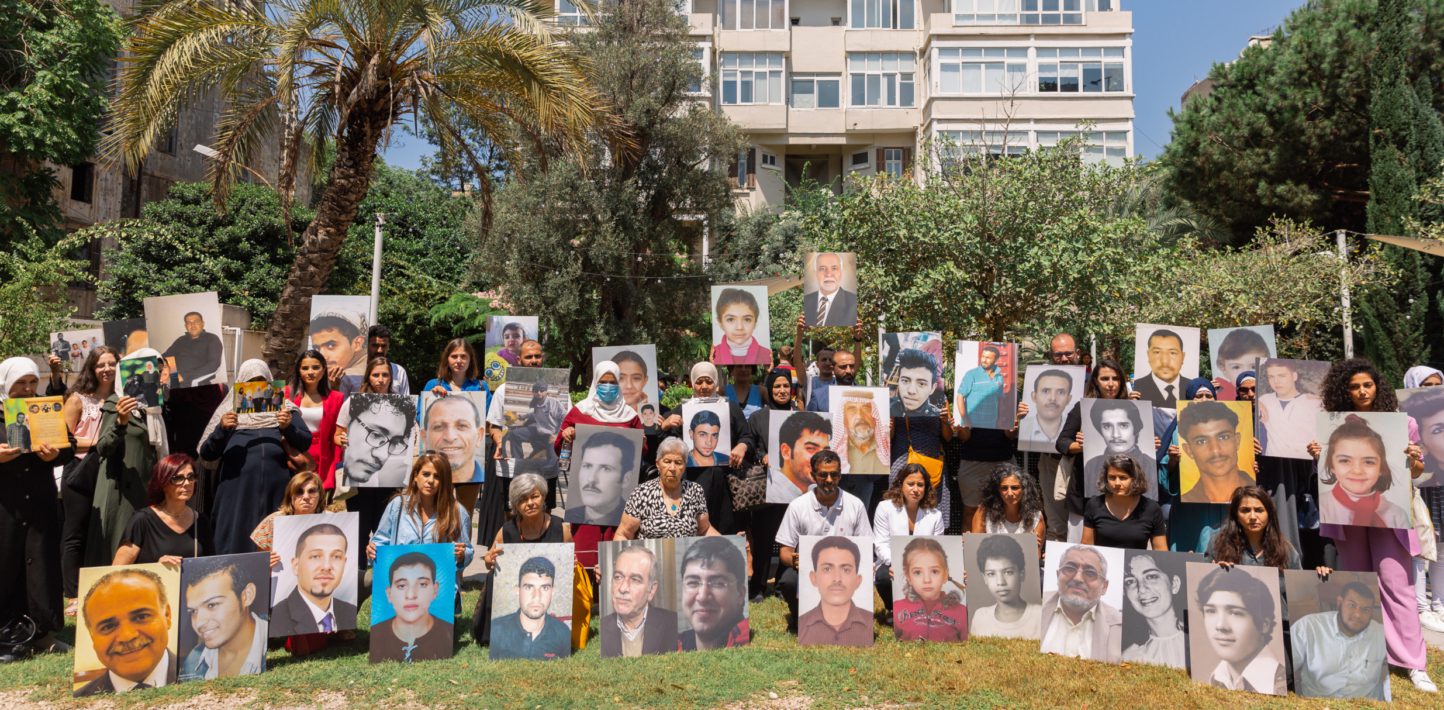
On 30 August 2023, Amnesty International reported on that Representatives of the families of people forcibly disappeared in Iraq, Lebanon, Syria and Yemen gathered in Beirut to demand that their governments uphold their rights to truth, justice and reparation, during an event organized by AI to mark the International Day of the Victims of Enforced Disappearances.
Across the Middle East, both state authorities and non-state actors, such as armed opposition groups, abduct and disappear people as a way to crush dissent, cement their power, and spread terror within societies, largely with impunity.
While most governments in the region have not yet investigated disappearances nor provided accurate numbers of those missing or disappeared, civil society organizations and UN bodies have published estimated numbers of people abducted and disappeared in each country. These numbers in Iraq, Lebanon, Syria and Yemen, when multiplied by a conservative estimate of the total years these individuals have been missing, suggest that families have spent more than a million years waiting for answers – an agonizing length of time.
“In the face of their governments’ apathy and complicity for the crime of enforced disappearances, the families of the disappeared across the Middle East have led the charge, year after year, in demanding their right to know what happened to their loved ones and to get justice and reparation – often at great personal risk,” said Aya Majzoub, Amnesty International’s Deputy Director for the Middle East and North Africa.
“Today we honour their perseverance and add our voice to theirs in calling for authorities to take real action to investigate these crimes, hold those suspected of criminal responsibility accountable and ensure these crimes are not committed again.”
Iraq
In Iraq, the UN estimates that between 250,000 to 1,000,000 individuals have been disappeared since 1968 – making it one of the countries with the highest number of disappearances in the world. Disappearances are still being carried out today at hands of militias affiliated with the government. Consecutive Iraqi governments have repeatedly failed to take meaningful steps to investigate disappearances or hold those suspected of criminal responsibility to account. Widad Shammari from Iraqi organization Al Haq Foundation for Human Rights, whose son has been missing since 2006, said: “I was a single protester until I met many others who shared my struggle, and we formed a strong coalition who fights for the truth for all the disappeared in the Arab region, not just Iraq.”
Lebanon
In Lebanon, the official estimate of those abducted or missing as a result of the 1975-1990 civil war is 17,415. Every year, on 13 April – the anniversary of the start of the Lebanese Civil War – the families of the missing and disappeared gather to mark the beginning of the conflict, repeating the mantra, “Let it be remembered, not repeated.”
The Lebanese authorities granted amnesty to the perpetrators of crimes that occurred during the civil war, but after years of campaigning, in 2018, the families of the disappeared successfully pressured the government to acknowledge the disappearances that took place. The government also passed a law that established the National Commission for the Missing and Forcibly Disappeared with a mandate to investigate individual cases, locate and exhume mass graves and enable a tracing process.
However, Wadad Halawani, whose husband was kidnapped in 1982 and who leads the Committee of the Kidnapped and Missing in Lebanon said: “Today, we raise our voice and shout out loud. The National Commission for the Missing and Forcibly Disappeared is 3 years old already. Only two years remain in its mandate. The Commission established a clear strategy for its work, but it cannot carry on without the needed financial and logistical support. The government must provide it with all the needed resources immediately.”
Syria
Since 2011, the Syrian authorities have forcibly disappeared tens of thousands of its actual or perceived opponents, including political activists, protestors, human rights defenders, journalists, lawyers, doctors, and humanitarian aid workers, as part of a widespread and systematic attack against the civilian population that amounts to crimes against humanity. Thousands have also gone missing after being detained by armed opposition groups and the so-called Islamic State. Given the Syrian government’s role in orchestrating the campaign of enforced disappearances, there has been total impunity for these crimes in Syria. The families have therefore resorted to international justice mechanisms.
In a momentous victory for the families, on 29 June 2023, the UN General Assembly voted to establish an international institution dedicated to shedding light on the fate and whereabouts of those missing and disappeared since the start of the armed conflict in Syria.
Fadwa Mahmoud from Families for Freedom, whose husband and son were disappeared in Syria in 2012 said: “We had big dreams in 2011. But we paid a very heavy price. My husband and son have been disappeared since September 2012… We faced our fears and raised our voice until it reached the United Nations …this [institution] is the product of our labour as the families of the detained…and this is its strength. We are demanding that we have an instrumental role in the institution.”
My husband and son have been disappeared since September 2012… We faced our fears and raised our voice until it reached the United Nations …this [institution] is the product of our labour as the families of the detained…and this is its strength.Fadwa Mahmoud from Families for Freedom, whose husband and son were disappeared in Syria in 2012
Yemen
In Yemen, human rights organizations have documented 1,547 cases of disappeared and missing people since 2015. All parties to the conflict, including the Huthi de facto authorities and the internationally recognized government forces, are still committing these crimes with impunity at a time when the world’s attention has turned away. Since the Human Rights Council voted in 2021 to end the mandate of the Group of Eminent Experts, following heavy lobbying from Saudi Arabia, efforts to hold all those suspected of criminal responsibility accountable in fair trials and realize victims’ rights to reparations have stalled.
The Abductees’ Mothers Association in Yemen said: “We were harassed and threatened and beaten-up during demonstrations, but we will not give up and we are determined at ensuring some progress every step of the way. We are not mothers of our own disappeared family members only; we consider ourselves mothers of every single disappeared person in the region and we will continue our fight for the truth for all of them.
Nasta (Anastasia) Loika was sentenced to 7 years in a penal colony for “inciting racial, national, religious or other social enmity or discord” on 20 June 2023. She is a prisoner of conscience, targeted in retaliation for her human rights work.
Nasta (Anastasia) Loika is a prominent human rights defender and educator, focusing her work on human rights violations resulting from the use of the repressive “anti-extremist” legislation in Belarus, the protection of foreign nationals and stateless persons in Belarus, and on human rights education.
Nasta Loika was sentenced for “inciting racial, national, religious or other social enmity or discord” under Part 3 of Article 130 of the Belarusian Criminal Code on 20 June 2023. The Belarusian human rights defender and prisoner of conscience was arbitrarily detained on 28 October 2022, accused of “petty hooliganism”, a violation under Article 19.1 of the Code of Administrative Offences. As the Belarusian authorities repeatedly brought the allegations against her, she served a total of five consecutive 15-day terms in detention for the same purported offence. On 24 December 2022, she was arbitrarily charged under Articles 342.1 (“Organization and preparation of actions that grossly violate public order, or active participation in them”) and 130.3 (“inciting racial, national, religious or other social enmity or discord”) of the Belarusian Criminal Code.
Nasta Loika reported that she had been tortured by electric shock during questioning and that whilst in detention she was left out in the courtyard for eight hours without outerwear in cold weather. She has consistently not been provided with the medical care she requires, which in itself may amount to inhumane and degrading treatment.
On 25 July, 2023 – International Afro-Latina, Afro-Caribbean and Diaspora Women’s Day, – Amnesty International highlighted nine defenders and collectives who have devoted their lives to ending inequality and violence, advocating a dignified life for all people because their work deserves the recognition, visibility, protection and resources necessary for it to continue to spread.
Rede Vozes Negras pelo Clima, Brazil
Rede Vozes Negras pelo Clima is an initiative of 11 Black Brazilian women who are working in their respective territories to protect human rights, confront climate racism and promote anti-racist socio-environmental justice. They belong to traditional, riverine quilombola communities. They are also activists and leaders of communities that live on the margins of large urban centres, communities that are being directly affected by the consequences of the climate crisis and development projects that fail to take into account the rights of local populations.
They are thus fighting for anti-racist adaptation policies and an energy transition that will guarantee the promotion of human rights and nature. Mitigation initiatives need to incorporate the ancestral knowledge and wisdom of traditional peoples and communities and ensure the participation of those people affected by extreme weather events when decisions are being made as to the investments that need to be made to repair losses and damage.
Dayana Blanco Acendra, Colombia
Dayana Blanco is a renowned Colombian lawyer who heads ILEX Acción Jurídica, an Afro-Colombian and Afro-LGBTQI+ organization committed to racial justice in Colombia, Latin America and the Caribbean. According to Blanco, “Racial justice in Colombia requires all of society to commit to combatting the historical inequality that has affected the Afro-descendant population. This means actions to address social and economic inequality.”
With an outstanding academic background and experience in different sectors, Dayana has promoted innovative research on racist police violence, statistical invisibility in the systematization of violence against Afro-descendant leaders and economic and social rights. In addition, together with her team and in coordination with other civil society organizations, she has obtained notable rulings in defence of Afro-Colombian midwifery, overcoming the statistical invisibility of the Afro-descendant population, among others, and demonstrating her dedication to the struggle for equality and justice.
Under her leadership, ILEX has – through legal mobilization, research and strategic communications – become a reference for promoting the rights of the Afro-descendant population. Dayana and her team highlight the importance of addressing social and economic inequality as a fundamental element of racial justice in Colombia, calling on the whole of society to unite in the struggle and build a more equitable future for all.
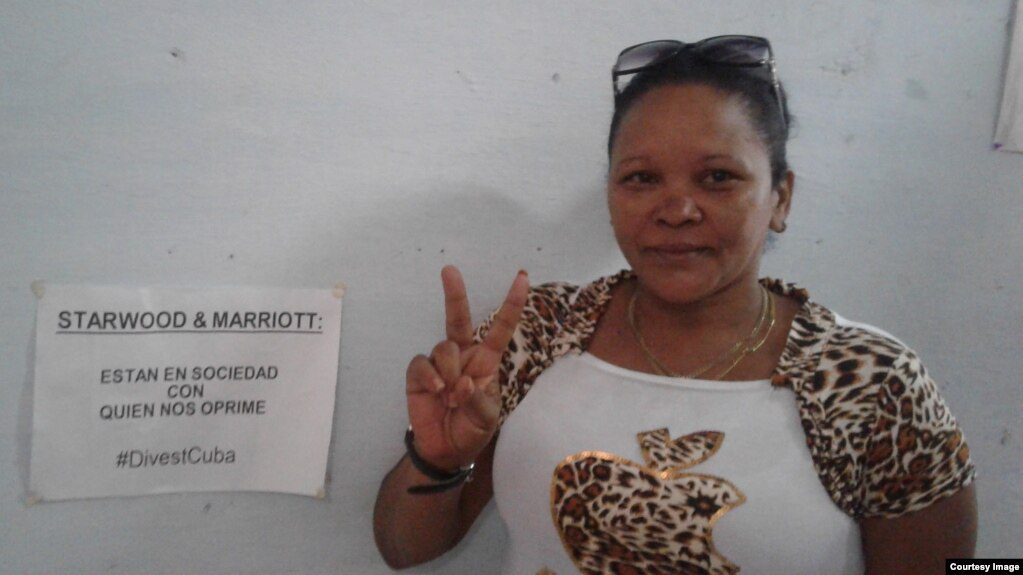
Donaida Pérez Paseiro, Cuba
Donaida Pérez Paseiro is a Black activist, religious leader and president of the Asociación Yorubas Libres de Cuba. Yoruba is a religion of the African diaspora that is practised in many countries, including Cuba. Donaida was arrested on 16 July 2021 and sentenced in February 2022 to eight years’ imprisonment by the Santa Clara Municipal People’s Court for “public disorder”, “contempt” and “attacking” an official. According to the information available to Amnesty International, Donaida should never have been charged with these crimes.
The charges of “contempt” and “public disorder” are frequently used in Cuba to limit the right to freedom of expression and peaceful assembly. Both she and her husband, Loreto Hernández García, were tried along with 14 other protesters in what appears to have been an unfair trial.
Donaida is the wife of Yoruba leader and activist Loreto Hernandez Garcia who was unjustly sentenced to seven years in prison for demanding respect for human rights in Cuba during the 11 July 2021 demonstrations.
Donaida is an example of courage and perseverance in the resistance against repression in Cuba. Her commitment has manifested itself in numerous peaceful marches and protests. According to her family, she was a freelance journalist and founded the Laurel Express press agency, where she gave visibility to the injustices and challenges faced by her community in the city of Placetas. Her activism spans multiple spheres, having been a member of the Orlando Zapata Tamayo resistance front and the central opposition coalition. Donaida’s legacy transcends borders and leaves a profound inspiration for those who seek a Cuba without repression.
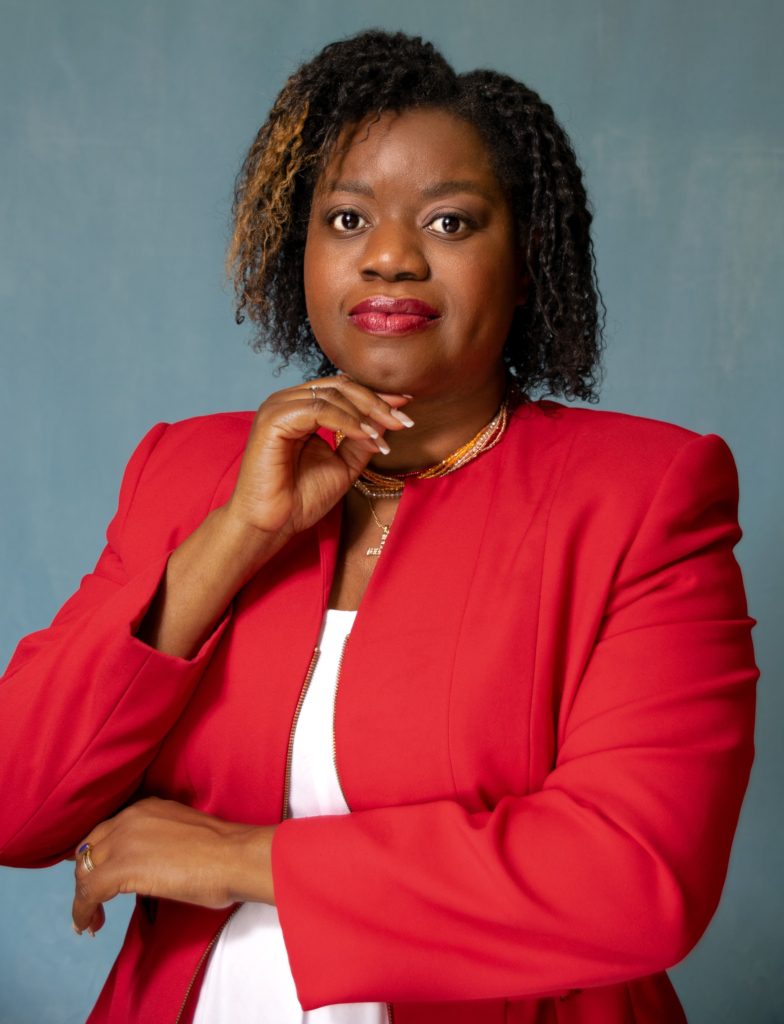
Guerline M. Jozef, Haiti
Guerline M. Jozef is the founder and executive director of the Haitian Bridge Alliance, the only Black and Haitian women-led organization serving migrants on both sides of the U.S.-Mexico border. Named one of the most influential people in 2021 on racial issues by Politico, she is also co-founder of the Black Immigrants Bail Fund and the Cameroon Advocacy Network.
The Haitian Bridge Alliance (HBA), also known as “the Bridge,” is a grassroots community-based organization that advocates for just and humane immigration policies and provides migrants and immigrants with humanitarian, legal and social services, with a special focus on Black migrants, the Haitian community, women and girls, LGBTQIA+ people, and survivors of torture and other human rights abuses. HBA also seeks to highlight issues specific to Black migrants and encourages solidarity and collective action to bring about policy changes. Through her work, Guerline reminds us that together, Anpil men, chay pa lou! Many hands lighten the load!
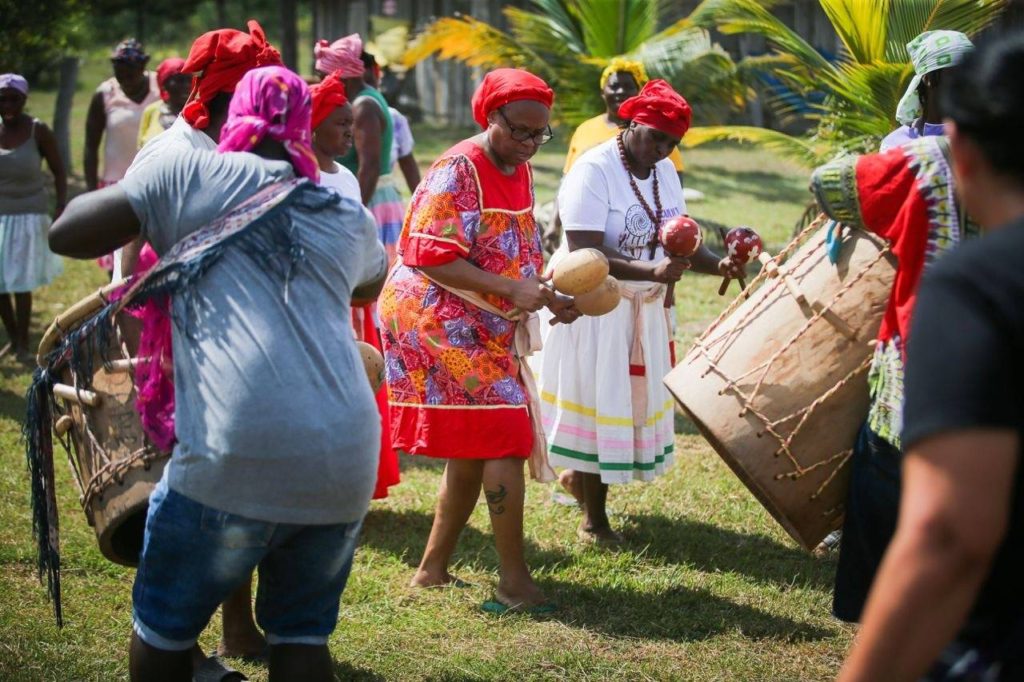
Miriam Miranda, Honduras
An Afro-indigenous Garífuna leader from Honduras, Miriam Miranda stands out as a courageous defender of human and environmental rights. As coordinator of the Organización Fraternal Negra Hondureña (OFRANEH), she has carried out invaluable work to protect and defend the rights of the Garífuna people in Honduras. Her tireless work, lucidity and commitment have earned her the recognition of prestigious awards, such as that of the Friedrich Ebert Foundation, as well as the Carlos Escaleras and Oscar Romero awards.
Miriam’s struggle is deeply rooted in the Garífuna territory of Honduras and is manifested through the history of OFRANEH, an organization through which these people are building their dignity and their future. The land and the sea, as an indispensable part of their identity, determine an essential struggle to preserve the natural assets of their territory.
Miriam is a highly respected thinker and leader within the social movement. She has an enormous capacity to devour books and mobilize energies from all sides to defend her people. She is one of those people who make life possible, whose words always point forward and who finds strength in the deep roots of her origin, where her future of freedom was born. As the daughter of Barauda (representing Garífuna female strength, Barauda is an historical character who pushed the Garífuna hero Sathuye to continue the struggle for the liberation of his people), Miriam has turned her critical eye to the source of it all: the predatory civilization of consumerism.
Her tireless work and courage inspire others to keep fighting. Her contribution and leadership have already left an indelible mark on the history of Honduras and global struggles for territory. [see also: https://humanrightsdefenders.blog/tag/miriam-miranda/]
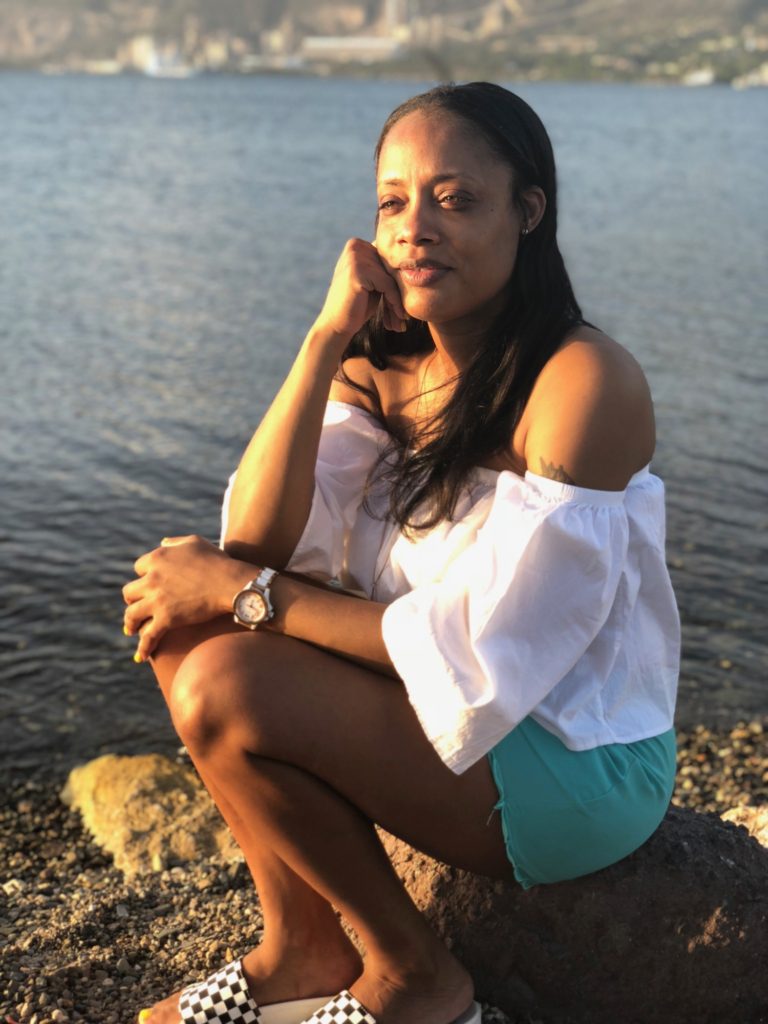
Shackelia Jackson, Jamaica
The extrajudicial killing of her brother, Nakiea Jackson, in 2014 pushed Shackelia Jackson into a life of activism. Since then she has been healing, evolving, learning and gathering the tools with which to reconcile her conflicting realities. A political science scholar and communicator, Shackelia is the mother of an empathetic child, who longs with innocence to experience the world. Despite challenges and setbacks, Shackelia remains dedicated to the wider struggle, supporting causes that prevent the institutionalization and normalization of practices that violate human rights and erode the sanctity of life.
Through her grassroots organizing efforts in Jamaica, she has raised funds to support back-to-school initiatives and education programmes, recognizing the importance of empowering the younger generation. Shackelia’s work has gone far beyond her local community. She has become a global force, lending her voice and expertise to international platforms. As keynote speaker at an Amnesty International event in London, she captivated the audience with her powerful words, urging them to stand up and take action. In 2017, Shackelia also participated in roundtable discussions at Amnesty International events in Brazil and the United States, amplifying the voices of the oppressed and demanding accountability.
It was on this journey that Shackelia realized that change starts with each individual. She has encouraged others to join her in writing for rights, and to use their words as weapons against injustice. “Let us write until we are heard, let us write until justice is done,” she said.
Ivana C. Fred Millán, Puerto Rico
Ivana Fred is a prominent Black and transgender activist, writer and leader from Puerto Rico. She has dedicated her life to fighting for human rights and equality for transgender people in her country. Her passion for justice has made her an influential figure and a powerful voice in Puerto Rican society.
Since her first steps into activism in 1999, Ivana has formed part of pioneering projects aimed at trans people and has used her voice and pen to amplify the stories and needs of trans people.
As she says: “Life put me in a place where I could develop as a leader, the ‘Ponte el Sombrero’ project gave me the tools to empower and educate socially disadvantaged and discriminated populations. That was how I came to understand that to exist is to resist”.
Ivana has also made her mark in the media, writing for the Metro newspaper and participating in acclaimed documentaries and films such as “Mala Mala” and “Las Muchachas”. Her presence and perspective have helped generate greater visibility and understanding of transgender experiences in Puerto Rico.
Ivana Fred is currently one of the directors of the organization Trans Goofy Games, where she continues to lead and support initiatives that promote transgender inclusion and empowerment. With unwavering commitment, Ivana has remained a visible leader and loyal activist. From her early days of activism to the present day, her voice has been resolute in seeking dignity and respect for all transgender people.
With her courage and determination, Ivana has shown that to exist is to resist and has paved the way for a more inclusive and respectful future in Puerto Rico and beyond. Her legacy as a visible leader and her tireless activism inspire us all to continue fighting for a world where everyone can live with equality and dignity.
Elena Lorac, Dominican Republic
Elena Lorac is a prominent activist and advocate for human rights in the Dominican Republic, especially on the part of Dominicans of Haitian descent. As national coordinator of the Movimiento Reconoci.do, she has led the fight for the right to nationality and full integration of this community into Dominican society.
With more than 12 years’ experience, Elena has worked to strengthen community leadership and empower black women in the country’s bateyes [sugar mill settlements]. She also provides support to Haitian migrants and Venezuelan migrants and refugees, and is known for her community-based approach.
Elena is also a nationally and internationally renowned speaker, speaking on issues such as nationality, discrimination and racism, and raising awareness of policies that affect Dominicans of Haitian descent in the Dominican Republic. Her tireless work has been instrumental in promoting human rights and achieving the real inclusion of this community in Dominican society.
Aracelis Sánchez, Venezuela
Aracelis Sánchez, a human rights defender and the founder of Organización de Familiares de Víctimas de Violación de Derechos Humanos (Orfavideh), is promoting solidarity and demanding justice together with more than 200 mothers of victims of extrajudicial executions in Venezuela.
Aracelis, who lost her son Darwilson Sequera, has been fighting for more than 10 years to get cases of human rights violations committed by Venezuelan state security forces investigated. Orfavideh provides human rights training workshops for mothers, equipping them with tools with which to demand guarantees and use the mechanisms of justice in Venezuela.
Aracelis stresses that when victims are empowered and able to put pressure on prosecutors, their cases are investigated. She believes that support and empowerment are essential to transform grief into positive action and thus achieve justice for victims and their families.
On 11 July 2023 EFE reported that Vietnam had released Vietnamese-Australian activist Chau Van Kham, sentenced in 2019 to 12 years in prison for extremism over his ties to the Viet Tan pro-democratic party.
Australian Prime Minister Anthony Albanese said he “very much welcomes the release of Chau,” in remarks Monday from Berlin, through Australian public broadcaster ABC.
Chau’s lawyer Dan Nguyen said in a statement through Amnesty International Australia that the activist, who returned Monday night to Australia, is with his wife and two sons. He also thanked the government’s, organizations and individuals’ efforts that fought for his release.
This was due to Chau, 73, being linked to pro-democratic group Viet Tan, considered an extremist entity in the country but a human rights organization in Australia.
Deputy Australian Prime Minister Richard Marles said Chau was released on “humanitarian” reasons and “in the spirit of friendship which exists between Australia and Vietnam,” according to ABC.
Chau is one of “more than 150 political activists in Vietnam who have been detained for peaceful acts in favor of freedom of expression,” Human Rights Watch Asia Human Rights Director Elaine Pearson said in a statement.
Pearson spoke of journalist Dang Dihn Bach and activists Mai Phan Loi, Dang Dinh Bach, and Hoang Thi Minh Hong among them and urged Australia to continue advocating for their release.
The exact number of political prisoners in Vietnam is unknown, as numbers provided by different human rights organizations have discrepancies.
While Human Rights Watch says the total exceeds 150, Amnesty International said there were 128 political prisoners in the country last year. Dissident organization Defend the Defenders raised the number to more than 250.
Danna joins HURIDOCS from the Amnesty Tech management team, where she played an integral role in growing globally distributed teams, securing and managing large grants, and providing strategic and operational leadership. She combines perceptive and empathetic leadership with a bright, organised, fearless approach to building organisational strength and resilience. See: https://humanrightsdefenders.blog/tag/danna-ingleton/
“At a time when the power of accurate, accessible and secure information has never been more important to those seeking justice and the fulfilment of their human rights, I am thrilled to be starting as the new Executive Director of HURIDOCS.”
It is exciting to be joining an organisation with such a rich history of harnessing the power of information to facilitate change. Together with my new colleagues and our diverse, valiant partners we will build on this history to ensure HURIDOCS is consistently at the sharp-edge of information management and technological developments, and always strategically growing.
As an activist myself who has been working in human rights for more than a decade I have seen how the battle for justice can take its toll on the people behind the movements. I am therefore also committed to ensuring HURIDOCS is an effective and accountable workplace that values health and the well-being of us all. – Danna Ingleton
Danna will officially assume her responsibilities on 1 July 2023
The urgent human rights issues in the Eastern Europe and Central Asia region are hugely varied and demand creative campaigns that are well-researched, well-planned and well-managed despite the time pressures that surround them.
JOB PURPOSE: To lead the identification, development, implementation and evaluation of Amnesty International’s campaigning and advocacy strategies on human rights violations in the Eastern Europe and Central Asia region, to deliver impact in relation to agreed priorities, utilizing political judgment and analytical, communication and representational skills.
ABOUT YOU
Lead the development and implementation of campaign strategies, ensuring campaigns result in measurable change.
Advise on, coordinate and review the contribution to relevant campaigns by regional colleagues and other programmes.
Coordinate action planning and ensure consistency with campaigning standards and optimal use of resources.
Assess opportunities for action, identifying creative and effective campaigning tactics.
Provide advice to sections and structures and external partners on the development and implementation of campaign strategies.
Responsible for ensuring there is effective communication between relevant IS teams, sections and structures and partners about projects.
Draft, review and advise on campaign materials for internal and external use, ensuring products are coherent within the campaign strategy.
Communicate AI’s concerns, positions and messages to external and internal audiences.
Contribute to planning, execution and evaluation stages of campaign projects; develop and share campaigning best practice.
SKILLS AND EXPERIENCE
The ability to adapt to fast-changing political situations in, and related to, Eastern Europe and Central Asia.
Experience of leading and implementing campaigns at the national & international level and the ability to lead innovation and creative approaches to campaigning.
Knowledge of working on, and in, the region and a specialist knowledge in relation to specific countries or other geographical areas in the region.
Digitally competent, with experience of digital campaigning and keeping up to date with digital trends and campaigning methodologies.
Experience of working with colleagues and partners based around the world.
Excellent communications skills in English and Russian in a fluent, clear and concise way. Knowledge of another regional language desirable
Experience of leading project teams and the ability to engage and inspire team members.
Experience of managing conflicting demands, meeting deadlines and adjusting priorities
Ability to undertake research to gather information relevant to the development of campaign strategies.
Ability to evaluate campaigns and projects and to report progress against stated objectives; experience of managing budgets and reporting against expenditure.
Amnesty International is committed to creating and sustaining a working environment in which everyone has an equal opportunity to fulfill their potential and we welcome applications from suitably qualified people from all sections of the community. For further information on our benefits, please visit https://www.amnesty.org/en/careers/benefits/




 Hans Thoolen on Human Rights Defenders and their awards