Taner Kılıç, a human rights activist and the final defendant in the so-called “Büyükada Trials,” was acquitted on Tuesday, marking the end of a case widely seen as a stain on Turkey’s human rights record, Turkish media reported.
On July 5, 2017, 10 human rights advocates were detained during a workshop that was taking place in a hotel on Istanbul’s Büyükada, one of the Princes’ Islands. Among those detained were İdil Eser, then-director of Amnesty International Turkey; İlknur Üstün of the Women’s Coalition; Özlem Dalkıran, a member of the Helsinki Citizens’ Assembly; and several others. Two weeks after their detention eight were jailed after a court appearance, while the other two were released pending trial.
While the group was still in detention, pro-government news outlets published reports accusing them of being foreign agents and that the workshop in Büyükada was a “spying activity.” However, an indictment prepared by the prosecutor three months later accused the group of “membership in a terrorist organization” and “aiding and abetting a terrorist organization.” They were linked to the outlawed Kurdistan Workers’ Party (PKK) and the Gülen movement.
Taner Kılıç, Amnesty Turkey’s honorary chair, who wasn’t among those who were initially detained but had been imprisoned on June 6, 2017 for alleged involvement in the 2016 coup attempt, was added to the indictment and his case was merged with the Büyükada trials.
In 2020 he was sentenced to more than six years in prison for links to the Gülen movement.
That same year, Günal Kurşun from the Human Rights Agenda Association, along with İdil Eser and Özlem Dalkıran, were sentenced to two years in prison. Nalan Erkem from the Helsinki Citizens’ Assembly, İlknur Üstün, Iranian-Swedish writer Ali Gharavi, German human rights activist Peter Steudtner, Veli Acu from the Human Rights Agenda Association, Nejat Taştan from the Association for Monitoring Equal Rights and Şeyhmus Özbekli from the Rights Initiative were acquitted.
On October 17, 2022 the Supreme Court of Appeals overturned the sentences, and in the retrial, Eser, Kurşun, Dalkıran and Kılıç were acquitted. However, the prosecutor objected to Kılıç’s acquittal and requested a review of the decision. As a result, the case was sent back to the appeals court. Ultimately, the final ruling favored Kılıç, with his acquittal upheld. [https://humanrightsdefenders.blog/2020/07/03/will-long-running-saga-of-trial-against-the-istanbul-10-end-on-friday-3-july/]
The Büyükada trials were harshly criticized by international human rights organizations such as Freedom House and Amnesty International.
Following the initial convictions, Freedom House said it was “an assault on human rights.”
“The conviction of Taner Kılıç, Günal Kurşun, İdil Eser, and Özlem Dalkıran in this politically motivated case lays bare the Turkish authorities’ ongoing assault on human rights and the justice system’s abdication of its responsibility to protect them,” said Marc Behrendt, director for Europe and Eurasia programs at Freedom House. “We call on the Turkish courts to reaffirm the rule of law and to fulfill their obligation to uphold fundamental rights and freedoms in Turkey.”
Amnesty International called the trials “an ordeal” and said it was a “baseless trial” that “represents a shocking example of the authorities’ attempt to criminalize the defense of human rights with implications for everyone in Turkey.” “This injustice has become a stark symbol of the massive crackdown on human rights and on those who defend them,” said Amnesty International.
Amnesty International invites applications for an 18-month part-time fellowship to explore the global phenomenon of shrinking civic space and document grassroots resistance strategies from marginalized and overlooked voices. Fellows will analyze current trends in civic space restrictions, investigate emerging resistance and human rights movements, and convene activists to co-create a practical toolkit for defending civic space worldwide. The fellowship aims to ensure that Amnesty’s work remains innovative, grounded in lived experience, and contributes to new knowledge on resistance strategies.
Deadline for all applications: 06/03/2024
Rate: Fixed Rate of USD 25,000 for the duration of the fellowship
Location: This fellowship does not include relocation. The consultant must work from their preferred location and possess the necessary work authorization.
OBJECTIVES AND DELIVERABLES
The Fellowship project aims to:
Support human rights defenders, academics, and practitioners with lived experience to document and analyze grassroots resistance strategies against authoritarianism and civic space restrictions in their regions.
Use this research to develop concrete recommendations and practical tools that can inform Amnesty’s global civic space advocacy.
Produce regular short written outputs, including blog posts and opinion pieces, to be independently published.
Convene activists and thought leaders in the region through virtual, in-person, or hybrid meetings to share ideas, incubate new strategies, and foster collective learning.
Deliver a final in-depth think-piece for Amnesty International’s internal strategy and advocacy, with external publication at Amnesty’s discretion.
ESSENTIAL REQUIREMENTS
Fluency in written and spoken English; fluency in a relevant regional language is desirable.
Demonstrated experience working on civic space resistance—either formally (academia, NGOs, journalism, law, policy) or through grassroots activism.
Strong writing and research skills, with experience producing publications related to civic space and human rights activism.
No formal academic qualifications or certifications are required to apply.
To apply, please submit:
A short bio (maximum one page) outlining your recent experience.
Relevant case studies or descriptions of past work on civic space issues.
Your proposed approach to this fellowship opportunity, including how you would structure your research and engagement.
Applications must be in PDF, Word, PowerPoint or Excel format.
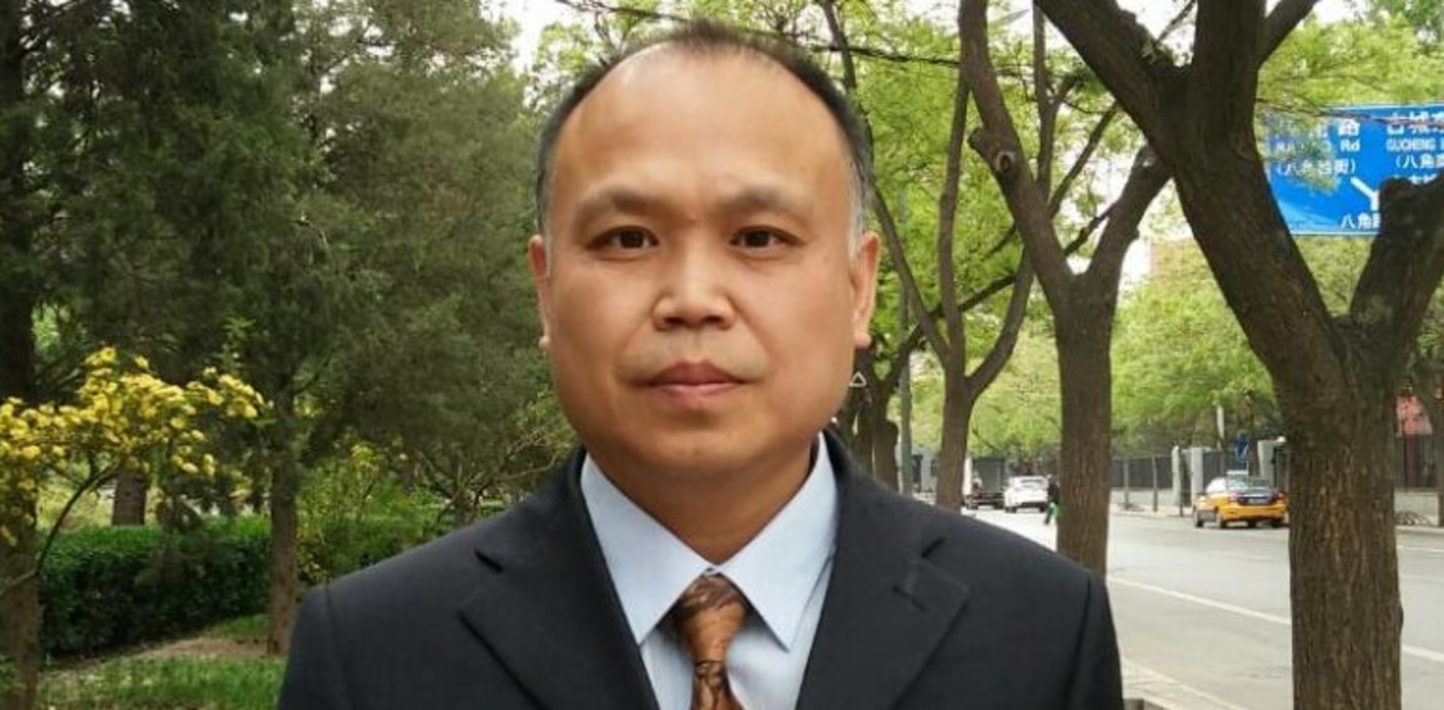
Responding to the rejection of Chinese human rights lawyer see also:s appeal against his three-year prison sentence for “inciting subversion of state power”, Amnesty International’s Interim Regional Deputy Director for Research Kate Schuetze said on 6 January, 2025: “The charges against Yu Wensheng and his wife, activist Xu Yan – who was convicted of the same offence – are entirely baseless. They reveal the authorities’ inability to provide any legitimate justification for their imprisonment.
“The Chinese government has used Yu’s online comments and his numerous international human rights awards as an excuse to label him a threat to national security. But all this really demonstrates is Beijing’s deep fear of human rights defenders who dare to dissent.
“Yu Wensheng and Xu Yan have been imprisoned solely for exercising their right to freedom of expression and they must be released immediately and unconditionally.”
On 2 January 2025 Amnesty Tech – a global collective of advocates, hackers, researchers, and technologists – announced the launch of the third Digital Forensics Fellowship (DFF).
This innovative Fellowship is an opportunity for 5 – 7 human rights defenders (HRDs), journalists, and/or technologists working in civil society organisations around the world to train with Amnesty Tech’s Security Lab to build skills and knowledge on advanced digital threats and forensic investigation techniques. This is a part-time Fellowship that will last 3-4 months and will come with a stipend.
Fellowship start and end date: The Fellowship is expected to run from April – July 2025.
Application Deadline, 23 January 2025 Location: dependent upon the suitable applicant’s location.
Remuneration: Successful applicants will be given a stipend of £500/month for their time.
Background
Across the world, hard-won rights are being weakened and denied every day. Increasingly, much of the repression faced by HRDs and journalists begins online. Since 2017, Amnesty Tech’s investigations have exposed vast and well-orchestrated digital attacks against activists and journalists in countries such as Morocco, Egypt, Azerbaijan, Qatar, Serbia, Mexico and Pakistan.
Advanced technical capacity is needed in all world regions to tackle the mercenary spyware crisis. By fostering a more decentralised, global, and diverse network of well-trained incident responders and investigators, we can jointly contribute to more timely and effective protection of HRDs and journalists against unlawful surveillance.
Participants in the Digital Forensics Fellowship will be expected to:
Attend an in-person, week-long convening where the majority of trainings will be conducted. This training will take place in June 2025, the exact location is set to be confirmed shortly.
Dedicate approximately 10 – 12 hours per month to the Fellowship, outside of the convening, by participating in remote training sessions and through independent work outside of scheduled sessions to deepen understanding of training topics.
Engage with the programme cohort and the Security Lab during the in-person and remote trainings, and in discussion groups on an ad-hoc basis.
Essential Requirements
An understanding of the technical threats, digital attacks and challenges faced by journalists, HRDs, and civil society organisations in their local contexts.
Demonstrated interest in conducting investigations to identify digital attacks against civil society, with the goal of building resilience among civil society actors in the face of surveillance after the Fellowship.
Familiarity using command line tools and basic knowledge of scripting languages like Bash and Python to analyse data.
An understanding of how internet infrastructure works, for example the role of IP addresses, TLS certificates, and DNS queries.
Technical familiarity with GNU/Linux operating systems, as well as Android and iPhone systems.
Engaging with the English language as the primary language throughout the Fellowship.
Application instructions:
To apply, applicants will be required to submit the following via our recruitment system eArcu – please upload all relevant documents to the CV section of the application portal.
A copy of your most recent CV.
A cover letter explaining your motivation and interest in the Fellowship and outlining how you meet the essential requirements outlined in the job description.
Applications must be in PDF, Word, PowerPoint or Excel format.
Application Process:
Shortlisted applicants will be invited to complete a record video interview week commencing 10th February, answering a series of pre-set questions via video, which allows us to learn more about you and your suitability for the Fellowship. Successful applicants from this process will be invited to a Microsoft Teams interview with the panel week commencing 3rd March.
Every year, people from around the world take part in Amnesty International’s Write for Rights campaign. It’s a really easy way to make a big difference by doing something “little”. It doesn’t take much time – all you need to do is write a letter, send a post or sign a petition.
Since Write for Rights started in 2001, millions of people have changed the lives of those whose human rights have been taken away. In fact, over the past 20 years more than 56 million actions have been taken, while over 100 people featured in our campaign have seen a positive outcome in their case. For this years toolkit see:
This year’s campaign will feature nine individuals and groups from all around the world. From a TikToker in Angola to a women’s rights defender in Saudi Arabia, these inspiring people are connected because their human rights have been violated.
For results from the recent past: Meet three incredible people whose lives have been changed for the better and find out what people power means to them.
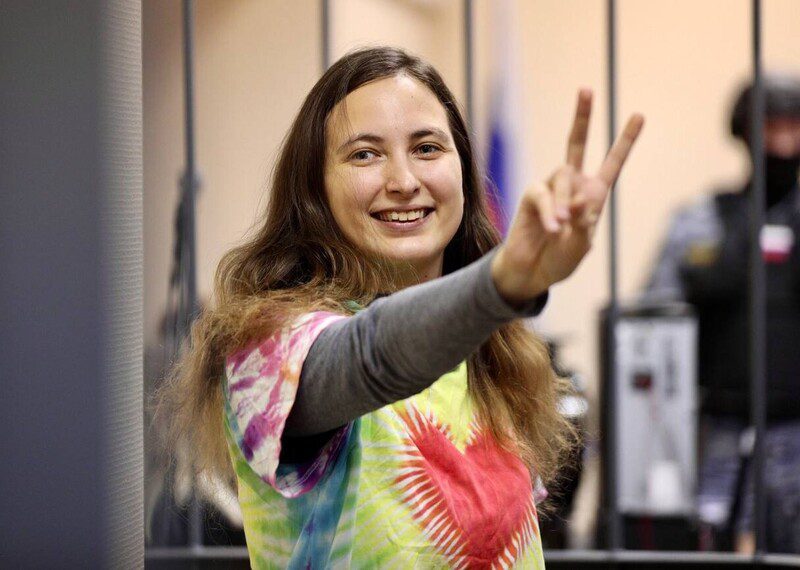
After huge public campaigning, artist and anti-war activist Aleksandra (Sasha) Skochilenko was freed in a historic prisoner swap in August 2024. The deal was brokered between Russia and Belarus on the one hand and Germany, Norway, Poland, Slovenia and the USA on the other.
Aleksandra Skochilenko on the day of sentencing, November 16, 2023.
Rita Karasartova is a human rights defender and expert in civic governance from Kyrgyzstan. For over a decade she dedicated her life to providing independent legal advice, helping people whose rights had been violated. Charged with attempting to “violently overthrow the government”, which carries a maximum sentence of 15 years’ imprisonment, Rita and 21 other defendants were acquitted on 14 June 2024.
In August 2017, Myanmar’s military unleashed a deadly crackdown on Rohingya Muslims – an ethnic minority who have faced decades of severe state-sponsored discrimination in Myanmar. Over 620,000 Rohingya fled to Bangladesh after security forces unleashed a campaign of violence, killing an unknown number of Rohingya; raping Rohingya women and girls; laying landmines; and burning entire Rohingya villages.
Fearing for their lives, then 17-year-old Maung Sawyeddollah and his family walked 15 days to Bangladesh, where they reached Cox’s Bazar refugee camps. Fuelled by his desire to become a lawyer, Sawyeddollah wanted to seek justice for the suffering around him.
Alongside his studies, he started a campaign calling for Facebook’s owner, Meta, to take responsibility for the way its algorithms amplified anti-Rohingya incitement on the Facebook platform, fuelling the Myanmar military’s violence.
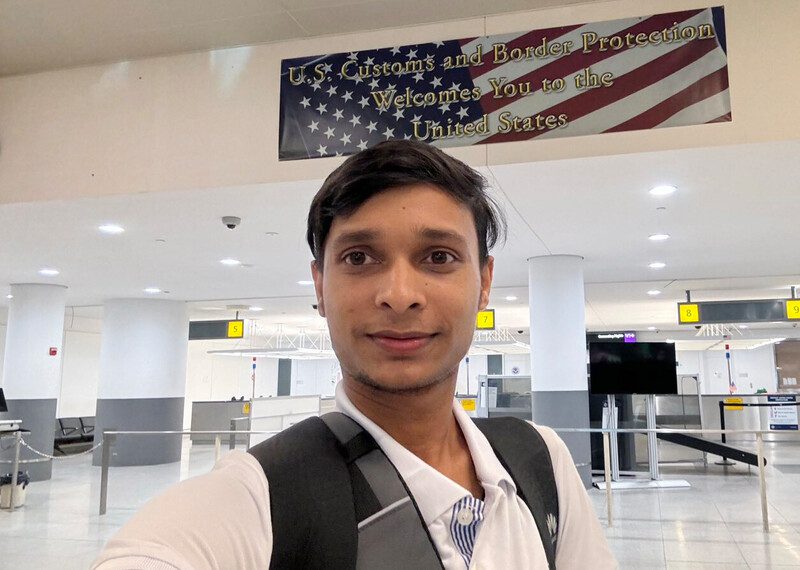
In 2023 Sawyeddollah was facing serious security risks in the refugee camps. Together with partners Victim Advocates International and Dev.tv, Amnesty International put together resources to help ensure Sawyeddollah’s safety. Through Amnesty’s Global Relief Team he was provided with urgent financial assistance to support his security needs throughout the year. In August 2024, Sawyeddollah was granted a student visa and moved to the USA to study. He landed in New York City on 19 August 2024, and he is now an international student at New York University.
Are you an artist passionate about human rights and social justice? We’re looking for talented creators to develop original art pieces for our 2024 Write for Rights campaign. This is your chance to use your creative skills to fight injustice and show your solidarity with people who are advocating for change.
What We’re Looking For
We are looking for a wide range of artistic expressions, including but not limited to:
Graphic design artwork
Videos of spoken-word art
Musical pieces (vocal, instrumental…etc.)
Videos of dances, skits
Animations
Paintings
Comic Illustrations
Project Details
Objective: Create an original art piece representing a specific Write for Rights case. Compensation: TBD Timeline: September 15, 2024 – October 15, 2024 Submission Deadline: August 30th, 2024
How to Apply
Submit your application including:
A brief introduction of yourself, your artistic background and your interest in social justice
A short proposal outlining:
Two Write for Rights cases you are interested in working on and why
A short description of your artistic vision for the piece
Don’t miss this chance to make a global impact with your art. Join us in advocating for human rights through powerful, creative expression.
Write for Rights Cases
Manahel al-Otaibi (Saudi Arabia)
Manahel al-Otaibi is a fitness instructor and a brave outspoken advocate for women’s rights in Saudi Arabia. In November 2022, she was arrested after posting to Snapchat photos of herself at a shopping mall. In the photos, she was not wearing the traditional long-sleeved loose robe known as an abaya. Manahel has been sentenced to 11 years in prison.
Wet’suwet’en Nation Land Defenders (Canada)
The Wetʼsuwetʼen Nation are deeply connected to their ancestral lands, but this is threatened by the construction of a fossil fuel pipeline through their territory. Their Hereditary Chiefs did not consent to this construction. Land defenders have been charged for blocking pipeline construction sites, even though these sites are on their ancestral lands. They could face prison and a criminal record.
Maryia Kalesnikava (Belarus)
Political activist Maryia Kalesnikava dared to challenge the repressive Belarus government. On 7 September 2020, Maryia was abducted by the Belarus authorities. She was taken to the border where she resisted deportation by tearing up her passport. She was detained and later sentenced to 11 years in prison on false charges. Maryia’s family haven’t heard from her for more than a year.
Floraine Irangabiye (Burundi)
Floriane Irangabiye is a mother, journalist, and human rights defender from Burundi. In 2010 she relocated to Rwanda where she co-founded a radio station for exiled Burundian voices. In August 2022 she was arrested while visiting family in Burundi. In January 2023 she was sentenced to 10 years in prison for “undermining the integrity of the national territory”, all for criticizing Burundi’s human rights record.
Kyung Seok Park (South Korea)
Kyung Seok Park is a dedicated disability rights activist. Holding peaceful protests on Seoul’s public transport systems, Kyung Seok Park has drawn attention to how hard it is for people with disabilities to easily access trains and subways safely – denying them the ability to travel to work, school, or to live independently. Kyung Seok Park’s activism has been met with police abuse, public smear campaigns and punitive litigation.
On July 1, 2024 AI published the findings of a survey which says that three out of five child and young human rights defenders face online harassment in connection with their activism, according to a new analysis of 400 responses to an Amnesty International questionnaire, distributed to young activists across 59 countries. More than 1400 young activists participated in the survey conducted as a part of Amnesty International’s global campaign to “Protect the Protest.”
Of those, 400 youth activists aged between 13 to 24 years agreed to the publication of their data.
They faced harassment in the form of hateful comments, threats, hacking and doxing which is often linked to offline abuse and political persecution often perpetrated by state actors with little or no response from Big Tech platforms resulting in the silencing of young people.
The highest rates of online harassment were reported by young activists in Nigeria and Argentina.
“I have been harassed […] by a stranger because of my pronouns. The stranger told me it is not possible to be a ‘they/them’ and kept sending messages about how I am crazy for identifying the way I identify. I had to ignore the person’s messages,” said a 17-year-old Nigerian queer LGBTI activist who asked not to be identified.
Another young activist – 21-year-old male Nigerian LBGTI rights activist said, “People disagree with my liberal progressive views, and immediately check my profile to see that I am queer Nigerian living in Nigeria, and they come at me with so much vitriol. I am usually scared to share my opinion on apps like TikTok because I can go viral. The internet can be a very scary place,” he said adding that, “Someone cat fishing as a gay man, lured me into coming out to see him after befriending me for a while, and then he attacked me with his friends. This is Nigeria, I couldn’t go to the police for secondary victimization.”
Twenty-one percent of respondents say they are trolled or threatened on a weekly basis and close to a third of the young activists say that they have censored themselves in response to tech-facilitated violence, with a further 14 percent saying they have stopped posting about human rights and their activism altogether.
“I always think twice before making a comment, when I express my political position, I start to get many comments that not only have to do with my position, but also with my body, my gender identity or my sexuality,” said Sofía*, a 23-year-old human rights defender from Argentina shared her experience on X formerly known as Twitter.
The survey respondents said they faced the most abuse on Facebook, with 87 percent of the platform’s users reporting experiences of harassment, compared to 52 percent on X and 51 percent on Instagram.
The most common forms of online harassment are upsetting and disrespectful “troll” comments (60 percent) and upsetting or threatening direct messages (52 percent).
Five percent of the young activists say they have faced online sexual harassment, too, reporting that users posted intimate images (including real and AI-generated images) of them without consent.
For many of the survey participants harassment in relation to their online activism is not limited to the digital world either. Almost a third of respondents reported facing offline forms of harassment, from family members and people in their personal lives to negative repercussions in school, police questioning and political persecution.
Twenty-year-old non-binary activist Aree* from Thailand shared their experience of facing politically motivated prosecution in five different cases whilst they were still a child.
Abdul* a 23-year-old Afghan activist reported being denied work at a hospital after authorities found out about his social media activism.
The Israel-Gaza war currently stands out as an issue attracting high levels of abusive online behaviour, but the threat of online harassment appears to be omnipresent across all leading human rights issues. Peace and security, the rule of law, economic and gender equality, social and racial justice, and environmental protection all served as “trigger topics” for the attacks.
However, the way young activists are targeted varies and appears to be closely linked to intersectional experiences of discrimination, likely harming survivors of identity-based abuse in longer lasting ways than issue-based harassment.
Twenty-one percent of respondents say they have been harassed in connection with their gender and twenty percent in connection with their race or ethnicity. Smaller percentages said they face abuse in connection with their socio-economic background, age, sexual orientation and/or disabilities.
“At first it was simply hateful comments since the posts I published were daring and spoke openly about LGBT rights, which later made me receive threats in private messages and it went further when my account was hacked,” said Paul a 24-year-old activist from Cameroon, on being targeted for his LGBTI related activism adding that, “For 2 years, I have been living in total insecurity because of the work I do as an advocate for the rights of my community online.”
For Paul and many other young activists, online harassment is having deep effects on their mental health. Forty percent of the respondents say they have felt a sense of powerlessness and nervousness or are afraid of using social media. Some respondents have even felt unable to perform everyday tasks and felt physically unsafe. Accordingly, psychological support is the most popular form of support which young activists call for, ahead of easier to use reporting mechanisms and legal support.
Many of the young activists voiced frustrations over leading social media platforms’ failure to adequately respond to their reports of harassment saying the abusive comments are left on the platforms long after being flagged.
Some respondents also felt that social media platforms are playing an active part in silencing them; multiple activists reported that they found posts about the war in Gaza removed, echoing previous reports of content advocating for Palestinian rights being subject to potentially discriminatory moderation by various platforms.
Others highlighted platforms’ role in enabling state-led intimidation and censorship campaigns, undermining activists’ hope for government regulation to provide answers to the challenge of tech-facilitated violence.
In a new report of 6 June 2024, the Amnesty International insists the world governing body “must terminate any agreement to host the tournament if human rights are jeopardised or violated“.
Last year Fifa confirmed Spain, Portugal and Morocco will be co-hosts in 2030, with the opening three matches taking place in Uruguay, Argentina and Paraguay. Saudi Arabia is the sole bidder for the 2034 tournament. Amnesty says the Gulf kingdom has an “appalling human rights record and its bid carries a broad range of very serious risks”.
But it also warns the 2030 tournament “carries human rights risks primarily related to labour rights, discrimination, freedom of expression and assembly, policing, privacy and housing”. It adds that greenhouse gas emissions generated by travel related to the expanded 48-team tournament across three continents “are likely to be significant, despite Fifa’s stated commitment on climate change to halve carbon emissions by 2030 and be ‘net-zero’ by 2040”.
Amnesty claims Fifa has not responded to its requests to speak to consultants involved in human rights-based assessments of the bids.
Fifa has been approached for comment. It is set to formally confirm the hosts of the two tournaments later this year at a meeting of its congress. When unveiling its choices for hosting the World Cups, it said it was “fully committed” to ensuring the competitions were held to “sustainable event management standards and practices, safeguarding principles for the protection of children and adults at risk and to respecting internationally-recognised human rights in accordance with the United Nations Guiding Principles on Business and Human Rights”.
It has also said it will “conduct a targeted dialogue with bidders, to ensure complete, comprehensive bids are received and evaluated against the minimum hosting requirements….[It] will focus on the defined priority areas of the event vision and key metrics, infrastructure, services, commercial, and sustainability and human rights.”
Steve Cockburn, Amnesty’s Head of Labour Rights and Sports, said: “With only a single bid to host each tournament and major human rights concerns surrounding both, there are huge questions about Fifa’s willingness to stand by the pledges and reforms it has made in recent years, including exercising its right to reject any bid which does not meet its stated human rights requirements.
“History shows that the World Cup can be a source of dignity or exploitation, inclusion or discrimination, freedom or repression, making Fifa’s award of the hosting rights for the 2030 and 2034 tournaments among the most consequential decisions ever taken by a sporting organisation.”
Assessing the human rights risks related to the respective bids, Amnesty claims that in Spain, Morocco and Portugal “migrant workers are at risk of exploitation”, “excessive use of police forces is a proven risk” and “racial discrimination is an issue in all three countries”. It says an independent Fifa evaluation of Morocco’s previous bid – to host the 2026 World Cup – “noted its criminalisation of same-sex acts was particularly problematic” and that the country “restricts freedom of expression”.
It adds that “discrimination is deeply embedded in legislation and practices, and could impact fans, workers, players and journalists… women fans face the risk of unfair and disproportionate prosecution… and there have been sweeping arrests and imprisonment of journalists, human rights defenders, political activists.” Amnesty says reforms to prevent human rights violations related to the World Cup in Saudi Arabia would need “sweeping changes to labour laws to protect workers, and the release of activists and human rights defenders who’ve been unjustly imprisoned”.
Last year the Saudi Sports Minister rejected claims of ‘sportswashing’ and defended the country’s right to host the 2034 tournament, telling the BBC: “We’ve hosted more than 85 global events and we’ve delivered on the highest level. We want to attract the world through sports. Hopefully, by 2034, people will have an extraordinary World Cup.”
Mozilla is highlighting each year the work of 25 digital leaders using technology to amplify voices, effect change, and build new technologies globally through its Rise 25 Awards. On 13 May 2024 was the turn of Raphael Mimoun, a builder dedicated to making tools that empower journalists and human rights defenders. Aron Yohannes talked with Raphael about the launch of his app, Tella, combatting misinformation online, the future of social media platforms and more.
Raphael Mimoun: So I never worked in tech per se and only developed a passion for technology as I was working in human rights. It was really a time when, basically, the power of technology to support movements and to head movements around the world was kind of getting fully understood. You had the Arab Spring, you had Occupy Wall Street, you had all of these movements for social justice, for democracy, for human rights, that were very much kind of spread through technology, right? Technology played a very, very important role. But just after that, it was kind of like a hangover where we all realized, “OK, it’s not just all good and fine.” You also have the flip side, which is government spying on the citizens, identifying citizens through social media, through hacking, and so on and so forth — harassing them, repressing them online, but translating into offline violence, repression, and so on. And so I think that was the moment where I was like, “OK, there is something that needs to be done around technology,” specifically for those people who are on the front lines because if we just treat it as a tool — one of those neutral tools — we end up getting very vulnerable to violence, and it can be from the state, it can also be from online mobs, armed groups, all sort of things.
There’s so much misinformation out there now that it’s so much harder to tell the difference between what’s real and fake news. Twitter was such a reliable tool of information before, but that’s changed. Do you think that any of these other platforms can be able to help make up for so much of the misinformation that is out there?
I think we all feel the weight of that loss of losing Twitter. Twitter was always a large corporation, partially owned by a billionaire. It was never kind of a community tool, but there was still an ethos, right? Like a philosophy, or the values of the platform were still very much like community-oriented, right? It was that place for activists and human rights defenders and journalists and communities in general to voice their opinions. So I think that loss was very hard on all of us.
I see a lot of misinformation on Instagram as well. There is very little moderation there. It’s also all visual, so if you want traction, you’re going to try to put something that is very spectacular that is very eye catchy, and so I think that leads to even more misinformation.
I am pretty optimistic about some of the alternatives that have popped up since Twitter’s downfall. Mastodon actually blew up after Twitter, but it’s much older — I think it’s 10 years old by now. And there’s Bluesky. So I think those two are building up, and they offer spaces that are much more decentralized with much more autonomy and agency to users. You are more likely to be able to customize your feeds. You are more likely to have tools for your own safety online, right? All of those different things that I feel like you could never get on Threads, on Instagram or on Twitter, or anything like that. I’m hoping it’s actually going to be able to recreate the community that is very much what Twitter was. It’s never going to be exactly the same thing, but I’m hoping we will get there. And I think the fact that it is decentralized, open source and with very much a philosophy of agency and autonomy is going to lead us to a place where these social networks can’t actually be taken over by a power hungry billionaire.
What do you think is the biggest challenge that we face in the world this year on and offline, and then how do you think we can combat it?
I don’t know if that’s the biggest challenge, but one of the really big challenges that we’re seeing is how the digital is meeting real life and how people who are active online or on the phone on the computer are getting repressed for that work in real life. So we developed an app called Tella, which encrypts and hides files on your phone, right? So you take a photo or a video of a demonstration or police violence, or whatever it is, and then if the police tries to catch you and grab your phone to delete it, they won’t be able to find it, or at least it will be much more difficult to find it. Or it would be uploaded already. And things like that, I think is one of the big things that we’re seeing again. I don’t know if that the biggest challenge online at the moment, but one of the big things we’re seeing is just that it’s becoming completely normalized to grab someone’s phone or check someone’s computer at the airport, or at the border, in the street and go through it without any form of accountability. People have no idea what the regulations are, what the rules are, what’s allowed, what’s not allowed. And when they abuse those powers, is there any recourse? Most places in the world, at least, where we are working, there is definitely no recourse. And so I think that connection between thinking you’re just taking a photo for social media but actually the repercussion is so real because you’re going to have someone take your phone, and maybe they’re going to delete the photo, or maybe they’re going to detain you. Or maybe they’re going to beat you up — like all of those different things. I think this is one of the big challenges that we’re seeing at the moment, and something that isn’t traditionally thought of as an internet issue or an online digital rights issue because it’s someone taking a physical device and looking through it. It often gets overlooked, and then we don’t have much kind of advocacy around it, or anything like that.
What do you think is one action everybody can take to make the world and our lives online a little bit better?
I think social media has a lot of negative consequences for everyone’s mental health and many other things, but for people who are active and who want to be active, consider social networks that are open source, privacy-friendly and decentralized. Bluesky, the Fediverse —including Mastodon — are examples because I think it’s our responsibility to kind of build up a community there, so we can move away from those social media platforms that are owned by either billionaires or massive corporations, who only want to extract value from us and who spy on us and who censor us. And I feel like if everyone committed to being active on those social media platforms — one way of doing that is just having an account, and whatever you post on one, you just post on the other — I feel like that’s one thing that can make a big difference in the long run.
We started Rise25 to celebrate Mozilla’s 25th anniversary. What do you hope that people are celebrating in the next 25 years?
I was talking a little bit earlier about how we are building a culture that is more privacy-centric, like people are becoming aware, becoming wary about all these things happening to the data, the identity, and so on. And I do think we are at a turning point in terms of the technology that’s available to us, the practices and what we need as users to maintain our privacy and our security. I feel like in honestly not even 25, I think in 10 years, if things go well — which it’s hard to know in this field — and if we keep on building what we already are building, I can see how we will have an internet that is a lot more privacy-centric where communications are by default are private. Where end-to-end encryption is ubiquitous in our communication, in our emailing. Where social media isn’t extractive and people have actual ownership and agency in the social network networks they use. Where data mining is no longer a thing. I feel like overall, I can see how the infrastructure is now getting built, and that in 10,15 or 25 years, we will be in a place where we can use the internet without having to constantly watch over our shoulder to see if someone is spying on us or seeing who has access and all of those things.
Lastly, what gives you hope about the future of our world?
That people are not getting complacent and that it is always people who are standing up to fight back. We’re seeing it at. We saw it at Google with people standing up as part of No Tech for Apartheid coalition and people losing the jobs. We’re seeing it on university campuses around the country. We’re seeing it on the streets. People fight back. That’s where any change has ever come from: the bottom up. I think now, more than ever, people are willing to put something on the line to make sure that they defend their rights. So I think that really gives me hope.
Nikole Yanez is a computer scientist by training, and a human rights defender from Honduras. She is passionate about feminism, the impact of the internet and protecting activists. She was first drawn to human rights through her work as a reporter with a local community radio station. After surviving the coup d’état in Honduras in 2009, Nikole broadened her approach to focus her activism on technology. When she applied for the Digital Forensics Fellowship with the Amnesty Tech Security Lab in 2022, she was looking to learn more about cybersecurity and apply what she learnt with the organizations and collectives she works with regularly.
She highlighted her commitment to fostering a network of tech-savvy communities across Latin America in an interview with Elina Castillo, Amnesty Tech’s Advocacy and Policy Advisor:
I grew up in Honduras, where I lived through the coup d’état, which took place in 2009. It was a difficult time where rights were non-existent, and people were constantly afraid. I thought it was something you only read about in history books, but it was happening in front of my eyes. I felt myself just trying to survive, but as time went by it made me stronger and want to fight for justice. Despite the difficulties, people in my community remained hopeful and we created a community radio station, which broadcast stories about everyday people and their lives with the aim of informing people about their human rights. I was a reporter, developing stories about individual people and their fight for their rights. From there, I found a passion for working with technology and it inspired me to train to become a computer scientist.
I am always looking for ways to connect technology with activism, and specifically to support women and Indigenous people in their struggles. As much as technology presents risks for human rights defenders, it also offers opportunities for us to better protect ourselves and strengthen our movements. Technology can bring more visibility to our movements, and it can empower our work by allowing us to connect with other people and learn new strategies.
Is there one moment where you realized how to connect what you’ve been doing with feminism with technology?
In my work, my perspective as a feminist helps me centre the experiences and needs of marginalised people for trainings and outreach. It is important for me to publicly identify as an Afrofeminist in a society where there is impunity for gendered and racist violence that occurs every day. In Honduras we need to put our energy into supporting these communities whose rights are most violated, and whose stories are invisible.
For example, in 2006, I was working with a Union to install the Ubuntu operating system (an open-source operating system) on their computers. We realized that the unionists didn’t know how to use a computer, so we created a space for digital literacy and learning about how to use a computer at the same time. This became not just a teaching exercise, but an exercise for me to figure out how to connect these tools to what people are interested in. Something clicked for me in this moment, and this experience helped solidify my approach to working on technology and human rights.
There are not many women working in technology and human rights. I don’t want to be one of the only women, so my goal is to see more women colleagues working on technical issues. I want to make it possible for women to work in this field. I also want to motivate more women to create change within the intersection of technology and human rights. Using a feminist perspective and approach, we ask big questions about how we are doing the work, what our approach needs to be, and who we need to work with. Nikole Yanez Honduras Human Rights Defender
For me, building a feminist internet means building an internet for everyone. This means creating a space where we do not reproduce sexist violence, where we find a community that responds to the people, to the groups, and to the organizations that fight for human rights. This includes involving women and marginalised people in building the infrastructure, in the configuration of servers, and in the development of protocols for how we use all these tools.
In Honduras, there aren’t many people trained in digital forensics analysis, yet there are organizations that are always seeking me out to help check their phones. The fellowship helped me learn about forensic analysis on phones and computers and tied the learning to what I’m actually doing in my area with different organizations and women’s rights defenders. The fellowship was practical and rooted in the experience of civil society organizations.
How do you explain the importance of digital forensics? Well first, it’s incredibly relevant for women rights defenders. Everyone wants to know if their phone has been hacked. That’s the first thing they ask:, “Can you actually know whether your phone has been hacked?” and “How do I know? Can you do it for me? How?” Those are the things that come up in my trainings and conversations.
I like to help people to think about protection as a process, something ongoing, because we use technology all day long. There are organizations and people that take years to understand that. So, it’s not something that can be achieved in a single conversation. Sometimes a lot of things need to happen, including bad things, before people really take this topic seriously…
I try to use very basic tools when I’m doing digital security support, to say you can do this on whatever device you’re on, this is a prevention tool. It’s not just applying technical knowledge, it’s also a process of explaining, training, showing how this work is not just for hackers or people who know a lot about computers.
One of the challenges is to spread awareness about cybersecurity among Indigenous and grassroots organizations, which aren’t hyper-connected and don’t think that digital forensics work is relevant to them. Sometimes what we do is completely disconnected from their lives, and they ask us: “But what are you doing?” So, our job is to understand their questions and where they are coming from and ground our knowledge-sharing in what people are actually doing.
To someone reading this piece and saying, oh, this kind of resonates with me, where do I start, what would your recommendation be?
If you are a human rights defender, I would recommend that you share your knowledge with your collective. You can teach them the importance of knowing about them, practicing them, as well as encouraging training to prevent digital attacks, because, in the end, forensic analysis is a reaction to something that has happened.
We can take a lot of preventive measures to ensure the smallest possible impact. That’s the best way to start. And it’s crucial to stay informed, to keep reading, to stay up to date with the news and build community.
If there are girls or gender non-conforming people reading this who are interested in technical issues, it doesn’t matter if you don’t have a degree or a formal education, as long as you like it. Most hackers I’ve met become hackers because they dive into a subject, they like it and they’re passionate about it.Nikole Yanez Honduras Human Rights Defender.
Powerful governments cast humanity into an era devoid of effective international rule of law, with civilians in conflicts paying the highest price
Rapidly changing artificial intelligence is left to create fertile ground for racism, discrimination and division in landmark year for public elections
Standing against these abuses, people the world over mobilized in unprecedented numbers, demanding human rights protection and respect for our common humanity
The world is reaping a harvest of terrifying consequences from escalating conflict and the near breakdown of international law, said Amnesty International as it launched its annual The State of the World’s Human Rights report, delivering an assessment of human rights in 155 countries.
Amnesty International also warned that the breakdown of the rule of law is likely to accelerate with rapid advancement in artificial intelligence (AI) which, coupled with the dominance of Big Tech, risks a “supercharging” of human rights violations if regulation continues to lag behind advances.
“Amnesty International’s report paints a dismal picture of alarming human rights repression and prolific international rule-breaking, all in the midst of deepening global inequality, superpowers vying for supremacy and an escalating climate crisis,” said Amnesty International’s Secretary General, Agnès Callamard.
“Israel’s flagrant disregard for international law is compounded by the failures of its allies to stop the indescribable civilian bloodshed meted out in Gaza. Many of those allies were the very architects of that post-World War Two system of law. Alongside Russia’s ongoing aggression against Ukraine, the growing number of armed conflicts, and massive human rights violations witnessed, for example, in Sudan, Ethiopia and Myanmar – the global rule-based order is at risk of decimation.”
Lawlessness, discrimination and impunity in conflicts and elsewhere have been enabled by unchecked use of new and familiar technologies which are now routinely weaponized by military, political and corporate actors. Big Tech’s platforms have stoked conflict. Spyware and mass surveillance tools are used to encroach on fundamental rights and freedoms, while governments are deploying automated tools targeting the most marginalized groups in society.
“In an increasingly precarious world, unregulated proliferation and deployment of technologies such as generative AI, facial recognition and spyware are poised to be a pernicious foe – scaling up and supercharging violations of international law and human rights to exceptional levels,” said Agnès Callamard.
“During a landmark year of elections and in the face of the increasingly powerful anti-regulation lobby driven and financed by Big Tech actors, these rogue and unregulated technological advances pose an enormous threat to us all. They can be weaponized to discriminate, disinform and divide.”
Amnesty International’s report paints a dismal picture of alarming human rights repression and prolific international rule-breaking, all in the midst of deepening global inequality, superpowers vying for supremacy and an escalating climate crisis. Amnesty International’s Secretary General, Agnès Callamard